
How A Bill Becomes A Law Types of
How A Bill Becomes A Law
Types of Bills • • • Private bills Public bills 30% Resolutions Joint resolutions Concurrent resolutions Riders

Private Bills Deal with individual people or places. Often deal with immigration or naturalization issues.
Public Bills • General matters • Apply to the entire nation • About 30% of all bills
Simple Resolutions • Affects only the one house of Congress that passed it. • Used to change procedural rules, etc. • Do not need President’s signature

Joint Resolutions • Passed by both houses of Congress • Used to correct errors in laws or appropriate money for a special purpose • Propose Constitutional Amendments • Do not require President’s signature

Concurrent Resolutions • Deal with matters of concern to both houses of Congress (but a law is not needed) – Date of adjournment – Express Congress’ opinion about an issue • Do not need President’s signature
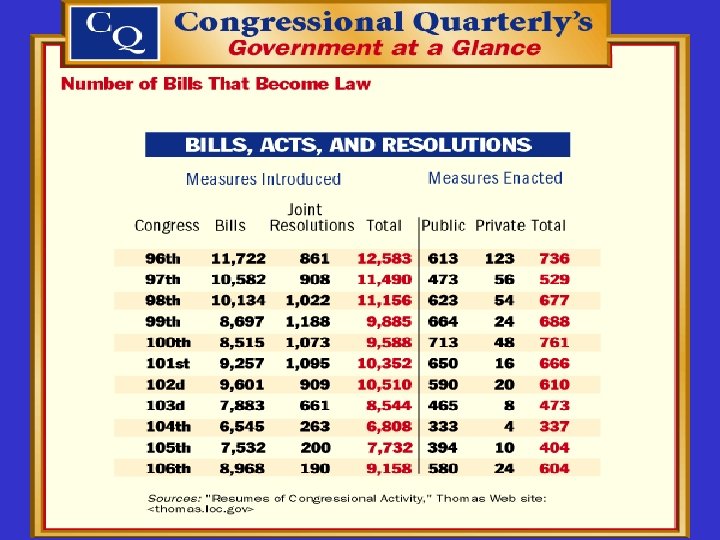
Few Bills Become Laws Only about 5% of bills become laws Why? ? ? – Process is complicated – Unless bill has strong support, it will die – Politics kill many bills – Interest groups may oppose the bill – Some bills are just for “show” • To appease some supporter • To bring attention to an issue
Writing A Bill Who writes a bill? ? ? • Congressman • Staff • Interest groups
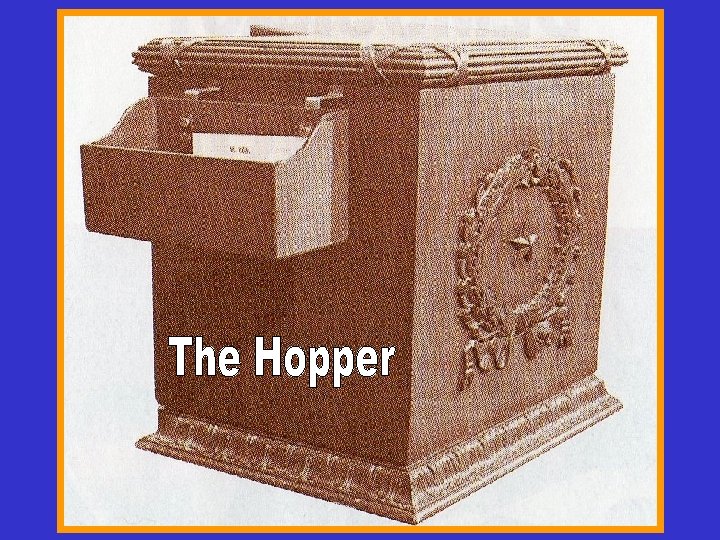
Introducing A Bill House of Representatives • Drop the bill into a hopper • An “HR” number gets assigned • Bill is assigned to standing committees Senate • Senator must actually read the bill to the Senate • An “S” number gets assigned • Bill is assigned to standing committees
Group work • Fill out worksheet dealing with video we saw yesterday. • Follow the instructions on the sheet of paper I hand out. • Turn in worksheet by end of class to me!
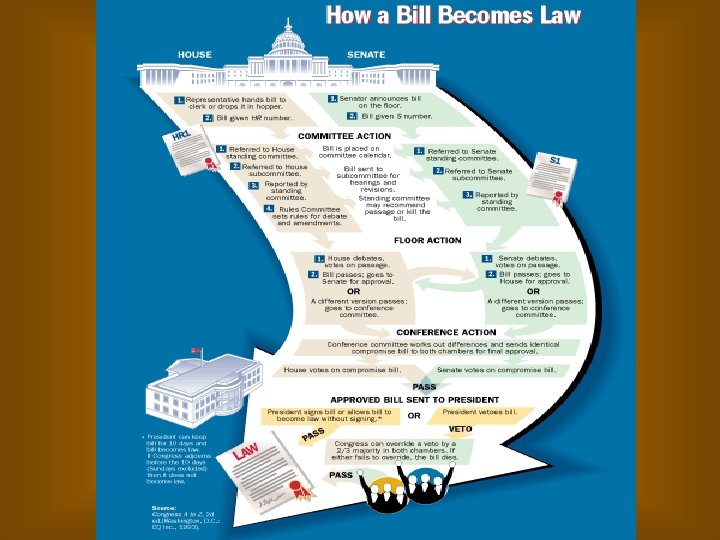

Committee Actions • • • Bill is assigned to subcommittee Hearings “Pigeonholing” to kill bills Make changes in bill Rewrite the bill Recommend that the bill be adopted
Reporting the Bill “Reporting a bill” means to send it to the full House of Representatives or Senate with a report of the committee’s actions.
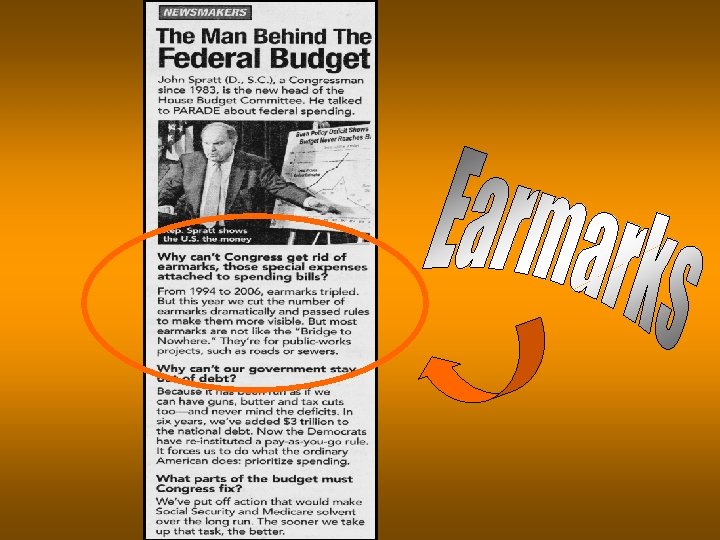
Debate on the Floor • Usually most of “debate” has occurred in the committees • Things are added: – Amendments – Riders – Earmarks
Riders Attached to a bill but have nothing to do with the bill but benefit the entire nation.
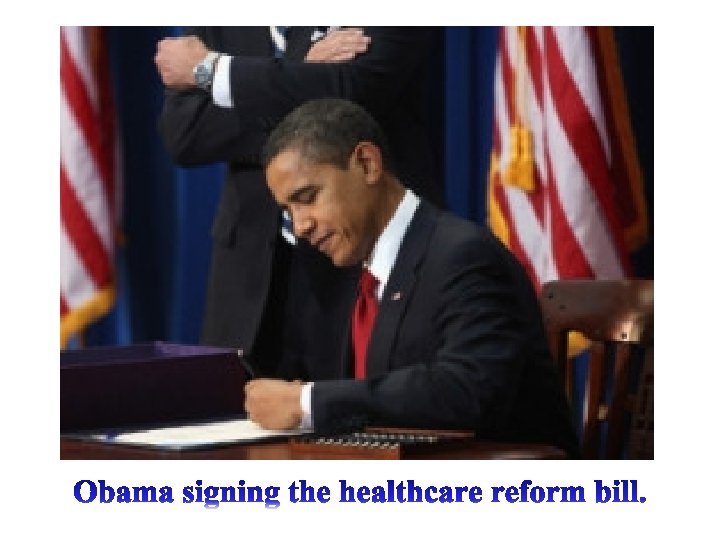
Riders Example: The new healthcare bill had a rider that changed the system for providing federal loans to college students.
Riders Earmarks • A form of rider that appropriates money that benefits only a single district or state. • Examples: – Money for a new park. – Money for a bridge. – Money for a library.
Final Steps for Bills • Voting • Conference Committees • Voting again
Final Step • Bill is “registered” • Given a number
Then the bill is finally sent to the President.
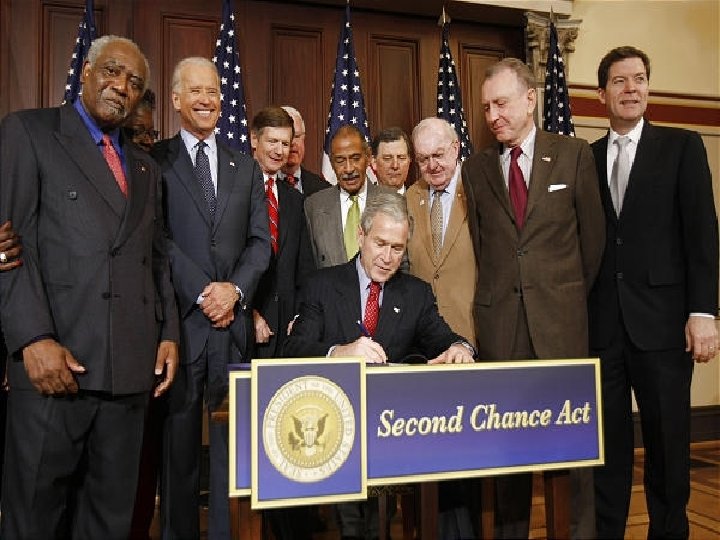
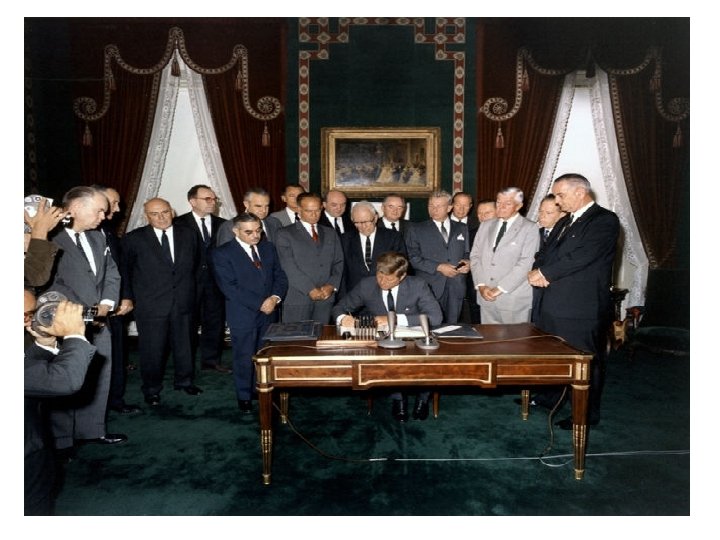
Presidential Actions • May sign bill • May let it sit for 10 days – If Congress is in session, it becomes law without signature – If Congress is not in session, it dies (Pocket Veto) • Veto
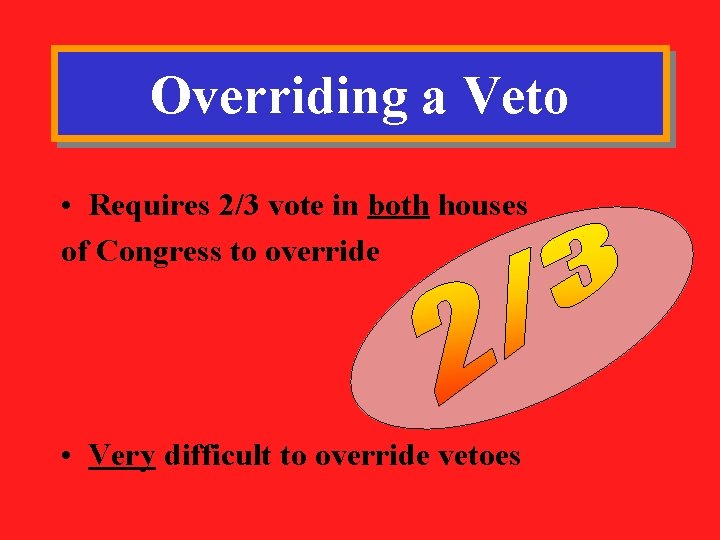
Overriding a Veto • Requires 2/3 vote in both houses of Congress to override • Very difficult to override vetoes
- Slides: 29