
How a Bill Becomes a Law The lawmaking
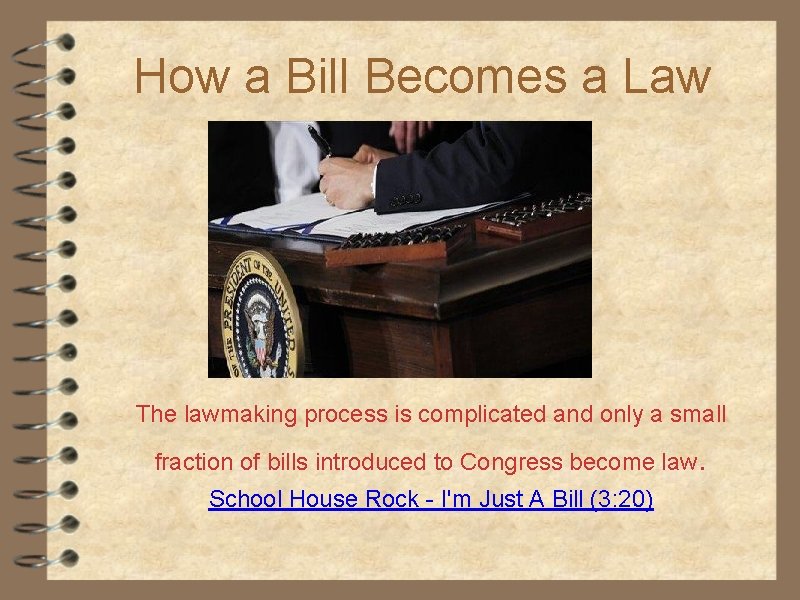
How a Bill Becomes a Law The lawmaking process is complicated and only a small fraction of bills introduced to Congress become law. School House Rock - I'm Just A Bill (3: 20)
How a Bill Becomes a Law ●Over 10, 000 bills are introduced each year. ●Only a few hundred become law (about 5%). ●The process is lengthy, sometimes several months long.
Why do so few bills become laws? 1. The process is long and complex. 2. Bills must have strong support. 3. Supporters must be willing to compromise. 4. Many bills are introduced that have no chance of passing.
How a Bill Becomes a Law ●First we will look at the different forms new legislation may take. ●Then you will learn about the steps a bill must go through in order to become a law.

Types of Bills & Resolutions

Public Bills ●Public bills deal with matters that apply to the entire nation (ex. taxes, health ins. , gun control, civil rights, abortion). ●They are often controversial and may be debated for months.
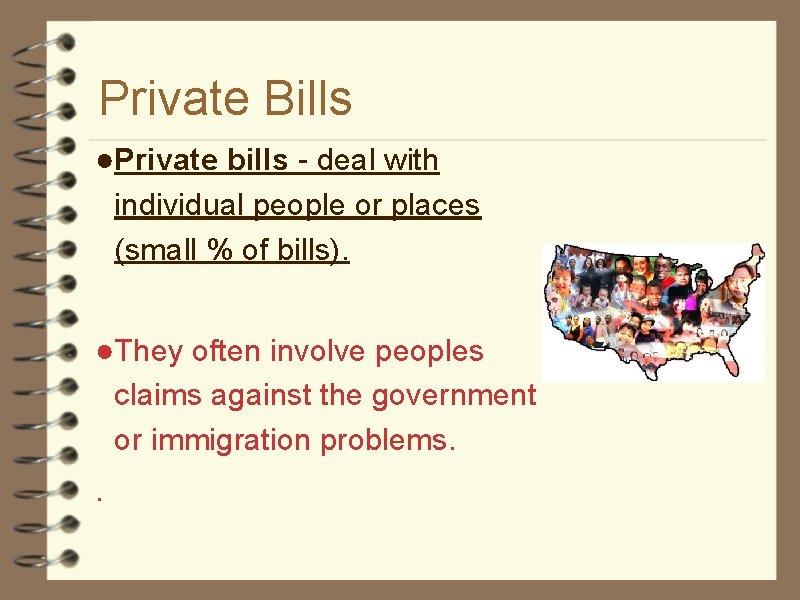
Private Bills ●Private bills - deal with individual people or places (small % of bills). ●They often involve peoples claims against the government or immigration problems. .
Resolutions ●Resolutions cover matters that only affect Congress (ex. -procedures, date for adjournment, etc. ). ●Because it is an internal matter, it does not have the force of law and is not sent to the president for signature.
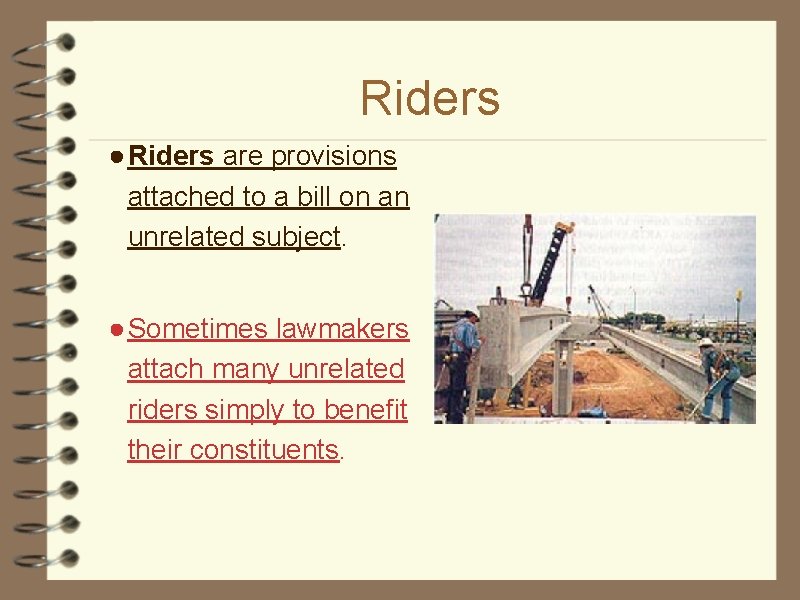
Riders ● Riders are provisions attached to a bill on an unrelated subject. ● Sometimes lawmakers attach many unrelated riders simply to benefit their constituents.

STEP 1: INTRODUCING A BILL
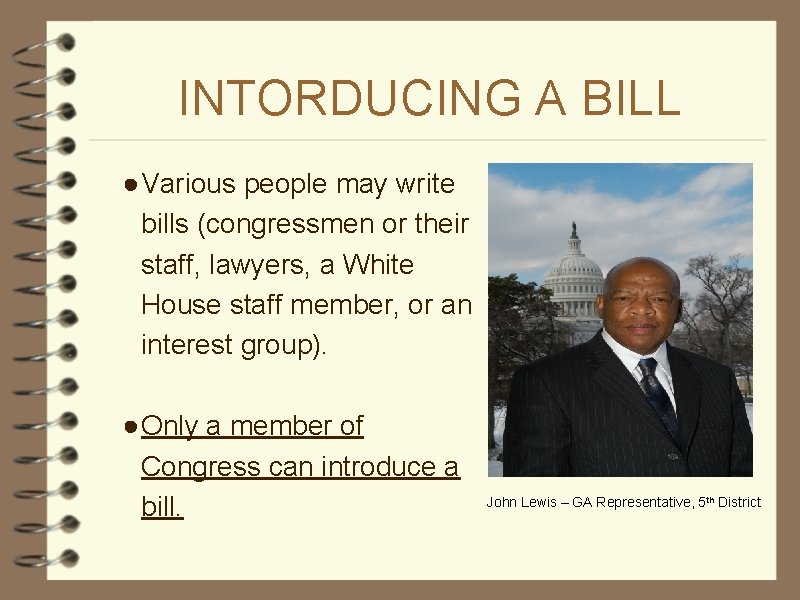
INTORDUCING A BILL ● Various people may write bills (congressmen or their staff, lawyers, a White House staff member, or an interest group). ● Only a member of Congress can introduce a bill. John Lewis – GA Representative, 5 th District
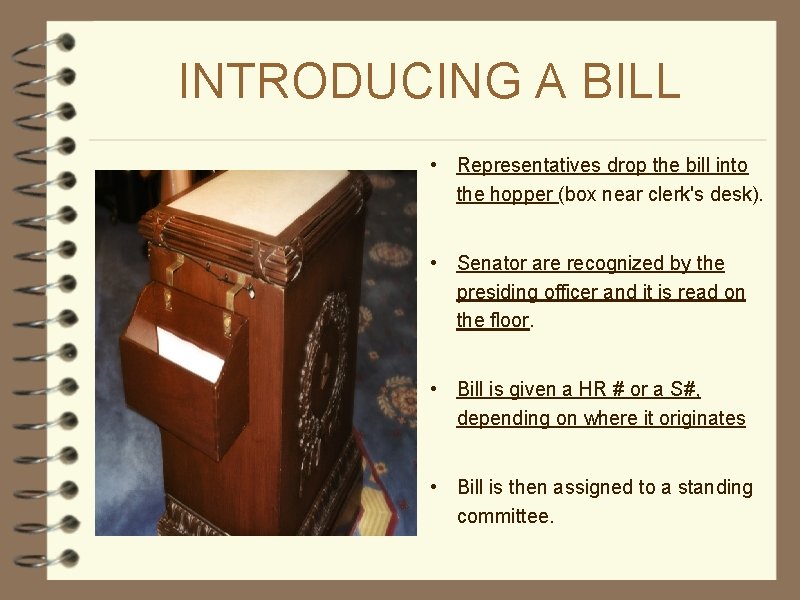
INTRODUCING A BILL • Representatives drop the bill into the hopper (box near clerk's desk). • Senator are recognized by the presiding officer and it is read on the floor. • Bill is given a HR # or a S#, depending on where it originates • Bill is then assigned to a standing committee.
STEP 2: COMMITTEE ACTION
Committee Action ● New bills are sent to the committees that deals with their subject matter (education, banking, agriculture, etc). ● Will hold hearings (listen to testimony from people interested in the bill) or public meetings. ● May propose changes in the bill ● May send the bill to a subcommittee.
Committee Action ● Then two possibilities may occur: 1. Recommend that the entire House or Senate vote on the bill 2. The bill is Pigeonholed (ignore the bill & let it die) in committee – Most common for bills ● Committee Chairs have great power because they decide which bills their committee will study ● Reporting a Bill -sent to the floor for vote by the entire House or Senate.
Committee Action ● Committee Chairs have great power because they decide which bills their committees will study ● A select committee deals with a problem not covered by any standing committee ● A joint committee is made up of members of both the House & Senate. Joint committees are usually select committees formed to conduct investigations. ● Reporting a Bill -sent to the floor for vote by the entire House or Senate.

Step 3: Floor Action
Floor Action ●Bill is debated & lawmakers have the opportunity to make amendments to the bill. ●The bill, including proposed changes, must receive a majority vote in both the House & Senate to pass.
Step 4: Conference Committee Action
Conference Committee Action ● To become law, a bill must pass in identical form in both Houses. ● If a bill has been amended, the conference committee works out differences and sends an identical compromised bill to both chambers for final approval. ● 2. Each House votes on the compromised bill before going to the President. .

Step 5: Presidential Action
Presidential Action The President can do one of the following: • If the President signs the bill it becomes a law • If the President holds the bill for 10 days without signing or vetoing, it becomes a law. • The President can veto (reject) the bill, which it will then go back to Congress - Congress can override a veto by a 2/3 vote in both chambers. If either Houses fails to override the veto, it does not become law. • Pocket veto: President keeps the bill for 10 days, during which time the Congressional Session ends & it fails to become a law
Step 6: Bill Becomes Law
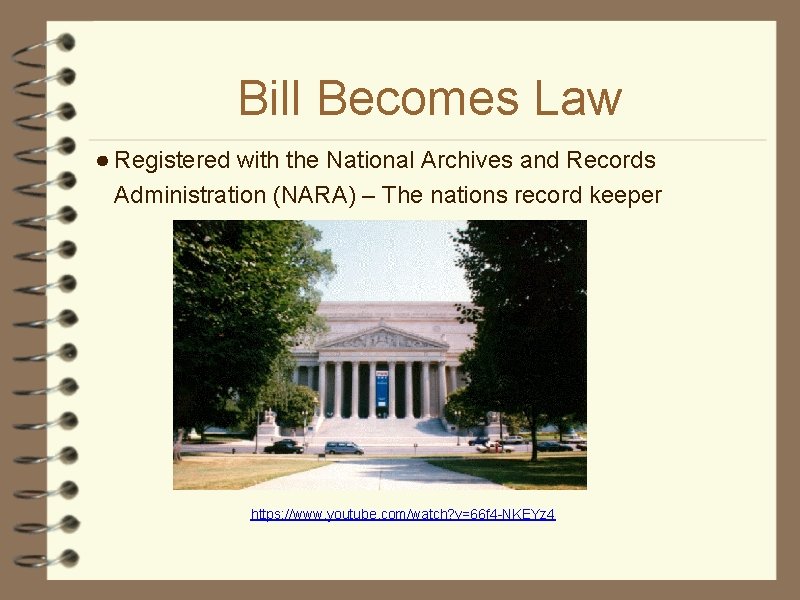
Bill Becomes Law ● Registered with the National Archives and Records Administration (NARA) – The nations record keeper https: //www. youtube. com/watch? v=66 f 4 -NKEYz 4
- Slides: 24