
How a Bill Becomes a Law The Journey
How a Bill Becomes a Law The Journey of a Bill
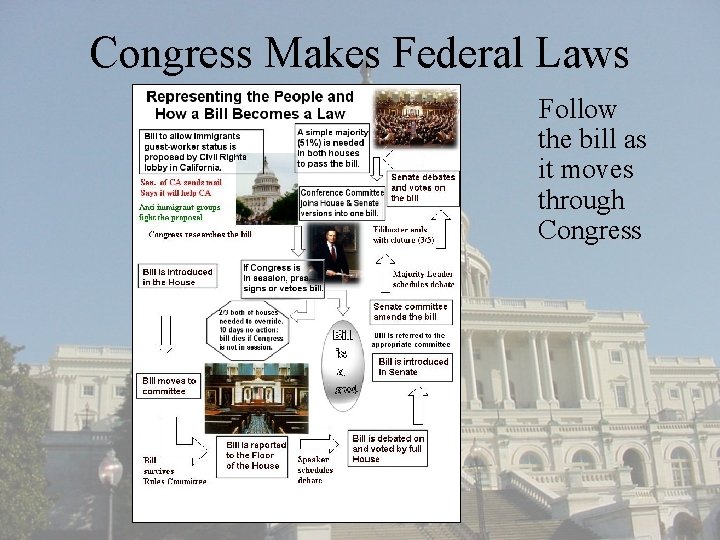
Congress Makes Federal Laws Follow the bill as it moves through Congress
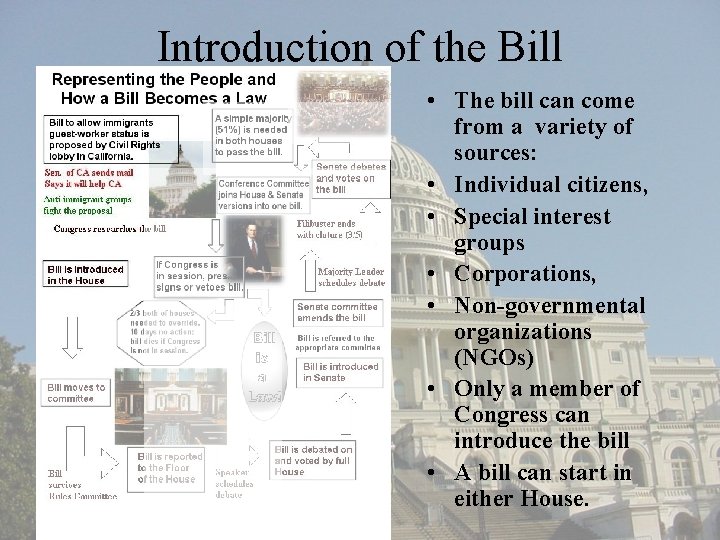
Introduction of the Bill • The bill can come from a variety of sources: • Individual citizens, • Special interest groups • Corporations, • Non-governmental organizations (NGOs) • Only a member of Congress can introduce the bill • A bill can start in either House.
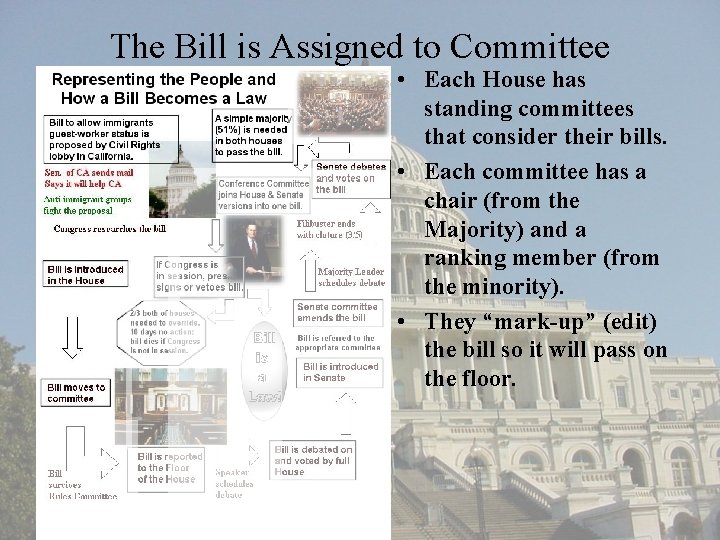
The Bill is Assigned to Committee • Each House has standing committees that consider their bills. • Each committee has a chair (from the Majority) and a ranking member (from the minority). • They “mark-up” (edit) the bill so it will pass on the floor.
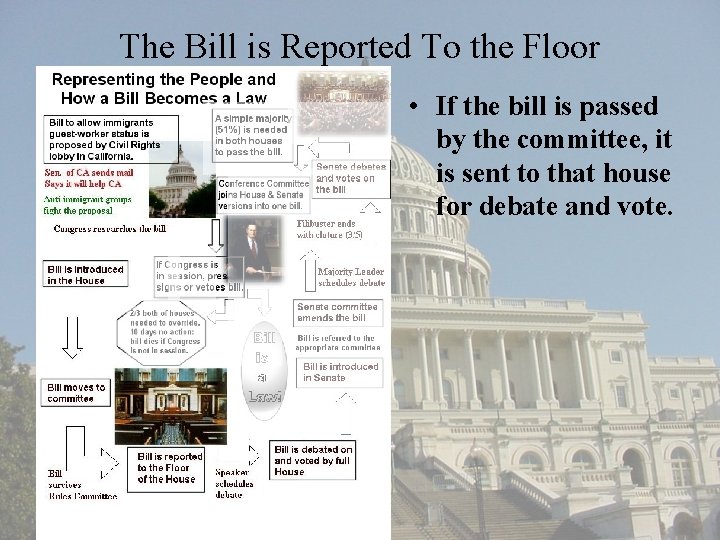
The Bill is Reported To the Floor • If the bill is passed by the committee, it is sent to that house for debate and vote.
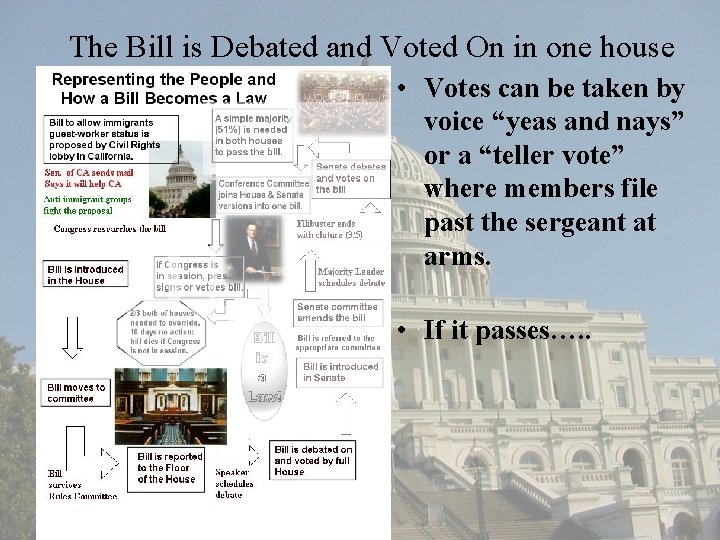
The Bill is Debated and Voted On in one house • Votes can be taken by voice “yeas and nays” or a “teller vote” where members file past the sergeant at arms. • If it passes…. .
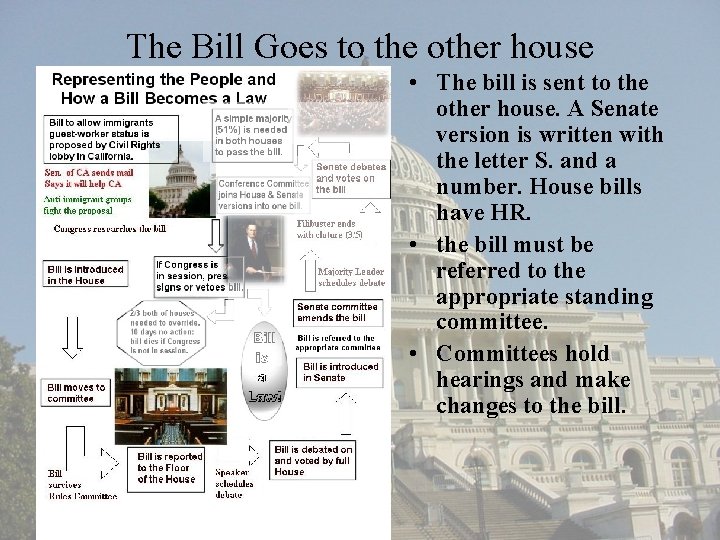
The Bill Goes to the other house • The bill is sent to the other house. A Senate version is written with the letter S. and a number. House bills have HR. • the bill must be referred to the appropriate standing committee. • Committees hold hearings and make changes to the bill.
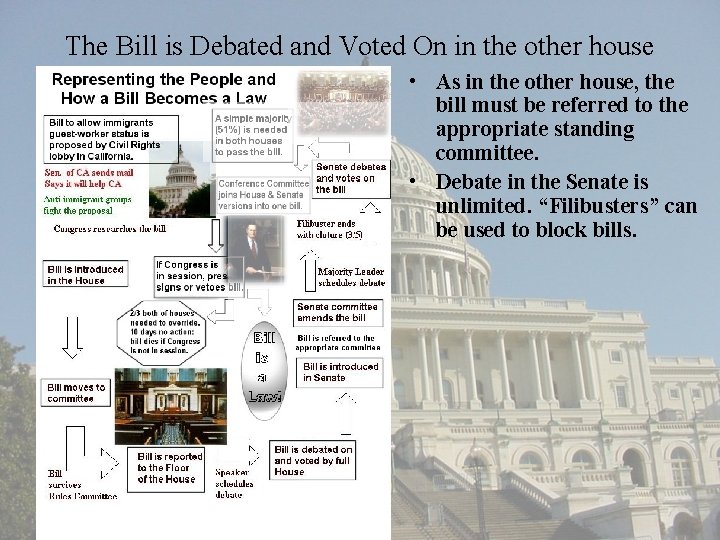
The Bill is Debated and Voted On in the other house • As in the other house, the bill must be referred to the appropriate standing committee. • Debate in the Senate is unlimited. “Filibusters” can be used to block bills.
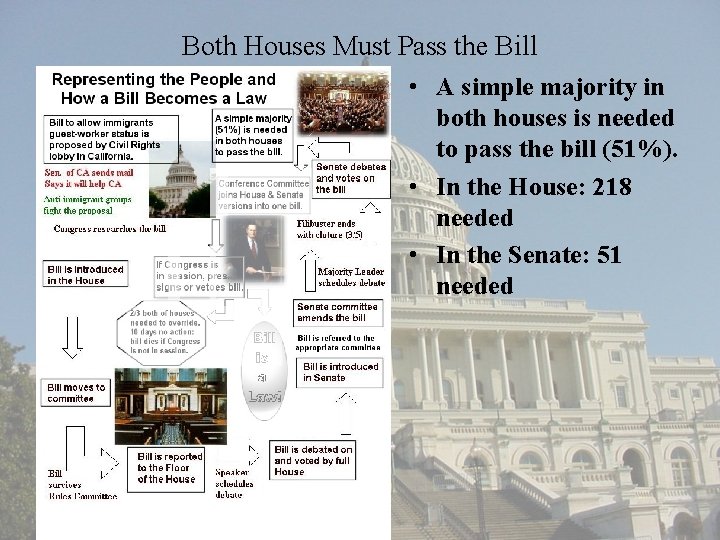
Both Houses Must Pass the Bill • A simple majority in both houses is needed to pass the bill (51%). • In the House: 218 needed • In the Senate: 51 needed
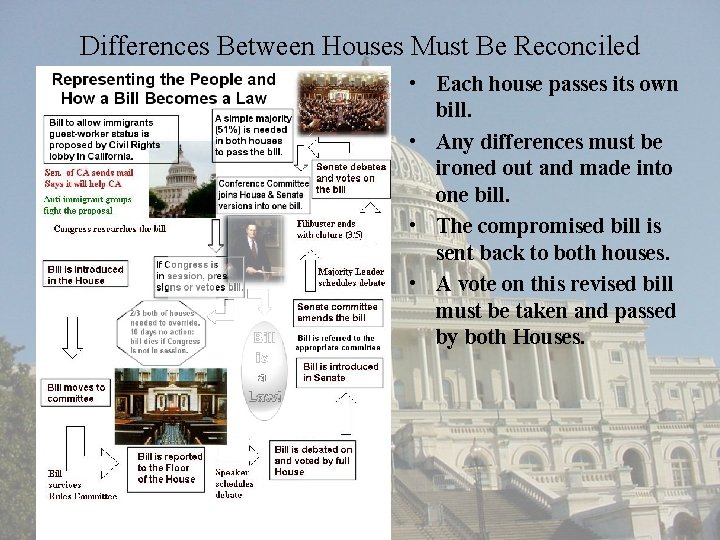
Differences Between Houses Must Be Reconciled • Each house passes its own bill. • Any differences must be ironed out and made into one bill. • The compromised bill is sent back to both houses. • A vote on this revised bill must be taken and passed by both Houses.
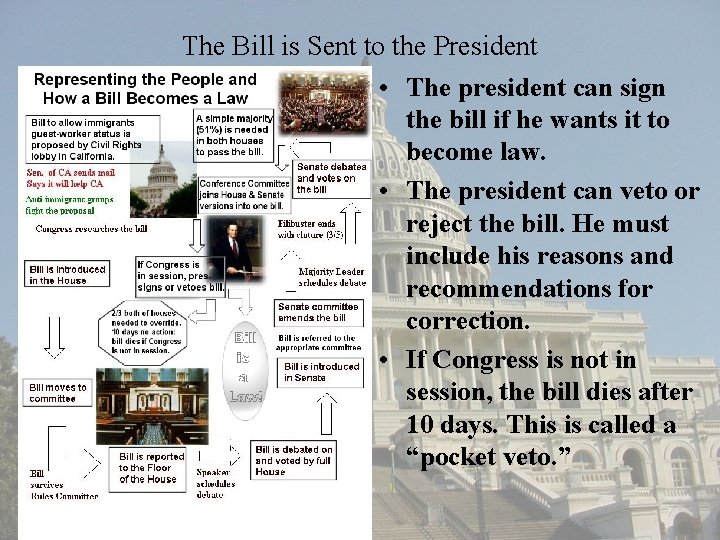
The Bill is Sent to the President • The president can sign the bill if he wants it to become law. • The president can veto or reject the bill. He must include his reasons and recommendations for correction. • If Congress is not in session, the bill dies after 10 days. This is called a “pocket veto. ”
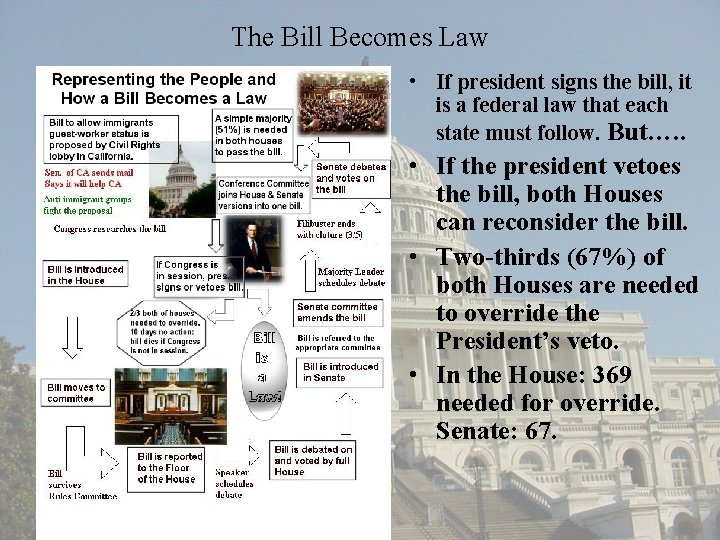
The Bill Becomes Law • If president signs the bill, it is a federal law that each state must follow. But…. . • If the president vetoes the bill, both Houses can reconsider the bill. • Two-thirds (67%) of both Houses are needed to override the President’s veto. • In the House: 369 needed for override. Senate: 67.
- Slides: 12