
How A Bill Becomes a Law Part II

How A Bill Becomes a Law Part II

Why do most bills never become laws? �Less than 5% become public laws �Process is long and complicated (100+ steps) Advantage: opponents Proponents must compromise (and not tick off powerful interests) �Sometimes just for show
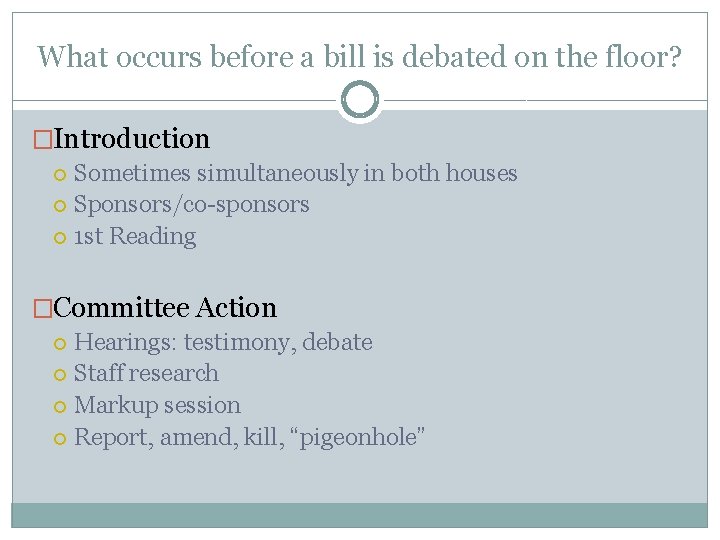
What occurs before a bill is debated on the floor? �Introduction Sometimes simultaneously in both houses Sponsors/co-sponsors 1 st Reading �Committee Action Hearings: testimony, debate Staff research Markup session Report, amend, kill, “pigeonhole”
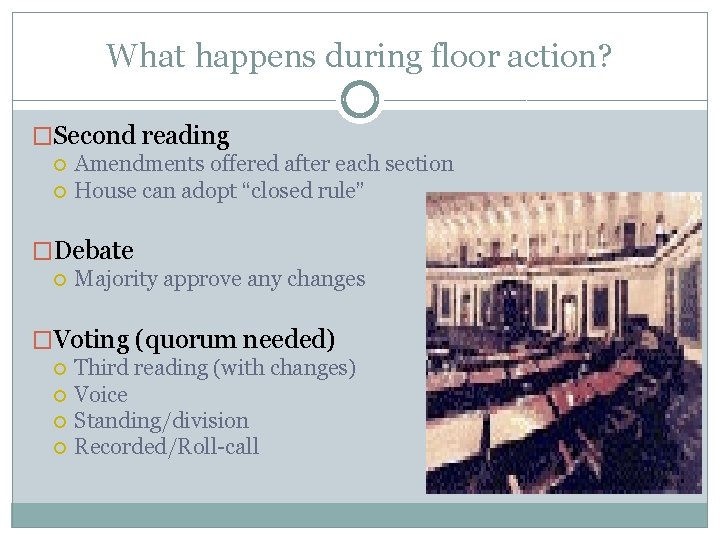
What happens during floor action? �Second reading Amendments offered after each section House can adopt “closed rule” �Debate Majority approve any changes �Voting (quorum needed) Third reading (with changes) Voice Standing/division Recorded/Roll-call

Voting on a Bill �Voice Vote – simple yea or nay votes on a bill �Roll-call Vote – official record of a vote on a major issue �If a majority pass the bill, the bill is sent to the President - if neither House or Senate pass a bill, then the bill dies
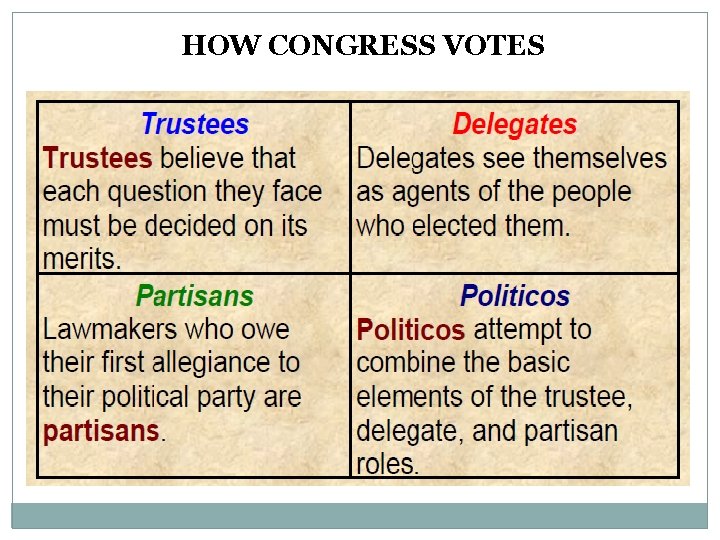
HOW CONGRESS VOTES
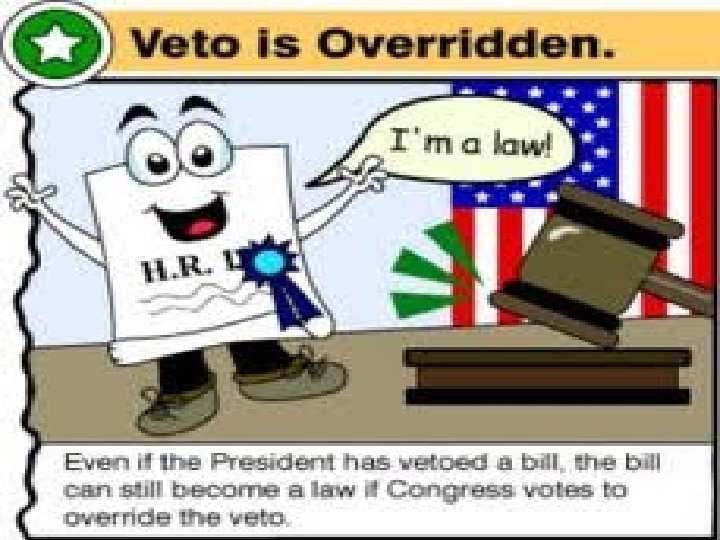
Presidential Action �If President signs the bill, it becomes a law �Veto – rejection of a proposed bill by the President �Pocket Veto – President “vetoes” the bill by letting it sit on his desk for 10 days while Congress is adjourned �Congress can override Presidential veto by 2/3 rds majority in the House and Senate
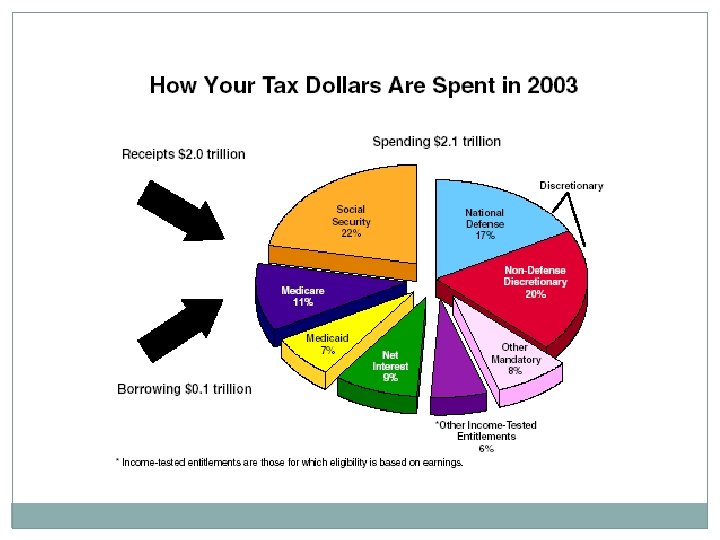
What is the role of Congress regarding spending money? �U. S. spends over $2 trill/yr. (debt v. deficit) �Congress appropriates—approves—government spending �President submits a budget proposal �H & S Appropriations Committees Hear testimony on value of gov. programs �Disposable vs. Discretionary (2: 1) Disposable includes entitlement programs such as Social Security, Medicare, Medicaid, etc.
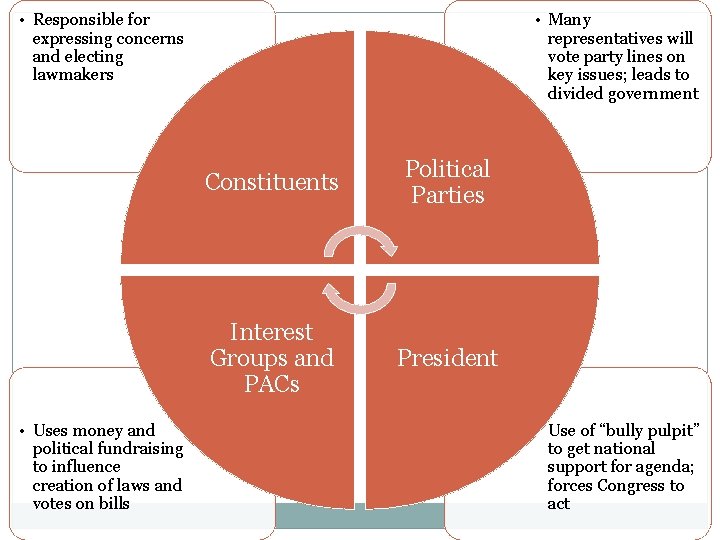
• Responsible for expressing concerns and electing lawmakers • Uses money and political fundraising to influence creation of laws and votes on bills • Many representatives will vote party lines on key issues; leads to divided government Constituents Political Parties Interest Groups and PACs President • Use of “bully pulpit” to get national support for agenda; forces Congress to act
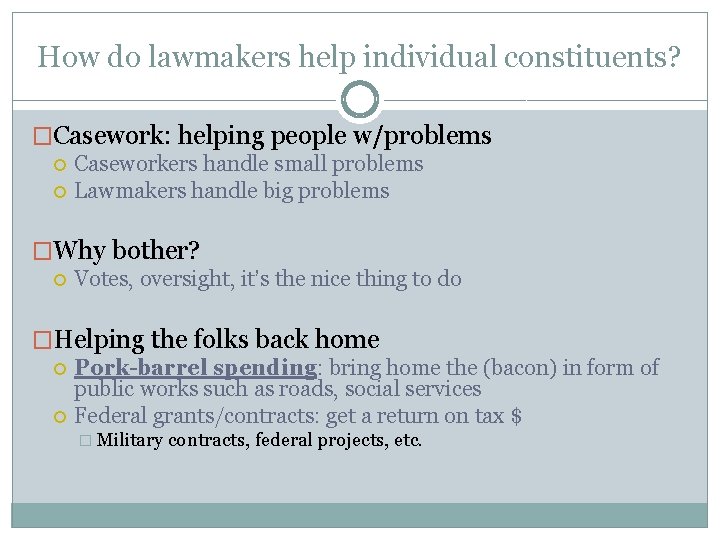
How do lawmakers help individual constituents? �Casework: helping people w/problems Caseworkers handle small problems Lawmakers handle big problems �Why bother? Votes, oversight, it’s the nice thing to do �Helping the folks back home Pork-barrel spending: bring home the (bacon) in form of public works such as roads, social services Federal grants/contracts: get a return on tax $ � Military contracts, federal projects, etc.
- Slides: 13