
How a Bill Becomes a Law Introduction of
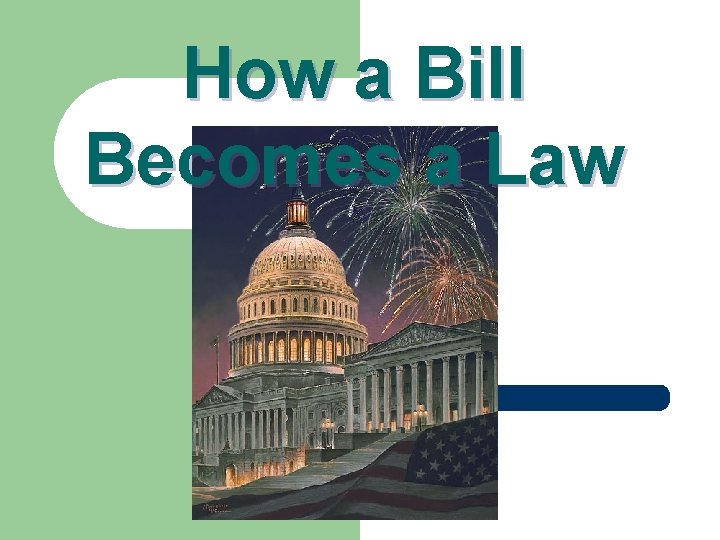
How a Bill Becomes a Law
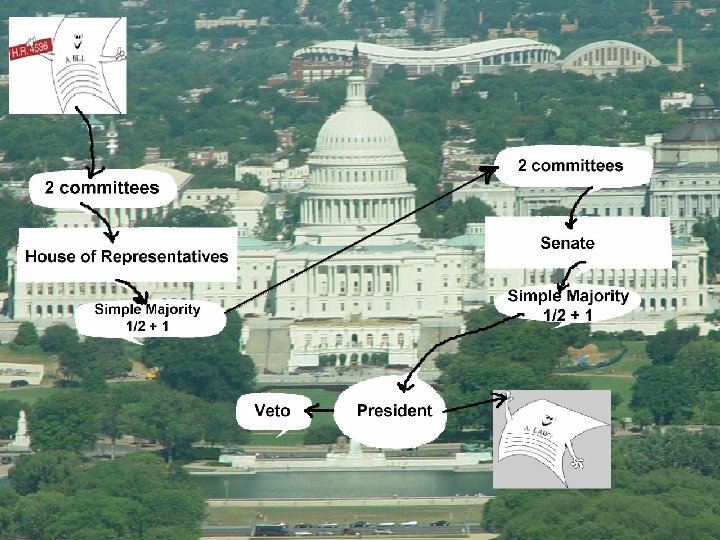
Introduction of a Bill l l **An idea for a bill may come from anybody (citizens, interest groups, elected officials and even the President), and can be about anything. **However only Members of Congress can propose/introduce a bill. Bills can be introduced at any time the House is in session. A Representative or Senator who introduces a bill becomes that bill's sponsor. A bill may also have cosponsors. A bill's type must be determined. A private bill affects a specific person or organization rather than the population at large. A public bill is one that affects the general public.
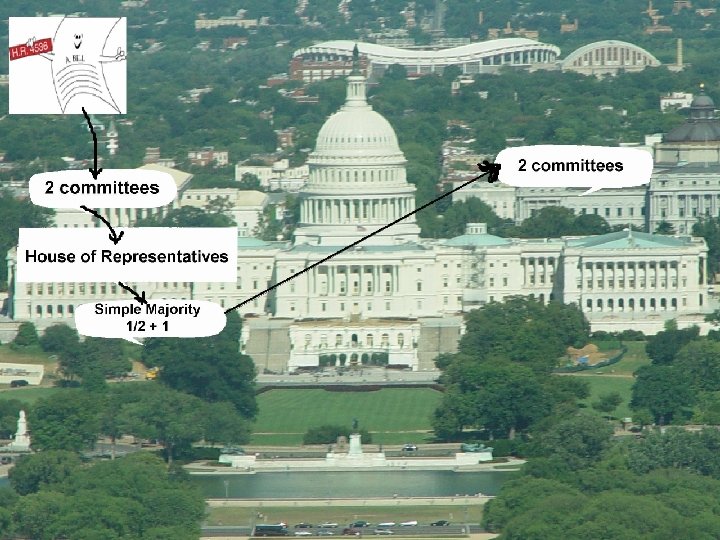
Propose a Bill l l **In the House, a proposed bill is introduced by placing it in the "hopper, " which is located at the speaker's platform. In the Senate, a proposed bill is introduced by placing it on the Presiding Officer's desk or by formally introducing it on the Senate Floor.
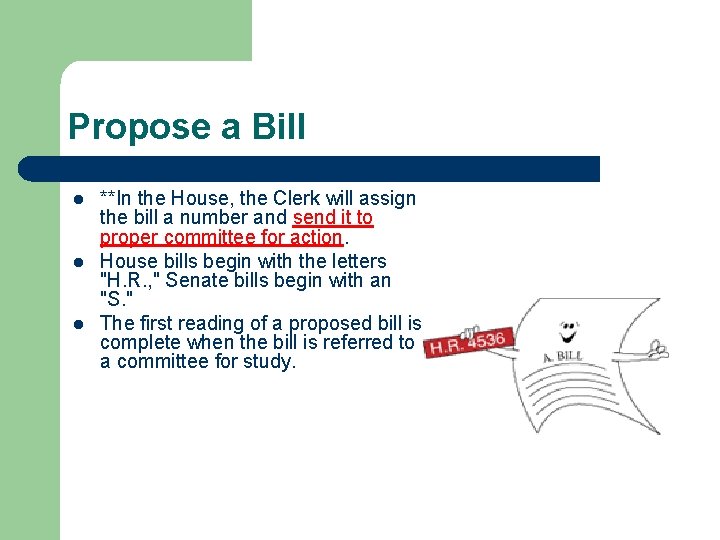
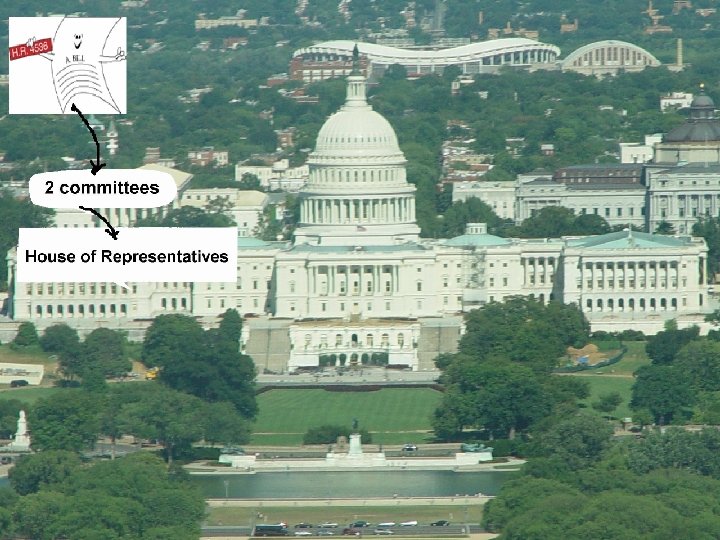
Propose a Bill l **In the House, the Clerk will assign the bill a number and send it to proper committee for action. House bills begin with the letters "H. R. , " Senate bills begin with an "S. " The first reading of a proposed bill is complete when the bill is referred to a committee for study.

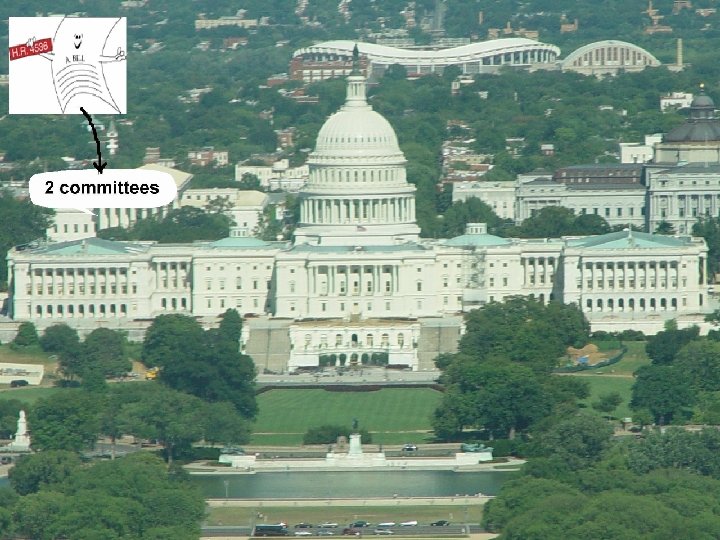
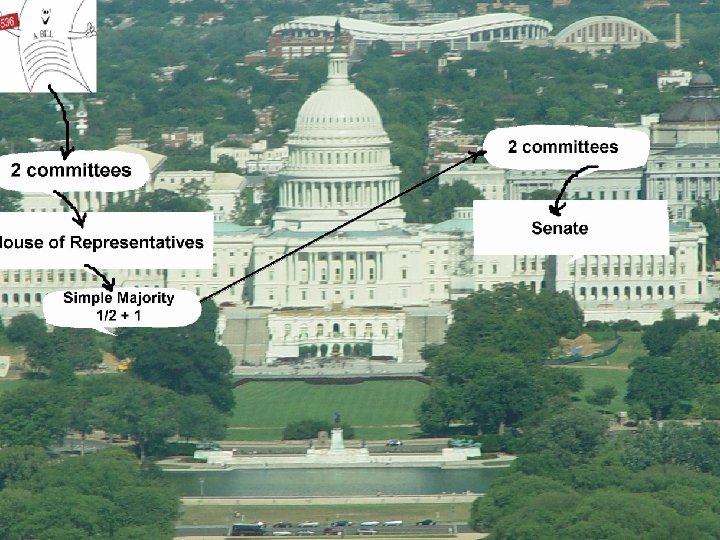
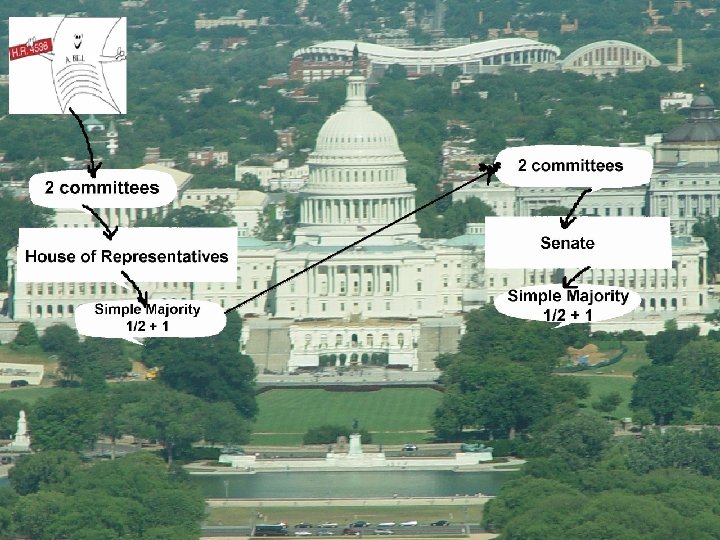
Committee Action l l l There are 19 House standing committees and 16 Senate committees. **Often the committee's first action on a bill is to send the bill to a subcommittee for study (expert witnesses and analysis). A committee may simply stop action or "table" a bill, when a committee decides the bill is unwise or unnecessary. A committee will meet to markup the proposed bill and may or may not make changes to it. **Committee members vote to accept or reject the changes, this is called reporting on the bill.
Subcommittee l l l Once the bill is sent to a subcommittee, it is placed on their calendar for study. Subcommittees hold hearings, giving experts, supporters, and opponents a chance to voice their views. A bill is tabled when a subcommittee decides the bill is unwise or unnecessary. If changes are needed, a subcommittee will meet to markup the bill. Subcommittee members vote to accept or reject the changes.
Report by Committee l l The committee votes on the bill after it is debated and/or amended. The bill is then sent to the House floor for consideration.
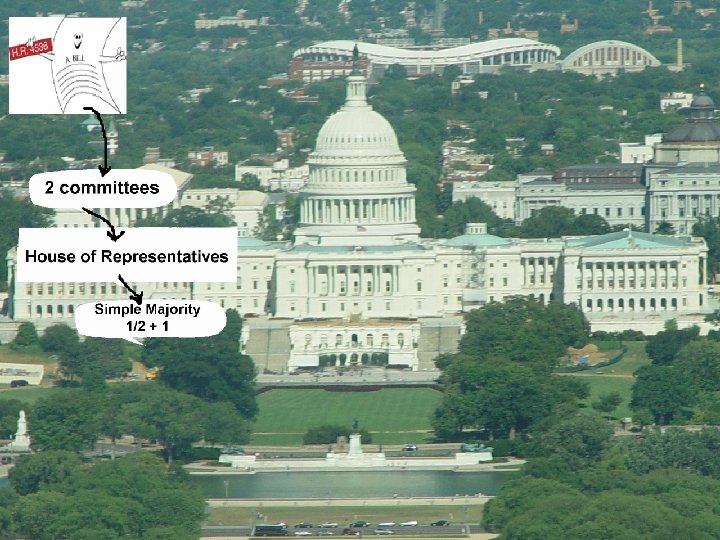
Consider the Bill l **Floor action begins on the House floor and members carefully consider and debate the bill. Following debate, the second reading of the bill begins in a sectionby-section manner, during which amendments may be offered. **At the conclusion of all amendment debate, the bill is put to a vote in the House.
Vote on a Bill l l The bill is read by title only and put to a vote. Members in attendance will vote to pass or not to pass the bill. Most voting in the House chamber is done electronically by Members recording their votes through the Electronic Voting System. Members of the Senate cast their votes by non-electronic means. Members may vote "Yea" for approval, "Nay" for disapproval, or "Present. "
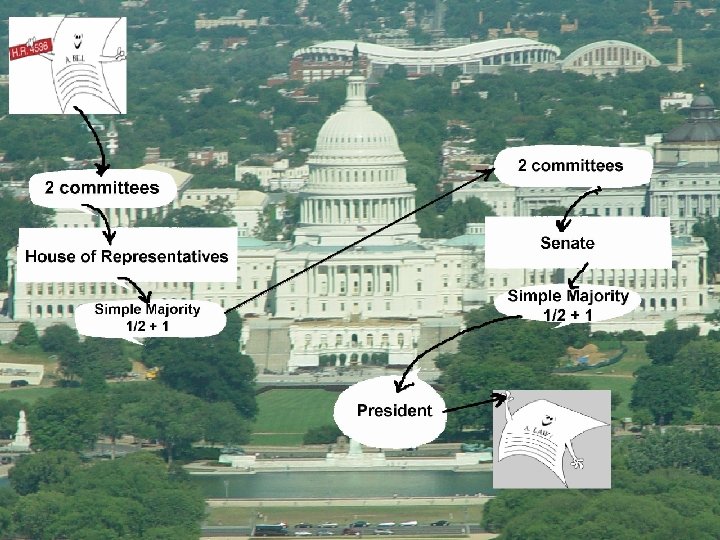
Refer to Second Chamber l l l **The bill is then referred/sent to the Senate for passage. Members may choose to ignore the bill and continue to work on their own legislation (tabling a bill). Debate in the Senate is not limited where cloture requires 60 votes. An ongoing Senate debate is known as a filibuster and is used to hold the floor and defeat a bill. Members may vote to pass or not to pass the bill. If the bill passes with different language, it must be sent to a conference committee. **Differences must be agreed upon before the bill is enrolled (sent to the President for signature).
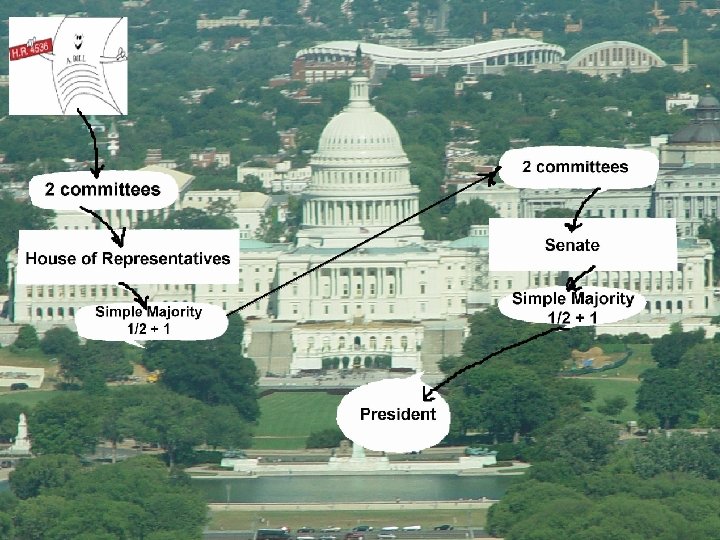
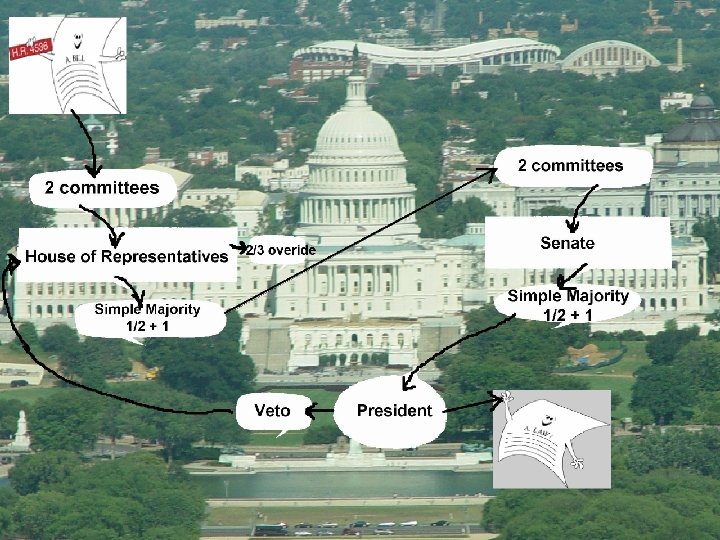
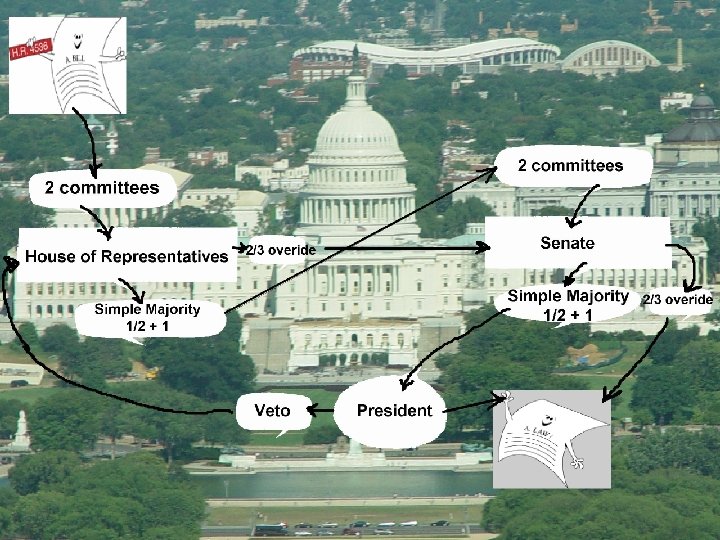
Final Action l l l **The President signs the bill and it becomes law OR **The President vetoes its passage and its back to Congress. If the president takes no action for ten days and Congress is in session, the bill becomes law. A pocket veto occurs when the president takes no action and Congress has adjourned its session. In this case, the bill dies.
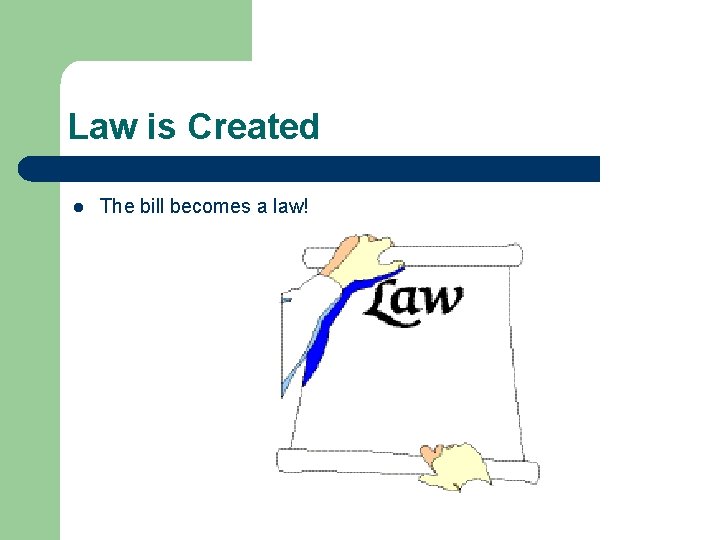
Law is Created l The bill becomes a law!
Veto l l l The bill returns to the House of origin. Objections are read and debated. If the House wishes to override the veto, a vote is taken. If the House chooses not to vote, the bill is stalled. A two-thirds vote or greater is needed in both Houses to override the President's veto.
- Slides: 25