
How a Bill Becomes a Law Chapter 12
How a Bill Becomes a Law Chapter 12, sections 3 & 4
The First Step – An Idea l l l The first thing that needs to happen is a citizen or group of citizens (constituents) have an idea about a concern that they may have. Does anyone have a piece that looks like light bulb? Please come forward and read your information.
The First Step – An Idea • • • Following the BP Oil spill, President Obama temporarily stopped drilling for resources in the Gulf of Mexico. Companies have permits allowing them to drill, but in light of the BP spill in the Gulf, the federal government wants to reconsider the permits. Permit holders want to drill without further government approval.
A member of the House introduces a bill. • Will Tim Murphy, the Bill and the Hopper please come forward. • Tim Murphy from PA agrees to write the bill and introduce it. • Congressman Murphy, as the SPONSOR of the bill, please place your copy of the bill in the Hopper – a wooden box in the House.
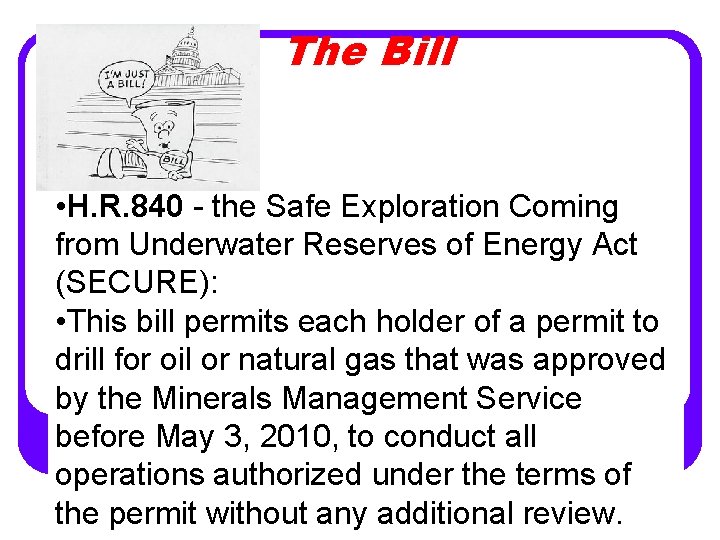
The Bill • H. R. 840 - the Safe Exploration Coming from Underwater Reserves of Energy Act (SECURE): • This bill permits each holder of a permit to drill for oil or natural gas that was approved by the Minerals Management Service before May 3, 2010, to conduct all operations authorized under the terms of the permit without any additional review.
A Bill is reviewed by committees. Will the following House committees please come forward: • The Energy and Commerce Committee • The Natural Resources Committee

A Bill is reviewed by committees. A Standing Committee (a small, permanent group made up of legislators who studies and reports on bills) reviews the bill and does one of three things: 1. Sends the bill back with no changes (rare). 2. Makes amendments and sends it back. 3. Rewrites the bill and replaces the original 4. Tables the bill -- In other words, they can do nothing.
A Bill is reviewed by committees. House Energy and Commerce Committee – please read your recommendation.
A Bill is reviewed by committees. House Natural Resources Committee – please read your recommendation

The Bill may be debated in the House. • Please come forward Majority and Minority leaders. • Once out of committee, the bill is scheduled on one of many House Calendars for debate. • Majority and minority leaders in the House will set the rules for debate (time limit, procedures) of the House of Representatives.
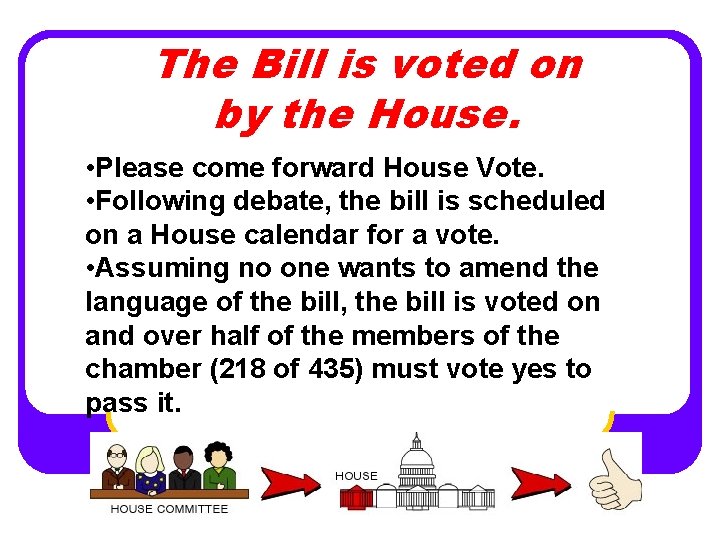
The Bill is voted on by the House. • Please come forward House Vote. • Following debate, the bill is scheduled on a House calendar for a vote. • Assuming no one wants to amend the language of the bill, the bill is voted on and over half of the members of the chamber (218 of 435) must vote yes to pass it.
The Bill moves to the US Senate • Please come forward Senators Toomey & Casey. • If the bill is passed by the House, it then moves to the other branch of Congress, the Senate. • Senators can choose to sponsor a bill in the Senate. Will either of the Senators sponsor S. 235: the Safe Exploration Coming from Underwater Reserves of Energy Act?
A Bill is reviewed by Senate committees. Will the following Senate committee please come forward and share your recommendation: • The Senate Energy & Natural Resources Committee
The Bill is debated in the Senate l l l Once out of committee, the bill is called to the floor for debate by the Senate Majority Leader. Debate is virtually unlimited in the Senate. Will the FILIBUSTER please come forward and explain yourself.
Filibuster l l l The Senate can FILIBUSTER a vote. In the United States Senate, rules permit a senator, or a series of senators, to speak for as long as they wish and on any topic they choose. unless A filibuster prevents a vote on the bill. It takes 60 senators to end a filibuster. This is called cloture.
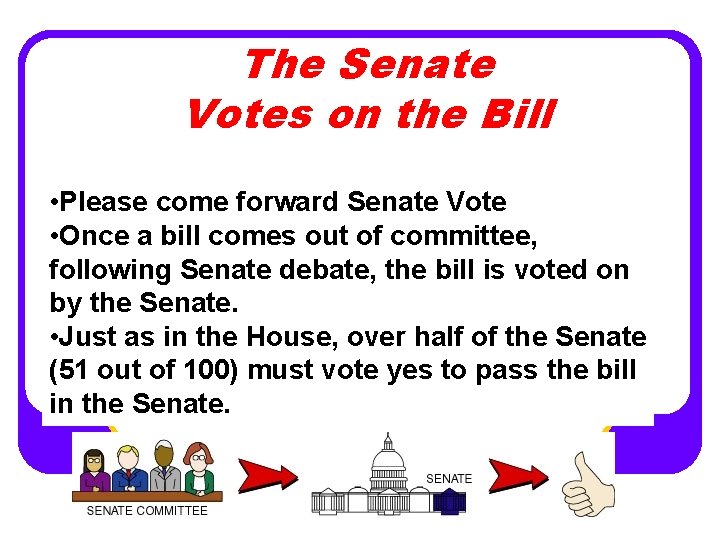
The Senate Votes on the Bill • Please come forward Senate Vote • Once a bill comes out of committee, following Senate debate, the bill is voted on by the Senate. • Just as in the House, over half of the Senate (51 out of 100) must vote yes to pass the bill in the Senate.
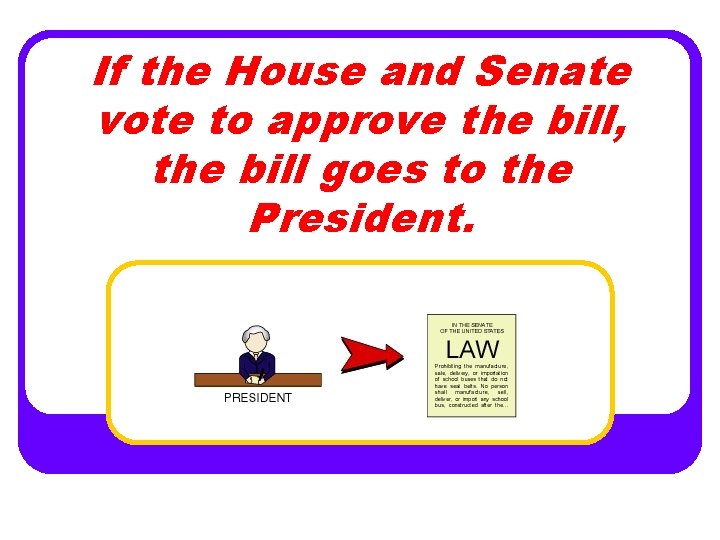
If the House and Senate vote to approve the bill, the bill goes to the President.
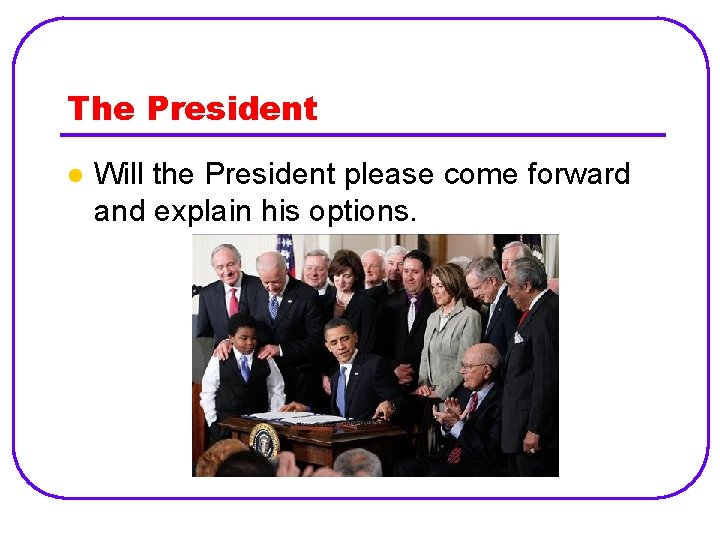
The President l Will the President please come forward and explain his options.
The President has 4 options 1. 2. 3. 4. President signs it, it becomes LAW President VETOs the bill, but Congress can override with 2/3 majority in each chamber. If the President fails to act in 10 days, it becomes LAW POCKET VETO occurs if Congress adjourns within 10 days, and the president does nothing with the bill.
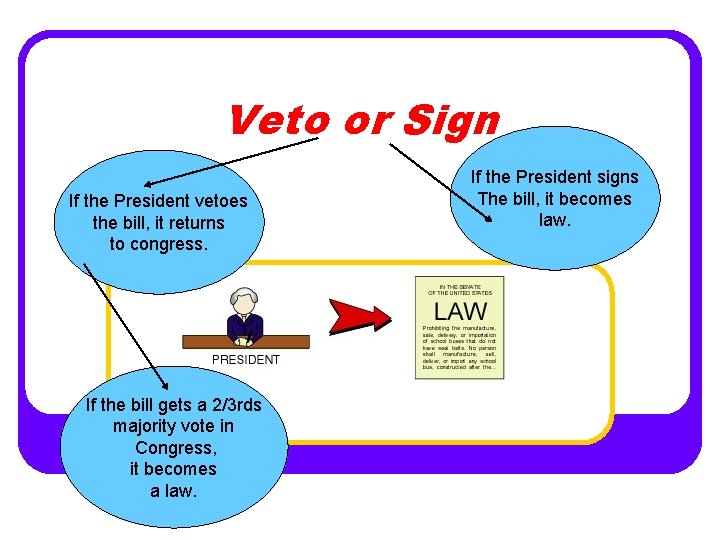
Veto or Sign If the President vetoes the bill, it returns to congress. If the bill gets a 2/3 rds majority vote in Congress, it becomes a law. If the President signs The bill, it becomes law.
- Slides: 20