
How a 4 Stroke Engines Work Student Learning
- Slides: 24
How a 4 Stroke Engines Work
Student Learning Objectives Define internal combustion engine and explain its principal parts. Describe the four events of the internal combustion engine. Explain the differences in operation of four-stroke and two-stroke internal combustion engines. Classify internal combustion engines.
Internal combustion engines and parts A internal combustion engine is a device that converts the energy contained in fuel into rotating power Various parts are housed within an engine block
4 parts of the engine block 1) Cylinder – the part of the engine block where the combustion takes place. Varies from 1 to 8 2) Piston – a plunger with rings that fit against the inside cylinder walls and prevent air from leaking past
4 parts of the engine block 3) Connecting rod – connects the piston to the crankshaft. Fastened by the wrist pin 4) Crankshaft – shaft with offsets to which the connecting rods are attached
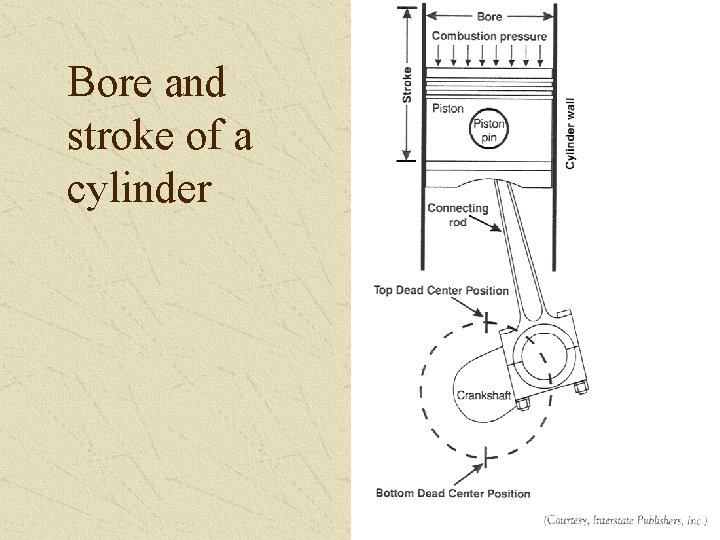
Bore and stroke of a cylinder
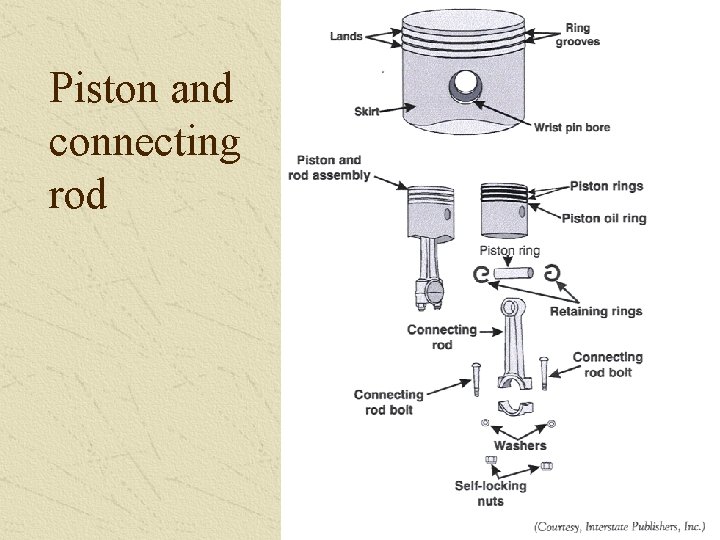
Piston and connecting rod
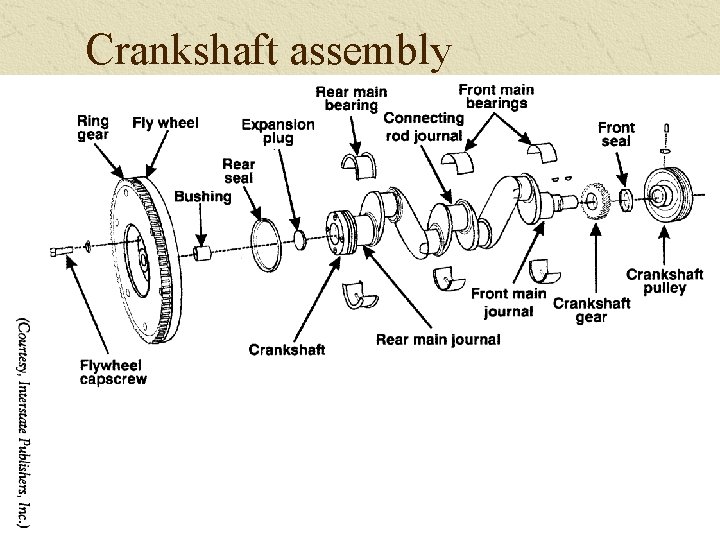
Crankshaft assembly
Cycles A cycle is a series of events that are repeated over and over again Four strokes make up a cycle: Intake Compression Power Exhaust
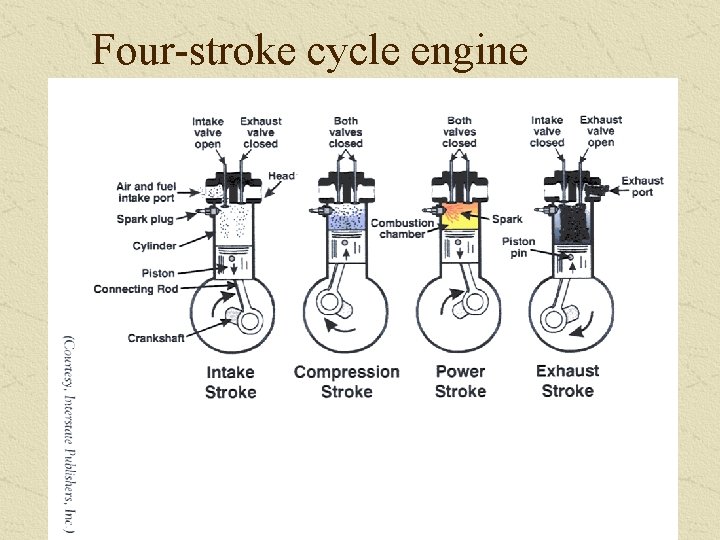
Intake The fuel and air required for combustion goes in the chamber Exhaust valve: closed Intake valve: open Compression The Piston compresses the fuel-air mixture in the combustion chamber Intake and exhaust valves are closed
Power Spark Plug ignites the mixture forcing the piston down turning the crankshaft creating power Both Valves are closed Exhaust Piston rises removing smoke from the chamber out the exhaust valve Exhaust Valve: open Intake Valve: Closed
Four-stroke cycle engine
Differences between fourand two-stroke engines A four-stroke engine has a series of four events that must be completed within the cycle A two-stroke engine completes the same series of four events in two strokes
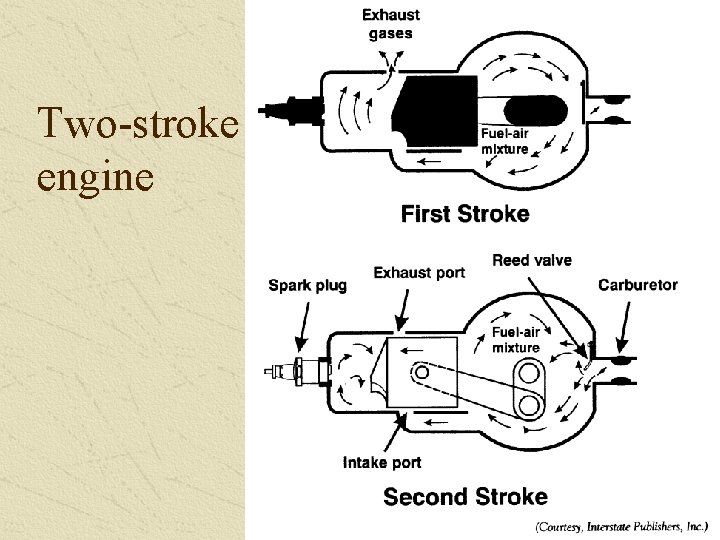
Two-stroke engine Completes the same four events in two strokes. 1 st stroke – release of exhaust gasses drives the piston downward 2 nd stroke – release of exhaust gasses drives the piston downwar Reed valves – one-way directional valves that allow the air-fuel mixture to enter the crankcase
Two-stroke engine
Classifying internal combustion engines There are many ways by which internal combustion engines are classified Piston strokes Engine power Number of cylinders Engine displacement Cylinder arrangement Fuel ignition
Piston strokes Two-stroke Four-stroke
Engine power Small engines – produce less than 25 horsepower Large engines – produce more than 25 horse power
Number of cylinders Single-cylinder – engines have only one cylinder Multi-cylinder – engines have 2, 3, 4, 5, 6, 8, or more cylinders
Engine displacement Describes the total swept volume of the engine cylinders as pistons complete one stroke Expressed as either cubic inches or cubic centimeters
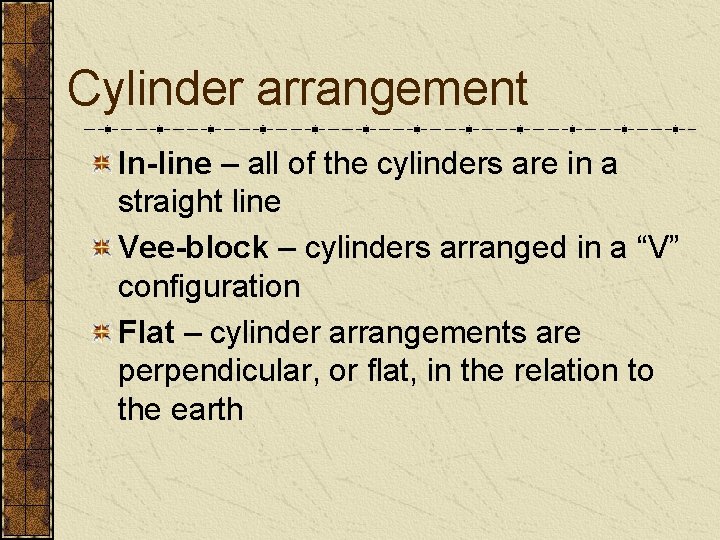
Cylinder arrangement In-line – all of the cylinders are in a straight line Vee-block – cylinders arranged in a “V” configuration Flat – cylinder arrangements are perpendicular, or flat, in the relation to the earth
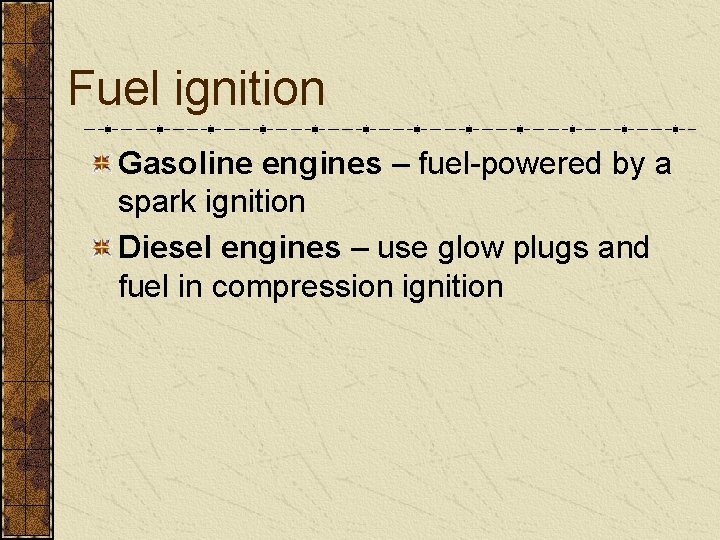
Fuel ignition Gasoline engines – fuel-powered by a spark ignition Diesel engines – use glow plugs and fuel in compression ignition
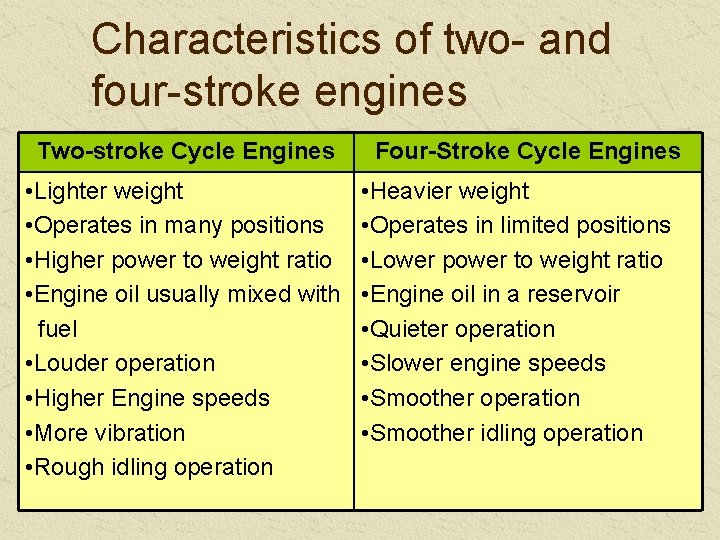
Characteristics of two- and four-stroke engines Two-stroke Cycle Engines • Lighter weight • Operates in many positions • Higher power to weight ratio • Engine oil usually mixed with fuel • Louder operation • Higher Engine speeds • More vibration • Rough idling operation Four-Stroke Cycle Engines • Heavier weight • Operates in limited positions • Lower power to weight ratio • Engine oil in a reservoir • Quieter operation • Slower engine speeds • Smoother operation • Smoother idling operation
Review/Summary What is an internal combustion engine? What are its principal parts? Describe the four events of the internal combustion engine. Explain the difference between fourand two-stroke internal combustion engines How are internal combustion engines classified?