
Housing Stabilization Services Minnesota Department of Human Services
Housing Stabilization Services Minnesota Department of Human Services Housing and Support Services Division Presenters: Bekah Kaufenberg-Satre, Mark Caldwell and Jensina Rosen
Housing Stabilization Services 11/18/20 A new Medicaid benefit available as of July 20, 2020 to help people with disabilities and seniors find and keep housing. 2
Goals of the Services Support an individual's transition to housing Increase long-term stability in housing Avoid future periods of homelessness or institutionalization 11/18/20 3
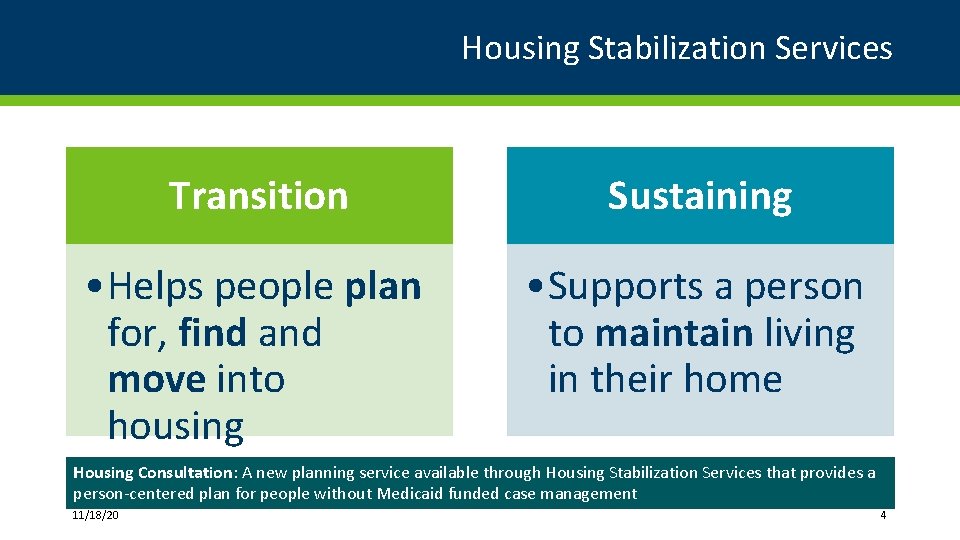
Housing Stabilization Services Transition Sustaining • Helps people plan for, find and move into housing • Supports a person to maintain living in their home Housing Consultation: A new planning service available through Housing Stabilization Services that provides a person-centered plan for people without Medicaid funded case management 11/18/20 4

What are transition/sustaining services? • Transition Services • Sustaining Services • 150 hours per transition • 150 hours per year • Housing search and application process • Develop and update a crisis or safety plan • Budgeting • Educate on tenant-landlord rights and responsibilities • Organizing move and locating funding for deposits or household needs • Identifying benefits to help promote housing stability 12/25/2021 • Advocacy to prevent eviction • Training on being a good tenant, lease compliance, and household management 5
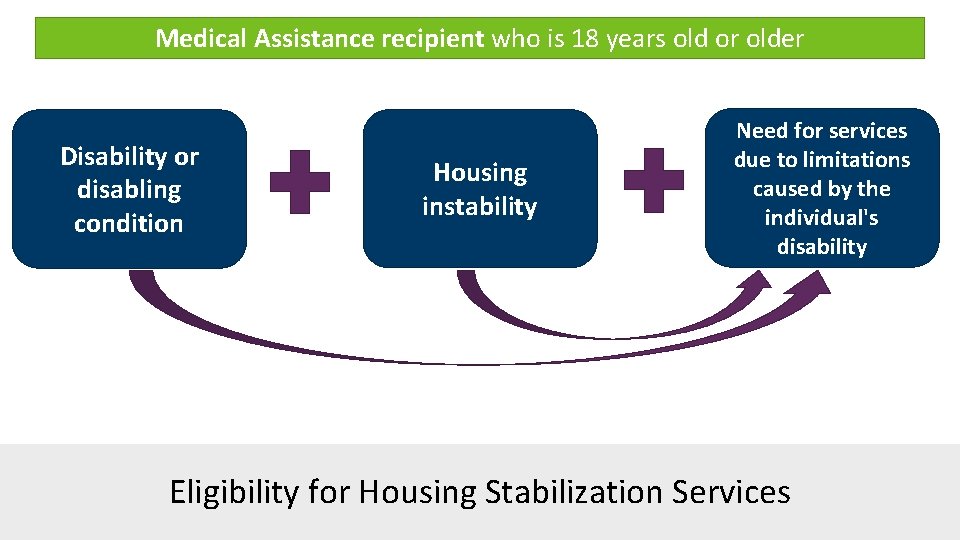
Medical Assistance recipient who is 18 years old or older Disability or disabling condition Housing instability Need for services due to limitations caused by the individual's disability Eligibility for Housing Stabilization Services
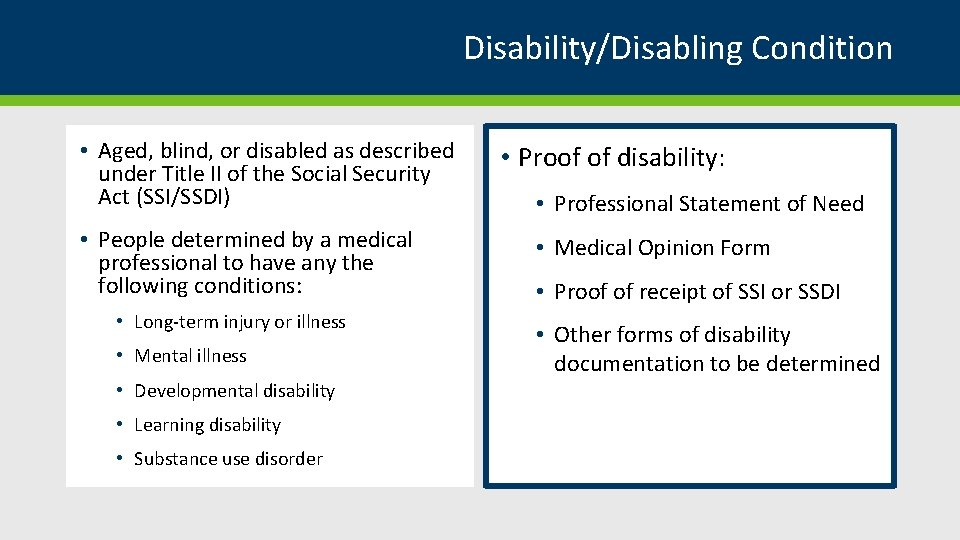
Disability/Disabling Condition • Aged, blind, or disabled as described under Title II of the Social Security Act (SSI/SSDI) • People determined by a medical professional to have any the following conditions: • Long-term injury or illness • Mental illness • Developmental disability • Learning disability • Substance use disorder • Proof of disability: • Professional Statement of Need • Medical Opinion Form • Proof of receipt of SSI or SSDI • Other forms of disability documentation to be determined
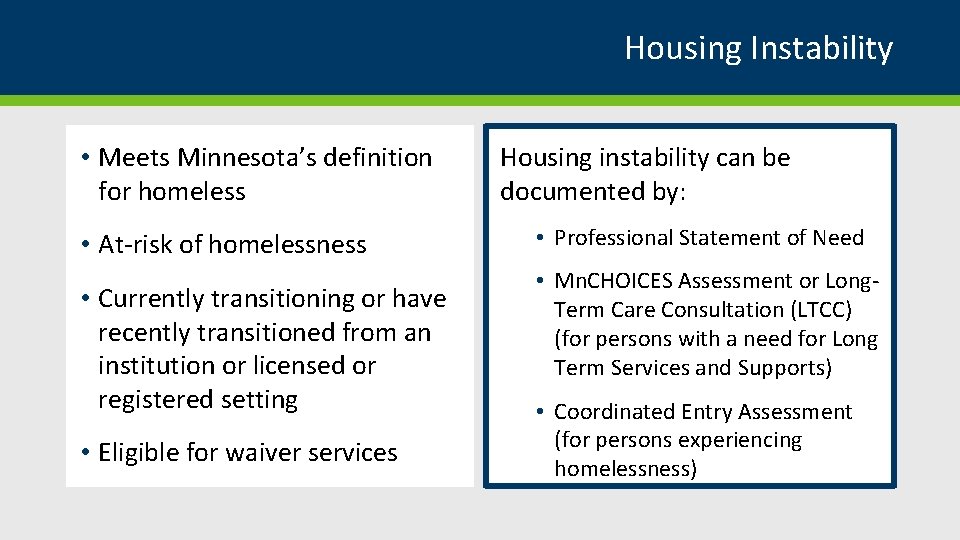
Housing Instability • Meets Minnesota’s definition for homeless • At-risk of homelessness • Currently transitioning or have recently transitioned from an institution or licensed or registered setting • Eligible for waiver services Housing instability can be documented by: • Professional Statement of Need • Mn. CHOICES Assessment or Long. Term Care Consultation (LTCC) (for persons with a need for Long Term Services and Supports) • Coordinated Entry Assessment (for persons experiencing homelessness)

Assessed Need for Services • Requires assistance due to their disability in one of the following areas: • Communication • Mobility • Decision-making • Managing challenging behaviors Assessed need for services can be documented by: • Professional Statement of Need • Mn. CHOICES Assessment or Long. Term Care Consultation (LTCC) (for persons with a need for Long Term Services and Supports) • Coordinated Entry Assessment (for persons experiencing bility a t s n i homelessness) e as housing Sam
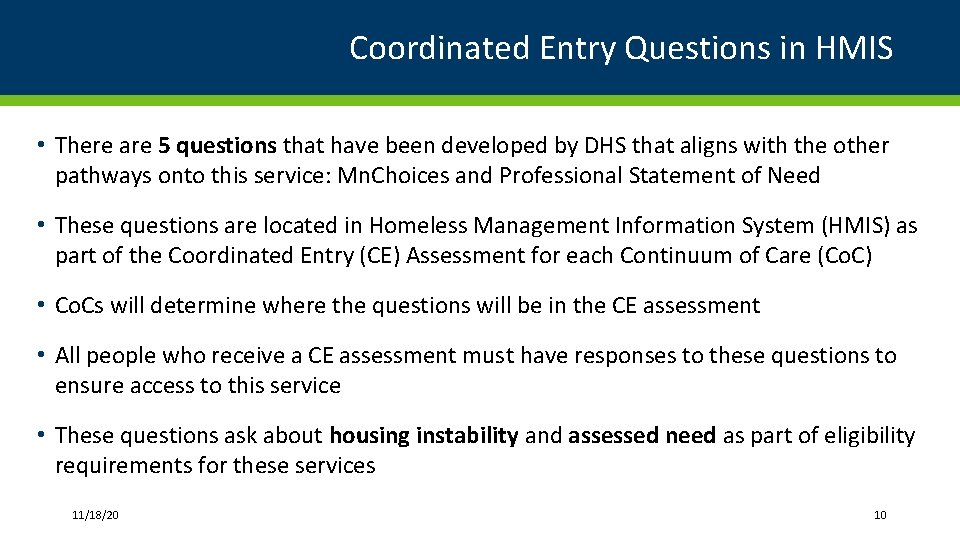
Coordinated Entry Questions in HMIS • There are 5 questions that have been developed by DHS that aligns with the other pathways onto this service: Mn. Choices and Professional Statement of Need • These questions are located in Homeless Management Information System (HMIS) as part of the Coordinated Entry (CE) Assessment for each Continuum of Care (Co. C) • Co. Cs will determine where the questions will be in the CE assessment • All people who receive a CE assessment must have responses to these questions to ensure access to this service • These questions ask about housing instability and assessed need as part of eligibility requirements for these services 11/18/20 10
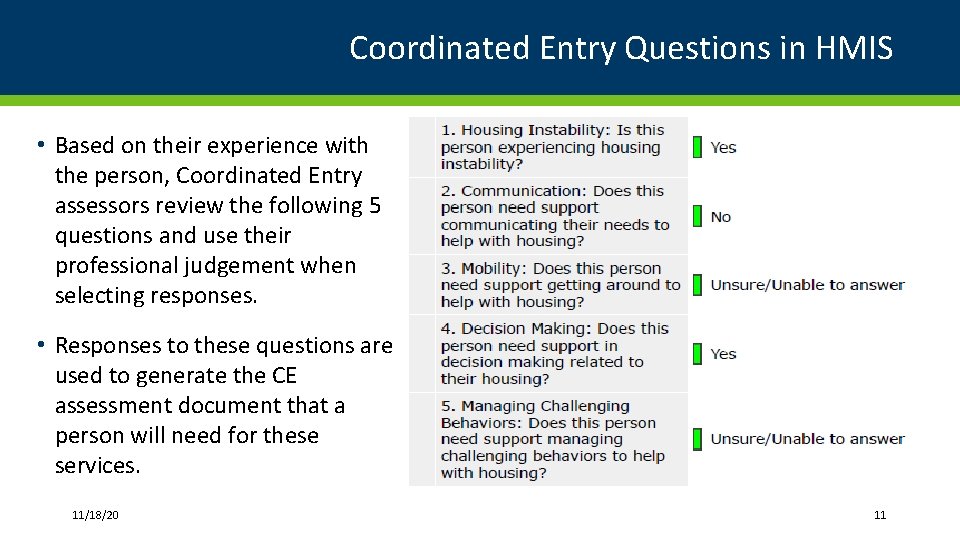
Coordinated Entry Questions in HMIS • Based on their experience with the person, Coordinated Entry assessors review the following 5 questions and use their professional judgement when selecting responses. • Responses to these questions are used to generate the CE assessment document that a person will need for these services. 11/18/20 11
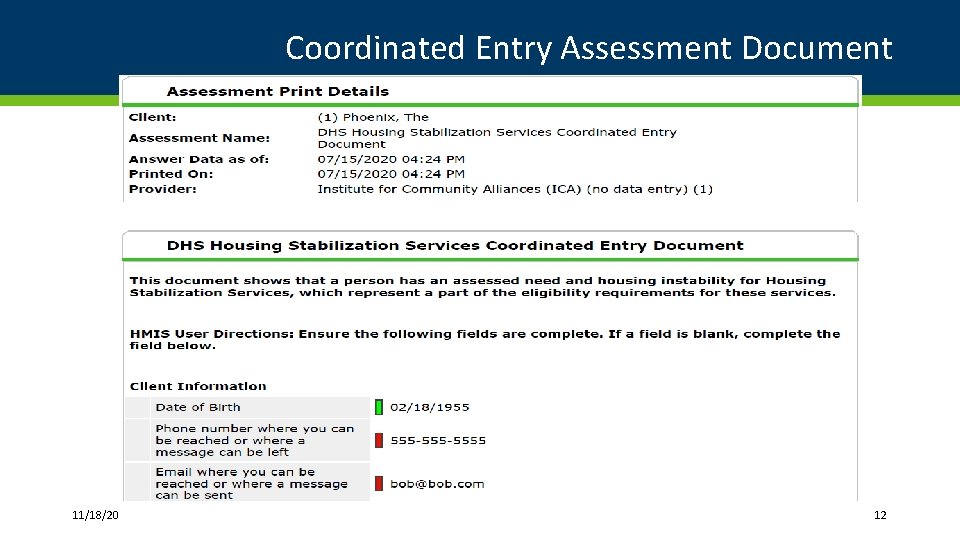
Coordinated Entry Assessment Document 11/18/20 12
Coordinated Entry Assessment Document • This document can be printed for the person. It will also be saved as a PDF that can be sent to an email address or stored in their “Vault” on HB 101. org. • In addition to this document, a person will still need proof of disability and a person-centered plan to meet the all of the eligibility criteria. • Assessors and other CE staff can direct people to get in touch with their targeted or waiver case manager to complete their plan. • If someone doesn’t have a targeted or waiver case manager, you can direct them to an enrolled Housing Consultant who can complete their plan. • Organizations involved in the CE process may want to enroll as providers to help get people onto services and add a new revenue stream to pay for staff. 11/18/20 13
Home and Community Based Service: Person-Centered Plan Requirements Everyone receiving Housing Stabilization Services will be required to have a person-centered service plan. The person-centered planning process must: • Be driven by the individual, • Include the person’s strengths, interests, wants as well as what supports they need, and • Help the person make an informed choice about their housing stabilization service provider. 12/25/2021 14
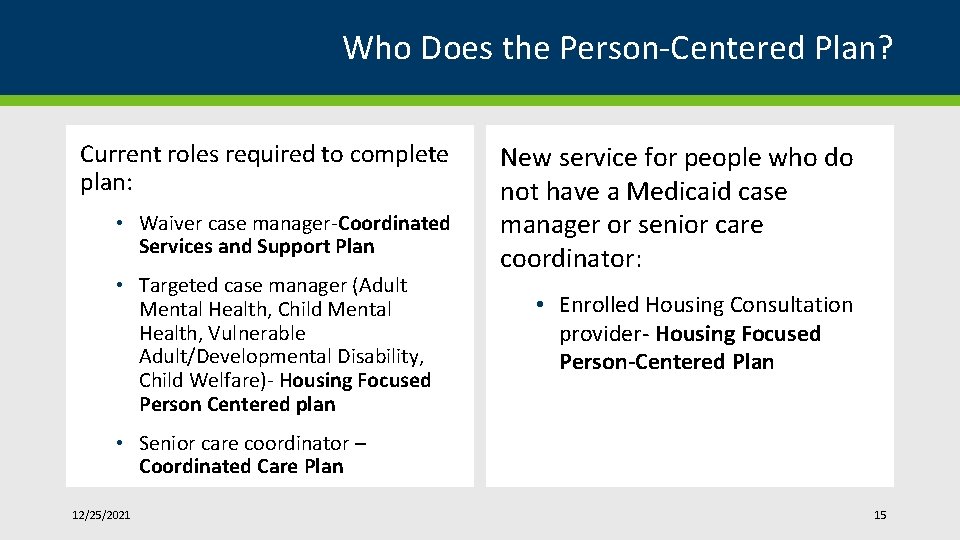
Who Does the Person-Centered Plan? Current roles required to complete plan: • Waiver case manager-Coordinated Services and Support Plan • Targeted case manager (Adult Mental Health, Child Mental Health, Vulnerable Adult/Developmental Disability, Child Welfare)- Housing Focused Person Centered plan New service for people who do not have a Medicaid case manager or senior care coordinator: • Enrolled Housing Consultation provider- Housing Focused Person-Centered Plan • Senior care coordinator – Coordinated Care Plan 12/25/2021 15
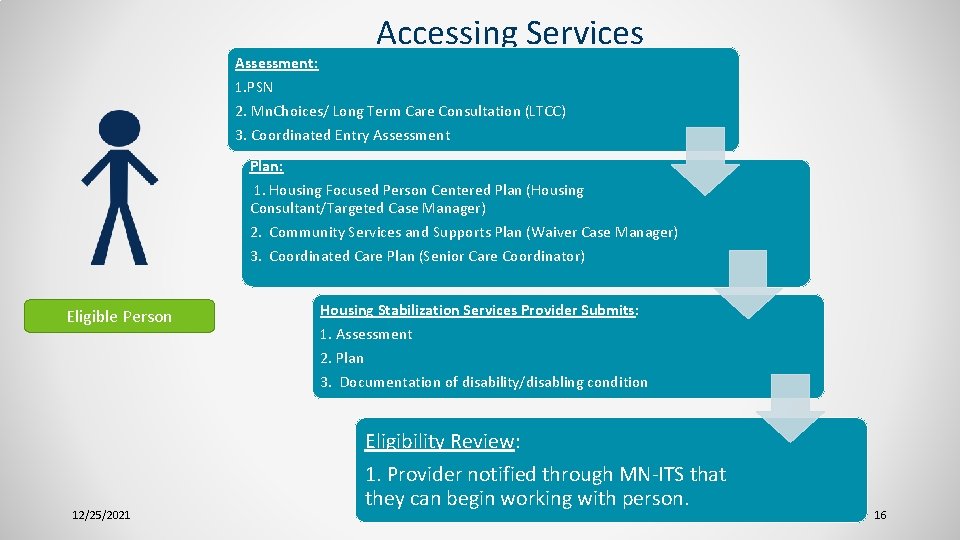
Assessment: 1. PSN Accessing Services 2. Mn. Choices/ Long Term Care Consultation (LTCC) 3. Coordinated Entry Assessment Plan: 1. Housing Focused Person Centered Plan (Housing Consultant/Targeted Case Manager) 2. Community Services and Supports Plan (Waiver Case Manager) 3. Coordinated Care Plan (Senior Care Coordinator) Eligible Person Housing Stabilization Services Provider Submits: 1. Assessment 2. Plan 3. Documentation of disability/disabling condition 12/25/2021 Eligibility Review: 1. Provider notified through MN-ITS that they can begin working with person. 16
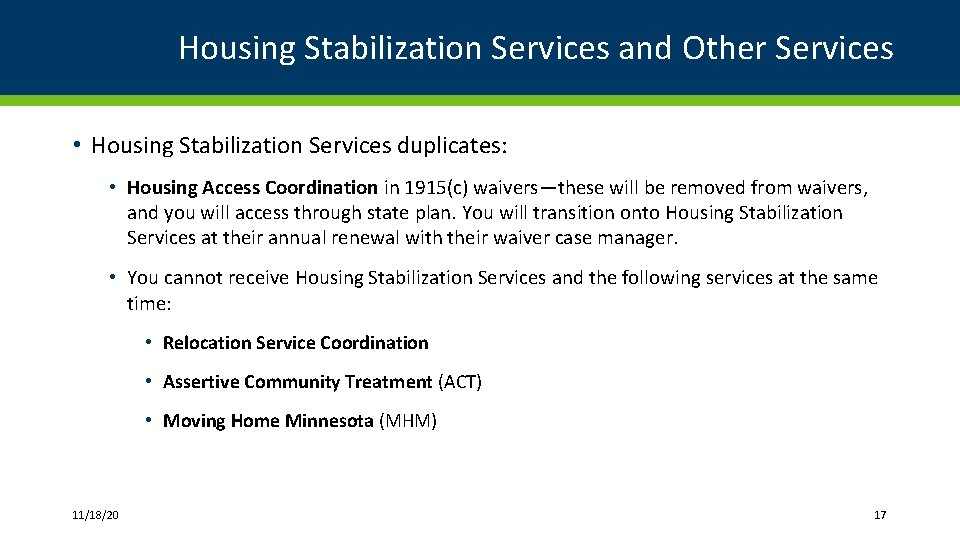
Housing Stabilization Services and Other Services • Housing Stabilization Services duplicates: • Housing Access Coordination in 1915(c) waivers—these will be removed from waivers, and you will access through state plan. You will transition onto Housing Stabilization Services at their annual renewal with their waiver case manager. • You cannot receive Housing Stabilization Services and the following services at the same time: • Relocation Service Coordination • Assertive Community Treatment (ACT) • Moving Home Minnesota (MHM) 11/18/20 17
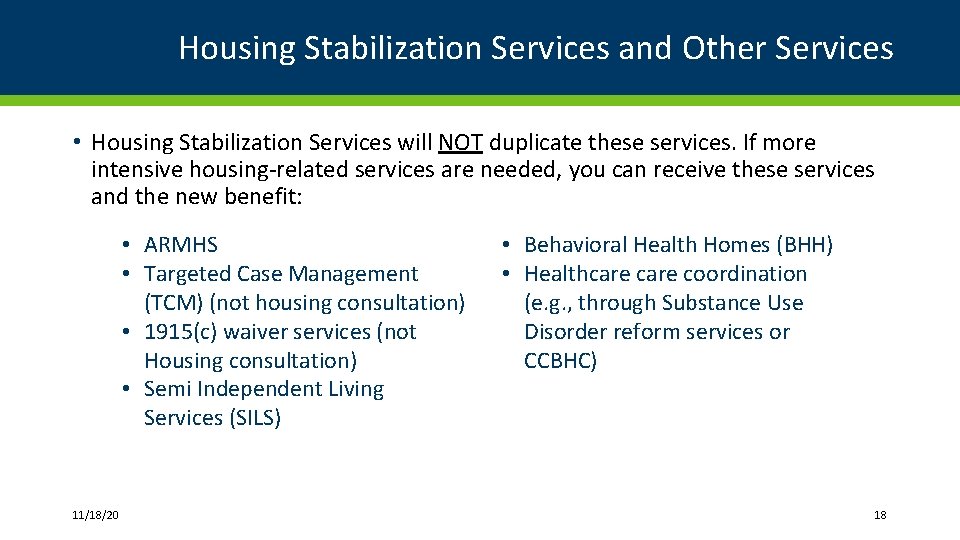
Housing Stabilization Services and Other Services • Housing Stabilization Services will NOT duplicate these services. If more intensive housing-related services are needed, you can receive these services and the new benefit: • ARMHS • Targeted Case Management (TCM) (not housing consultation) • 1915(c) waiver services (not Housing consultation) • Semi Independent Living Services (SILS) 11/18/20 • Behavioral Health Homes (BHH) • Healthcare coordination (e. g. , through Substance Use Disorder reform services or CCBHC) 18
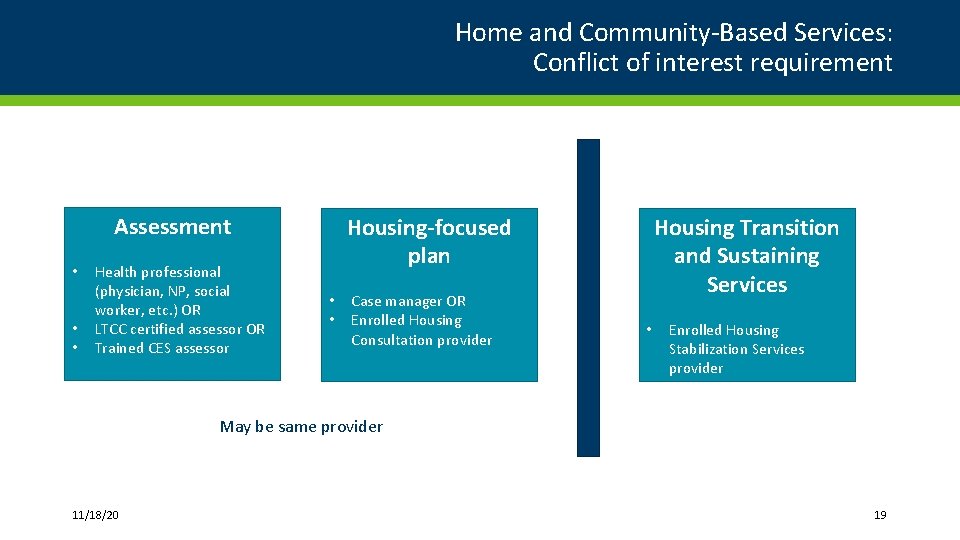
Home and Community-Based Services: Conflict of interest requirement Assessment • • • Health professional (physician, NP, social worker, etc. ) OR LTCC certified assessor OR Trained CES assessor Housing-focused plan • • Case manager OR Enrolled Housing Consultation provider Housing Transition and Sustaining Services • Enrolled Housing Stabilization Services provider May be same provider 11/18/20 19
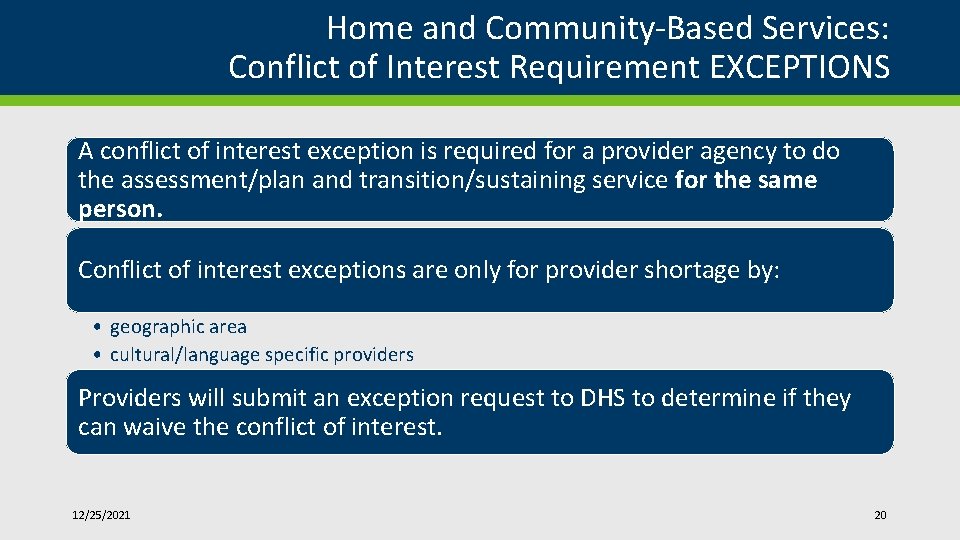
Home and Community-Based Services: Conflict of Interest Requirement EXCEPTIONS A conflict of interest exception is required for a provider agency to do the assessment/plan and transition/sustaining service for the same person. Conflict of interest exceptions are only for provider shortage by: • geographic area • cultural/language specific providers Providers will submit an exception request to DHS to determine if they can waive the conflict of interest. 12/25/2021 20
Strategically Plan and Deliver Services Consider ways to maximize Housing Stabilization Services and integrate it into your community! • Recruit counties and tribes to provide housing consultation services for people not receiving MA-funded case management • Creates more access to the services • Frees up community-based providers to offer housing transition/sustaining services • Consider ways Housing Stabilization Services can help fund parts of the coordinated entry system (i. e. , housing transition services) • Think about how Housing Stabilization Services can cover services paid for through state grant dollars, and how to target those dollars toward services not covered by Medical Assistance 11/18/20 21
Additional Resources • DHS Websites • Housing Stabilization Services Policy Page • New! Important Program Announcements Section • Sign up for our mailing list to receive important announcements! • MHCP Provider Manual • Webinars • General Overview (recorded) on Housing Benefits 101 and Policy Page (PDF only) • Provider and County – Tribal Remote Regional Roadshows (slide decks and recorded presentations) on the HB 101 Partners Page • Housing Benefits 101 (mn. hb 101. org) • • MHCP Provider Directory • Search under Home and Community Based Services Helpful tools for people served, including benefits look-ups, budgeting pathways, and general information about Housing Stabilization Services (brochure/visual aids) • New Resources • Subtype “Housing Stabilization Services” • Allowable Documentation for Housing Stabilization Services Eligibility Requests Guidance • Frequently Asked Questions Document (PDF) – updated monthly! • Information for Targeted Case Managers Guidance and “Introduction to the Housing-Focused Person-Centered Plan” training on Train. Link • Person-Served Workflow (DHS-7347) • Contact Us! • dhshousingstabilization@state. mn. us 11/18/20 22
Additional Resources • Housing Benefits 101 (mn. hb 101. org) • Helpful tools for people served, including benefits look-ups, budgeting pathways, and general information about Housing Stabilization Services (brochure/visual aids) • Vault feature, which allows for free, secure document storage and transmission • New! Pro Tools, including a Keeping My Housing Plan, to guide the work of housing sustaining providers • New! Person-Served Workflow (DHS-7347) • Reach out to Housing Stabilization Services Team anytime via e-mail at dhshousingstabilization@state. mn. us 12/25/2021 23
Thank you for your participation! Visit our webpage 11/18/20 Contact us at: dhshousingstabilization@state. mn. us Sign up for our mailing list to stay updated about our program here. 24
- Slides: 24