
Housing Housing Any structure built for people to
Housing • Housing: Any structure built for people to live in. • 3 Basic Types: – Natural Shelters – Portable Shelters – Permanent Shelters

Natural Shelters • Primitive people used landscape for protection and shelter from elements • Archaeologists have discovered that they had: • Sturdy roofs • Fireplaces for cooking • Food storage facilities • Beds made of mounds and covered with animal hides
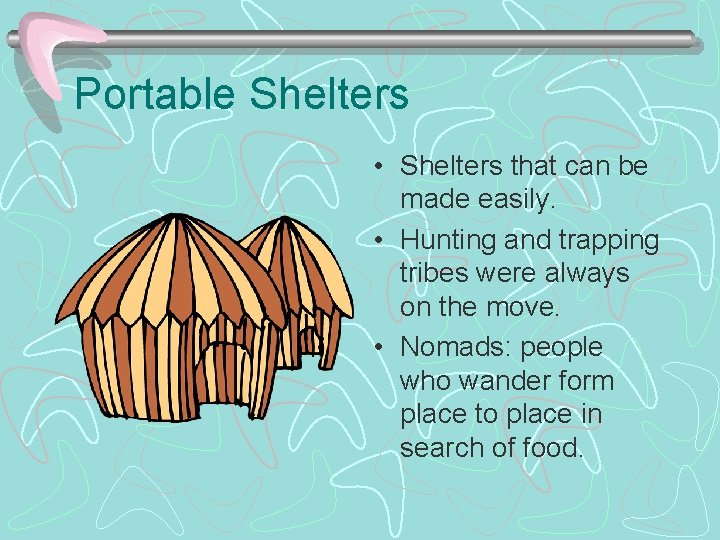
Portable Shelters • Shelters that can be made easily. • Hunting and trapping tribes were always on the move. • Nomads: people who wander form place to place in search of food.
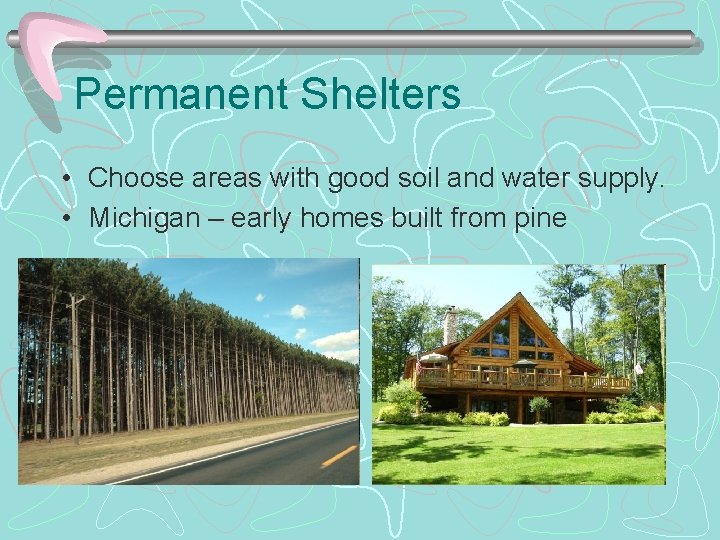
Permanent Shelters • Choose areas with good soil and water supply. • Michigan – early homes built from pine
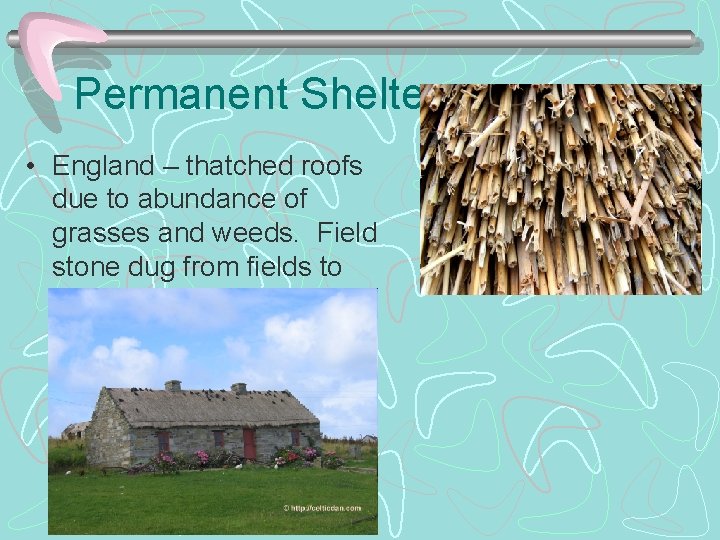
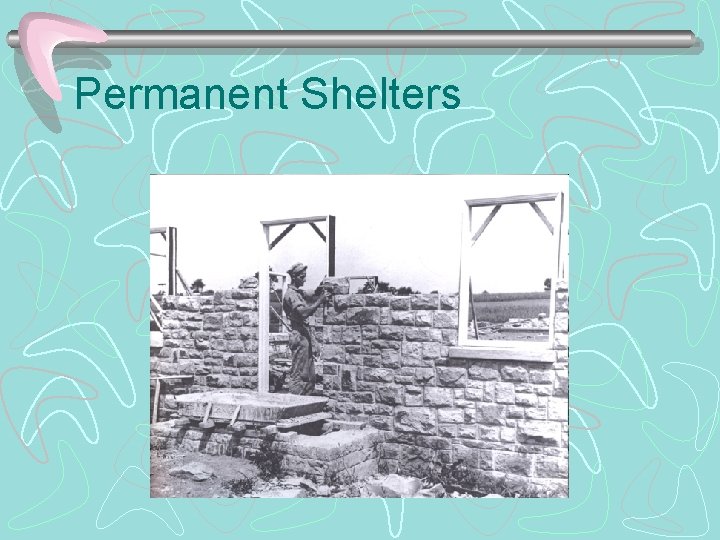
Permanent Shelters • England – thatched roofs due to abundance of grasses and weeds. Field stone dug from fields to create stone cottages
Permanent Shelters
Distinctions Within Communities • Primitive communities – were all alike • Later on – homes became symbols of wealth • Center of city = upper class 2 story houses (priests and merchants) • Just behind = 1 story middle class houses (govt. officials, shopkeepers, skilled workers) • Outskirts of city = mud and stick homes (farmers, fishers, etc. ) • Today – how are distinctions made?
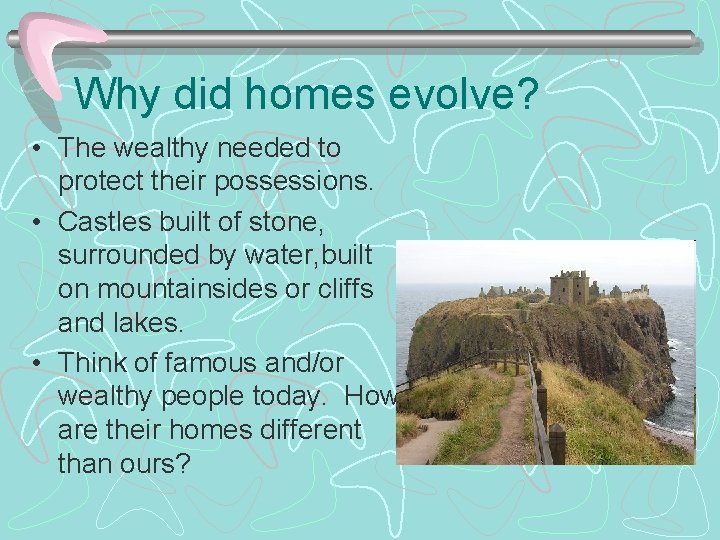
Why did homes evolve? • The wealthy needed to protect their possessions. • Castles built of stone, surrounded by water, built on mountainsides or cliffs and lakes. • Think of famous and/or wealthy people today. How are their homes different than ours?
Comfortable Shelters • Early homes could be drafty, little light, not a lot of comfort • Renaissance period (1300’s in Italy) become more comfortable through technology • Better ventilation, more light, sanitation
Physical Needs • Includes all things the body needs to survive: air, sunlight, shelter, sleep and food. • Shelter: Protection from nature. (Temperature, humidity, rain, snow, wind and sun. ) – Low ceilings keep in heat – Clay walls keep interior cool – Why are high ceilings in Michigan not a good idea?
Physical Needs • Sleep: necessity for body to function • Specific rooms set aside to sleep in North America vs. Japan (sliding screens) • Food: for preparation and place to eat. • Separate room to prepare food in North America vs. Indonesia (living room = kitchen too)
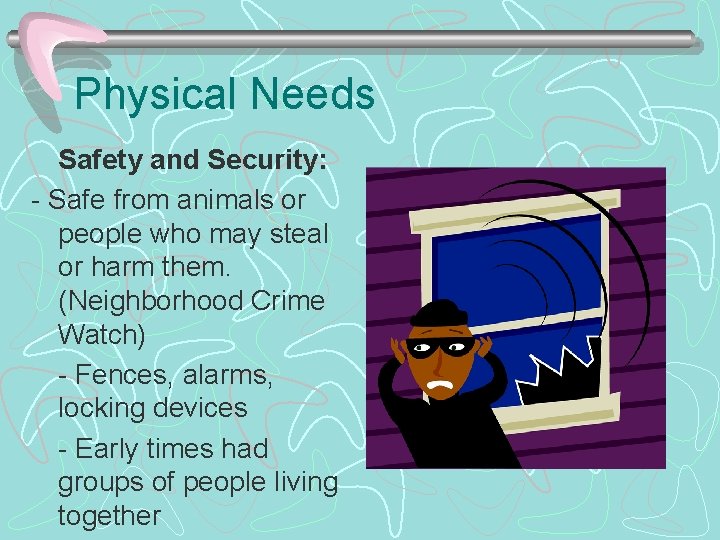
Physical Needs Safety and Security: - Safe from animals or people who may steal or harm them. (Neighborhood Crime Watch) - Fences, alarms, locking devices - Early times had groups of people living together
Psychological Needs • Related to thoughts and emotions; feel a sense of identity and express oneself. • Love and Belonging: family, friends and coworkers. Children learn how to interact in a house. Interactions with friends. • Live in a place where they feel a member of the group.
Psychological Needs • People feel need for personal space • Should you live in a small town or large city? How do you pick? • Identity: Most people like to personalize their home. Welcome mats, decorations, paint color • Lifestyles: ways of living influences people’s choice of housing. They select housing that is an image of themselves
Psychological Needs • Creativity: lets people use their imagination and skills to express themselves • The most important room in my house is _______ because _______.
- Slides: 15