
Housing Development Local Land Conflicts and Sustainable Landuse
Housing Development, Local Land Conflicts and Sustainable Land-use Planning in Peri-urban Ghana Presented by Augustine Fosu PLAAS, UWC, SA Conference on Land Policy in Africa-2019
PRESENTATION OUTLINE v Introduction v Research context v Study area and methods v Findings v Conclusion and recommendation
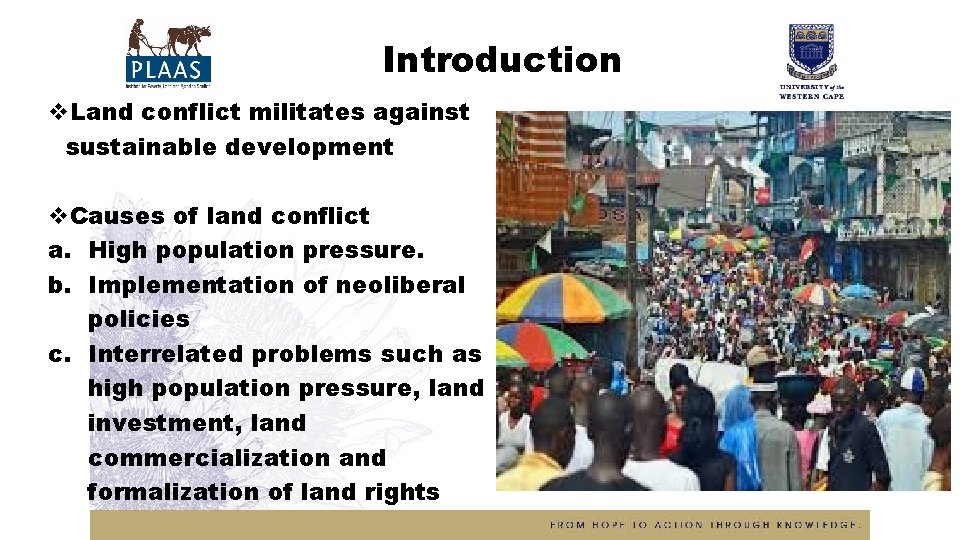
Introduction v. Land conflict militates against sustainable development v. Causes of land conflict a. High population pressure. b. Implementation of neoliberal policies c. Interrelated problems such as high population pressure, land investment, land commercialization and formalization of land rights
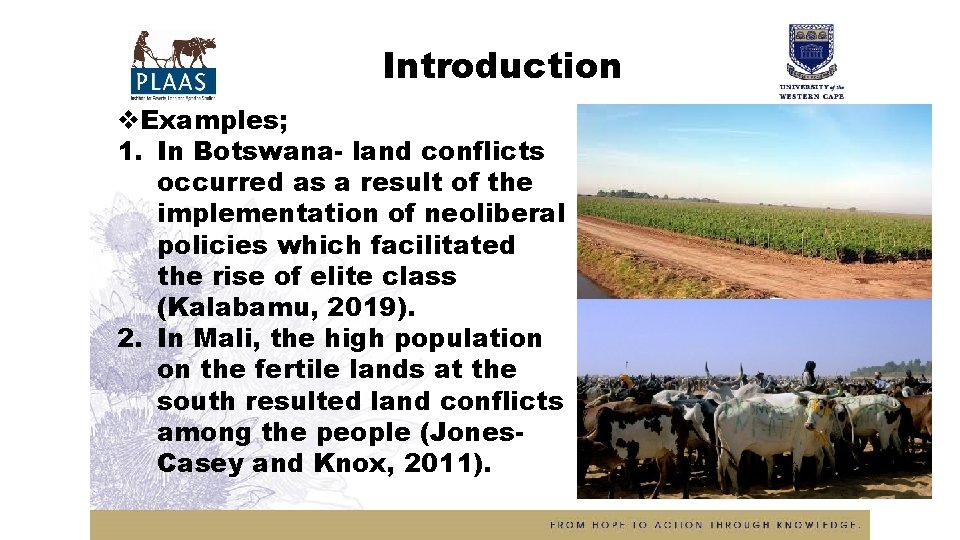
Introduction v. Examples; 1. In Botswana- land conflicts occurred as a result of the implementation of neoliberal policies which facilitated the rise of elite class (Kalabamu, 2019). 2. In Mali, the high population on the fertile lands at the south resulted land conflicts among the people (Jones. Casey and Knox, 2011).
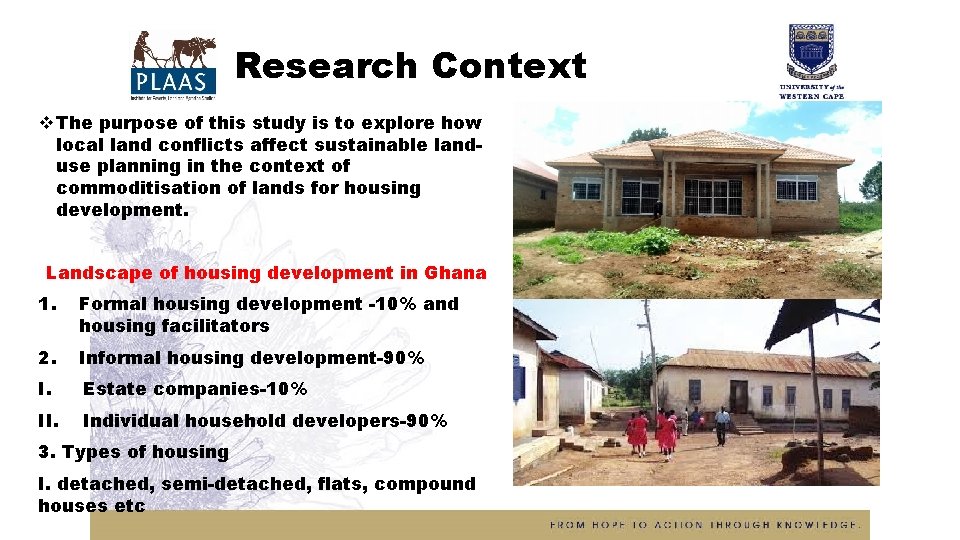
Research Context v The purpose of this study is to explore how local land conflicts affect sustainable landuse planning in the context of commoditisation of lands for housing development. Landscape of housing development in Ghana 1. Formal housing development -10% and housing facilitators 2. Informal housing development-90% I. Estate companies-10% II. Individual household developers-90% 3. Types of housing I. detached, semi-detached, flats, compound houses etc
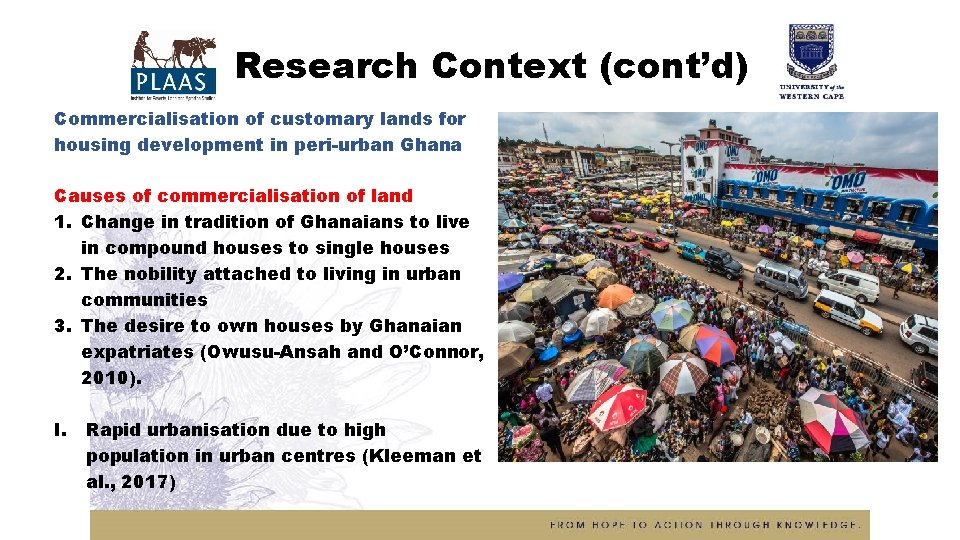
Research Context (cont’d) Commercialisation of customary lands for housing development in peri-urban Ghana Causes of commercialisation of land 1. Change in tradition of Ghanaians to live in compound houses to single houses 2. The nobility attached to living in urban communities 3. The desire to own houses by Ghanaian expatriates (Owusu-Ansah and O’Connor, 2010). I. Rapid urbanisation due to high population in urban centres (Kleeman et al. , 2017)
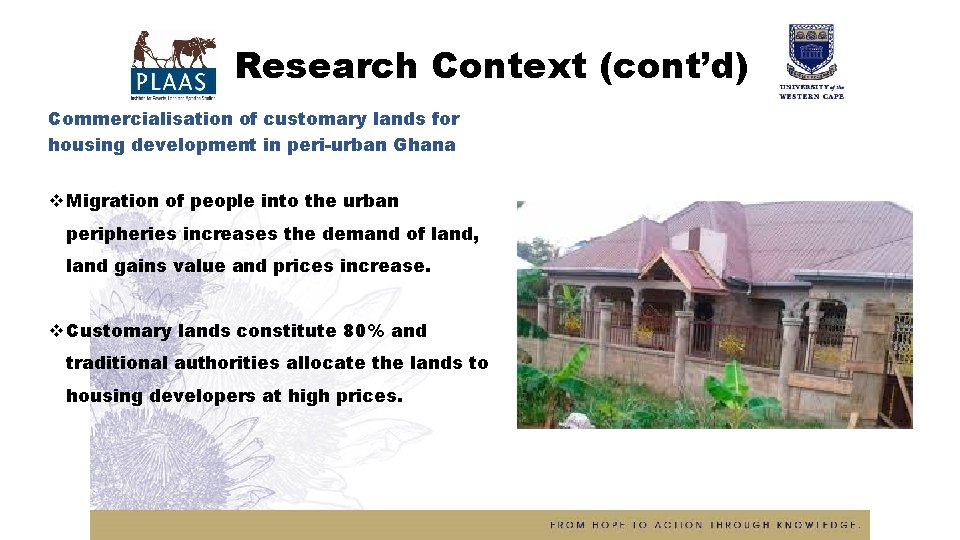
Research Context (cont’d) Commercialisation of customary lands for housing development in peri-urban Ghana v Migration of people into the urban peripheries increases the demand of land, land gains value and prices increase. v Customary lands constitute 80% and traditional authorities allocate the lands to housing developers at high prices.
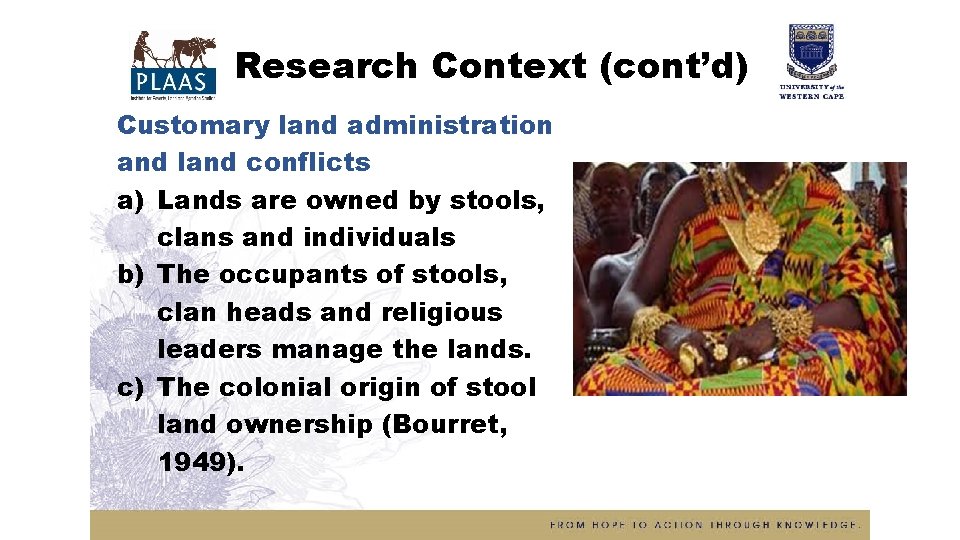
Research Context (cont’d) Customary land administration and land conflicts a) Lands are owned by stools, clans and individuals b) The occupants of stools, clan heads and religious leaders manage the lands. c) The colonial origin of stool land ownership (Bourret, 1949).
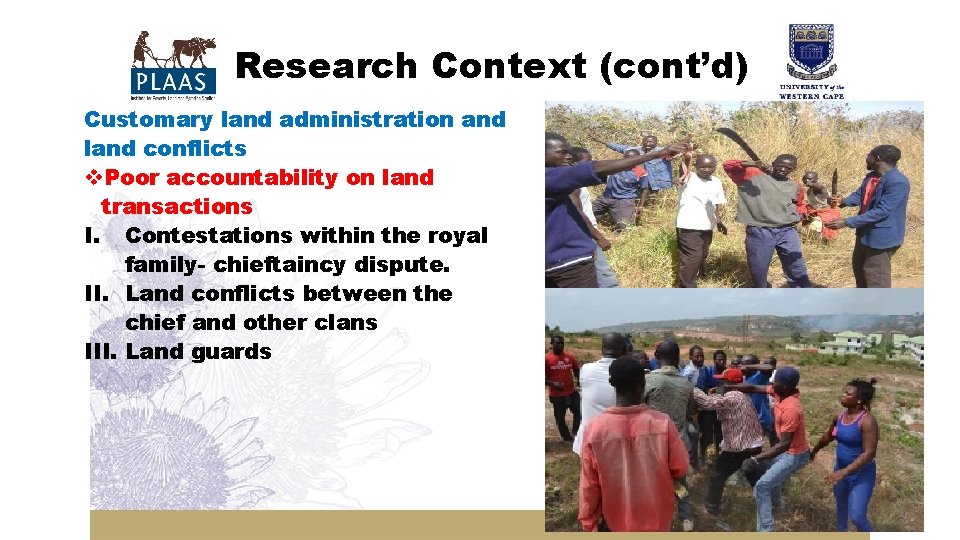
Research Context (cont’d) Customary land administration and land conflicts v. Poor accountability on land transactions I. Contestations within the royal family- chieftaincy dispute. II. Land conflicts between the chief and other clans III. Land guards
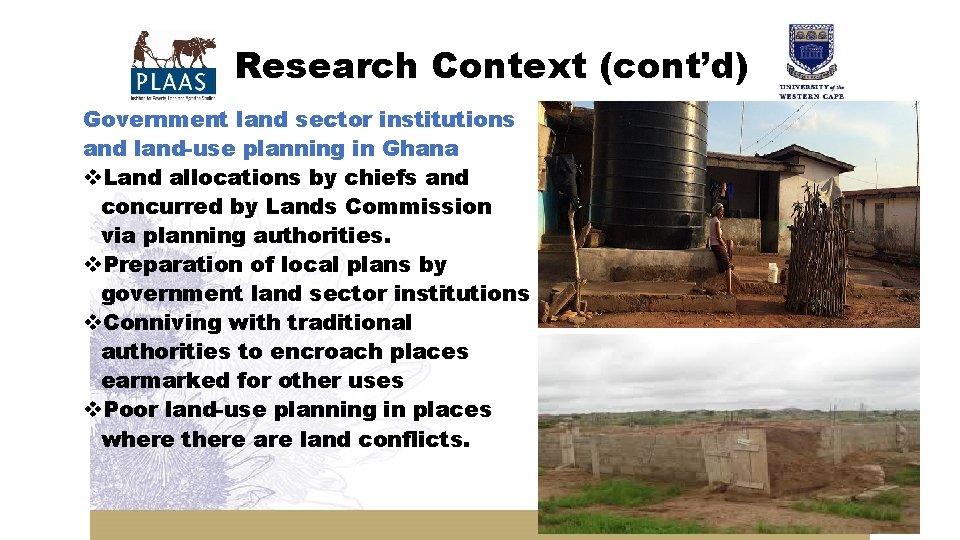
Research Context (cont’d) Government land sector institutions and land-use planning in Ghana v. Land allocations by chiefs and concurred by Lands Commission via planning authorities. v. Preparation of local plans by government land sector institutions v. Conniving with traditional authorities to encroach places earmarked for other uses v. Poor land-use planning in places where there are land conflicts.
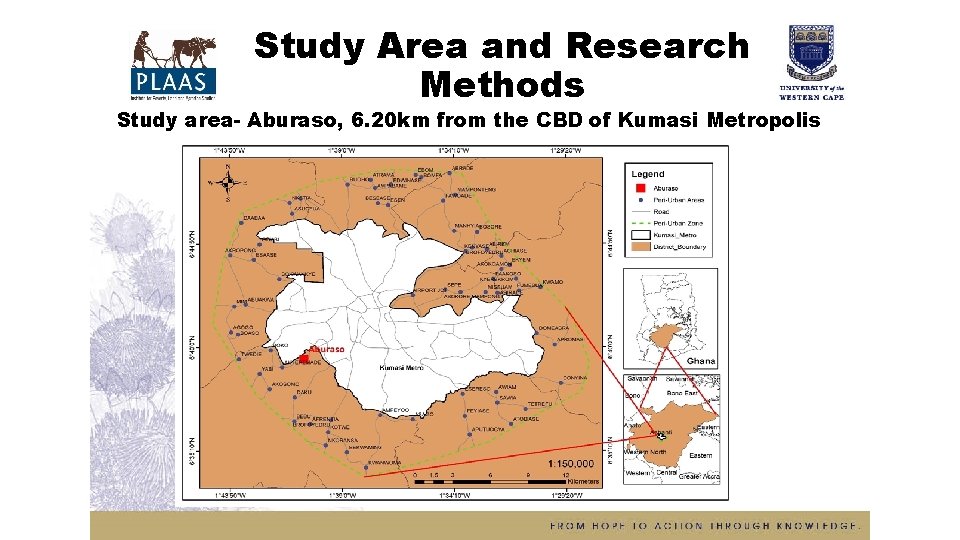
Study Area and Research Methods Study area- Aburaso, 6. 20 km from the CBD of Kumasi Metropolis
Study Area and Research Methods Research methods v. Mixed method approach (qualitative and quantitative) v. Sample size- 40 participants, 9 key informants and 31 individual housing developers v. Sampling instruments-in-depth interview and questionnaire survey v. Data analysis- thematic content for qualitative data and the use of SPSS and Microsoft Excel for quantitative data
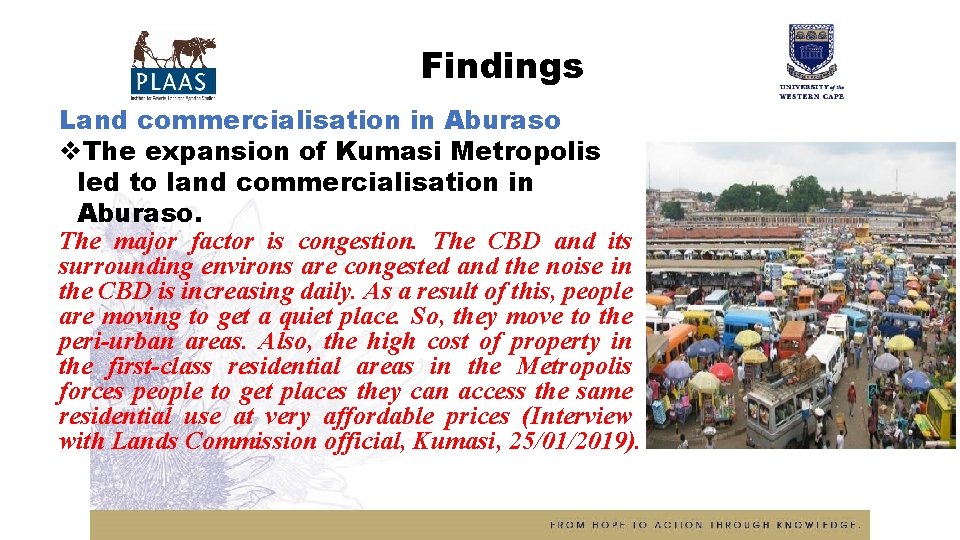
Findings Land commercialisation in Aburaso v. The expansion of Kumasi Metropolis led to land commercialisation in Aburaso. The major factor is congestion. The CBD and its surrounding environs are congested and the noise in the CBD is increasing daily. As a result of this, people are moving to get a quiet place. So, they move to the peri-urban areas. Also, the high cost of property in the first-class residential areas in the Metropolis forces people to get places they can access the same residential use at very affordable prices (Interview with Lands Commission official, Kumasi, 25/01/2019).
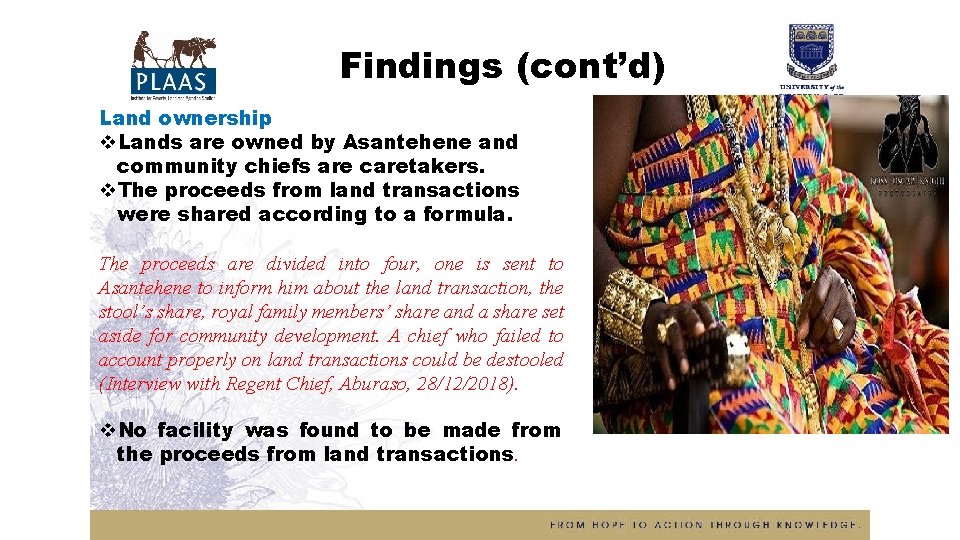
Findings (cont’d) Land ownership v. Lands are owned by Asantehene and community chiefs are caretakers. v. The proceeds from land transactions were shared according to a formula. The proceeds are divided into four, one is sent to Asantehene to inform him about the land transaction, the stool’s share, royal family members’ share and a share set aside for community development. A chief who failed to account properly on land transactions could be destooled (Interview with Regent Chief, Aburaso, 28/12/2018). v. No facility was found to be made from the proceeds from land transactions.
Findings (cont’d) v. Poor accountability on land transactions led to contestations within the royal family which led to chieftaincy dispute. Eviction of indigenes from their farmlands led to conflicts between the chief and the clans. The land conflicts led to poor land allocation and creation of land guards. […] in Aburaso, there is no substantive chief. Everybody who has access to the land try to sell it. Every family is claiming the part they were farming as theirs. This is because there is no chief. The trend it should have gone; it is not going in that way. Everybody is controlling his own part (Interview with an official, District Physical Planning Department, 16/01/2019). v. Planning authorities did not have approved local plan
Findings (cont’d)
Findings (cont’d)
Conclusion and recommendation Conclusion Commoditisation of lands in peri-urban areas results land conflicts which lead to poor land allocations and poor land-use planning. Recommendation v. Legal recognition of traditional council to authenticate land transactions v. Participatory planning v. Government must initiate local plans. v. Equip planning departments with resources.
End of presentation Thank you
- Slides: 19