
Hour of Code 2014 Prof Todd Neller Gettysburg
Hour of Code 2014 Prof. Todd Neller Gettysburg College
Hour of Code • What is “coding” or “programming”? – Instructing a computer to solve a problem. – Computer Scientists call programs “algorithms”. • Who can code? – You can. You learn algorithms from a young age (example: multidigit addition). You can also express algorithms with practice.
Why Code? • Why should I code? – It’s EMPOWERING. “Knowledge is power. ” Coders work the world’s knowledge. – It’s PROFITABLE. There’s a huge need for good computer problem solvers. Large demand + small supply = $$$ – It’s FUN. Being a good problem solver is creative and satisfying.
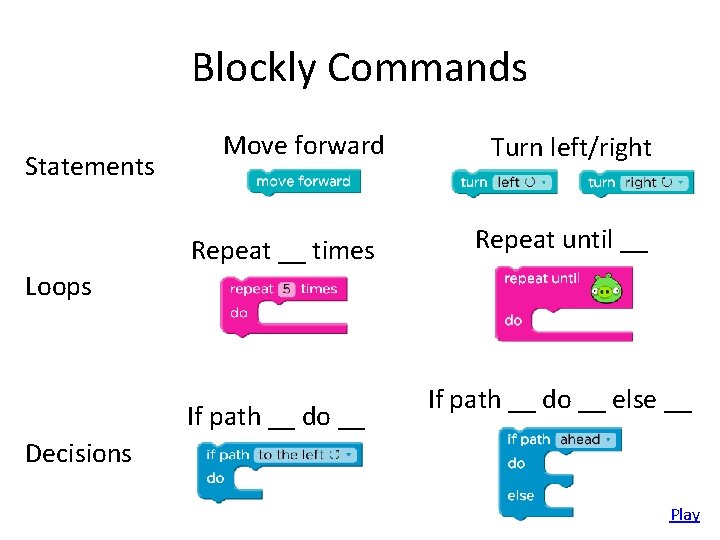
Blockly Commands Statements Move forward Repeat __ times Turn left/right Repeat until __ Loops If path __ do __ else __ Decisions Play
Coding is Like Legos • Unlike spoken languages, computer languages have few words and simple grammar rules. • With very few types of code “pieces”, we can construct code of amazing complexity. • Learning how to code – isn’t so much about the pieces, as – learning interesting patterns for combining them.

Python Number Guessing Game import random secret = random. randint(1, 100) print('I am thinking of a number from 1 to 100. ') game. Over = False while not game. Over: guess = int(input('Your guess? ')) if guess == secret: print('Correct!') game. Over = True else: print('Lower. ' if guess > secret else 'Higher. ')
To Remember • Coding has simple pieces (statements, loops, & decisions) that can be assembled in complex ways to solve difficult problems. • You’ve learned algorithms. You can learn how to express them and have the computer do it! • The computer is a power tool for the mind. Knowing how to code is like having a super power.
Next Steps • http: //tinyurl. com/gburghoc – this presentation, – more Blockly mazes, – free coding resources, – and more. • Enjoy learning more about coding!
- Slides: 8