
Hough transform BY TYWu 2014 Theory Recognition Different
Hough transform BY TYWu 2014
Theory • Recognition – Different Objects May Use Different Recognition Approaches – Many Algorithms
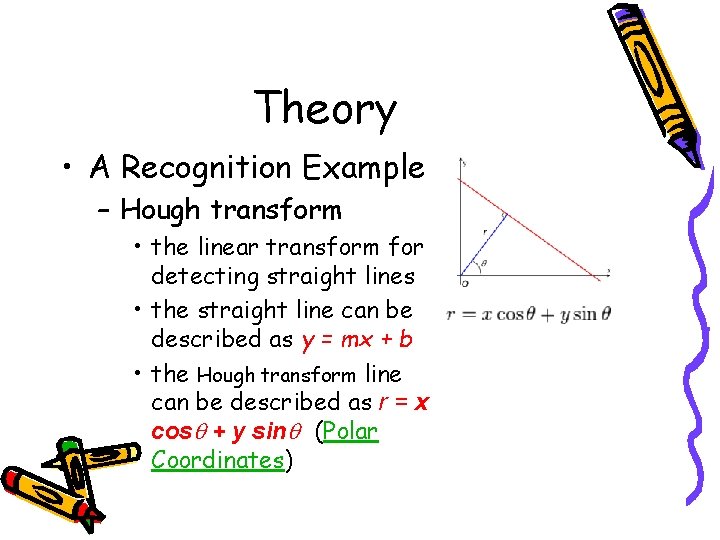
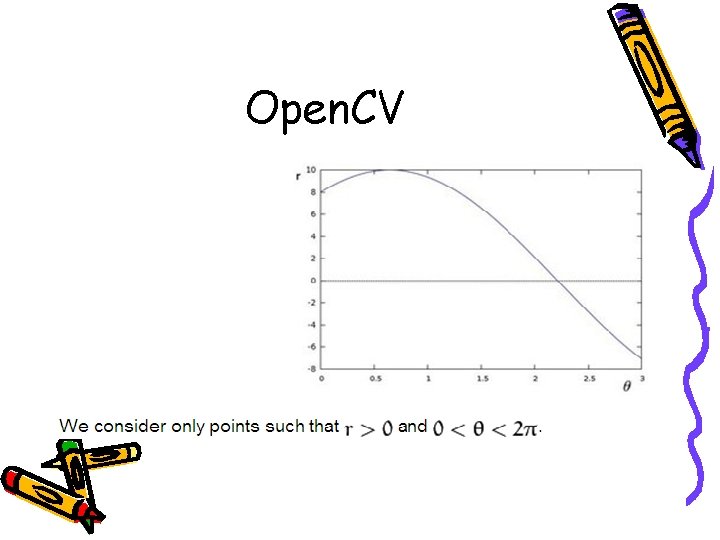
Theory • A Recognition Example – Hough transform • the linear transform for detecting straight lines • the straight line can be described as y = mx + b • the Hough transform line can be described as r = x cos + y sin (Polar Coordinates)
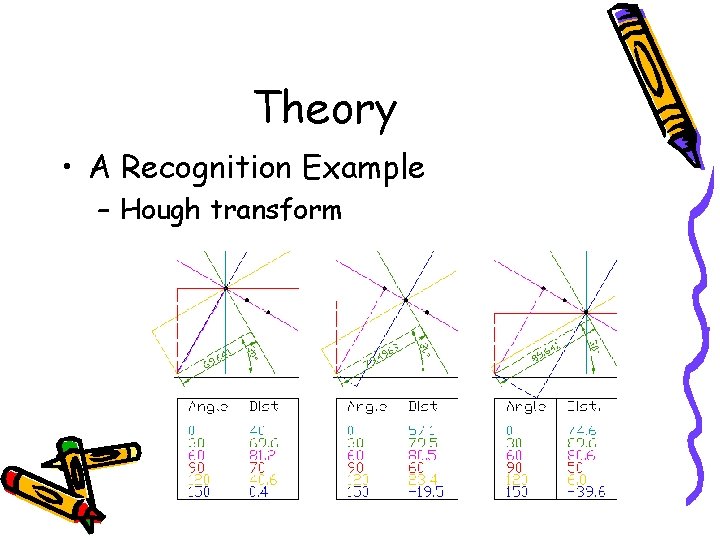
Theory • A Recognition Example – Hough transform
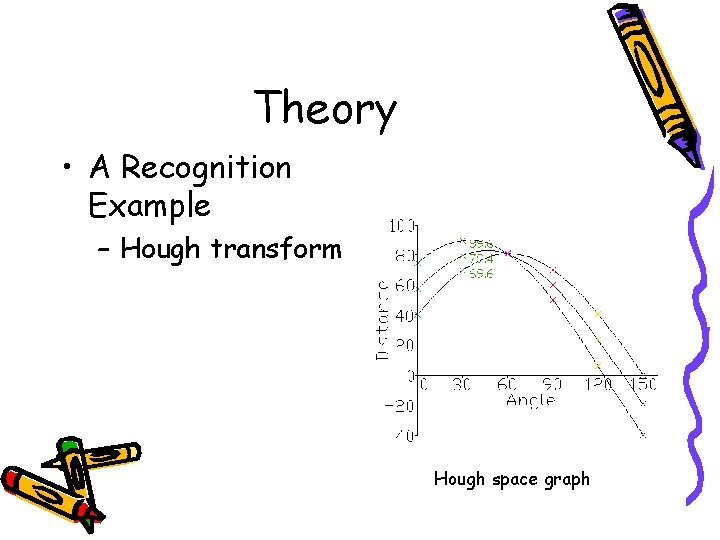
Theory • A Recognition Example – Hough transform Hough space graph
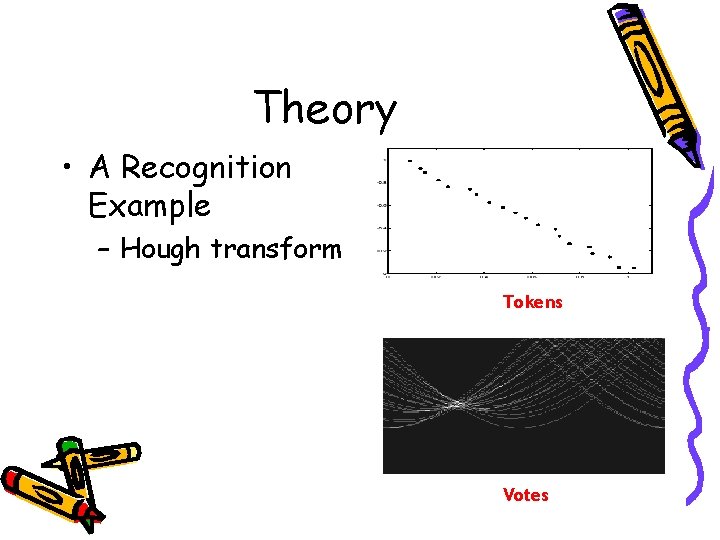
Theory • A Recognition Example – Hough transform Tokens Votes
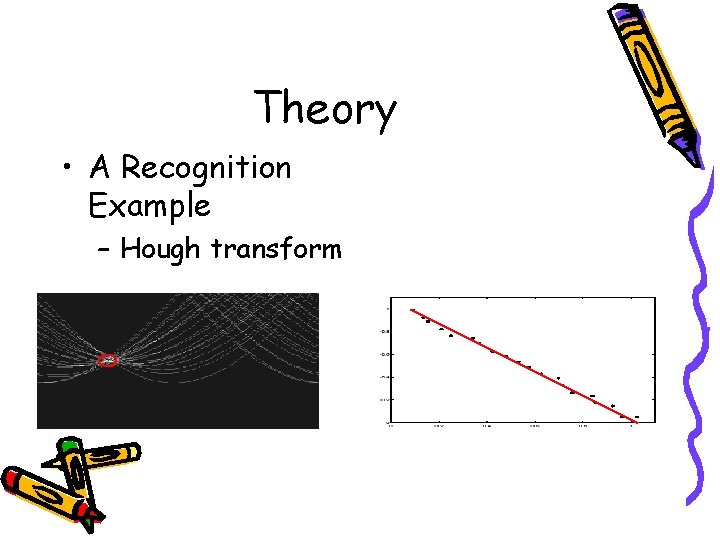
Theory • A Recognition Example – Hough transform
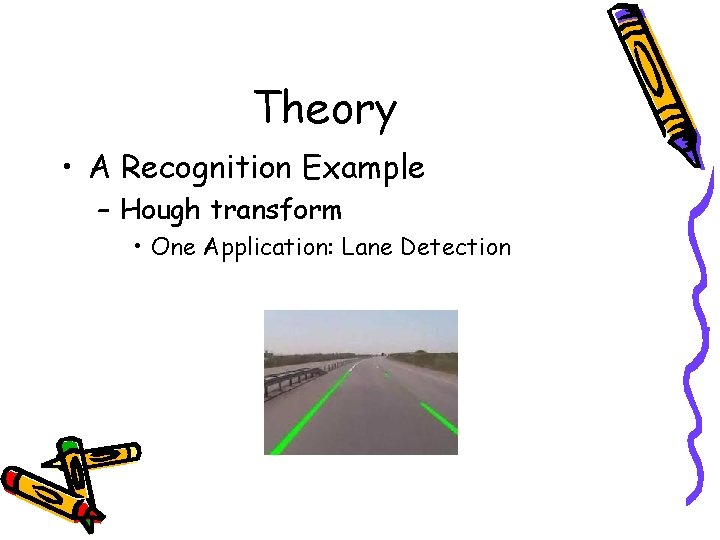
Theory • A Recognition Example – Hough transform • One Application: Lane Detection

You. Tube • https: //www. youtube. com/watch? v=u DB 2 q. Gqn. Q 1 g
Open. CV
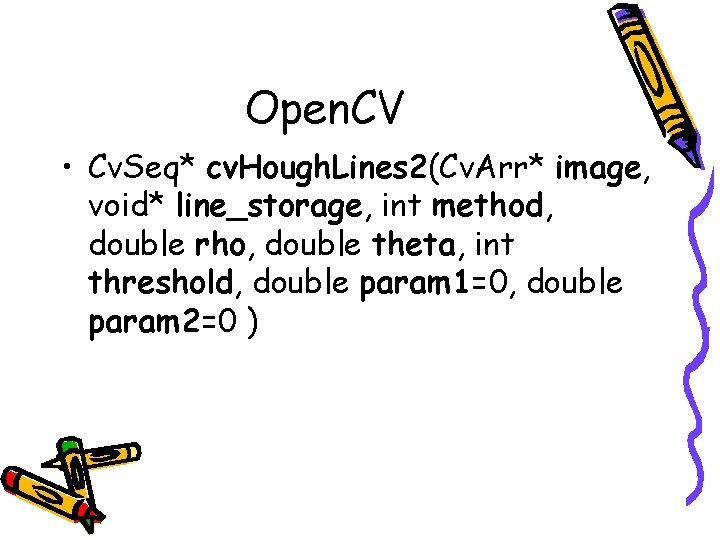
Open. CV • Cv. Seq* cv. Hough. Lines 2(Cv. Arr* image, void* line_storage, int method, double rho, double theta, int threshold, double param 1=0, double param 2=0 )
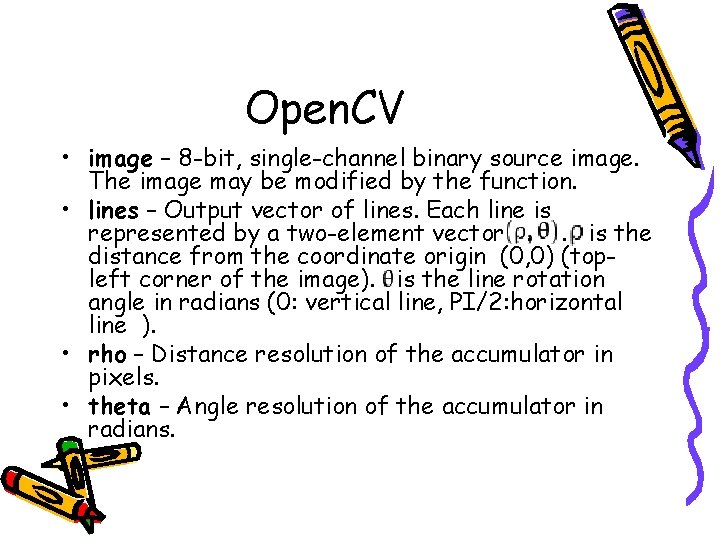
Open. CV • image – 8 -bit, single-channel binary source image. The image may be modified by the function. • lines – Output vector of lines. Each line is represented by a two-element vector. . is the distance from the coordinate origin (0, 0) (topleft corner of the image). is the line rotation angle in radians (0: vertical line, PI/2: horizontal line ). • rho – Distance resolution of the accumulator in pixels. • theta – Angle resolution of the accumulator in radians.
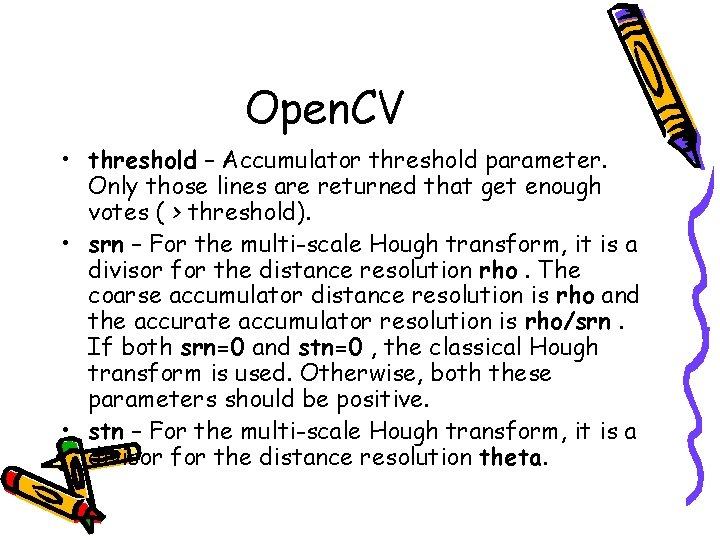
Open. CV • threshold – Accumulator threshold parameter. Only those lines are returned that get enough votes ( > threshold). • srn – For the multi-scale Hough transform, it is a divisor for the distance resolution rho. The coarse accumulator distance resolution is rho and the accurate accumulator resolution is rho/srn. If both srn=0 and stn=0 , the classical Hough transform is used. Otherwise, both these parameters should be positive. • stn – For the multi-scale Hough transform, it is a divisor for the distance resolution theta.
Open. CV • method – One of the following Hough transform variants: • CV_HOUGH_STANDARD classical or standard Hough transform. • CV_HOUGH_PROBABILISTIC probabilistic Hough transform (more efficient in case if the picture contains a few long linear segments). It returns line segments rather than the whole line. Each segment is represented by starting and ending points, and the matrix must be (the created sequence will be) of the CV_32 SC 4 type. • CV_HOUGH_MULTI_SCALE multi-scale variant of the classical Hough
Open. CV • param 1 – First method-dependent parameter: – For the classical Hough transform, it is not used (0). – For the probabilistic Hough transform, it is the minimum line length. • param 2 – Second method-dependent parameter: – For the classical Hough transform, it is not used (0). – For the probabilistic Hough transform, it is the maximum gap between line segments lying on the same line to treat them as a single line segment (that is, to join them).
Example • Download
Exercise • Hough. Circles
Reference • http: //docs. opencv. org/doc/tutorials /imgproc/imgtrans/hough_lines/houg h_lines. html
- Slides: 18