
Hot Topics in Biology Mad Cow Disease By
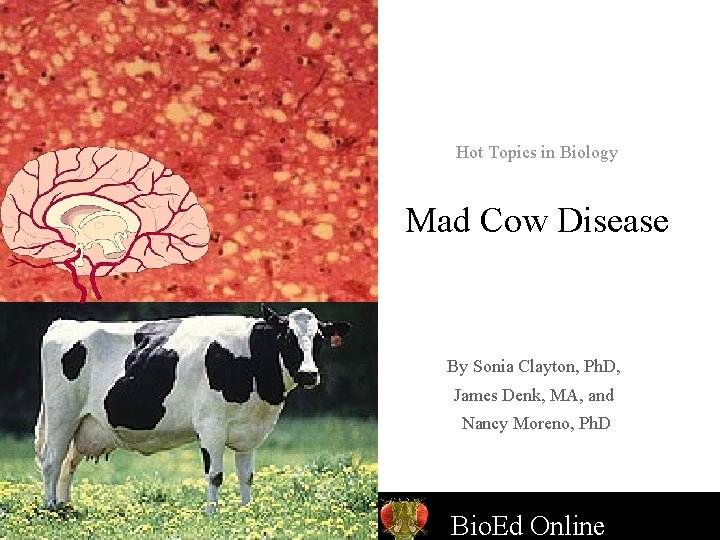
Hot Topics in Biology Mad Cow Disease By Sonia Clayton, Ph. D, James Denk, MA, and Nancy Moreno, Ph. D Bio. Ed Online
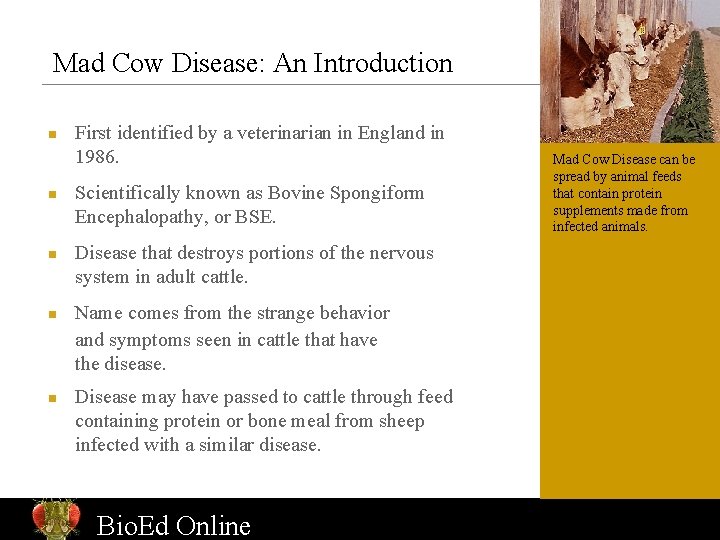
Mad Cow Disease: An Introduction n n First identified by a veterinarian in England in 1986. Scientifically known as Bovine Spongiform Encephalopathy, or BSE. Mad Cow Disease can be spread by animal feeds that contain protein supplements made from infected animals. Disease that destroys portions of the nervous system in adult cattle. Name comes from the strange behavior and symptoms seen in cattle that have the disease. Disease may have passed to cattle through feed containing protein or bone meal from sheep infected with a similar disease. Bio. Ed Online www. Bio. Ed. Online. org
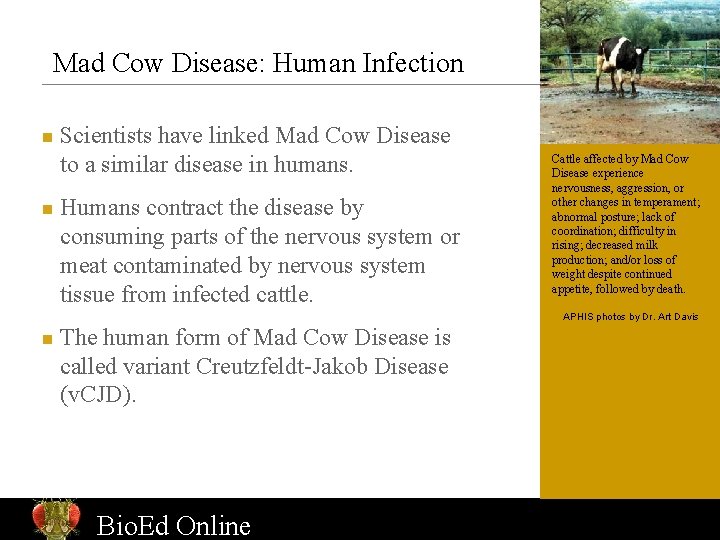
Mad Cow Disease: Human Infection n n Scientists have linked Mad Cow Disease to a similar disease in humans. Humans contract the disease by consuming parts of the nervous system or meat contaminated by nervous system tissue from infected cattle. Cattle affected by Mad Cow Disease experience nervousness, aggression, or other changes in temperament; abnormal posture; lack of coordination; difficulty in rising; decreased milk production; and/or loss of weight despite continued appetite, followed by death. APHIS photos by Dr. Art Davis n The human form of Mad Cow Disease is called variant Creutzfeldt-Jakob Disease (v. CJD). Bio. Ed Online www. Bio. Ed. Online. org
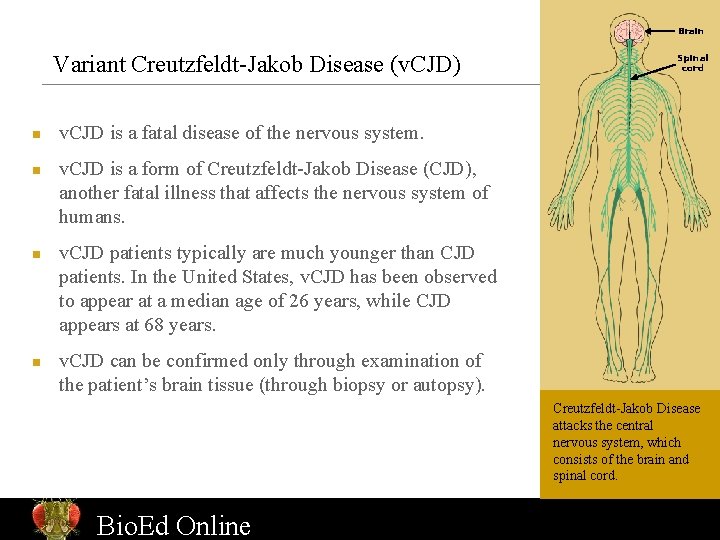
Brain Variant Creutzfeldt-Jakob Disease (v. CJD) n n Spinal cord v. CJD is a fatal disease of the nervous system. v. CJD is a form of Creutzfeldt-Jakob Disease (CJD), another fatal illness that affects the nervous system of humans. v. CJD patients typically are much younger than CJD patients. In the United States, v. CJD has been observed to appear at a median age of 26 years, while CJD appears at 68 years. v. CJD can be confirmed only through examination of the patient’s brain tissue (through biopsy or autopsy). Creutzfeldt-Jakob Disease attacks the central nervous system, which consists of the brain and spinal cord. Bio. Ed Online www. Bio. Ed. Online. org

Mad Cow Disease: Transmission n n Scientists believe that Mad Cow and related diseases are caused by abnormal proteins in the nervous system, called prions. Prions are different from bacteria, viruses or any other known disease-causing agent. Prions enter the body when people eat infected beef products. The brains of affected cows have a sponge-like appearance when tissue sections are examined in the lab. APHIS photos by Dr. Al Jenny Once in the body, prions are believed to convert normal proteins in the nervous system into the abnormal prion shape. Cumulative damage by prions leads to Mad Cow and other similar diseases of the brain and nervous system. Bio. Ed Online www. Bio. Ed. Online. org
- Slides: 5