
Hot Arid and SemiArid Environments Spot the difference
- Slides: 55
Hot Arid and Semi-Arid Environments
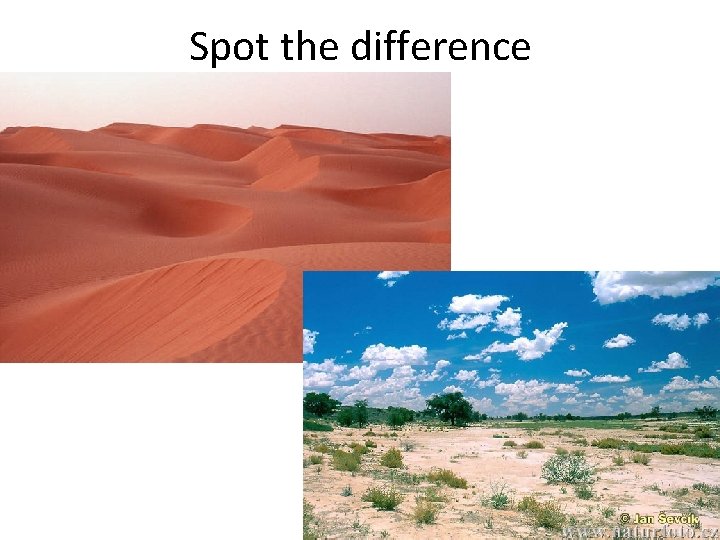
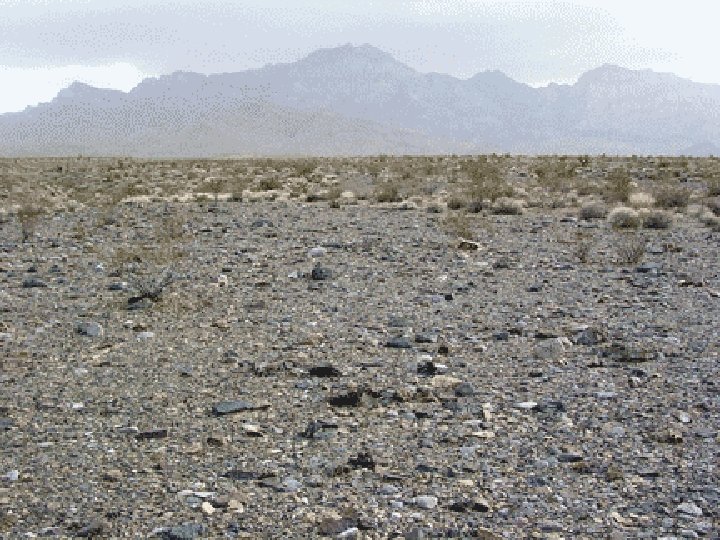
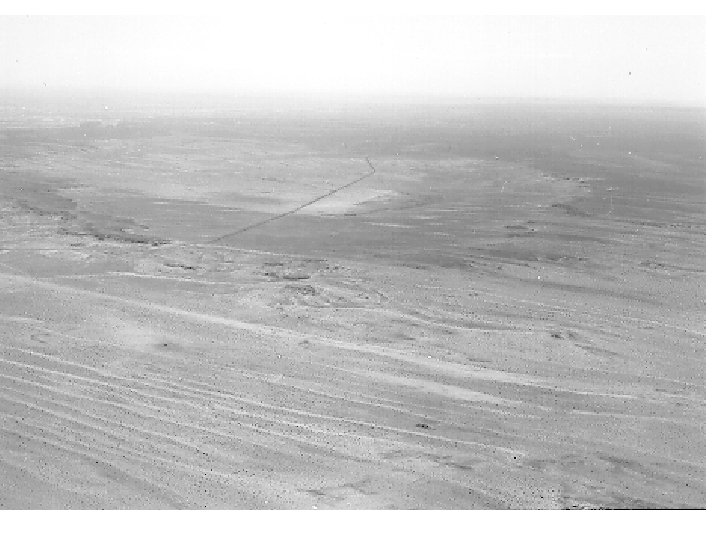
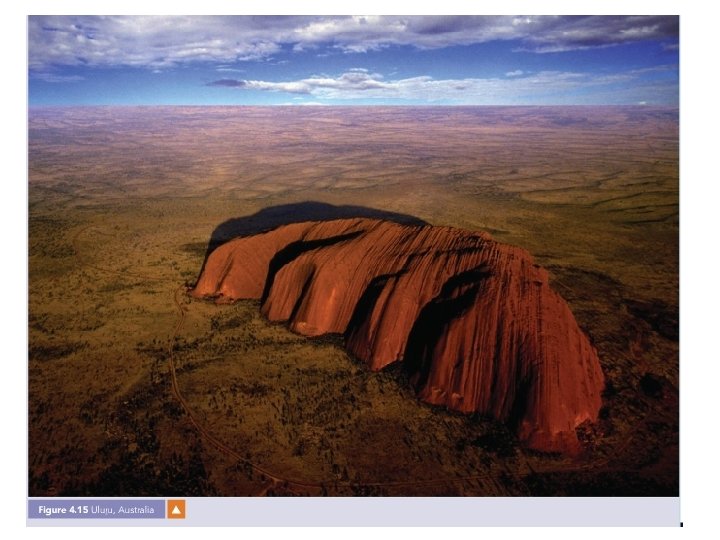
Spot the difference
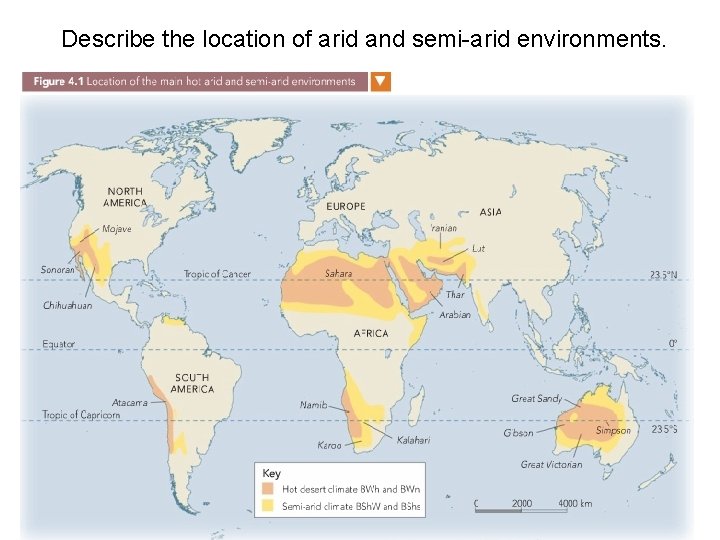
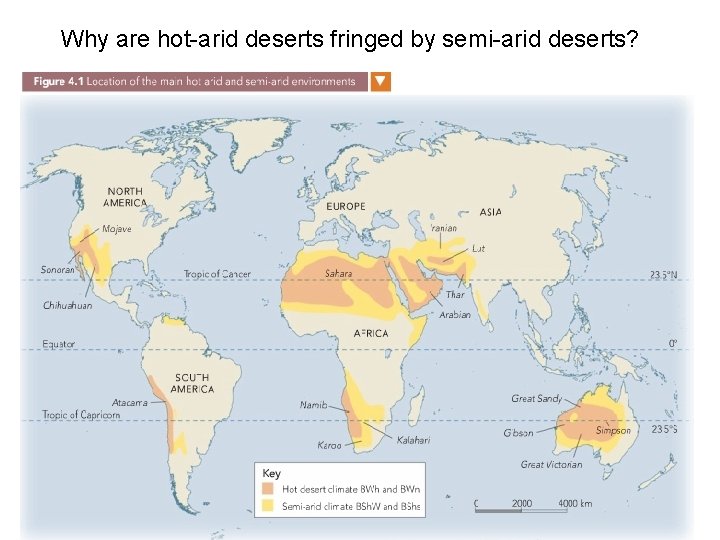
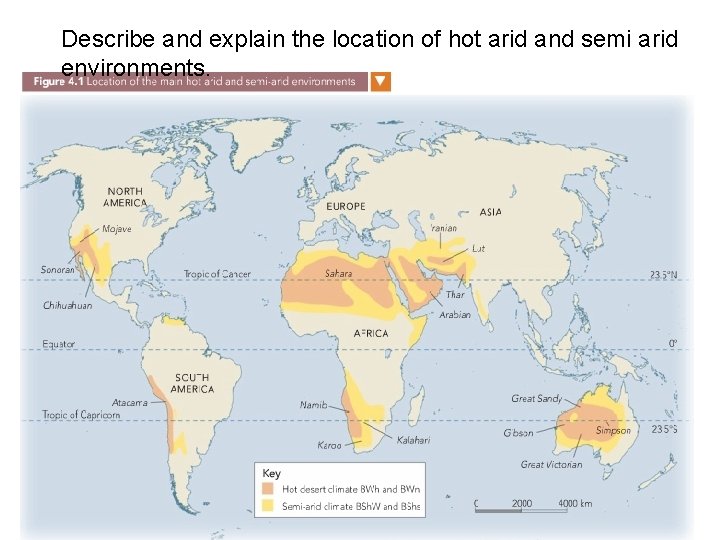
Describe the location of arid and semi-arid environments.
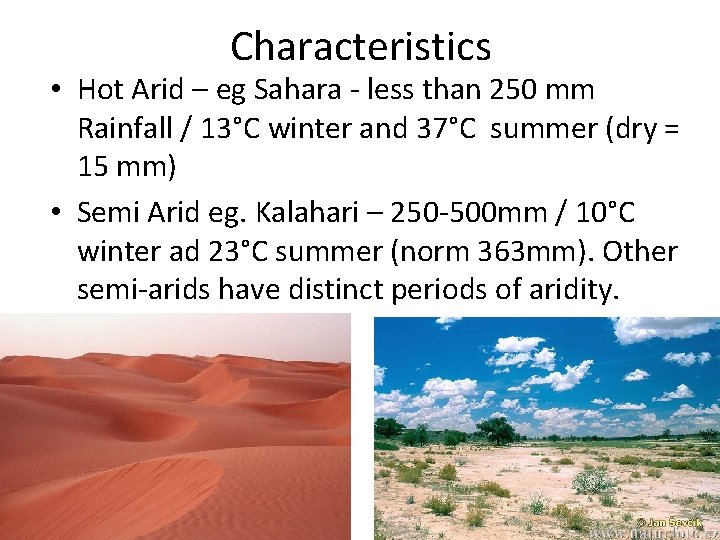
Characteristics • Hot Arid – eg Sahara - less than 250 mm Rainfall / 13°C winter and 37°C summer (dry = 15 mm) • Semi Arid eg. Kalahari – 250 -500 mm / 10°C winter ad 23°C summer (norm 363 mm). Other semi-arids have distinct periods of aridity.
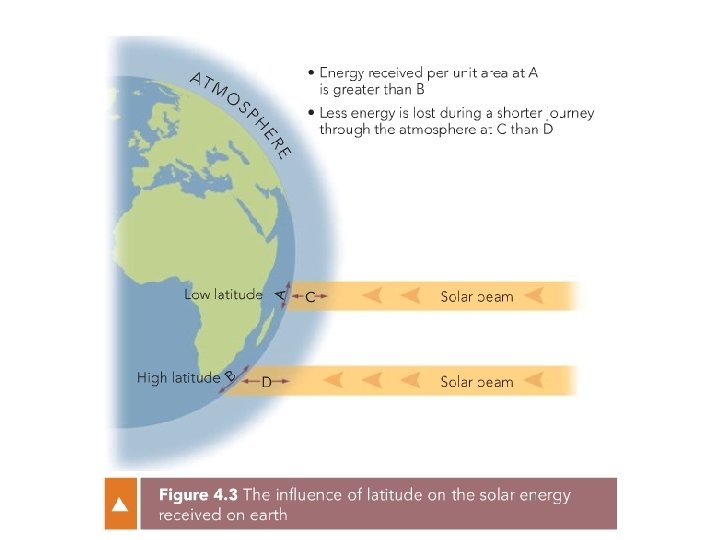
Factors influencing the climate • Temperature – aridity is defined by the total amount of rainfall but is more importantly dependent on the relationship between rainfall and evaporation (rainfall effectiveness). • The large diurnal (daily) range in temperature is due to lack of cloud cover. Intense solar radiation heats the ground and warms the air above it. At night heat escapes under clear skies. • Precipitation – can vary from 10 to 500 mm/yr. It is also unreliable – may be convectional causing flash floods (Sahara), it may take the form of coastal fog (Atacama) or it may be seasonal due to global shifts in air pressure patterns and winds.
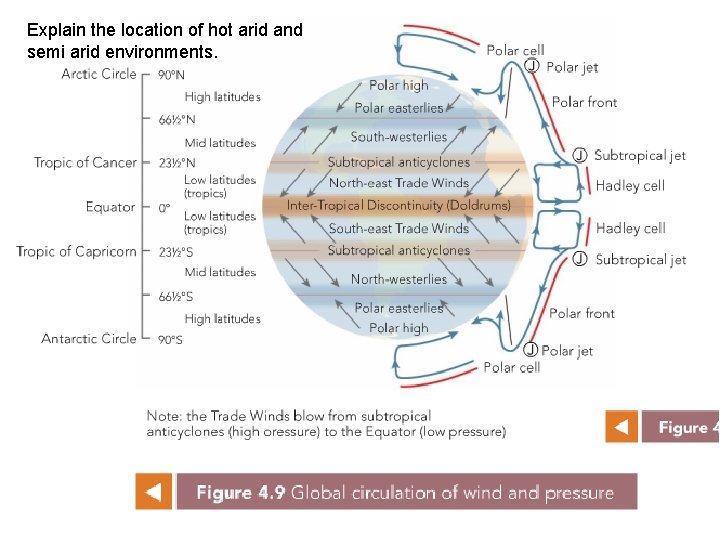
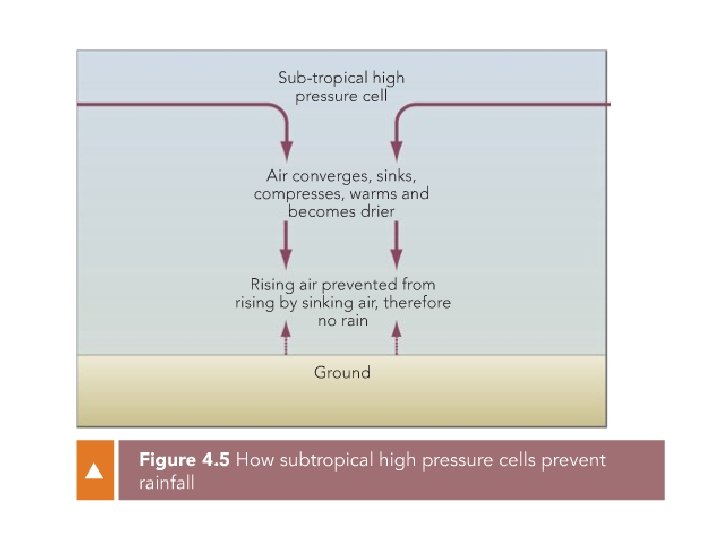
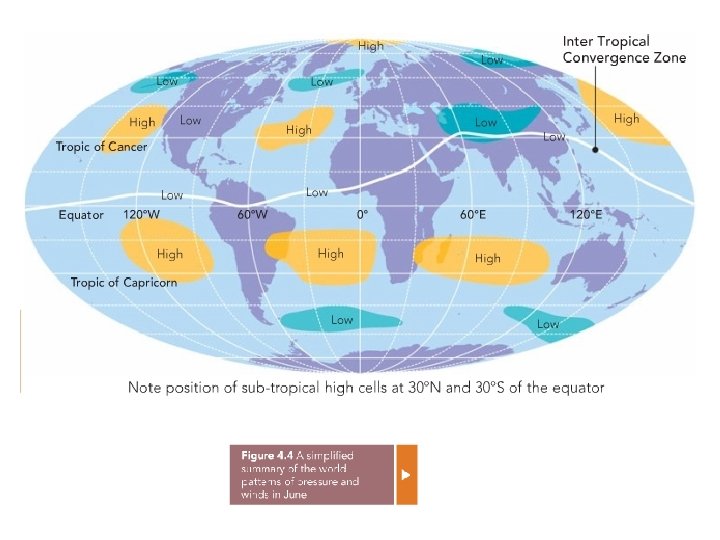
Explain the location of hot arid and semi arid environments.
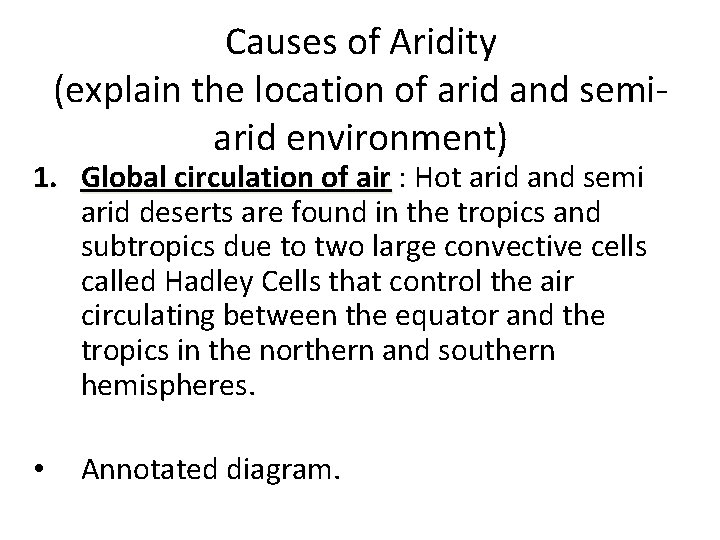
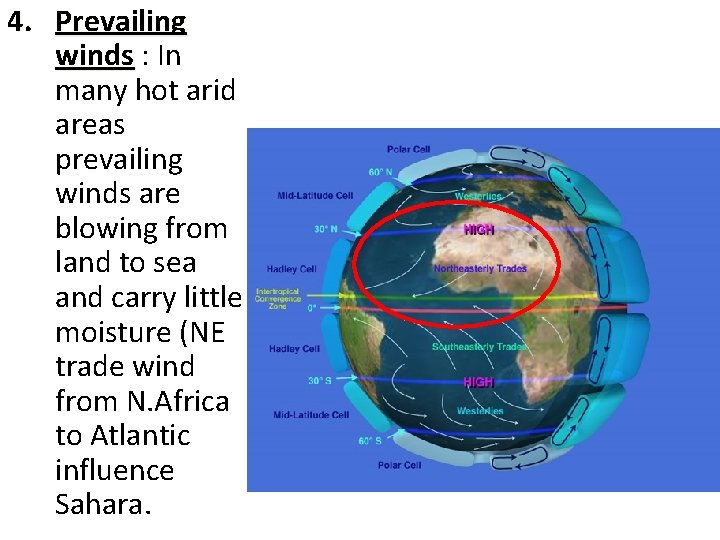
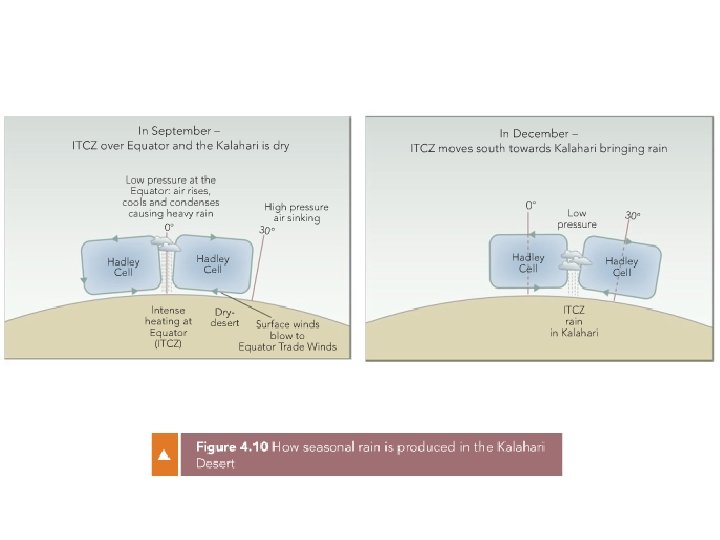
Causes of Aridity (explain the location of arid and semiarid environment) 1. Global circulation of air : Hot arid and semi arid deserts are found in the tropics and subtropics due to two large convective cells called Hadley Cells that control the air circulating between the equator and the tropics in the northern and southern hemispheres. • Annotated diagram.
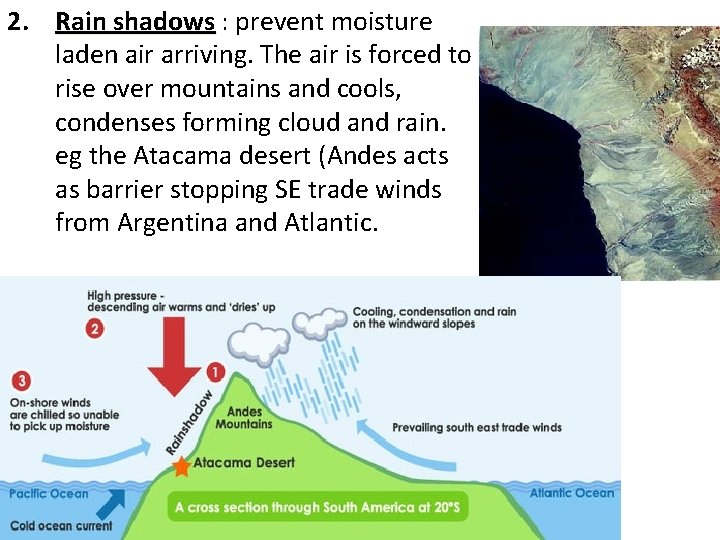
2. Rain shadows : prevent moisture laden air arriving. The air is forced to rise over mountains and cools, condenses forming cloud and rain. eg the Atacama desert (Andes acts as barrier stopping SE trade winds from Argentina and Atlantic. • .
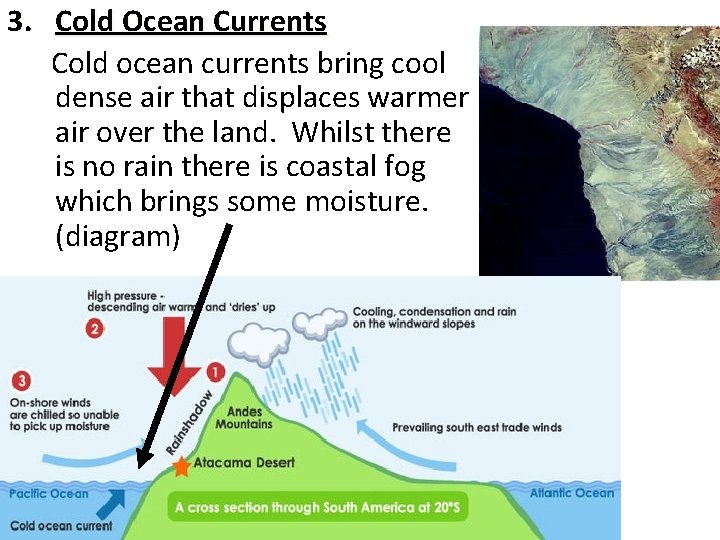
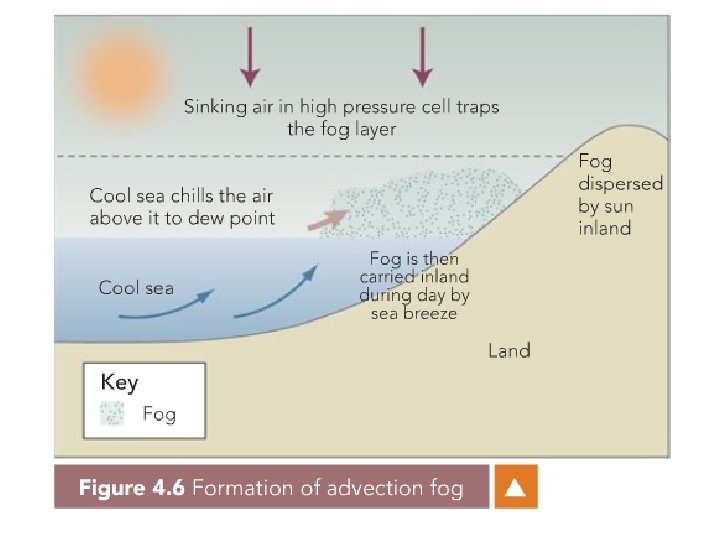
3. Cold Ocean Currents Cold ocean currents bring cool dense air that displaces warmer air over the land. Whilst there is no rain there is coastal fog which brings some moisture. (diagram) • .
4. Prevailing winds : In many hot arid areas prevailing winds are blowing from land to sea and carry little moisture (NE trade wind from N. Africa to Atlantic influence Sahara.
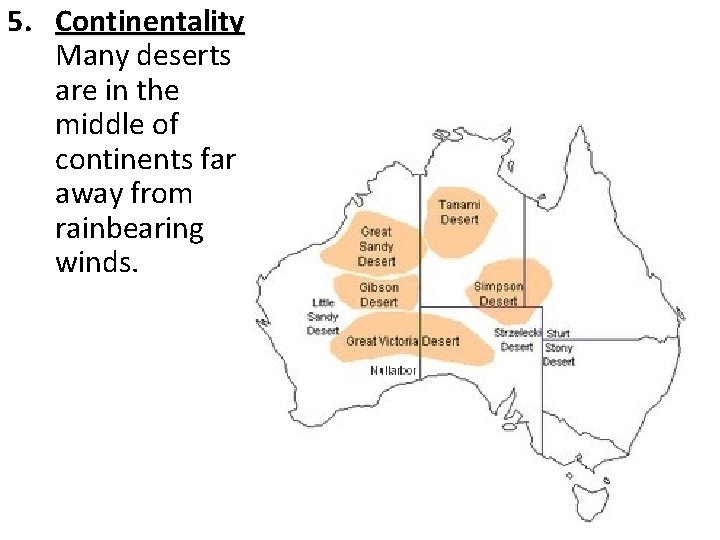
5. Continentality Many deserts are in the middle of continents far away from rainbearing winds.
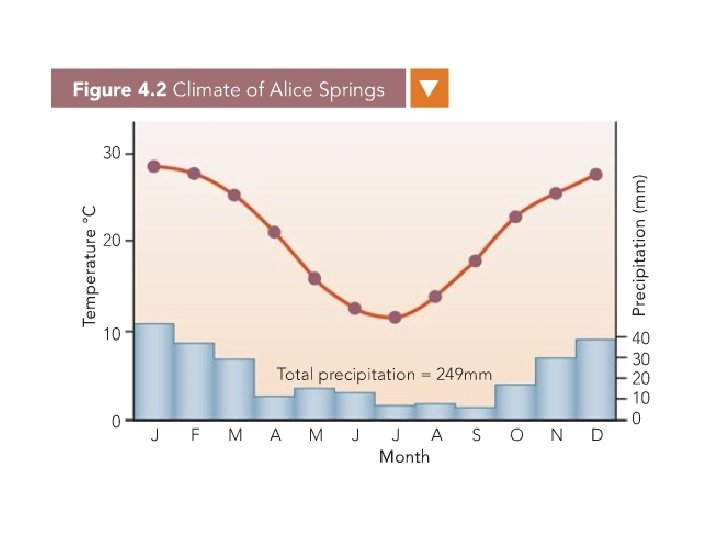
Question • Homework – green activity box • Draw graph and: • Annotate with important climatic features (max/min, range, seasonality). • Don’t do questions.
Why are hot-arid deserts fringed by semi-arid deserts?
Why are some deserts semi-arid? • Tropical semi-arid deserts are found between the equator and hot deserts, they fringe hot deserts southwards and polewards and experience seasonal rainfall in summer. • Reason for those near the equator – migration of hadley cells and rain at the equator due to migration of overhead sun between tropic of cancer and capricorn at the INTERTROPICAL CONVERGENGE ZONE (ITCZ). ITCZ normally at equator but migrates into tropical semi-arid areas bringing convectional rainfall (largely ineffective due to evaporation loss and intensity)
Why are some deserts semi-arid? • Sub-tropical, semi-arid areas polewards of the hot-arid deserts get rain in winter due to converging winds at polar fronts. Depressions occur bringing rain.
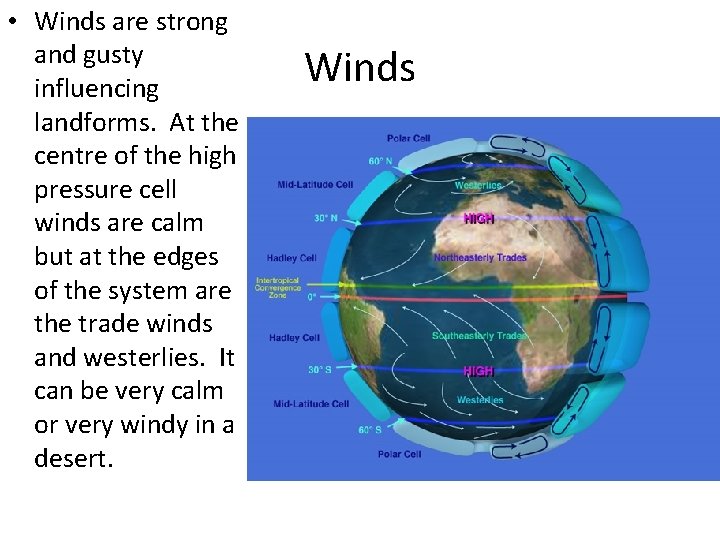
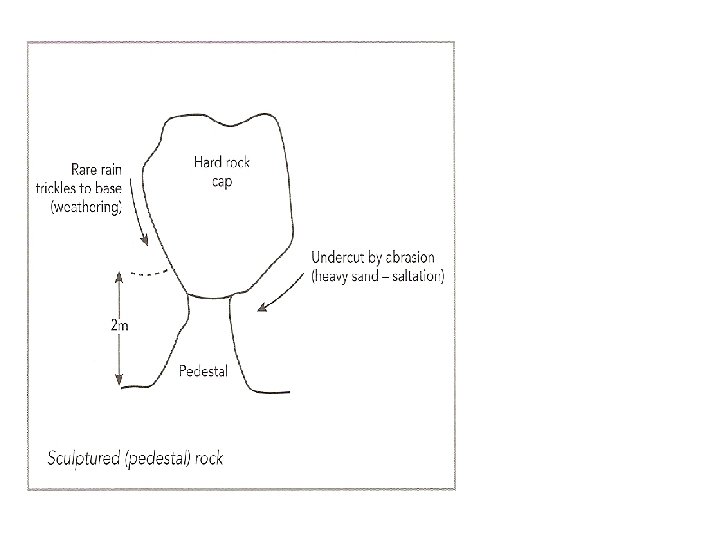
• Winds are strong and gusty influencing landforms. At the centre of the high pressure cell winds are calm but at the edges of the system are the trade winds and westerlies. It can be very calm or very windy in a desert. Winds
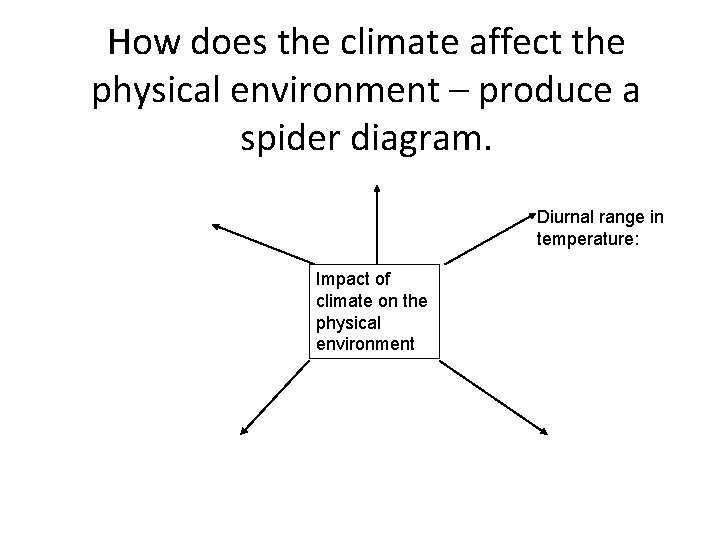
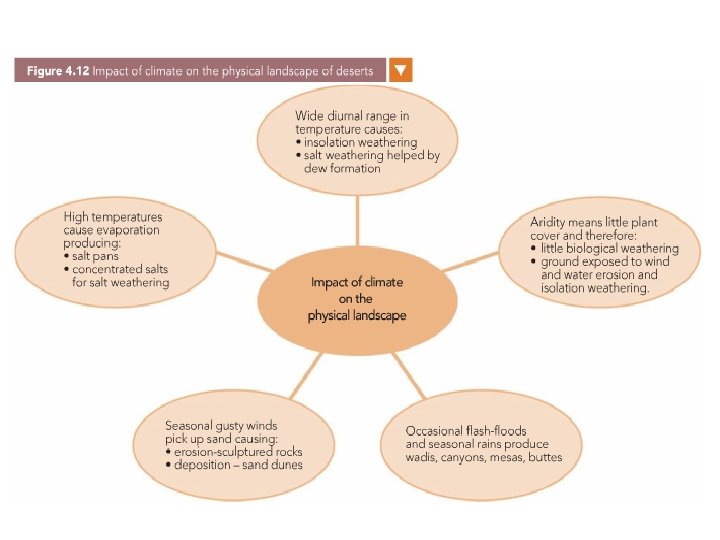
How does the climate affect the physical environment – produce a spider diagram. Diurnal range in temperature: Impact of climate on the physical environment
Describe and explain the location of hot arid and semi arid environments.
How does the climate affect the landscape in hot arid and semi arid environments? • Key features of the climate: • How do these key features of the climate affect the landscape and types of landforms in hot arid and semi-arid environments.
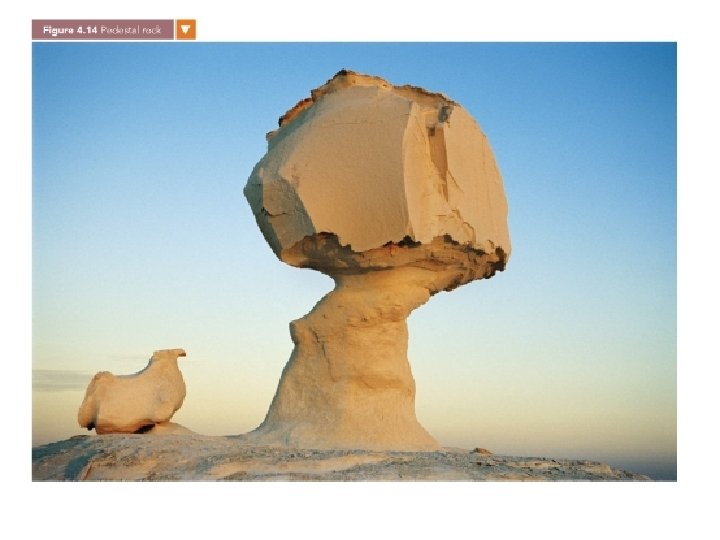
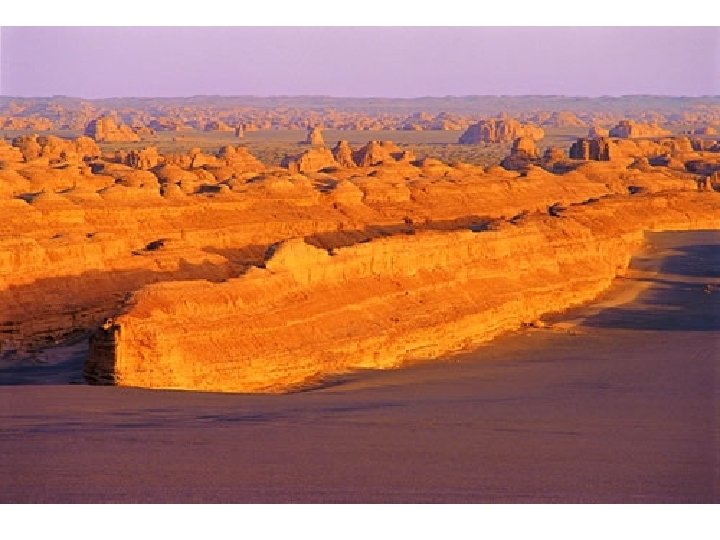
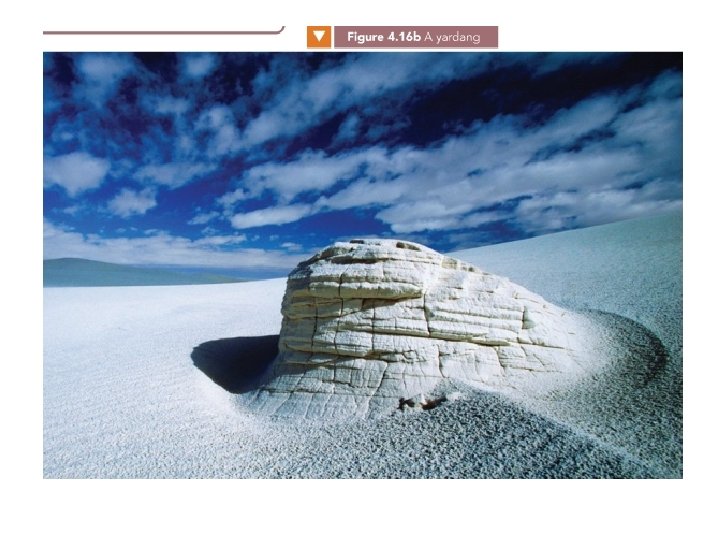
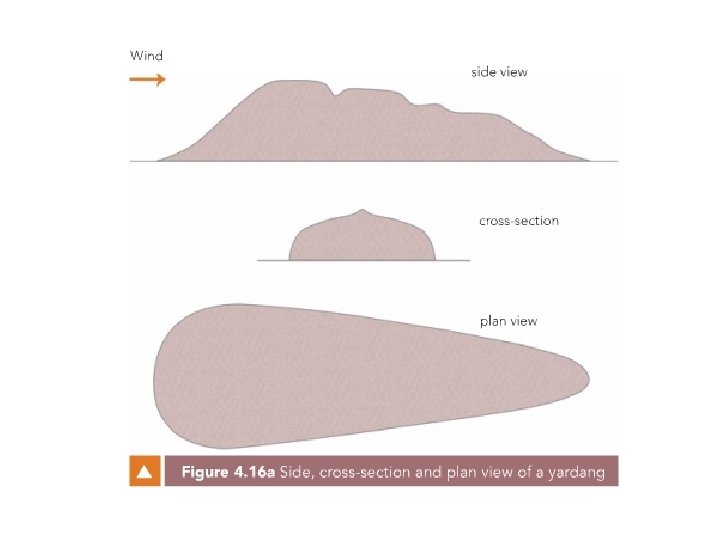
Prep • Find pictures of: • • Inselberg Yardang Saltpan Dunes Mesa and butte Pedestal rock Wadi Canyon
Processes that give hot arid and semiarid environments their distinctive characteristics. • Weathering. • Aeolian erosion • Water erosion
Weathering
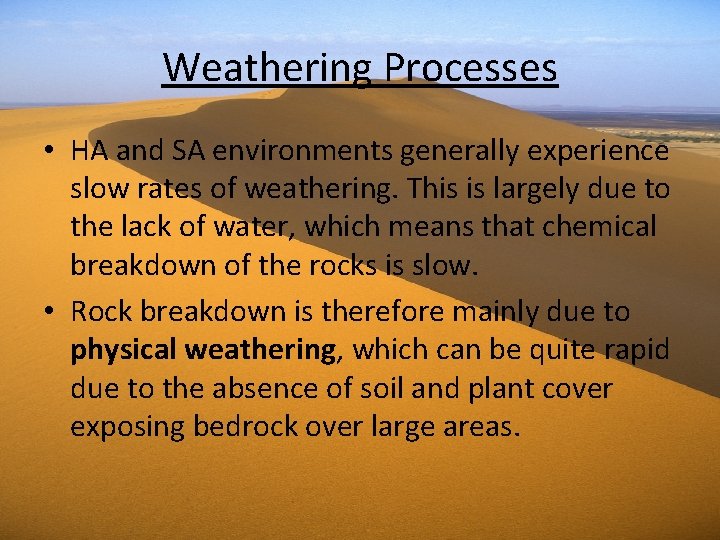
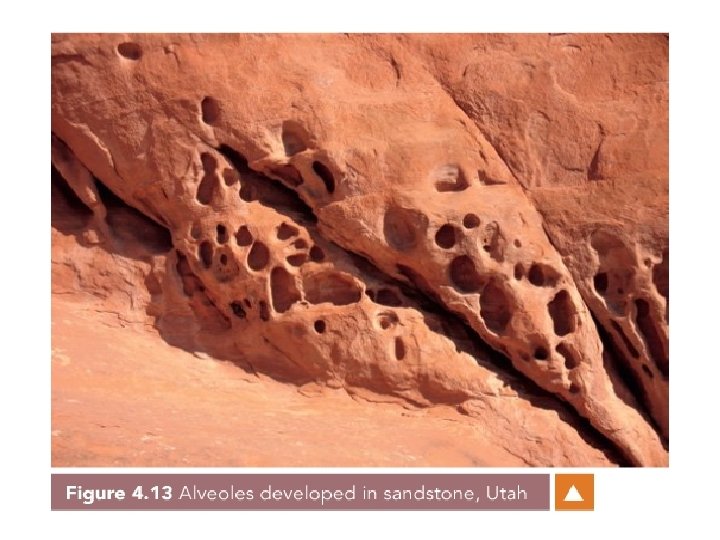
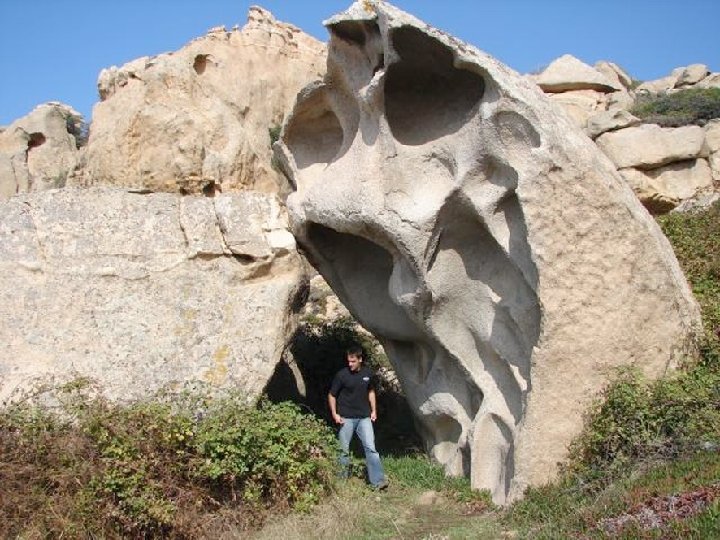
Weathering Processes • HA and SA environments generally experience slow rates of weathering. This is largely due to the lack of water, which means that chemical breakdown of the rocks is slow. • Rock breakdown is therefore mainly due to physical weathering, which can be quite rapid due to the absence of soil and plant cover exposing bedrock over large areas.
• Three important physical weathering processes are; • Freeze thaw • Salt weathering • Insolation weathering • Freeze thaw – possible where temperatures fluctuate above and below freezing and where there is sufficient moisture. Generally found in semi arid mid-latitude environments.
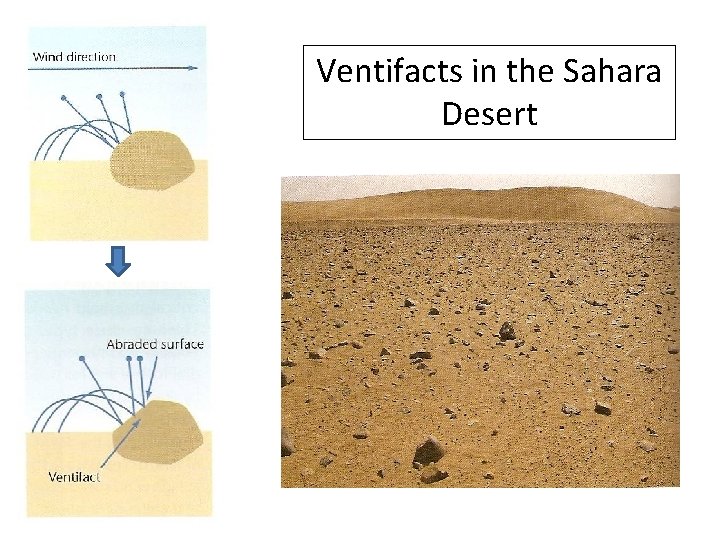
Aeolian erosion • Deflation • Abrasion • Attrition
Ventifacts in the Sahara Desert
Case Study – Arches National Park • • http: //www. desertusa. com/arches/ Where Characteristics Landforms and explanation of formation
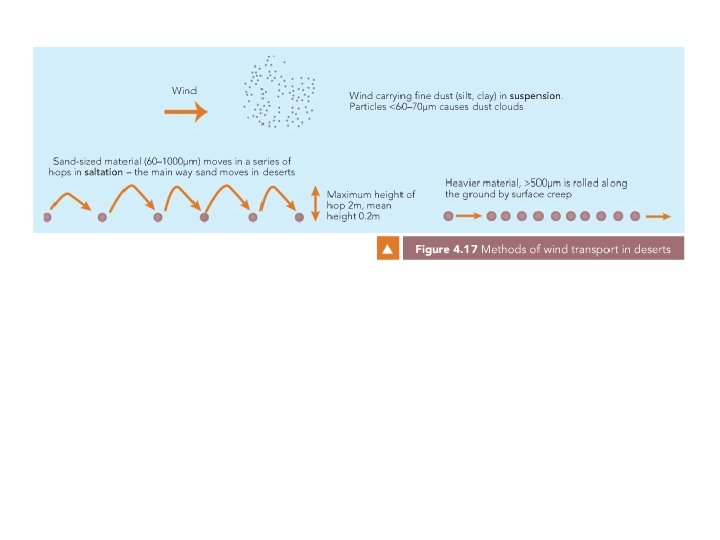
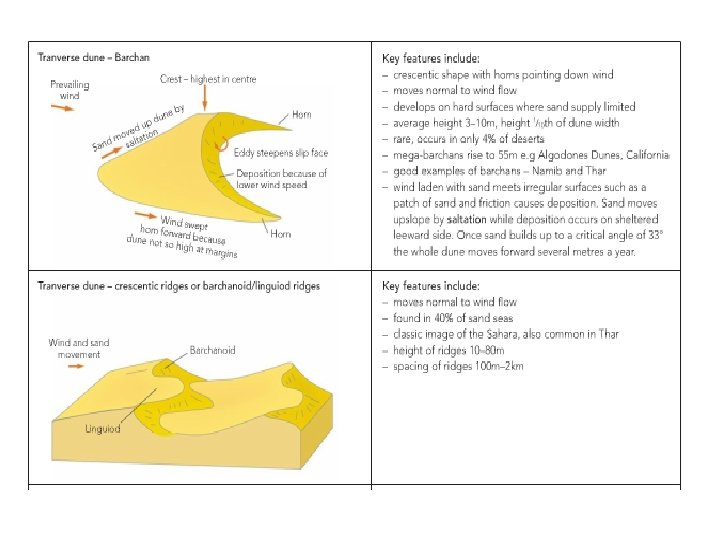
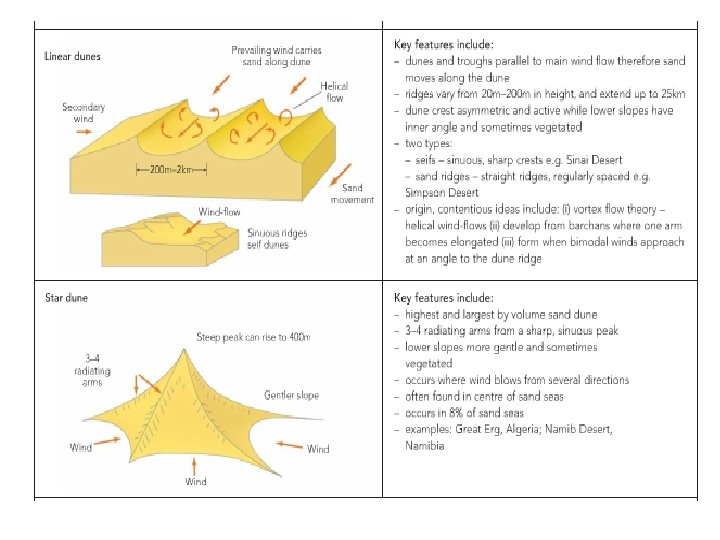
Aeolian transportation and deposition. • Application of knowledge • What types of transportation are there? • What landform of deposition exists in deserts? • Draw one!
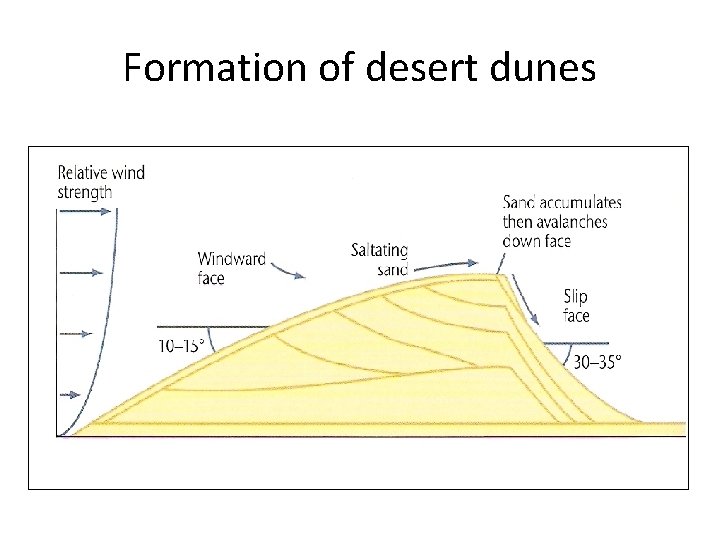
Formation of desert dunes
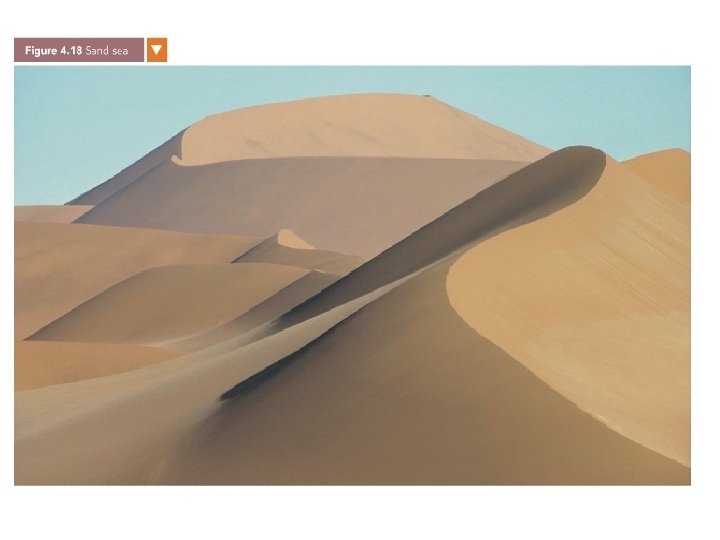
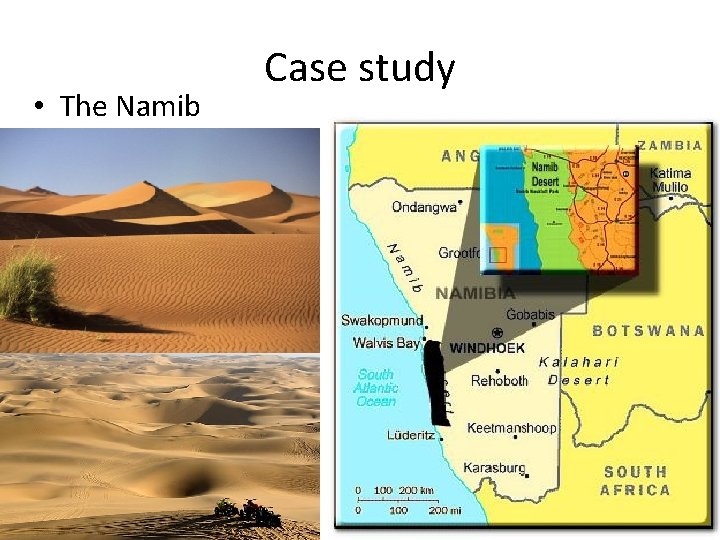
• The Namib Case study
Water erosion and deposition • Wadis, canyons and canyon landscape (pediments and alluvial fans) • Salt pans and playas.
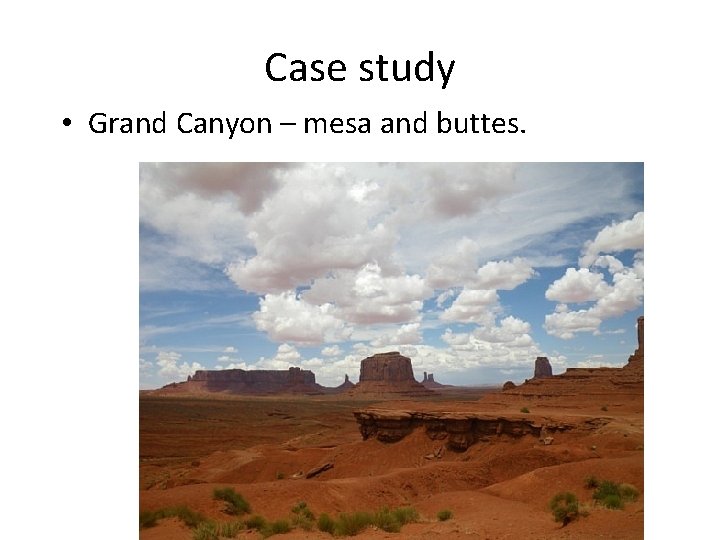
Case study • Grand Canyon – mesa and buttes.