
Hot Air Soldering for SMD Devices By Dave
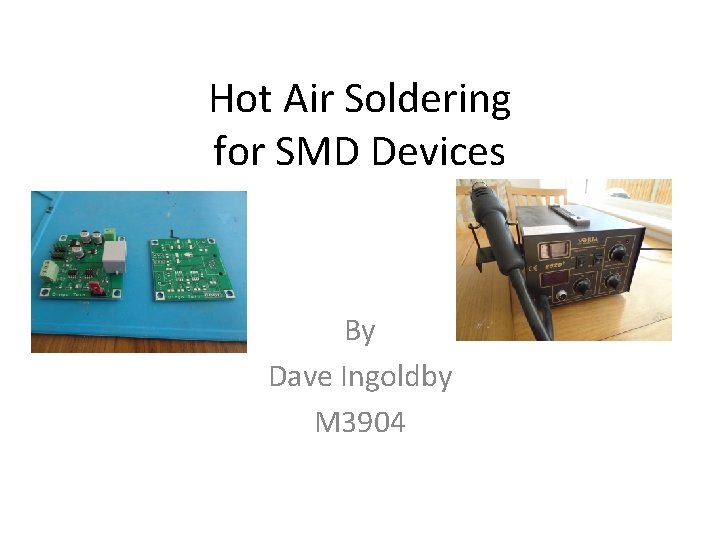
Hot Air Soldering for SMD Devices By Dave Ingoldby M 3904
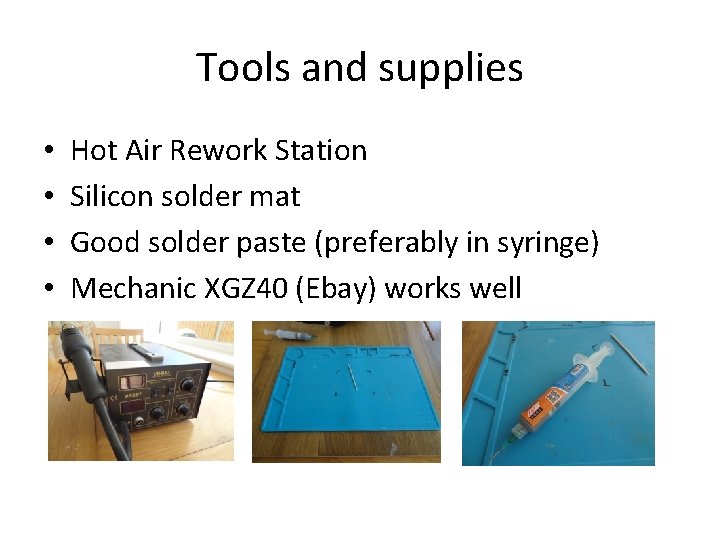
Tools and supplies • • Hot Air Rework Station Silicon solder mat Good solder paste (preferably in syringe) Mechanic XGZ 40 (Ebay) works well
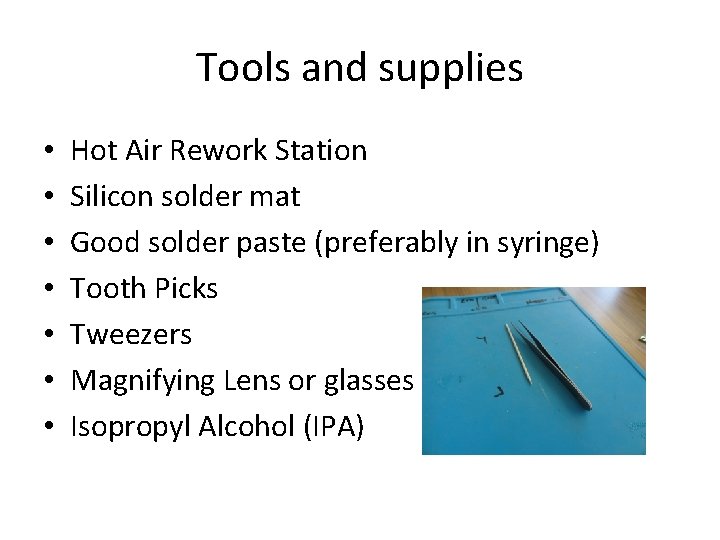
Tools and supplies • • Hot Air Rework Station Silicon solder mat Good solder paste (preferably in syringe) Tooth Picks Tweezers Magnifying Lens or glasses Isopropyl Alcohol (IPA)

Why Hot Air? • Gives a much better finish than normal soldering methods • Ideally suited to SMD devices • Much quicker once the technique has been mastered • Makes for “professional” looking boards
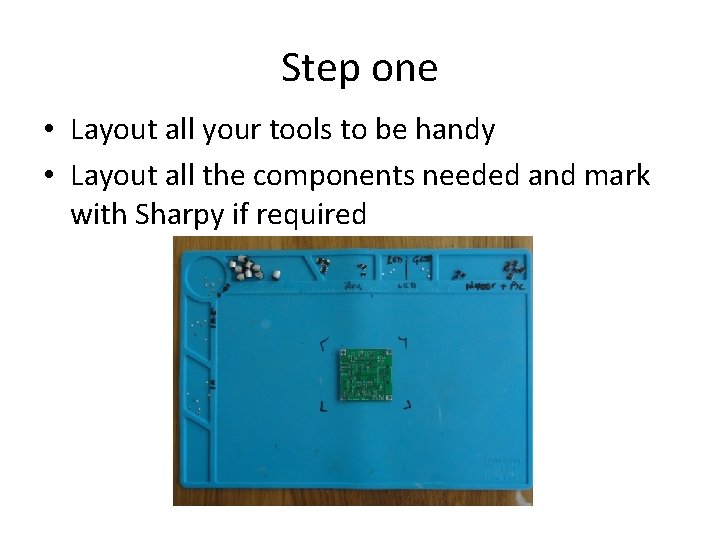
Step one • Layout all your tools to be handy • Layout all the components needed and mark with Sharpy if required
Step one • Layout all your tools to be handy • Layout all the components needed and mark with Sharpy if required • I always pre-program my PIC’s before assembly to make sure that I don’t have any faulty IC’s • Clean boards thoroughly with IPA • Make sure you are in a well ventilated area
Setting the Hot Air Gun • • Fit small tube tip – I use ¼” tip Set temperature depending on your solder I use about 320 deg C Set airflow to minimum Test the system to make sure it is functioning DON’T Burn yourself Or the carpet!! (Don’t ask)
Step 2 • Place the board on the silicon mat and warm it slightly • This helps the solder to stick when you put it on the pads • Carefully place a small amount of solder on each pad • Larger pads/components may need a bit more • Keep a toothpick handy to help get the solder in the right place

Adding Solder Paste
Step 3 • Place the components carefully on their pads with a pair of tweezers and toothpick • Try to put them on without too much moving around as this spreads the solder paste all over and could cause shorts • Work from the top to the bottom using tweezers to turn the board if required. (So as not to get Solderpaste on your sleeve)
Step 4 • Check to make sure that all components are correct and oriented correctly • It’s easy to get an electrolytic the wrong way round (Don’t ask) • When all is ready, fire up the gun and wait until the right temperature is reached • Not the fun bit arrives
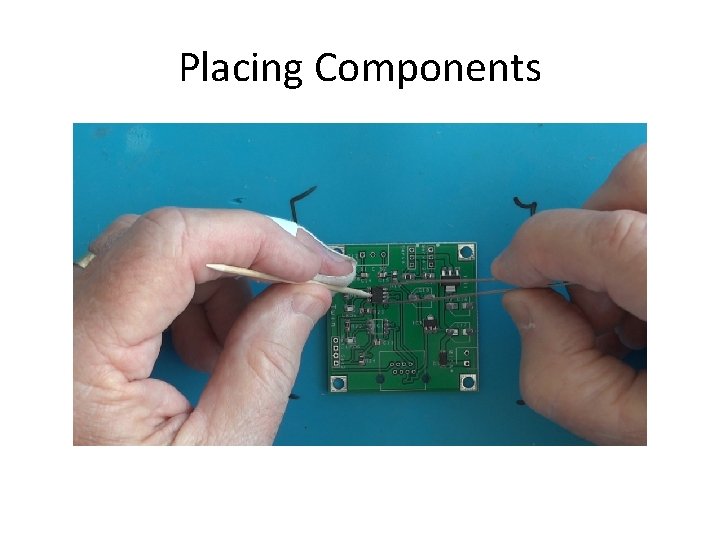
Placing Components
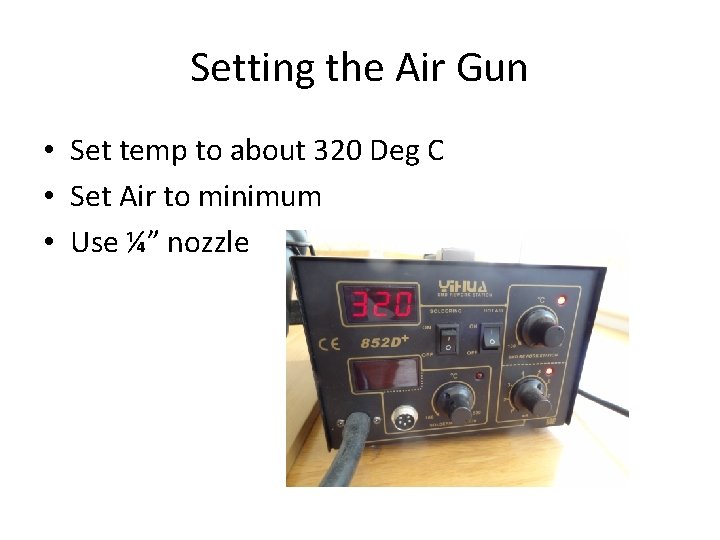
Setting the Air Gun • Set temp to about 320 Deg C • Set Air to minimum • Use ¼” nozzle
Soldering • Gently move the gun around the components starting from one end • Do not get too close as you could blow components away quite easily • Keep a toothpick handy in case a part starts to flap or move, but careful as they do burn • Note that as the solder starts to flow the components will jiggle to get themselves all lined up with the pads on the PCB
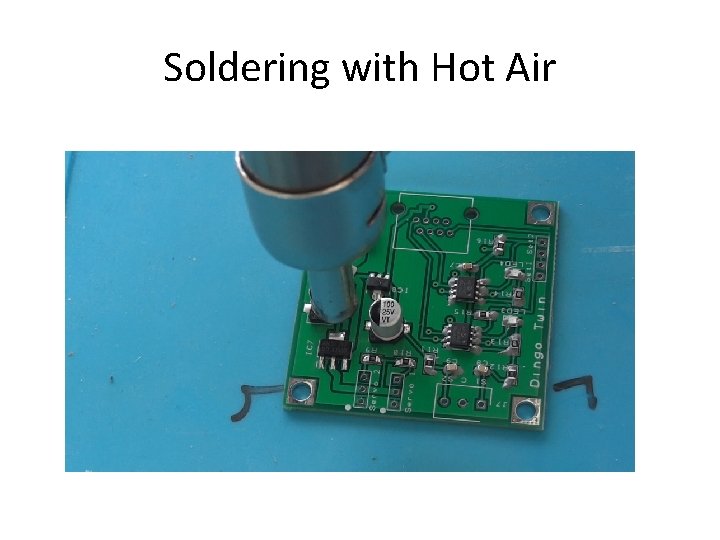
Soldering with Hot Air
Soldering 2 • Be careful to give the board enough heat to melt the solder but not too much to damage the board • I find that when the solder starts to flow it is quite easy to control this • Keep the air nozzle moving all the time • Lift off quickly is a component starts to lift of blow away.
Step 5 • Once the whole board has been flowed you can back off the air and switch it off • Note it will take a few minutes to cool down before the fan stops • Make sure that the nozzle is not too close to anything that could burn (Curtains, books etc) • Allow the board to cool before trying to pick it up
Step 6 • Examine the board carefully to make sure all joints have flowed properly • You can carefully add a bit more solder and reflow if you have a poor joint • Alternatively touch up the joint with a fine pointed soldering iron
Step 7 • Once you are happy that the board is good, you can now add any through hole components with a soldering iron in the normal way • When complete , test your board to make sure you haven’t missed anything • Hey presto! You’ve built a SMD board! • Now do a quick clean with some IPA and cloth

Video • Now for a quick video showing these steps in action • I will try to talk you through it as I go along. • Note I did 3 boards for this video using different angles so the cuts may look a little strange, but it’s just to give you the most comprehensive view of what is happening.
A later modification • I have now started Silk screening my boards as I make up quite a few at a time • For this I have had some templates cut and created a small home made Printing jig • There are many videos on You. Tube about this • Using Mechanic XG 50 solder paste for this also bought off Ebay in 50 g tub • I have been using both for over a year with no degredation in products as far as I can tell.
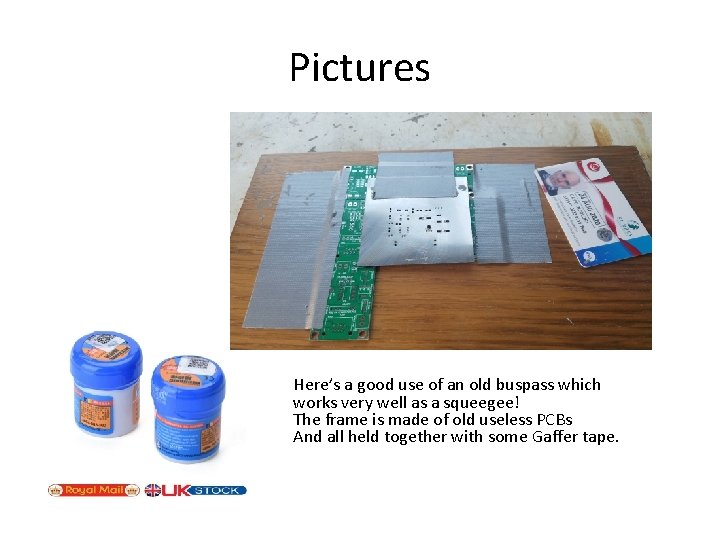
Pictures Here’s a good use of an old buspass which works very well as a squeegee! The frame is made of old useless PCBs And all held together with some Gaffer tape.

And that’s all folks • Thanks for watching • I will take questions now if you like • Dave.
- Slides: 23