Horticultural Products Export To EU Petronilla Mlowe MCIEH
- Slides: 19
• • Horticultural Products Export To EU Petronilla Mlowe MCIEH FRSPH CEO: FOOD SAFETY CONSULTING LTD Email: info@foodsafetytz. com Web: http: //foodsafetytz. com/
Overview • • Introduction Tanzania Fruits &Vegetables Current Market Constraints EU Consumer Trends Strategy to Access the EU Market Conclusion
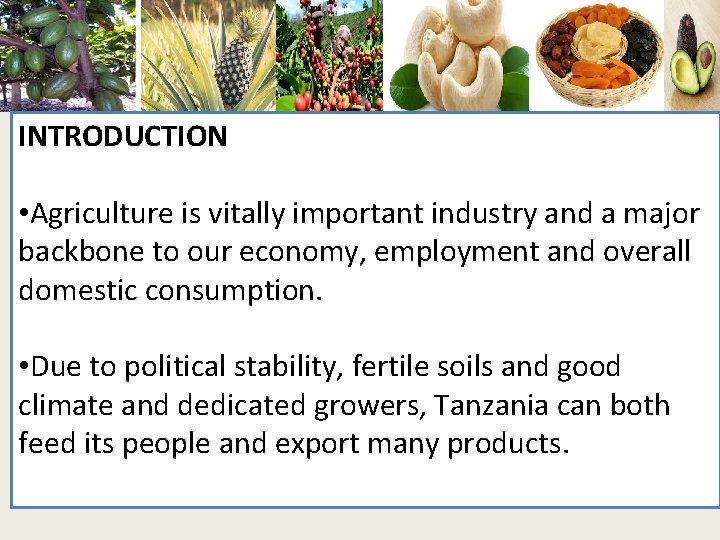
INTRODUCTION • Agriculture is vitally important industry and a major backbone to our economy, employment and overall domestic consumption. • Due to political stability, fertile soils and good climate and dedicated growers, Tanzania can both feed its people and export many products.
Tanzanian Produce • Mangetout, ginger, galanger, herbs, tamarind, peas, tomatoes, cabbages, broccoli, kale, chinese spinach, herbs , lettuce, onions, carrots, irish potatoes, flowers, baby corn, carrots, spices, chayote, pak choi, sugar cane, • Oranges, lemons, avocado, peaches, coconut, plums, baobab, custard apple, jack fruits, sour sop, carambola, jackfruit, pommello, rambutan, sugar apple, • Beans, cashew nuts, coffee, cocoa, cangoes, • Bananas, plantain, matoke, chillies, mangoostine, tindoori, okra, aubergine, sweet potatoes, pineapples, guavas, passion fruits, lemon grass, etc.
CURRENT MARKET • Domestic Market • Continental- within the region Ø Domestic + Regional- approximately 80 -90% • Export – Middle and Far East, EU and the rest of the world , approximately 10 -20% Ø Approximately 40% of Fresh Fruit and Vegetable (FFV) wastage during post harvest
Why only 10 -20% Export? • Rejection of consignments leading to economic losses to the exporter • Deterioration of product due to pre and post harvest handling ( farming, harvest, transportation, ect) • Labelling- omitting importance information on the labels i. e. false claims, no nutritional information i. e. Organic, cures TB ect • Lack of documents accompanying the consignments • Pesticide residues exceeding MRL/ banned chemicals
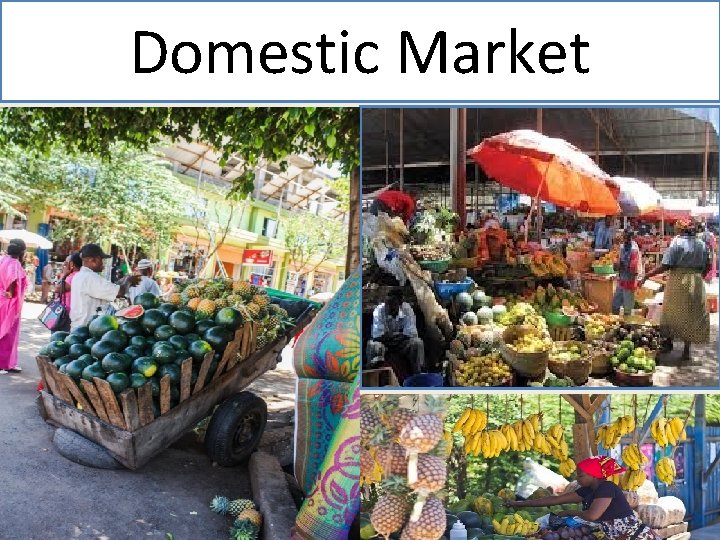
Domestic Market
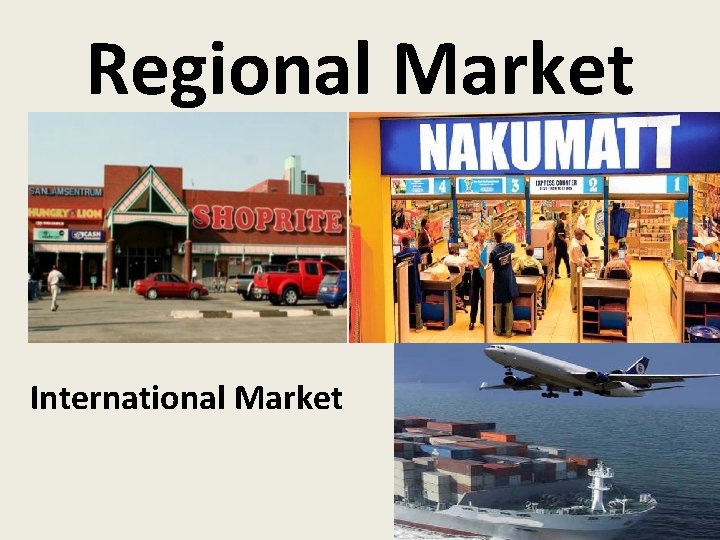
Regional Market International Market
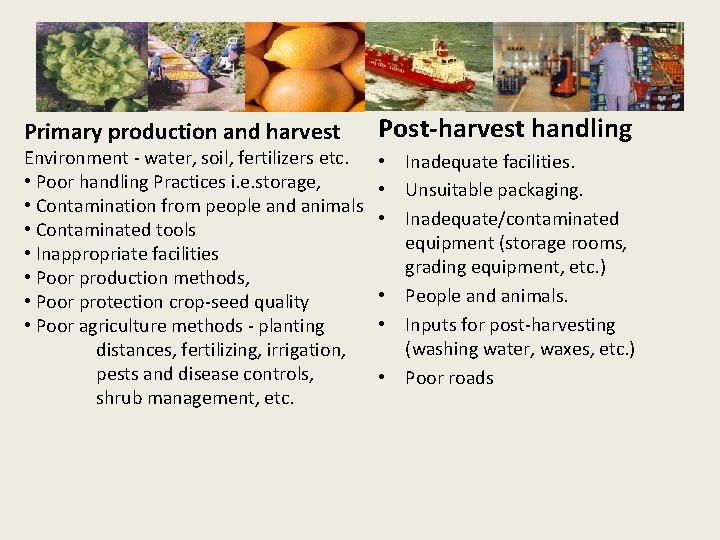
Primary production and harvest Environment - water, soil, fertilizers etc. • Poor handling Practices i. e. storage, • Contamination from people and animals • Contaminated tools • Inappropriate facilities • Poor production methods, • Poor protection crop-seed quality • Poor agriculture methods - planting distances, fertilizing, irrigation, pests and disease controls, shrub management, etc. Post-harvest handling • Inadequate facilities. • Unsuitable packaging. • Inadequate/contaminated equipment (storage rooms, grading equipment, etc. ) • People and animals. • Inputs for post-harvesting (washing water, waxes, etc. ) • Poor roads
Constraints • FOOD SAFETY REGULATIONS • Lack of appropriate food safety policy, shortage of internationally accredited laboratories and overlapping laws • Programs for quality assurance of FFV • National Code of Practice and guidance to include FSMS. i. e. GAP, GMP etc. • Capacity building at both macro and grass root levels’ Infrastructures, such as laboratories, GAP auditors and market requirement information, are critical for food safety standards compliances and market access • Modernize the existing food legislation to make it more coherent and to keep abreast of changing trends as well as provide greater understanding for consumers on the importance and access to safe food -FAO
• Inadequate knowledge on food safety best practices present a challenge of quality compliance • Poor infrastructure & few facilities– lack of high quality packaging, cold storage rooms and reefer vehicles to facilitate post harvest handling. • Inadequate farmers knowledge on economic chain evaluation i. e. tend to copy prices from each other
• Lengthy, bureaucratic customs procedures at the point of exit • Power Supply cuts. . as usual ‘’umeme wa mgao’’ affecting post harvest handling. . • Financial Constraints.
EU Consumer Trends • Consumer behaviour pave the way on initiatives, policies, food demand, i. e. Organic, local, game. healthier, super foods e. c. t. • BREXIT can open doors to negotiate international trade agreements with non-EU trading partners including Tanzania. • Immigrants – Introduction of new varieties
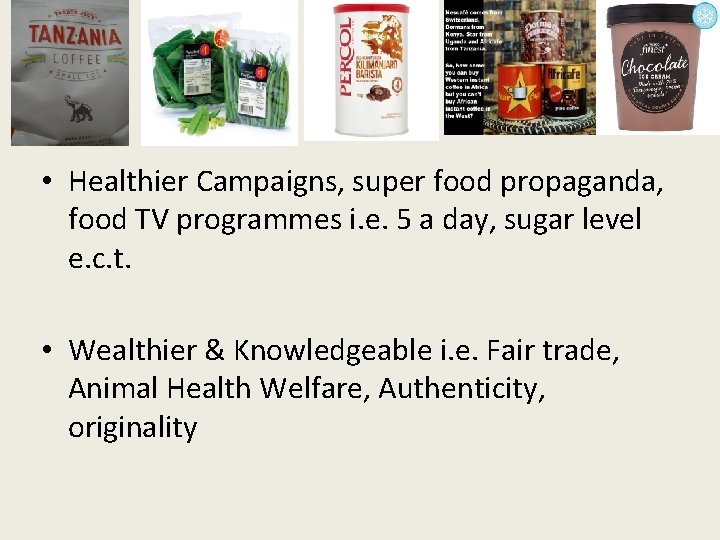
• Healthier Campaigns, super food propaganda, food TV programmes i. e. 5 a day, sugar level e. c. t. • Wealthier & Knowledgeable i. e. Fair trade, Animal Health Welfare, Authenticity, originality
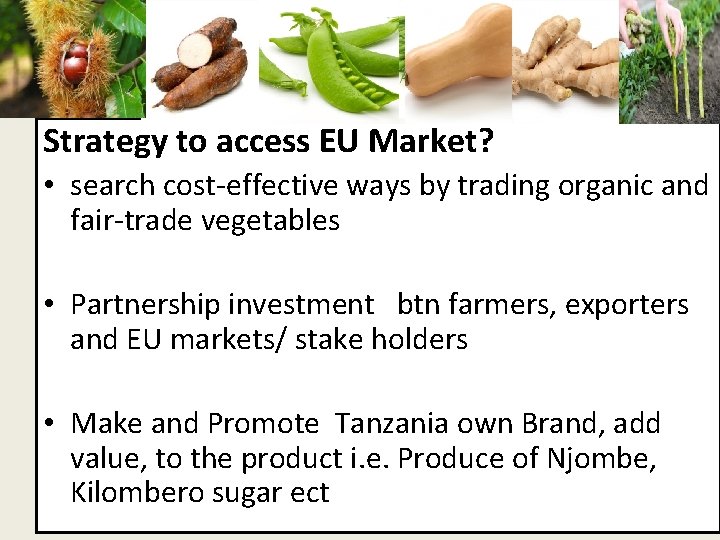
fv Strategy to access EU Market? • search cost-effective ways by trading organic and fair-trade vegetables • Partnership investment btn farmers, exporters and EU markets/ stake holders • Make and Promote Tanzania own Brand, add value, to the product i. e. Produce of Njombe, Kilombero sugar ect
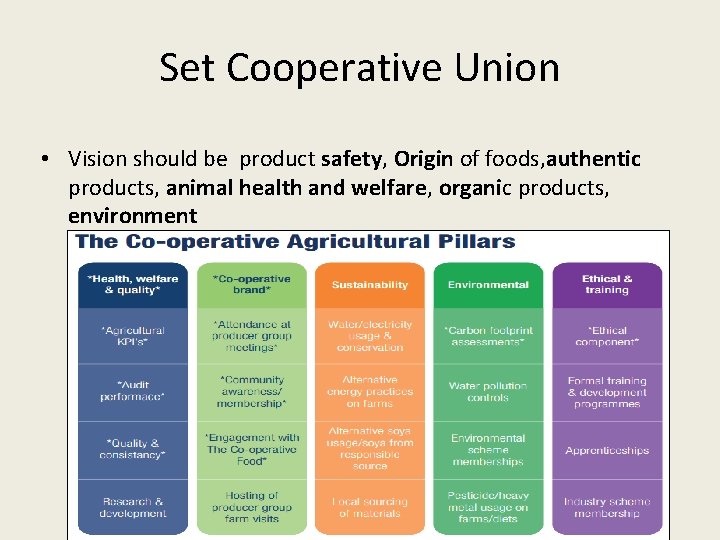
Set Cooperative Union • Vision should be product safety, Origin of foods, authentic products, animal health and welfare, organic products, environment
Contd: • Strengthen FFV farmers groups with flowers exporters to increase export potential • Certification boards links to small scale growers schemes i. e. Global-GAP, Fair trade, BRC • Build cold room storage units by the air ports, Provide cargo airline/ charter, Improve infrastructure to minimize traffic • Introduce new FFV varieties to compete with EU supply chain
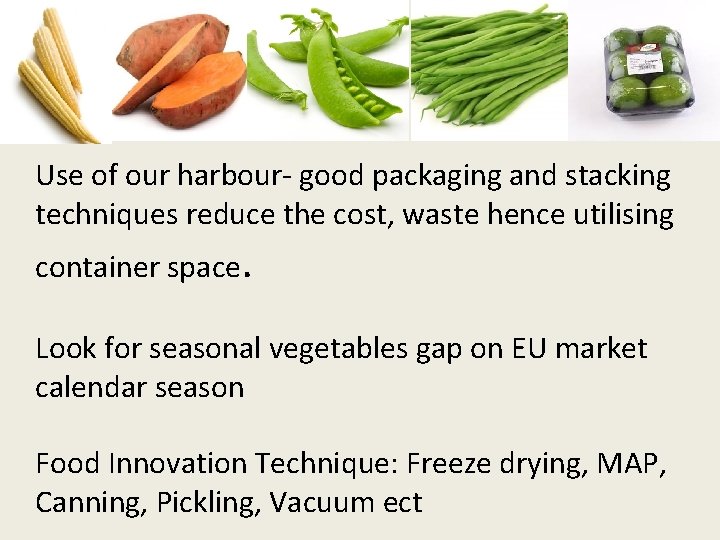
Use of our harbour- good packaging and stacking techniques reduce the cost, waste hence utilising container space. Look for seasonal vegetables gap on EU market calendar season Food Innovation Technique: Freeze drying, MAP, Canning, Pickling, Vacuum ect
Conclusion • Institutional changes-integration of public and private sector (inter-institutional and multi-stakeholder involvement • Getting acceptance of National Codes from the importing markets (recognition of the Code and the process of implementation). • Setting reliable auditing systems. • Development of National Codes/Standards and National Programmes covering expectations of different stakeholders • Development accreditation systems for the national programme.