
Horse Judging Anatomy Halter Conformation Balance Structure and
Horse Judging
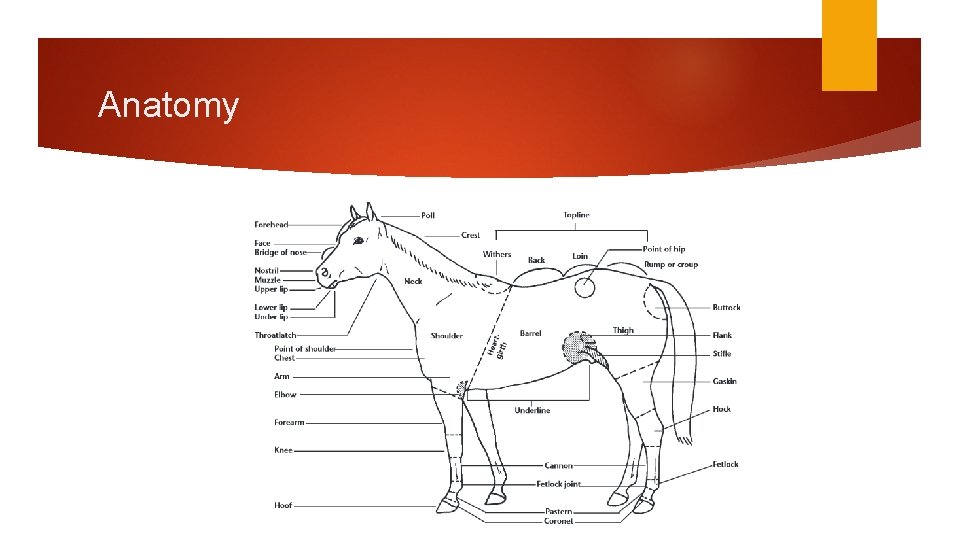
Anatomy
Halter Conformation Balance Structure and travel Muscle Breed and Sex characteristics
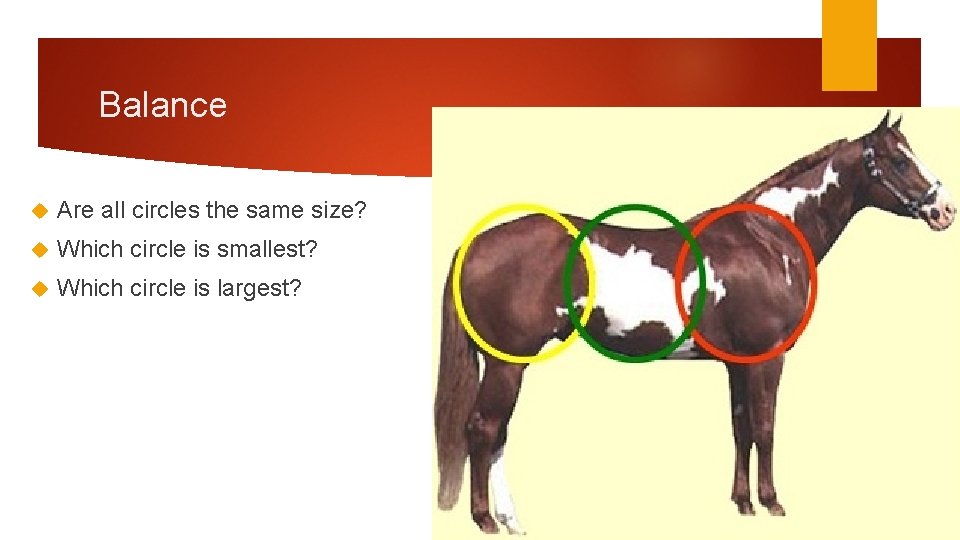
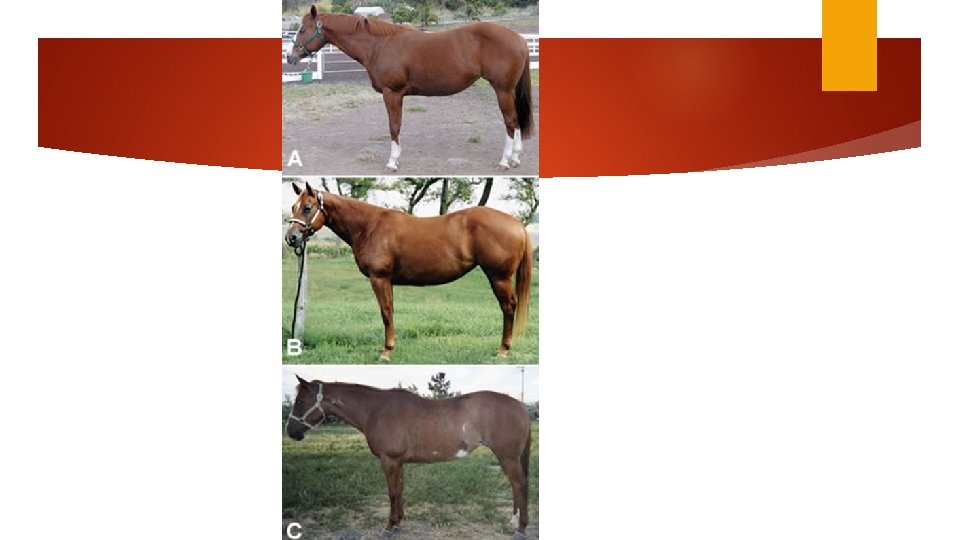
Balance Are all circles the same size? Which circle is smallest? Which circle is largest?
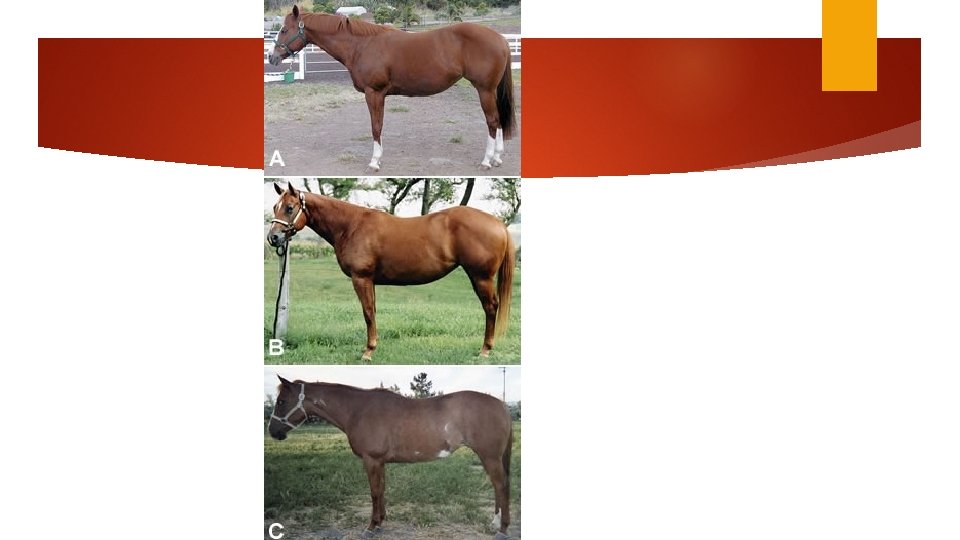
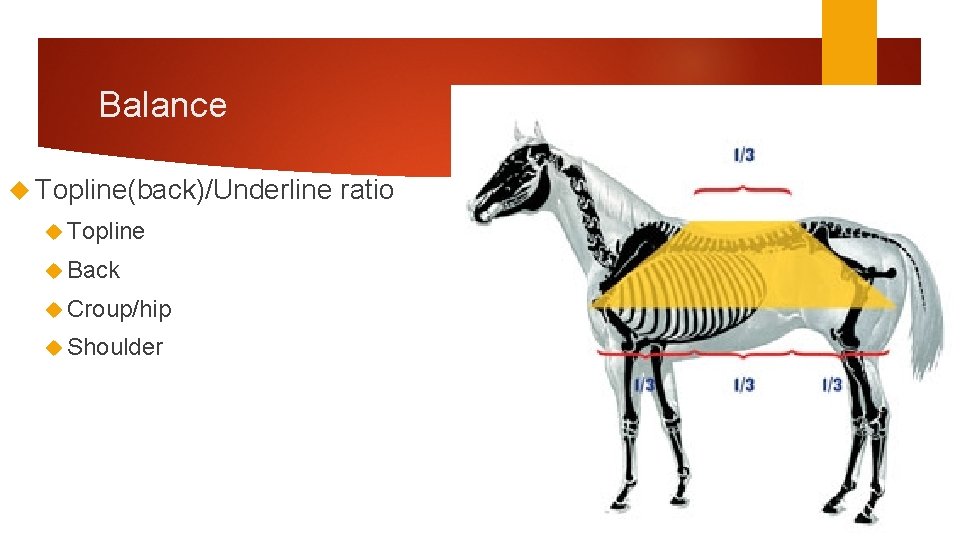
Balance Topline(back)/Underline Topline Back Croup/hip Shoulder ratio
Structure and Travel Shoulders Back Underline Croup Legs Neck Head
Structure Shoulders Support weight Preserve Aid the stability and balance of body the hind legs in propelling the body forward Resist injurious effect of wear and tear on their own structures
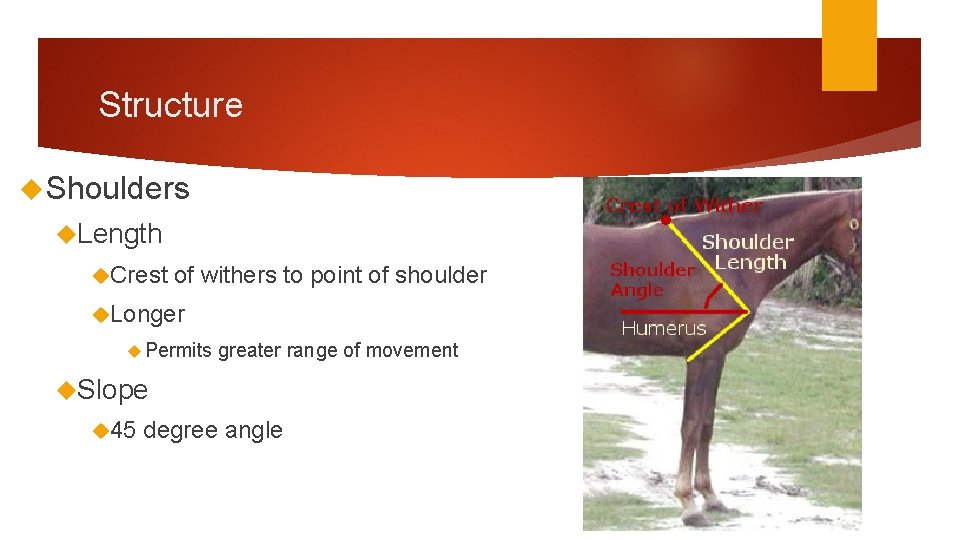
Structure Shoulders Length Crest of withers to point of shoulder Longer Permits greater range of movement Slope 45 degree angle
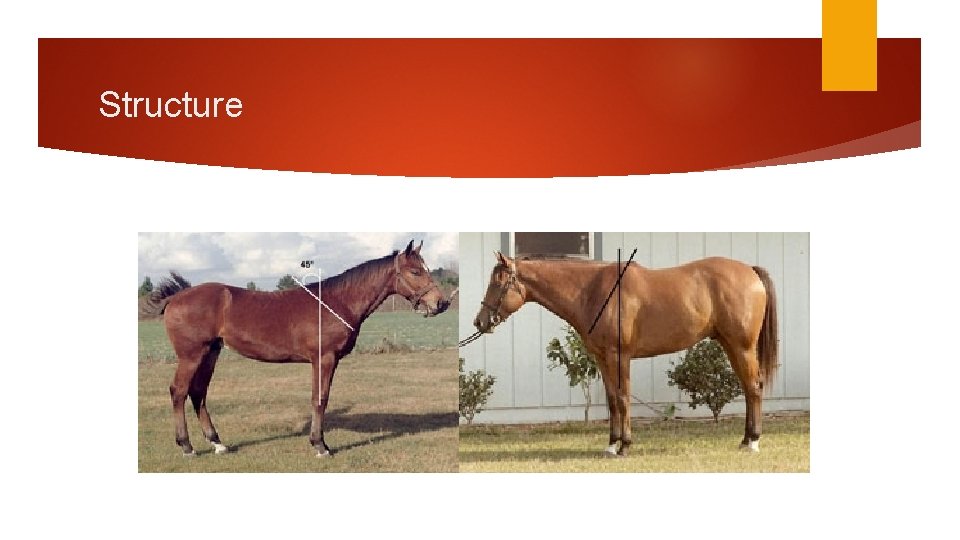
Structure Long and Sloping Shoulder Short and straight shoulder Greater extension of the forearms Allow the front leg to be raised higher so the stride can be fully completed before the foot strikes the ground Causes shorter steps and harder concussion); Produce a rough gait Retard rotation of the scapulae causing the horse to work its front legs with less freedom Shoulders are sometimes referred to as “pegged” when shoulder action seems retarded rather than free Give power and strength to the swing of the forearm Contribute to ease, freedom and style of action Disperse the damaging effects of concussion
Structure
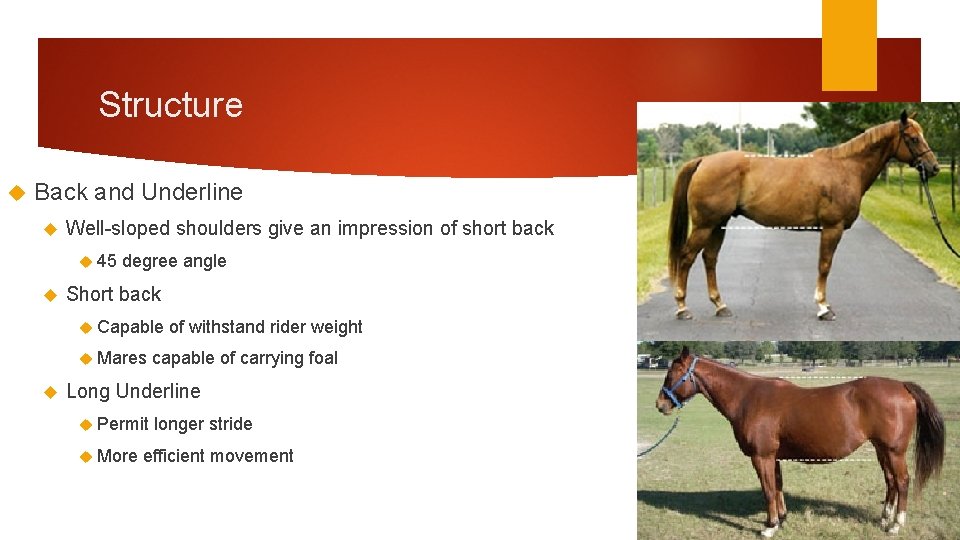
Structure Back and Underline Well-sloped shoulders give an impression of short back 45 degree angle Short back Capable Mares of withstand rider weight capable of carrying foal Long Underline Permit More longer stride efficient movement
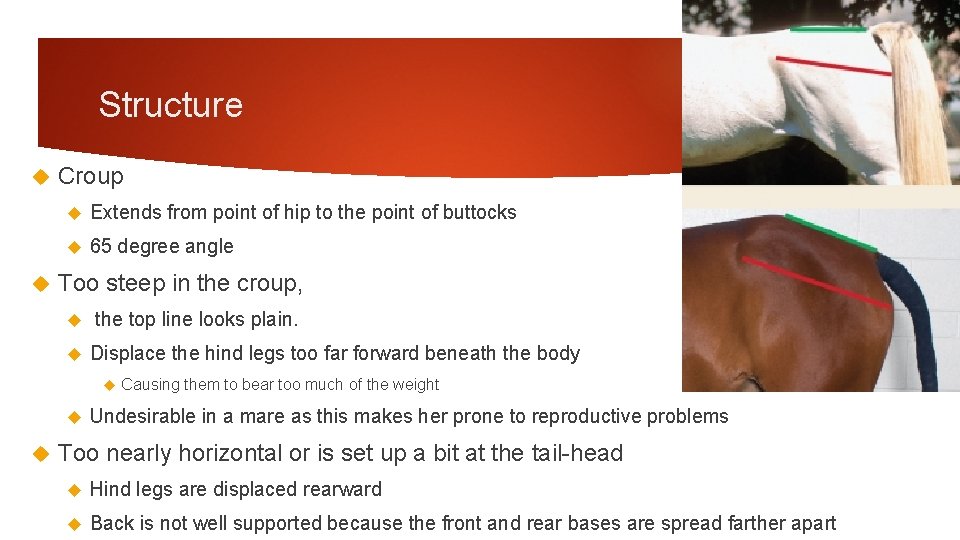
Structure Croup Extends from point of hip to the point of buttocks 65 degree angle Too steep in the croup, the top line looks plain. Displace the hind legs too far forward beneath the body Causing them to bear too much of the weight Undesirable in a mare as this makes her prone to reproductive problems Too nearly horizontal or is set up a bit at the tail-head Hind legs are displaced rearward Back is not well supported because the front and rear bases are spread farther apart
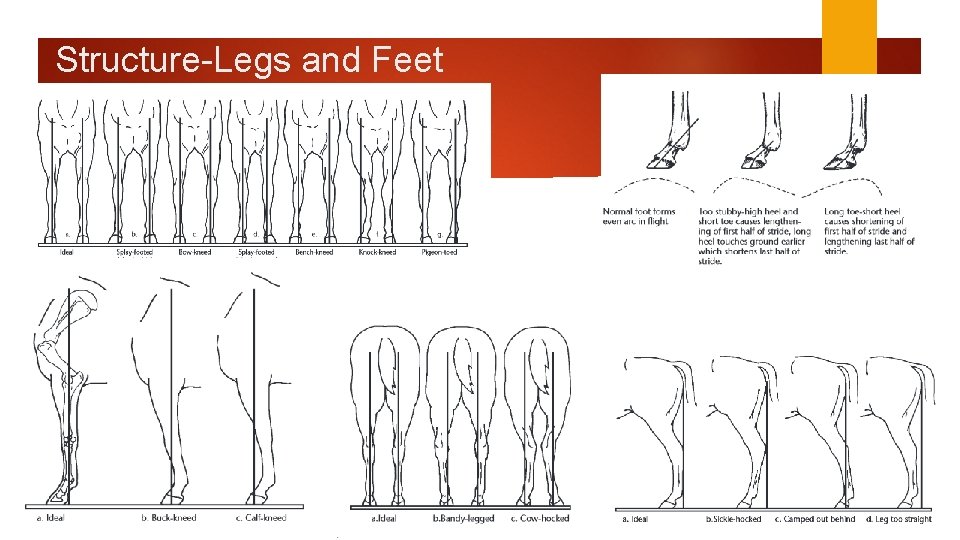
Structure-Legs and Feet
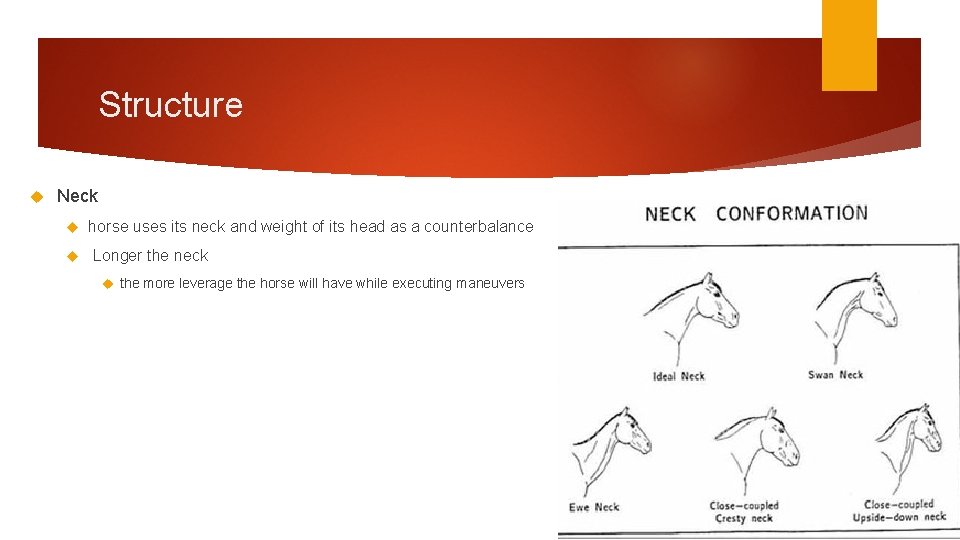
Structure Neck horse uses its neck and weight of its head as a counterbalance Longer the neck the more leverage the horse will have while executing maneuvers
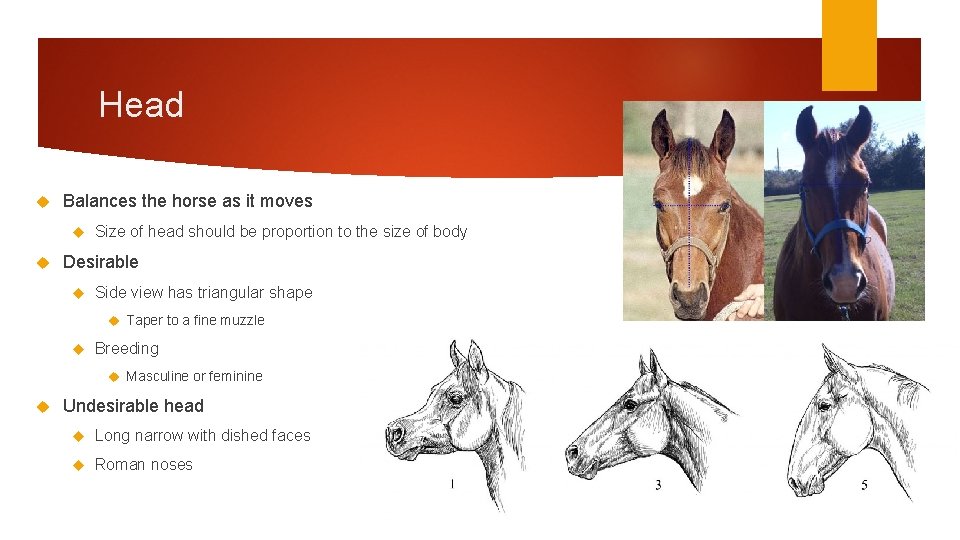
Head Balances the horse as it moves Size of head should be proportion to the size of body Desirable Side view has triangular shape Taper to a fine muzzle Breeding Masculine or feminine Undesirable head Long narrow with dished faces Roman noses
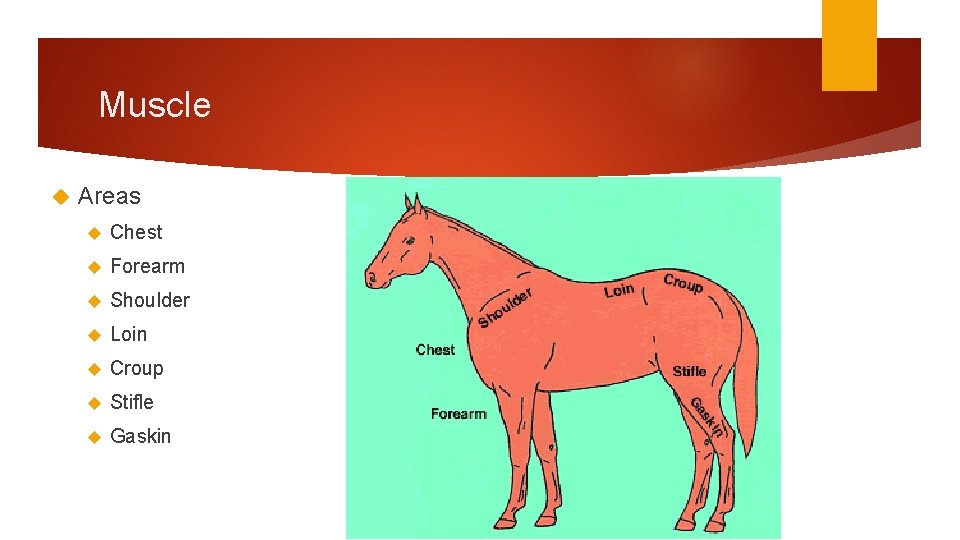
Muscle Areas Chest Forearm Shoulder Loin Croup Stifle Gaskin
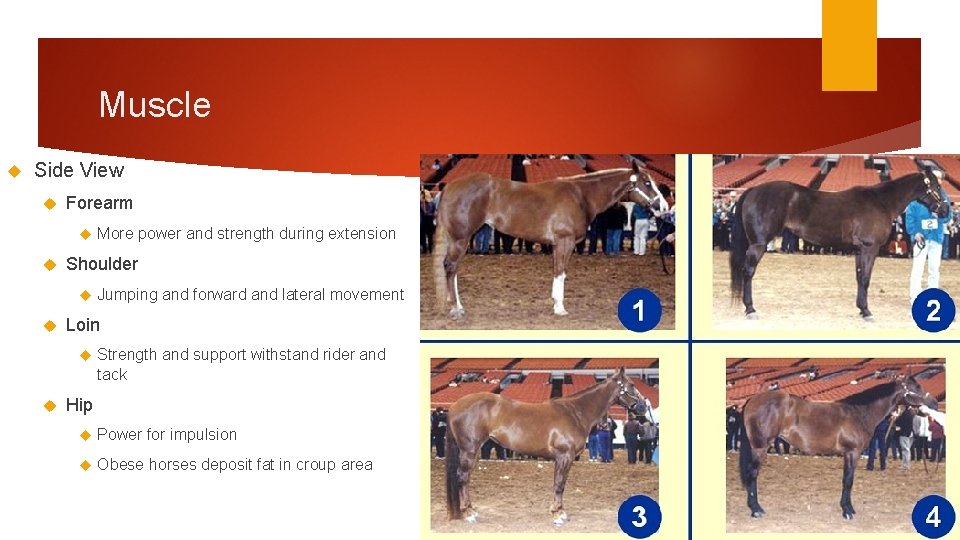
Muscle Side View Forearm Shoulder Jumping and forward and lateral movement Loin More power and strength during extension Strength and support withstand rider and tack Hip Power for impulsion Obese horses deposit fat in croup area
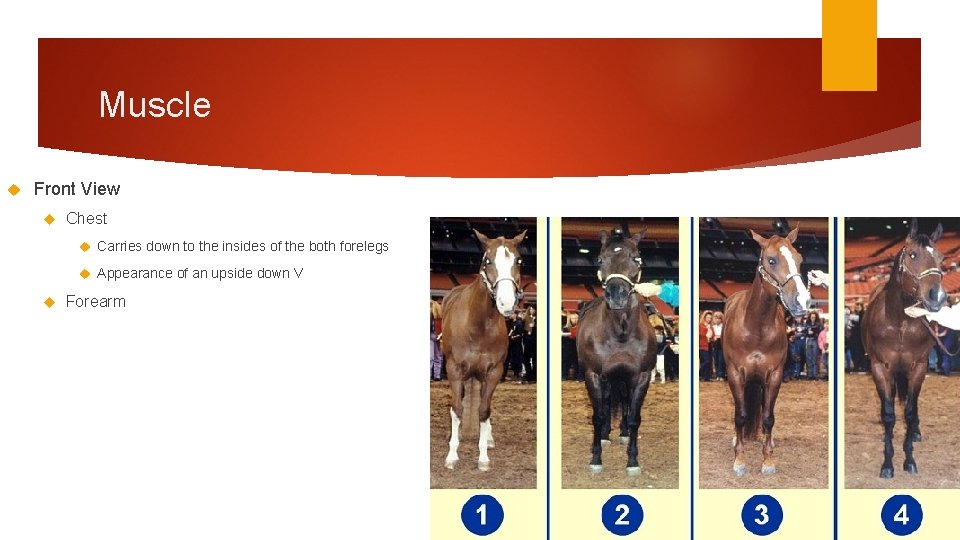
Muscle Front View Chest Carries down to the insides of the both forelegs Appearance of an upside down V Forearm
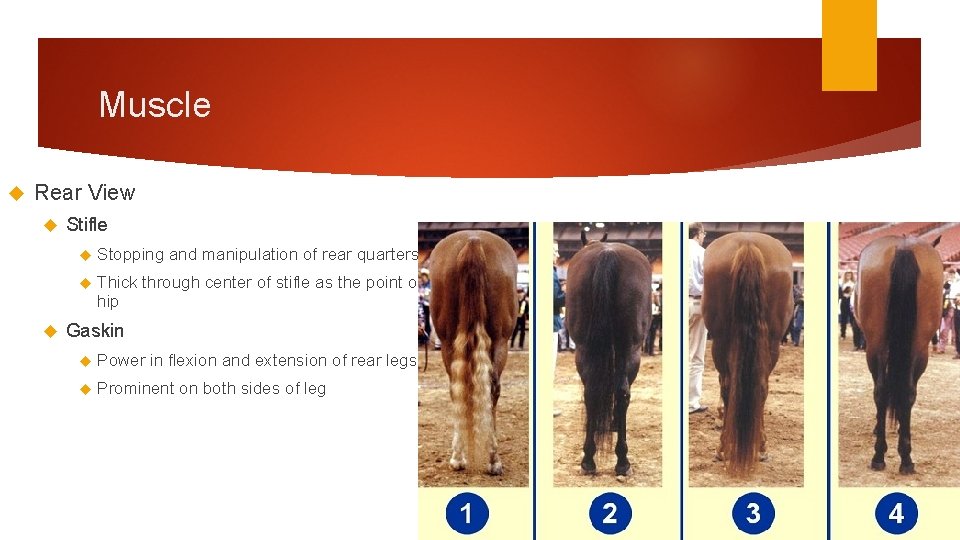
Muscle Rear View Stifle Stopping Thick hip and manipulation of rear quarters through center of stifle as the point of Gaskin Power in flexion and extension of rear legs Prominent on both sides of leg
- Slides: 21