
Hormones Have Many Actions in the Body Hormones
Hormones Have Many Actions in the Body Hormones are chemicals, secreted by one cell group, that travel through the bloodstream to act on targets. Endocrine glands release hormones within the body. Exocrine glands use ducts to secrete fluids such as tears and sweat outside the body.
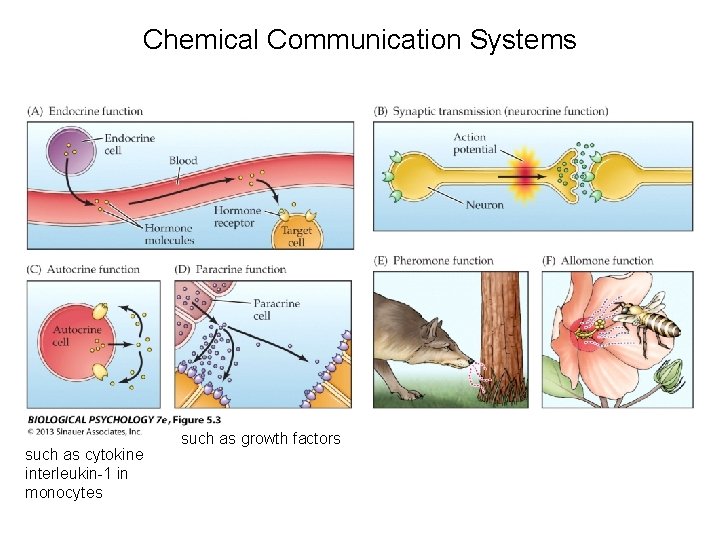
Chemical Communication Systems such as cytokine interleukin-1 in monocytes such as growth factors
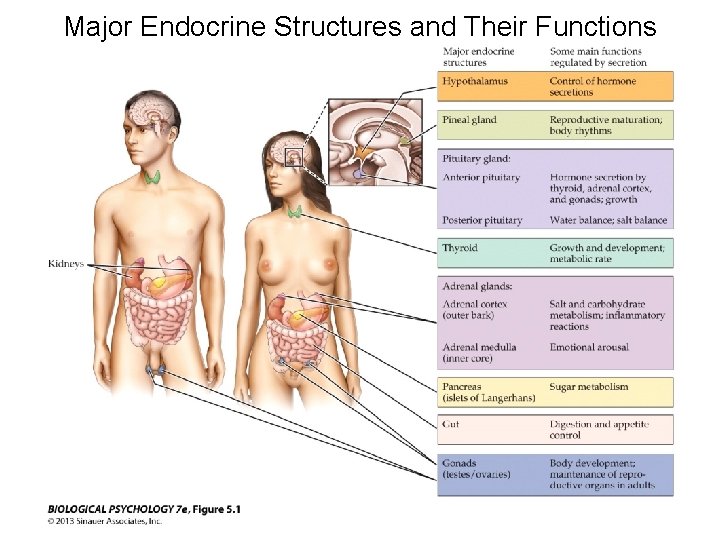
Major Endocrine Structures and Their Functions
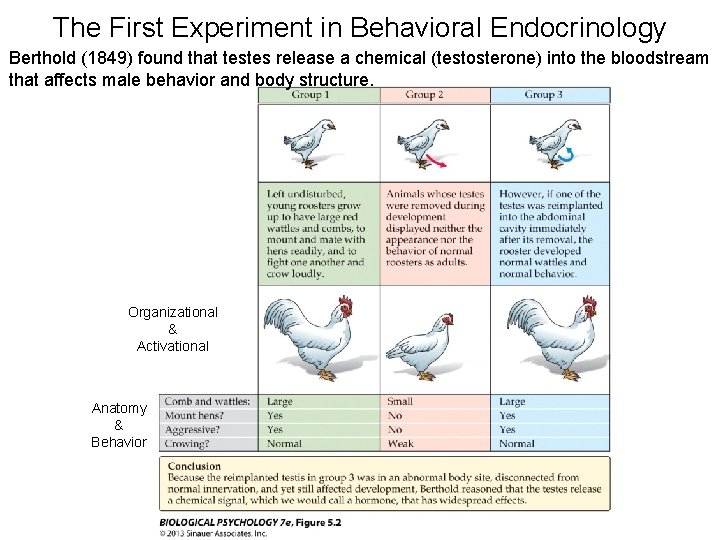
The First Experiment in Behavioral Endocrinology Berthold (1849) found that testes release a chemical (testosterone) into the bloodstream that affects male behavior and body structure. Organizational & Activational Anatomy & Behavior
Organizational and Activational effects of Hormones • The brain and body are “organized” by exposure to hormones early in life, and these changes can be dramatic and long-lasting. • Later in life, hormones “activate” behaviors, but their effects tend to be less dramatic and short-lived.
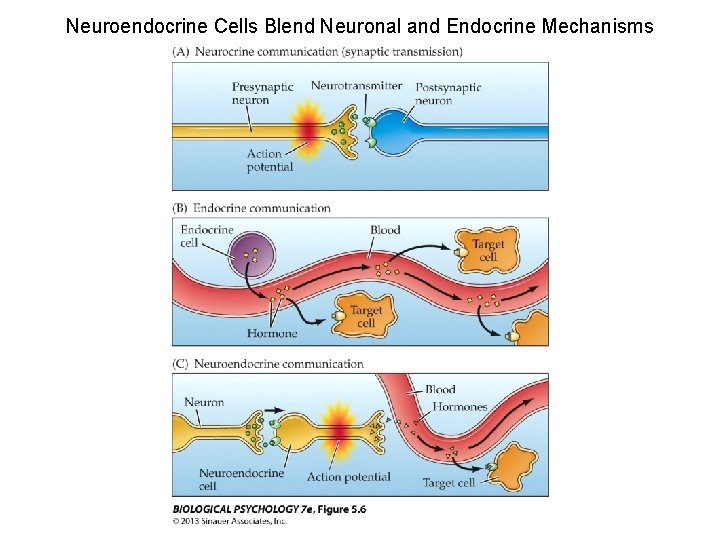
Neuroendocrine Cells Blend Neuronal and Endocrine Mechanisms
General Principles of Hormone Actions 1. Hormones act in a gradual fashion, hours to weeks. 2. Hormones act by changing the probability or intensity of a behavior, not an on/off switch. 3. The relationship between behavior and hormones is reciprocal, circular. a. Testosterone increases aggression and winning increases testosterone 4. (a)A hormone may have multiple effects (b) one behavior can be affected by several hormones. Figure 5. 5 5. Hormones often have a pulsatile secretion pattern—in bursts. 6. Some hormones are controlled by circadian clocks in the brain. 7. Hormones can interact with other hormones and change their effects, thyroid hormones and reproductive hormones. 8. Hormones can only affect “target” cells with a receptor protein for that hormone. Estrogen binds to estrogen receptors
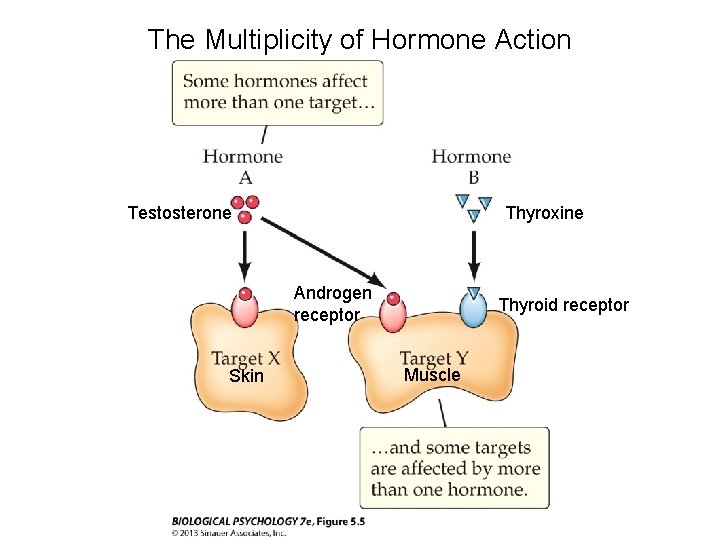
The Multiplicity of Hormone Action Testosterone Thyroxine Androgen receptor Skin Thyroid receptor Muscle
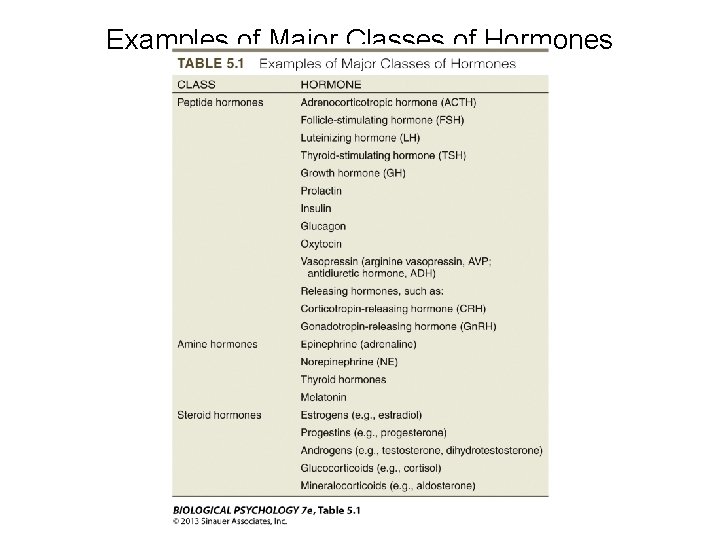
Examples of Major Classes of Hormones
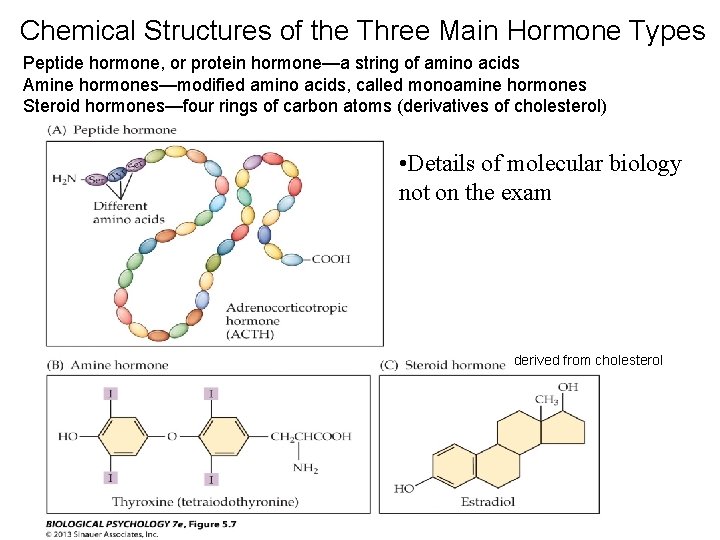
Chemical Structures of the Three Main Hormone Types Peptide hormone, or protein hormone—a string of amino acids Amine hormones—modified amino acids, called monoamine hormones Steroid hormones—four rings of carbon atoms (derivatives of cholesterol) • Details of molecular biology not on the exam derived from cholesterol
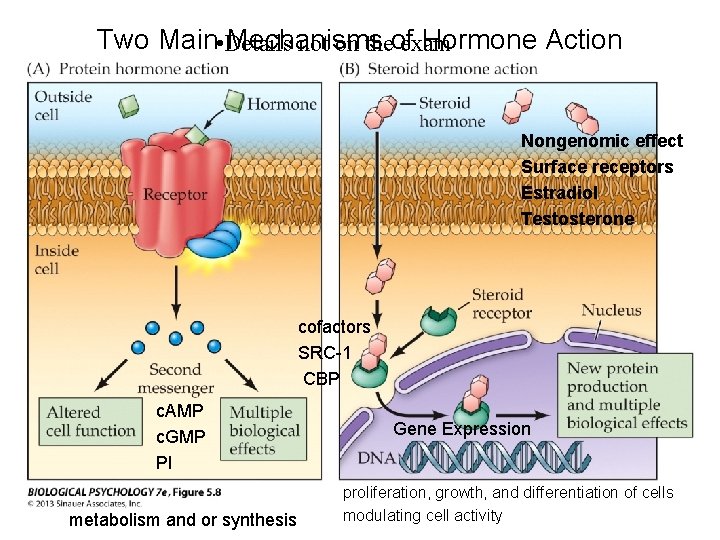
Two Main • Details Mechanisms Hormone Action not on theof exam Nongenomic effect Surface receptors Estradiol Testosterone cofactors SRC-1 CBP c. AMP c. GMP PI metabolism and or synthesis Gene Expression proliferation, growth, and differentiation of cells modulating cell activity
Chemosensory systems • Main olfactory epithelium (MOE) – Detects a broad range of chemicals – Ciliated olfactory sensor neurons • Olfactory receptors for general odor information • Mice have about 1000 different types of receptor proteins – divided into four different subfamilies of about 250 receptors each • Trace amine-associated receptors (TAARs) for pheromone information – Recently discovered – Circuit from receptors in olfactory epithelium to olfactory bulb and then to olfactory cortex • Vomeronasal organ (VNO) – Detects pheromones – Circuit from receptors in VNO to accessory olfactory bulb (AOB) and then to amygdala and hypothalamus
Chemosensory systems • Vomeronasal organ (VNO) – Detects species specific pheromone chemicals – Microvillar receptor neurons – Two distinct families of receptors in rodents • vomeronasal type 1 receptors (V 1 Rs) • 100’s of receptor types – project to the anterior AOB • vomeronasal type 2 receptors (V 2 Rs) – project to the posterior AOB – responsive to Major Histocompatibility Complex (MHC) » proteins found on the surfaces of cells that help the immune system recognize foreign substances – Distribution and density of receptors varies greatly across species
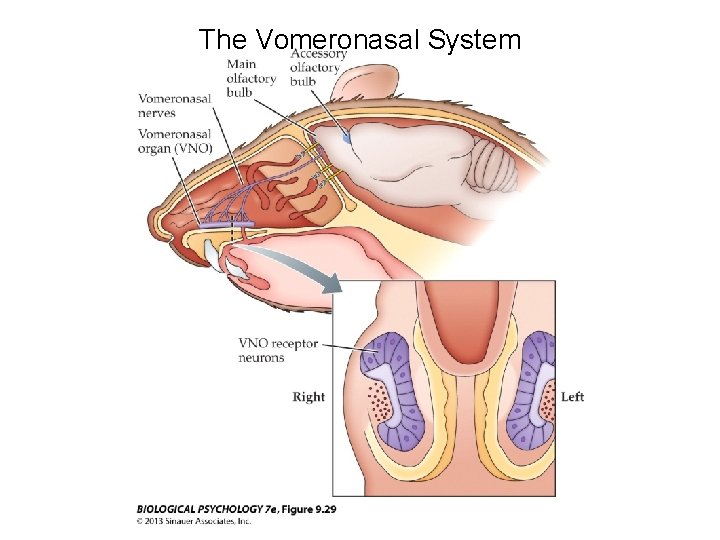
The Vomeronasal System
Pheromones • Secreted or excreted chemical that triggers a social response in “conspecifics” members of the same species • Used by unicellular organisms “yeast” as well as multicellular animals “mammals” • Regulating behavior such as mating, aggression, and fear • Influence hormone levels related to puberty or estrous • Serve as cues for individual recognition • Messages are dependent on – Social identities of the signaller and the receiver – Gender of the signaller and the receiver
Examples of pheromones do not need to know the details • Major Histocompatibility Complex (MHC) “signalers” – MHC proteins are part of the signaling system in the immune system – Prefer mates with MHC somewhat different from yours • 2 -methylbut-2 -enal – volatile aldehyde in rabbit milk – induces nipple-searching behavior in pups – Detected by MOE system • Methanethiol – volatile thiol in male mouse urine – attractant for female mice • alpha-farnesene molecule in male mouse urine – accelerates puberty in young female mice – by altering the hypothalamic secretion of Gn. R – which triggers the secretion of gonadotrophic hormones • follicle stimulating hormone (FSH) • luteinizing hormone (LH) • which affect gonadal hormone secretion
Evolution of Pheromone Signaling in Tetrapods • Aquatic ancestors of all tetrapods – transition from water to land • Female goldfish release F prostaglandin – pheromones changed from soluble to: • volatile: small air borne molecules that signal gender • non-volatile: large complex proteins that signal individual identity – Requires changes to • mechanisms of release • sensory anatomy • receptors
Evolution of Pheromone Signaling in Tetrapods • In primates – Increased brain size • evolution of color vision • increase in social complexity – Reduced influence of pheromones • Inactivation of the vomeronasal system in catarrhine primates – Old World monkeys: baboons, macaques, colobus, and so on … – Apes: gibbons, orangutans, gorillas, chimpanzees, bonobos, and humans • How much influence remains in humans?
Human Pheromones • Controversial because of vestigial VNO and poor replication of some findings • For example, compounds from the armpits of women that synchronizes menstrual cycles in groups of women • Humans do show sex-specific behavioral and physiological responses to various odors received through the MOE that likely qualify as pheromones • One example is sweat produced by apocrine “sweat” glands – Contains androstadienone in men • activates preoptic and ventromedial hypothalamus in women • affects their endocrine levels, physiological arousal, mood, and sexual orientation • Another example is the scent of ovulating women – Men who smell estrogen-like substance have activation in the paraventricular and dorsomedial nuclei of the hypothalamus – Could produce increased levels of testosterone
Human Pheromones • Trace amine-associated receptors (TAARs) – In the main olfactory system for pheromone information – In mice they mediate aversion or attraction towards volatile amines that include • the mouse odor trimethylamine • the predator odor 2 -phenylethylamine • the death-associated odor cadaverine. • Humans have genes for (TAAR 1, TAAR 2, TAAR 5, TAAR 6, TAAR 8, TAAR 9) – Although not all of these are functional – Possible for pheromone reception through the MOE
- Slides: 20