
Hormones Anterior Pituitary Growth Hormone GH n n
- Slides: 19
Hormones
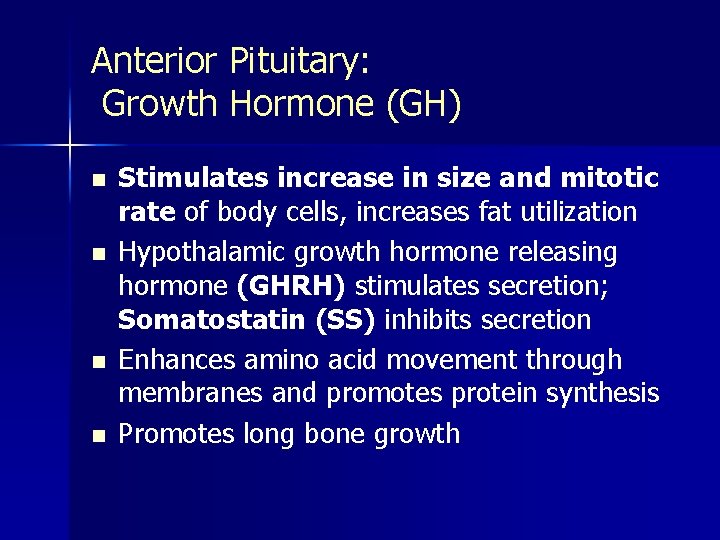
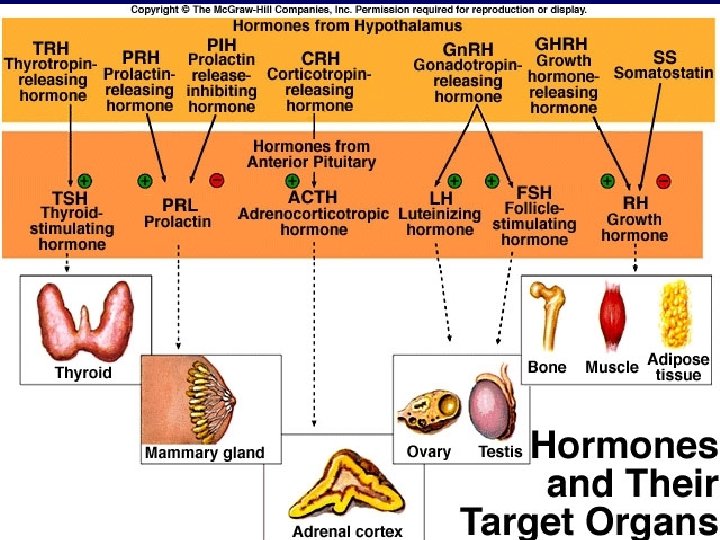
Anterior Pituitary: Growth Hormone (GH) n n Stimulates increase in size and mitotic rate of body cells, increases fat utilization Hypothalamic growth hormone releasing hormone (GHRH) stimulates secretion; Somatostatin (SS) inhibits secretion Enhances amino acid movement through membranes and promotes protein synthesis Promotes long bone growth
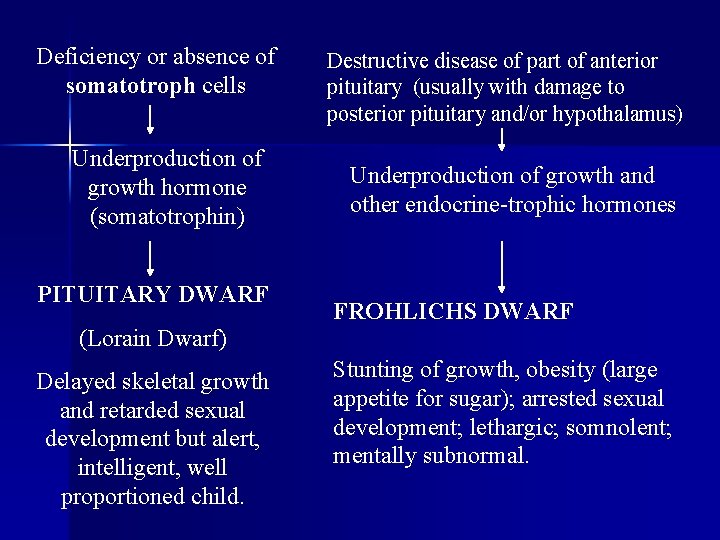
Deficiency or absence of somatotroph cells Underproduction of growth hormone (somatotrophin) PITUITARY DWARF (Lorain Dwarf) Delayed skeletal growth and retarded sexual development but alert, intelligent, well proportioned child. Destructive disease of part of anterior pituitary (usually with damage to posterior pituitary and/or hypothalamus) Underproduction of growth and other endocrine-trophic hormones FROHLICHS DWARF Stunting of growth, obesity (large appetite for sugar); arrested sexual development; lethargic; somnolent; mentally subnormal.
Prolactin (PRL) n Sustains milk production after birth n Secretion stimulated by hypothalamic prolactin-releasing hormone (PRH) and inhibited by prolactin-inhibiting hormone (PIH) n Aids in decreasing LH secretion in men
Thyroid-Stimulating Hormone (TSH) = Thyrotropin n Controls secretion of hormones from the thyroid gland n Thyrotropin-releasing hormone (TRH) from the hypothalamus stimulates secretion n High levels lead to goiter
Adrenocorticotropic Hormone (ACTH) n Controls secretion of hormones from the adrenal cortex n Corticotropin-releasing hormone (CRH) from the hypothalamus stimulates secretion n Stress can stimulate CRH secretion
Follicle-stimulating Hormone (FSH) n A glycoprotein caled also a gonadotropin n Gonadotropin-releasing hormone (Gn. RH) from the hypothalamus stimulates its secretion n In women, it stimulates the development of ovarian follicles, stimulates follicular cells to secrete estrogen n In men, this gonadotropin stimulates growth of the seminiferous tubules and sperm production
Luteinizing Hormone (LH) n Female gonadotropin LH or male gonadotropin LH = ICSH n Hypothalamic gonadotropin-releasing hormone (Gn. RH) stimulates its secretion n Promotes secretion of sex hormones (testosterone) n In women, it promotes egg release = ovulation
Posterior Pituitary: Antidiuretic Hormone (ADH) n Causes kidneys to retain water = concentrates urine n In high concentration, it raises blood pressure n Hypothalamus produces and posterior pituitary neurosecretory cells release ADH in response to changes in blood volume and changing blood concentration
Oxytocin (OT) n Contracts muscles in uterine wall and those associated with milk-secreting glands n Produced by the hypothalamus and secreted by neurosecretory cells in the posterior pituitary in response to uterine and vaginal wall stretching and stimulation of breasts
Thyroxine (T 4); Triiodothyronine (T 3) n Regulate metabolism of carbohydrates, lipids, and proteins n Essential for growth and development and maturation of the nervous system n Iodine needed as integral part of molecules n Follicular cells secrete the precursor to. T 3/T 4 which is without iodine (I) called thyroglobulin; upon addition of I, thyroglobulin becomes either T 3 or T 4 which are released into the blood
n Cretinism occurs due to neonatal T 3/T 4 deficiencies and is marked by growth and maturation disorders (dwarfism, delayed sexual development, etc. ) and central nervous disorders (intelligence deficits, seizures, etc. ). The administration of thyroid hormones in the first six months of life can prevent or reduce some of these abnormalities.
Calcitonin Lowers blood calcium levels and phosphate ion concentration; high blood calcium concentration stimulates secretion n Effect on bone matrix: Increases calcium and phosphate deposition n Effect on kidneys: Increases excretion of calcium and phosphate ions
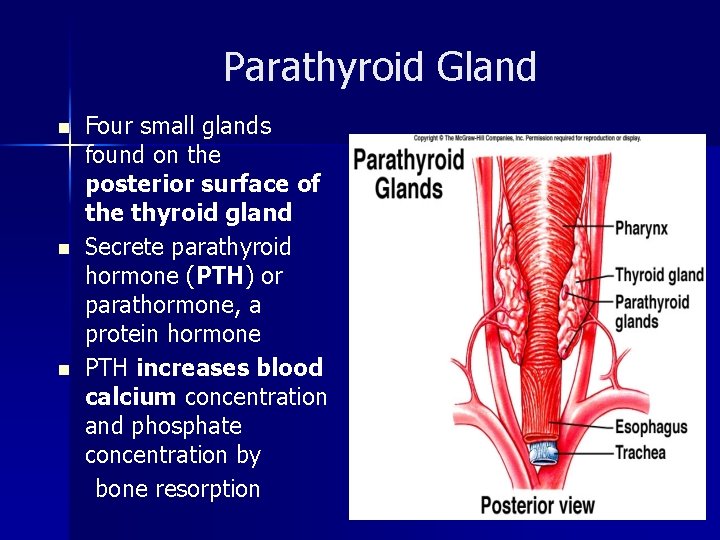
Parathyroid Gland n n n Four small glands found on the posterior surface of the thyroid gland Secrete parathyroid hormone (PTH) or parathormone, a protein hormone PTH increases blood calcium concentration and phosphate concentration by bone resorption
Parathyroid Hormone (PTH) Stimulates bone resorption by osteoclasts and osteocytes n Inhibits activity of osteoblasts n Effect on kidneys: Causes kidneys to conserve calcium and excrete phosphate n Effect on intestine: Stimulates calcium absorption through vitamin D n Low blood calcium concentrations stimulate secretion of PTH from the parathyroid gland n
Adrenal Gland n It is an endocrine gland that is located in the abdomen superior to the kidney. n Under conditions of fear or stress, a surge of the hormone adrenaline mobilizes the body for peak physical response. Flooding the bloodstream at up to 300 times the normal concentration, the adrenaline interacts with receptors on cells in various organs, increasing the heart rate and blood pressure and prompting the release from the liver of extra sugar to fuel muscular work. Taken together, these reactions constitute a "fight or flight" response.
§In the medulla, specialized cells known as chromaffin cells manufacture, store, and secrete a complex mixture of hormones, the most important of which is adrenaline. §The adrenal medulla can also be thought of, however, as part of the sympathetic nervous system, which helps to regulate such involuntary functions as heart rate, intestinal movements and the dilation of the pupil. §The adrenal medulla is controlled by nerves originating in the spinal cord; its primary hormone, adrenaline, is closely related to noradrenaline, the characteristic neurotransmitter of the sympathetic nerves. Moreover, the adrenal medulla itself secretes noradrenaline and neurologically active substances known as neuropeptides.