
Hormones and Endocrine System Ch 45 Overview The



- Slides: 55
Hormones and Endocrine System Ch. 45
Overview: The Body’s Long. Distance Regulators • Animal hormones are chemical signals that are secreted into the circulatory system and communicate regulatory messages within the body • Hormones reach all parts of the body, but only target cells have receptors for that hormone • Insect metamorphosis is regulated by hormones © 2011 Pearson Education, Inc.
• Two systems coordinate communication throughout the body: the endocrine system and the nervous system • The endocrine system secretes hormones that coordinate slower but longer-acting responses including reproduction, development, energy metabolism, growth, and behavior • The nervous system conveys high-speed electrical signals along specialized cells called neurons; these signals regulate other cells © 2011 Pearson Education, Inc.
Intercellular Communication • The ways that signal are transmitted between animal cells are classified by two criteria – The type of secreting cell – The route taken by the signal in reaching its target © 2011 Pearson Education, Inc.
Endocrine Signaling • Hormones secreted into extracellular fluids by endocrine cells reach their targets via the bloodstream • Endocrine signaling maintains homeostasis, mediates responses to stimuli, regulates growth and development © 2011 Pearson Education, Inc.
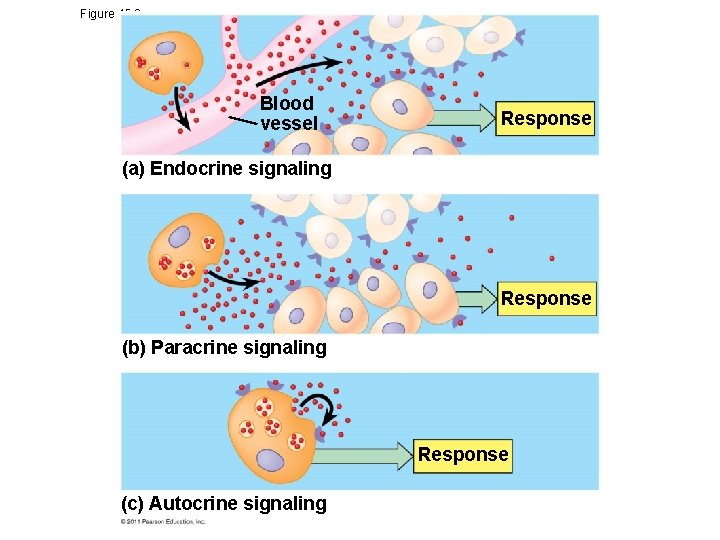
Paracrine and Autocrine Signaling • Local regulators are molecules that act over short distances, reaching target cells solely by diffusion • In paracrine signaling, the target cells lie near the secreting cells • In autocrine signaling, the target cell is also the secreting cell © 2011 Pearson Education, Inc.
Figure 45. 2 a Blood vessel Response (a) Endocrine signaling Response (b) Paracrine signaling Response (c) Autocrine signaling
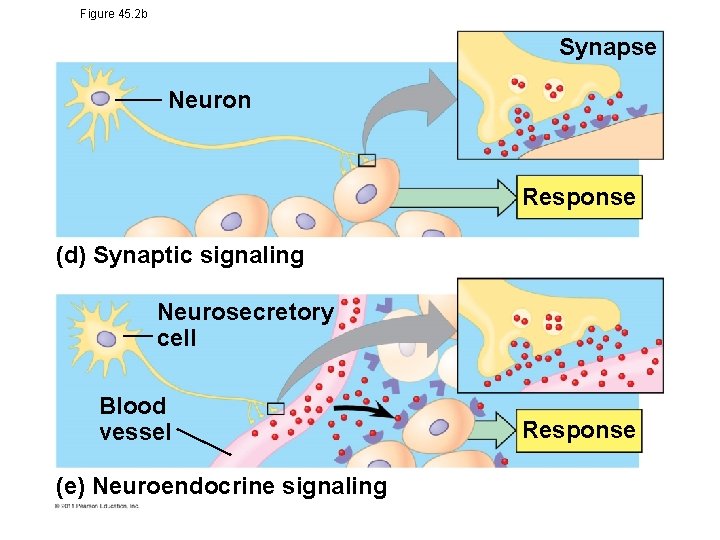
Synaptic and Neuroendocrine Signaling • In synaptic signaling, neurons form specialized junctions with target cells, called synapses • At synapses, neurons secrete molecules called neurotransmitters that diffuse short distances and bind to receptors on target cells • In neuroendocrine signaling, specialized neurosecretory cells secrete molecules called neurohormones that travel to target cells via the bloodstream © 2011 Pearson Education, Inc.
Figure 45. 2 b Synapse Neuron Response (d) Synaptic signaling Neurosecretory cell Blood vessel (e) Neuroendocrine signaling Response
Signaling by Pheromones • Members of the same animal species sometimes communicate with pheromones, chemicals that are released into the environment • Pheromones serve many functions, including marking trails leading to food, a wide range of functions that include defining territories, warning of predators, and attracting potential mates © 2011 Pearson Education, Inc.
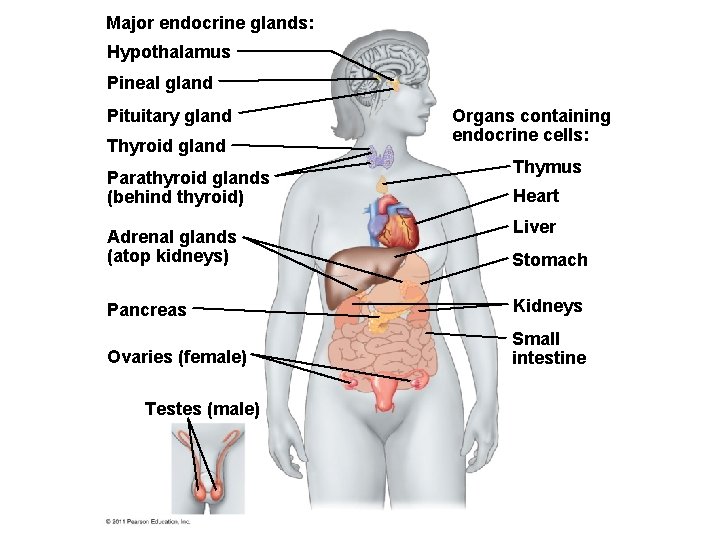
Endocrine Tissues and Organs • In some tissues, endocrine cells are grouped together in ductless organs called endocrine glands • Endocrine glands secrete hormones directly into surrounding fluid © 2011 Pearson Education, Inc.
Major endocrine glands: Hypothalamus Pineal gland Pituitary gland Thyroid gland Parathyroid glands (behind thyroid) Organs containing endocrine cells: Thymus Heart Liver Adrenal glands (atop kidneys) Stomach Pancreas Kidneys Ovaries (female) Small intestine Testes (male)
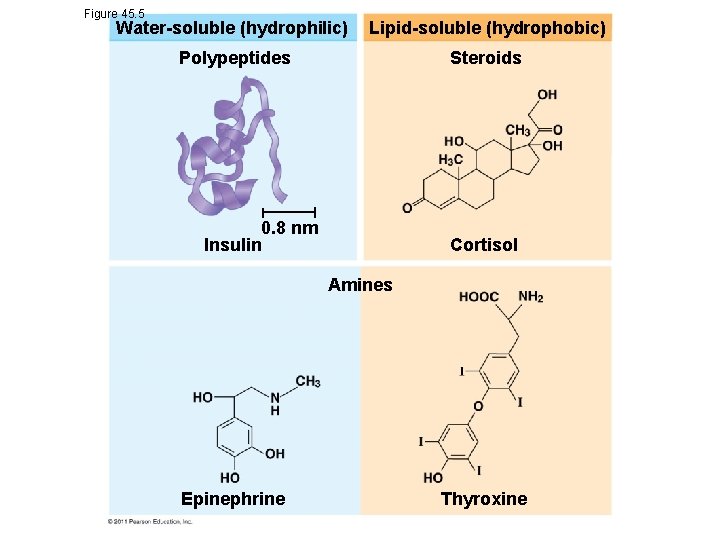
Chemical Classes of Hormones • Three major classes of molecules function as hormones in vertebrates – Polypeptides (proteins and peptides) – Amines derived from amino acids – Steroid hormones © 2011 Pearson Education, Inc.
Figure 45. 5 Water-soluble (hydrophilic) Lipid-soluble (hydrophobic) Polypeptides Steroids 0. 8 nm Insulin Cortisol Amines Epinephrine Thyroxine
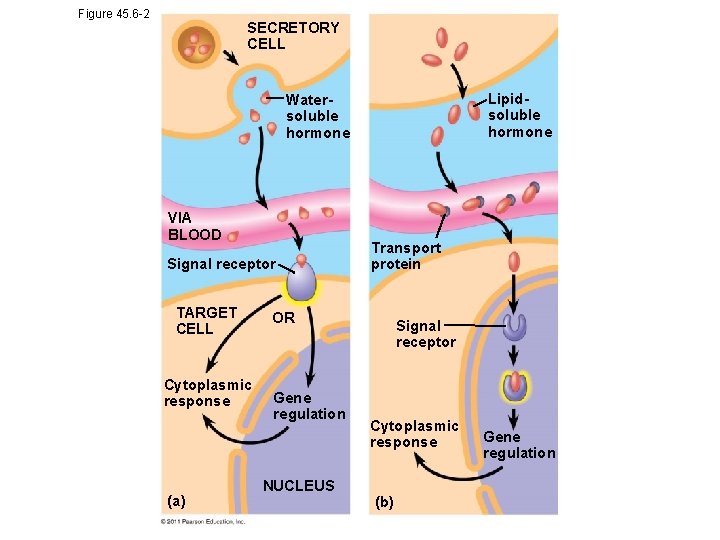
Cellular Response Pathways • Water and lipid soluble hormones differ in their paths through a body • Water-soluble hormones are secreted by exocytosis, travel freely in the bloodstream, and bind to cell-surface receptors • Lipid-soluble hormones diffuse across cell membranes, travel in the bloodstream bound to transport proteins, and diffuse through the membrane of target cells © 2011 Pearson Education, Inc.
Figure 45. 6 -2 SECRETORY CELL Lipidsoluble hormone Watersoluble hormone VIA BLOOD Signal receptor TARGET CELL Cytoplasmic response (a) Transport protein OR Gene regulation NUCLEUS Signal receptor Cytoplasmic response (b) Gene regulation
Pathway for Water-Soluble Hormones • Binding of a hormone to its receptor initiates a signal transduction pathway leading to responses in the cytoplasm, enzyme activation, or a change in gene expression © 2011 Pearson Education, Inc.
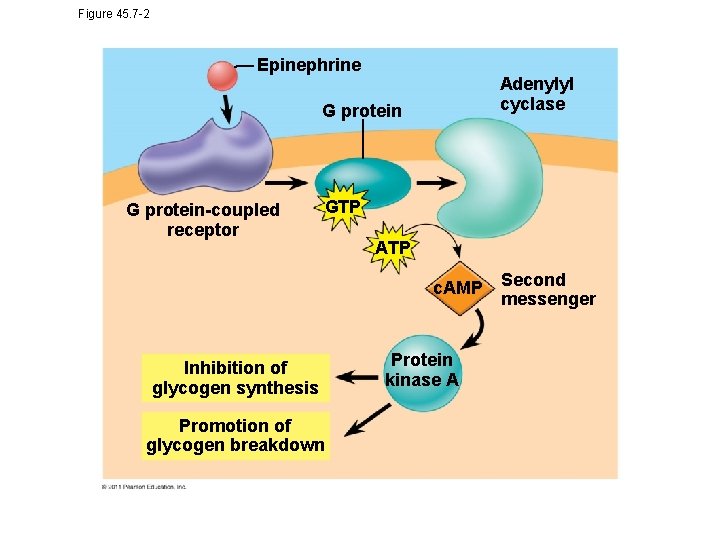
• The hormone epinephrine has multiple effects in mediating the body’s response to short-term stress • Epinephrine binds to receptors on the plasma membrane of liver cells • This triggers the release of messenger molecules that activate enzymes and result in the release of glucose into the bloodstream © 2011 Pearson Education, Inc.
Cell Surface Receptors. Epinephrine and Liver Cells • http: //highered. mcgrawhill. com/olcweb/cgi/pluginpop. cgi? it=swf: : 5 35: : 535: : /sites/dl/free/0072437316/120109 /bio 48. swf: : Action%20 of%20 Epinephrine% 20 on%20 a%20 Liver%20 Cell
Figure 45. 7 -2 Epinephrine Adenylyl cyclase G protein-coupled receptor GTP ATP c. AMP Second messenger Inhibition of glycogen synthesis Promotion of glycogen breakdown Protein kinase A
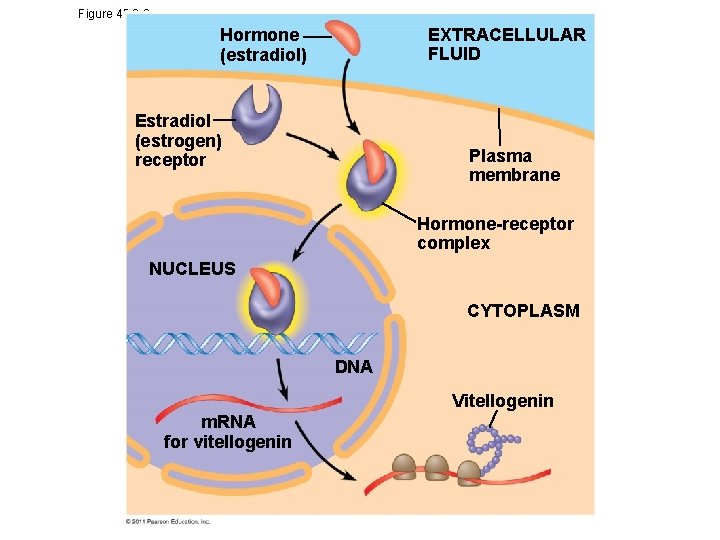
Pathway for Lipid-Soluble Hormones • The response to a lipid-soluble hormone is usually a change in gene expression • Steroids, thyroid hormones, and the hormonal form of vitamin D enter target cells and bind to protein receptors in the cytoplasm or nucleus • Protein-receptor complexes then act as transcription factors in the nucleus, regulating transcription of specific genes © 2011 Pearson Education, Inc.
Steroids • http: //highered. mcgrawhill. com/sites/0072507470/student_view 0/ chapter 18/animation__mechanism_of_ster oid_hormone_action__quiz_1_. html
Figure 45. 8 -2 EXTRACELLULAR FLUID Hormone (estradiol) Estradiol (estrogen) receptor Plasma membrane Hormone-receptor complex NUCLEUS CYTOPLASM DNA Vitellogenin m. RNA for vitellogenin
Feedback regulation and antagonistic hormone pairs • Hormones are assembled into regulatory pathways © 2011 Pearson Education, Inc.
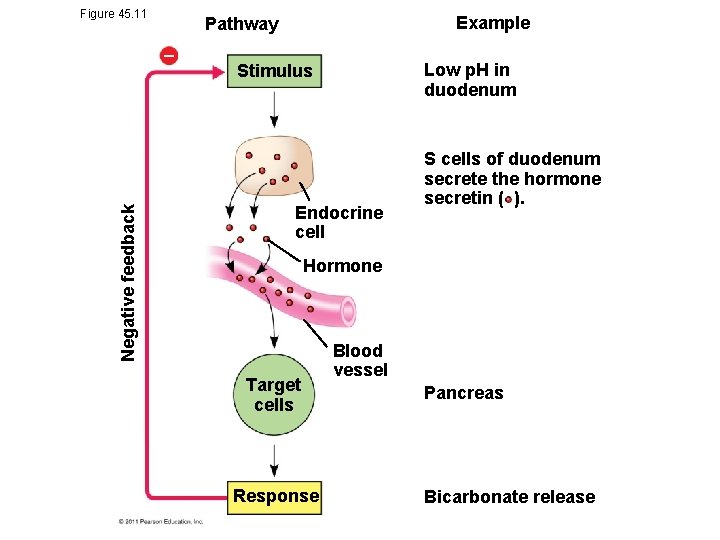
Simple Hormone Pathways • Hormones are released from an endocrine cell, travel through the bloodstream, and interact with specific receptors within a target cell to cause a physiological response • For example, the release of acidic contents of the stomach into the duodenum stimulates endocrine cells there to secrete secretin • This causes target cells in the pancreas, a gland behind the stomach, to raise the p. H in the duodenum © 2011 Pearson Education, Inc.
Figure 45. 11 Negative feedback Example Pathway Low p. H in duodenum Stimulus Endocrine cell S cells of duodenum secrete the hormone secretin ( ). Hormone Target cells Response Blood vessel Pancreas Bicarbonate release
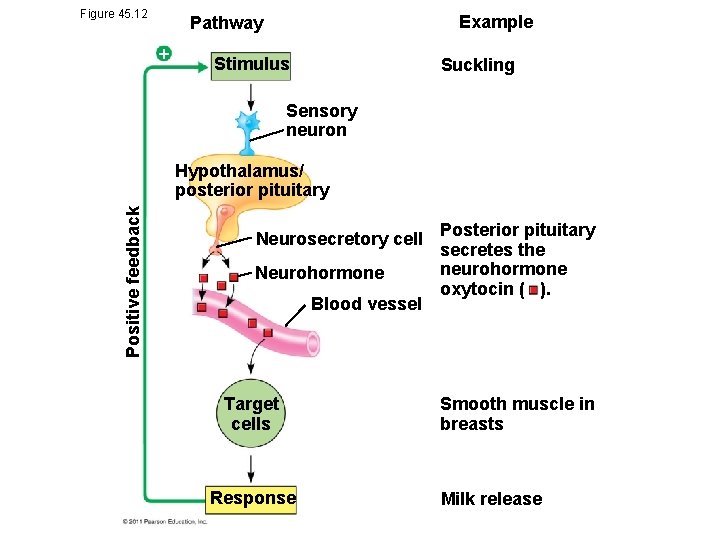
• In a simple neuroendocrine pathway, the stimulus is received by a sensory neuron, which stimulates a neurosecretory cell • The neurosecretory cell secretes a neurohormone, which enters the bloodstream and travels to target cells © 2011 Pearson Education, Inc.
Figure 45. 12 Example Pathway Stimulus Suckling Sensory neuron Positive feedback Hypothalamus/ posterior pituitary Neurosecretory cell Posterior pituitary secretes the neurohormone Neurohormone oxytocin ( ). Blood vessel Target cells Response Smooth muscle in breasts Milk release
Feedback Regulation • A negative feedback loop inhibits a response by reducing the initial stimulus, thus preventing excessive pathway activity • Positive feedback reinforces a stimulus to produce an even greater response • For example, in mammals oxytocin causes the release of milk, causing greater suckling by offspring, which stimulates the release of more oxytocin © 2011 Pearson Education, Inc.
Feedback Loops • http: //www. youtube. com/watch? v=CLv 3 Sk F_Eag
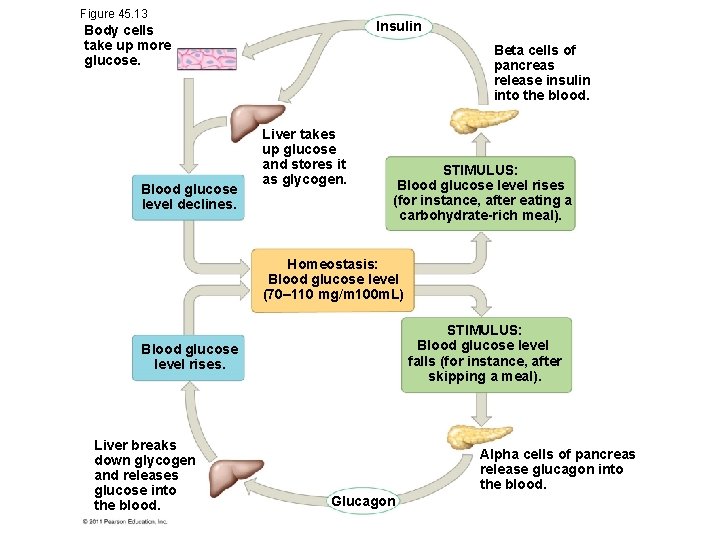
Insulin and Glucagon: Control of Blood Glucose • Insulin (decreases blood glucose) and glucagon (increases blood glucose) are antagonistic hormones that help maintain glucose homeostasis • The pancreas has clusters of endocrine cells called pancreatic islets with alpha cells that produce glucagon and beta cells that produce insulin © 2011 Pearson Education, Inc.
Pancreas • http: //www. youtube. com/watch? v=qzjj. W--I 2 Q
Figure 45. 13 Insulin Body cells take up more glucose. Blood glucose level declines. Beta cells of pancreas release insulin into the blood. Liver takes up glucose and stores it as glycogen. STIMULUS: Blood glucose level rises (for instance, after eating a carbohydrate-rich meal). Homeostasis: Blood glucose level (70– 110 mg/m 100 m. L) STIMULUS: Blood glucose level falls (for instance, after skipping a meal). Blood glucose level rises. Liver breaks down glycogen and releases glucose into the blood. Alpha cells of pancreas release glucagon into the blood. Glucagon
Target Tissues for Insulin and Glucagon • Insulin reduces blood glucose levels by – Promoting the cellular uptake of glucose – Slowing glycogen breakdown in the liver – Promoting fat storage, not breakdown © 2011 Pearson Education, Inc.
• Glucagon increases blood glucose levels by – Stimulating conversion of glycogen to glucose in the liver – Stimulating breakdown of fat and protein into glucose © 2011 Pearson Education, Inc.
Diabetes Mellitus • Diabetes mellitus is perhaps the best-known endocrine disorder • It is caused by a deficiency of insulin or a decreased response to insulin in target tissues • It is marked by elevated blood glucose levels © 2011 Pearson Education, Inc.
• Type I diabetes mellitus (insulin-dependent) is an autoimmune disorder in which the immune system destroys pancreatic beta cells • Type II diabetes mellitus (non-insulin-dependent) involves insulin deficiency or reduced response of target cells due to change in insulin receptors © 2011 Pearson Education, Inc.
Homeostatic Loops • http: //www. youtube. com/watch? v=jkio. ZCD HT_E
The hypothalamus and pituitary are central to endocrine regulation • Endocrine pathways are subject to regulation by the nervous system, including the brain © 2011 Pearson Education, Inc.
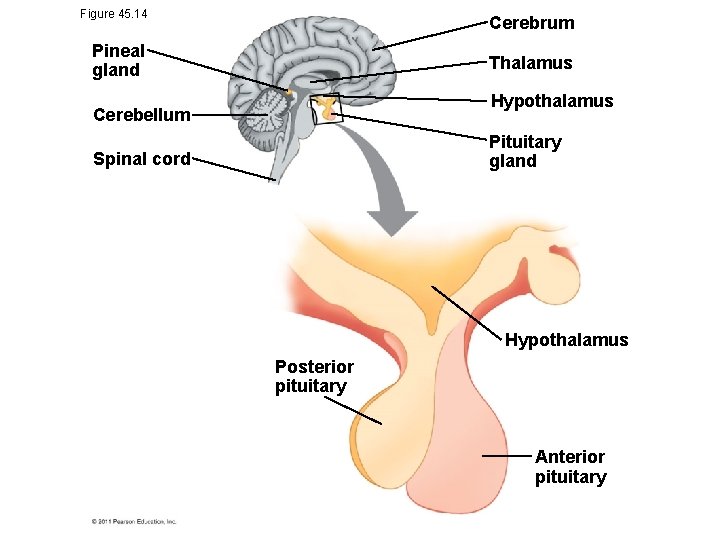
Coordination of Endocrine and Nervous Systems in Vertebrates • The hypothalamus receives information from the nervous system and initiates responses through the endocrine system • Attached to the hypothalamus is the pituitary gland composed of the posterior pituitary and anterior pituitary © 2011 Pearson Education, Inc.
Figure 45. 14 Cerebrum Pineal gland Thalamus Hypothalamus Cerebellum Pituitary gland Spinal cord Hypothalamus Posterior pituitary Anterior pituitary
• The posterior pituitary stores and secretes hormones that are made in the hypothalamus • The anterior pituitary makes and releases hormones under regulation of the hypothalamus © 2011 Pearson Education, Inc.
Posterior Pituitary Hormones • The two hormones released from the posterior pituitary act directly on nonendocrine tissues – Oxytocin regulates milk secretion by the mammary glands – Antidiuretic hormone (ADH) regulates physiology and behavior © 2011 Pearson Education, Inc.
Hypothalamus and Pituitary • http: //bcs. whfreeman. com/thelifewire/conte nt/chp 42/4202 s. swf
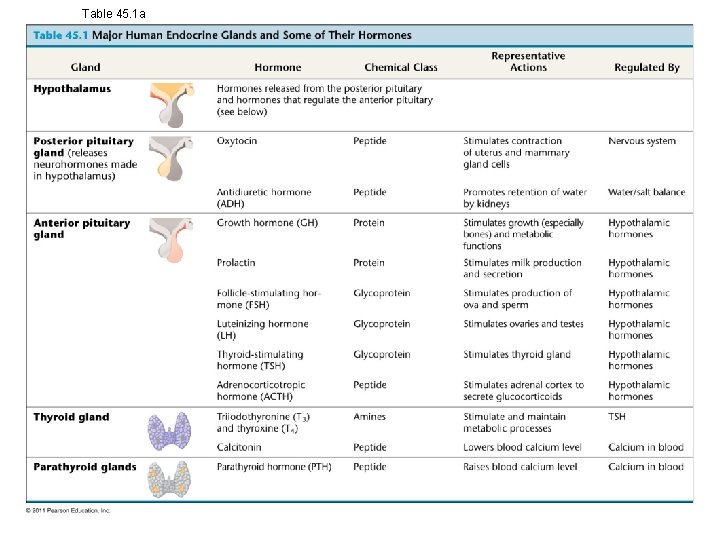
Table 45. 1 a
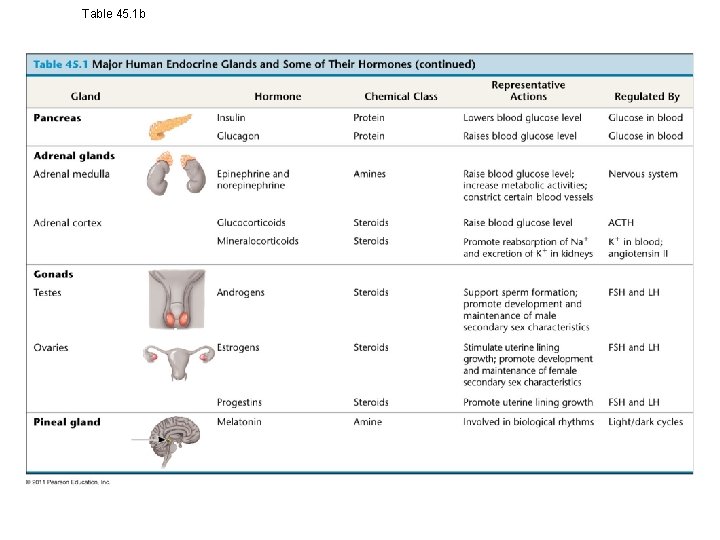
Table 45. 1 b
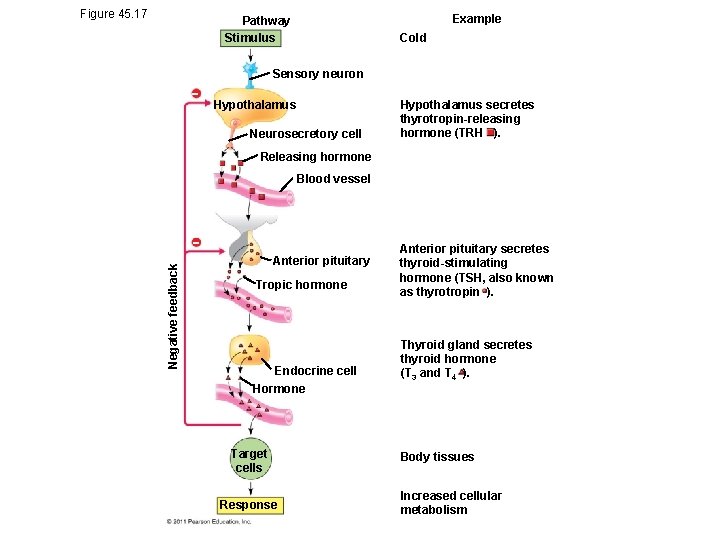
Thyroid Regulation: A Hormone Cascade Pathway • A hormone can stimulate the release of a series of other hormones, the last of which activates a nonendocrine target cell; this is called a hormone cascade pathway • The release of thyroid hormone results from a hormone cascade pathway involving the hypothalamus, anterior pituitary, and thyroid gland • Hormone cascade pathways typically involve negative feedback © 2011 Pearson Education, Inc.
Figure 45. 17 Example Pathway Stimulus Cold Sensory neuron Hypothalamus Neurosecretory cell Hypothalamus secretes thyrotropin-releasing hormone (TRH ). Releasing hormone Blood vessel Negative feedback Anterior pituitary Tropic hormone Endocrine cell Anterior pituitary secretes thyroid-stimulating hormone (TSH, also known as thyrotropin ). Thyroid gland secretes thyroid hormone (T 3 and T 4 ). Hormone Target cells Response Body tissues Increased cellular metabolism
Thyroid and Parathyroid Glands • http: //bcs. whfreeman. com/thelifewire/conte nt/chp 42/4202003. html
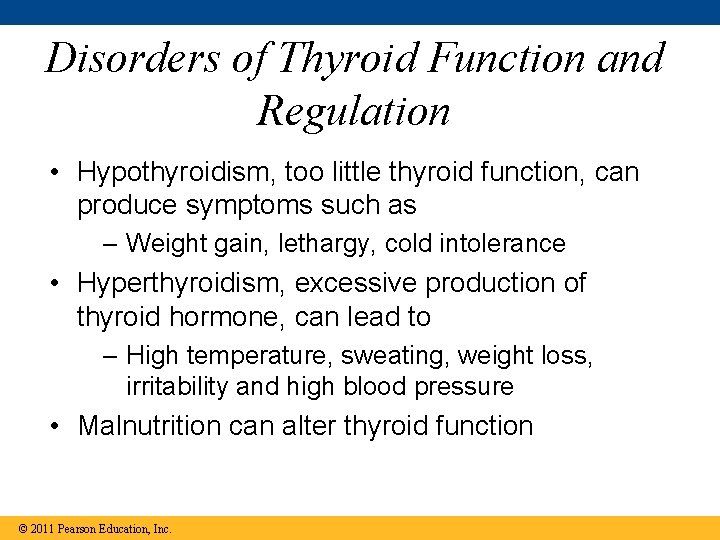
Disorders of Thyroid Function and Regulation • Hypothyroidism, too little thyroid function, can produce symptoms such as – Weight gain, lethargy, cold intolerance • Hyperthyroidism, excessive production of thyroid hormone, can lead to – High temperature, sweating, weight loss, irritability and high blood pressure • Malnutrition can alter thyroid function © 2011 Pearson Education, Inc.
Evolution of Hormone Function • Over the course of evolution the function of a given hormone may diverge between species • For example, thyroid hormone plays a role in metabolism across many lineages, but in frogs has taken on a unique function: stimulating the resorption of the tadpole tail during metamorphosis • Prolactin also has a broad range of activities in vertebrates © 2011 Pearson Education, Inc.
• Melanocyte-stimulating hormone (MSH) regulates skin color in amphibians, fish, and reptiles by controlling pigment distribution in melanocytes • In mammals, MSH plays additional roles in hunger and metabolism in addition to coloration © 2011 Pearson Education, Inc.
Tropic and Nontropic Hormones • A tropic hormone regulates the function of endocrine cells or glands • Three primarily tropic hormones are – Follicle-stimulating hormone (FSH) – Luteinizing hormone (LH) – Adrenocorticotropic hormone (ACTH) © 2011 Pearson Education, Inc.
• Growth hormone (GH) is secreted by the anterior pituitary gland has tropic and nontropic actions • It promotes growth directly and has diverse metabolic effects • It stimulates production of growth factors • An excess of GH can cause gigantism, while a lack of GH can cause dwarfism © 2011 Pearson Education, Inc.
Hormonal Communication • Endocrine signaling regulates homeostasis, development, and behavior • http: //highered. mcgrawhill. com/sites/0072507470/student_view 0/ chapter 18/animation__hormonal_communi cation. html