
Hormonal Response to Exercise 1 The Endocrine System
- Slides: 42
Hormonal Response to Exercise 1
The Endocrine System • A communication system – Nervous system = electrical communication – Endocrine system = chemical communication • Slower responding, longer lasting than nervous system • Maintains homeostasis via hormones – Chemicals that control and regulate cell/organ activity – Act on target cells 2
The Endocrine System • Coordinates integration of physiological systems during rest and exercise • Maintains homeostasis during exercise – Controls substrate metabolism – Regulates fluid, electrolyte balance 3
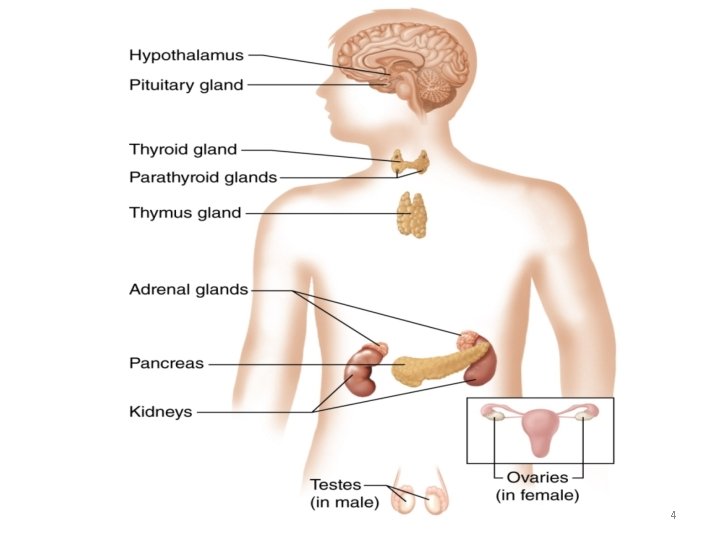
4
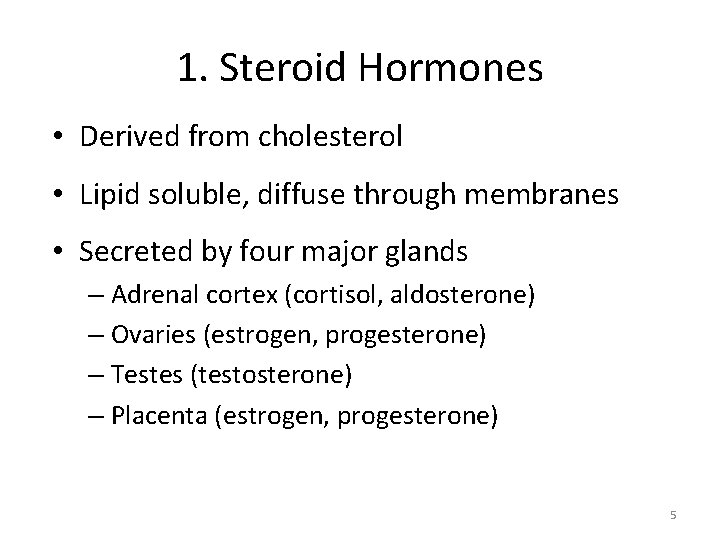
1. Steroid Hormones • Derived from cholesterol • Lipid soluble, diffuse through membranes • Secreted by four major glands – Adrenal cortex (cortisol, aldosterone) – Ovaries (estrogen, progesterone) – Testes (testosterone) – Placenta (estrogen, progesterone) 5
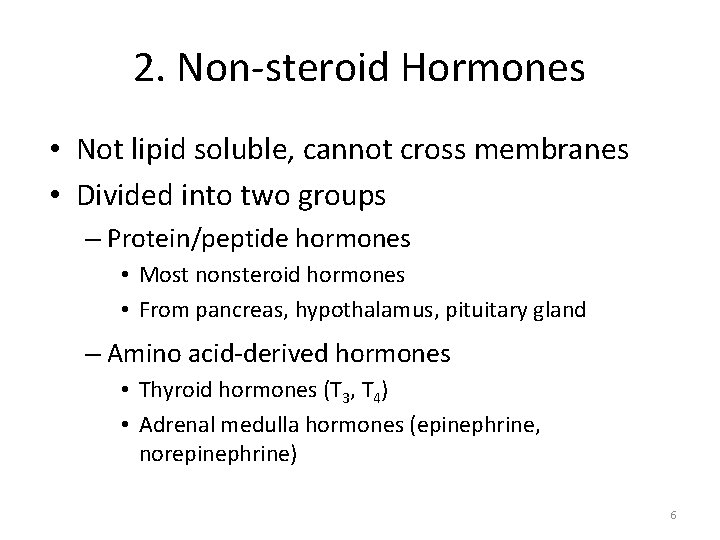
2. Non-steroid Hormones • Not lipid soluble, cannot cross membranes • Divided into two groups – Protein/peptide hormones • Most nonsteroid hormones • From pancreas, hypothalamus, pituitary gland – Amino acid-derived hormones • Thyroid hormones (T 3, T 4) • Adrenal medulla hormones (epinephrine, norepinephrine) 6
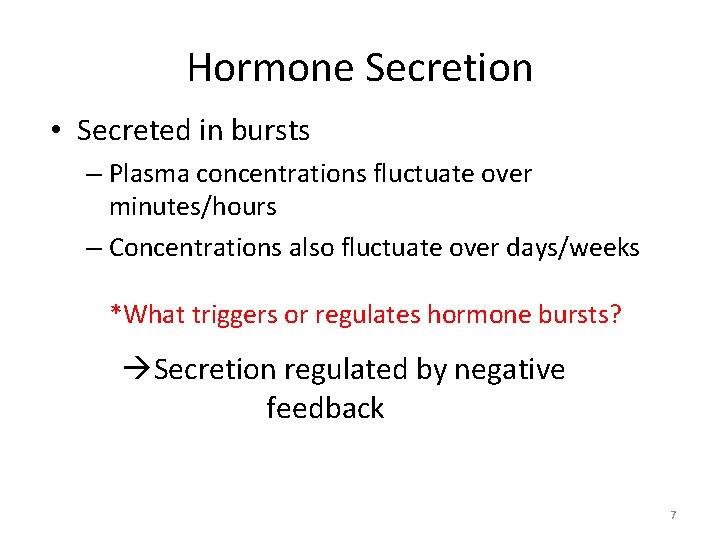
Hormone Secretion • Secreted in bursts – Plasma concentrations fluctuate over minutes/hours – Concentrations also fluctuate over days/weeks *What triggers or regulates hormone bursts? Secretion regulated by negative feedback 7
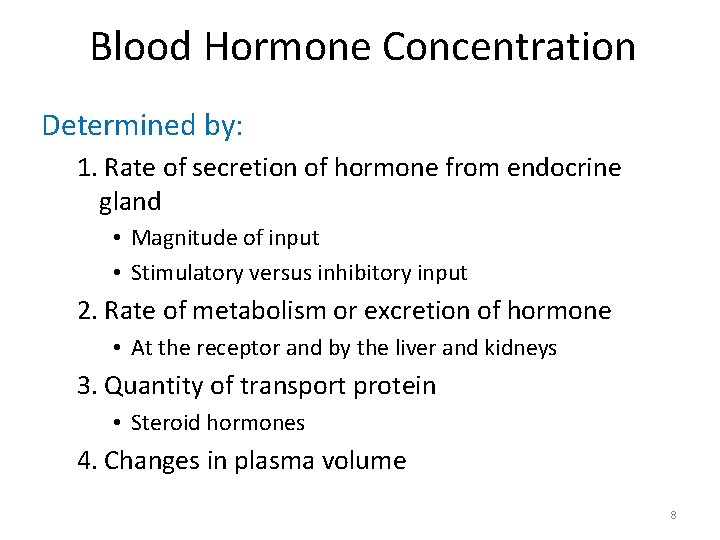
Neuroendocrinology Blood Hormone Concentration Determined by: 1. Rate of secretion of hormone from endocrine gland • Magnitude of input • Stimulatory versus inhibitory input 2. Rate of metabolism or excretion of hormone • At the receptor and by the liver and kidneys 3. Quantity of transport protein • Steroid hormones 4. Changes in plasma volume 8
Hormone Activity • Plasma concentration: – Cells change sensitivity to hormones – Number of receptors on cell surface can change • Downregulation: number of receptors during high plasma concentration = desensitization • Upregulation: number of receptors during high plasma concentration = sensitization 9
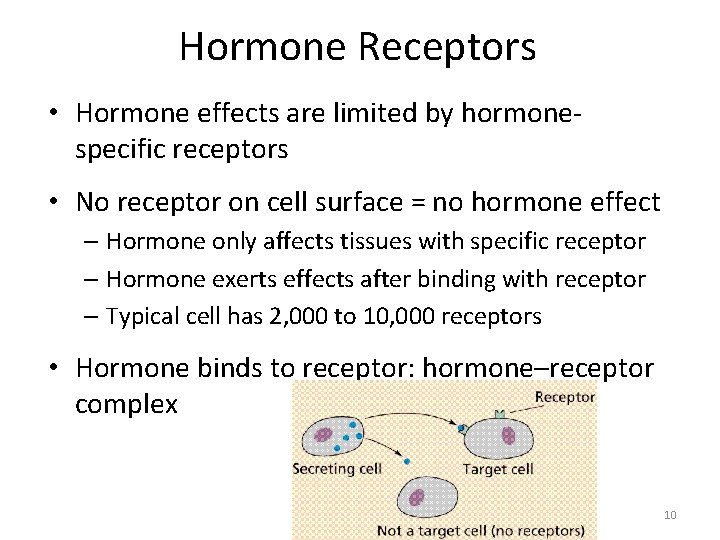
Hormone Receptors • Hormone effects are limited by hormonespecific receptors • No receptor on cell surface = no hormone effect – Hormone only affects tissues with specific receptor – Hormone exerts effects after binding with receptor – Typical cell has 2, 000 to 10, 000 receptors • Hormone binds to receptor: hormone–receptor complex 10
3. Prostaglandins • Third class of (pseudo)hormones • Derived from arachidonic acid • Act as local hormones/ immediate area – Inflammatory response (swelling, vasodilation) – Sensitize nociceptor free nerve endings (pain) 11
Hormonal Regulation of Metabolism During Exercise • Major endocrine glands responsible for metabolic regulation: – Anterior pituitary gland – Thyroid gland – Adrenal gland – Pancreas • Hormones released by these glands affect metabolism of carbohydrate and fat during exercise 12
Endocrine Regulation of Metabolism: Anterior Pituitary Gland • Pituitary gland attached to inferior hypothalamus • Three lobes: anterior, intermediate, posterior • Secretes hormones in response to hypothalamic hormone factors – Releasing factors & inhibiting factors – Exercise secretion of all anterior pituitary hormones 13
Hormones: Regulation and Action Posterior Pituitary Gland • Antidiuretic hormone (ADH) – Reduces water loss from the body to maintain plasma volume • Reabsorption of water from kidney tubules to capillaries – Release stimulated by low plasma volume • Due to sweat loss without water replacement = less water in urine – Increases during exercise >60% VO 2 max • To maintain plasma volume 14
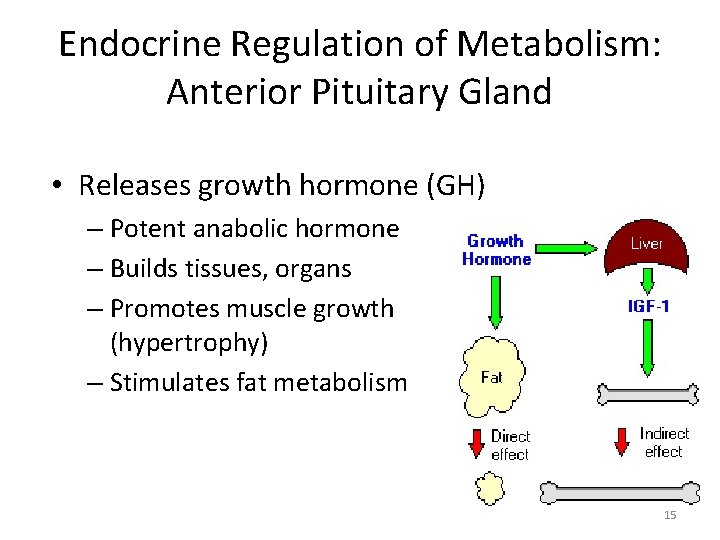
Endocrine Regulation of Metabolism: Anterior Pituitary Gland • Releases growth hormone (GH) – Potent anabolic hormone – Builds tissues, organs – Promotes muscle growth (hypertrophy) – Stimulates fat metabolism 15
Hormones: Regulation and Action Growth Hormone • Essential growth of all tissues – Amino acid uptake and protein synthesis – Long bone growth • Spares plasma glucose – Reduces the use of plasma glucose – Increases gluconeogenesis – Mobilizes fatty acids from adipose tissue 16
Hormonal Control of Substrate Mobilization During Exercise Growth Hormone • Slow-acting hormone • Exercise effect: – Increase in plasma GH with increased intensity – Greater response in trained runners *GH release proportional to exercise intensity 17
Hormones: Regulation and Action Growth Hormone and Performance • GH increases protein synthesis in muscle and long bone growth – Used to treat childhood dwarfism – Also used by athletes and elderly • More adverse effects than benefits • No evidence that GH promotes strength gains • Difficult to detect usage by athletes 18
Endocrine Regulation of Metabolism: Thyroid Gland • Secretes triiodothyronine (T 3), thyroxine (T 4) • T 3 and T 4 lead to increases in – Metabolic rate of all tissues – Protein synthesis – Number and size of mitochondria – Glucose uptake by cells – Rate of glycolysis, gluconeogenesis – FFA mobilization 19
Hormonal Control of Substrate Mobilization During Exercise Thyroid Hormones • Act in a permissive manner to allow other hormones to exert their full effect & maintain metabolic rate – T 3 enhances effect of epinephrine to mobilize free fatty acids from adipose tissue • No significant change in T 3 and T 4 during exercise 20
Hormones: Regulation and Action Thyroid Gland • Calcitonin – Regulation of plasma Ca+2 bone building – When Ca+2 levels are high = stimulates Ca+2 excretion by kidneys expelled in urine – Protects against calcium loss from skeleton during periods of calcium mobilization pregnancy & lactation 21
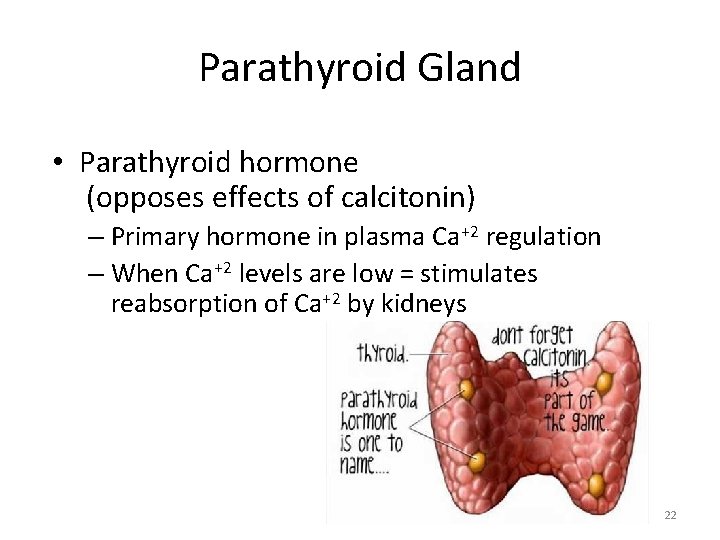
Hormones: Regulation and Action Parathyroid Gland • Parathyroid hormone (opposes effects of calcitonin) – Primary hormone in plasma Ca+2 regulation – When Ca+2 levels are low = stimulates reabsorption of Ca+2 by kidneys 22
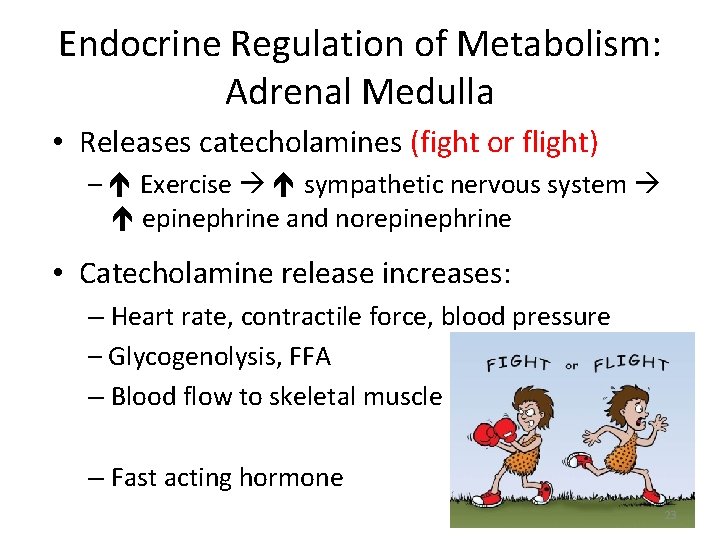
Endocrine Regulation of Metabolism: Adrenal Medulla • Releases catecholamines (fight or flight) – Exercise sympathetic nervous system epinephrine and norepinephrine • Catecholamine release increases: – Heart rate, contractile force, blood pressure – Glycogenolysis, FFA – Blood flow to skeletal muscle – Fast acting hormone 23
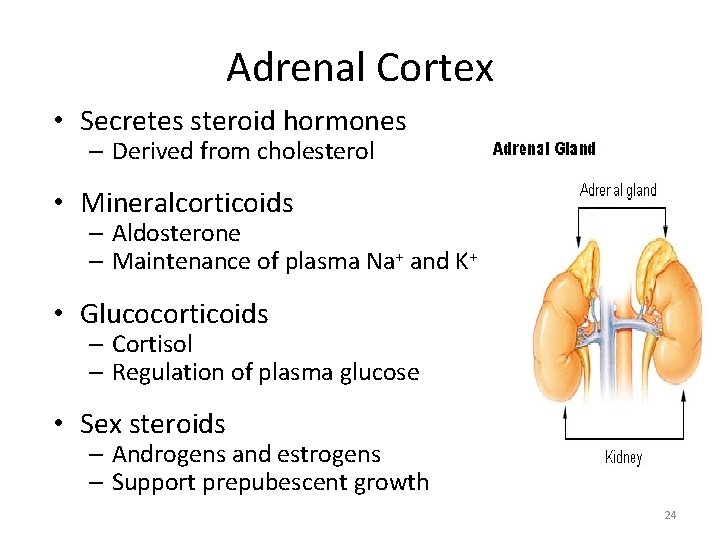
Hormones: Regulation and Action Adrenal Cortex • Secretes steroid hormones – Derived from cholesterol • Mineralcorticoids – Aldosterone – Maintenance of plasma Na+ and K+ • Glucocorticoids – Cortisol – Regulation of plasma glucose • Sex steroids – Androgens and estrogens – Support prepubescent growth 24
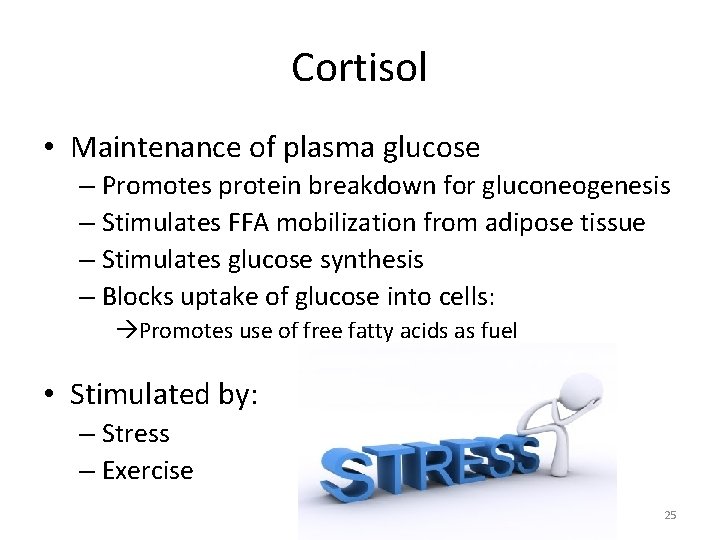
Hormones: Regulation and Action Cortisol • Maintenance of plasma glucose – Promotes protein breakdown for gluconeogenesis – Stimulates FFA mobilization from adipose tissue – Stimulates glucose synthesis – Blocks uptake of glucose into cells: Promotes use of free fatty acids as fuel • Stimulated by: – Stress – Exercise 25
Hormonal Control of Substrate Mobilization During Exercise Cortisol • Slow-acting hormone • Effect of exercise: – Decrease during low-intensity exercise – Increase during high-intensity exercise • Above ~60% VO 2 max 26
Hormones: Regulation and Action Adipose Tissue Is an Endocrine Organ • In addition to storing triglycerides, adipose tissue also secretes hormones – Leptin • Influences appetite • Enhances insulin sensitivity and fatty acid oxidation – Adiponectin • Increases insulin sensitivity and fatty acid oxidation • With increased fat mass (obesity) – Higher leptin levels and lower adiponectin – Leads to type 2 diabetes and low-grade inflammation 27
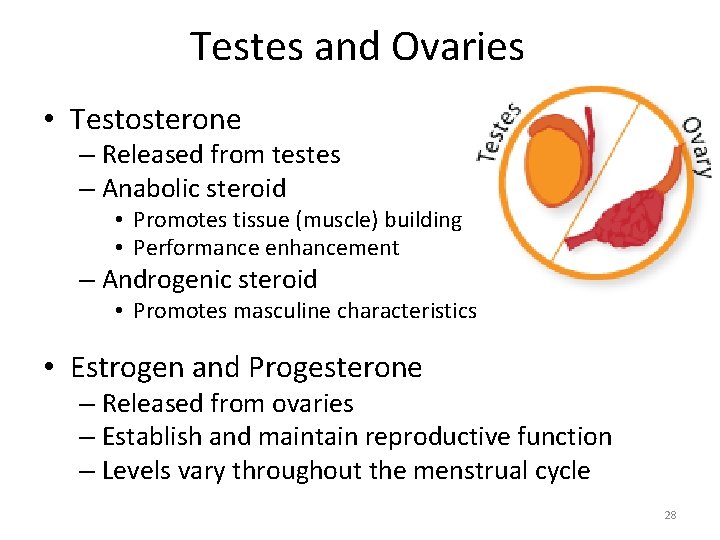
Hormones: Regulation and Action Testes and Ovaries • Testosterone – Released from testes – Anabolic steroid • Promotes tissue (muscle) building • Performance enhancement – Androgenic steroid • Promotes masculine characteristics • Estrogen and Progesterone – Released from ovaries – Establish and maintain reproductive function – Levels vary throughout the menstrual cycle 28
Hormones: Regulation and Action Anabolic Steroids and Performance • Taken: 10 to 100 times the recommended dosage • Also associated with negative side effects – Revert to normal after discontinuation • Widespread use has led to testing of competitive athletes • Most users are not competitive athletes – Take more than one steroid in megadoses 29
Pancreas Hormones: Regulation and Action • Both exocrine and endocrine functions • Secretes: – Insulin (from cells) • Promotes the storage of glucose, amino acids, and fats • Lack of insulin is called diabetes mellitus – Glucagon (from cells) • Promotes the mobilization of fatty acids and glucose – Somatostatin • Controls rate of entry of nutrients into the circulation – Digestive enzymes and bicarbonate • Into the small intestine 30
Endocrine Regulation of Metabolism: Pancreas • Insulin: lowers blood glucose – Counters hyperglycemia, opposes glucagon – Glucose transport into cells – Synthesis of glycogen, protein, fat – Inhibits gluconeogenesis • Glucagon: raises blood glucose – Counters hypoglycemia, opposes insulin – Glycogenolysis, gluconeogenesis 31
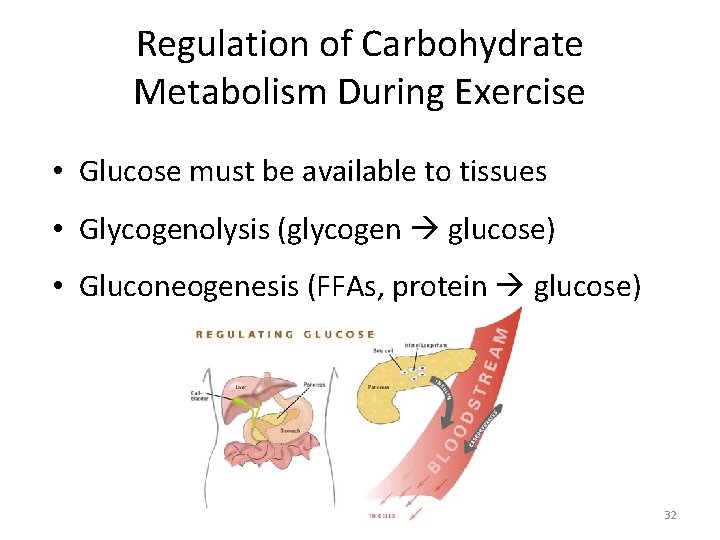
Regulation of Carbohydrate Metabolism During Exercise • Glucose must be available to tissues • Glycogenolysis (glycogen glucose) • Gluconeogenesis (FFAs, protein glucose) 32
Regulation of Carbohydrate Metabolism During Exercise • Adequate glucose during exercise requires – Glucose release by liver – Glucose uptake by muscles • Hormones that circulating glucose: – Glucagon – Epinephrine – Norepinephrine – Cortisol 33
Regulation of Carbohydrate Metabolism During Exercise • Circulating glucose during exercise also affected by – GH: FFA mobilization, cellular glucose uptake – T 3, T 4: glucose catabolism and fat metabolism • Amount of glucose released from liver depends on exercise intensity & duration 34
Regulation of Carbohydrate Metabolism During Exercise • As exercise intensity increases: – Catecholamine release – Glycogenolysis rate (liver, muscles) – Muscle glycogen used before liver glycogen • As exercise duration increases – More liver glycogen used – Muscle glucose uptake liver glucose release – As glycogen stores , glucagon hormone levels 35
Hormonal Control of Substrate Mobilization During Exercise Blood Glucose Homeostasis During Exercise • Plasma glucose maintained through four processes: 1. Mobilization of glucose from liver glycogen stores 2. Mobilization of FFA from adipose tissue • Spares blood glucose 3. Gluconeogenesis from amino acids, lactic acid, and glycerol 4. Blocking the entry of glucose into cells • Forces use of FFA as a fuel 36
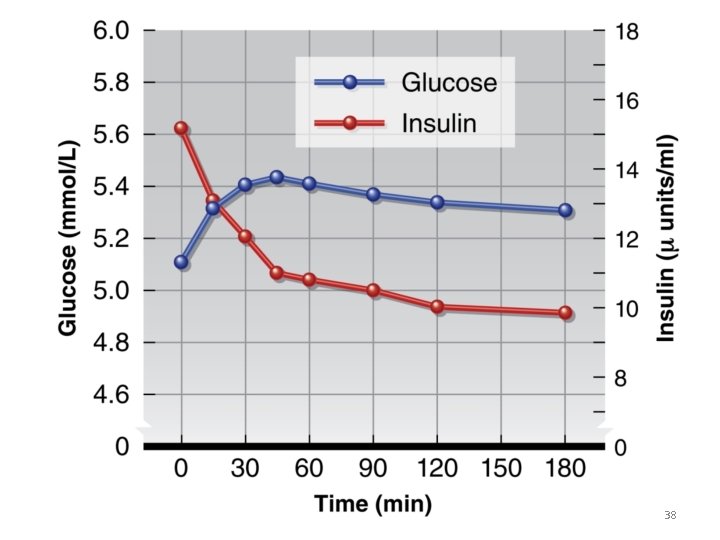
Regulation of Carbohydrate Metabolism During Exercise • Glucose mobilization = only half the story • Insulin: enables glucose uptake in muscle • During exercise – Insulin concentrations – Cellular insulin sensitivity – More glucose uptake into cells, use less insulin 37
38
Hormonal Control of Substrate Mobilization During Exercise Role of insulin & Glucagon: Fast-Acting Hormones • Insulin – Uptake and storage of glucose and FFA – Plasma concentration decreases during exercise – Decreased insulin response following training • Glucagon – Mobilization of glucose and FFA fuels – Plasma concentration increases during exercise – Decreased response following training • Insulin & glucagon secretion influenced by catecholamines 39
Hormonal Control of Substrate Mobilization During Exercise Epinephrine and Norepinephrine • Also Fast-acting hormones • Maintain blood glucose during exercise – Muscle glycogen mobilization – Increasing liver glucose mobilization – Increasing FFA mobilization – Alter glucose uptake • Plasma E and NE increase during exercise – Also related to increased heart rate and blood pressure during exercise • Decreased plasma E and NE after training 40
Regulation of Fat Metabolism During Exercise • FFA mobilization and fat metabolism critical to endurance exercise performance – Glycogen depleted need fat for energy = release hormones accelerate fat breakdown (lipolysis) • Triglycerides FFAs + glycerol – Fat stored as triglycerides in adipose tissue – Broken down into FFAs transported to muscle – Rate of triglyceride breakdown into FFAs = determine rate of cellular fat metabolism 41
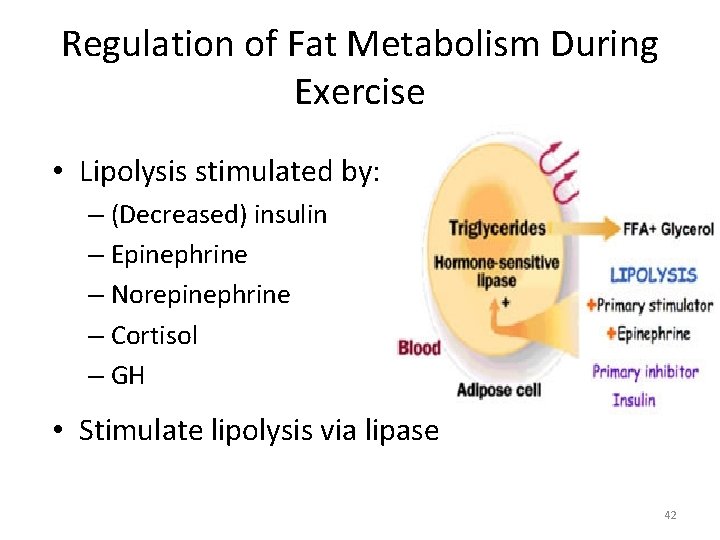
Regulation of Fat Metabolism During Exercise • Lipolysis stimulated by: – (Decreased) insulin – Epinephrine – Norepinephrine – Cortisol – GH • Stimulate lipolysis via lipase 42