
Hormonal Regulation of Growth Development and Metabolism Chapter
Hormonal Regulation of Growth, Development, and Metabolism Chapter 9. 2 Mc. Graw-Hill Ryerson Biology 12 (2011)
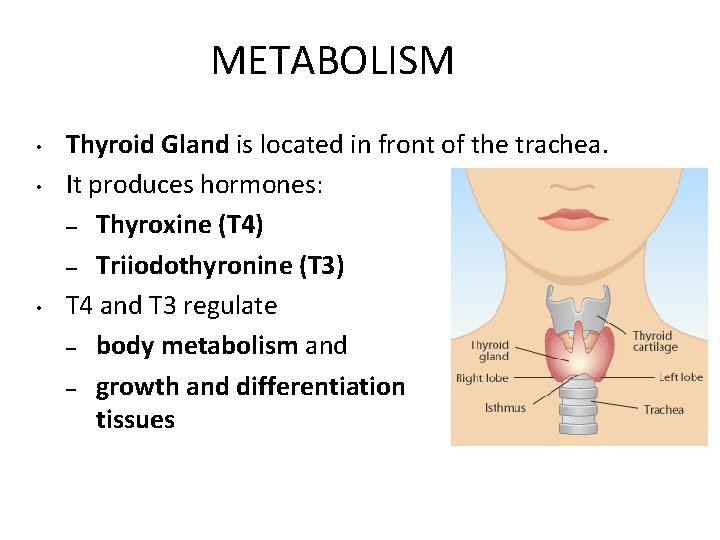
METABOLISM • • • Thyroid Gland is located in front of the trachea. It produces hormones: – Thyroxine (T 4) – Triiodothyronine (T 3) T 4 and T 3 regulate – body metabolism and – growth and differentiation of tissues
T 4 and T 3 • Tyrosine based hormones, dependent on iodine for production. • Lipophilic, travel through blood bound to a protein, thyroxine binding globulin (TBG) and cross the cell membrane easily to interact with nuclear receptors, thyroid hormone receptor. • T 4 has a longer half-life than T 3 and outnumbers T 3 by 20: 1 in the bloodstream, but T 3 is 4 times as potent (more active). • Circulating T 4 is converted to T 3 by the removal of iodine. T 4 is considered a precursor to T 3.
Effects of T 4 and T 3 • T 4 and T 3 help our body oxidize sugars and nutrients (proteins, fats) at a faster rate. – All the energy of glucose is transferred to heat and ATP, (no storing of glucose) and ATP is consumed during activity, therefore there is no weight gain. • Also increase cardiac output, heart rate, breathing rate, and production of RNA polymerases (so increased protein synthesis – as well as metabolism)
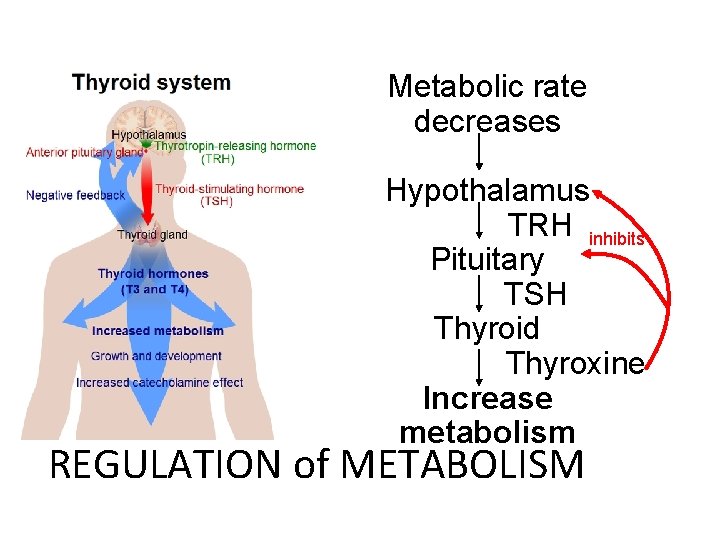
Metabolic rate decreases Hypothalamus TRH inhibits Pituitary TSH Thyroid Thyroxine Increase metabolism REGULATION of METABOLISM
REGULATION of METABOLISM • Metabolic rate decreases • hypothalamus sends thyroid releasing hormone (TRH) to the anterior pituitary • Anterior pituitary releases thyroid stimulating hormone (TSH) • TSH acts on thyroid to stimulate release of thyroxine. • thyroxine raises metabolism by increasing sugar usage by body tissues • thyroxine levels feedback on hypothalamus and pituitary to inhibit further release of TRH /TSH
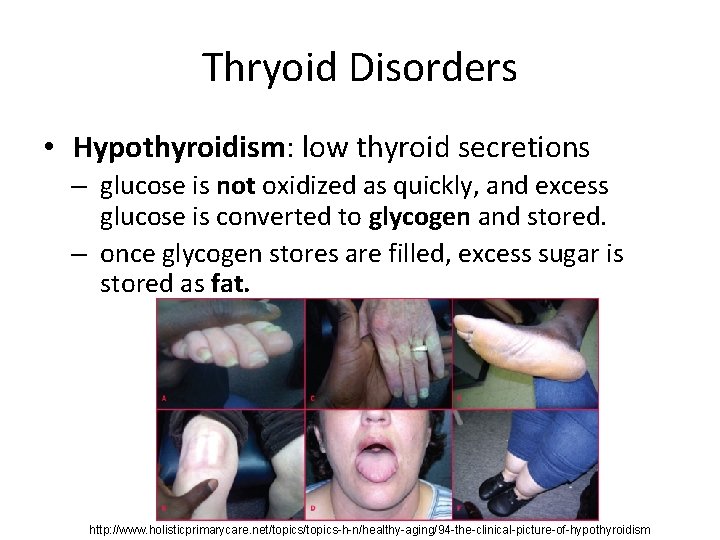
Thryoid Disorders • Hypothyroidism: low thyroid secretions – glucose is not oxidized as quickly, and excess glucose is converted to glycogen and stored. – once glycogen stores are filled, excess sugar is stored as fat. http: //www. holisticprimarycare. net/topics-h-n/healthy-aging/94 -the-clinical-picture-of-hypothyroidism
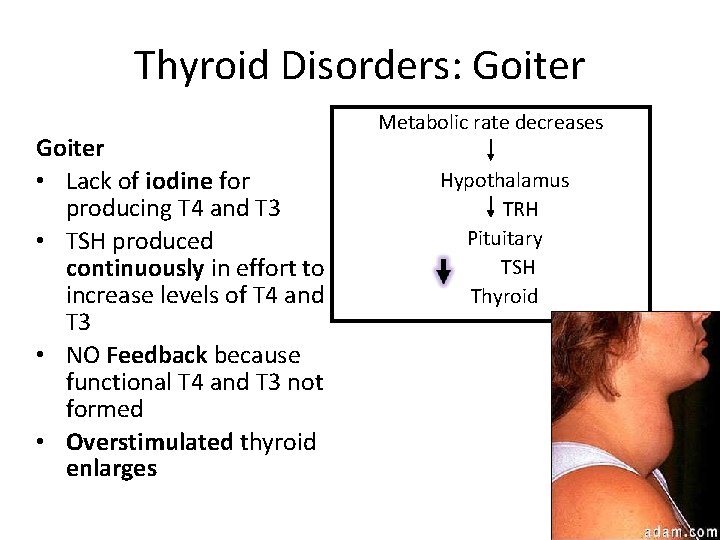
Thyroid Disorders: Goiter • Lack of iodine for producing T 4 and T 3 • TSH produced continuously in effort to increase levels of T 4 and T 3 • NO Feedback because functional T 4 and T 3 not formed • Overstimulated thyroid enlarges Metabolic rate decreases Hypothalamus TRH Pituitary TSH Thyroid
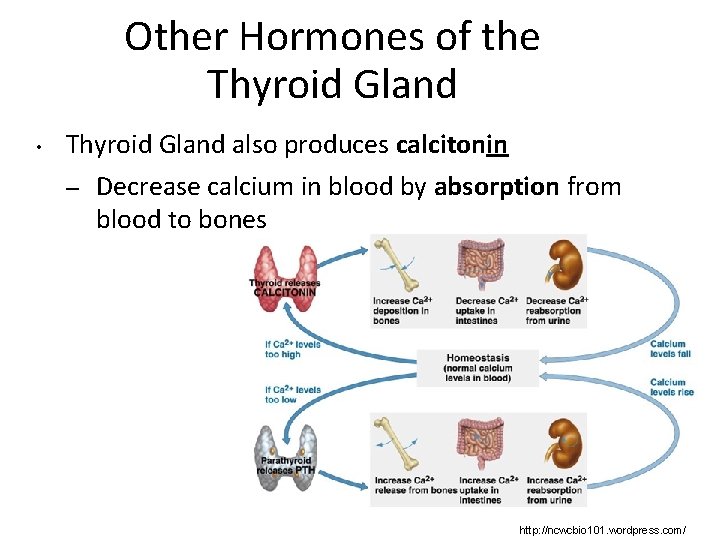
Other Hormones of the Thyroid Gland • Thyroid Gland also produces calcitonin – Decrease calcium in blood by absorption from blood to bones http: //ncwcbio 101. wordpress. com/
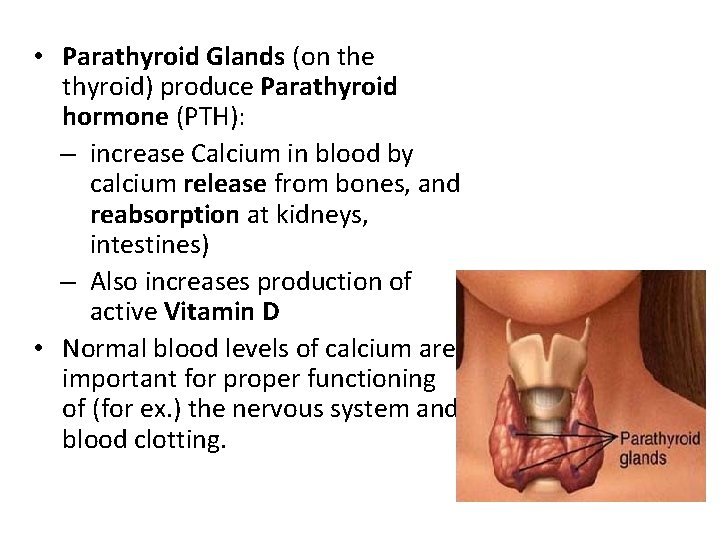
• Parathyroid Glands (on the thyroid) produce Parathyroid hormone (PTH): – increase Calcium in blood by calcium release from bones, and reabsorption at kidneys, intestines) – Also increases production of active Vitamin D • Normal blood levels of calcium are important for proper functioning of (for ex. ) the nervous system and blood clotting.
Other Metabolic Hormones • In addition to TSH, the Pituitary Gland also produces Growth hormone (somatotropin) • • Increase Protein synthesis, Breakdown of fats Abnomal levels lead to: dwarfism, gigantism, acromegaly

Homework • Pg 403 #4, 6, 8, 10, 11
- Slides: 12