
Horizon Sampling This slide set provides instructions to
- Slides: 8
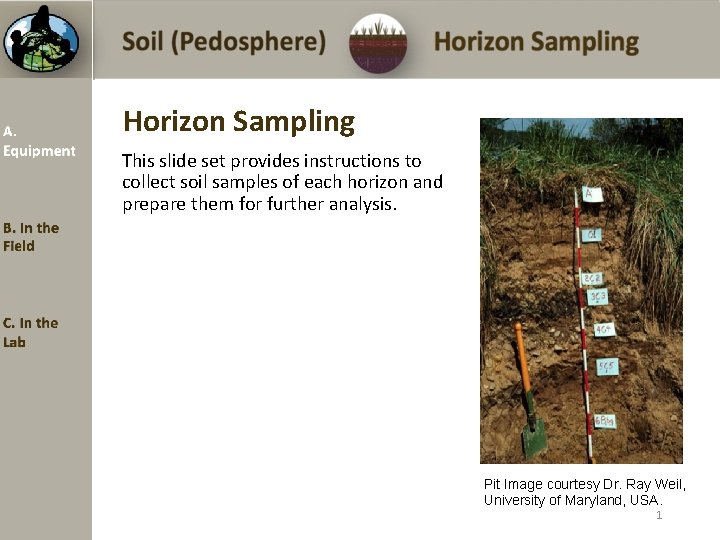
Horizon Sampling This slide set provides instructions to collect soil samples of each horizon and prepare them for further analysis. Pit Image courtesy Dr. Ray Weil, University of Maryland, USA. 1
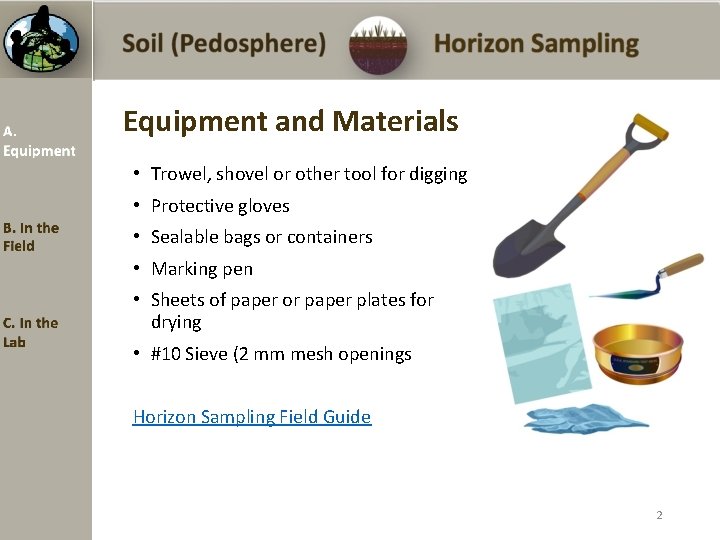
Equipment and Materials • Trowel, shovel or other tool for digging • Protective gloves • Sealable bags or containers • Marking pen • Sheets of paper or paper plates for drying • #10 Sieve (2 mm mesh openings Horizon Sampling Field Guide 2
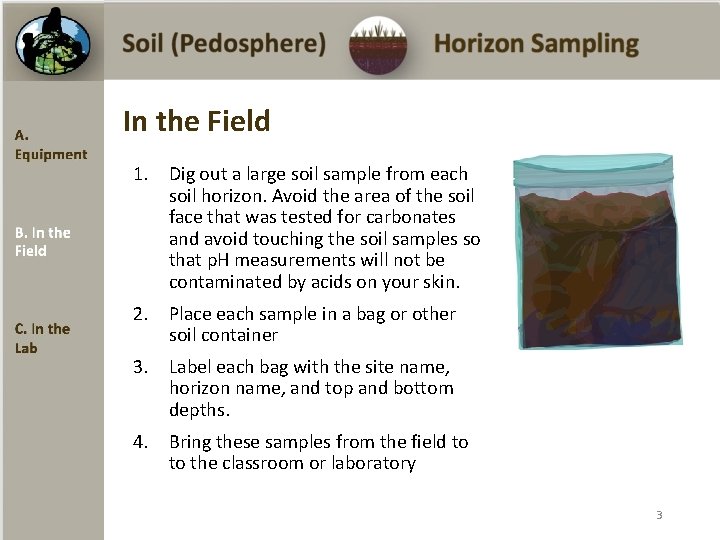
In the Field 1. Dig out a large soil sample from each soil horizon. Avoid the area of the soil face that was tested for carbonates and avoid touching the soil samples so that p. H measurements will not be contaminated by acids on your skin. 2. Place each sample in a bag or other soil container 3. Label each bag with the site name, horizon name, and top and bottom depths. 4. Bring these samples from the field to to the classroom or laboratory 3
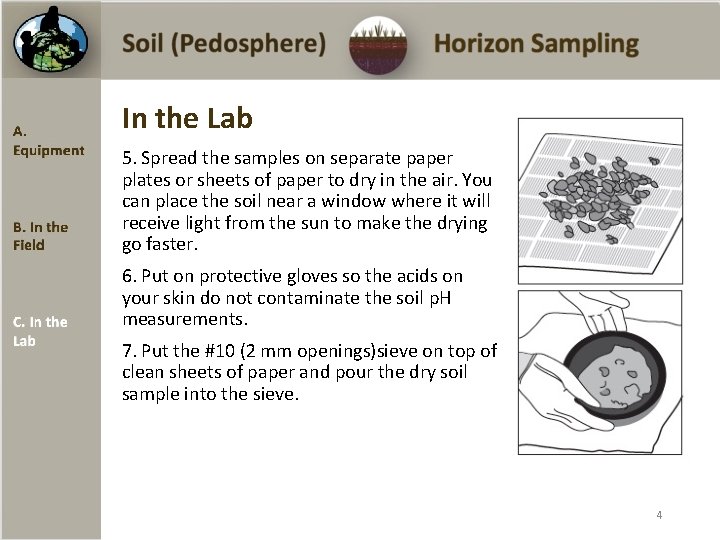
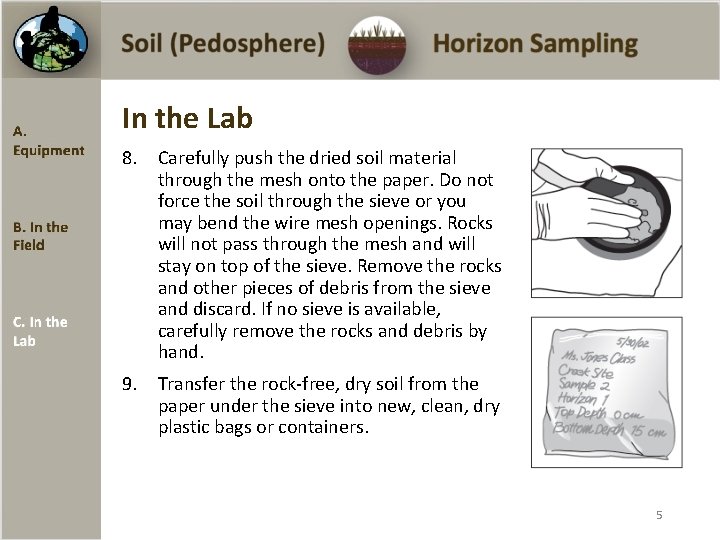
In the Lab 5. Spread the samples on separate paper plates or sheets of paper to dry in the air. You can place the soil near a window where it will receive light from the sun to make the drying go faster. 6. Put on protective gloves so the acids on your skin do not contaminate the soil p. H measurements. 7. Put the #10 (2 mm openings)sieve on top of clean sheets of paper and pour the dry soil sample into the sieve. 4
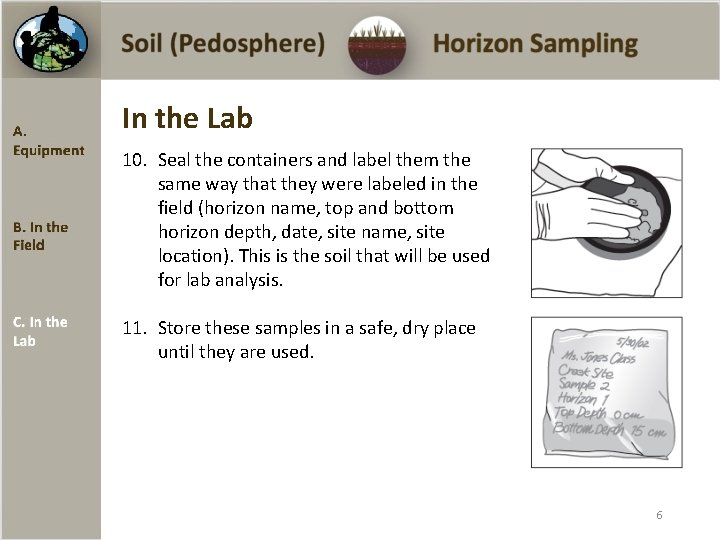
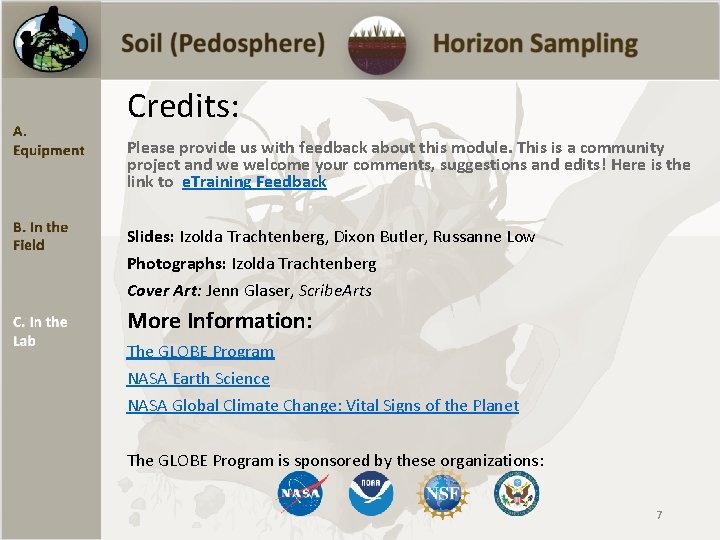
In the Lab 8. Carefully push the dried soil material through the mesh onto the paper. Do not force the soil through the sieve or you may bend the wire mesh openings. Rocks will not pass through the mesh and will stay on top of the sieve. Remove the rocks and other pieces of debris from the sieve and discard. If no sieve is available, carefully remove the rocks and debris by hand. 9. Transfer the rock-free, dry soil from the paper under the sieve into new, clean, dry plastic bags or containers. 5
In the Lab 10. Seal the containers and label them the same way that they were labeled in the field (horizon name, top and bottom horizon depth, date, site name, site location). This is the soil that will be used for lab analysis. 11. Store these samples in a safe, dry place until they are used. 6
Credits: Please provide us with feedback about this module. This is a community project and we welcome your comments, suggestions and edits! Here is the link to e. Training Feedback Slides: Izolda Trachtenberg, Dixon Butler, Russanne Low Photographs: Izolda Trachtenberg Cover Art: Jenn Glaser, Scribe. Arts More Information: The GLOBE Program NASA Earth Science NASA Global Climate Change: Vital Signs of the Planet The GLOBE Program is sponsored by these organizations: 7