
Horizon 2020 the EU Framework Programme for Research
- Slides: 25
Horizon 2020, the EU Framework Programme for Research Innovation Funding routes for International Cooperation and Infrastructures of potential relevance to FAANG GO-FAANG meeting, Washington, 7 -8 October 2015 Jean-Charles Cavitte Research & Innovation Unit European Commission – DG Agriculture & Rural Development
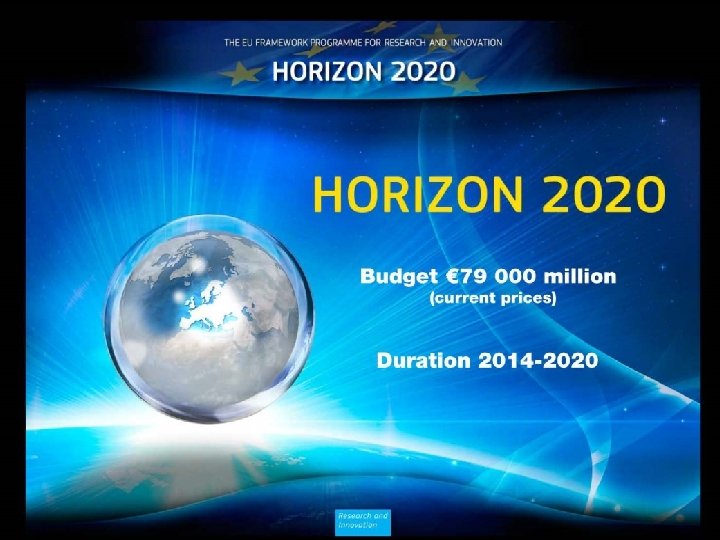
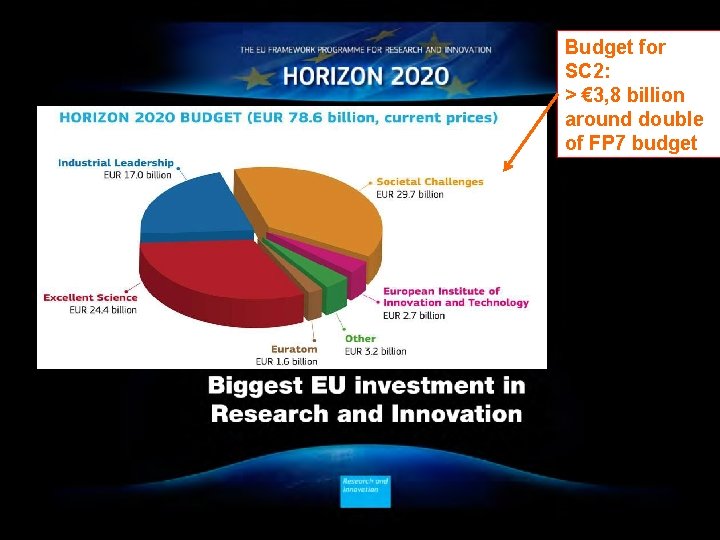
77 billion The presentation shall neither be binding nor construed as constituting commitment by the European Commission Budget for SC 2: > € 3, 8 billion around double of FP 7 budget
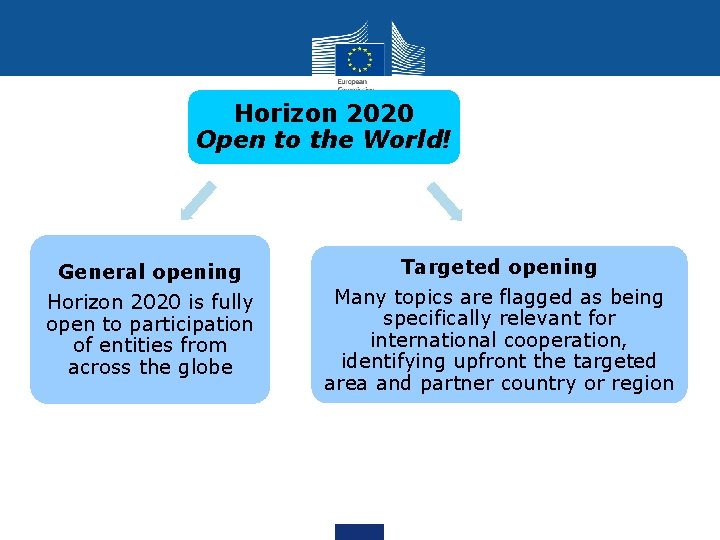
Horizon 2020 Open to the World! General opening Horizon 2020 is fully open to participation of entities from across the globe Targeted opening Many topics are flagged as being specifically relevant for international cooperation, identifying upfront the targeted area and partner country or region
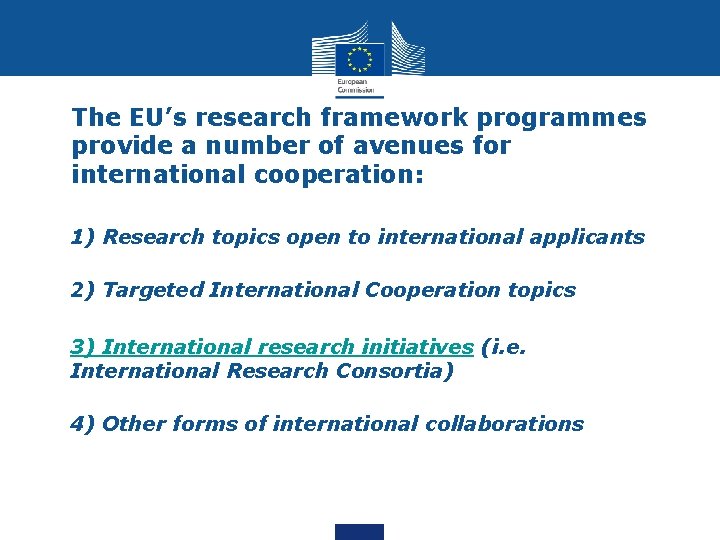
The EU’s research framework programmes provide a number of avenues for international cooperation: • • 1) Research topics open to international applicants 2) Targeted International Cooperation topics • 3) International research initiatives (i. e. International Research Consortia) • 4) Other forms of international collaborations
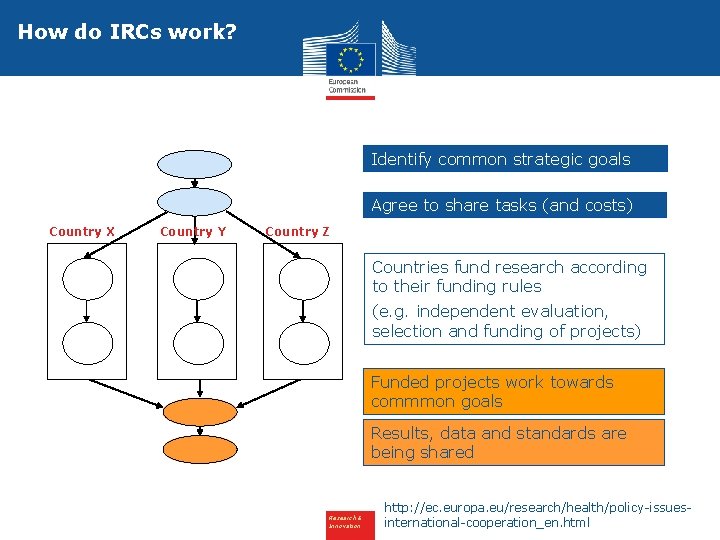
How do IRCs work? Identify common strategic goals Agree to share tasks (and costs) Country X Country Y Country Z Countries fund research according to their funding rules (e. g. independent evaluation, selection and funding of projects) Funded projects work towards commmon goals Results, data and standards are being shared Research & Innovation http: //ec. europa. eu/research/health/policy-issuesinternational-cooperation_en. html
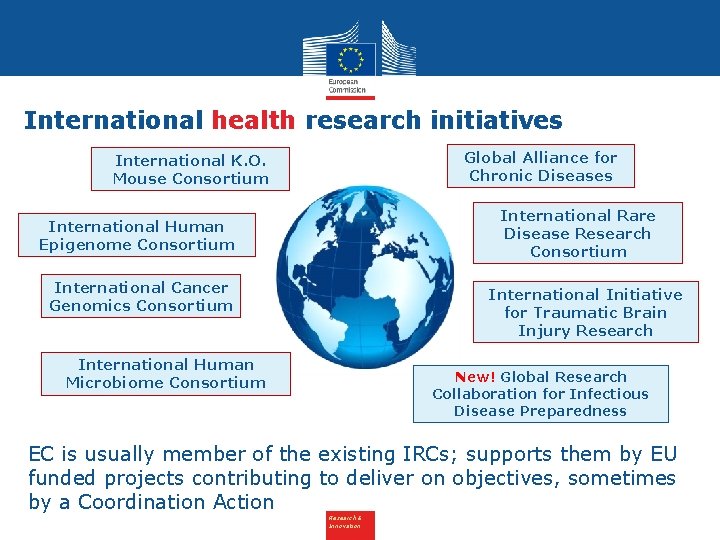
International health research initiatives Global Alliance for Chronic Diseases International K. O. Mouse Consortium International Rare Disease Research Consortium International Human Epigenome Consortium International Cancer Genomics Consortium International Initiative for Traumatic Brain Injury Research International Human Microbiome Consortium New! Global Research Collaboration for Infectious Disease Preparedness EC is usually member of the existing IRCs; supports them by EU funded projects contributing to deliver on objectives, sometimes by a Coordination Action Research & Innovation
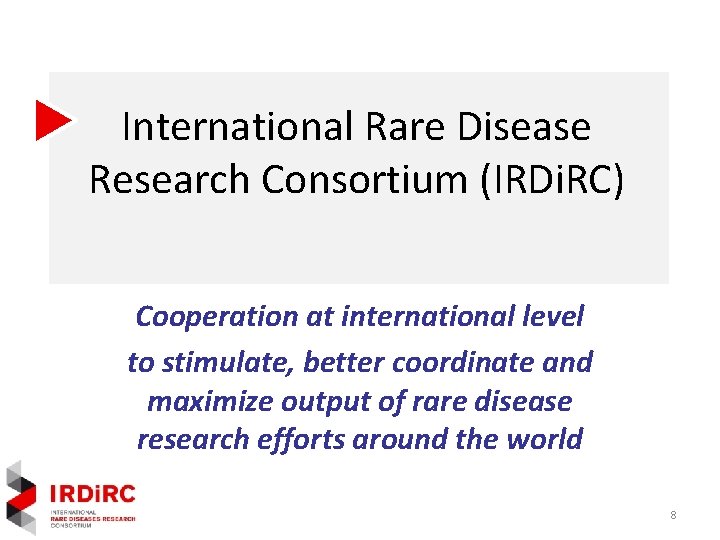
International Rare Disease Research Consortium (IRDi. RC) Cooperation at international level to stimulate, better coordinate and maximize output of rare disease research efforts around the world 8
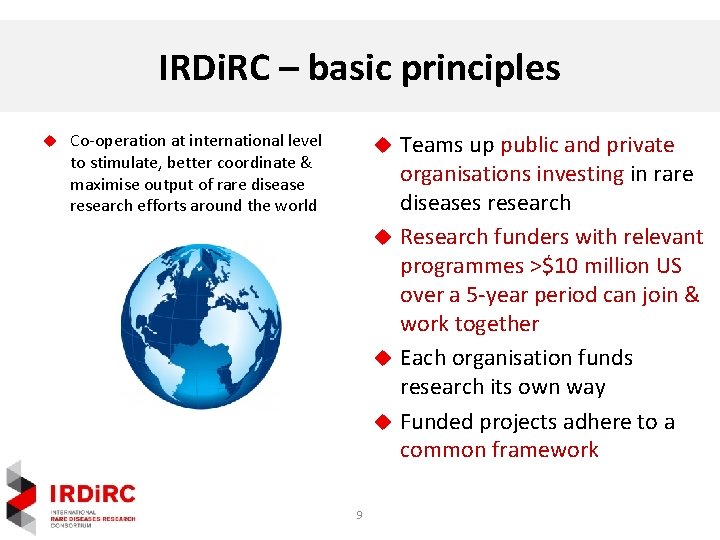
IRDi. RC – basic principles u Teams up public and private organisations investing in rare diseases research u Research funders with relevant programmes >$10 million US over a 5 -year period can join & work together u Each organisation funds research its own way u Funded projects adhere to a common framework Co-operation at international level to stimulate, better coordinate & maximise output of rare disease research efforts around the world u 9
200 therapies and means to diagnose most rare diseases by 2020 www. irdirc. org Research & Innovation
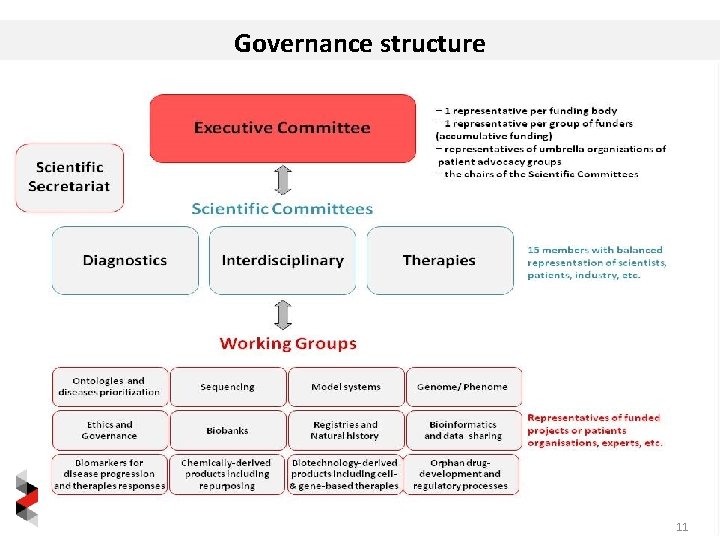
Governance structure 11 11
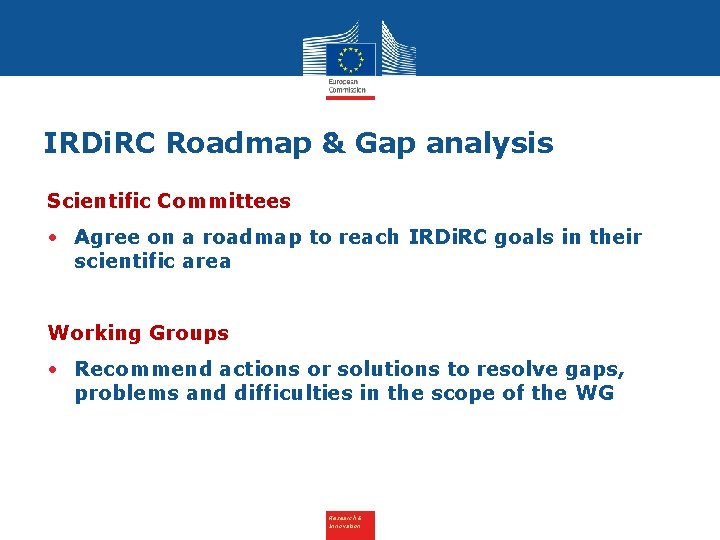
IRDi. RC Roadmap & Gap analysis Scientific Committees • Agree on a roadmap to reach IRDi. RC goals in their scientific area Working Groups • Recommend actions or solutions to resolve gaps, problems and difficulties in the scope of the WG Research & Innovation
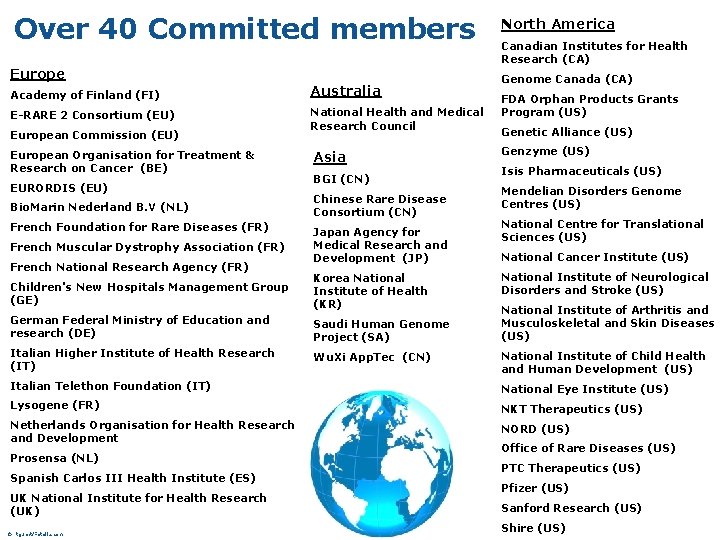
Over 40 Committed members Europe Academy of Finland (FI) Australia E-RARE 2 Consortium (EU) National Health and Medical Research Council European Commission (EU) European Organisation for Treatment & Research on Cancer (BE) EURORDIS (EU) Bio. Marin Nederland B. V (NL) French Foundation for Rare Diseases (FR) French Muscular Dystrophy Association (FR) French National Research Agency (FR) Asia BGI (CN) Chinese Rare Disease Consortium (CN) Japan Agency for Medical Research and Development (JP) Children's New Hospitals Management Group (GE) Korea National Institute of Health (KR) German Federal Ministry of Education and research (DE) Saudi Human Genome Project (SA) Italian Higher Institute of Health Research (IT) Wu. Xi App. Tec (CN) North America Canadian Institutes for Health Research (CA) Genome Canada (CA) FDA Orphan Products Grants Program (US) Genetic Alliance (US) Genzyme (US) Isis Pharmaceuticals (US) Mendelian Disorders Genome Centres (US) National Centre for Translational Sciences (US) National Cancer Institute (US) National Institute of Neurological Disorders and Stroke (US) National Institute of Arthritis and Musculoskeletal and Skin Diseases (US) National Institute of Child Health and Human Development (US) Italian Telethon Foundation (IT) National Eye Institute (US) Lysogene (FR) NKT Therapeutics (US) Netherlands Organisation for Health Research and Development NORD (US) Office of Rare Diseases (US) Prosensa (NL) PTC Therapeutics (US) Spanish Carlos III Health Institute (ES) UK National Institute for Health Research (UK) © rtguest/Fotolia. com Pfizer (US) Sanford Research (US) Research and Innovation Shire (US)
All documents are accesssible at www. irdirc. org 14
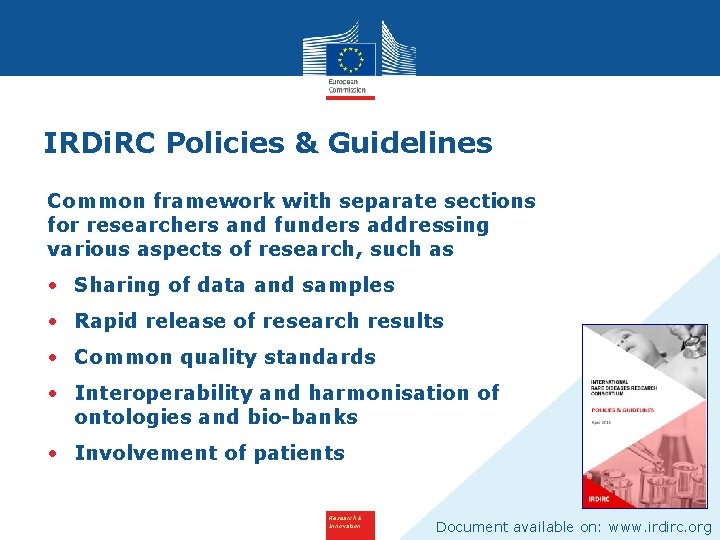
IRDi. RC Policies & Guidelines Common framework with separate sections for researchers and funders addressing various aspects of research, such as • Sharing of data and samples • Rapid release of research results • Common quality standards • Interoperability and harmonisation of ontologies and bio-banks • Involvement of patients Research & Innovation Document available on: www. irdirc. org
IRDi. RC Scientific Secretariat u In place at Inserm US 14, at the Rare Disease Platform, Paris, France u FP 7 contract for 6 years since October 2012: « Support IRDi. RC » u Management of the network / assistance to Executive Committee, Scientific Committees and Working Groups u Management of the website: http: //www. irdirc. org/ 16
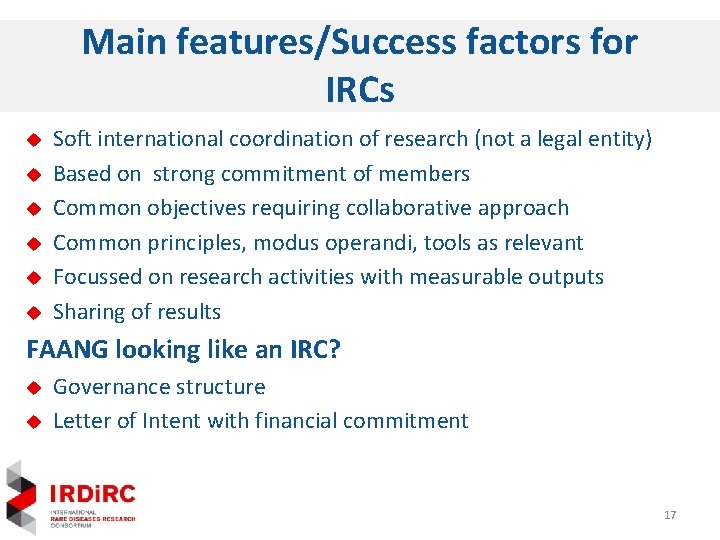
Main features/Success factors for IRCs u u u Soft international coordination of research (not a legal entity) Based on strong commitment of members Common objectives requiring collaborative approach Common principles, modus operandi, tools as relevant Focussed on research activities with measurable outputs Sharing of results FAANG looking like an IRC? u u Governance structure Letter of Intent with financial commitment 17
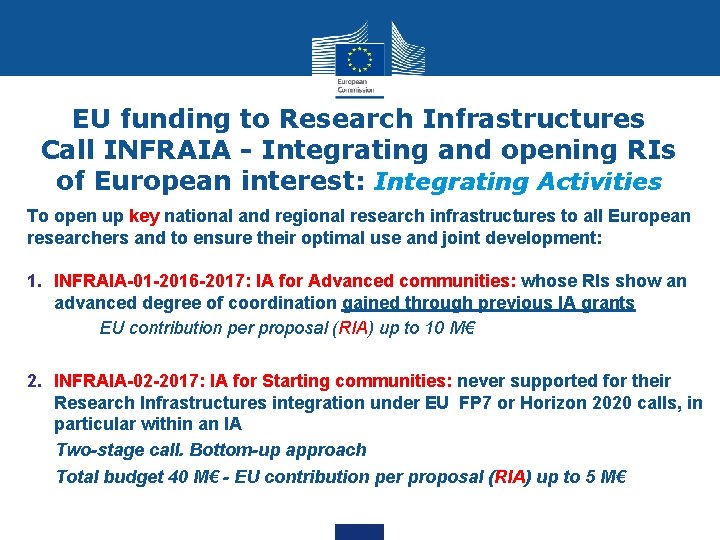
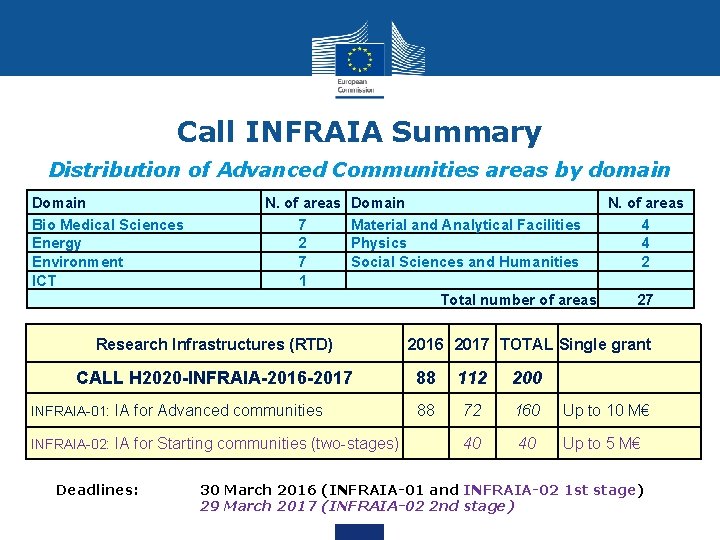
EU funding to Research Infrastructures Call INFRAIA - Integrating and opening RIs of European interest: Integrating Activities To open up key national and regional research infrastructures to all European researchers and to ensure their optimal use and joint development: 1. INFRAIA-01 -2016 -2017: IA for Advanced communities: whose RIs show an advanced degree of coordination gained through previous IA grants EU contribution per proposal (RIA) up to 10 M€ 2. INFRAIA-02 -2017: IA for Starting communities: never supported for their Research Infrastructures integration under EU FP 7 or Horizon 2020 calls, in particular within an IA Two-stage call. Bottom-up approach Total budget 40 M€ - EU contribution per proposal (RIA) up to 5 M€
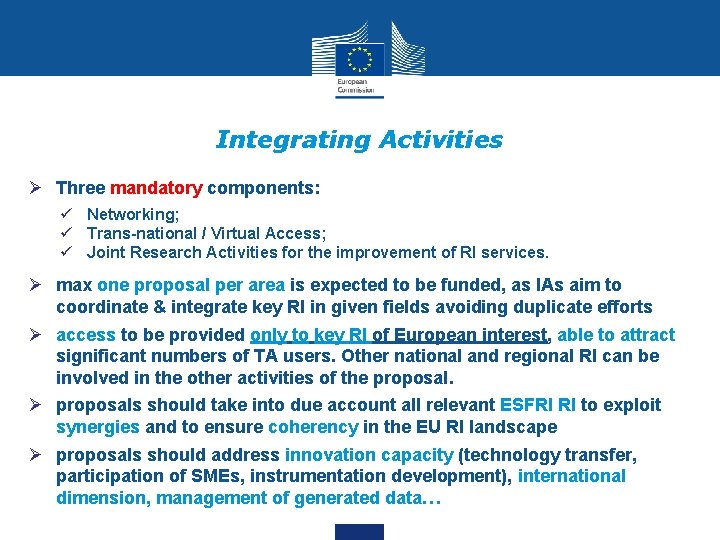
Integrating Activities Ø Three mandatory components: ü Networking; ü Trans-national / Virtual Access; ü Joint Research Activities for the improvement of RI services. Ø max one proposal per area is expected to be funded, as IAs aim to coordinate & integrate key RI in given fields avoiding duplicate efforts Ø access to be provided only to key RI of European interest, able to attract significant numbers of TA users. Other national and regional RI can be involved in the other activities of the proposal. Ø proposals should take into due account all relevant ESFRI RI to exploit synergies and to ensure coherency in the EU RI landscape Ø proposals should address innovation capacity (technology transfer, participation of SMEs, instrumentation development), international dimension, management of generated data…
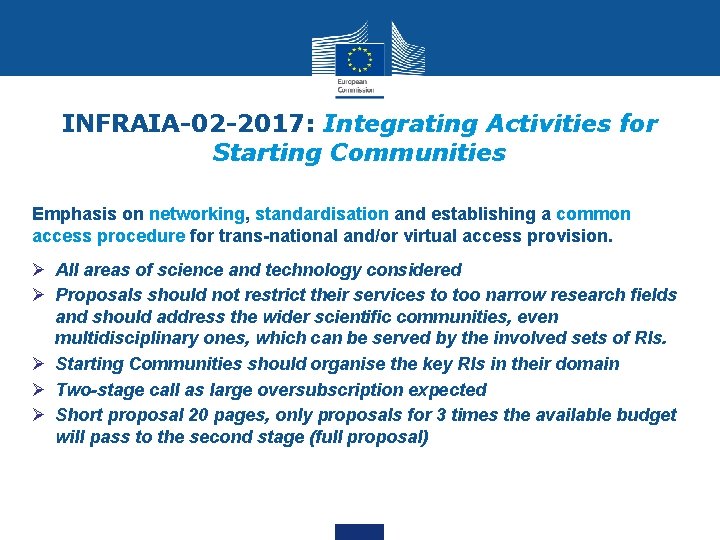
INFRAIA-02 -2017: Integrating Activities for Starting Communities Emphasis on networking, standardisation and establishing a common access procedure for trans-national and/or virtual access provision. Ø All areas of science and technology considered Ø Proposals should not restrict their services to too narrow research fields and should address the wider scientific communities, even multidisciplinary ones, which can be served by the involved sets of RIs. Ø Starting Communities should organise the key RIs in their domain Ø Two-stage call as large oversubscription expected Ø Short proposal 20 pages, only proposals for 3 times the available budget will pass to the second stage (full proposal)
Call INFRAIA Summary Distribution of Advanced Communities areas by domain Domain Bio Medical Sciences Energy Environment ICT N. of areas 7 2 7 1 Domain Material and Analytical Facilities Physics Social Sciences and Humanities Total number of areas Research Infrastructures (RTD) CALL H 2020 -INFRAIA-2016 -2017 INFRAIA-01: IA for Advanced communities INFRAIA-02: IA for Starting communities (two-stages) Deadlines: N. of areas 4 4 2 27 2016 2017 TOTAL Single grant 88 112 200 88 72 160 Up to 10 M€ 40 40 Up to 5 M€ 30 March 2016 (INFRAIA-01 and INFRAIA-02 1 st stage) 29 March 2017 (INFRAIA-02 2 nd stage)
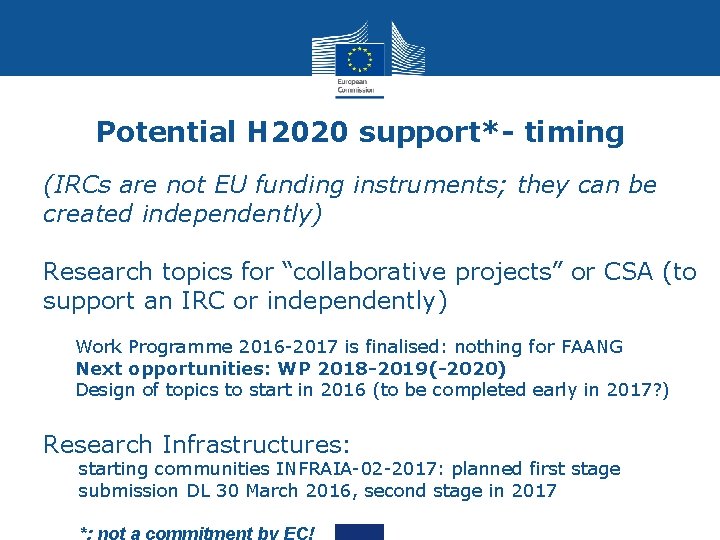
Potential H 2020 support*- timing (IRCs are not EU funding instruments; they can be created independently) Research topics for “collaborative projects” or CSA (to support an IRC or independently) Work Programme 2016 -2017 is finalised: nothing for FAANG Next opportunities: WP 2018 -2019(-2020) Design of topics to start in 2016 (to be completed early in 2017? ) Research Infrastructures: starting communities INFRAIA-02 -2017: planned first stage submission DL 30 March 2016, second stage in 2017 *: not a commitment by EC!
HORIZON 2020 Thank you for your attention! Find out more: www. ec. europa/research/horizon 2020
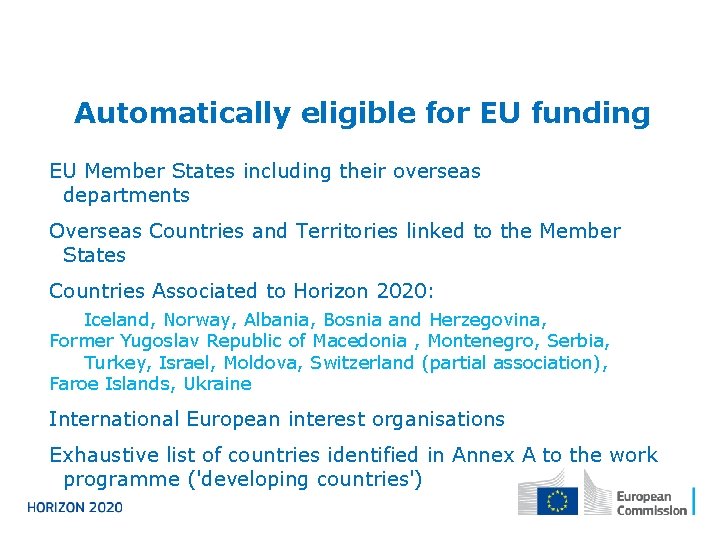
Automatically eligible for EU funding EU Member States including their overseas departments Overseas Countries and Territories linked to the Member States Countries Associated to Horizon 2020: Iceland, Norway, Albania, Bosnia and Herzegovina, Former Yugoslav Republic of Macedonia , Montenegro, Serbia, Turkey, Israel, Moldova, Switzerland (partial association), Faroe Islands, Ukraine International European interest organisations Exhaustive list of countries identified in Annex A to the work programme ('developing countries')
Not automatically eligible for EU funding Entities in non-EU/non-Associated/non-'developing countries' may only be granted EU funding when: Provision in the work programme; or Provision under a bilateral S&T agreement; or Commission deems participation essential for carrying out the action (project case-by-case assessment, based on proposals evaluations) 25