
HORIZON 2020 Model Grant Agreements of the Marie
- Slides: 41
HORIZON 2020 Model Grant Agreements of the Marie Skłodowska-Curie Actions Structure, novelties & specificities DG EAC/REA – 23 June 2014
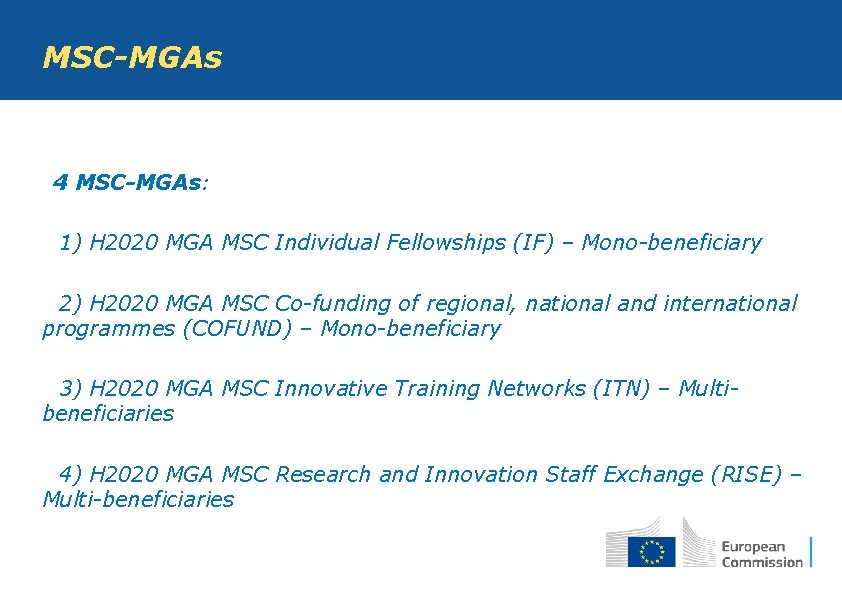
MSC-MGAs • 4 MSC-MGAs: Ø 1) H 2020 MGA MSC Individual Fellowships (IF) – Mono-beneficiary Ø 2) H 2020 MGA MSC Co-funding of regional, national and international programmes (COFUND) – Mono-beneficiary Ø 3) H 2020 MGA MSC Innovative Training Networks (ITN) – Multibeneficiaries Ø 4) H 2020 MGA MSC Research and Innovation Staff Exchange (RISE) – Multi-beneficiaries
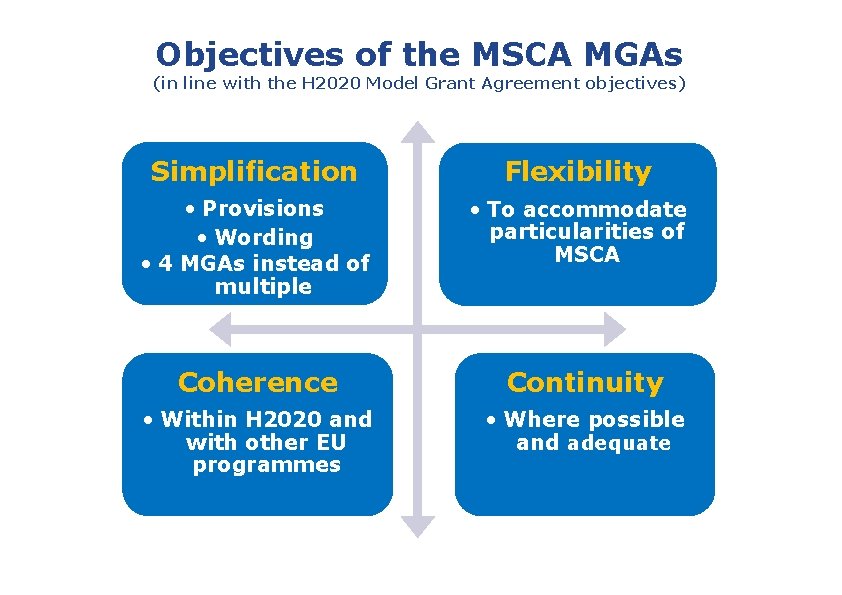
Objectives of the MSCA MGAs (in line with the H 2020 Model Grant Agreement objectives) Simplification Flexibility • Provisions • Wording • 4 MGAs instead of multiple • To accommodate particularities of MSCA Coherence Continuity • Within H 2020 and with other EU programmes • Where possible and adequate
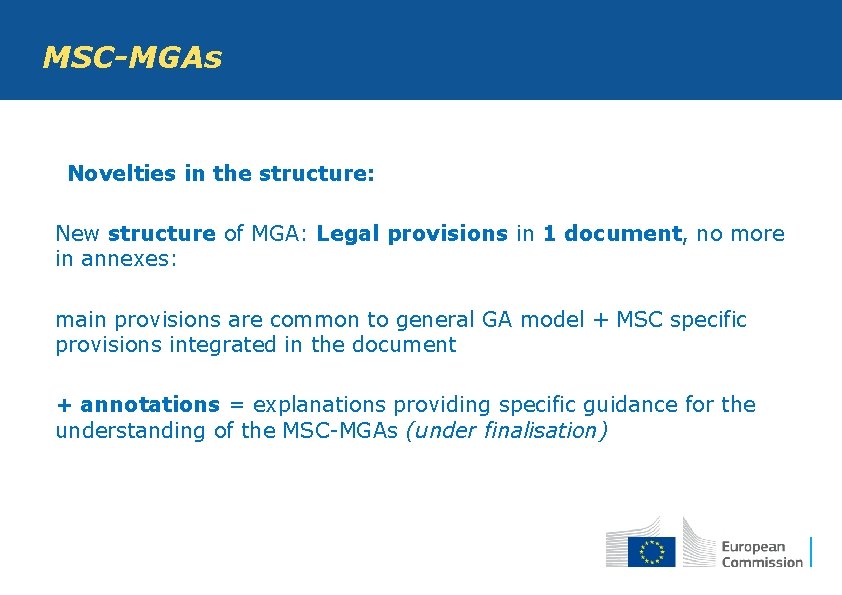
MSC-MGAs • Novelties in the structure: New structure of MGA: Legal provisions in 1 document, no more in annexes: main provisions are common to general GA model + MSC specific provisions integrated in the document + annotations = explanations providing specific guidance for the understanding of the MSC-MGAs (under finalisation)
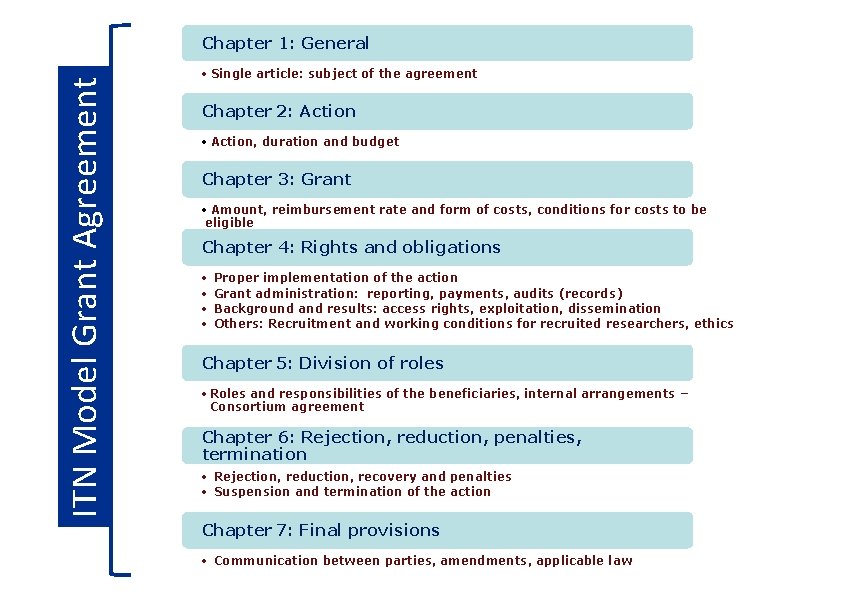
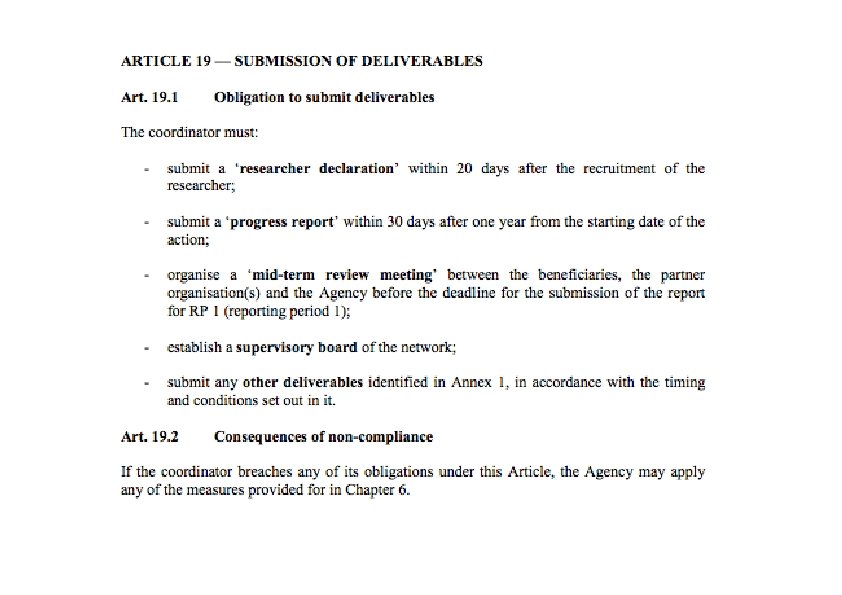
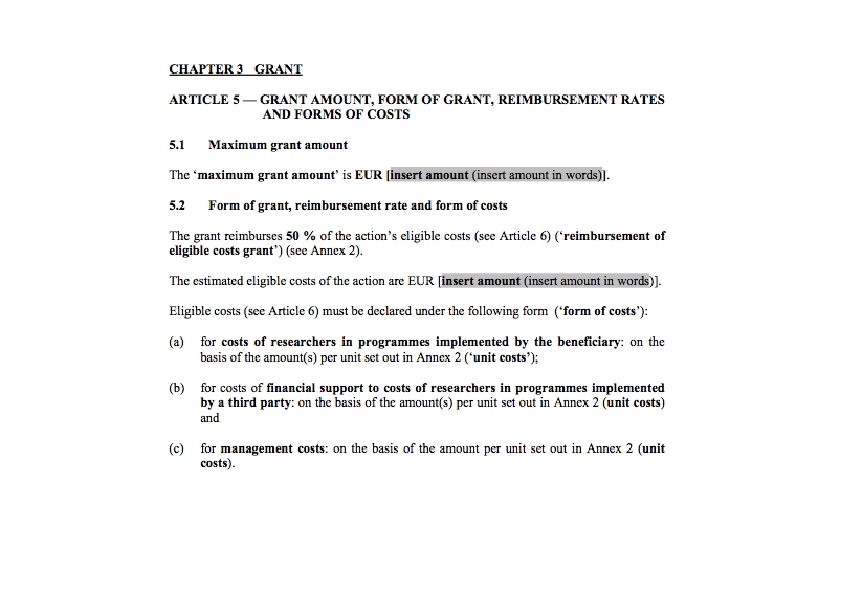
ITN Model Grant Agreement Chapter 1: General • Single article: subject of the agreement Chapter 2: Action • Action, duration and budget Chapter 3: Grant • Amount, reimbursement rate and form of costs, conditions for costs to be eligible Chapter 4: Rights and obligations • • Proper implementation of the action Grant administration: reporting, payments, audits (records) Background and results: access rights, exploitation, dissemination Others: Recruitment and working conditions for recruited researchers, ethics Chapter 5: Division of roles • Roles and responsibilities of the beneficiaries, internal arrangements – Consortium agreement Chapter 6: Rejection, reduction, penalties, termination • Rejection, reduction, recovery and penalties • Suspension and termination of the action Chapter 7: Final provisions • Communication between parties, amendments, applicable law
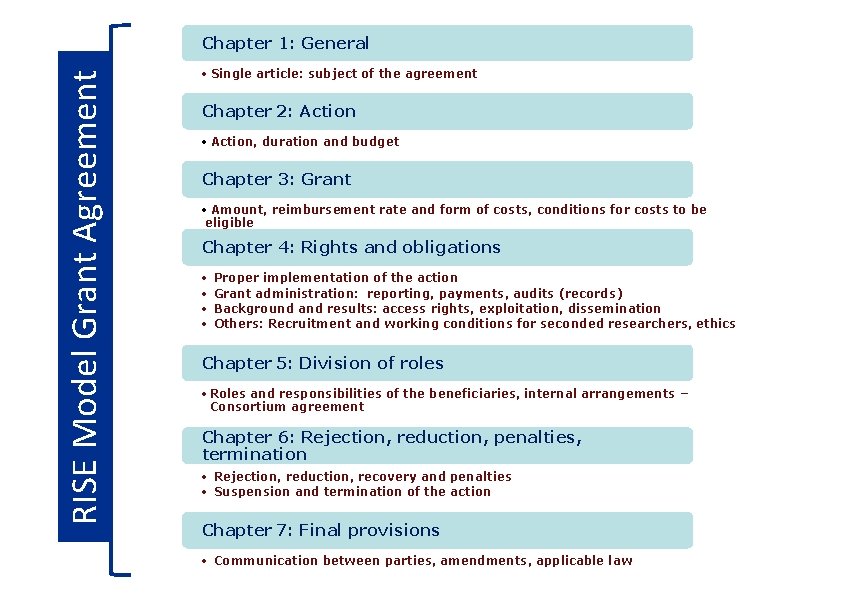
RISE Model Grant Agreement Chapter 1: General • Single article: subject of the agreement Chapter 2: Action • Action, duration and budget Chapter 3: Grant • Amount, reimbursement rate and form of costs, conditions for costs to be eligible Chapter 4: Rights and obligations • • Proper implementation of the action Grant administration: reporting, payments, audits (records) Background and results: access rights, exploitation, dissemination Others: Recruitment and working conditions for seconded researchers, ethics Chapter 5: Division of roles • Roles and responsibilities of the beneficiaries, internal arrangements – Consortium agreement Chapter 6: Rejection, reduction, penalties, termination • Rejection, reduction, recovery and penalties • Suspension and termination of the action Chapter 7: Final provisions • Communication between parties, amendments, applicable law
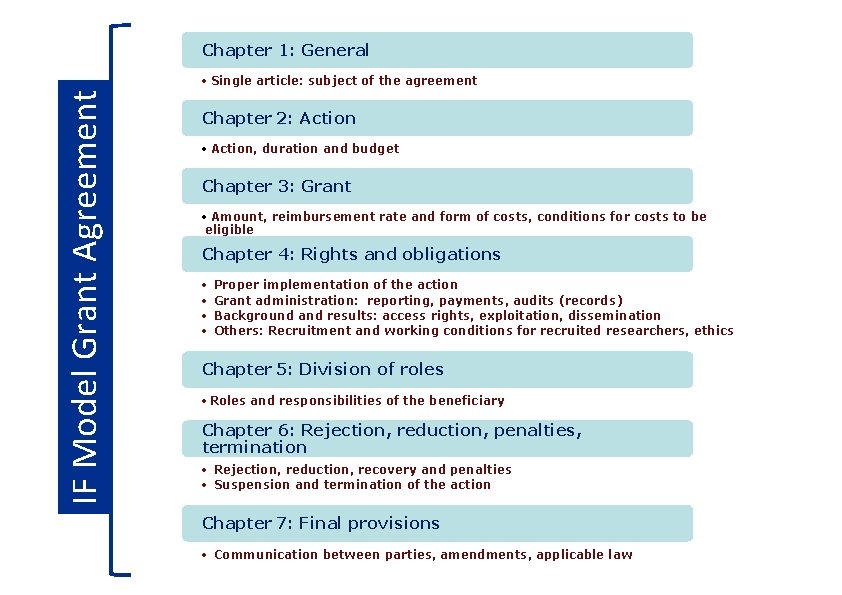
Chapter 1: General IF Model Grant Agreement • Single article: subject of the agreement Chapter 2: Action • Action, duration and budget Chapter 3: Grant • Amount, reimbursement rate and form of costs, conditions for costs to be eligible Chapter 4: Rights and obligations • • Proper implementation of the action Grant administration: reporting, payments, audits (records) Background and results: access rights, exploitation, dissemination Others: Recruitment and working conditions for recruited researchers, ethics Chapter 5: Division of roles • Roles and responsibilities of the beneficiary Chapter 6: Rejection, reduction, penalties, termination • Rejection, reduction, recovery and penalties • Suspension and termination of the action Chapter 7: Final provisions • Communication between parties, amendments, applicable law
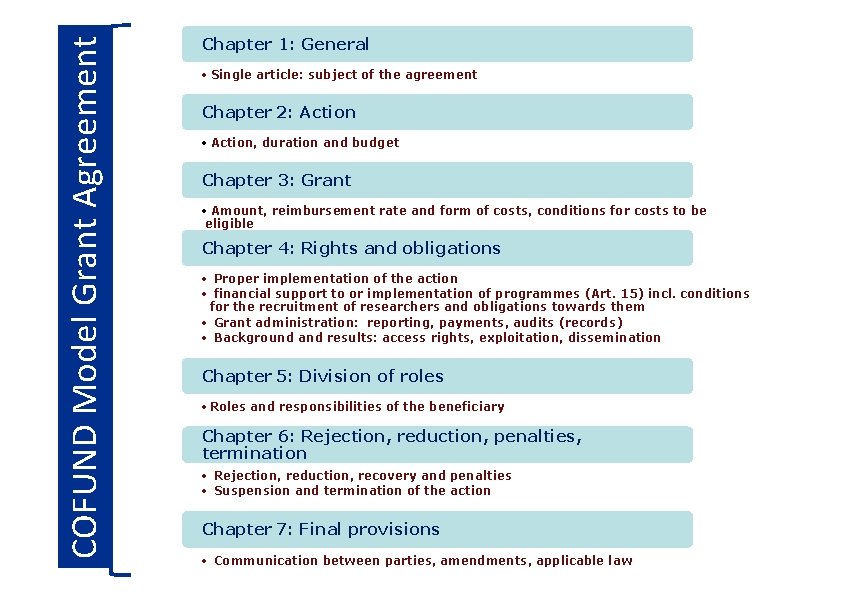
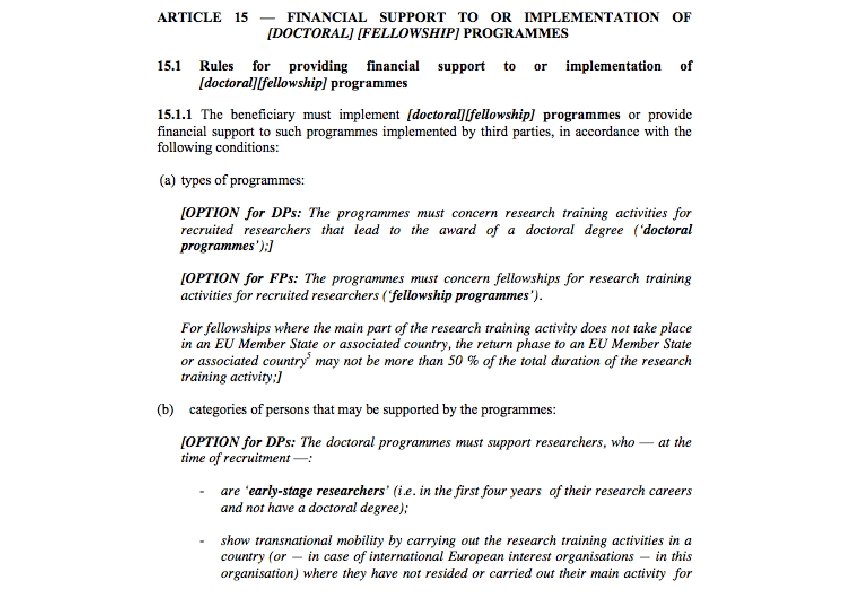
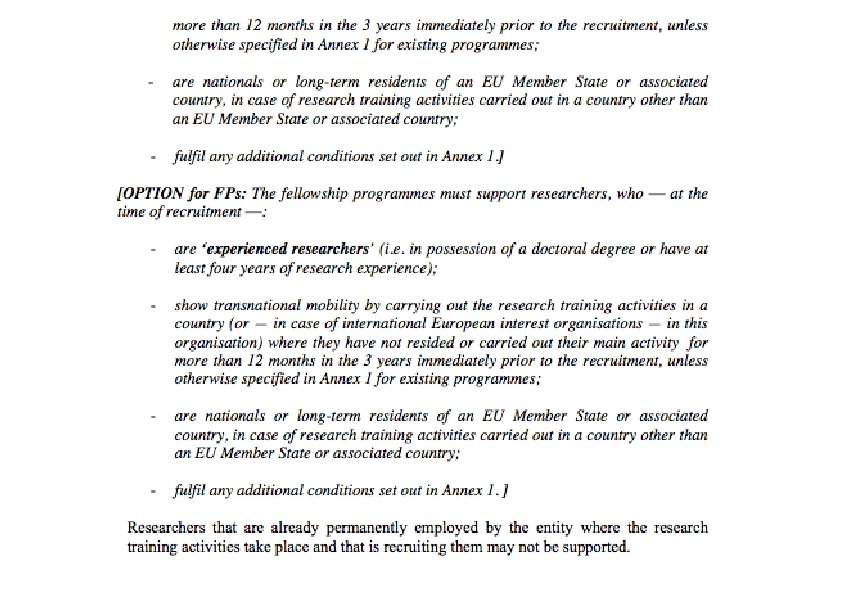
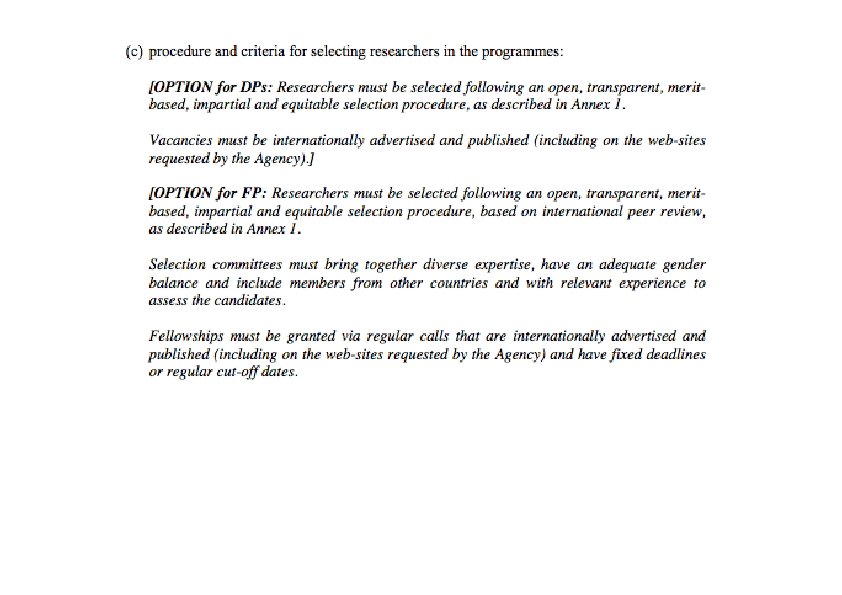
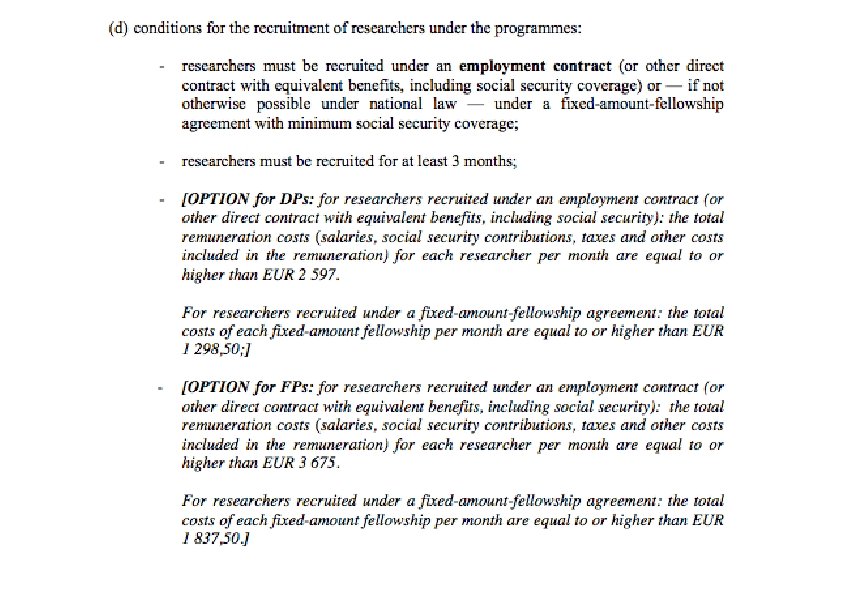
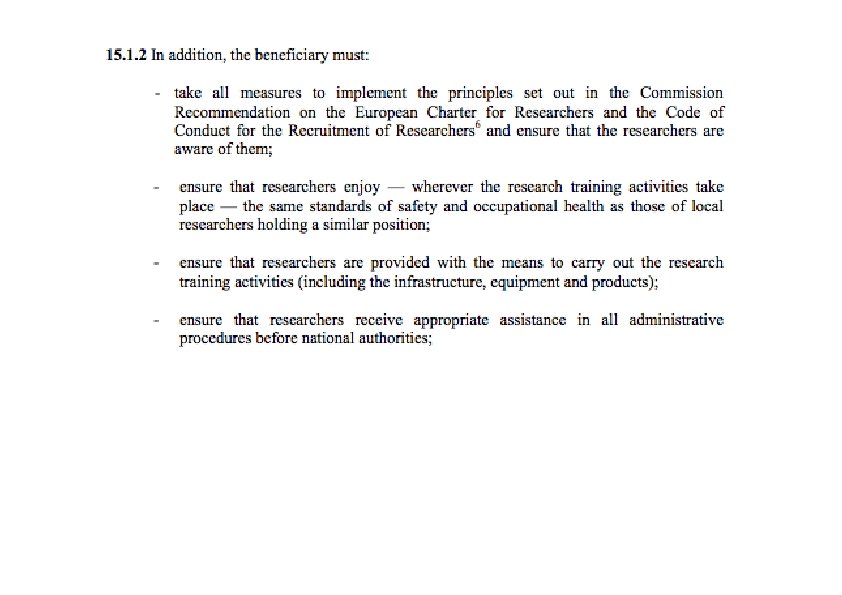
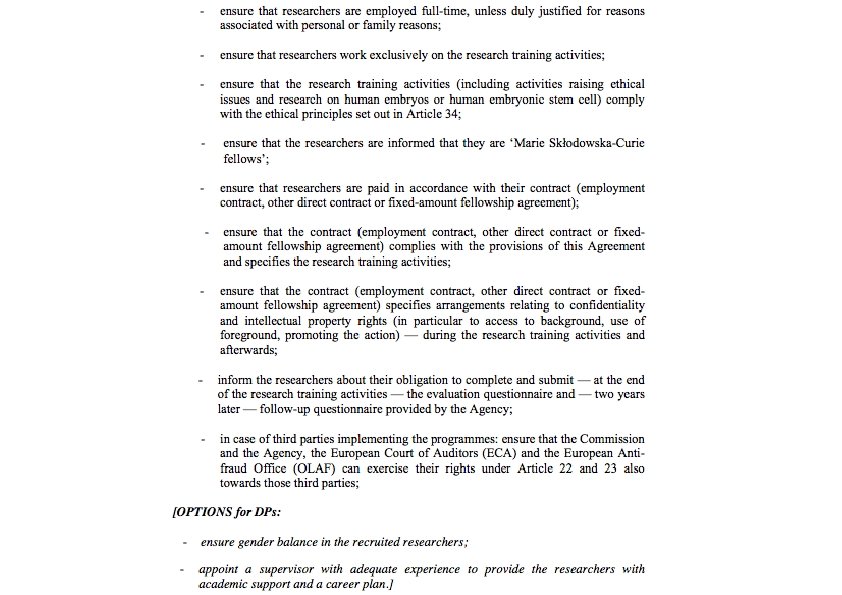
COFUND Model Grant Agreement Chapter 1: General • Single article: subject of the agreement Chapter 2: Action • Action, duration and budget Chapter 3: Grant • Amount, reimbursement rate and form of costs, conditions for costs to be eligible Chapter 4: Rights and obligations • Proper implementation of the action • financial support to or implementation of programmes (Art. 15) incl. conditions for the recruitment of researchers and obligations towards them • Grant administration: reporting, payments, audits (records) • Background and results: access rights, exploitation, dissemination Chapter 5: Division of roles • Roles and responsibilities of the beneficiary Chapter 6: Rejection, reduction, penalties, termination • Rejection, reduction, recovery and penalties • Suspension and termination of the action Chapter 7: Final provisions • Communication between parties, amendments, applicable law
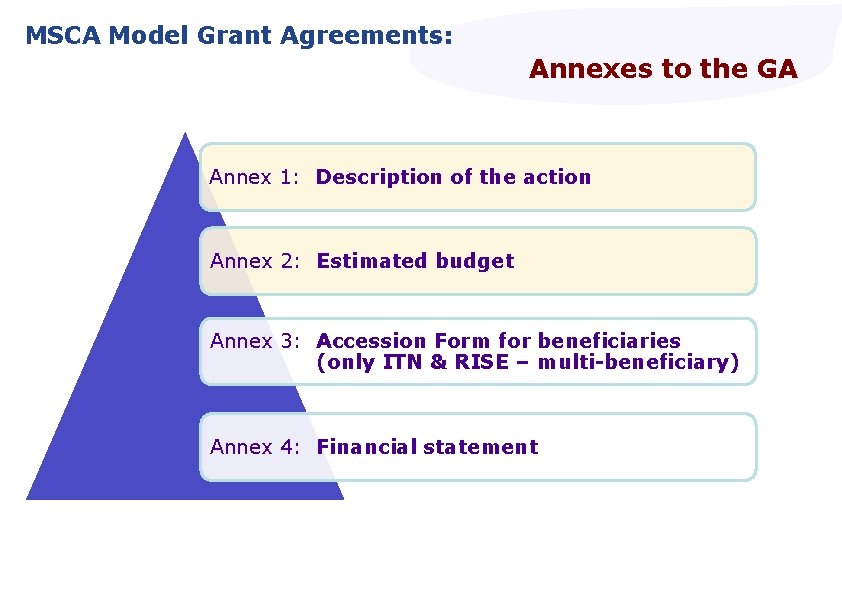
MSCA Model Grant Agreements: Annexes to the GA Annex 1: Description of the action Annex 2: Estimated budget Annex 3: Accession Form for beneficiaries (only ITN & RISE – multi-beneficiary) Annex 4: Financial statement
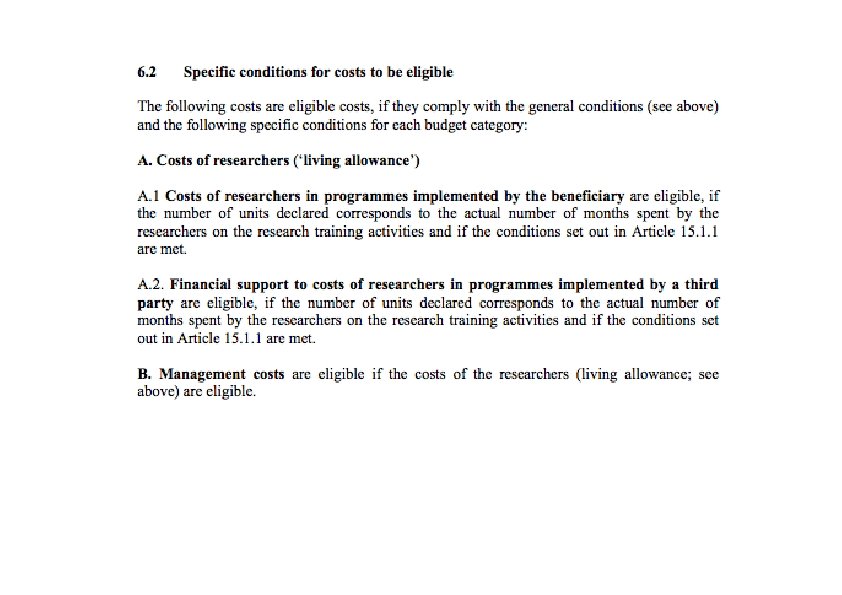
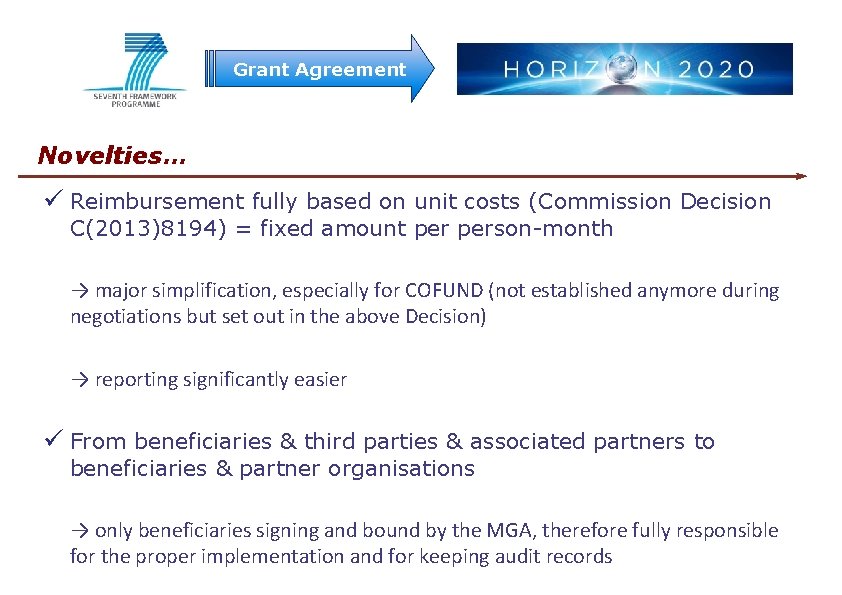
Grant Agreement Novelties… ü Reimbursement fully based on unit costs (Commission Decision C(2013)8194) = fixed amount person-month → major simplification, especially for COFUND (not established anymore during negotiations but set out in the above Decision) → reporting significantly easier ü From beneficiaries & third parties & associated partners to beneficiaries & partner organisations → only beneficiaries signing and bound by the MGA, therefore fully responsible for the proper implementation and for keeping audit records
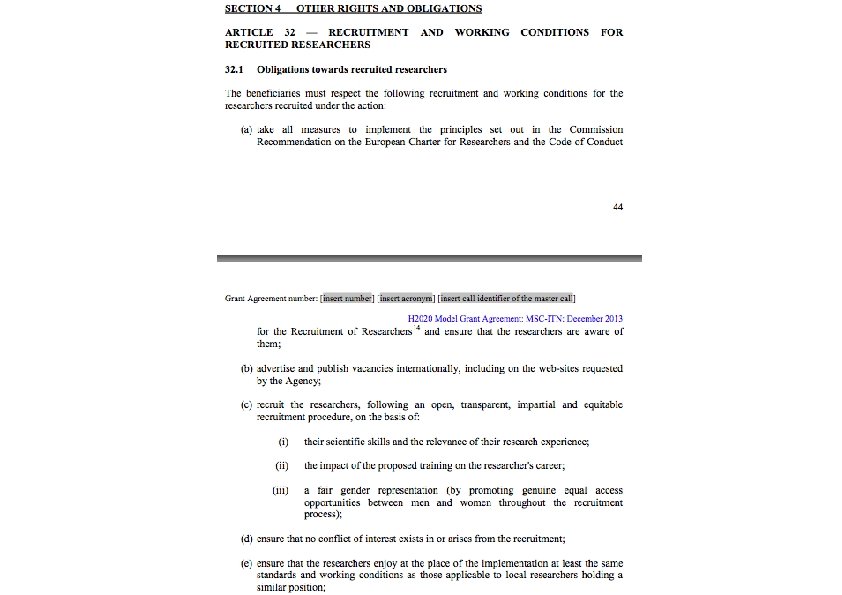
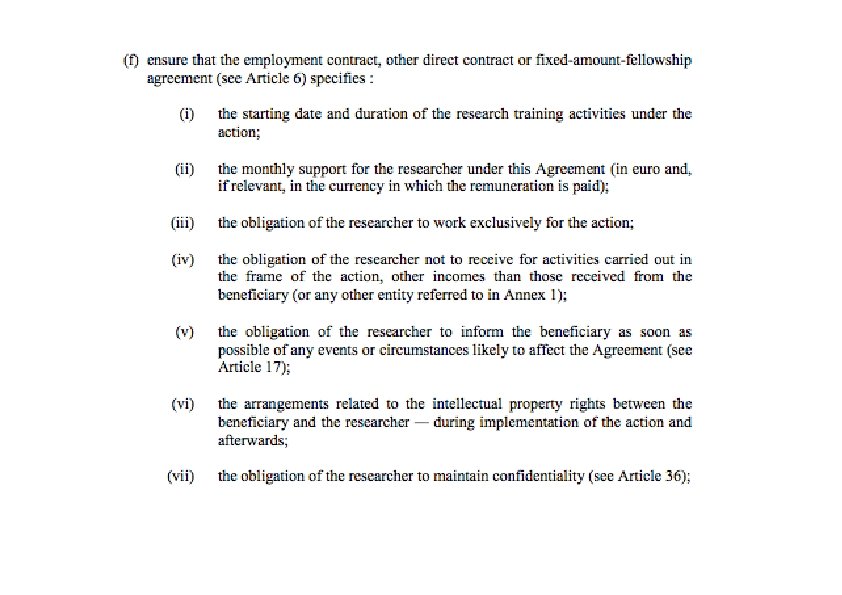
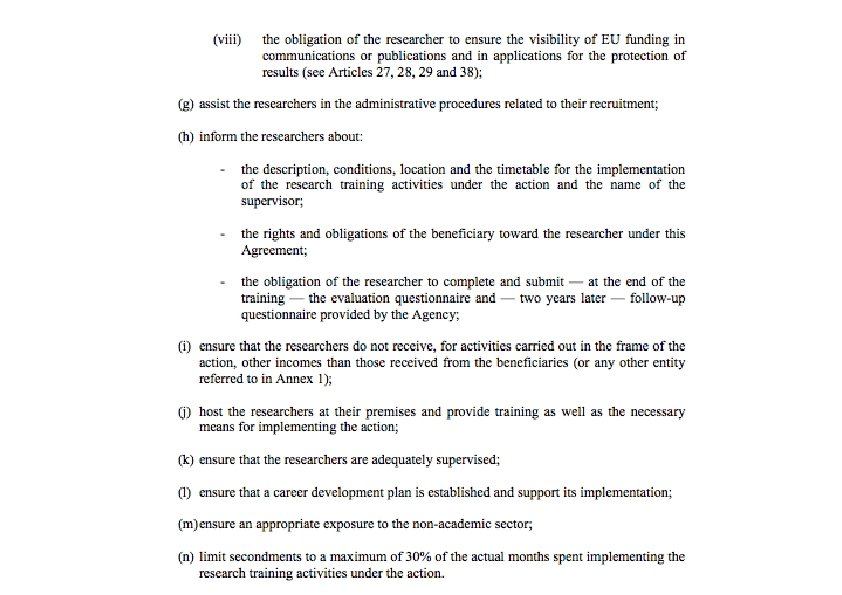
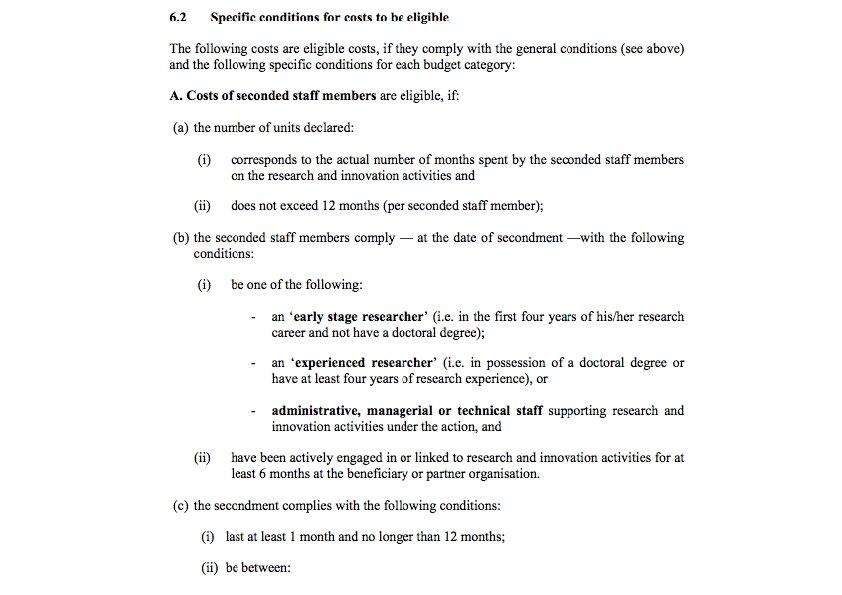
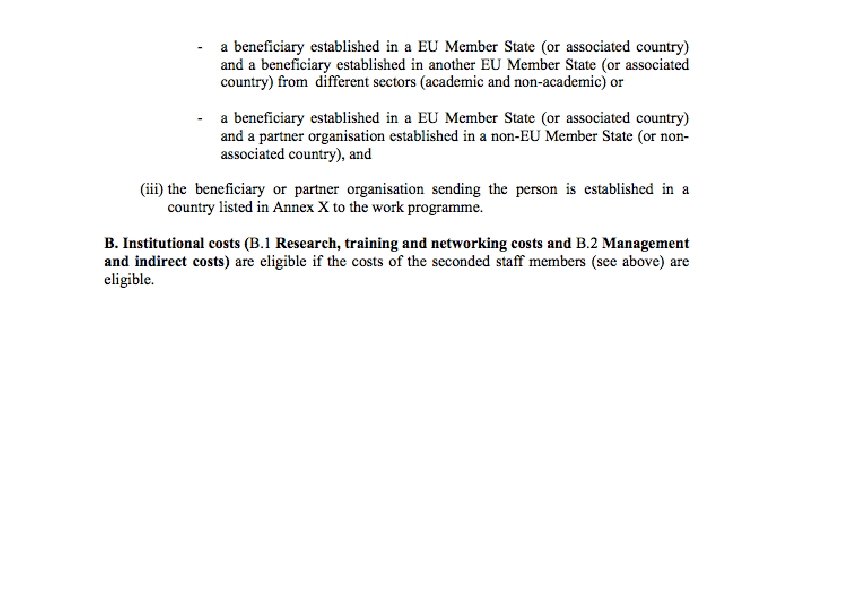
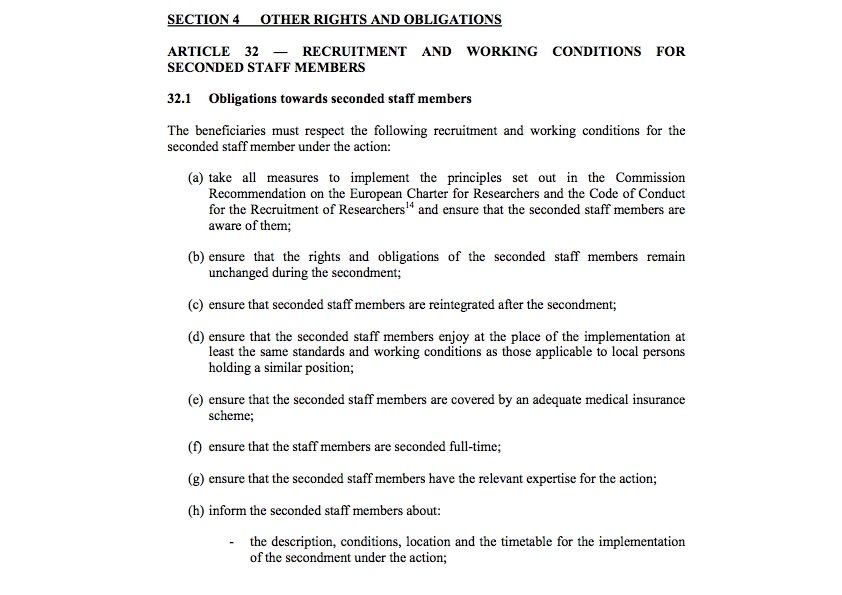
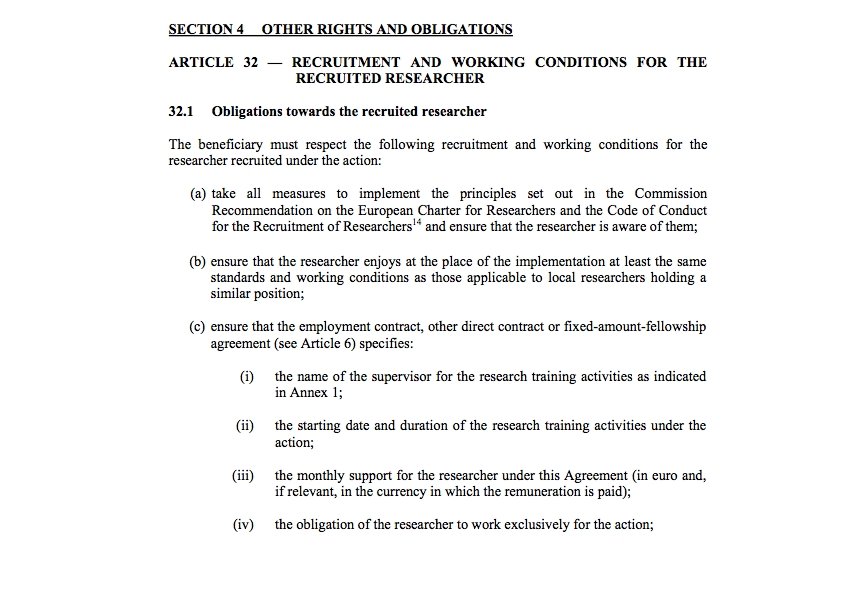
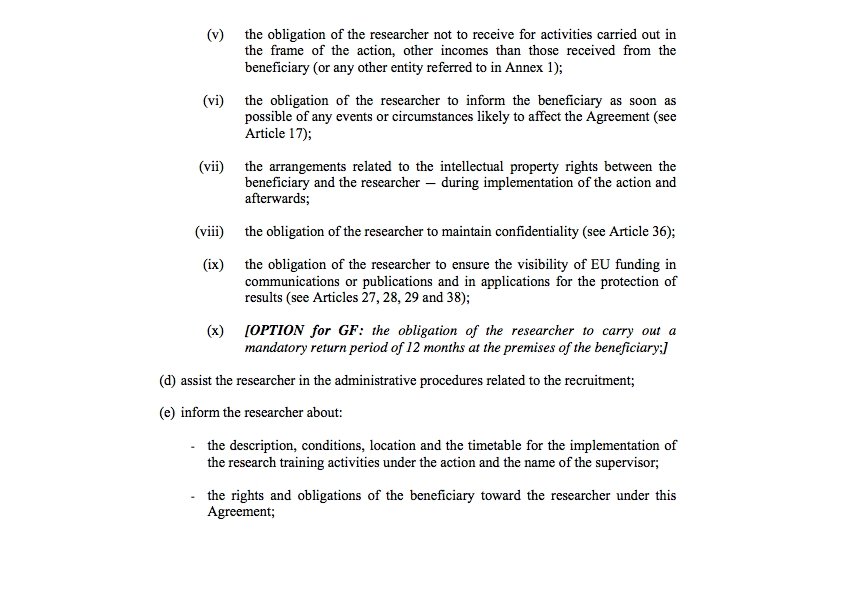
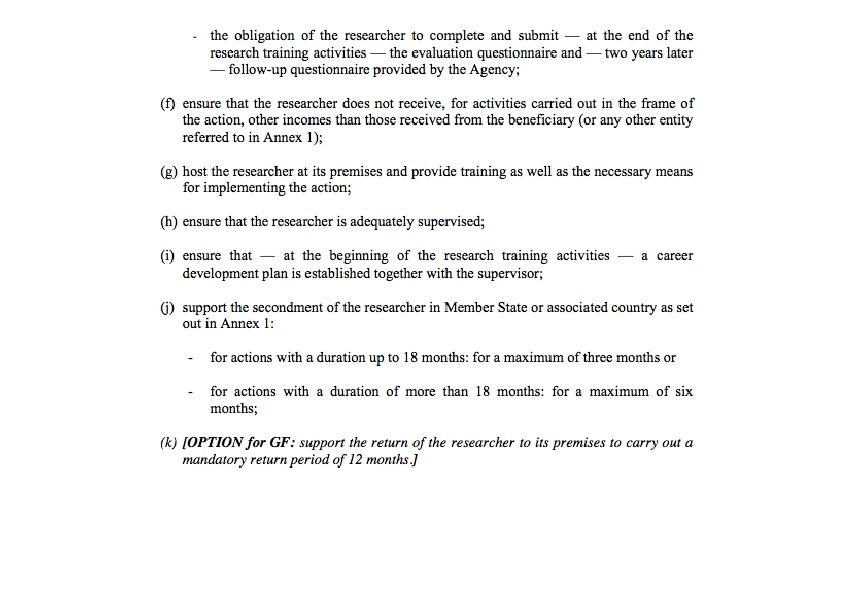
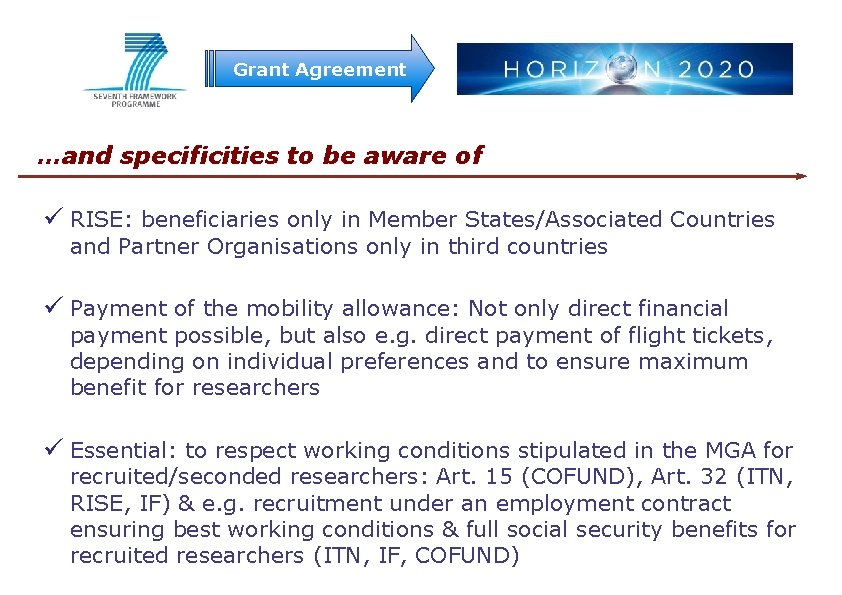
Grant Agreement …and specificities to be aware of ü RISE: beneficiaries only in Member States/Associated Countries and Partner Organisations only in third countries ü Payment of the mobility allowance: Not only direct financial payment possible, but also e. g. direct payment of flight tickets, depending on individual preferences and to ensure maximum benefit for researchers ü Essential: to respect working conditions stipulated in the MGA for recruited/seconded researchers: Art. 15 (COFUND), Art. 32 (ITN, RISE, IF) & e. g. recruitment under an employment contract ensuring best working conditions & full social security benefits for recruited researchers (ITN, IF, COFUND)
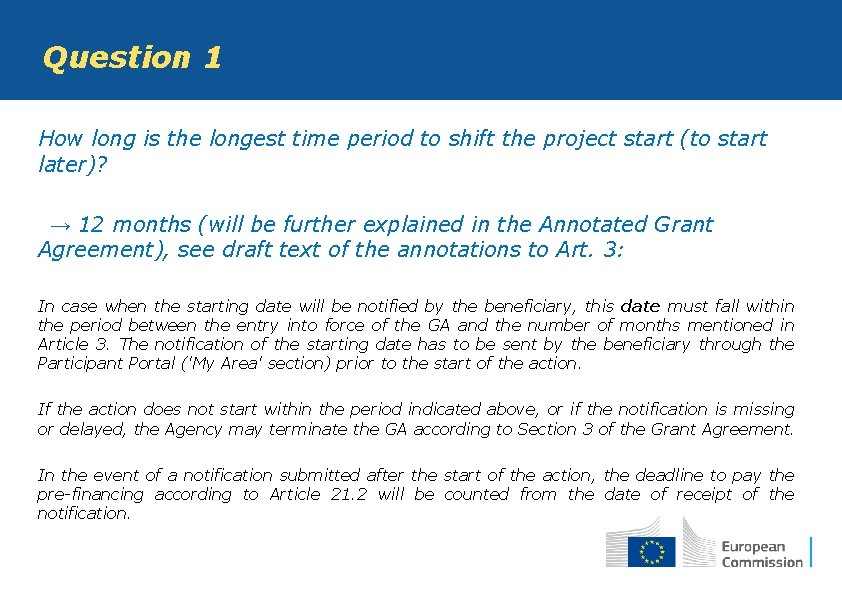
Question 1 How long is the longest time period to shift the project start (to start later)? • → 12 months (will be further explained in the Annotated Grant Agreement), see draft text of the annotations to Art. 3: In case when the starting date will be notified by the beneficiary, this date must fall within the period between the entry into force of the GA and the number of months mentioned in Article 3. The notification of the starting date has to be sent by the beneficiary through the Participant Portal ('My Area' section) prior to the start of the action. If the action does not start within the period indicated above, or if the notification is missing or delayed, the Agency may terminate the GA according to Section 3 of the Grant Agreement. In the event of a notification submitted after the start of the action, the deadline to pay the pre-financing according to Article 21. 2 will be counted from the date of receipt of the notification.
Question 2 In cases of ethically sensitive issues all necessary formalities have to be finished before the start of the research work. Is this starting point the start of the project or the start of the specific research work (work package, task)? → Starting point is the start of the specific research work.
Question 3 The "eligibility-check" (fulfilling of the mobility rules) for the researcher lies in the responsibility of the scientists in charge of the host institutions. There is some flexibility because of the different rules (e. g. in the context of the meaning of full-time research experience - for example in the medical research there specific rules in this context). In the case of an audit who and how exactly will be checked if those "eligibility-check" has been fulfilled? Has the host to decided if it is fulfilled or not? → The host institution is entirely responsible for ensuring compliance with the eligibility criteria and for keeping necessary and adequate records in case of an audit.
Question 4 Employment contract” for MSC Researchers (ITN + IF). In FP 7, Italian Universities used “assegno di ricerca” (research fellowship) as main contract to recruit MSC researchers, according to the interpretation given by Jean-Bernard Veyret, Head of Unit P 4 – Marie Curie Host-Driven Actions (mail 08/03/2012 to Mara Longhini – UNIBO where he states that “we have concluded that it fulfils the criteria to be given a status akin to a type A contract. The - assegno di ricerca - may be used until the employment law in Italy is revised again. Along the “assegno di ricerca” (art. 22 of Law 240/2010) we encourage you that you also use the employment contract of fixed duration (art. 24 of Law 240/2010)”. Can we assume this statement in H 2020 too and applied it both to IF (post-doc grant positions) and ITN (Ph. Ds positions)?
Question 4 In principle, a full-time employment contract fulfilling the minimum criteria laid out in Art. 6 & Art. 32 GA is needed, unless this is impossible under national law. In case a specific situation arises due to a specificity of the legal framework and an interpretation is needed, COM can give an authoritative interpretation as to which constellations are in line with the legal framework, as e. g. regarding the "assegno di ricercia" (IT), for which the COM can confirm that it can continue to be used until the revision of the Italian employment law.
HORIZON 2020 Thank you for your attention! http: //ec. europa. eu/msca & http: //ec. europa. eu/research/participants/portal/desktop /en/funding/reference_docs. html