
Hoovers Policies Restoring Hope Hoovers Philosophy Remained optimistic
- Slides: 19
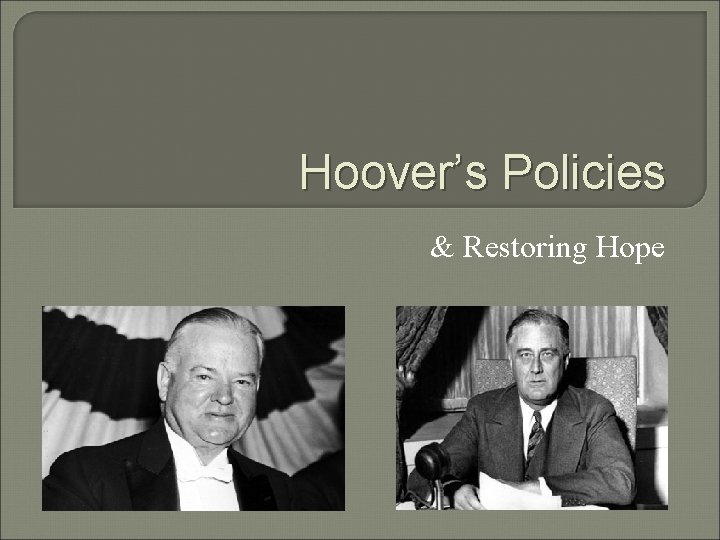
Hoover’s Policies & Restoring Hope
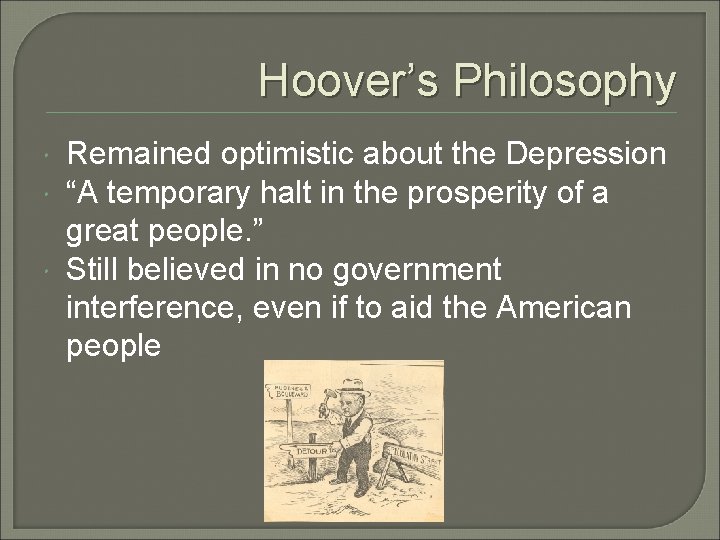
Hoover’s Philosophy Remained optimistic about the Depression “A temporary halt in the prosperity of a great people. ” Still believed in no government interference, even if to aid the American people
“Let’s Tough it Out” ENCOURAGING VOLUNTARISM OPPOSING DIRECT RELIEF Americans were demanding direct government relief Demanding food, clothing, and shelter Hoover still rejected the idea of direct relief Create large bureaucracy Believed in rugged individualism Many believed the voluntary aid was better than government aid Locally charities and governments were ill-equipped to deal with the amount of aid needed Hoover created President’s Committee for Unemployment Relief (PCUR) Organizations like YMCA and Red Cross distributed materials about relief agencies PCUR was pretty ineffective
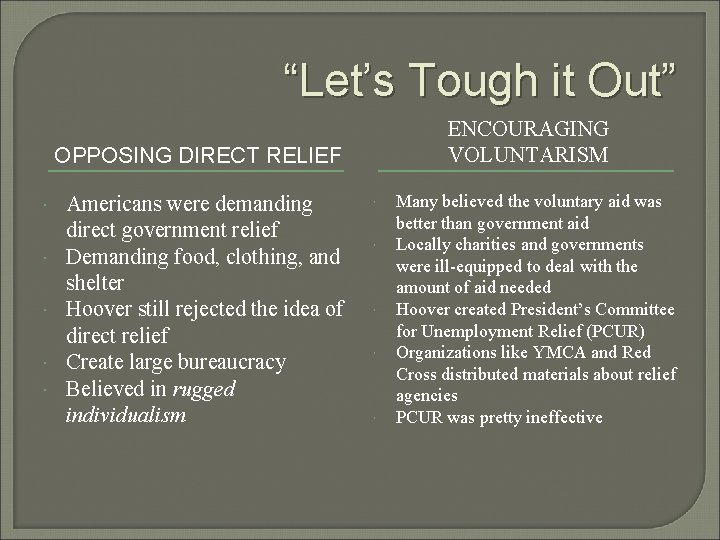
Stimulating the Economy America sank further into depression Andrew Mellon, Sec. of Treasury supported laissez-faire approach In his opinion American businesses had to deal with the depression Hoover disagreed, something had to be done Urged gov’t leaders to maintain predepression levels of wages, employment, and production Hoover was optimistic, the worst would be over in 60 days American public was highly skeptical of Hoover administration
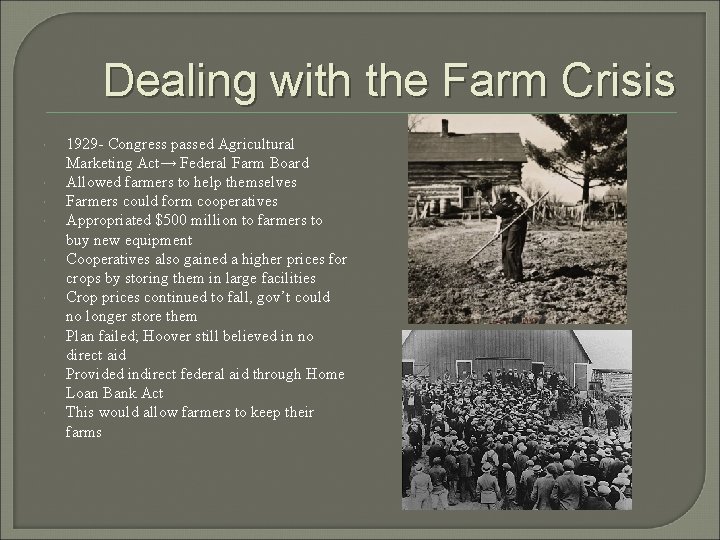
Dealing with the Farm Crisis 1929 - Congress passed Agricultural Marketing Act→ Federal Farm Board Allowed farmers to help themselves Farmers could form cooperatives Appropriated $500 million to farmers to buy new equipment Cooperatives also gained a higher prices for crops by storing them in large facilities Crop prices continued to fall, gov’t could no longer store them Plan failed; Hoover still believed in no direct aid Provided indirect federal aid through Home Loan Bank Act This would allow farmers to keep their farms
Government Involvement? RECONSTRUCTION FINANCE CORPORATION Another attempt to stimulate the economy 2 billion in taxpayer money to stabilize banks, investment companies, rr companies Stabilize big business→ help small businesses Money never “trickled down” Small businesses continued to fail RFC came to late; Depression was already in full swing Critics argued money should go directly to those in need GOVERNMENT ACTIVISM Shift in policy thinking Government had to “do” something Laissez-faire was not an option anymore Andrew Mellon still argued that this Depression might be good for American economy Hoover’s policies like RFC and Home Loan Bank Act were too late
Discontent with the President RADICAL PROTESTS Hoover became one of the most hated men in America Communist and Socialist parties started to surface and condemn capitalism Communist Party defended nine black men sentenced to death by all-white jury Strikes in Detroit and Seattle THE BONUS ARMY 10, 000 WWI veterans and families marched to Washington in support of a bonus bill Allow early pensions to veterans for service Many veterans housed in government buildings refused to leave Military went in and forcefully removed veterans
Election of 1932 Rep. party hesitantly re-nominated Hoover Dem. Sensed victory and nominated Franklin D. Roosevelt, New York governor Born into wealth and rich political background; distant cousin of Teddy Roosevelt Overcame physical challenges of polio Supported more progressive reforms like Teddy Roosevelt Wife Eleanor Roosevelt advocate of social reform; asset to FDR
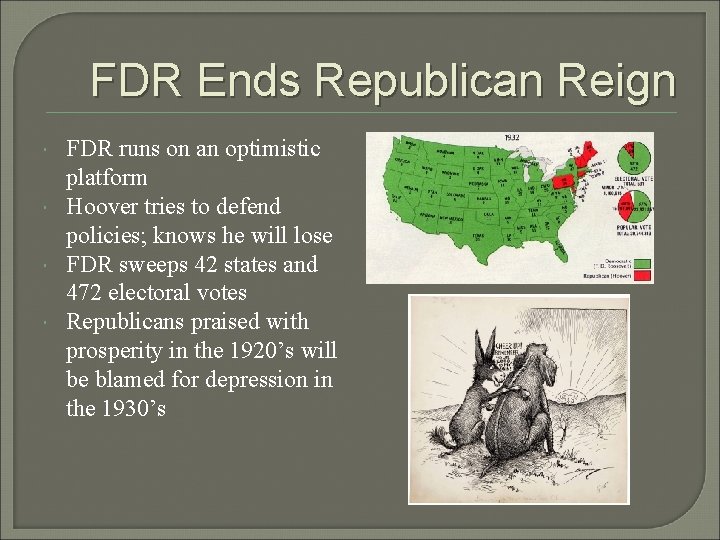
FDR Ends Republican Reign FDR runs on an optimistic platform Hoover tries to defend policies; knows he will lose FDR sweeps 42 states and 472 electoral votes Republicans praised with prosperity in the 1920’s will be blamed for depression in the 1930’s
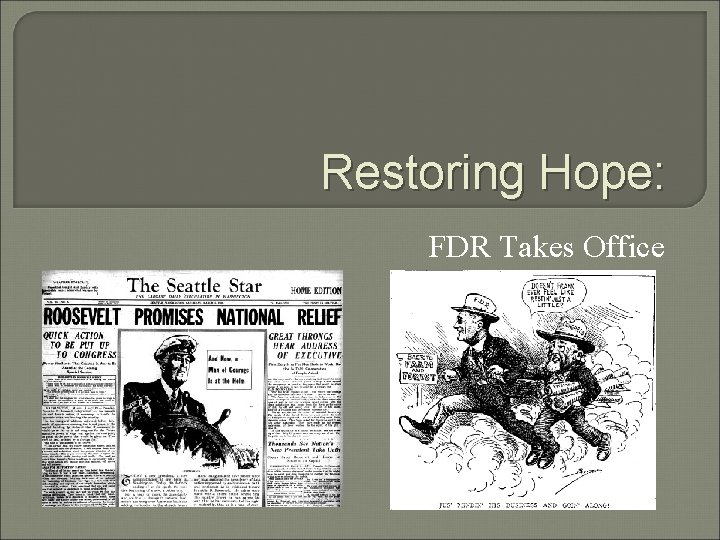
Restoring Hope: FDR Takes Office
Damage Control During campaign, FDR formed the Brain Trust Willing to stretch the bounds of executive power to fight the current emergency Roosevelt called Congress into special session 100 days, Congress approved all 15 measures that would comprise the New Deal
A New Banking System 1 st order of business: banking system Bank Holiday- All banks closed for a few days Emergency Banking Act- Allowed Congress to evaluate banks and reopen those which were financially sound First of many “fireside chats” encouraged Americans to deposit money in banks again June, 1933 - Congress created FDIC (Federal Deposit Insurance Corporation) Home Owners Loan Corporation (HOLC)- assisted 1 million in refinancing low-interest mortgages Farm Credit Administration (FCA)- aided farmers with low -interest loans → buy back lost farms, pay back taxes, buy seed
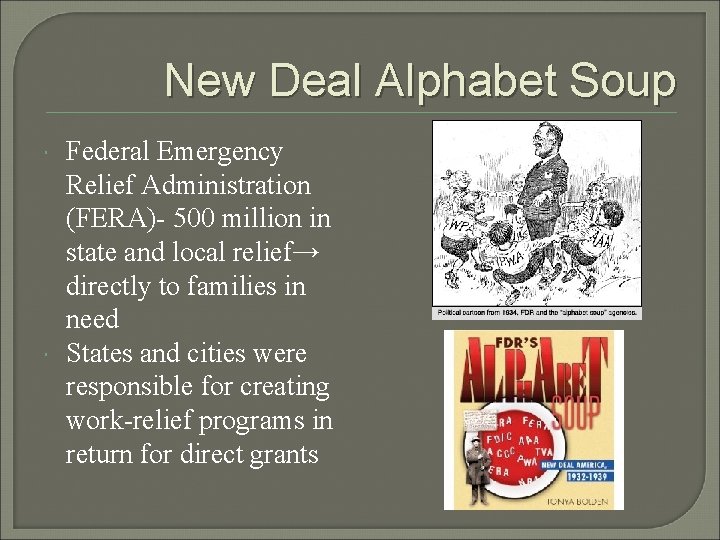
New Deal Alphabet Soup Federal Emergency Relief Administration (FERA)- 500 million in state and local relief→ directly to families in need States and cities were responsible for creating work-relief programs in return for direct grants
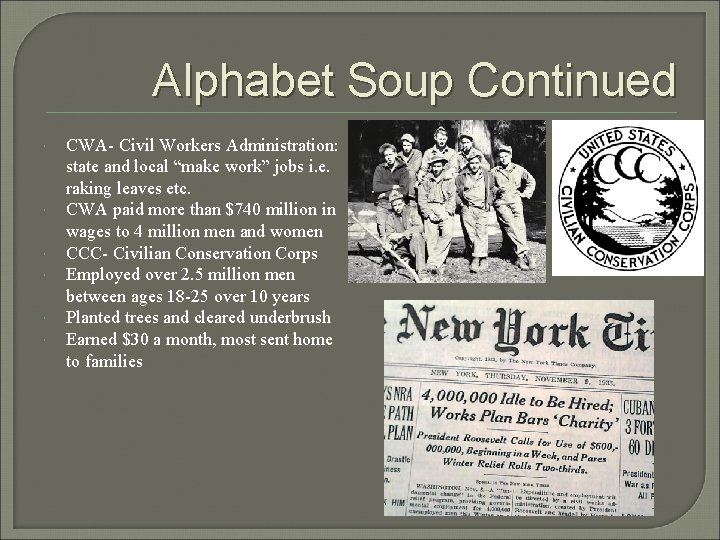
Alphabet Soup Continued CWA- Civil Workers Administration: state and local “make work” jobs i. e. raking leaves etc. CWA paid more than $740 million in wages to 4 million men and women CCC- Civilian Conservation Corps Employed over 2. 5 million men between ages 18 -25 over 10 years Planted trees and cleared underbrush Earned $30 a month, most sent home to families
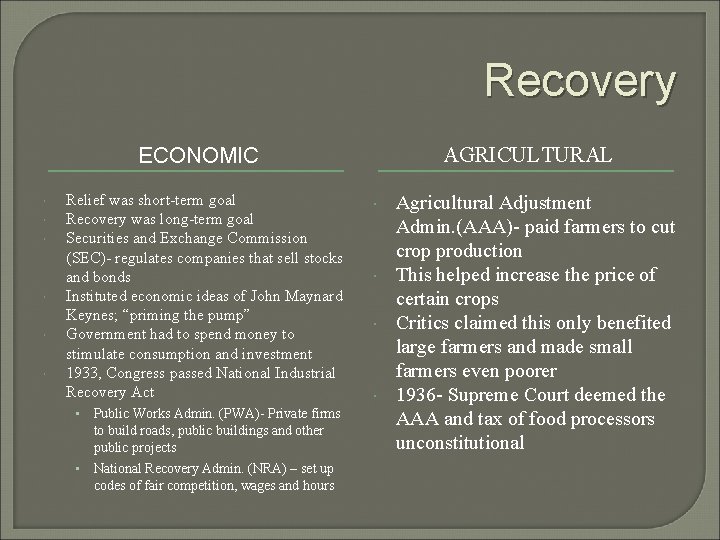
Recovery ECONOMIC Relief was short-term goal Recovery was long-term goal Securities and Exchange Commission (SEC)- regulates companies that sell stocks and bonds Instituted economic ideas of John Maynard Keynes; “priming the pump” Government had to spend money to stimulate consumption and investment 1933, Congress passed National Industrial Recovery Act Public Works Admin. (PWA)- Private firms to build roads, public buildings and other public projects • National Recovery Admin. (NRA) – set up codes of fair competition, wages and hours • AGRICULTURAL Agricultural Adjustment Admin. (AAA)- paid farmers to cut crop production This helped increase the price of certain crops Critics claimed this only benefited large farmers and made small farmers even poorer 1936 - Supreme Court deemed the AAA and tax of food processors unconstitutional
Tennessee Valley Authority Early New Deal program Aid seven rural states deformed by deforestation and flooding Built dams, power stations, provided electricity, and recreational centered Tried to increase the low standard of living Abuse of federal power?
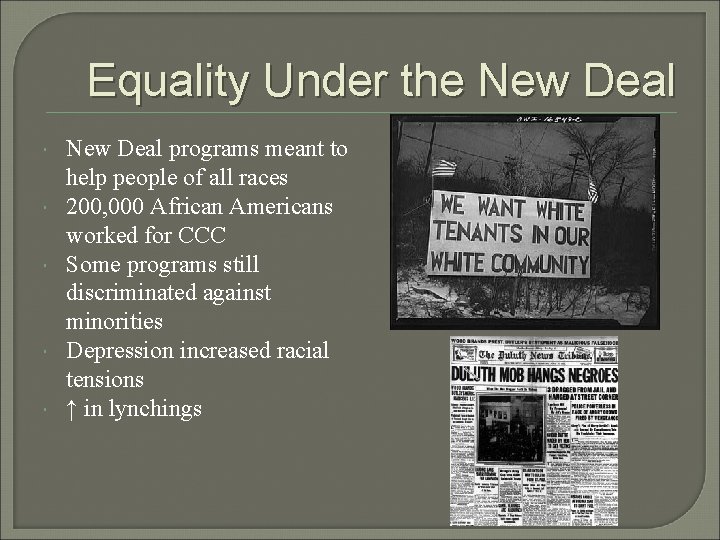
Equality Under the New Deal programs meant to help people of all races 200, 000 African Americans worked for CCC Some programs still discriminated against minorities Depression increased racial tensions ↑ in lynchings
Fighting Racial Discrimination No real progress in civil rights legislation FDR named more than 100 African Americans to federal jobs Federal Council on Negro Affairs aka: Black Cabinet or Black Brain Trust Eleanor Roosevelt was a huge champion for expanding African American rights and equality
Life of Native Americans in the New Deal Poor living conditions for America’s 300, 000 Native Americans Social worker, John Collier observed Native American conditions and founded American Indian Defense Association 1934, Congress passed Indian Reorganization Act which reversed the Dawes Act