
Honors Physics NC Physics Exam Review Projectile Motion
- Slides: 25
Honors Physics NC Physics Exam Review Projectile Motion
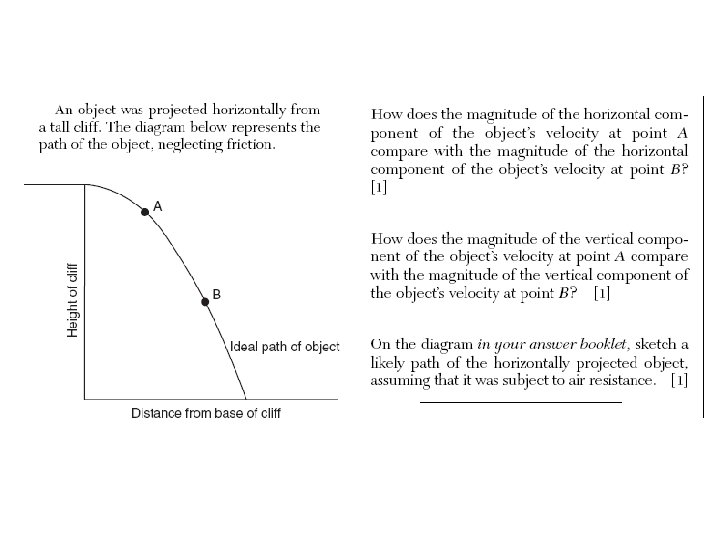
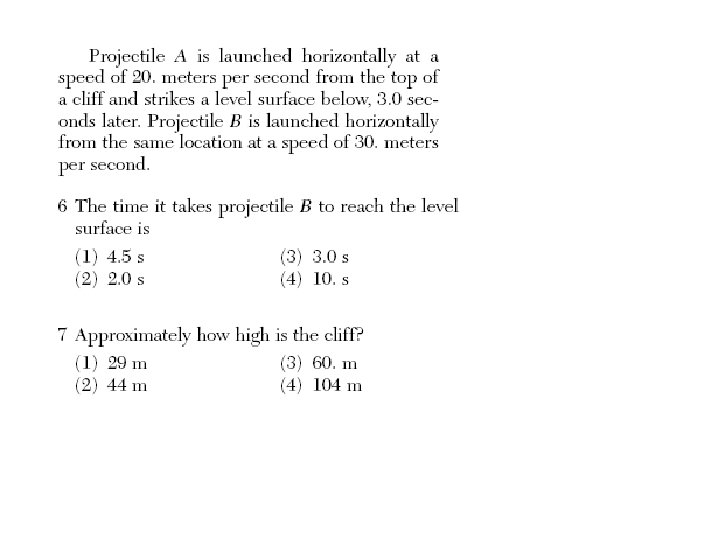
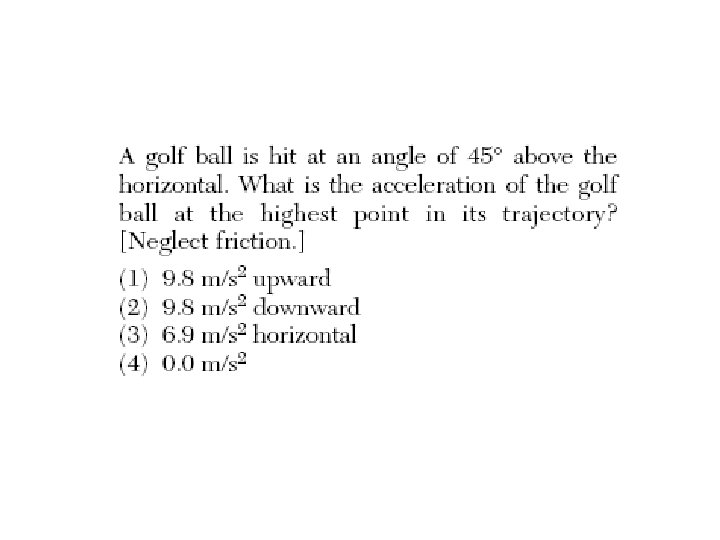
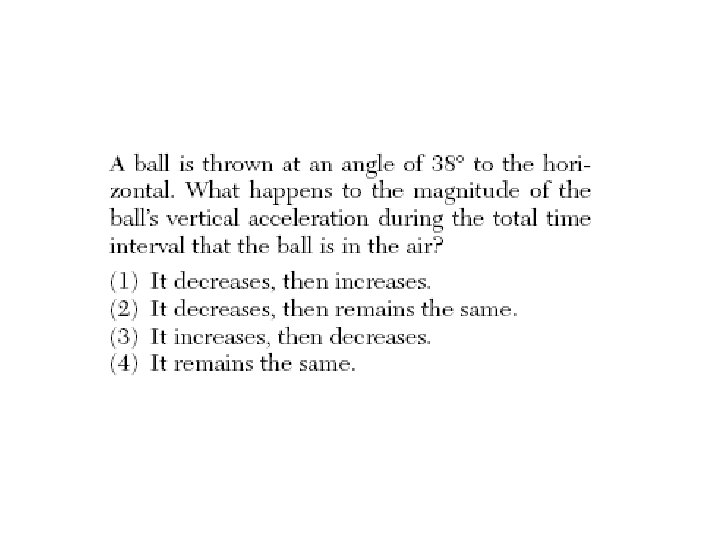
Things to Remember! There are Two Kinds of Projectile Motion Horizontal and Angular. • For both types, horizontal motion is independent of vertical motion! • We assume no air resistance, so horizontal velocity (vx) ALWAYS stays constant. • Vertical velocity (vy) constantly changes due to gravity, so ay = 9. 81 m/s 2.
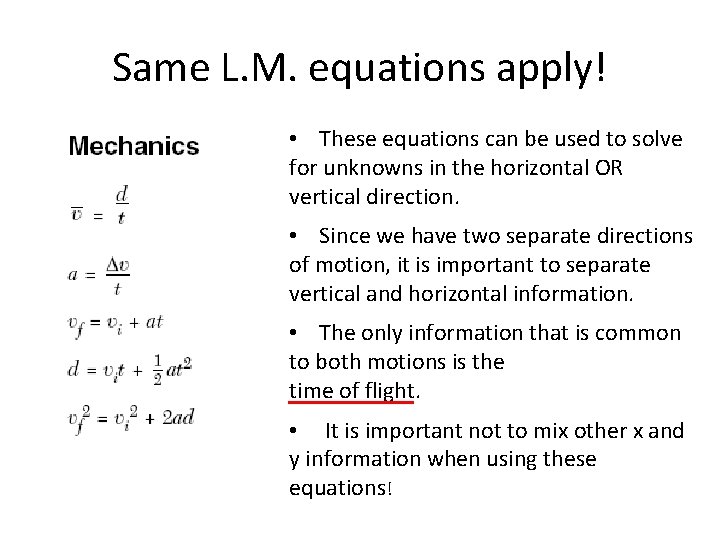
Same L. M. equations apply! • These equations can be used to solve for unknowns in the horizontal OR vertical direction. • Since we have two separate directions of motion, it is important to separate vertical and horizontal information. • The only information that is common to both motions is the time of flight. • It is important not to mix other x and y information when using these equations!
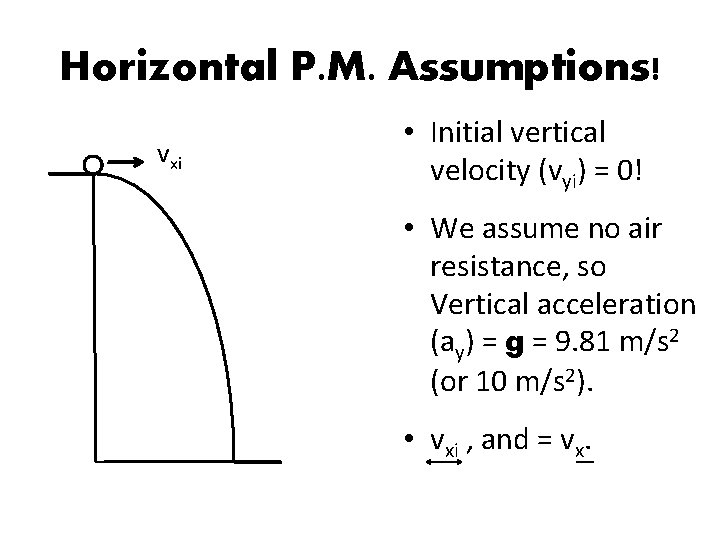
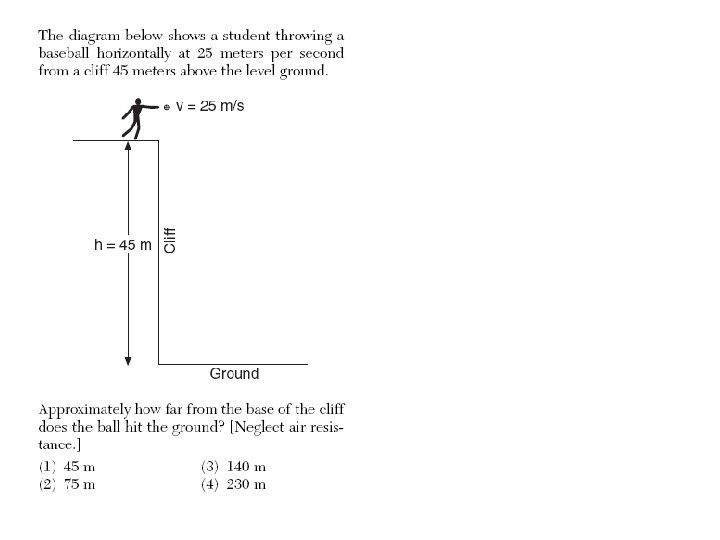
Horizontal P. M. Assumptions! vxi • Initial vertical velocity (vyi) = 0! • We assume no air resistance, so Vertical acceleration (ay) = g = 9. 81 m/s 2 (or 10 m/s 2). • vxi , and = vx.
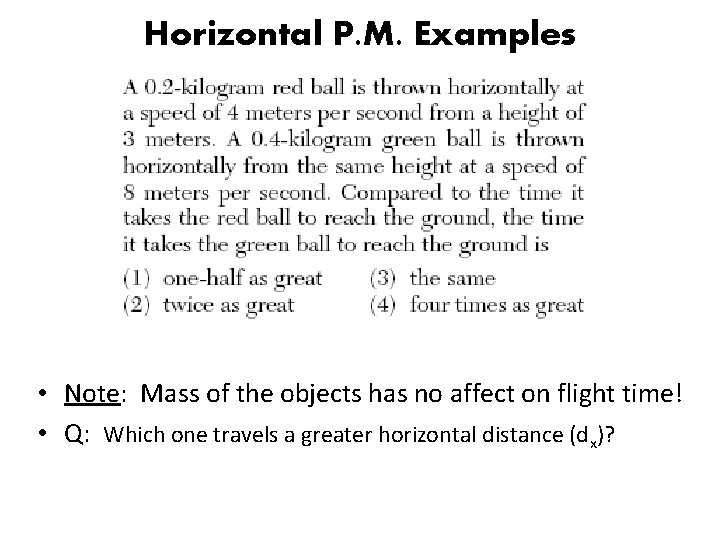
Horizontal P. M. Examples • Note: Mass of the objects has no affect on flight time! • Q: Which one travels a greater horizontal distance (dx)?
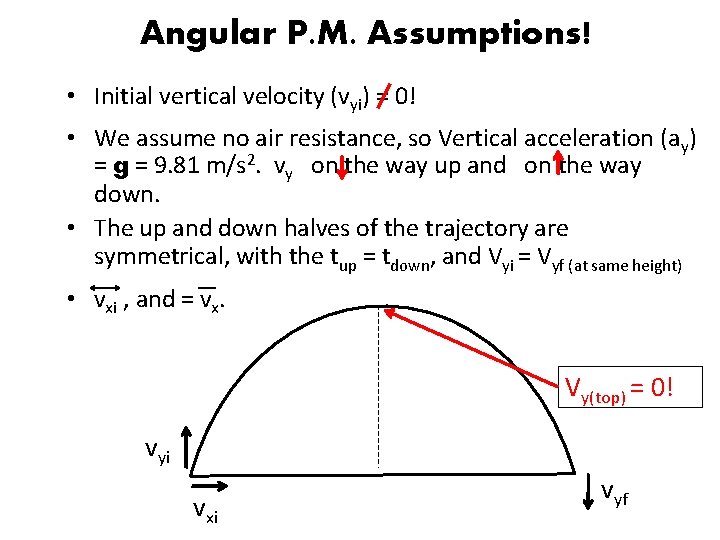
Angular P. M. Assumptions! • Initial vertical velocity (vyi) = 0! • We assume no air resistance, so Vertical acceleration (ay) = g = 9. 81 m/s 2. vy on the way up and on the way down. • The up and down halves of the trajectory are symmetrical, with the tup = tdown, and Vyi = Vyf (at same height) • vxi , and = vx. Vy(top) = 0! vyi vxi vyf
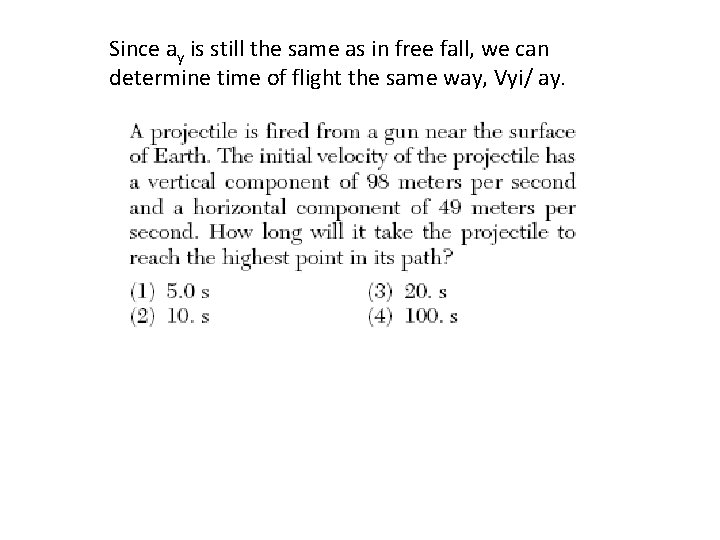
Since ay is still the same as in free fall, we can determine time of flight the same way, Vyi/ ay.
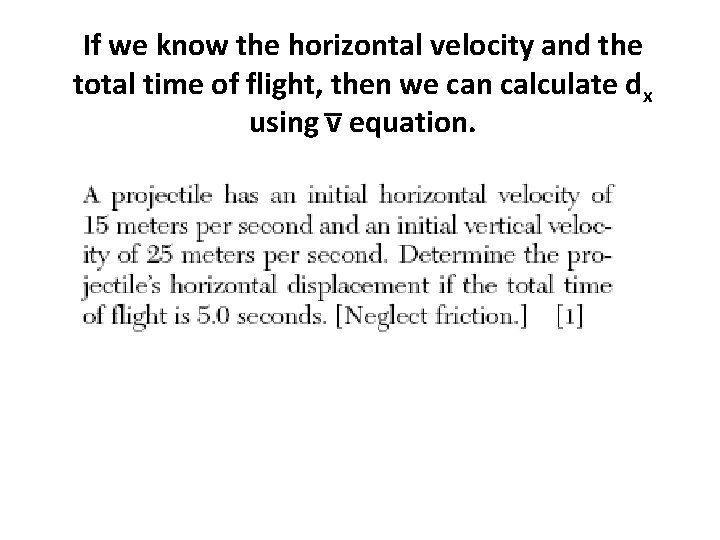
If we know the horizontal velocity and the total time of flight, then we can calculate dx using v equation.
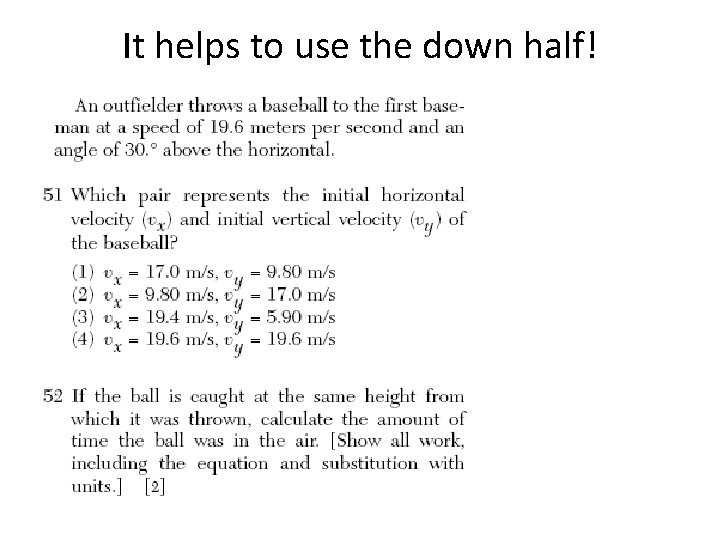
It helps to use the down half!
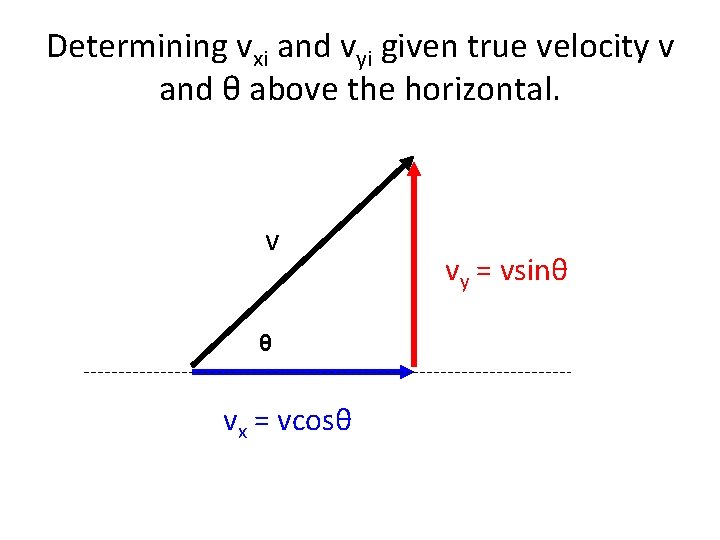
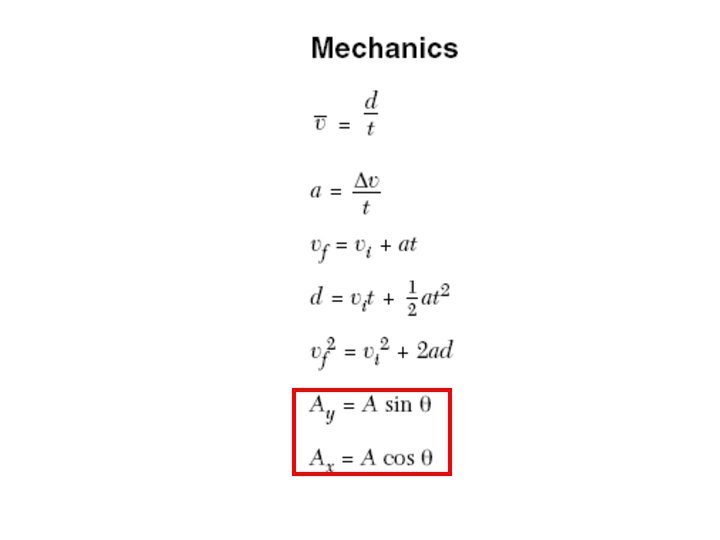
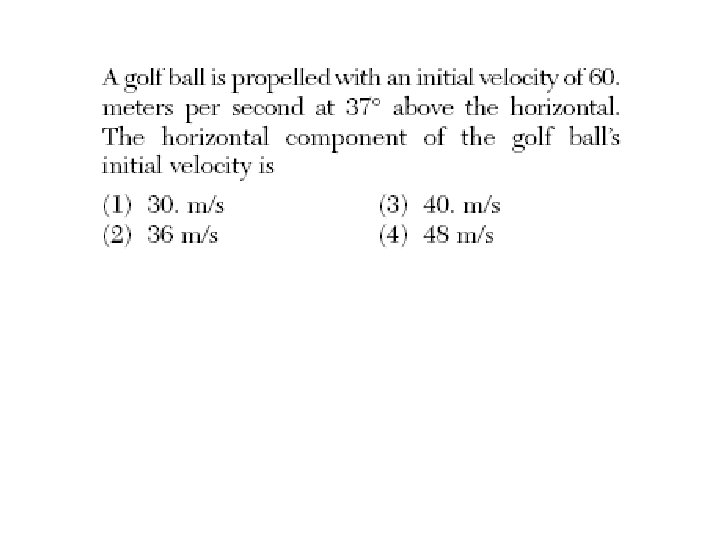
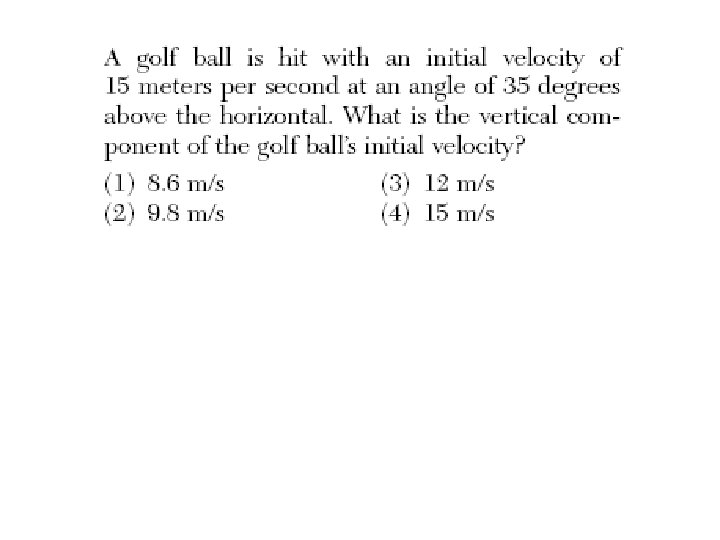
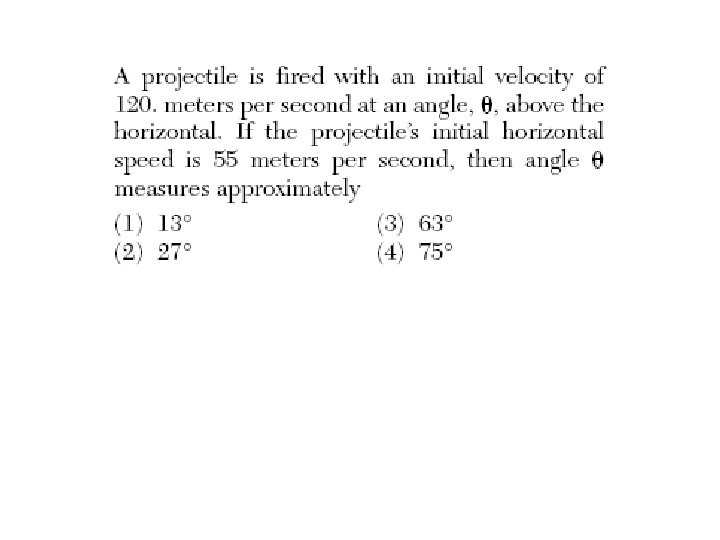
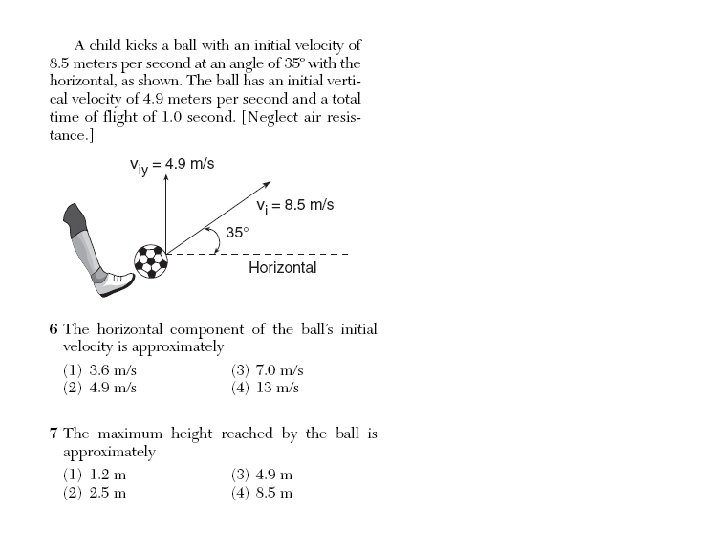
Determining vxi and vyi given true velocity v and θ above the horizontal. v θ vx = vcosθ vy = vsinθ
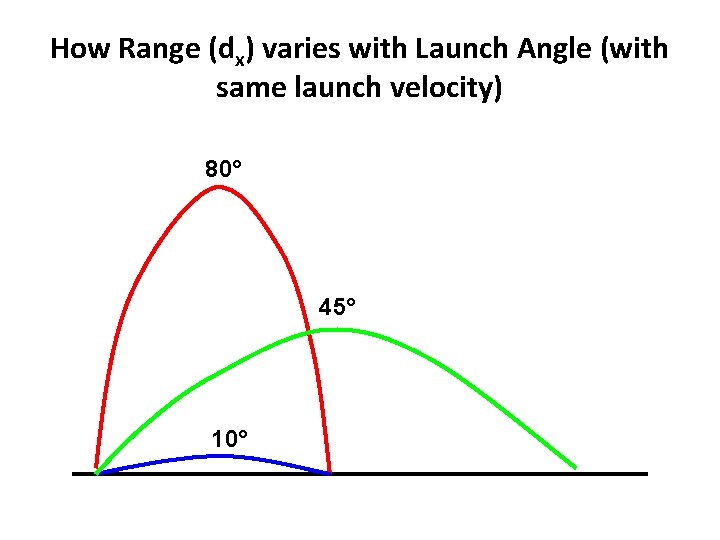
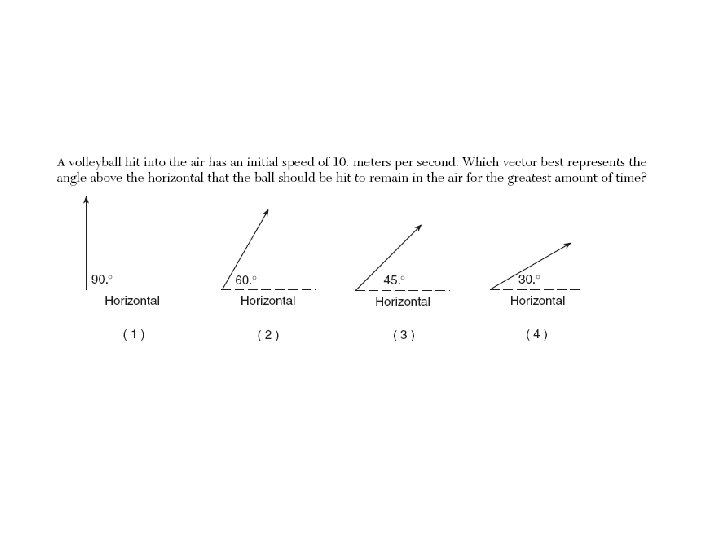
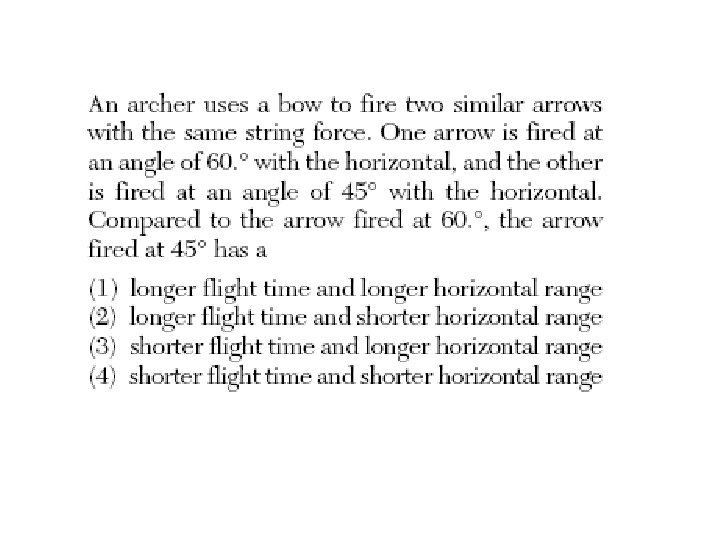
How Range (dx) varies with Launch Angle (with same launch velocity) 80° 45° 10°
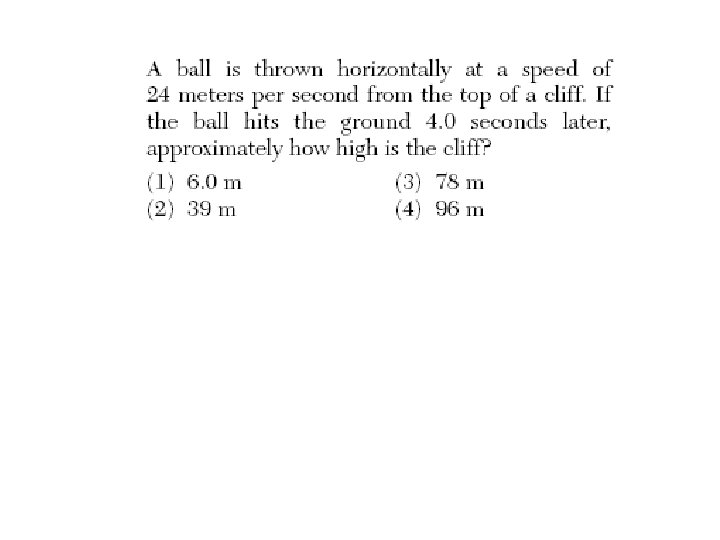
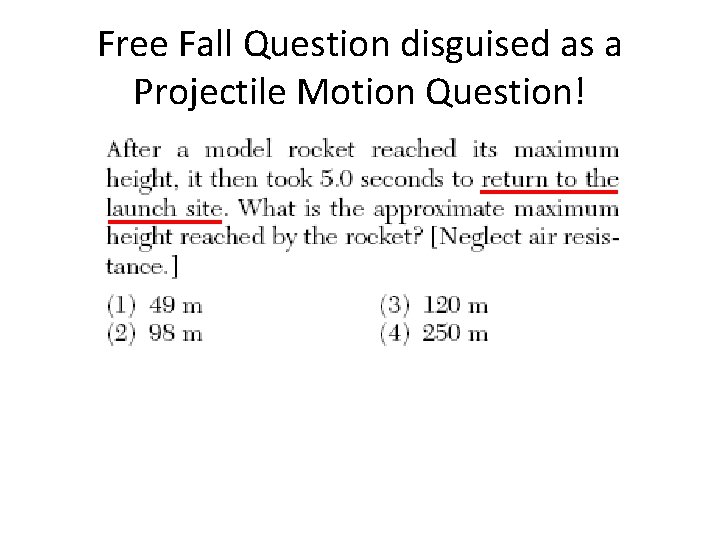
Free Fall Question disguised as a Projectile Motion Question!