
Honors Biology Chapter 7 PHOTOSYNTHESIS Uses energy from
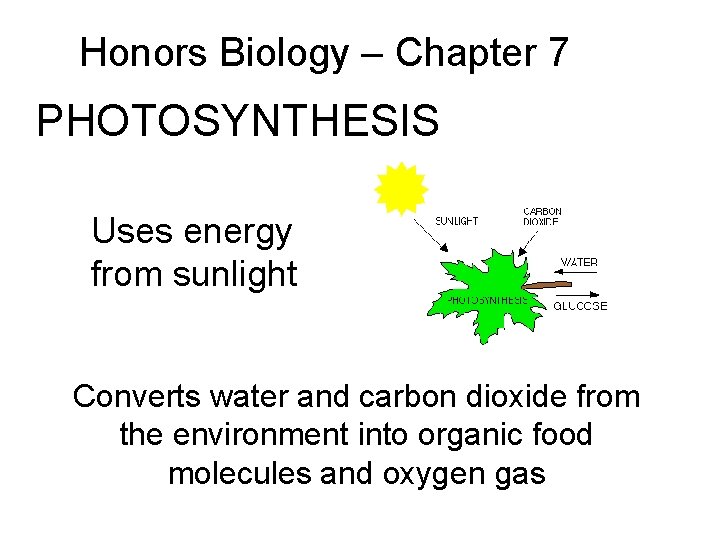
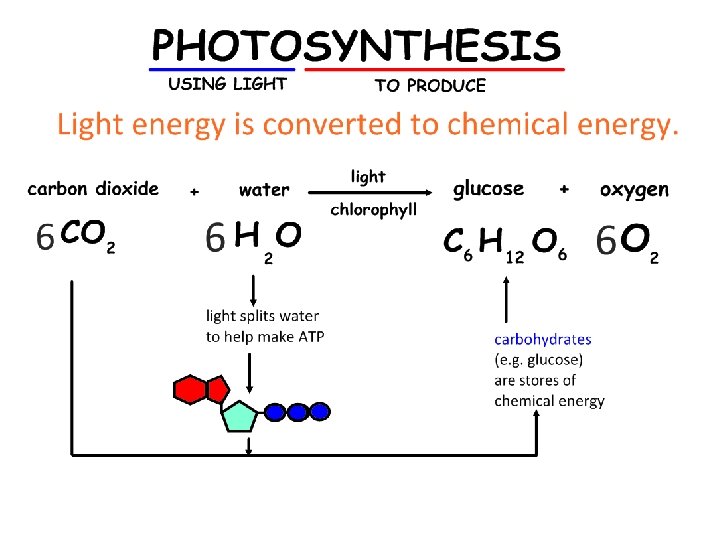
Honors Biology – Chapter 7 PHOTOSYNTHESIS Uses energy from sunlight Converts water and carbon dioxide from the environment into organic food molecules and oxygen gas
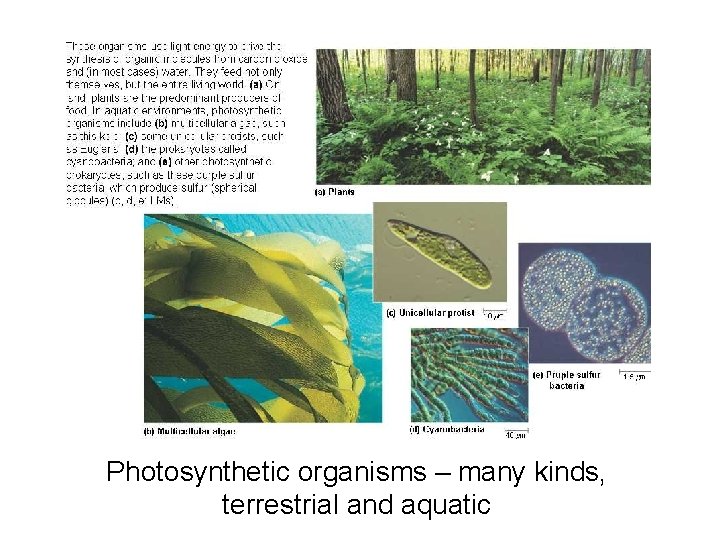
Photosynthetic organisms – many kinds, terrestrial and aquatic
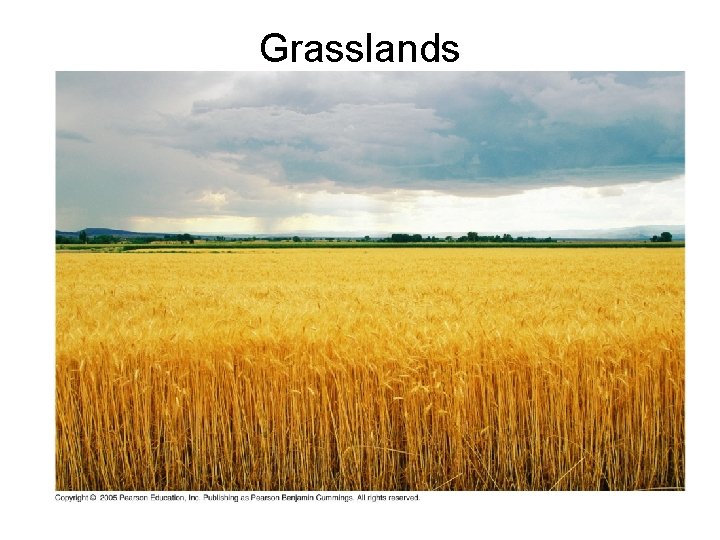
Grasslands
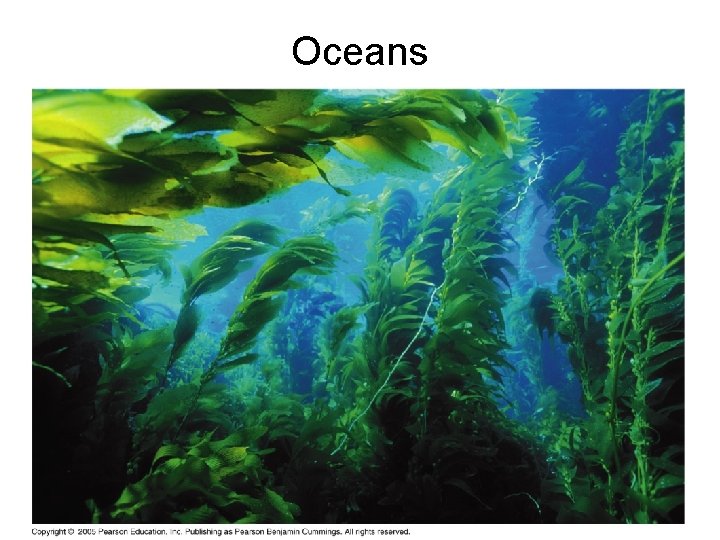
Oceans
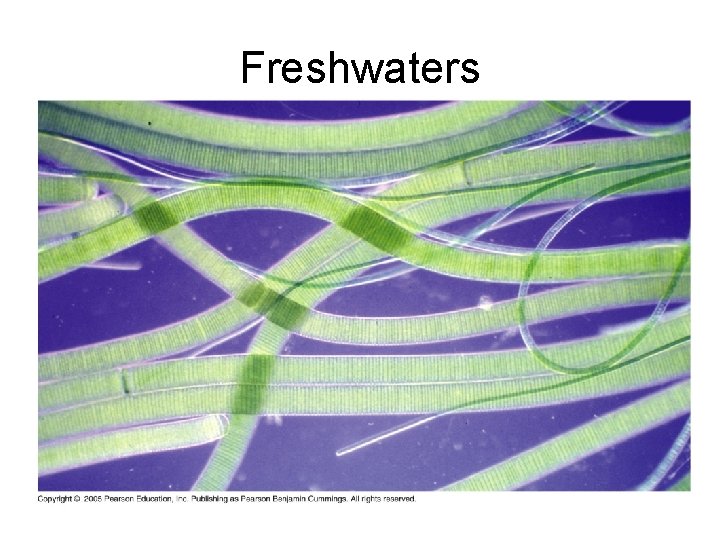
Freshwaters
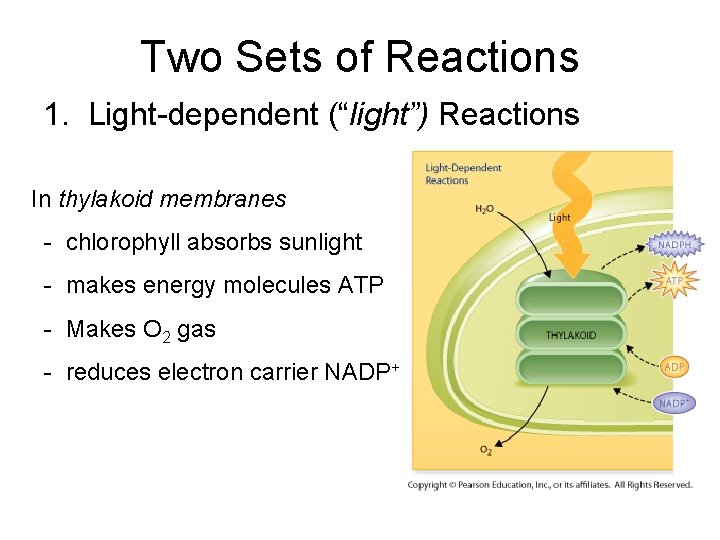
Two Sets of Reactions 1. Light-dependent (“light”) Reactions In thylakoid membranes - chlorophyll absorbs sunlight - makes energy molecules ATP - Makes O 2 gas - reduces electron carrier NADP+
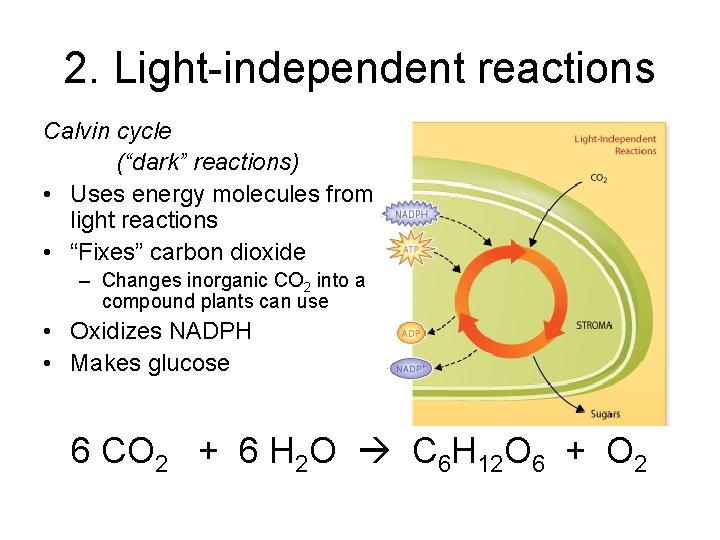
2. Light-independent reactions Calvin cycle (“dark” reactions) • Uses energy molecules from light reactions • “Fixes” carbon dioxide – Changes inorganic CO 2 into a compound plants can use • Oxidizes NADPH • Makes glucose 6 CO 2 + 6 H 2 O C 6 H 12 O 6 + O 2
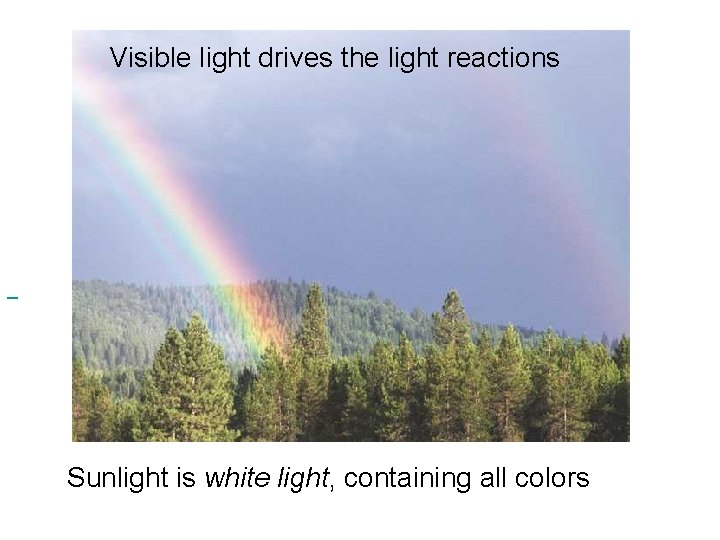
Visible light drives the light reactions <> Sunlight is white light, containing all colors
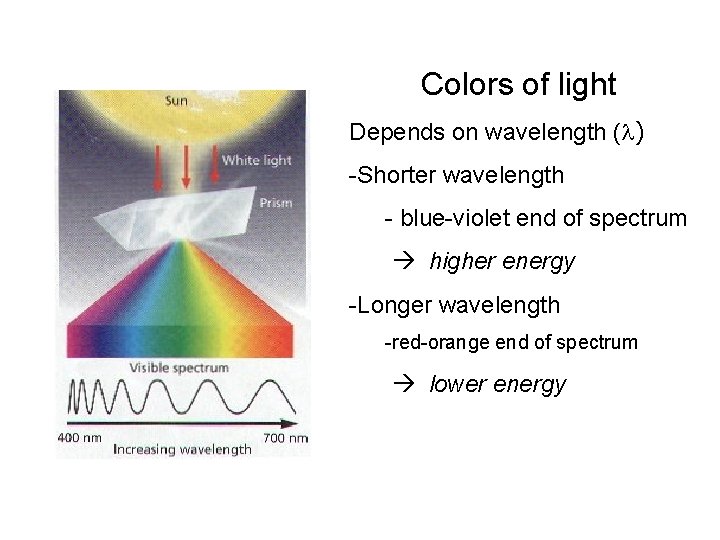
Colors of light Depends on wavelength (l) -Shorter wavelength - blue-violet end of spectrum higher energy -Longer wavelength -red-orange end of spectrum lower energy
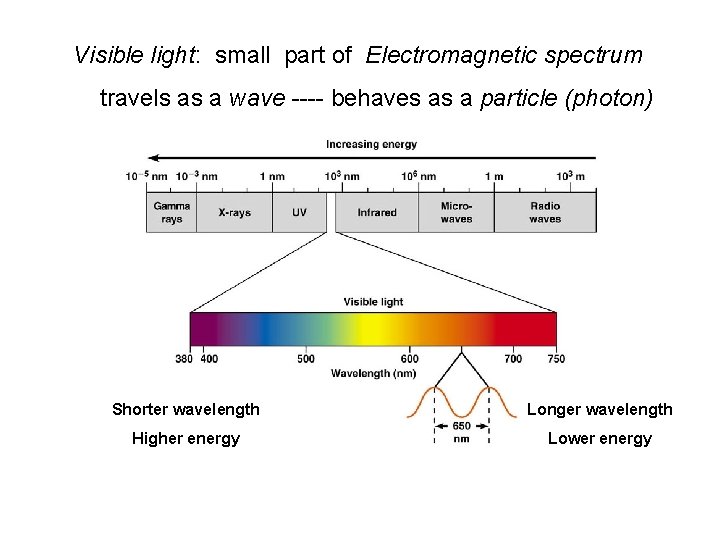
Visible light: small part of Electromagnetic spectrum travels as a wave ---- behaves as a particle (photon) Shorter wavelength Longer wavelength Higher energy Lower energy
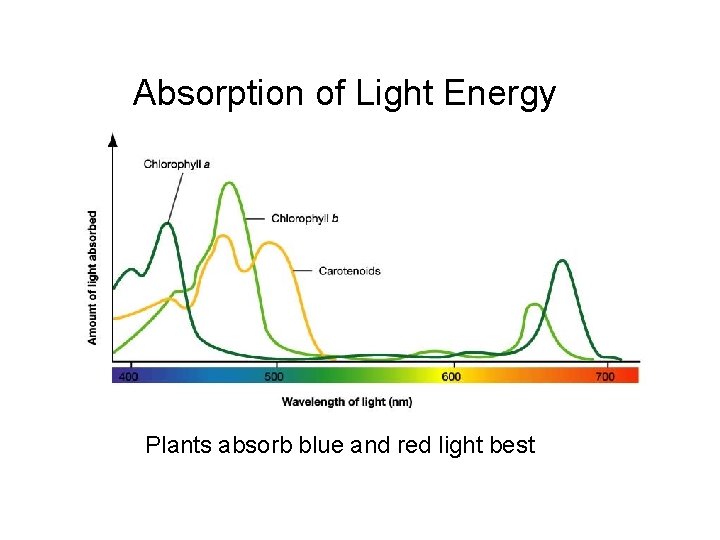
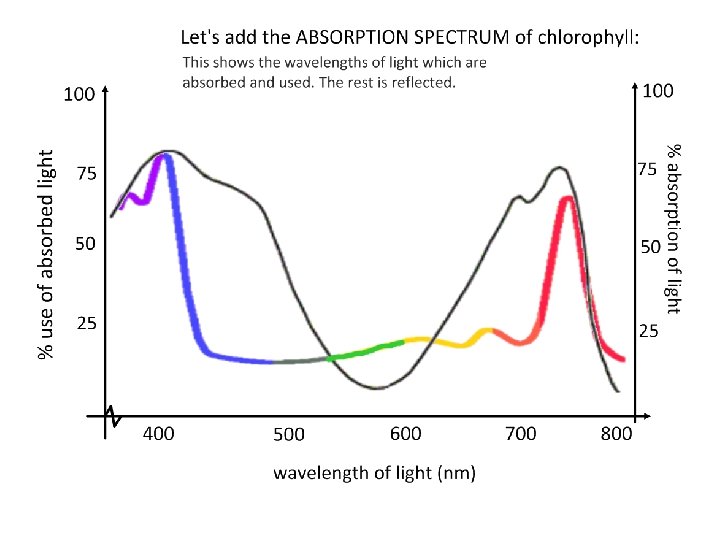
Absorption of Light Energy Plants absorb blue and red light best
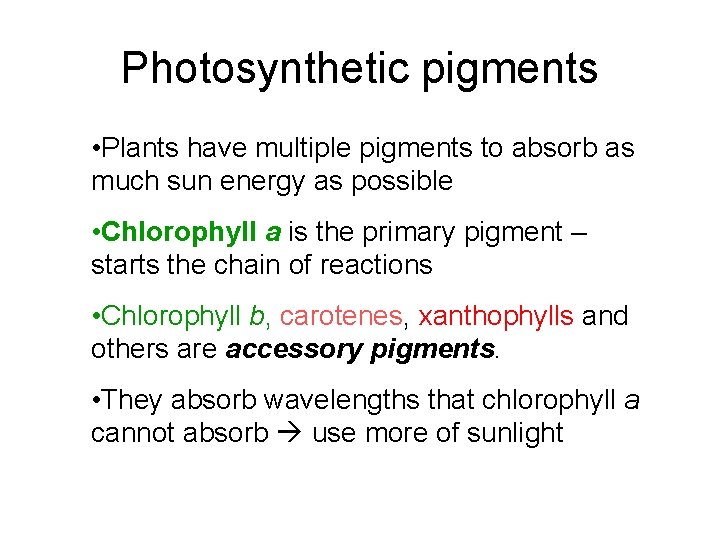
Photosynthetic pigments • Plants have multiple pigments to absorb as much sun energy as possible • Chlorophyll a is the primary pigment – starts the chain of reactions • Chlorophyll b, carotenes, xanthophylls and others are accessory pigments. • They absorb wavelengths that chlorophyll a cannot absorb use more of sunlight
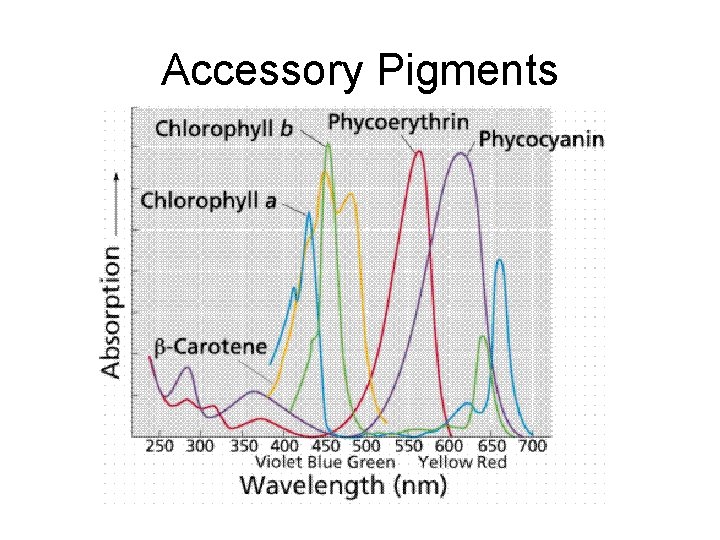
Accessory Pigments
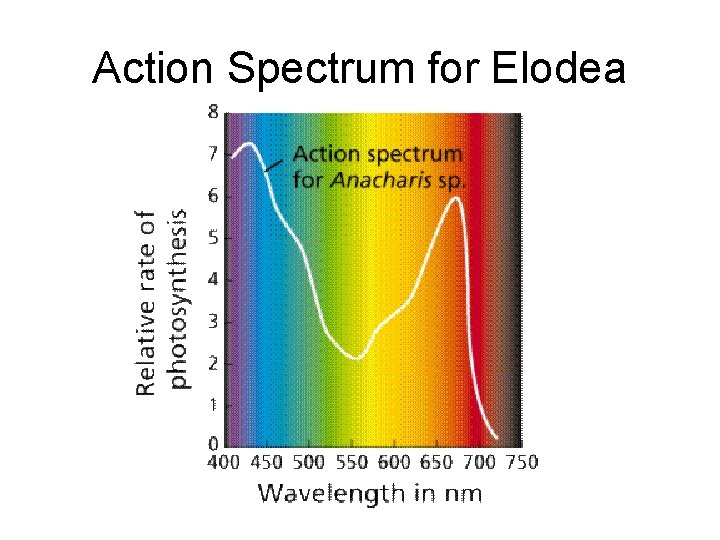
Action Spectrum for Elodea
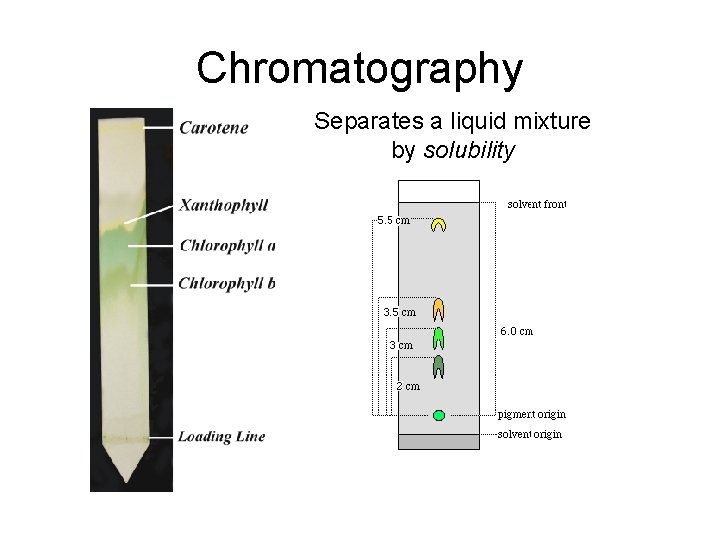
Chromatography Separates a liquid mixture by solubility
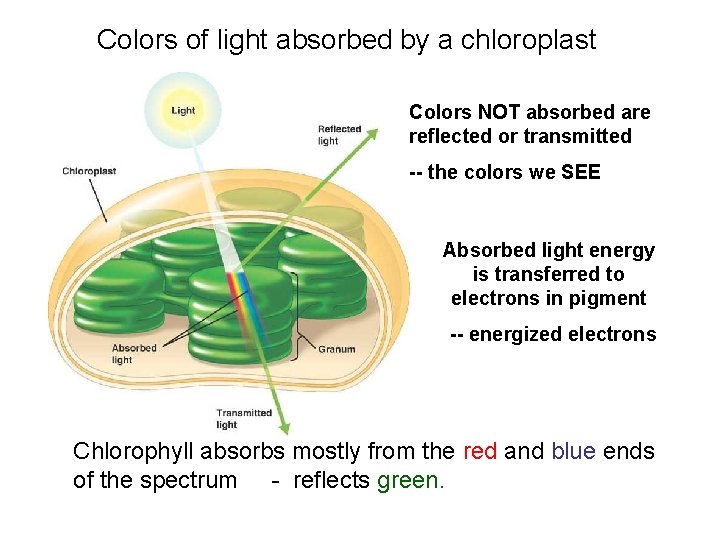
Colors of light absorbed by a chloroplast Colors NOT absorbed are reflected or transmitted -- the colors we SEE Absorbed light energy is transferred to electrons in pigment -- energized electrons Chlorophyll absorbs mostly from the red and blue ends of the spectrum - reflects green.
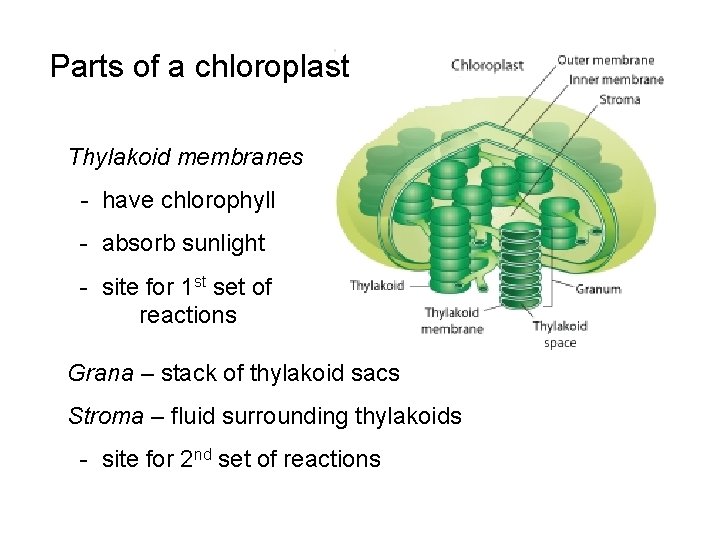
Parts of a chloroplast Thylakoid membranes - have chlorophyll - absorb sunlight - site for 1 st set of reactions Grana – stack of thylakoid sacs Stroma – fluid surrounding thylakoids - site for 2 nd set of reactions
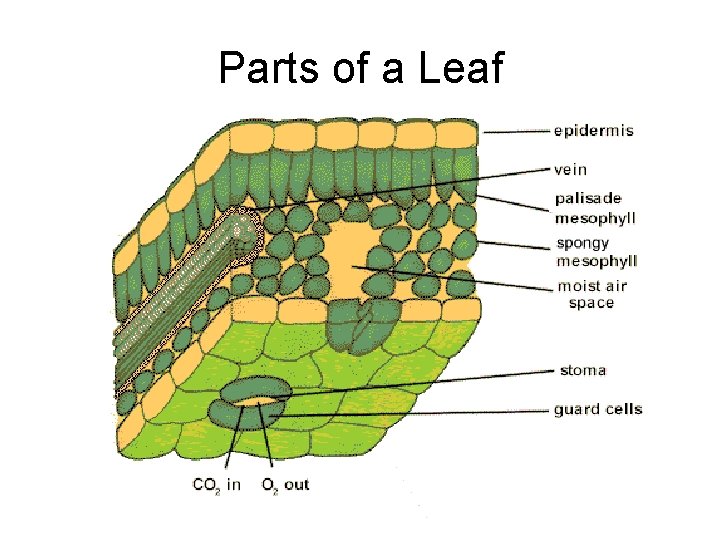
Parts of a Leaf
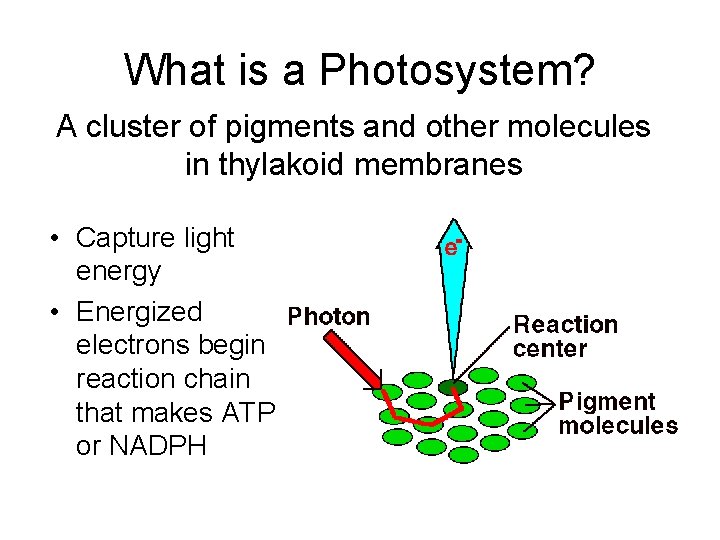
What is a Photosystem? A cluster of pigments and other molecules in thylakoid membranes • Capture light energy • Energized electrons begin reaction chain that makes ATP or NADPH
Light reactions are a series of oxidation and reduction reactions • Oxidation – lose energy – – Lose an electron (alone or on atoms) Lose a hydrogen atom (H+ + e-) Lose a phosphate group (PO 4) Be broken apart (decomposed, hydrolyzed) • Reduction – gain energy – Gain electrons (alone or on atoms) – Form more chemical bonds (synthesized)
Electron carriers Coenzymes – help in a reaction but are not the catalyst Take electrons (and often H+) from one molecule in a chain of reactions and give them up in a later reaction a. Electrons transfer energy b. In photosynthesis, electron transfers help make energy molecules ATP and NADPH
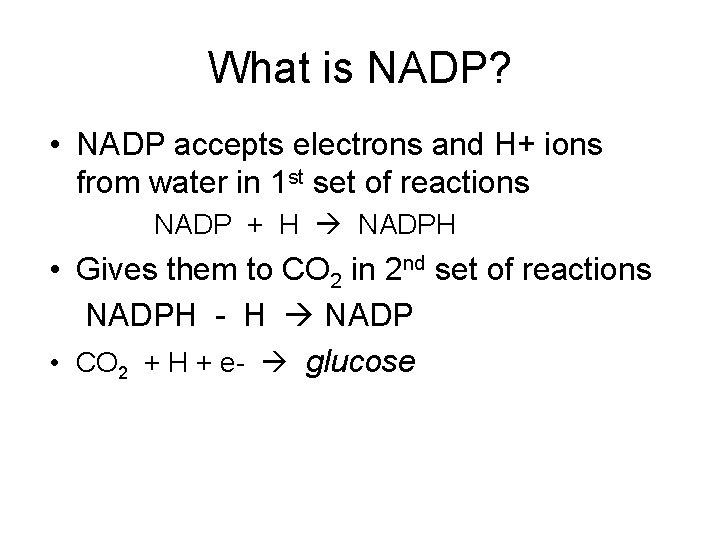
What is NADP? • NADP accepts electrons and H+ ions from water in 1 st set of reactions NADP + H NADPH • Gives them to CO 2 in 2 nd set of reactions NADPH - H NADP • CO 2 + H + e- glucose
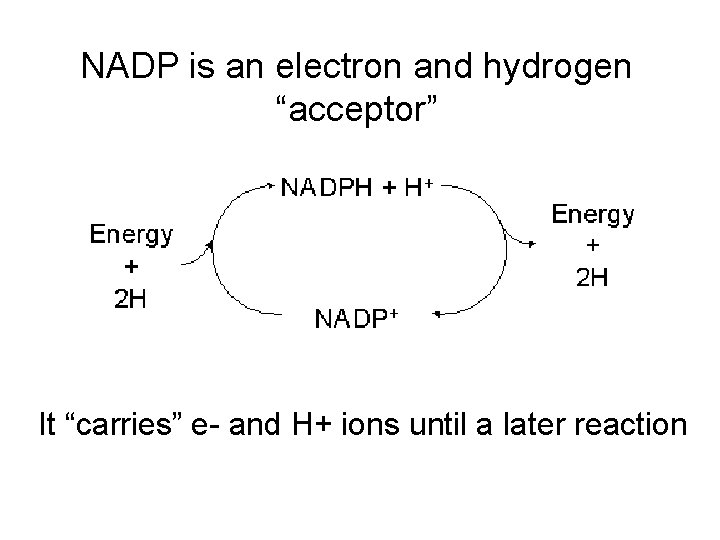
NADP is an electron and hydrogen “acceptor” It “carries” e- and H+ ions until a later reaction
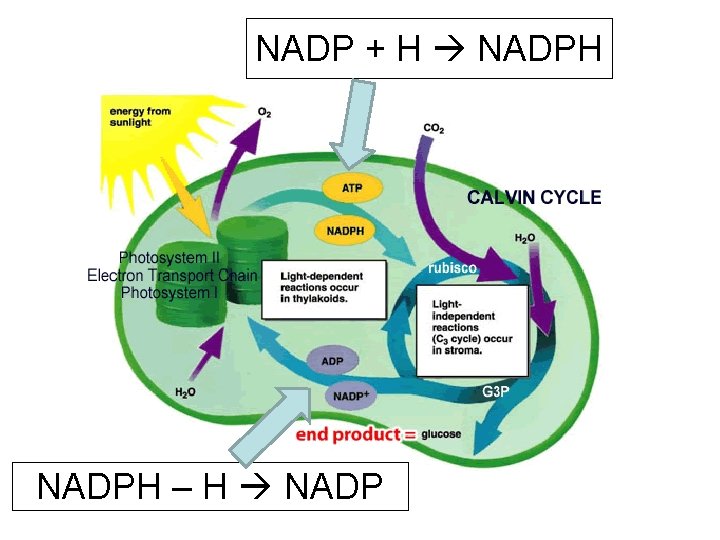
NADP + H NADPH – H NADP
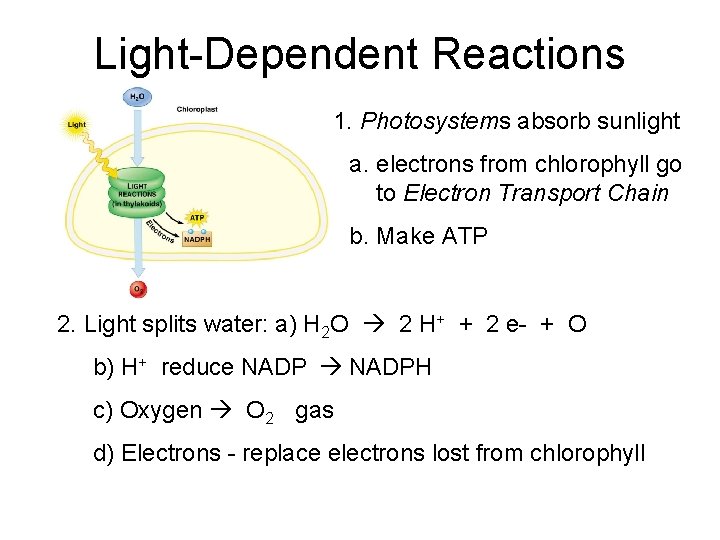
Light-Dependent Reactions 1. Photosystems absorb sunlight a. electrons from chlorophyll go to Electron Transport Chain b. Make ATP 2. Light splits water: a) H 2 O 2 H+ + 2 e- + O b) H+ reduce NADPH c) Oxygen O 2 gas d) Electrons - replace electrons lost from chlorophyll
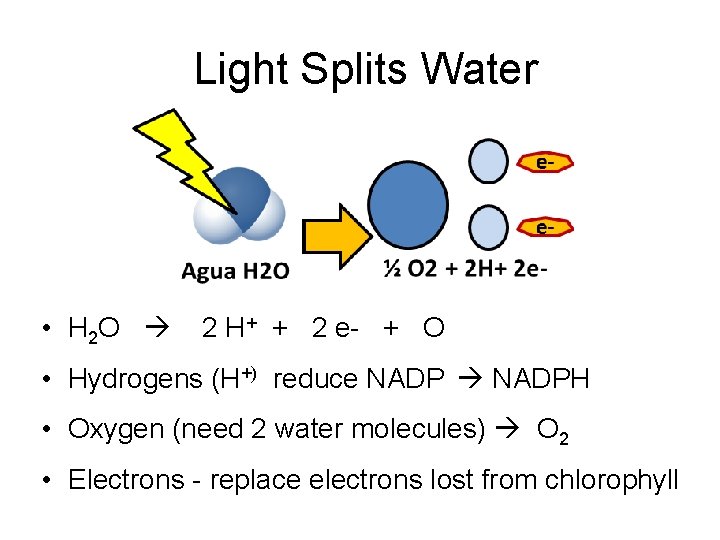
Light Splits Water • H 2 O 2 H+ + 2 e- + O • Hydrogens (H+) reduce NADPH • Oxygen (need 2 water molecules) O 2 • Electrons - replace electrons lost from chlorophyll
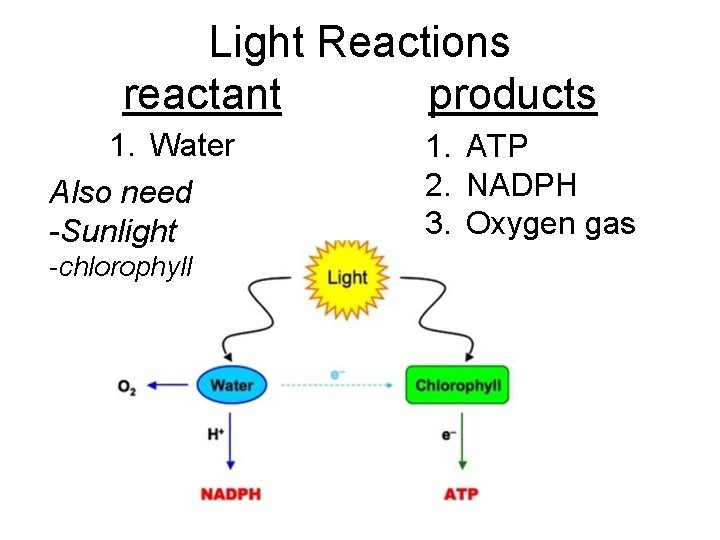
Light Reactions reactant products 1. Water Also need -Sunlight -chlorophyll 1. ATP 2. NADPH 3. Oxygen gas
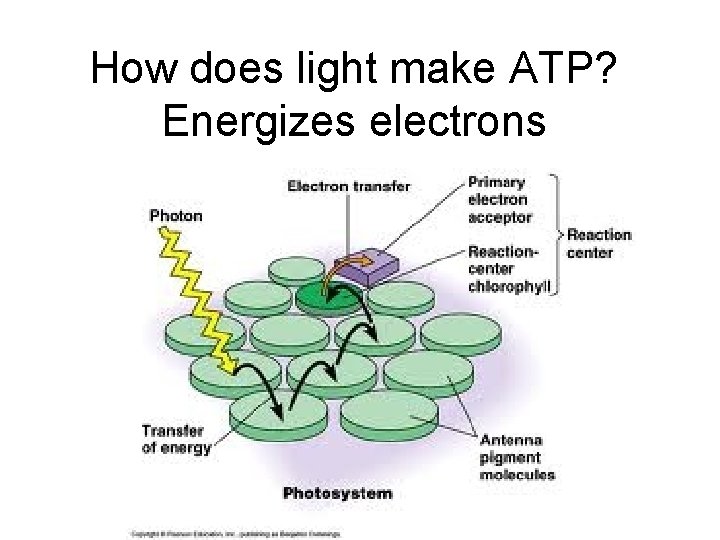
How does light make ATP? Energizes electrons
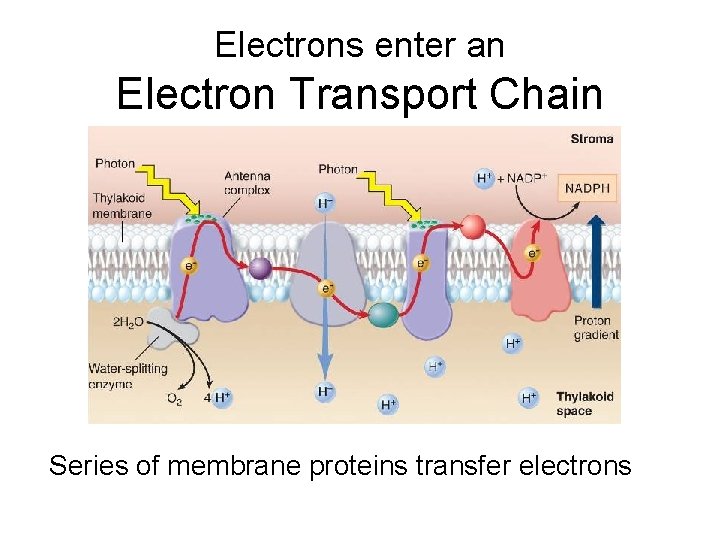
Electrons enter an Electron Transport Chain Series of membrane proteins transfer electrons
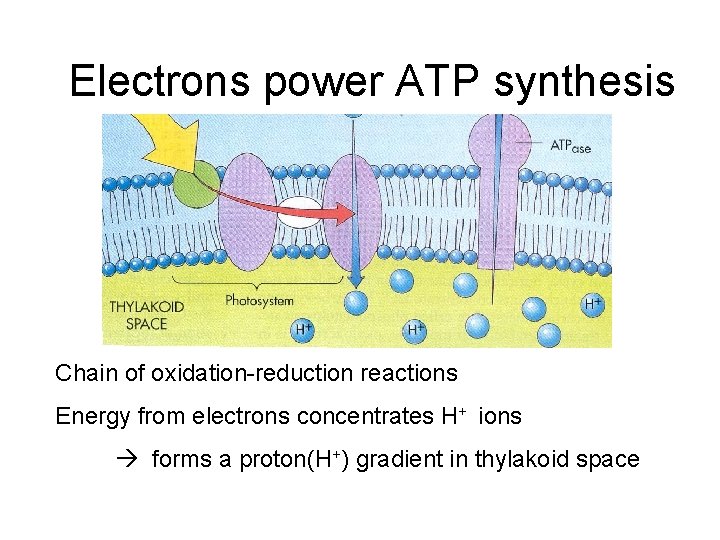
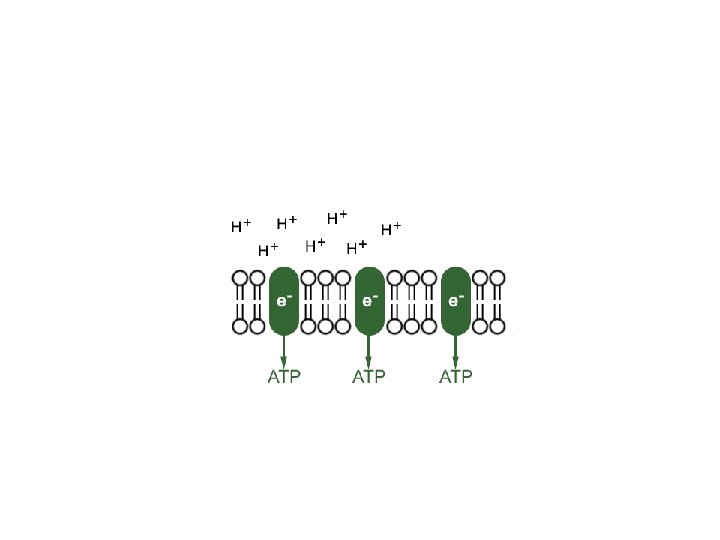
Electrons power ATP synthesis Chain of oxidation-reduction reactions Energy from electrons concentrates H+ ions forms a proton(H+) gradient in thylakoid space
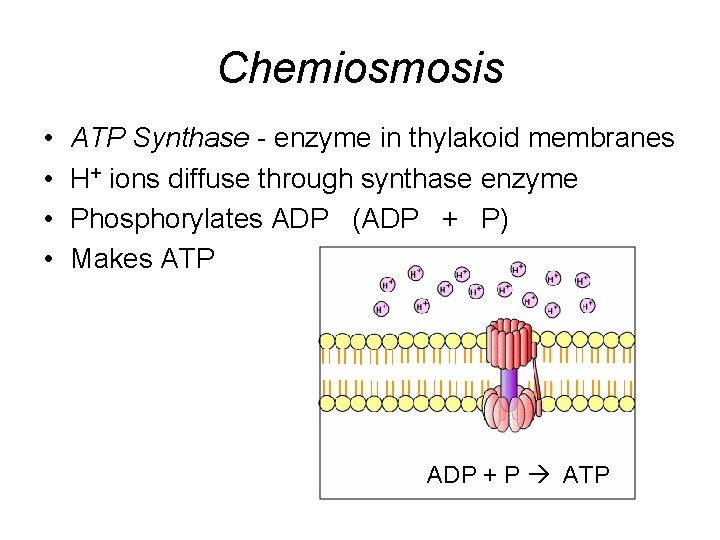
Chemiosmosis • • ATP Synthase - enzyme in thylakoid membranes H+ ions diffuse through synthase enzyme Phosphorylates ADP (ADP + P) Makes ATP ADP + P ATP
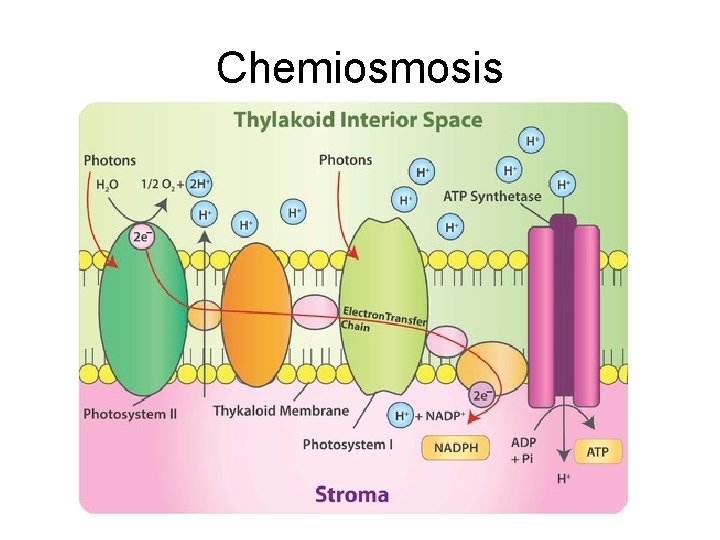
Chemiosmosis
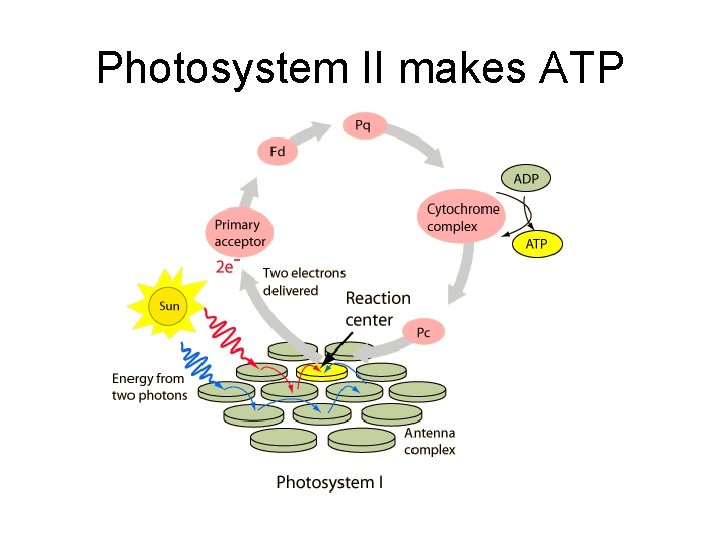
Photosystem II makes ATP
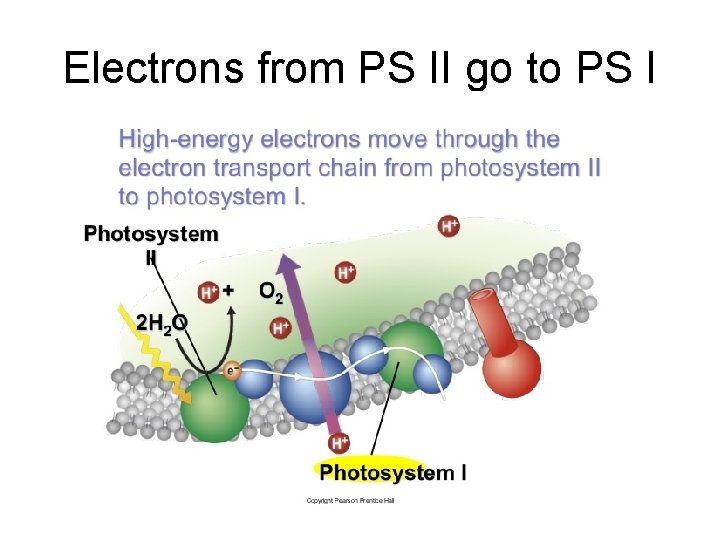
Electrons from PS II go to PS I
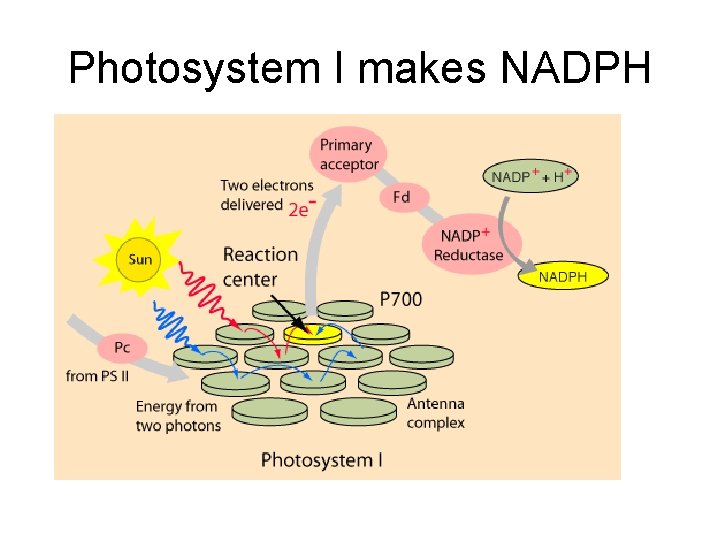
Photosystem I makes NADPH
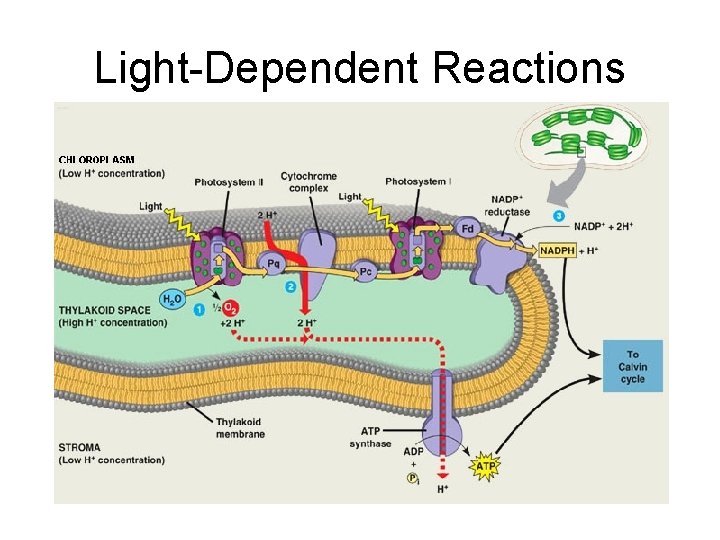
Light-Dependent Reactions
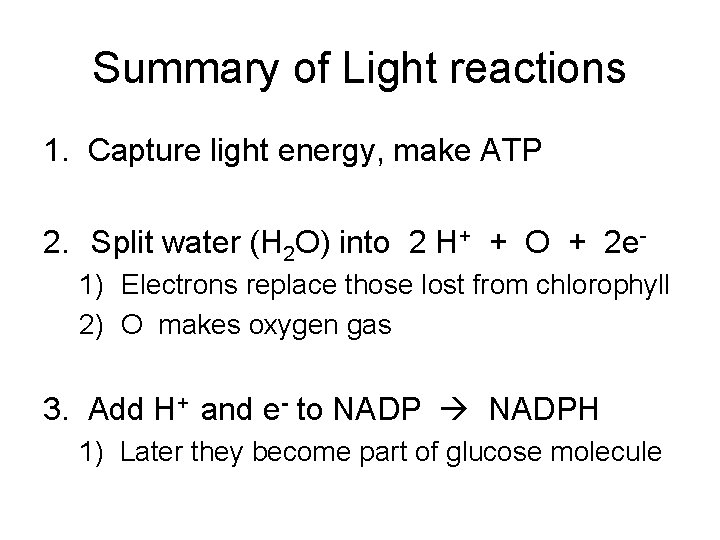
Summary of Light reactions 1. Capture light energy, make ATP 2. Split water (H 2 O) into 2 H+ + O + 2 e 1) Electrons replace those lost from chlorophyll 2) O makes oxygen gas 3. Add H+ and e- to NADPH 1) Later they become part of glucose molecule
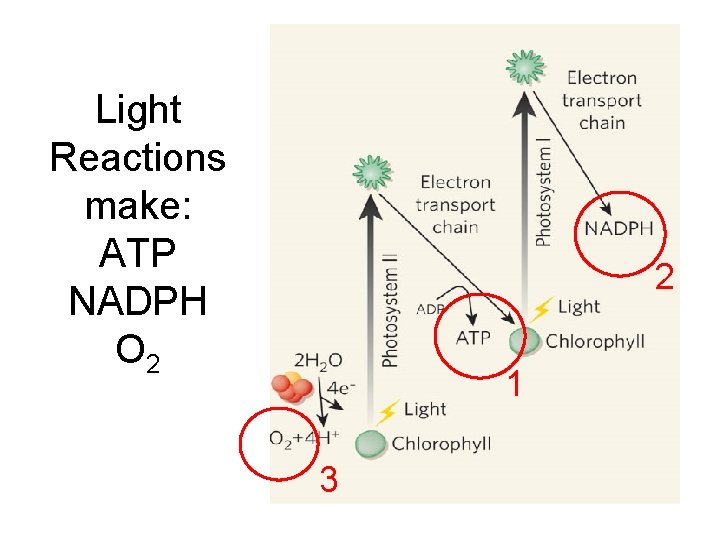
Light Reactions make: ATP NADPH O 2 2 1 3
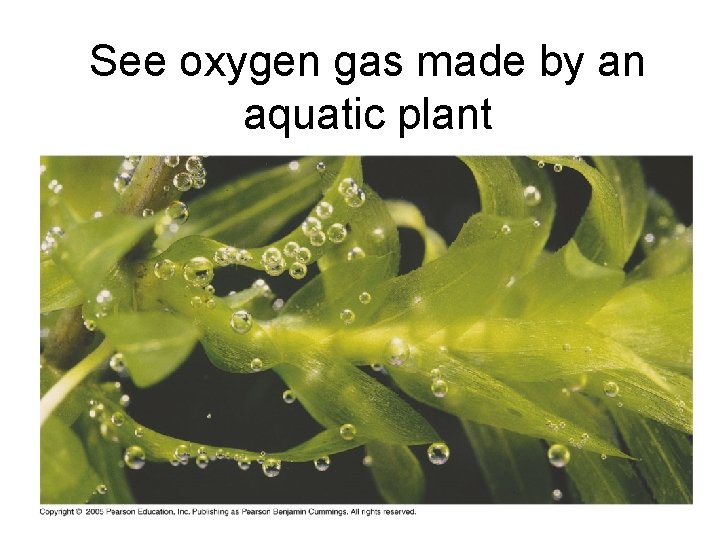
See oxygen gas made by an aquatic plant
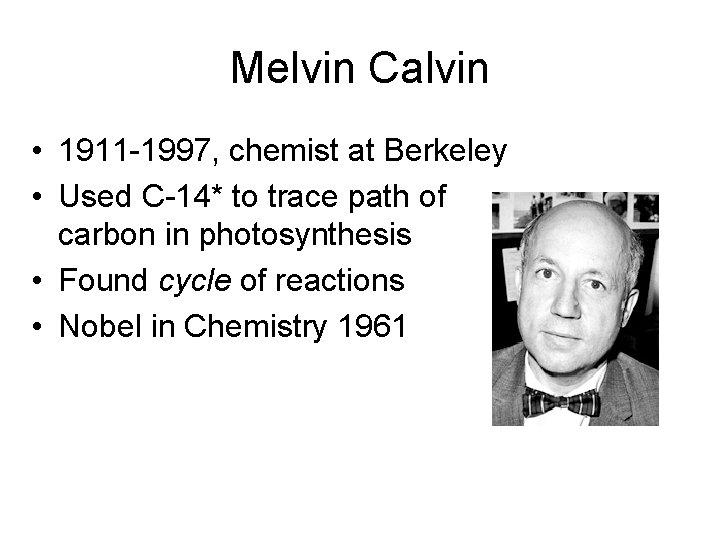
Melvin Calvin • 1911 -1997, chemist at Berkeley • Used C-14* to trace path of carbon in photosynthesis • Found cycle of reactions • Nobel in Chemistry 1961
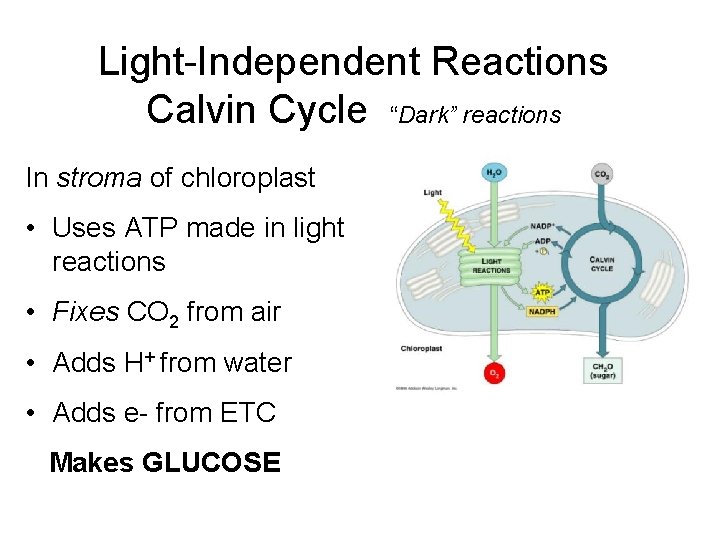
Light-Independent Reactions Calvin Cycle “Dark” reactions In stroma of chloroplast • Uses ATP made in light reactions • Fixes CO 2 from air • Adds H+ from water • Adds e- from ETC Makes GLUCOSE
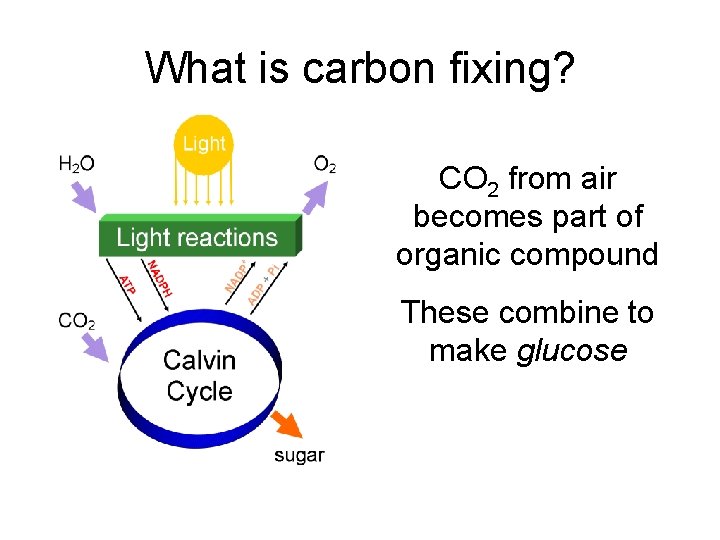
What is carbon fixing? CO 2 from air becomes part of organic compound These combine to make glucose
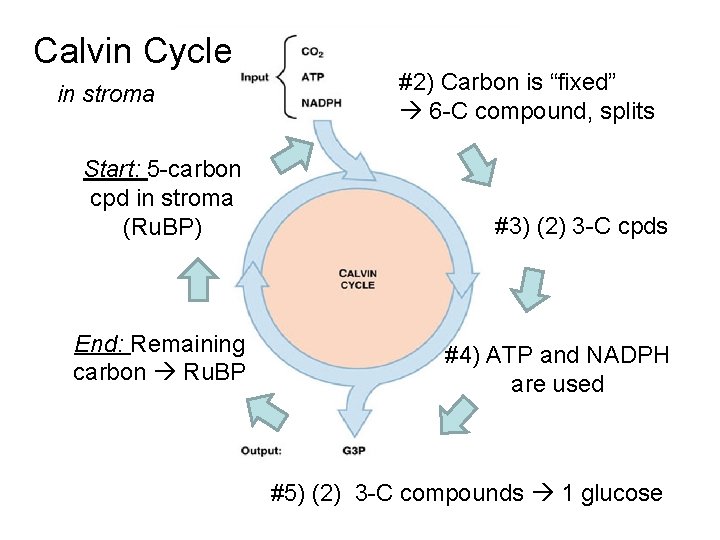
Calvin Cycle in stroma #2) Carbon is “fixed” 6 -C compound, splits Start: 5 -carbon cpd in stroma (Ru. BP) #3) (2) 3 -C cpds End: Remaining carbon Ru. BP #4) ATP and NADPH are used #5) (2) 3 -C compounds 1 glucose
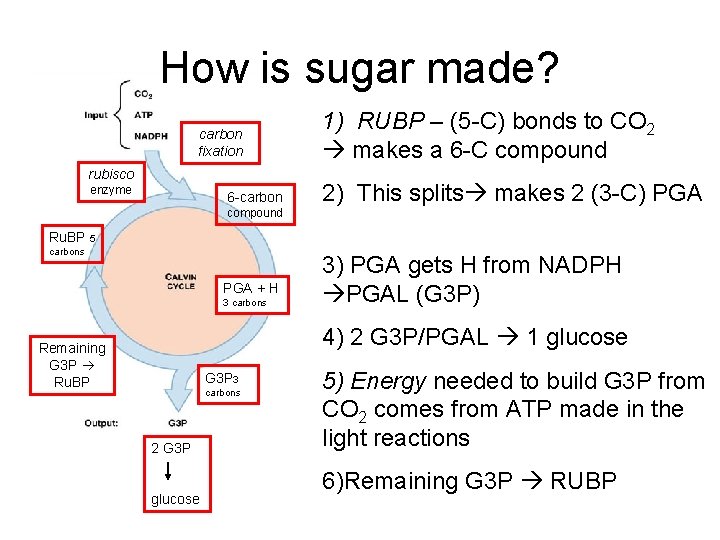
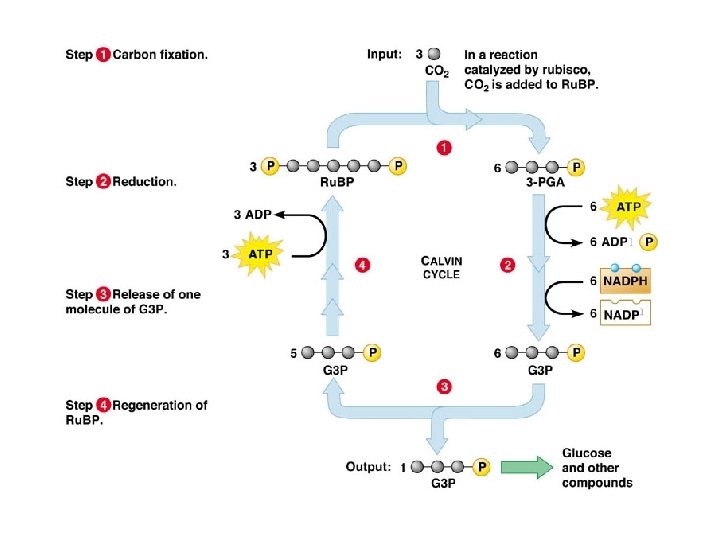
How is sugar made? carbon fixation rubisco enzyme 6 -carbon compound 1) RUBP – (5 -C) bonds to CO 2 makes a 6 -C compound 2) This splits makes 2 (3 -C) PGA Ru. BP 5 carbons PGA + H 3 carbons 3) PGA gets H from NADPH PGAL (G 3 P) 4) 2 G 3 P/PGAL 1 glucose Remaining G 3 P Ru. BP G 3 P 3 carbons 2 G 3 P glucose 5) Energy needed to build G 3 P from CO 2 comes from ATP made in the light reactions 6)Remaining G 3 P RUBP
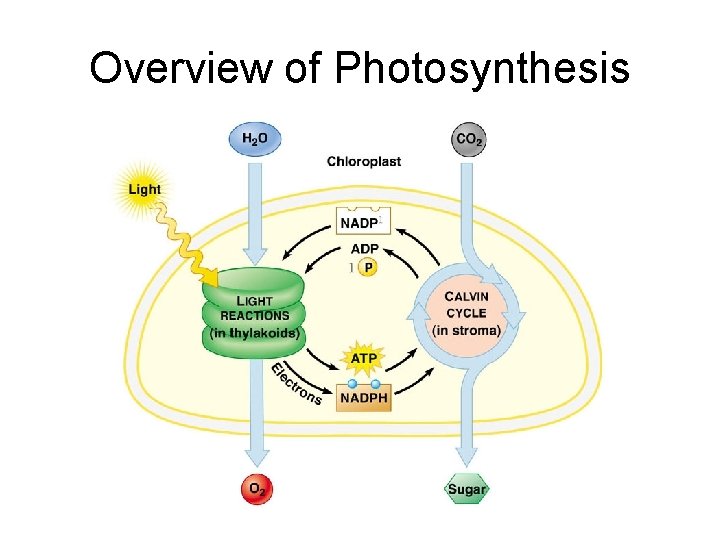
Overview of Photosynthesis
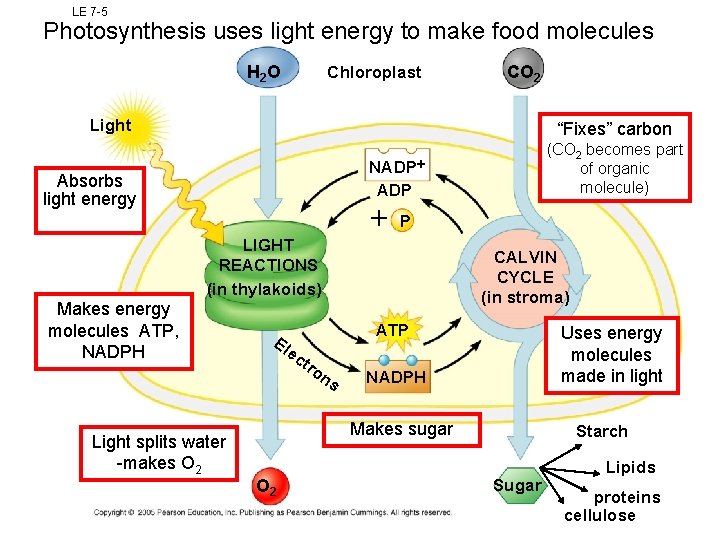
LE 7 -5 Photosynthesis uses light energy to make food molecules H 2 O Chloroplast CO 2 Light “Fixes” carbon Absorbs light energy Makes energy molecules ATP, NADPH (CO 2 becomes part of organic molecule) NADP P LIGHT REACTIONS (in thylakoids) ATP El ec tro ns Light splits water -makes O 2 CALVIN CYCLE (in stroma) Uses energy molecules made in light NADPH Makes sugar O 2 Starch Sugar Lipids proteins cellulose
Factors Affecting Photosynthesis 1. Light – bright sun, more energy a. Long days (summer), more light absorbed b. Wavelength – cannot absorb green light 2. Temperature – warm, but not too hot a. Hot days – stomata close to save water 3. Water – soil must be moist a. Water comes up through xylem in veins b. Exits through open stomata c. Water low? – stomata close
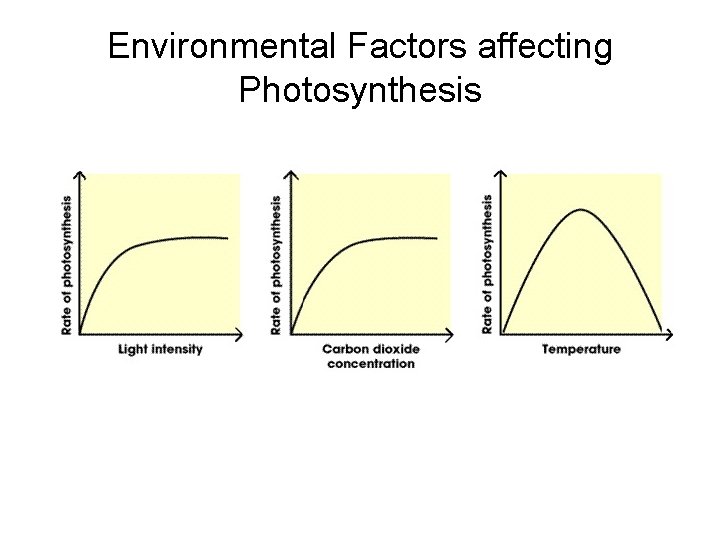
Environmental Factors affecting Photosynthesis
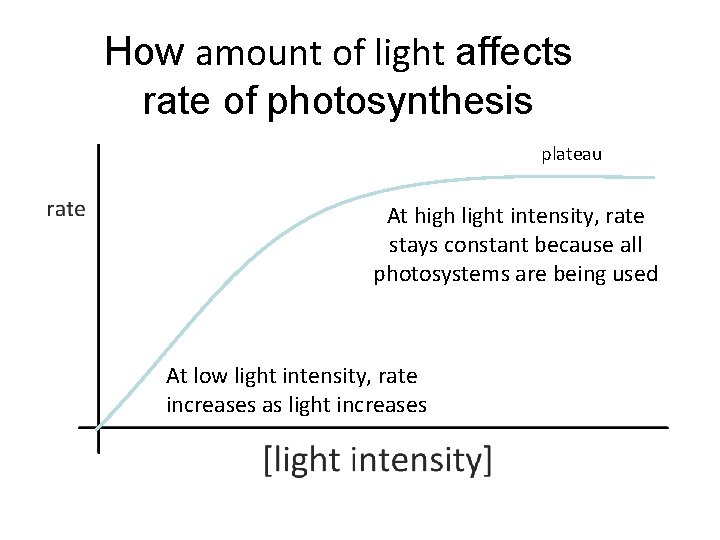
How amount of light affects rate of photosynthesis plateau At high light intensity, rate stays constant because all photosystems are being used At low light intensity, rate increases as light increases
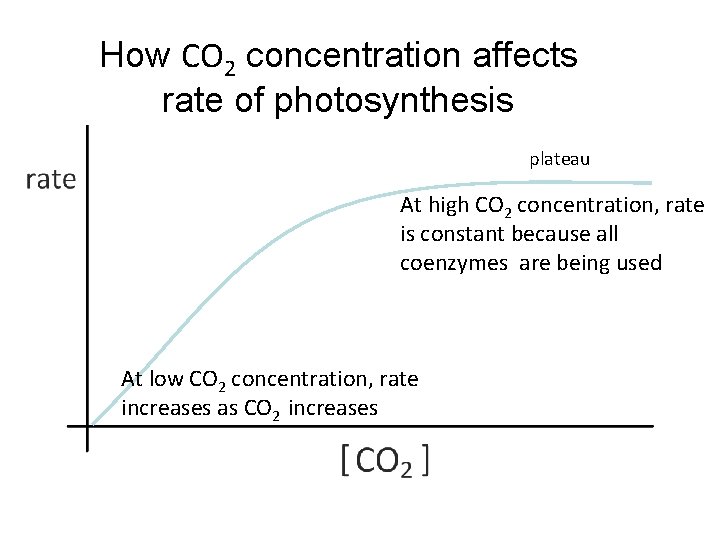
How CO 2 concentration affects rate of photosynthesis plateau At high CO 2 concentration, rate is constant because all coenzymes are being used At low CO 2 concentration, rate increases as CO 2 increases
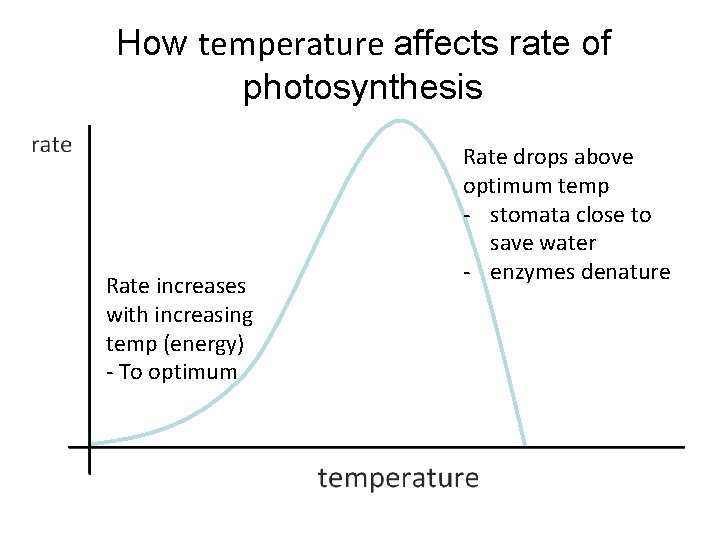
How temperature affects rate of photosynthesis Rate increases with increasing temp (energy) - To optimum Rate drops above optimum temp - stomata close to save water - enzymes denature
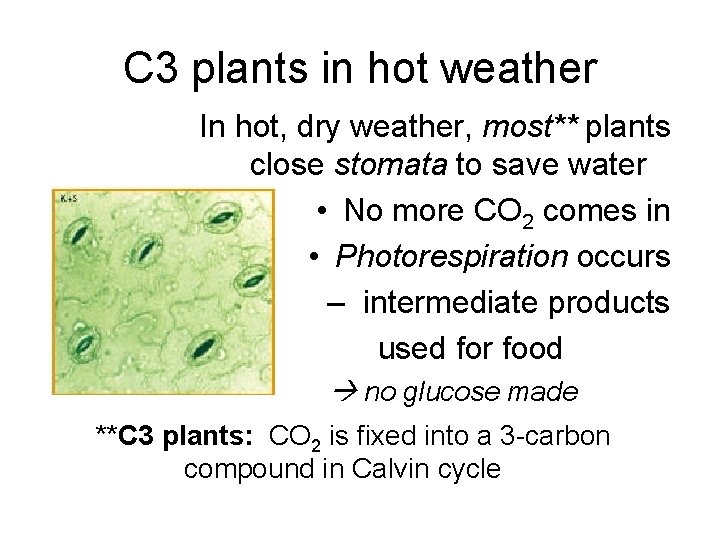
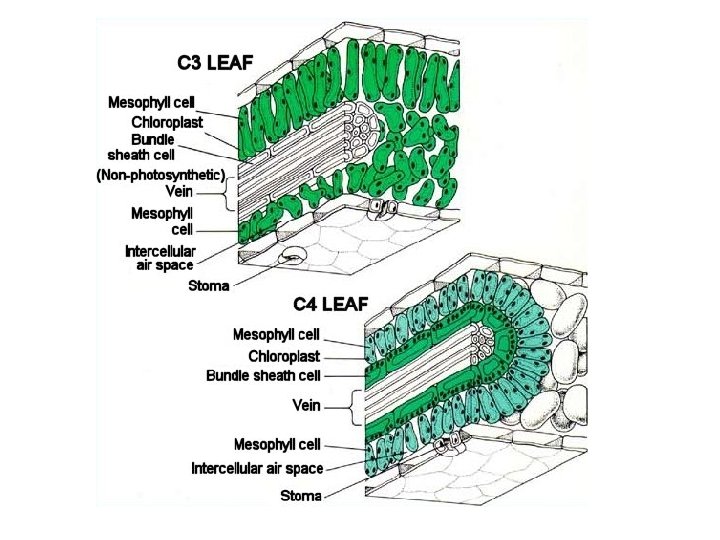
C 3 plants in hot weather In hot, dry weather, most** plants close stomata to save water • No more CO 2 comes in • Photorespiration occurs – intermediate products used for food no glucose made **C 3 plants: CO 2 is fixed into a 3 -carbon compound in Calvin cycle
![Guard cells open/close stomata Close when [CO 2] or water is low Closed Open](http://slidetodoc.com/presentation_image_h2/b4605e44ec7fc670d6a432d042d111e9/image-56.jpg "Guard cells open/close stomata Close when [CO 2] or water is low Closed Open")
Guard cells open/close stomata Close when [CO 2] or water is low Closed Open
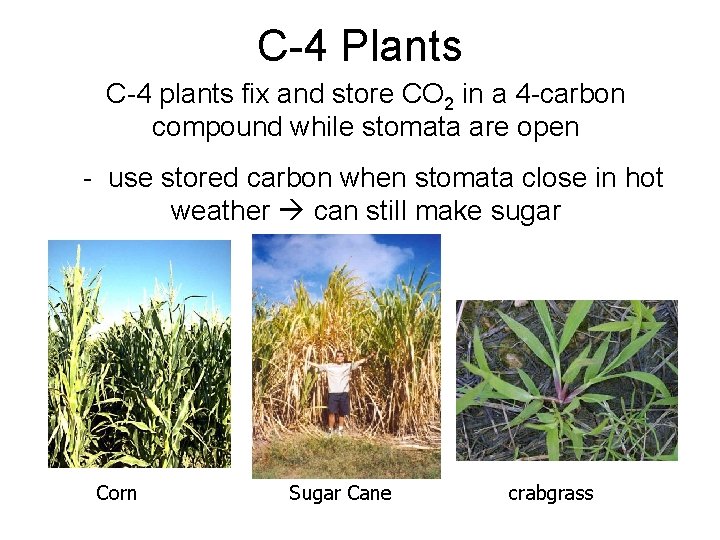
C-4 Plants C-4 plants fix and store CO 2 in a 4 -carbon compound while stomata are open - use stored carbon when stomata close in hot weather can still make sugar Corn Sugar Cane crabgrass
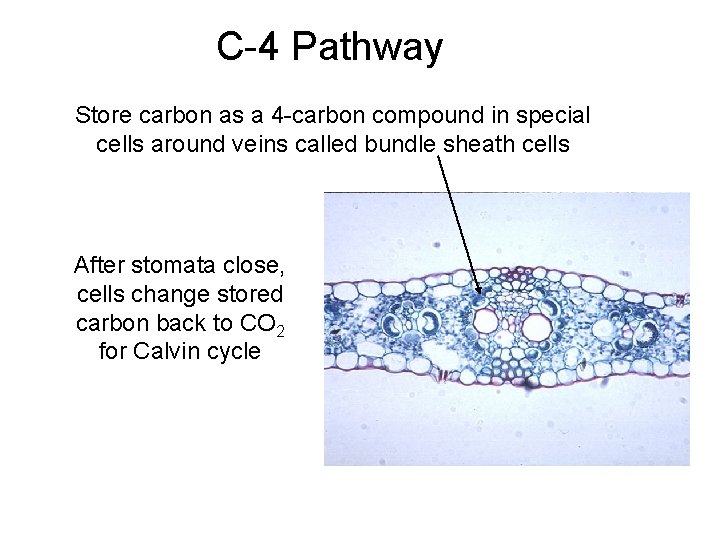
C-4 Pathway Store carbon as a 4 -carbon compound in special cells around veins called bundle sheath cells After stomata close, cells change stored carbon back to CO 2 for Calvin cycle
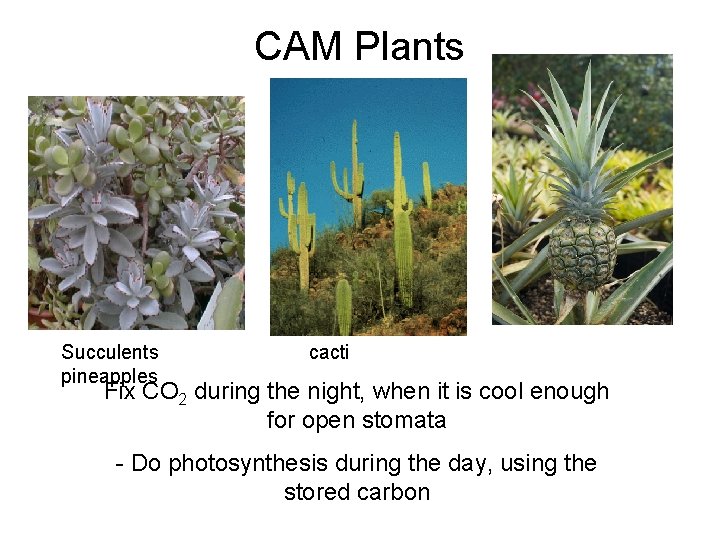
CAM Plants Succulents pineapples cacti Fix CO 2 during the night, when it is cool enough for open stomata - Do photosynthesis during the day, using the stored carbon
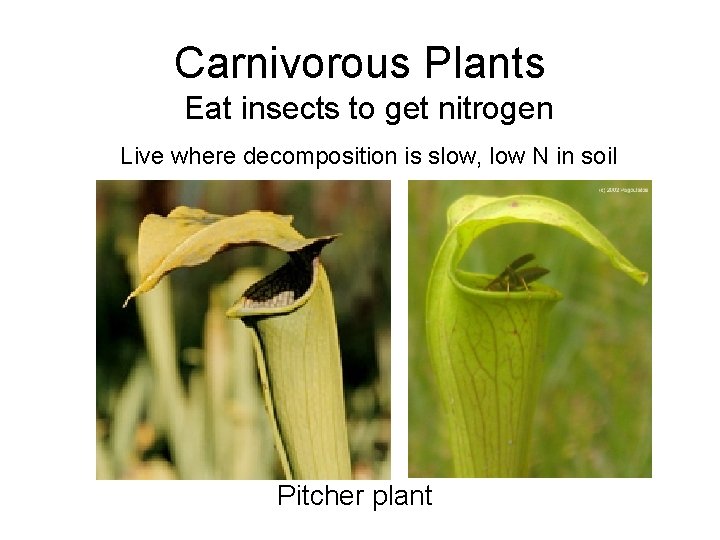
Carnivorous Plants Eat insects to get nitrogen Live where decomposition is slow, low N in soil Pitcher plant
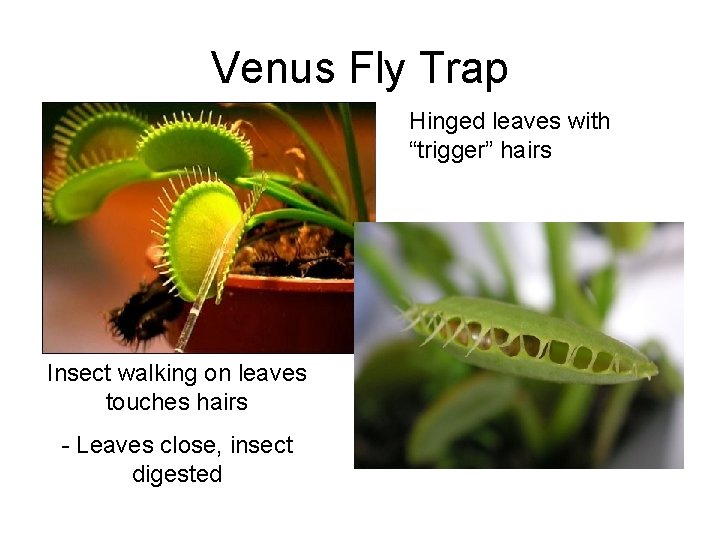
Venus Fly Trap Hinged leaves with “trigger” hairs Insect walking on leaves touches hairs - Leaves close, insect digested
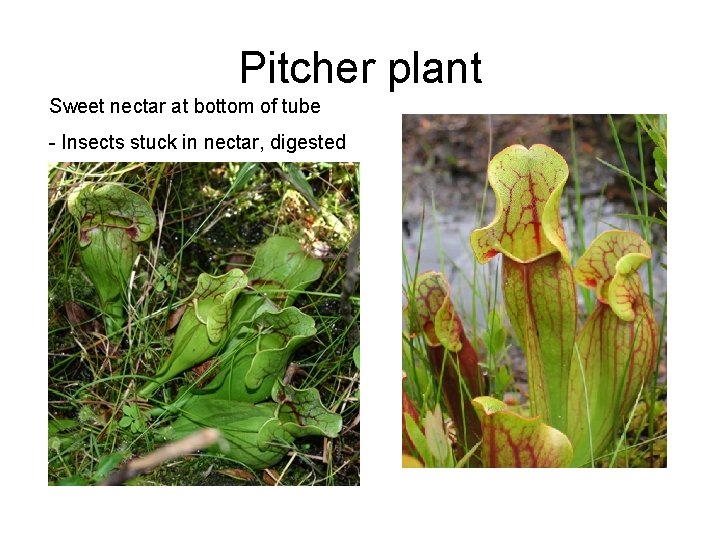
Pitcher plant Sweet nectar at bottom of tube - Insects stuck in nectar, digested
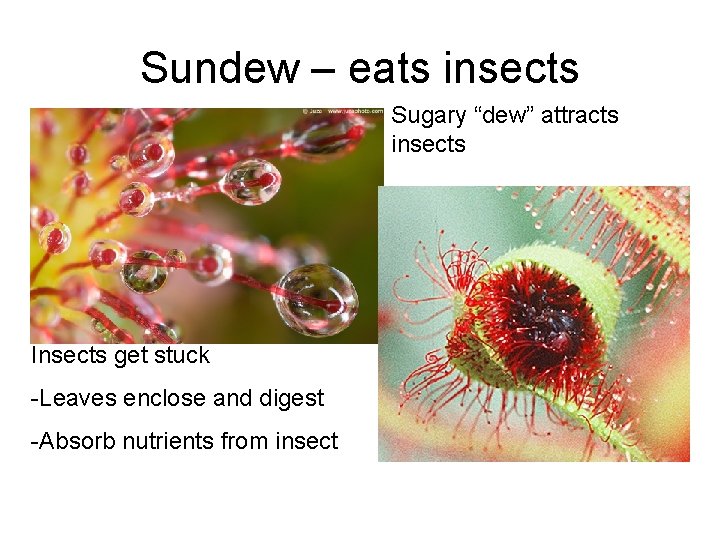
Sundew – eats insects Sugary “dew” attracts insects Insects get stuck -Leaves enclose and digest -Absorb nutrients from insect
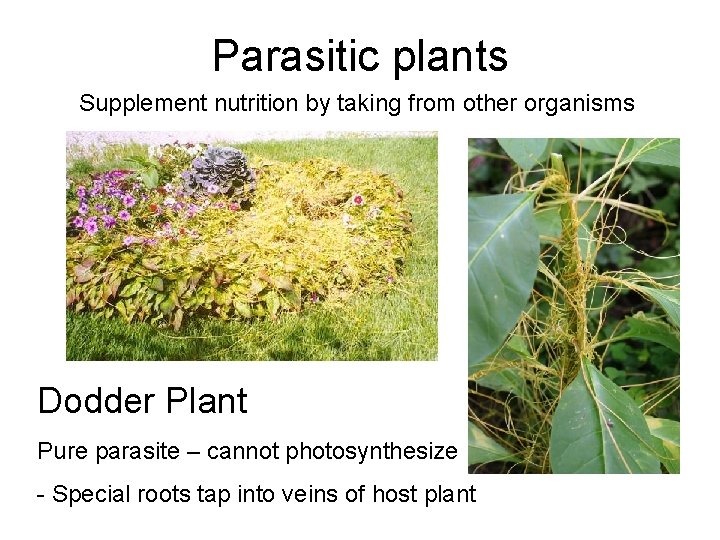
Parasitic plants Supplement nutrition by taking from other organisms Dodder Plant Pure parasite – cannot photosynthesize - Special roots tap into veins of host plant
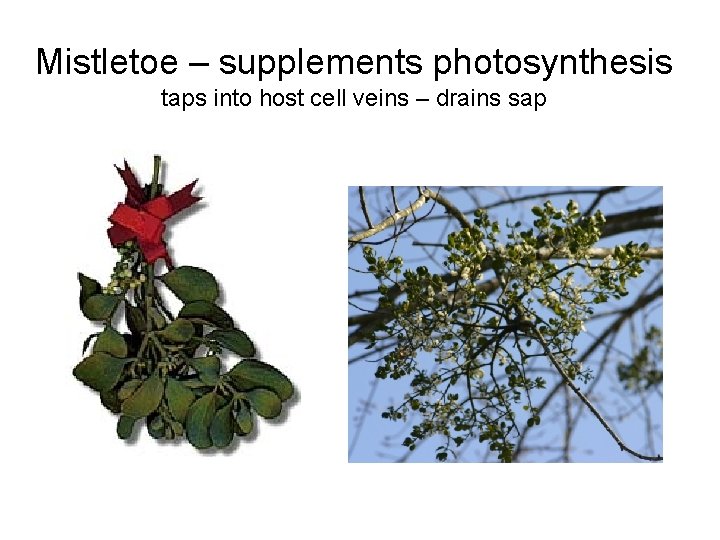
Mistletoe – supplements photosynthesis taps into host cell veins – drains sap
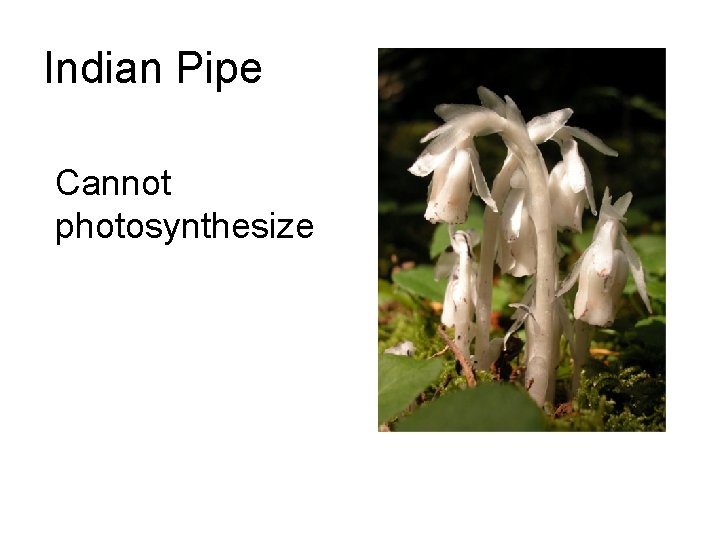
Indian Pipe Cannot photosynthesize
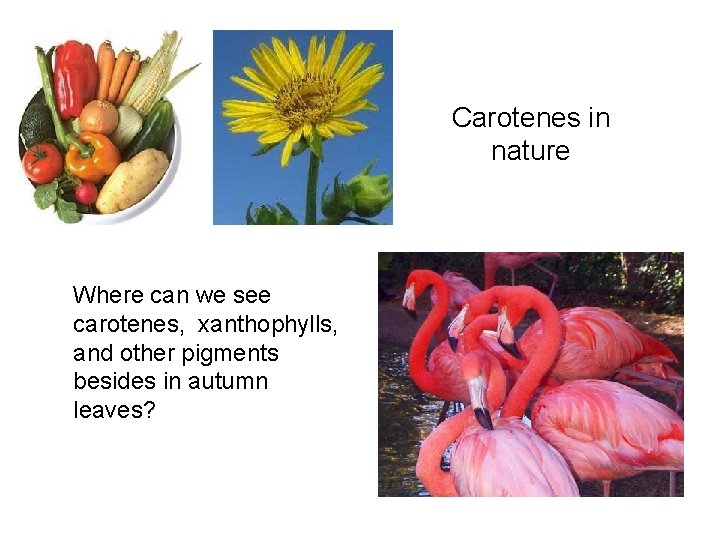
Carotenes in nature Where can we see carotenes, xanthophylls, and other pigments besides in autumn leaves?
END Chapter 8
Photosynthesis reduces atmospheric CO 2 • • • Excess greenhouse gases: - from human activity -burning fossil fuels - deforestation - increases global warming - photosynthesis removes CO 2 and helps moderate warming
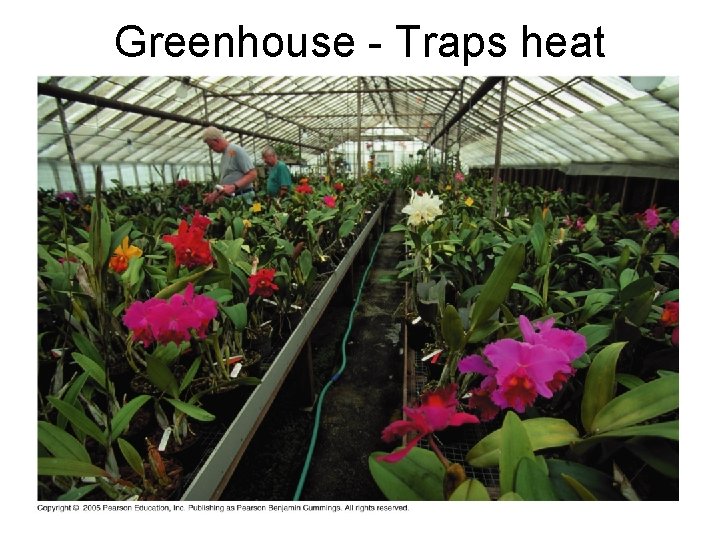
Greenhouse - Traps heat indoors
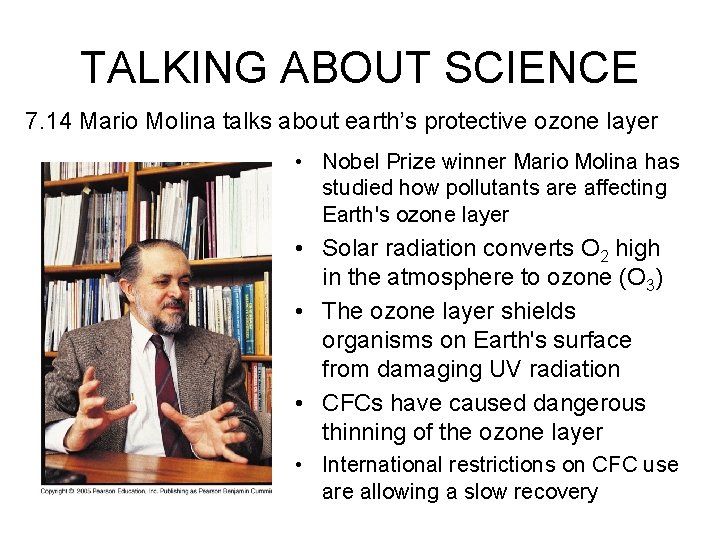
TALKING ABOUT SCIENCE 7. 14 Mario Molina talks about earth’s protective ozone layer • Nobel Prize winner Mario Molina has studied how pollutants are affecting Earth's ozone layer • Solar radiation converts O 2 high in the atmosphere to ozone (O 3) • The ozone layer shields organisms on Earth's surface from damaging UV radiation • CFCs have caused dangerous thinning of the ozone layer • International restrictions on CFC use are allowing a slow recovery
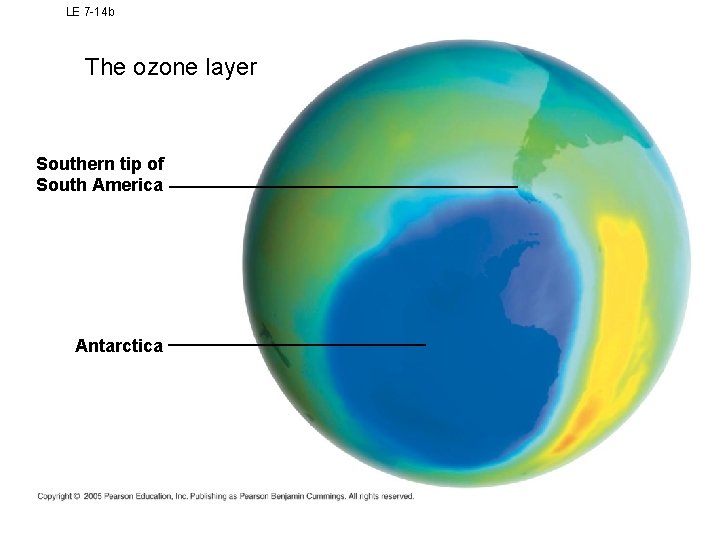
LE 7 -14 b The ozone layer Southern tip of South America Antarctica
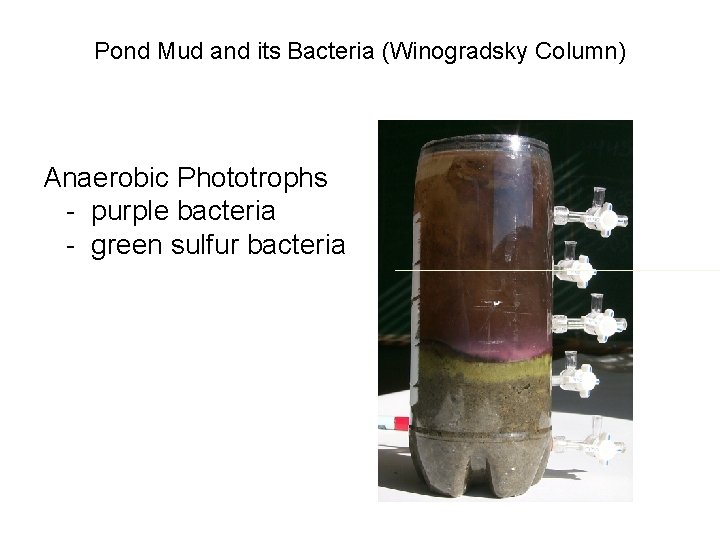
Pond Mud and its Bacteria (Winogradsky Column) Anaerobic Phototrophs - purple bacteria - green sulfur bacteria
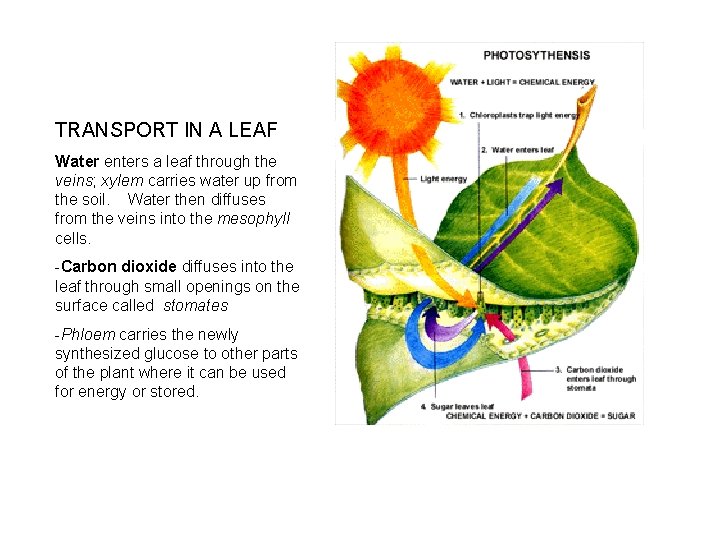
TRANSPORT IN A LEAF Water enters a leaf through the veins; xylem carries water up from the soil. Water then diffuses from the veins into the mesophyll cells. -Carbon dioxide diffuses into the leaf through small openings on the surface called stomates -Phloem carries the newly synthesized glucose to other parts of the plant where it can be used for energy or stored.
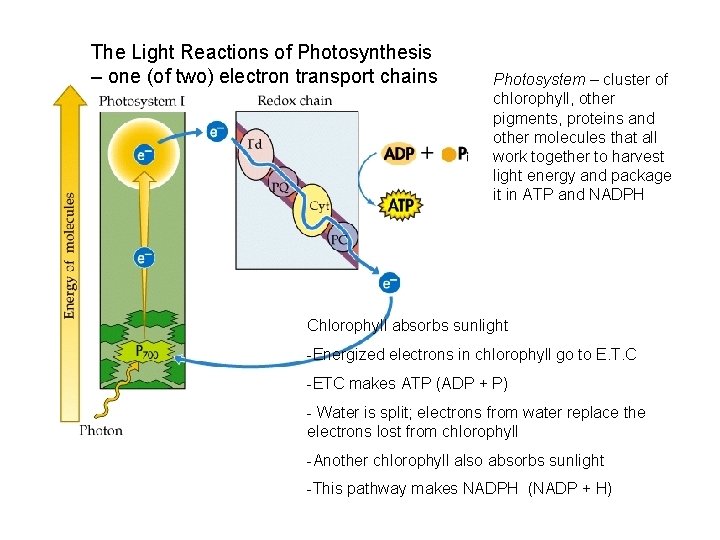
The Light Reactions of Photosynthesis – one (of two) electron transport chains Photosystem – cluster of chlorophyll, other pigments, proteins and other molecules that all work together to harvest light energy and package it in ATP and NADPH Chlorophyll absorbs sunlight -Energized electrons in chlorophyll go to E. T. C -ETC makes ATP (ADP + P) - Water is split; electrons from water replace the electrons lost from chlorophyll -Another chlorophyll also absorbs sunlight -This pathway makes NADPH (NADP + H)
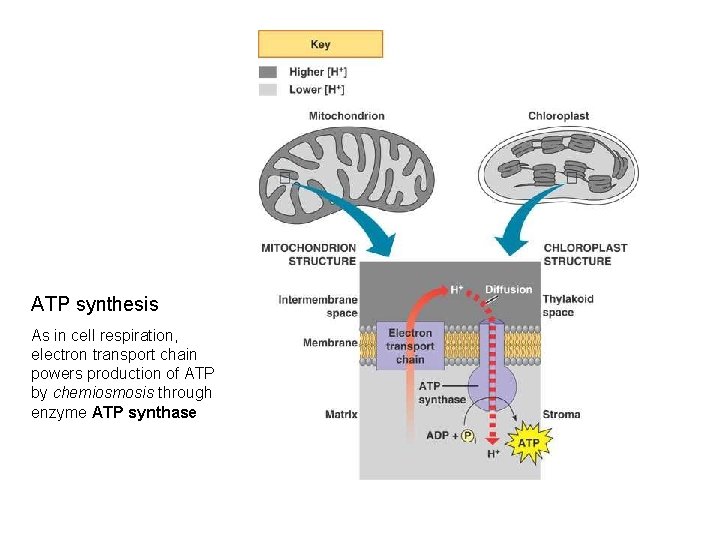
ATP synthesis As in cell respiration, electron transport chain powers production of ATP by chemiosmosis through enzyme ATP synthase
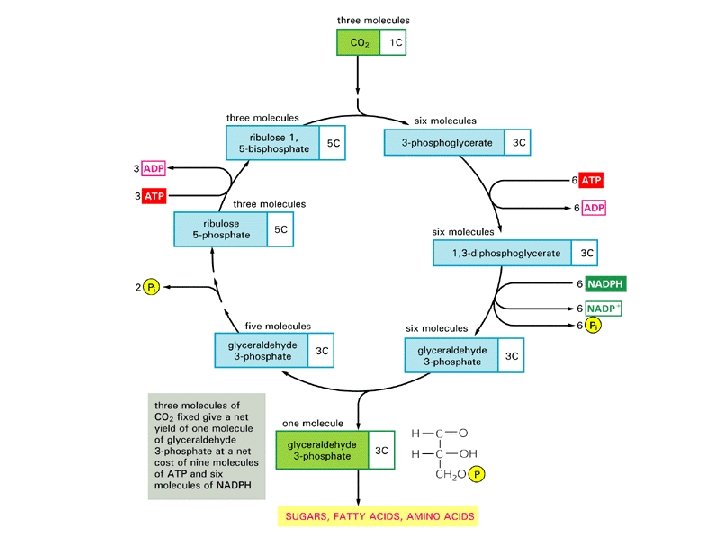
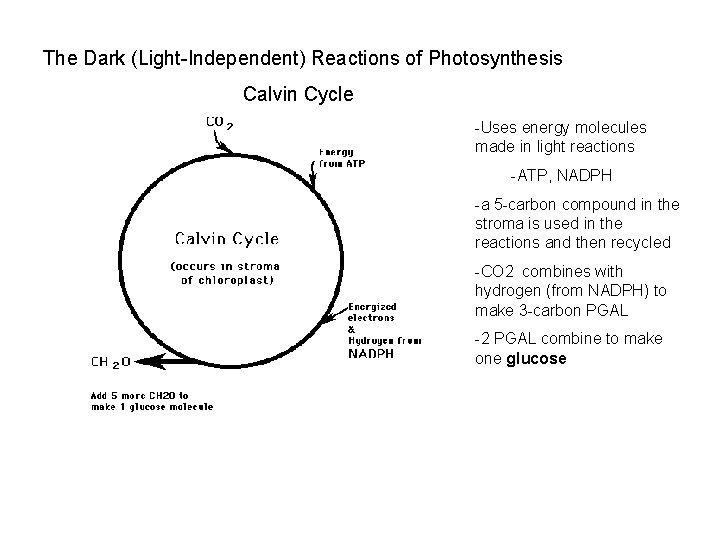
The Dark (Light-Independent) Reactions of Photosynthesis Calvin Cycle -Uses energy molecules made in light reactions -ATP, NADPH -a 5 -carbon compound in the stroma is used in the reactions and then recycled -CO 2 combines with hydrogen (from NADPH) to make 3 -carbon PGAL -2 PGAL combine to make one glucose
- Slides: 81