
HONORS BIOLOGY CHAPTER 5 REVIEW 1 Why is
HONORS BIOLOGY CHAPTER 5 REVIEW
#1 • Why is fluid mosaic a good description of the plasma membrane? • Structures shift in place • Watery hydrophilic heads and hydrophobic (fatty tails)
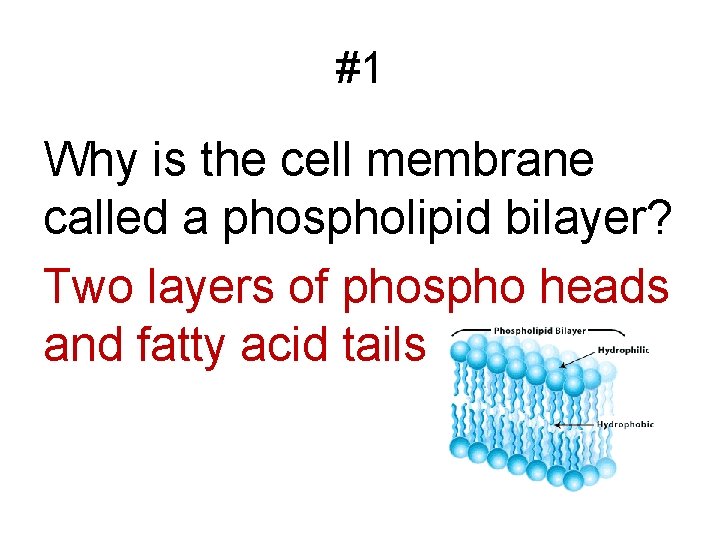
#1 Why is the cell membrane called a phospholipid bilayer? Two layers of phospho heads and fatty acid tails
#2 • • Six functions of proteins in a plasma membrane: p. 74 Attach to ECM Signal transduction Transport Intercellular junction Cell-cell recognition Enzymatic activity
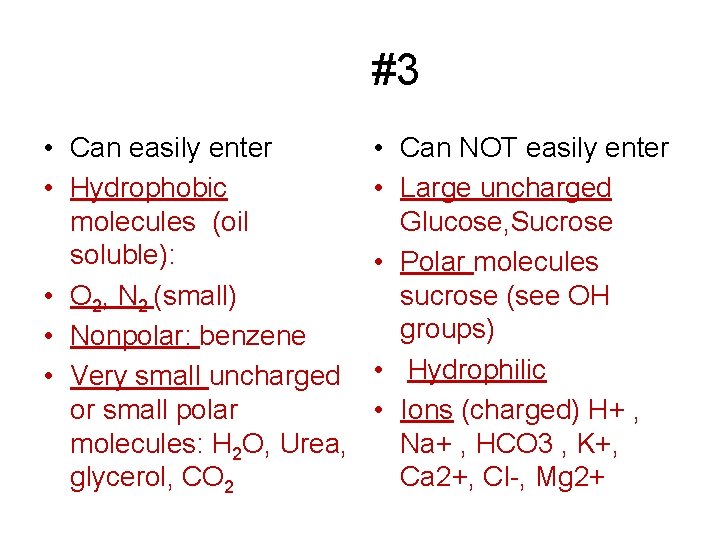
#3 • Can easily enter • Hydrophobic molecules (oil soluble): • O 2, N 2 (small) • Nonpolar: benzene • Very small uncharged or small polar molecules: H 2 O, Urea, glycerol, CO 2 • Can NOT easily enter • Large uncharged Glucose, Sucrose • Polar molecules sucrose (see OH groups) • Hydrophilic • Ions (charged) H+ , Na+ , HCO 3 , K+, Ca 2+, Cl-, Mg 2+
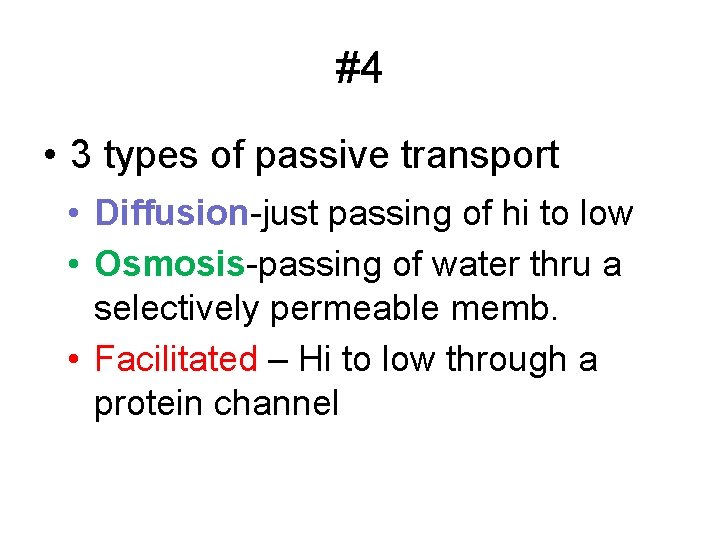
#4 • 3 types of passive transport • Diffusion-just passing of hi to low • Osmosis-passing of water thru a selectively permeable memb. • Facilitated – Hi to low through a protein channel
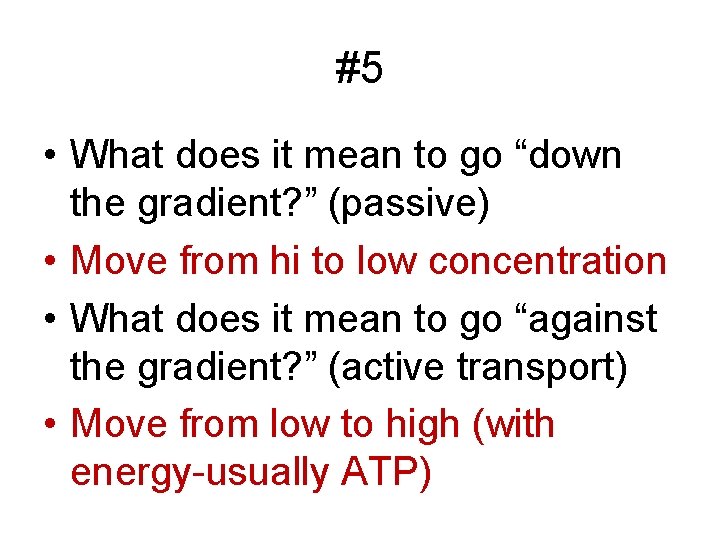
#5 • What does it mean to go “down the gradient? ” (passive) • Move from hi to low concentration • What does it mean to go “against the gradient? ” (active transport) • Move from low to high (with energy-usually ATP)
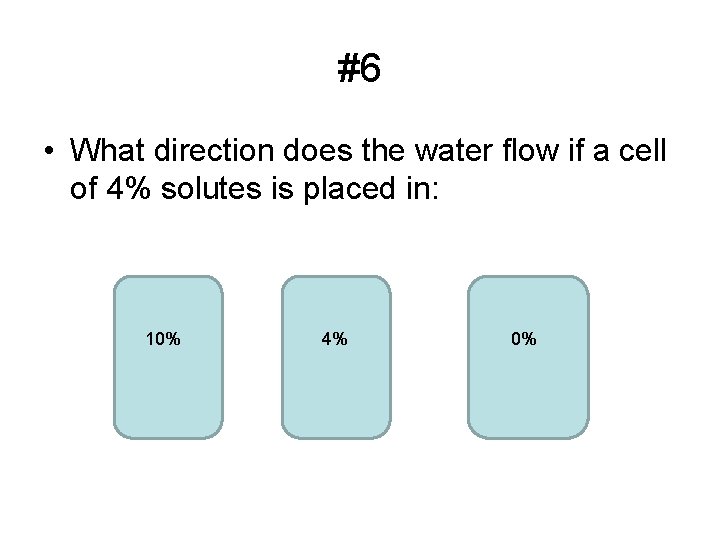
#6 • What direction does the water flow if a cell of 4% solutes is placed in: 10% 4% 0%
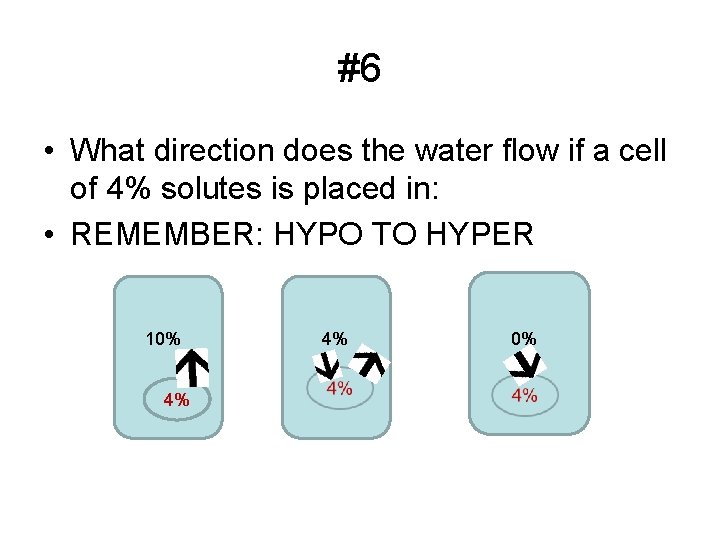
#6 • What direction does the water flow if a cell of 4% solutes is placed in: • REMEMBER: HYPO TO HYPER 10% 4% 4% 0%
#7 • What is tonicity? • Measure of osmotic pressure gradient determined by the solute concentration that cannot cross the selectively permeable membrane

#7 • Note water flows from high water concentration to low (hypo to hyper)

#8 Animal Cells p. 77
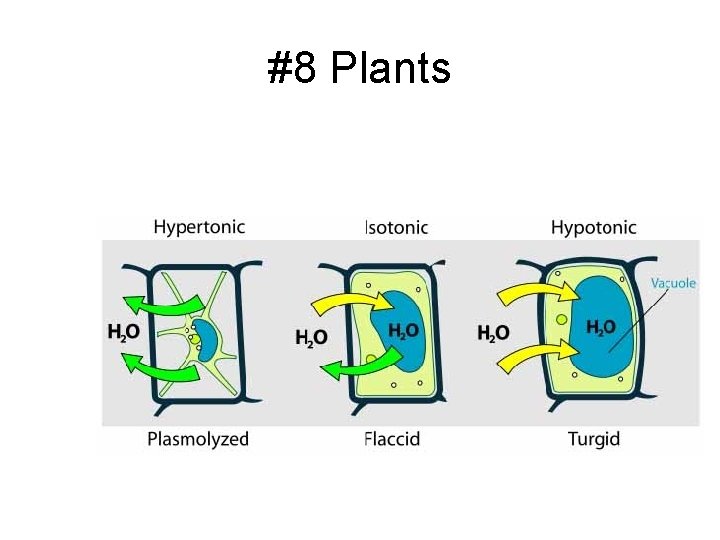
#8 Plants
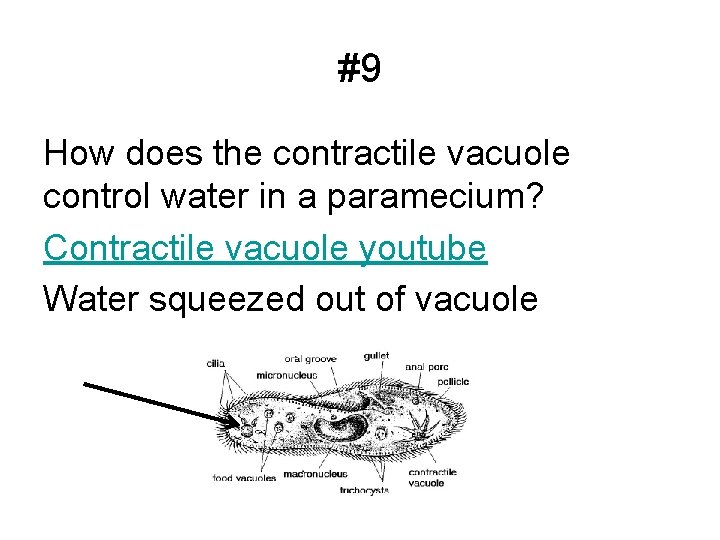
#9 How does the contractile vacuole control water in a paramecium? Contractile vacuole youtube Water squeezed out of vacuole
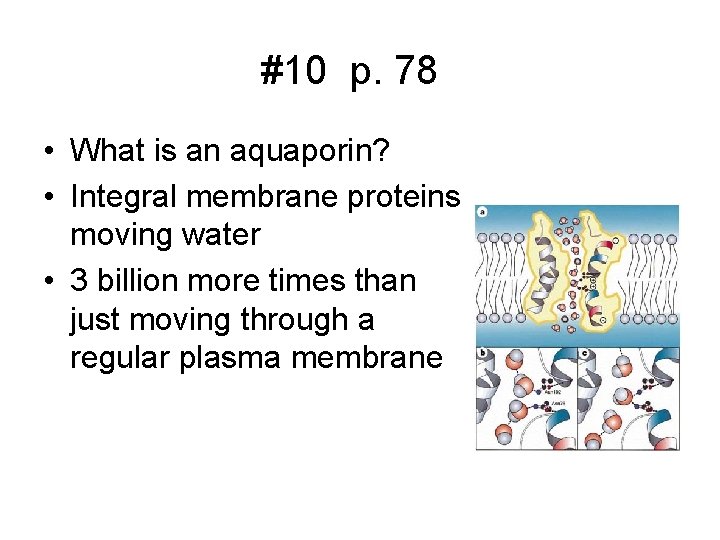
#10 p. 78 • What is an aquaporin? • Integral membrane proteins moving water • 3 billion more times than just moving through a regular plasma membrane

#11 • Exocytosis and endocytosis are both active transport. Protein channels span the membrane. Endocytosis and exocytosis engulf the particle with the membrane.
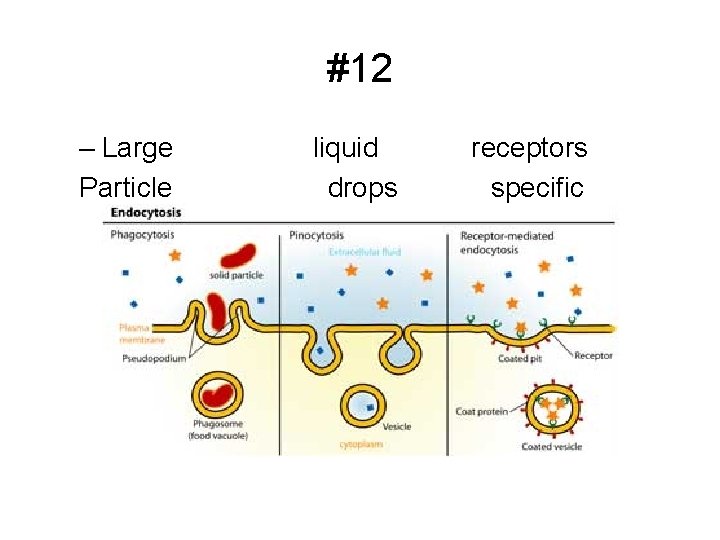
#12 – Large Particle liquid drops receptors specific
#13 • Ability to cause change or do work • L. energy • Thermal energy • O. heat
13 • Energy as a result of location or structure • I. potential • Type of energy released or need in molecules • N. chemical
#13 • Study of energy transformations • M thermodynamics • Reaction that releases energy • E. exergonic
#13 • Makes products rich in potential energy • G. Endergonic • Energy of motion • J. kinetic

#13 • Measure of disorder • B. Entropy • Energy in the universe is constant • C. 1 st Law of Thermodynamics
#13 • Energy from exergonic to run endergonic • K. Energy coupling • Total of an organism’s chemical reactions • F. metabolism
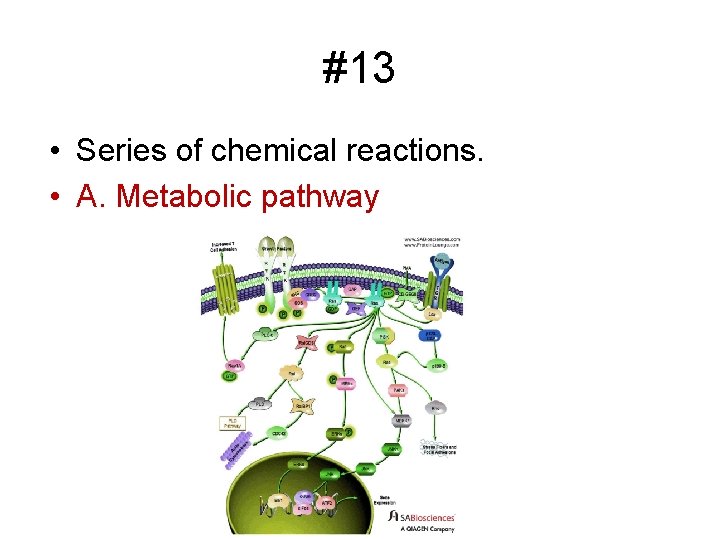
#13 • Series of chemical reactions. • A. Metabolic pathway
#13 • Energy conversions increase the entropy • D. 2 nd Law of Thermodynamics • Cells use oxygen to release energy from molecules • H. Cellular respiration
#14 • What does ATP stand for? • Adenosine triphosphate
#15 • What part of the ATP molecule is lost or gained? • Last Phosphate • Is ATP recyclable? • YES
#16 • Is ATP made by phosphorylation? • YES ADP + P = ATP ADP is made by hydrolysis. ATP = ADP + P
#17 • Is ATP made from exergonic reactions or endergonic? • Endergonic
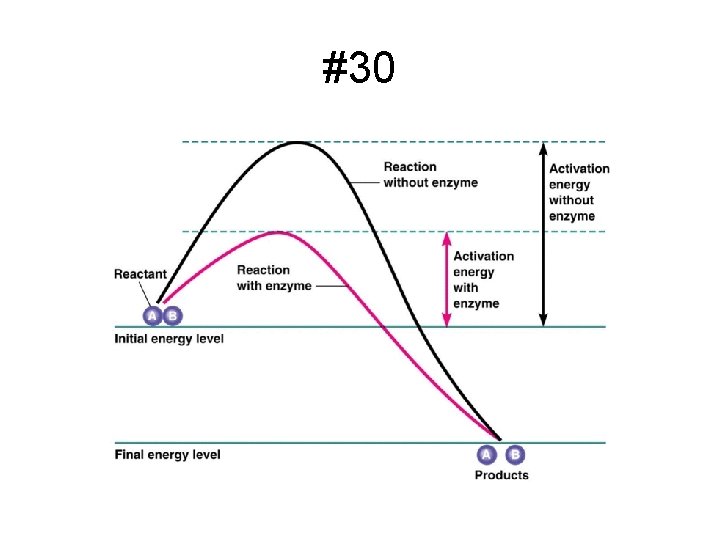
#18 • What is activation energy? • Amount of energy needed to get a reaction going. • Why is this energy needed? • Reactants are stable and bonds need to be broken or distorted.
#18 • How do enzymes affect the amount of activation energy needed? • Reduces the activation energy needed • Why? • Enzyme brings the reactants together.
#19 • Why are enzymes called “Biological catalysts? • They are proteins (biological) and speed up reactions without changing themselves (catalyst).
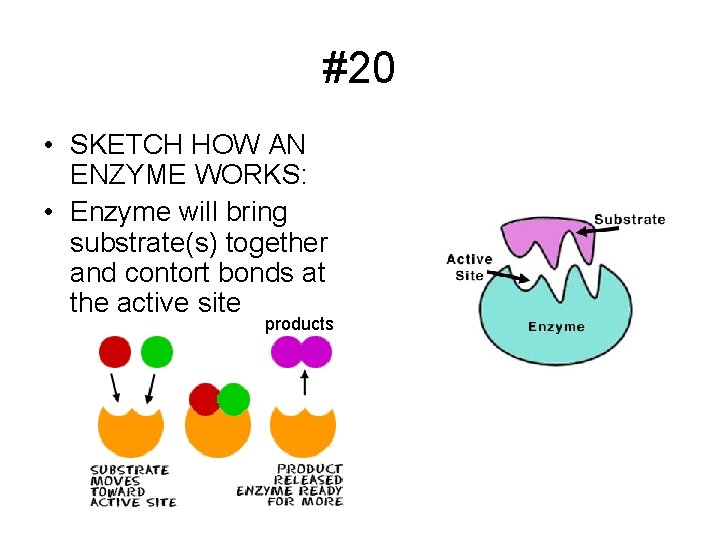
#20 • SKETCH HOW AN ENZYME WORKS: • Enzyme will bring substrate(s) together and contort bonds at the active site products
#21 • What is the purpose of the “induced fit” (hand shake) of an enzyme-substrate complex? • The enzyme slightly changes the shape of the active site to contort/break substrate bonds.
#22 • Why might too high temperatures make an enzyme not function properly? • Denature (unravel) the enzyme and change the shape of the active site.
#23 • What is the optimal temperature for most human enzymes? • 35 -40 o C • (body temp is 37 o. C) • What is the optimal p. H for most enzymes? • 6 -8
#24 • What is the difference between cofactors and coenzymes? • Cofactors are inorganic and coenzymes are organic.
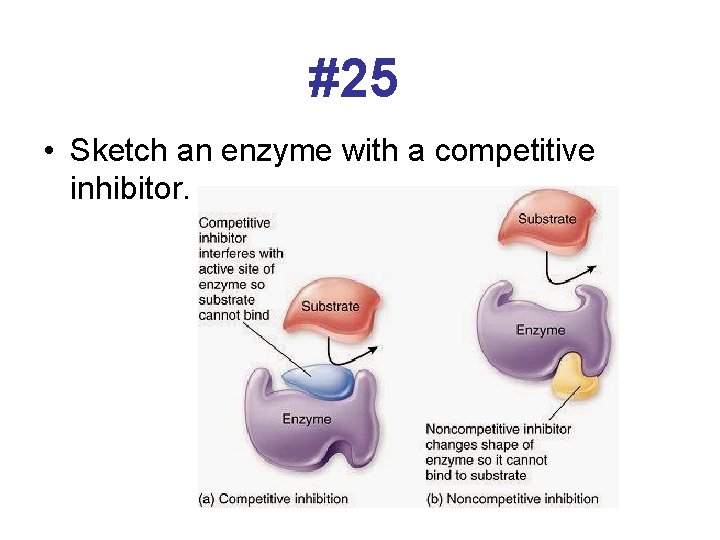
#25 • Sketch an enzyme with a competitive inhibitor.
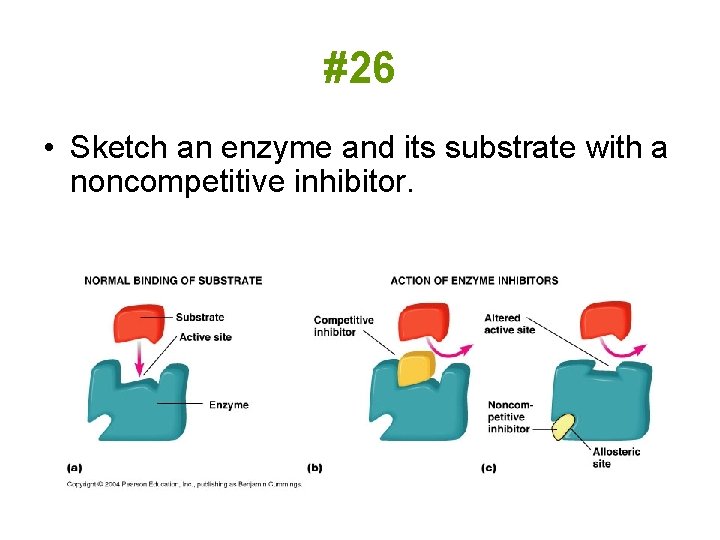
#26 • Sketch an enzyme and its substrate with a noncompetitive inhibitor.
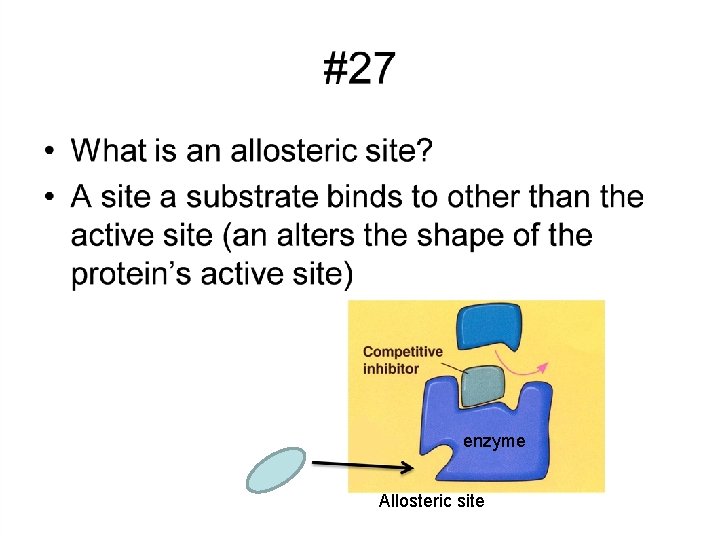
enzyme Allosteric site
#28 • What is it called • if a cell produces more product than it needs and the product as an inhibitor? Feedback inhibition (negative feedback)
#29 MATCH • Inhibits prostanglandins (sensation of pain) • Blocks bact. Cell walls • Blood pressure meds Ibuprofen Penicillin Beta blockers • Target HIV Protease inhibitors
#30
#31 • • LABEL THE PLASMA MEMBRANE: Phospho head A 1 Cholesterol E Lipid tail A 2 Protein pump G Carbohydrate chain D Glycolipid F
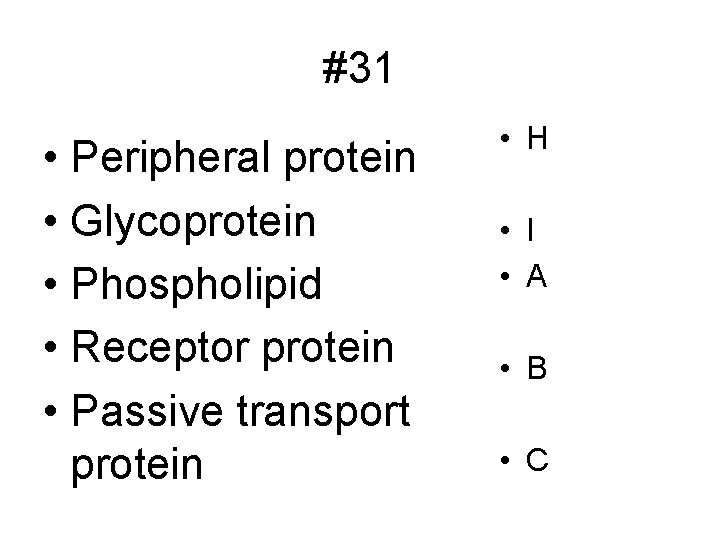
#31 • Peripheral protein • Glycoprotein • Phospholipid • Receptor protein • Passive transport protein • H • I • A • B • C
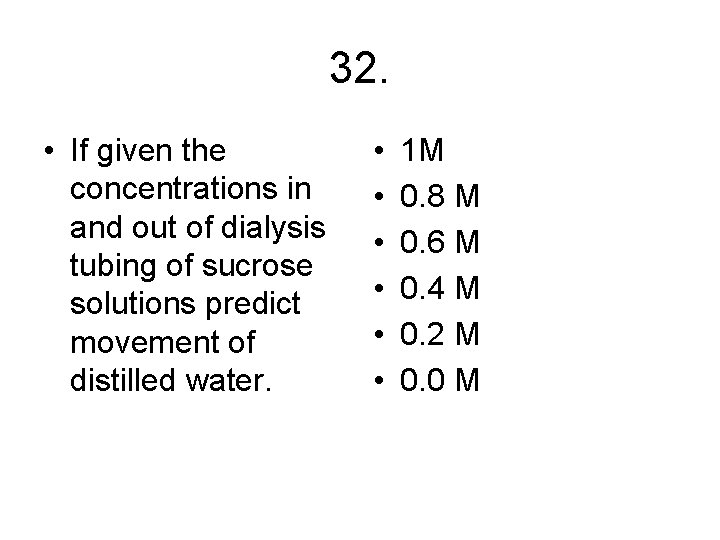
32. • If given the concentrations in and out of dialysis tubing of sucrose solutions predict movement of distilled water. • • • 1 M 0. 8 M 0. 6 M 0. 4 M 0. 2 M 0. 0 M
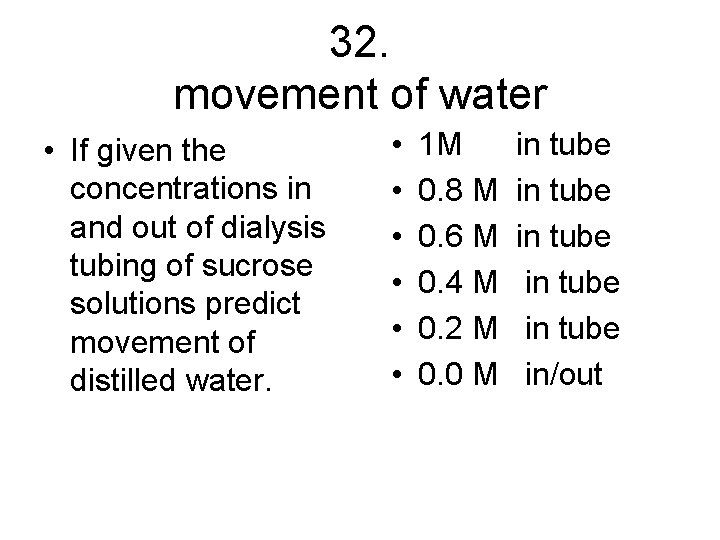
32. movement of water • If given the concentrations in and out of dialysis tubing of sucrose solutions predict movement of distilled water. • • • 1 M 0. 8 M 0. 6 M 0. 4 M 0. 2 M 0. 0 M in tube in tube in/out
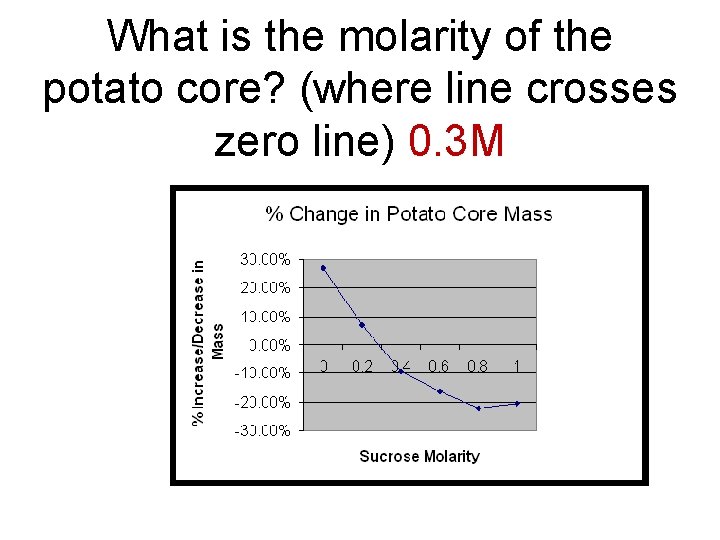
What is the molarity of the potato core? (where line crosses zero line) 0. 3 M
- Slides: 48