
Hong Kong Institute of Technology Applied Learning Course


- Slides: 41
Hong Kong Institute of Technology Applied Learning Course Business Data Analysis
About HKIT 香港科技專上書院 ◉ The Hong Kong Institute of Technology is a non-profit making institution. The education mission of HKIT is to offer a wide range of programmes to help students to develop their international perspectives and potential. ◉ HKIT is the first institution in Hong Kong to pursue accreditation of non-local learning programmes. This serves to enhance the recognition of HKIT programmes through assured quality and standardization. These programmes include: Applied Learning, Diploma Yi Jin, Associate’s Degrees and Overseas Bachelor’s and Master's Programmes.
Track Records Applied Learning Course offered by HKIT ◉ In the past years, HKIT offered the Applied Business Research course for secondary students ◉ The pass rate of ABR was over 95% ◉ Students received scholarships awarded by the Law’s Charitable Foundation with Applied Learning Session of EDB ◉ This year HKIT is offering a new Applied Learning Course Business Data Analysis
New Ap. L New course to catch up with new business development ◉ HKIT launches a new Applied Learning Course: BUSINESS DATA ANALYSIS ◉ The course has been accredited by the HKCAAVQ as a QF Level 3 programme and the course information can be found on the HK(SAR) Government website HKQF ◉ In 2018, Ap. L results will be reported on the HKDSE Certificate with the following grades: Attained: Comparable to Level 2 for Category A subjects Attained with Distinction (I) : Comparable to Level 3 or above for Category A subjects Attained with Distinction (II) : Comparable to Level 4 or above for Category A subjects Achievements in Ap. L can help students enrol to university programmes
Further Studies BUSINESS DATA ANALYSIS FURTHER STUDY & CAREER PROSPECTS
Further Studies ◉ This course equips students with the basic knowledge and skill sets in analyzing and reporting data in a business environment. The course also equips generic skills such as problem solving, communication and writing for students to pursue further studies. ◉ The course is recognized by a number of universities, including The Hong Kong Polytechnic University, Hong Kong Baptist University, The Education University of Hong Kong and etc.
Further Studies Updated programmes that recognizes our Ap. L BDA • • • BA (Honours) in Bilingual Interdisciplinary Chinese Studies BSc (Hons) Geomatics For further information please refer to the following link https: //www. polyu. edu. hk/
Further Studies Updated programmes that recognizes our Ap. L BDA • BSoc. Sc (Hons) in China Studies (Economics) • For further information please refer to the following link http: //chinast. hkbu. edu. hk/chi/admission. php
Further Studies Updated programmes that recognizes our Ap. L BDA • • • BEd (Hons) (Primary - Mathematics) BEd (Hons) (Secondary in Information and Communication Technology) • For further information please refer to the following link www. eduhk. hk/main/tc/
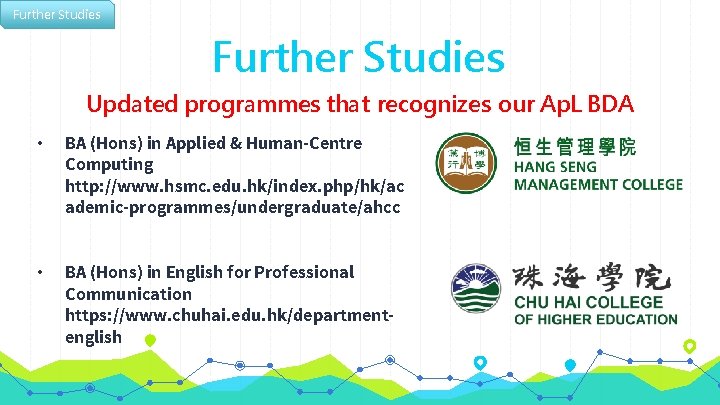
Further Studies Updated programmes that recognizes our Ap. L BDA • BA (Hons) in Applied & Human-Centre Computing http: //www. hsmc. edu. hk/index. php/hk/ac ademic-programmes/undergraduate/ahcc • BA (Hons) in English for Professional Communication https: //www. chuhai. edu. hk/departmentenglish
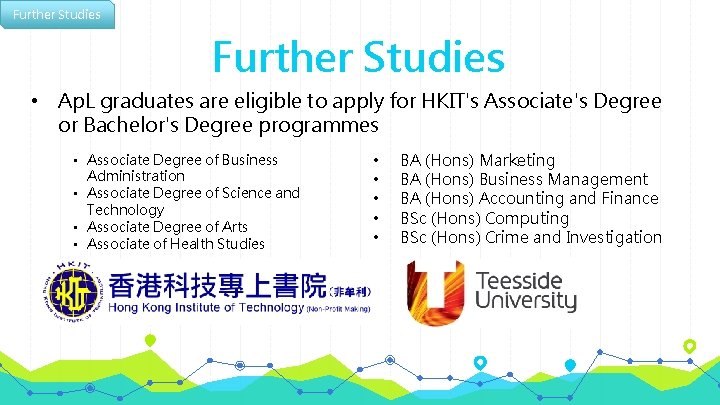
Further Studies • Ap. L graduates are eligible to apply for HKIT's Associate's Degree or Bachelor's Degree programmes • Associate Degree of Business Administration • Associate Degree of Science and Technology • Associate Degree of Arts • Associate of Health Studies • • • BA (Hons) Marketing BA (Hons) Business Management BA (Hons) Accounting and Finance BSc (Hons) Computing BSc (Hons) Crime and Investigation
Careers Career Prospects ◉ This course gives students basic skills of business data analysis and reporting and also enhances their workplace communicatio. ◉ Data Entry Clerk, Business Management Related Posts (e. g. Business Analyst, Risk Management, Business Development Executive/Analyst, Business Intelligence, Project Analyst, etc)
Business Data Analysis BUSINESS DATA ANALYSIS COURSE CONTENTS
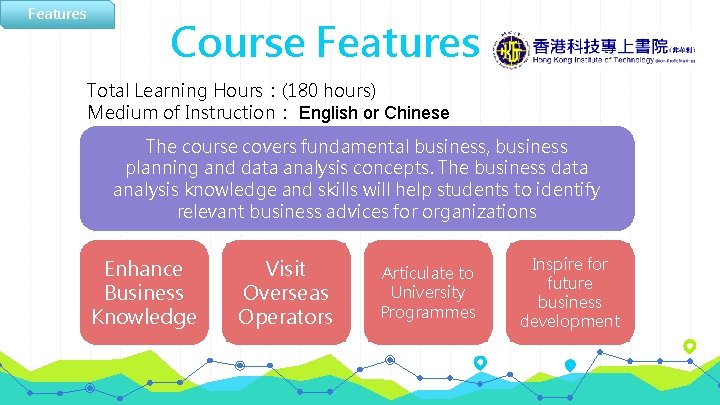
Features Course Features Total Learning Hours:(180 hours) Medium of Instruction: English or Chinese The course covers fundamental business, business planning and data analysis concepts. The business data analysis knowledge and skills will help students to identify relevant business advices for organizations Enhance Business Knowledge Visit Overseas Operators Articulate to University Programmes Inspire for future business development
Features Teaching and Learning through ◉ Research report and presentation ◉ Workshops ◉ Case studies ◉ Role play Teaching through ◉ Group Discussions ◉ Visiting operators ◉ Lectures ◉ Seminars
Features Visit Overseas Business operators ◉ To enhance the practical element in this course, we will especially arrange students to visit business operators in Japan ◉ Japan is located in East Asia. Business is well developed. Japanese Business has similarities to Hong Kong. It also has its own characteristics ◉ The course offers visit to Japanese business operators. The visit will allow students to compare the business of Hong Kong and Japan and to identify their similarities and differences in business. The visit will also increase students’ international business knowledge ◉ The Ap. L course fee is fully subsidized by the Education Bureau. In other words, students are not required to pay for Japan Visit Fees including (air ticket and accommodation)
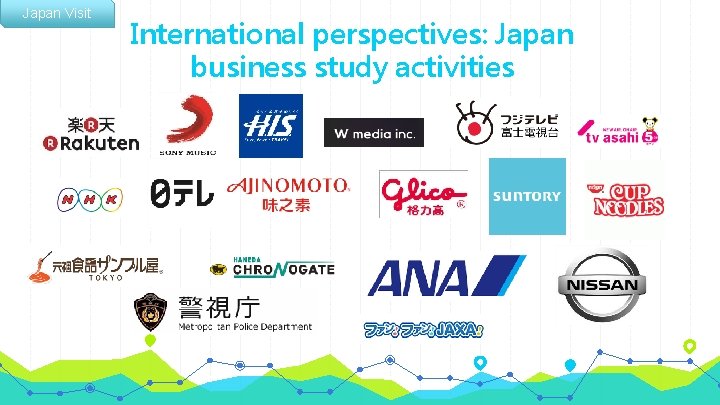
Japan Visit International perspectives: Japan business study activities
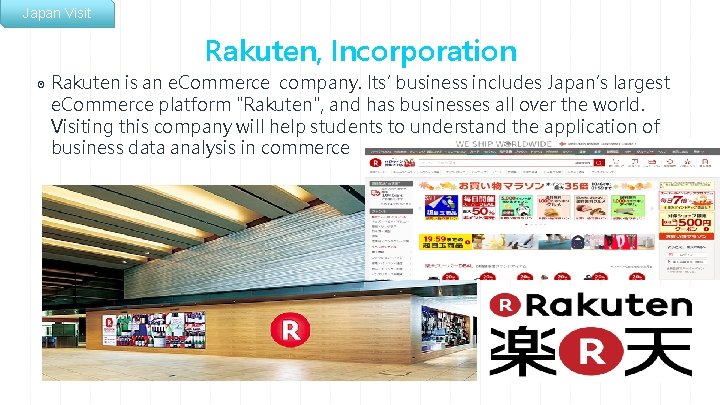
Japan Visit Rakuten, Incorporation ◉ Rakuten is an e. Commerce company. Its’ business includes Japan’s largest e. Commerce platform "Rakuten", and has businesses all over the world. Visiting this company will help students to understand the application of business data analysis in commerce
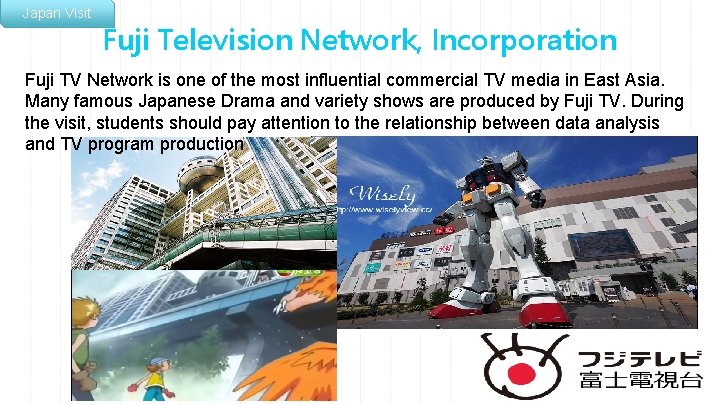
Japan Visit Fuji Television Network, Incorporation Fuji TV Network is one of the most influential commercial TV media in East Asia. Many famous Japanese Drama and variety shows are produced by Fuji TV. During the visit, students should pay attention to the relationship between data analysis and TV program production
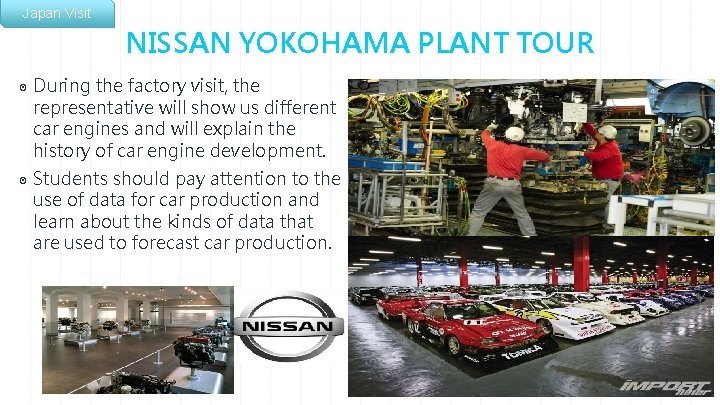
Japan Visit NISSAN YOKOHAMA PLANT TOUR ◉ During the factory visit, the representative will show us different car engines and will explain the history of car engine development. ◉ Students should pay attention to the use of data for car production and learn about the kinds of data that are used to forecast car production.
Assessment ◉ Oral Presentation ◉ Written report ◉ Case study
Class arrangement Class Arrangements Mode 1: HKIT (Sham Shui Po Campus) Time ◉ Saturday: 9: 30 am - 12: 30 pm ◉ (Note: Lessons will also be scheduled during summer holidays. ) ◉ Hong Kong Institute of Technology (SSP Campus) ◉ 213 Nam Cheong Street, Sham Shui Po, Kowloon Mode 2 ◉ Lessons will mainly be held at students’ own schools. Details will be confirmed between course deliverers and schools concerned.
Case Discussion Business Data Analysis Case Study Knowing Japan’s Economic Data for Business
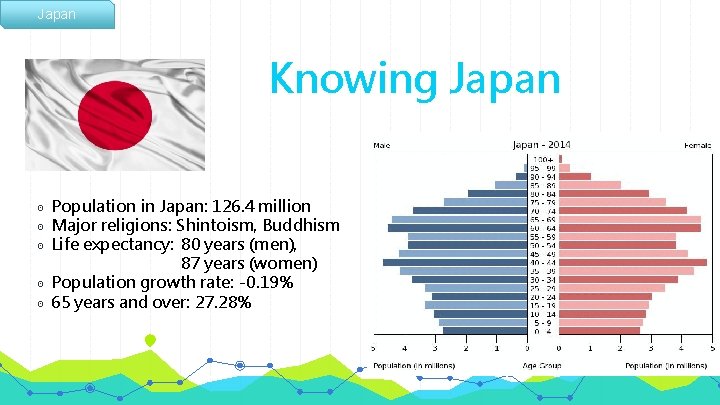
Japan Knowing Japan ◉ Population in Japan: 126. 4 million ◉ Major religions: Shintoism, Buddhism ◉ Life expectancy: 80 years (men), 87 years (women) ◉ Population growth rate: -0. 19% ◉ 65 years and over: 27. 28%
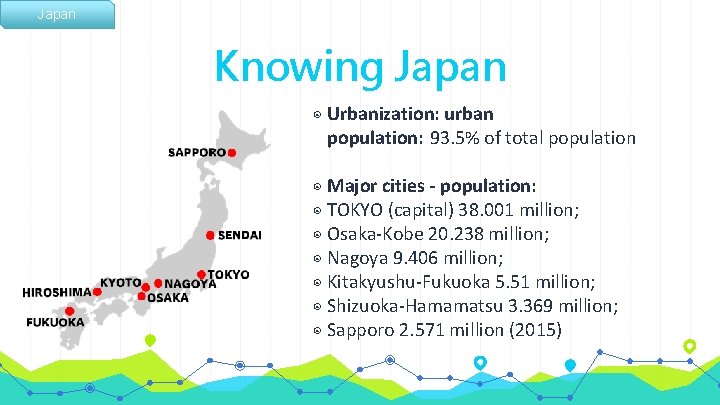
Japan Knowing Japan ◉ Urbanization: urban population: 93. 5% of total population ◉ Major cities - population: ◉ TOKYO (capital) 38. 001 million; ◉ Osaka-Kobe 20. 238 million; ◉ Nagoya 9. 406 million; ◉ Kitakyushu-Fukuoka 5. 51 million; ◉ Shizuoka-Hamamatsu 3. 369 million; ◉ Sapporo 2. 571 million (2015)
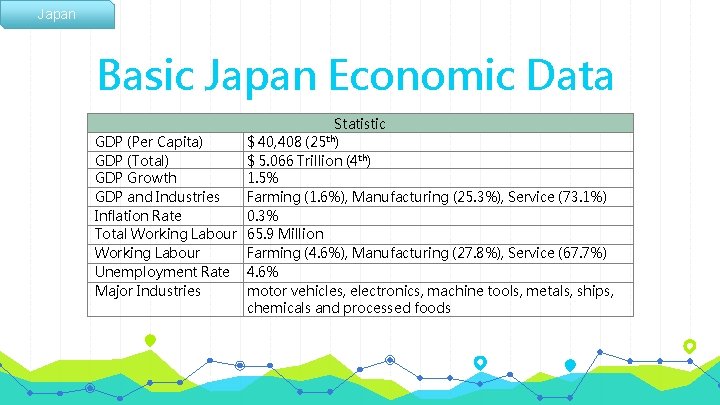
Japan Basic Japan Economic Data GDP (Per Capita) GDP (Total) GDP Growth GDP and Industries Inflation Rate Total Working Labour Unemployment Rate Major Industries Statistic (25 th) $ 40, 408 $ 5. 066 Trillion (4 th) 1. 5% Farming (1. 6%), Manufacturing (25. 3%), Service (73. 1%) 0. 3% 65. 9 Million Farming (4. 6%), Manufacturing (27. 8%), Service (67. 7%) 4. 6% motor vehicles, electronics, machine tools, metals, ships, chemicals and processed foods
互動體驗 Business Data Analysis Experiencing Data Analysis Exercise
Experiencing Data Analysis Exercise ◉ divide into groups of 6, introduce yourselves to all the group members (15 mins) ◉ 以小組形式自我介紹,互相熟悉 (15 mins)
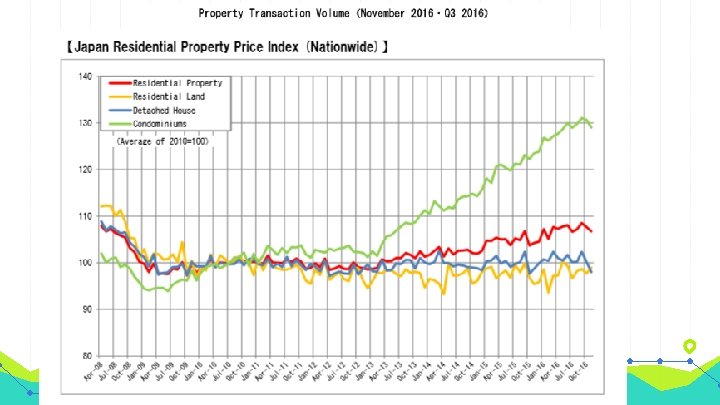
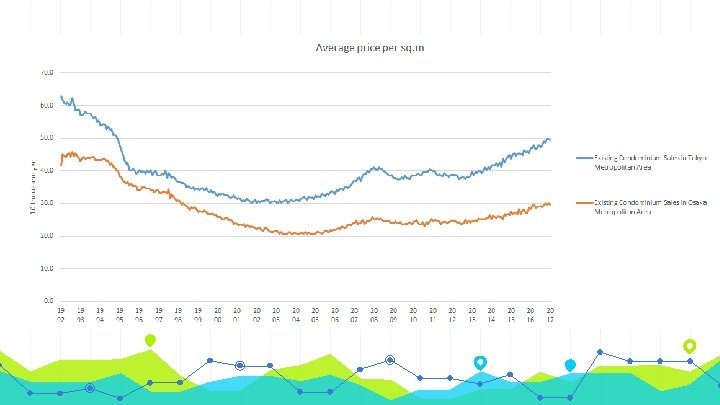
Experiencing Data Analysis Exercise – Question 1 ◉ Please describe the trends of the four types of property housing and the trend of average property price index? ◉ 根據 作紙第一頁,你可否判斷日本這 4種住宅價格指數的 趨勢(上升或者下跌)
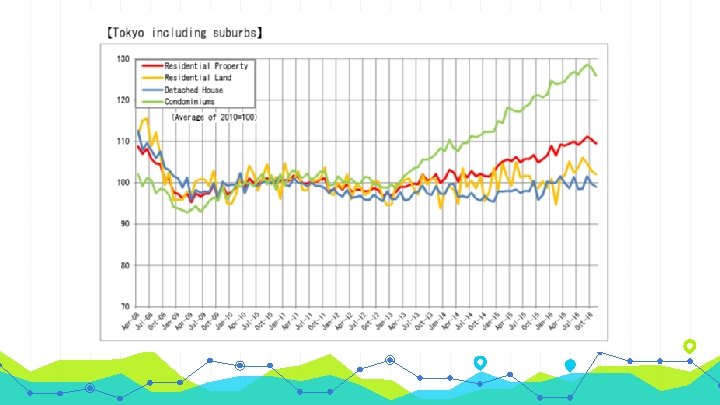
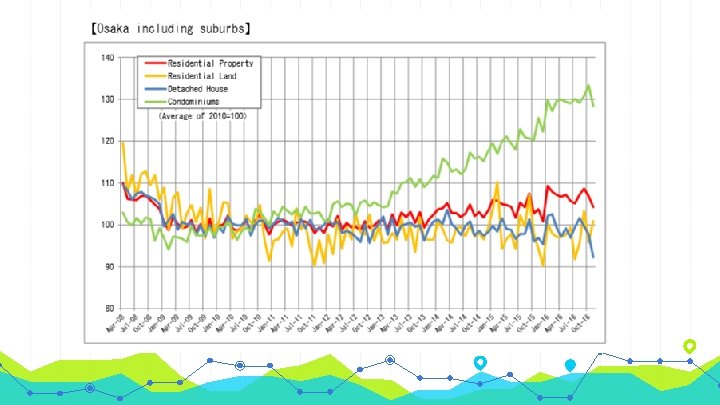
Experiencing Data Analysis Exercise – Question 2 ◉ Compare the similarities and differences of the properties pricing between Tokyo and Osaka? ◉ 比較下東京及大阪兩個地方價格指數的相同與不同
Experiencing Data Analysis Exercise – Question 3 ◉ If you are an investor, you will choose to invest in Tokyo or Osaka? Why? ◉ 你作為一個投資者,會選擇投資日本東京或大阪中的哪一個, 為什麼?
Experiencing Data Analysis Exercise – Question 4 ◉ Please identify the per sq. m prices for residential housing in Tokyo and Osaka for the Years 2003 and 2013? ◉ 試論述東京與大阪於 2003及2013年的房價(以每平方米計算)
Experiencing Data Analysis Exercise – Question 5 ◉ Please calculate the prices of residential housing in Tokyo and Osaka of the Years 2003 and 2013. The size of house is 500 sq. f (500 square feet = 46 sq. m) ◉ 請計算出東京與大阪於 2003及2013年面積約500平方呎(約 46平方米)的房價
Experiencing Data Analysis Exercise – Question 6 ◉ Please calculate the changes of residential housing prices in Tokyo and Osaka between the Year of 2003 and 2013 for a 500 square feet house. ◉ 請計算出東京與大阪於 2003及2013年面積約500平方呎(約 46平方米)房價的轉變
Experiencing Data Analysis Exercise – Question 7 ◉ Please explain the increase in the demand for apartment in Tokyo and Osaka since 2013? ◉ 請解釋為何由 2013年起東京及大阪的多層住宅需求會大增 ?
Q&A
Thank you