
HONEYBEES A honey bee is a flying insect
HONEYBEES A honey bee is a flying insect within the genus Apis of the bee clade, all native to Eurasia but spread to four other continents by human beings.
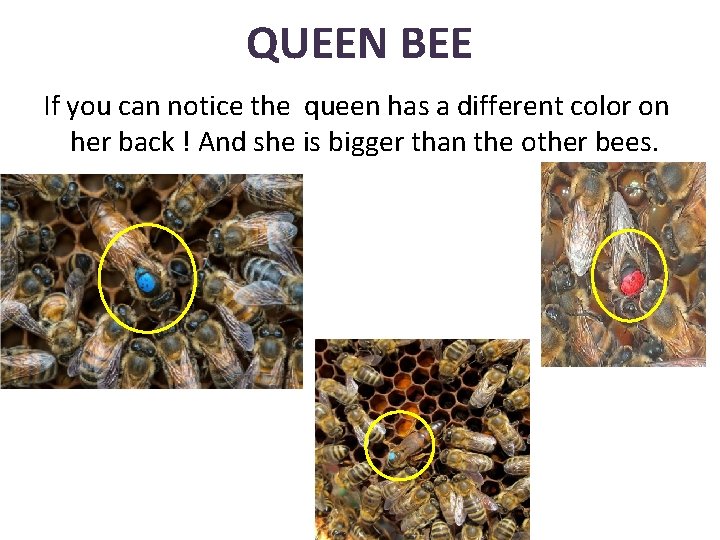
QUEEN BEE If you can notice the queen has a different color on her back ! And she is bigger than the other bees.
LIFE CYCLE OF BEES
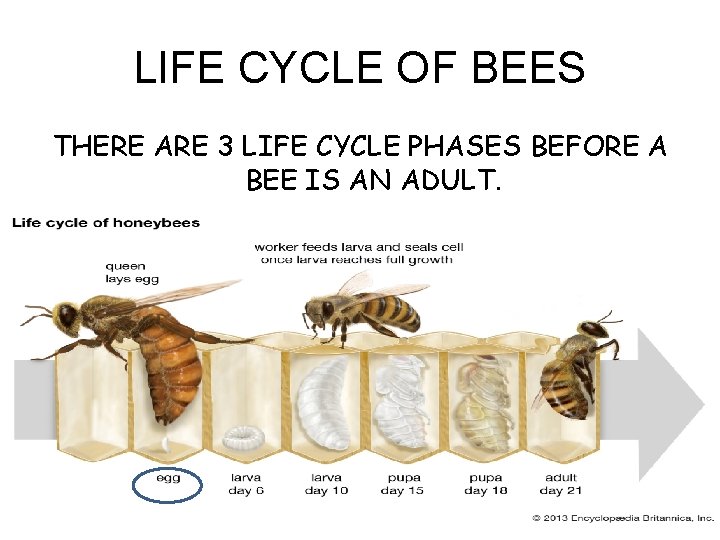
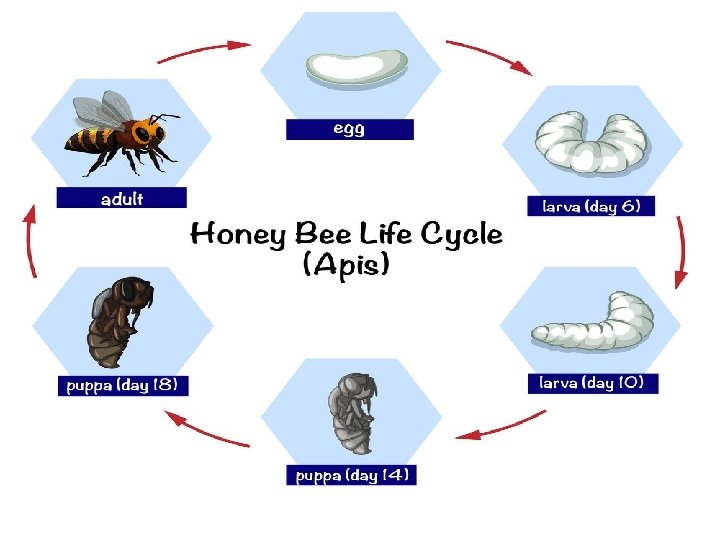
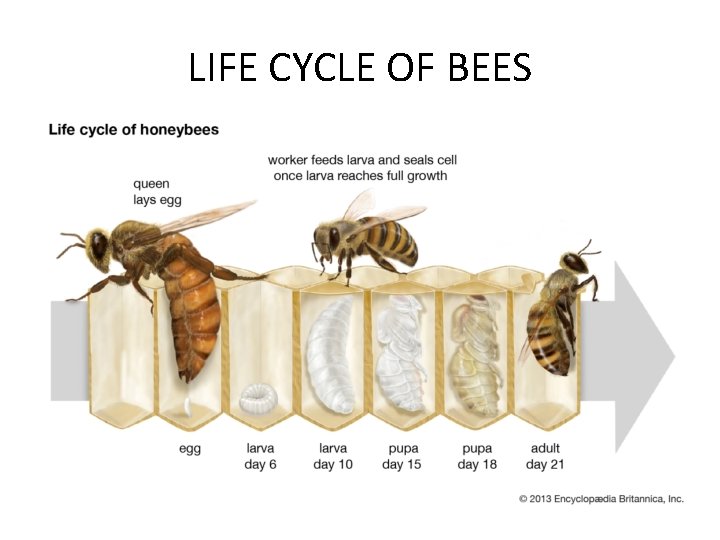
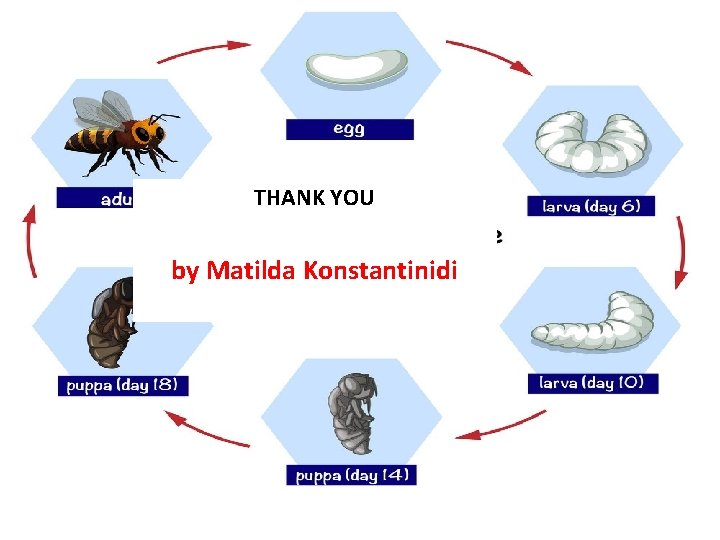
LIFE CYCLE OF BEES THERE ARE 3 LIFE CYCLE PHASES BEFORE A BEE IS AN ADULT.
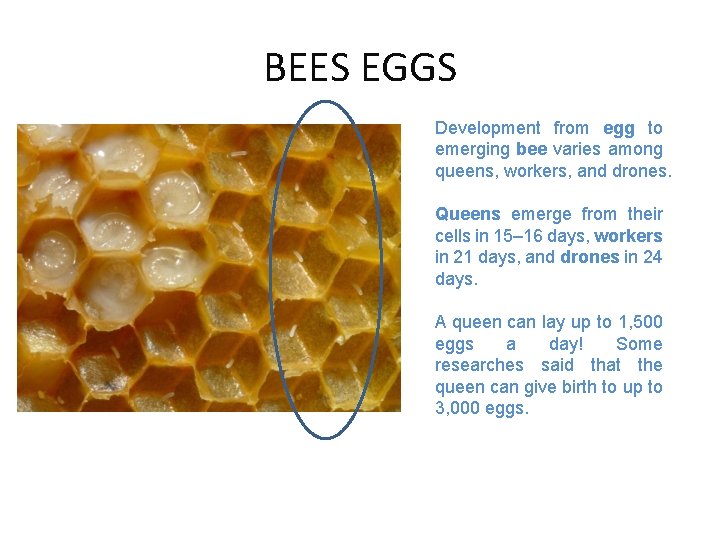
BEES EGGS Development from egg to emerging bee varies among queens, workers, and drones. Queens emerge from their cells in 15– 16 days, workers in 21 days, and drones in 24 days. A queen can lay up to 1, 500 eggs a day! Some researches said that the queen can give birth to up to 3, 000 eggs.
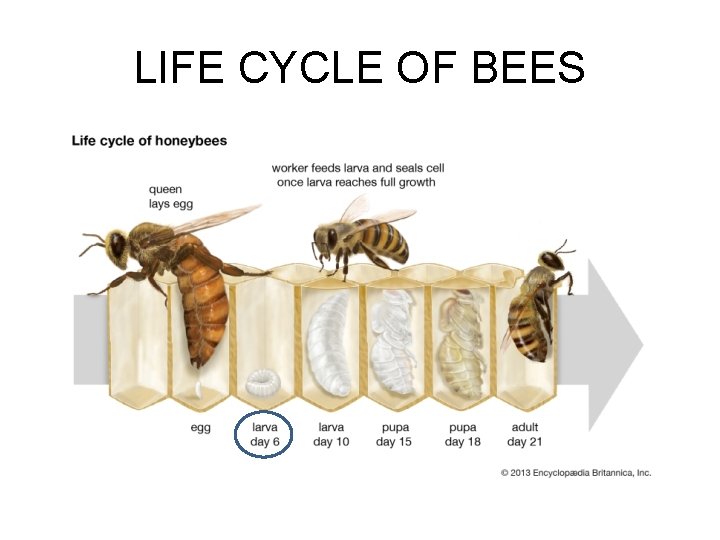
LIFE CYCLE OF BEES
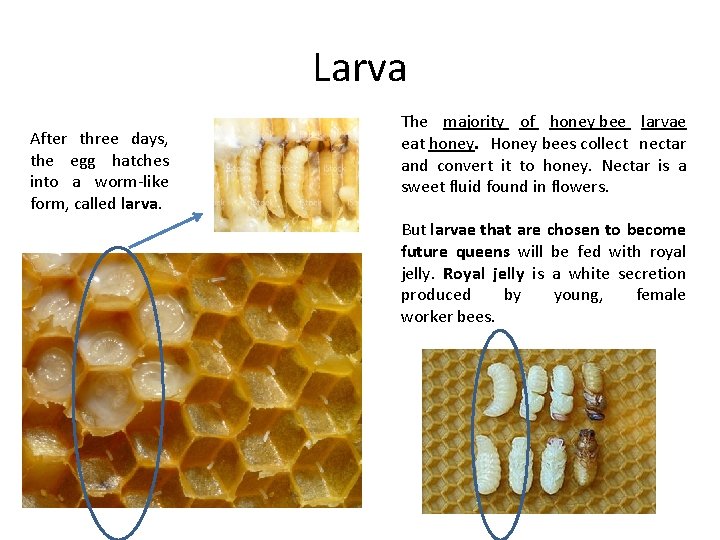
Larva After three days, the egg hatches into a worm-like form, called larva. The majority of honey bee larvae eat honey. Honey bees collect nectar and convert it to honey. Nectar is a sweet fluid found in flowers. But larvae that are chosen to become future queens will be fed with royal jelly. Royal jelly is a white secretion produced by young, female worker bees.
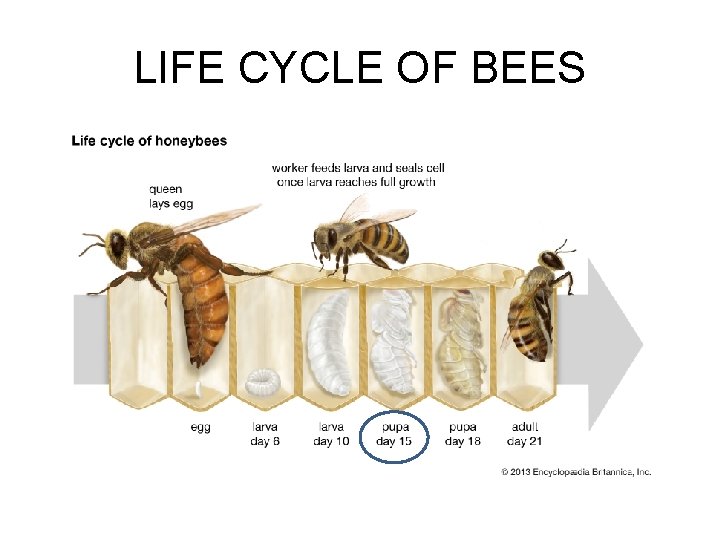
LIFE CYCLE OF BEES
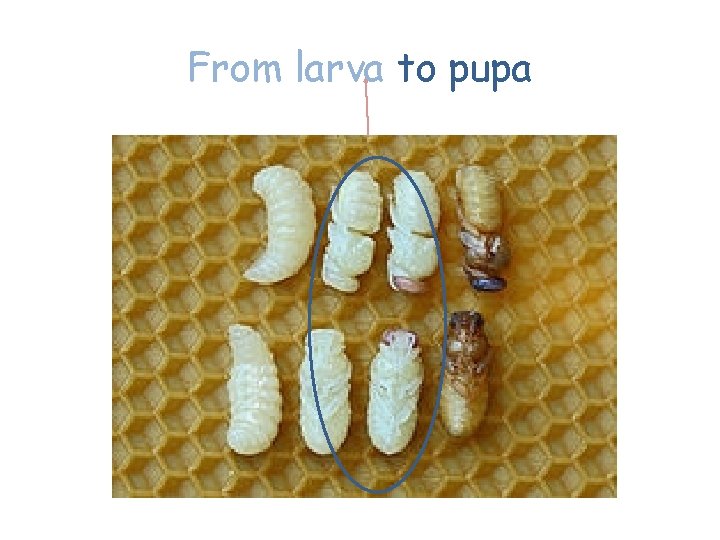
From larva to pupa
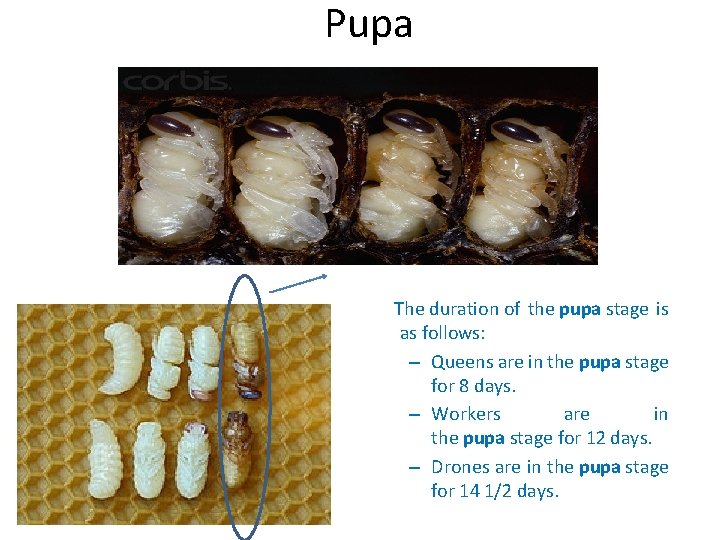
Pupa The duration of the pupa stage is as follows: – Queens are in the pupa stage for 8 days. – Workers are in the pupa stage for 12 days. – Drones are in the pupa stage for 14 1/2 days.
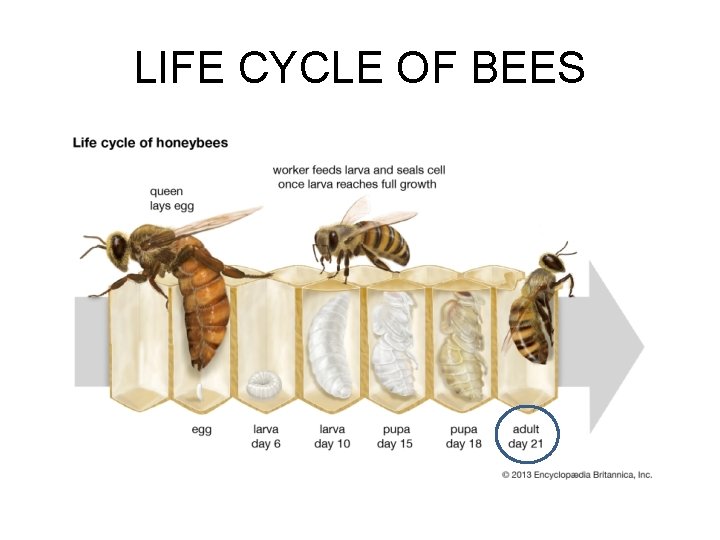
LIFE CYCLE OF BEES
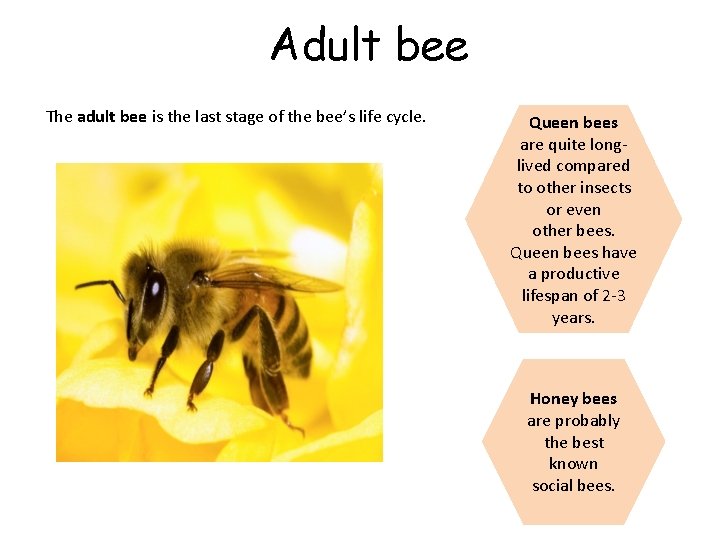
Adult bee The adult bee is the last stage of the bee’s life cycle. Queen bees are quite longlived compared to other insects or even other bees. Queen bees have a productive lifespan of 2 -3 years. Honey bees are probably the best known social bees.
THANK YOU by Matilda Konstantinidi
- Slides: 14