
HONEY BEE SWARMING Identifying conditions Prevention Techniques Reasons
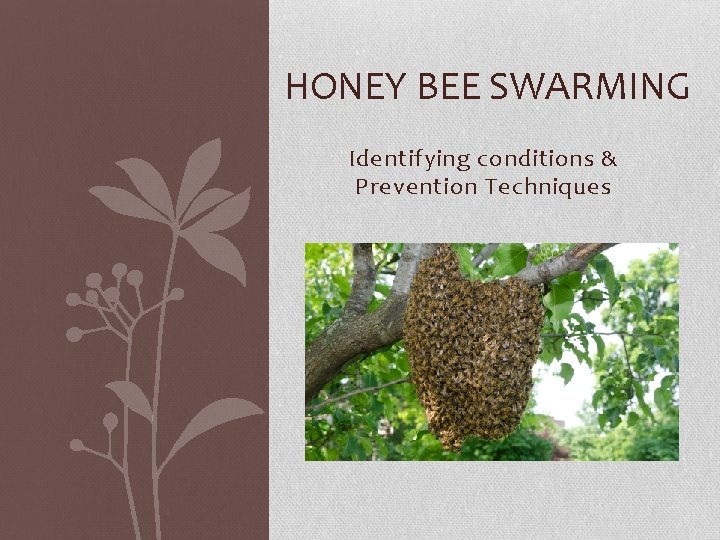
HONEY BEE SWARMING Identifying conditions & Prevention Techniques

Reasons for Swarming • Spring: • • • Mechanism for colony procreation and continuing species Restrictive ventilation Overcrowding Honey bound Poor health of queen • Fall (false swarm/absconding) • Disease • Robbing • Pest infestation
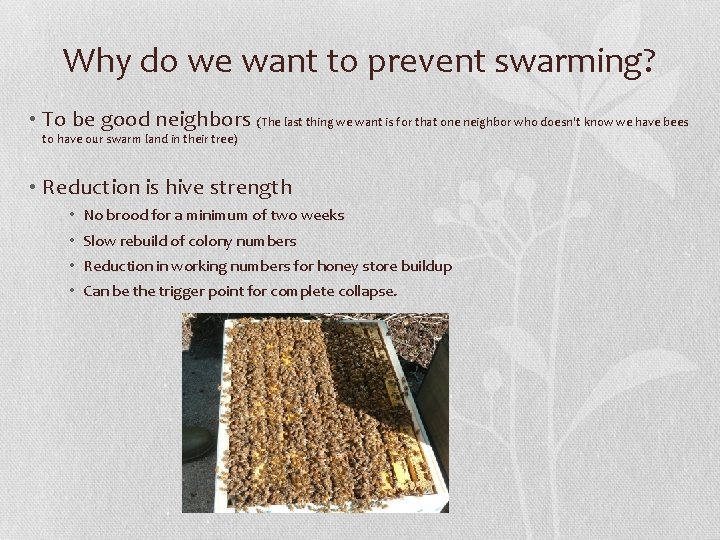
Why do we want to prevent swarming? • To be good neighbors (The last thing we want is for that one neighbor who doesn't know we have bees to have our swarm land in their tree) • Reduction is hive strength • No brood for a minimum of two weeks • Slow rebuild of colony numbers • Reduction in working numbers for honey store buildup • Can be the trigger point for complete collapse.

What triggers swarming preparations? • Some colonies will prepare as soon as the spring nectar flow starts • Adequate bee population in the hive • Abundant food store • Low queen pheromone production • Some colonies are naturally very “swarmy” (don’t keep them around)
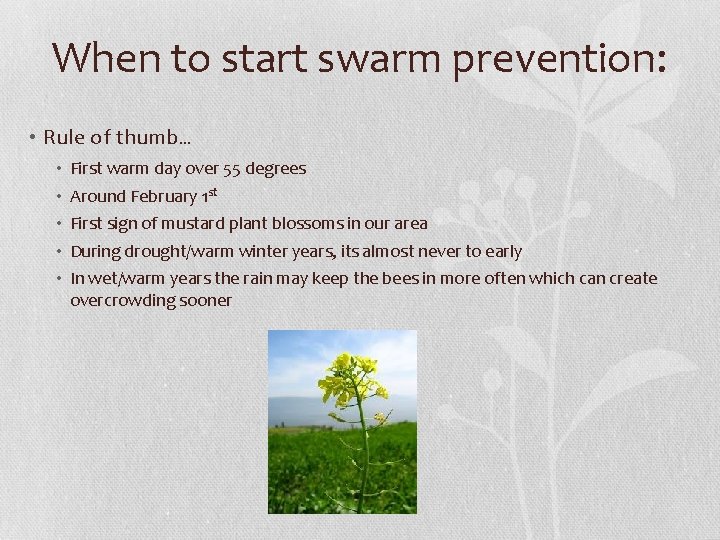
When to start swarm prevention: • Rule of thumb… • • • First warm day over 55 degrees Around February 1 st First sign of mustard plant blossoms in our area During drought/warm winter years, its almost never to early In wet/warm years the rain may keep the bees in more often which can create overcrowding sooner

What to look for during inspection: • Queen cells at bottom of the frames • Workers backfilling cells with nectar • Large number of capped brood cells • Inspect queen for weight loss, restlessness and has stopped laying
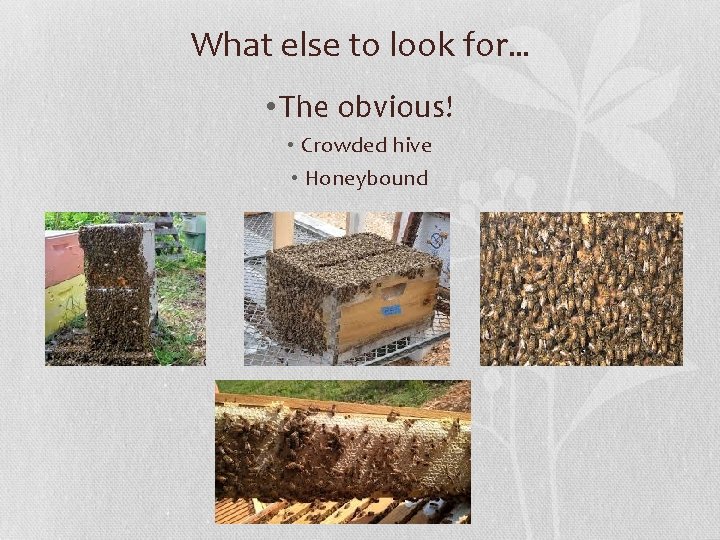
What else to look for… • The obvious! • Crowded hive • Honeybound

Swarm Control Methods 1. Give them ROOM!!! Add suppers February 1 st!!!! 2. Box Flip 3. Slatted Rack 1. Add super on bottom (crystallized honey) and top super 2. Install swarm screen (entrance grill) • Cut queen excluder
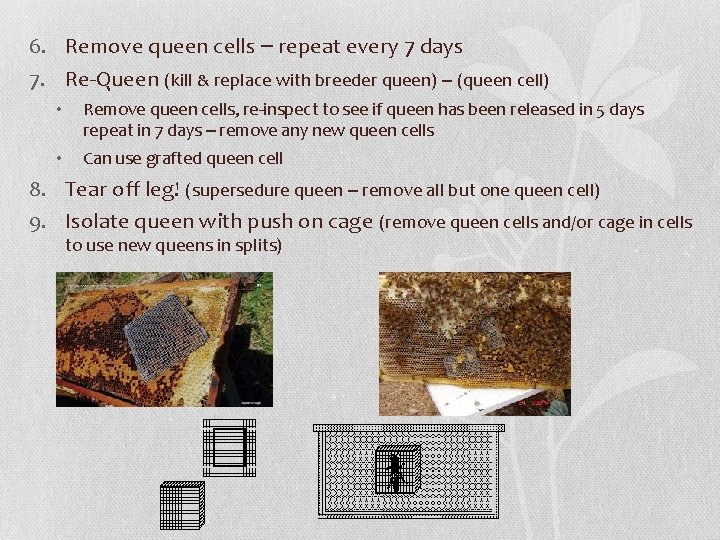
6. Remove queen cells – repeat every 7 days 7. Re-Queen (kill & replace with breeder queen) – (queen cell) • Remove queen cells, re-inspect to see if queen has been released in 5 days repeat in 7 days – remove any new queen cells • Can use grafted queen cell 8. Tear off leg! (supersedure queen – remove all but one queen cell) 9. Isolate queen with push on cage (remove queen cells and/or cage in cells to use new queens in splits)

10. Split! • Cincinnati Split (aka walkaway) • Multi-Nuc 11. Checker boarding 12. Demaree (isolate queen from brood) Diagram of the Demaree method (shaded boxes and frames indicate congested boxes and frames covered with bees: white boxes and frames indicate empty boxes and empty frames or foundation. 13. Ventilation!! 14. Open brood nest & extract ASAP (drawn comb is beekeepers gold)
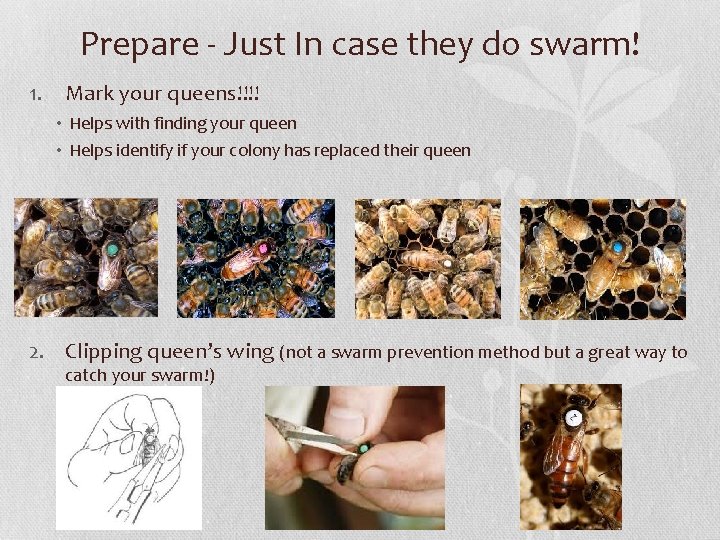
Prepare - Just In case they do swarm! 1. Mark your queens!!!! • Helps with finding your queen • Helps identify if your colony has replaced their queen 2. Clipping queen’s wing (not a swarm prevention method but a great way to catch your swarm!)
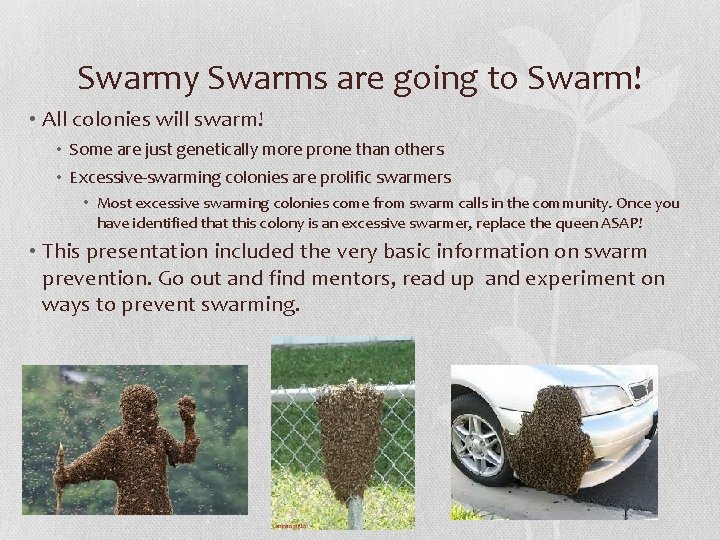
Swarmy Swarms are going to Swarm! • All colonies will swarm! • Some are just genetically more prone than others • Excessive-swarming colonies are prolific swarmers • Most excessive swarming colonies come from swarm calls in the community. Once you have identified that this colony is an excessive swarmer, replace the queen ASAP! • This presentation included the very basic information on swarm prevention. Go out and find mentors, read up and experiment on ways to prevent swarming.

Bee Diligent and Have Fun!
- Slides: 13