
Homosexualities Edward Burra Izzy Orts 1955 Bar life
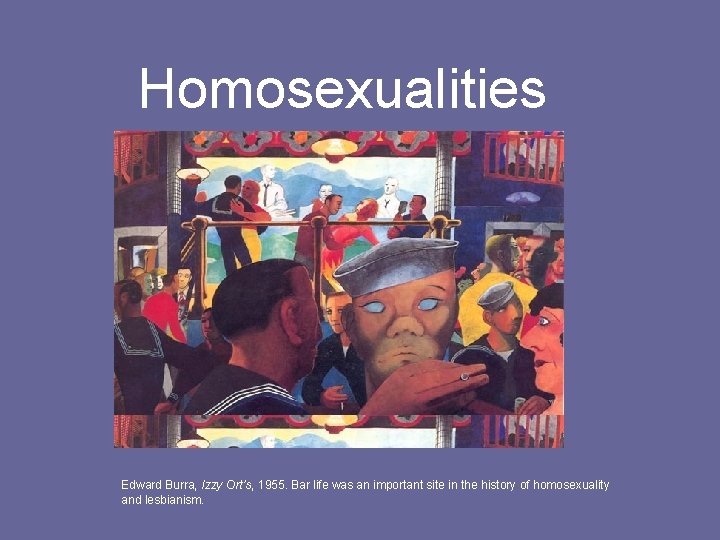
Homosexualities Edward Burra, Izzy Ort’s, 1955. Bar life was an important site in the history of homosexuality and lesbianism.
Plan Male homosexuality 1) Halperin: Effeminacy; Sodomy; Friendship; Inversion; Homosexuality 2) Chauncey’s Gay New York 3) Houlbrook’s Queer London Lesbianism 1) Introduction 2) Crossdressers; Inversion; Friendship; Lesbianism 3) George Henry’s Sex Variants
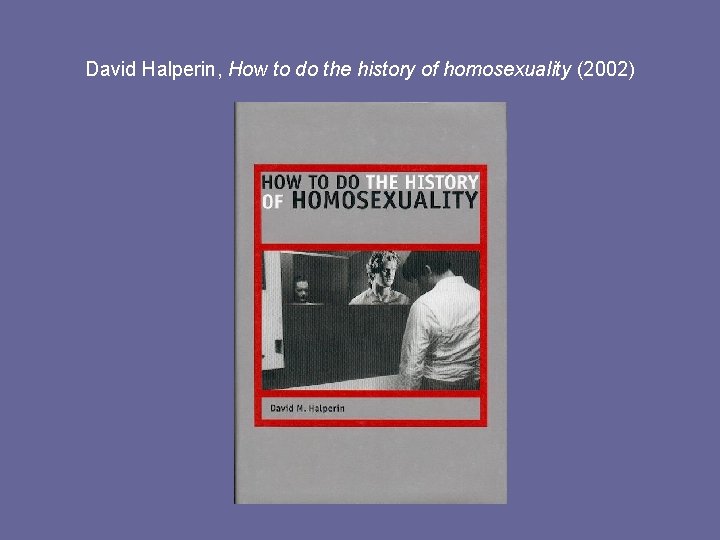
David Halperin, How to do the history of homosexuality (2002)
Historically, the heterosexual and homosexual interact and overlap more than we might think.
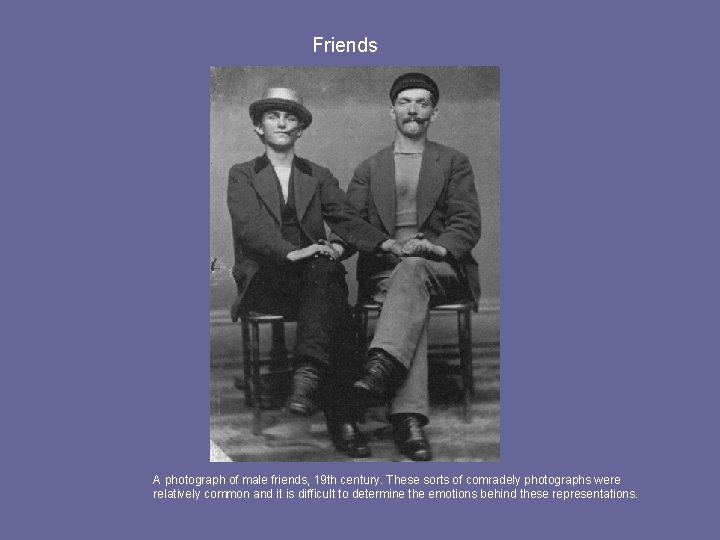
Friends A photograph of male friends, 19 th century. These sorts of comradely photographs were relatively common and it is difficult to determine the emotions behind these representations.
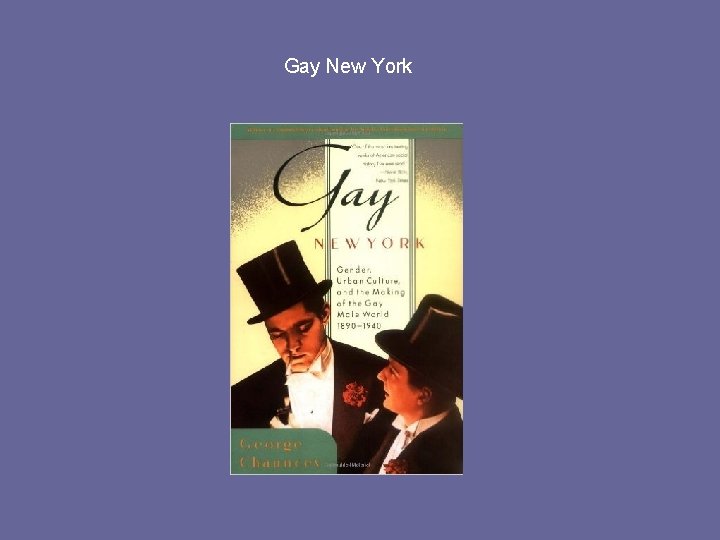
Gay New York
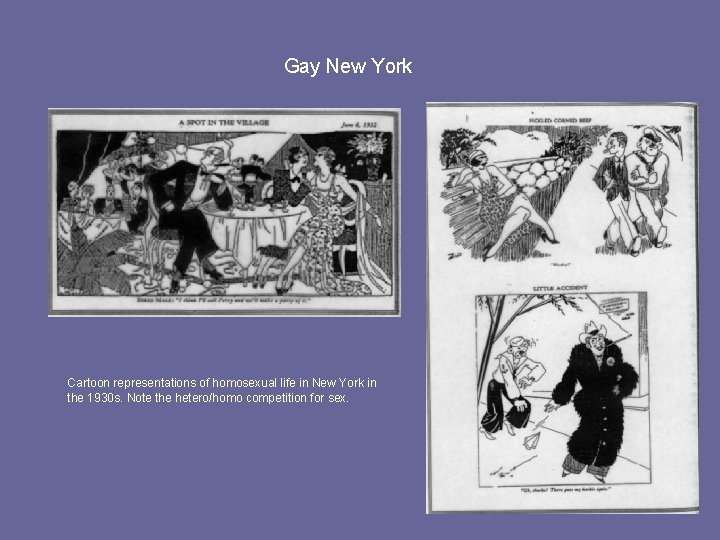
Gay New York Cartoon representations of homosexual life in New York in the 1930 s. Note the hetero/homo competition for sex.
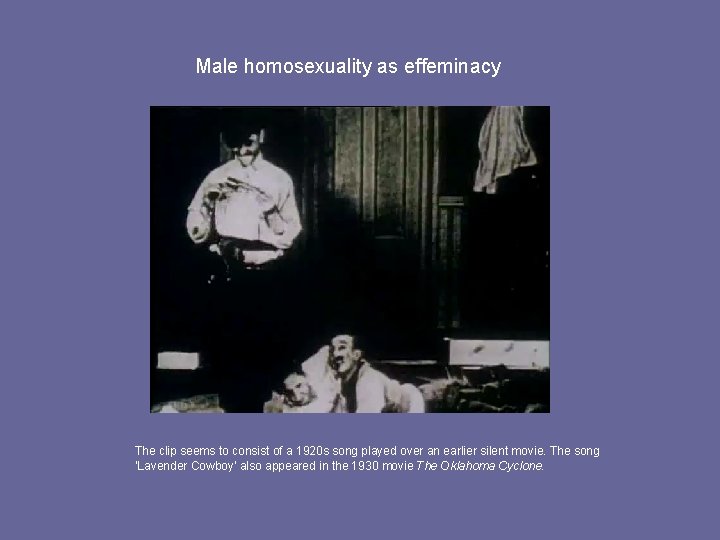
Male homosexuality as effeminacy The clip seems to consist of a 1920 s song played over an earlier silent movie. The song ‘Lavender Cowboy’ also appeared in the 1930 movie The Oklahoma Cyclone.
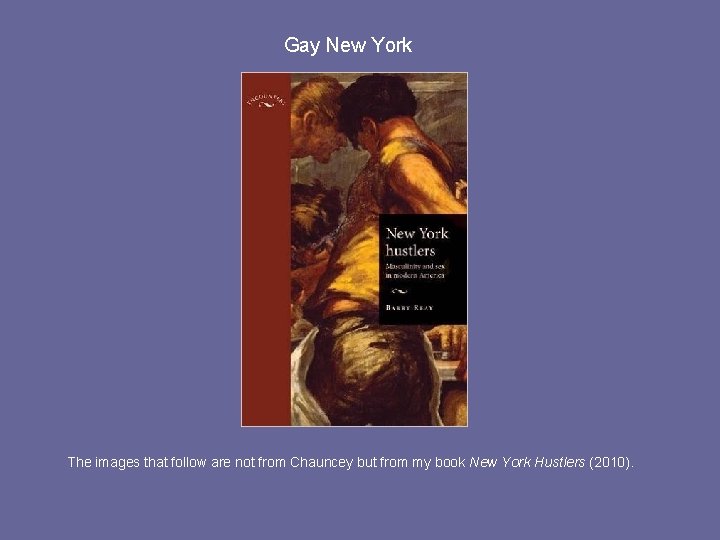
Gay New York The images that follow are not from Chauncey but from my book New York Hustlers (2010).
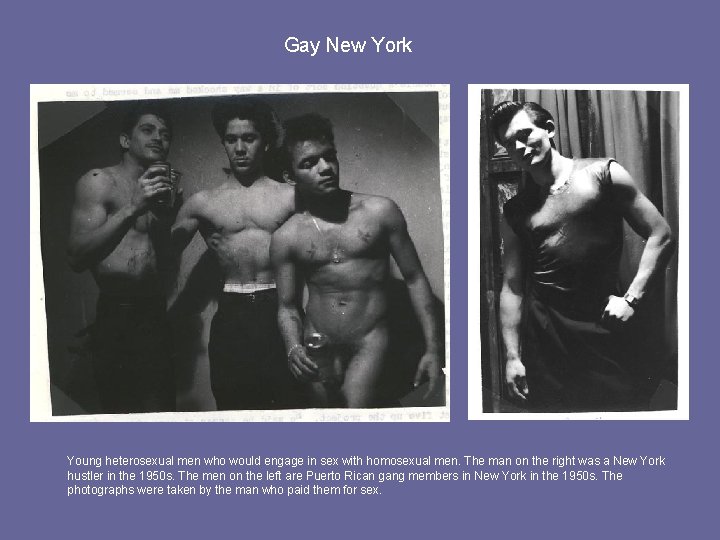
Gay New York Young heterosexual men who would engage in sex with homosexual men. The man on the right was a New York hustler in the 1950 s. The men on the left are Puerto Rican gang members in New York in the 1950 s. The photographs were taken by the man who paid them for sex.
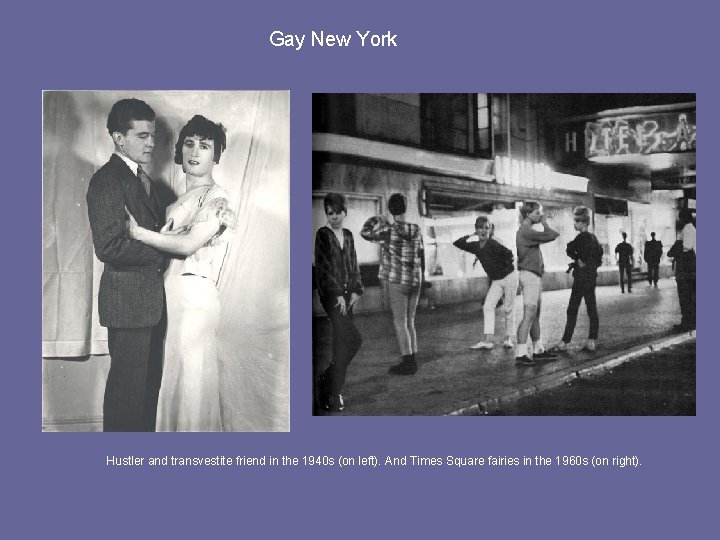
Gay New York Hustler and transvestite friend in the 1940 s (on left). And Times Square fairies in the 1960 s (on right).
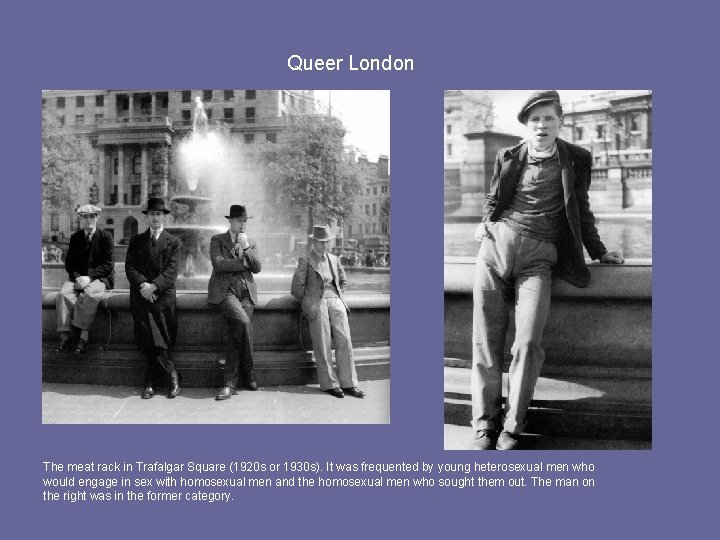
Queer London The meat rack in Trafalgar Square (1920 s or 1930 s). It was frequented by young heterosexual men who would engage in sex with homosexual men and the homosexual men who sought them out. The man on the right was in the former category.
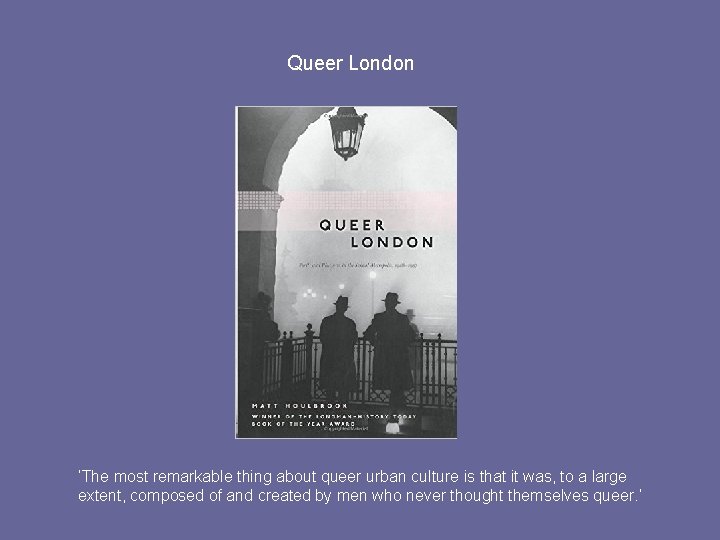
Queer London ‘The most remarkable thing about queer urban culture is that it was, to a large extent, composed of and created by men who never thought themselves queer. ’

Martha Vicinus has argued that even though ‘they did not use the word lesbian, women self-consciously sought to understand their feeling, their actions, and their relationships apart from men. A few women fully acknowledged and acted upon the sexual basis of their deep love for another woman. Others controlled their erotic desire in order to win a higher love. ’ Her theme is of the ‘varieties of erotic love, ranging from the openly sexual, to the delicately sensual’.
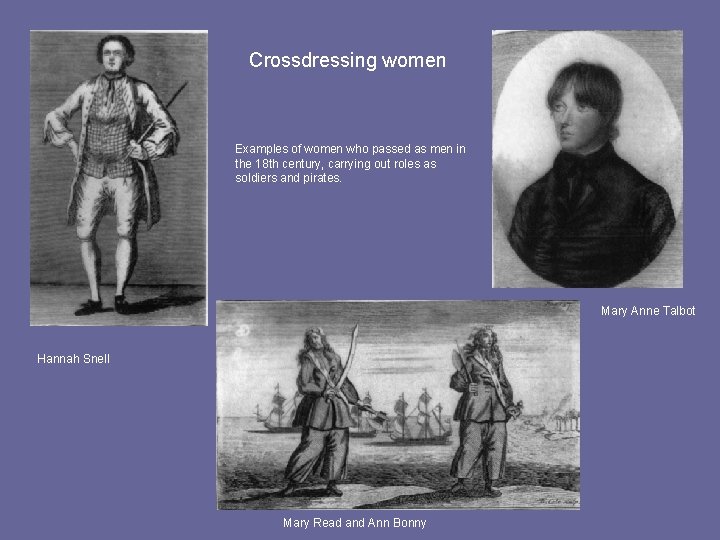
Crossdressing women Examples of women who passed as men in the 18 th century, carrying out roles as soldiers and pirates. Mary Anne Talbot Hannah Snell Mary Read and Ann Bonny
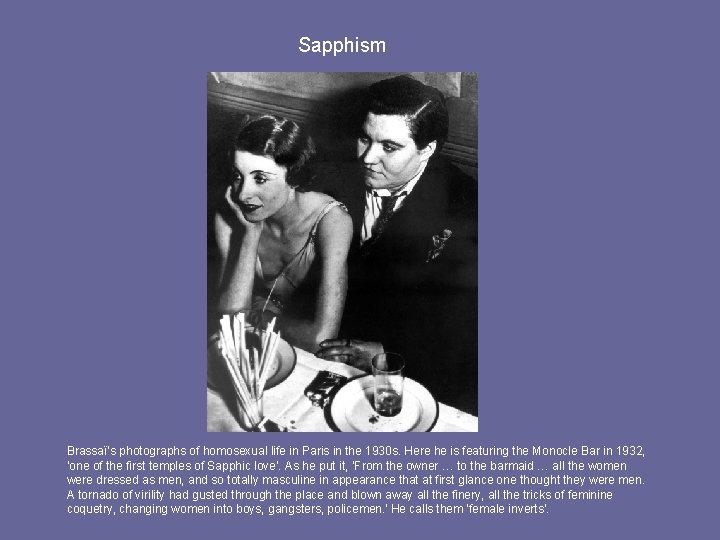
Sapphism Brassaï’s photographs of homosexual life in Paris in the 1930 s. Here he is featuring the Monocle Bar in 1932, ‘one of the first temples of Sapphic love’. As he put it, ‘From the owner … to the barmaid … all the women were dressed as men, and so totally masculine in appearance that at first glance one thought they were men. A tornado of virility had gusted through the place and blown away all the finery, all the tricks of feminine coquetry, changing women into boys, gangsters, policemen. ’ He calls them ‘female inverts’.
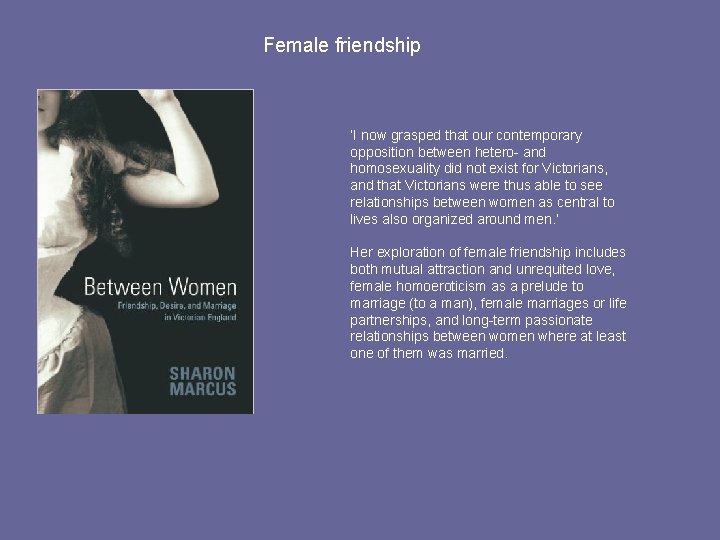
Female friendship ‘I now grasped that our contemporary opposition between hetero- and homosexuality did not exist for Victorians, and that Victorians were thus able to see relationships between women as central to lives also organized around men. ’ Her exploration of female friendship includes both mutual attraction and unrequited love, female homoeroticism as a prelude to marriage (to a man), female marriages or life partnerships, and long-term passionate relationships between women where at least one of them was married.
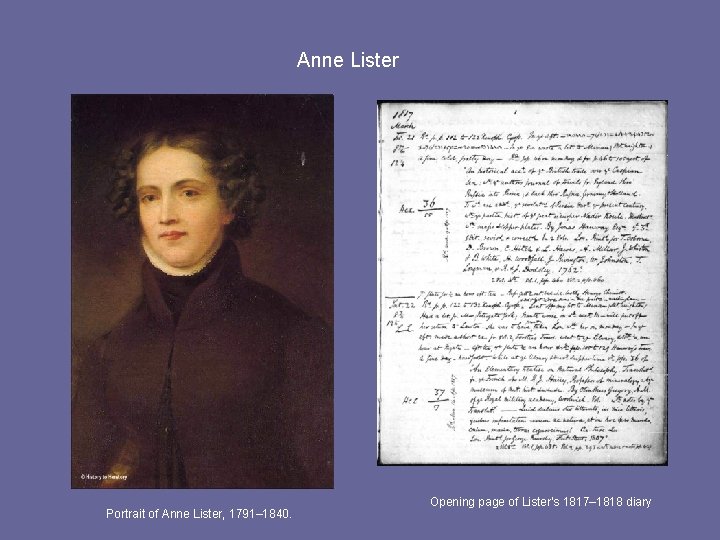
Anne Lister Portrait of Anne Lister, 1791– 1840. Opening page of Lister’s 1817– 1818 diary
Anne Lister engaged in what we (though not she) would term lesbian behaviour. Indeed she constructed a kind of same-sex awareness based on her reading of such behaviour in the classics, her interaction with similar women, and a sensitivity to her own desires. She was cautious about declaring herself. But she had no trouble interacting with women with similar sexual tastes. Even more interestingly, her diaries reveal a range of such sexuality. Lister liked to dominate her lovers. She would not let them womanise her, as she put it. She had a long-term lover who was married – that is, who was engaging in heterosexual and homosexual sex. Lister unofficially married a woman whom she lived with as a female companion, and she knew of others in similar situations. But Lister also had relationships with what we would term heterosexual women: young women who later married; a widow with a child. Women flirted with her as they might with a man.
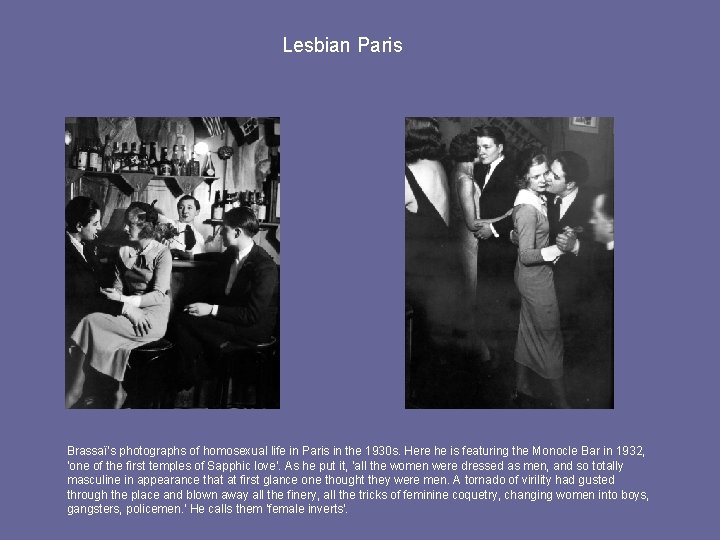
Lesbian Paris Brassaï’s photographs of homosexual life in Paris in the 1930 s. Here he is featuring the Monocle Bar in 1932, ‘one of the first temples of Sapphic love’. As he put it, ‘all the women were dressed as men, and so totally masculine in appearance that at first glance one thought they were men. A tornado of virility had gusted through the place and blown away all the finery, all the tricks of feminine coquetry, changing women into boys, gangsters, policemen. ’ He calls them ‘female inverts’.
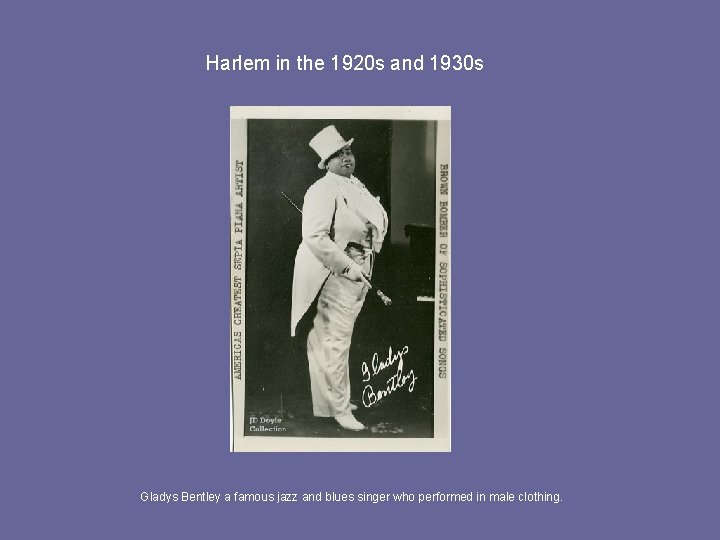
Harlem in the 1920 s and 1930 s Gladys Bentley a famous jazz and blues singer who performed in male clothing.
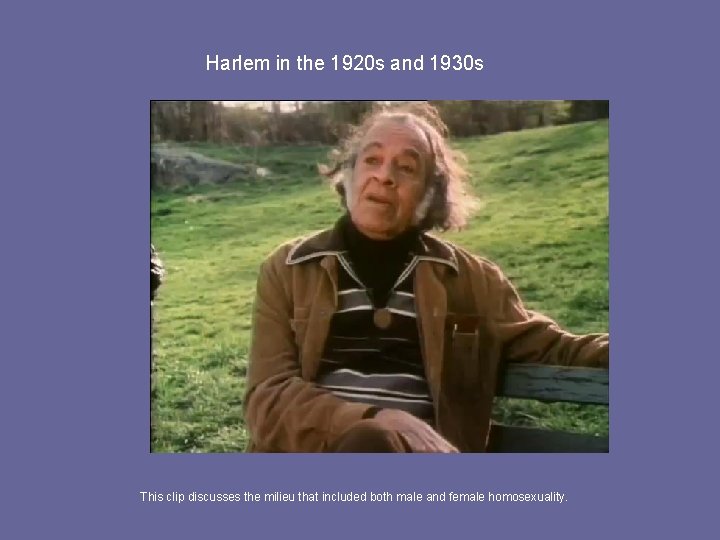
Harlem in the 1920 s and 1930 s This clip discusses the milieu that included both male and female homosexuality.
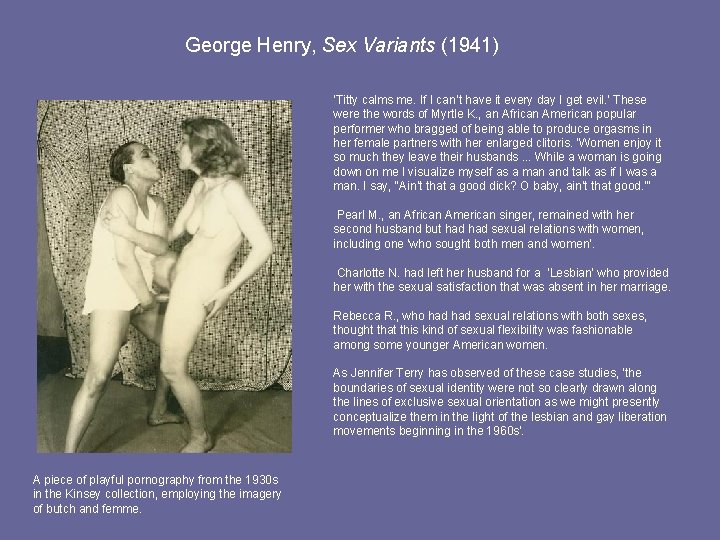
George Henry, Sex Variants (1941) ‘Titty calms me. If I can’t have it every day I get evil. ’ These were the words of Myrtle K. , an African American popular performer who bragged of being able to produce orgasms in her female partners with her enlarged clitoris. ‘Women enjoy it so much they leave their husbands. . . While a woman is going down on me I visualize myself as a man and talk as if I was a man. I say, “Ain’t that a good dick? O baby, ain’t that good. ”’ Pearl M. , an African American singer, remained with her second husband but had sexual relations with women, including one ‘who sought both men and women’. Charlotte N. had left her husband for a ‘Lesbian’ who provided her with the sexual satisfaction that was absent in her marriage. Rebecca R. , who had sexual relations with both sexes, thought that this kind of sexual flexibility was fashionable among some younger American women. As Jennifer Terry has observed of these case studies, ‘the boundaries of sexual identity were not so clearly drawn along the lines of exclusive sexual orientation as we might presently conceptualize them in the light of the lesbian and gay liberation movements beginning in the 1960 s’. A piece of playful pornography from the 1930 s in the Kinsey collection, employing the imagery of butch and femme.
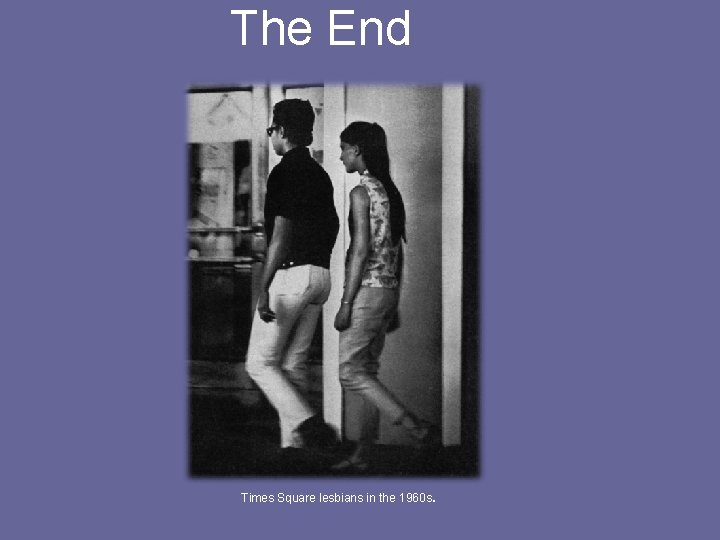
The End . Times Square lesbians in the 1960 s
- Slides: 24