
Homology versus Analogy Evolutionary Homology Serial Homology Criteria
- Slides: 11
Homology versus Analogy Evolutionary Homology Serial Homology Criteria for Determining Homology
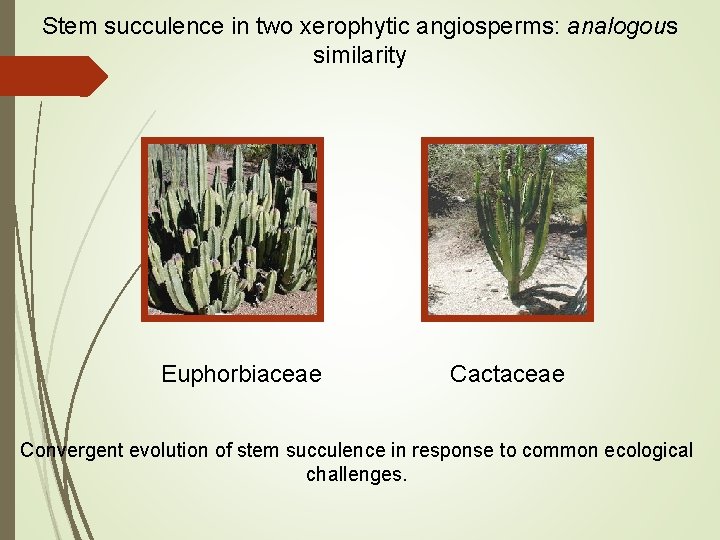
Stem succulence in two xerophytic angiosperms: analogous similarity Euphorbiaceae Cactaceae Convergent evolution of stem succulence in response to common ecological challenges.
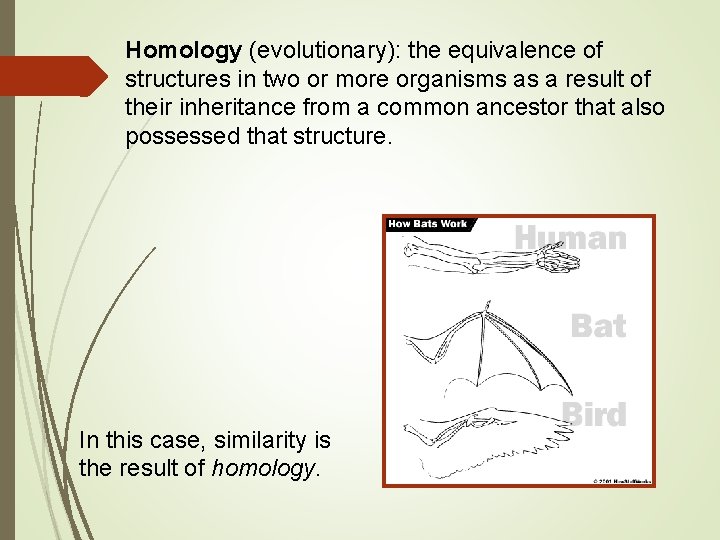
Homology (evolutionary): the equivalence of structures in two or more organisms as a result of their inheritance from a common ancestor that also possessed that structure. In this case, similarity is the result of homology.
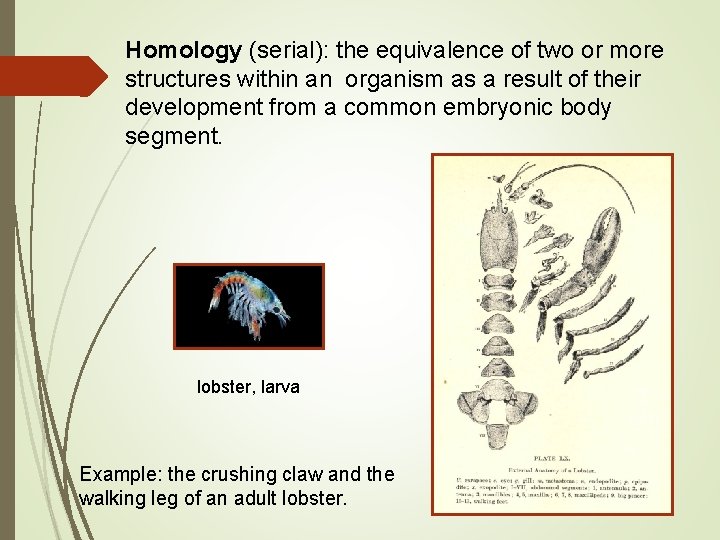
Homology (serial): the equivalence of two or more structures within an organism as a result of their development from a common embryonic body segment. lobster, larva Example: the crushing claw and the walking leg of an adult lobster.
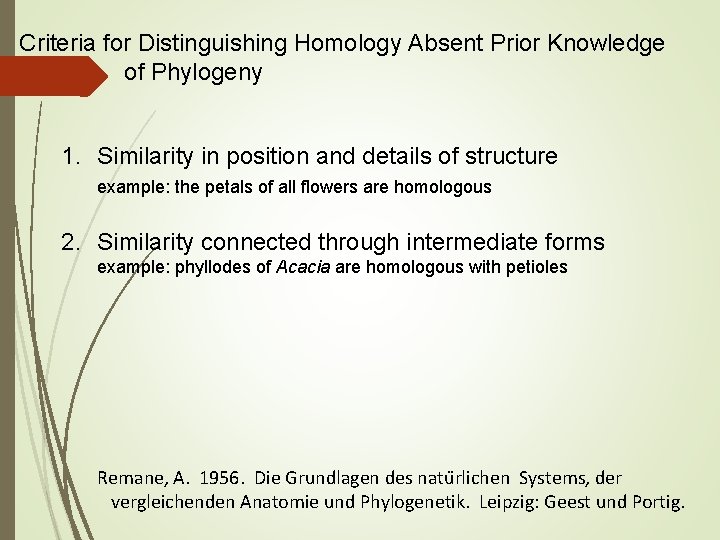
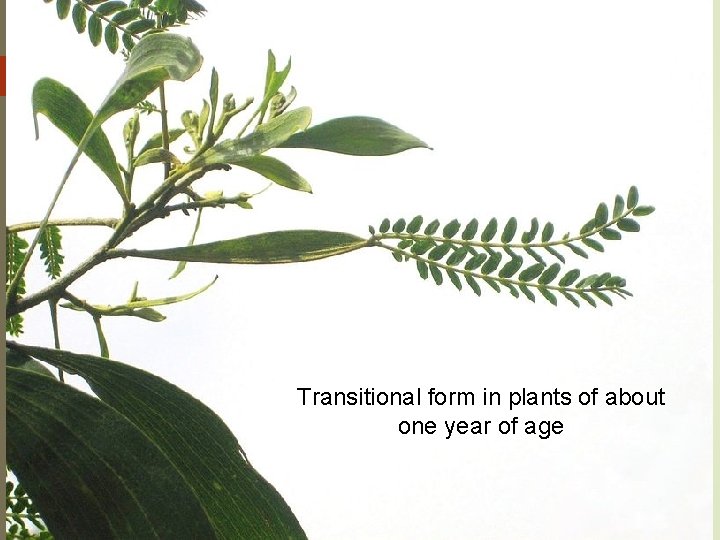
Criteria for Distinguishing Homology Absent Prior Knowledge of Phylogeny 1. Similarity in position and details of structure example: the petals of all flowers are homologous 2. Similarity connected through intermediate forms example: phyllodes of Acacia are homologous with petioles Remane, A. 1956. Die Grundlagen des natu rlichen Systems, der vergleichenden Anatomie und Phylogenetik. Leipzig: Geest und Portig.
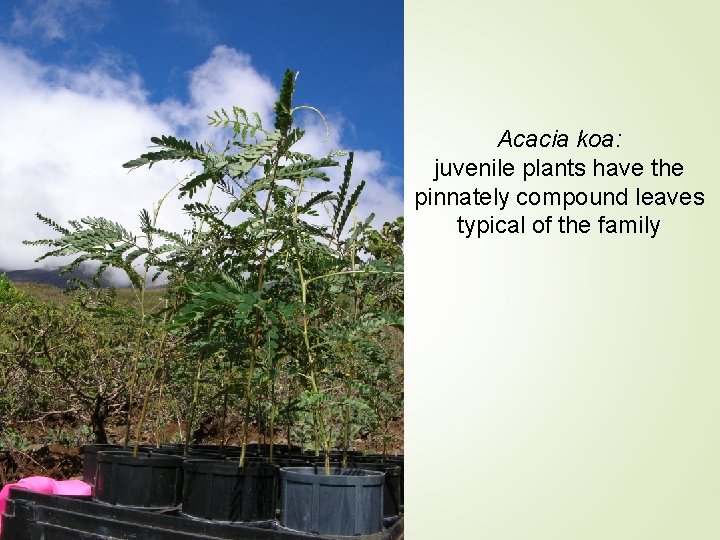
Acacia koa: juvenile plants have the pinnately compound leaves typical of the family
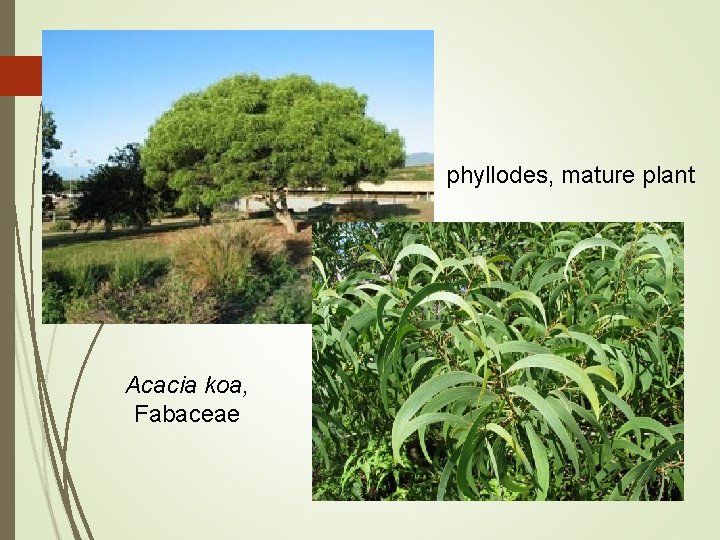
phyllodes, mature plant Acacia koa, Fabaceae
Transitional form in plants of about one year of age
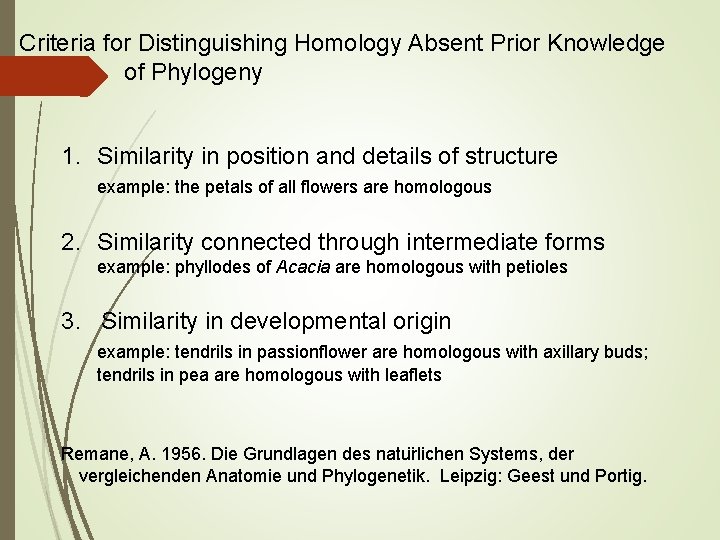
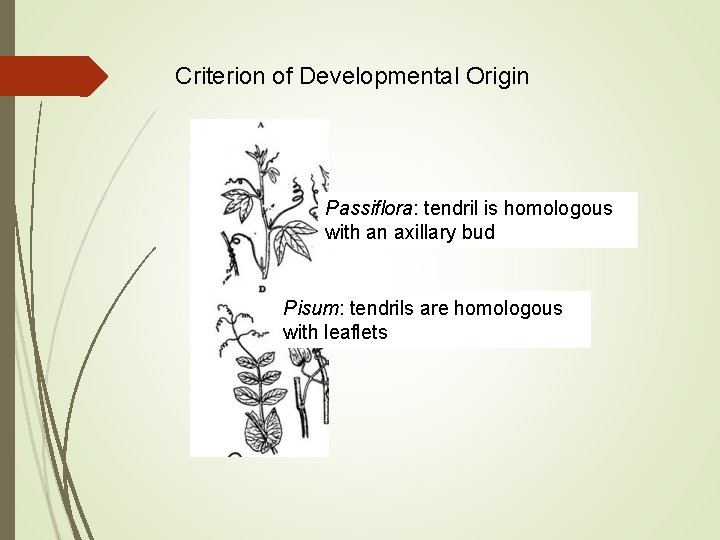
Criteria for Distinguishing Homology Absent Prior Knowledge of Phylogeny 1. Similarity in position and details of structure example: the petals of all flowers are homologous 2. Similarity connected through intermediate forms example: phyllodes of Acacia are homologous with petioles 3. Similarity in developmental origin example: tendrils in passionflower are homologous with axillary buds; tendrils in pea are homologous with leaflets Remane, A. 1956. Die Grundlagen des natu rlichen Systems, der vergleichenden Anatomie und Phylogenetik. Leipzig: Geest und Portig.
Criterion of Developmental Origin Passiflora: tendril is homologous with an axillary bud Pisum: tendrils are homologous with leaflets
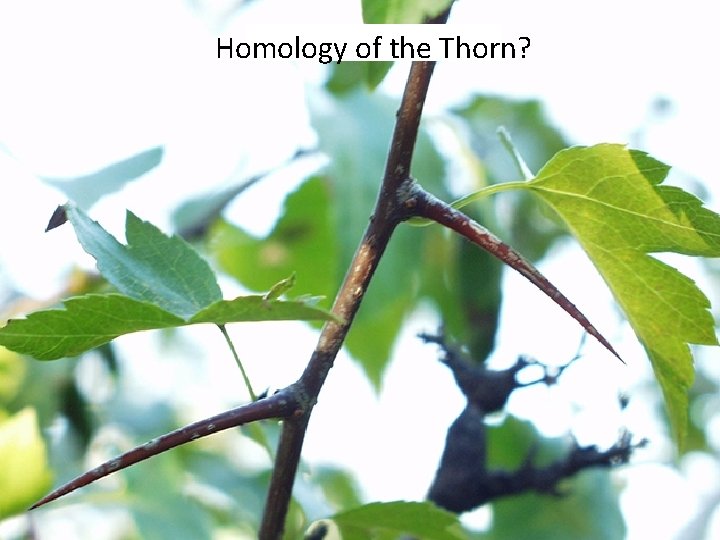
Homology of the Thorn?