
Homologous OR Not As already discussed Homologous Structures
- Slides: 17
Homologous OR Not As already discussed Homologous Structures between species provide evidence that the species shared a common ancestor, as shown in the mammal forelimb examples, displaying the same structure but adapting different functions for their forelimbs. Some times in nature, unrelated species will evolve similar functions through different evolutionary paths using unrelated structures. These types of structures are called Analogous Structures and they do not show evidence of evolution from a common ancestor.
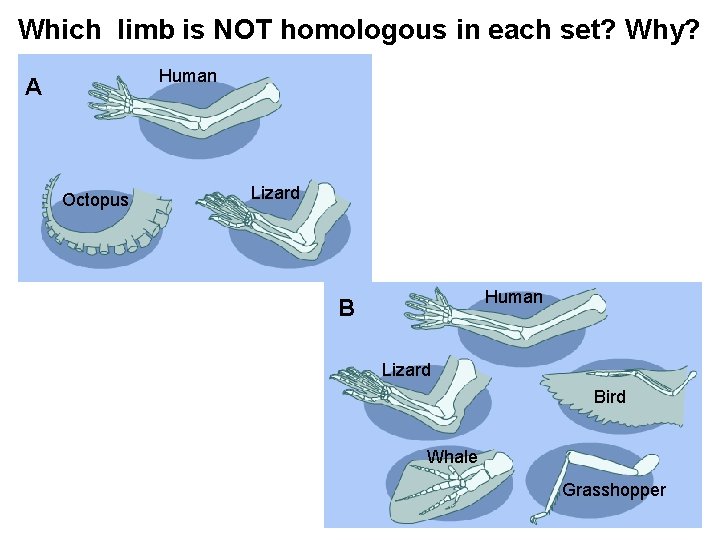
Which limb is NOT homologous in each set? Why? Human A Octopus Lizard Human B Lizard Bird Whale Grasshopper
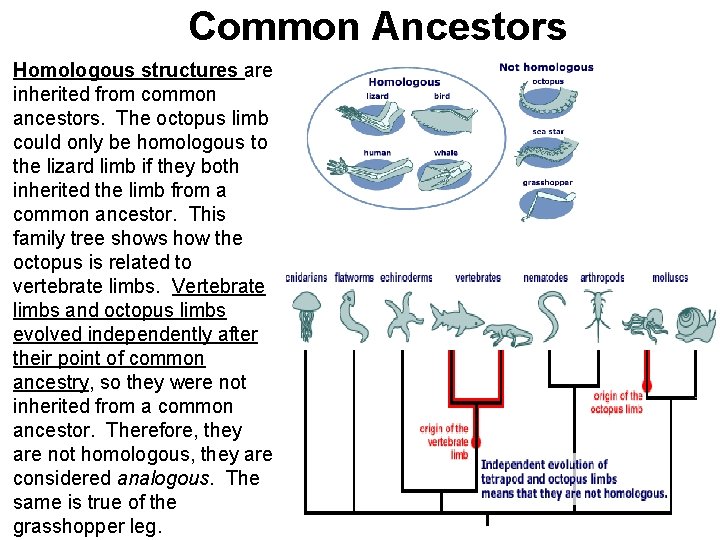
Common Ancestors Homologous structures are inherited from common ancestors. The octopus limb could only be homologous to the lizard limb if they both inherited the limb from a common ancestor. This family tree shows how the octopus is related to vertebrate limbs. Vertebrate limbs and octopus limbs evolved independently after their point of common ancestry, so they were not inherited from a common ancestor. Therefore, they are not homologous, they are considered analogous. The same is true of the grasshopper leg.
Homologous OR Not GAME Helpful Hint: For each set of pictures, ask yourself if the structure or adaptation evolved between the species from a shared common ancestor OR did the structure evolve independently between the two species showing no common ancestor linking the structure or adaptation together. DIRECTIONS: Keep Score of how many you and your group get correct.
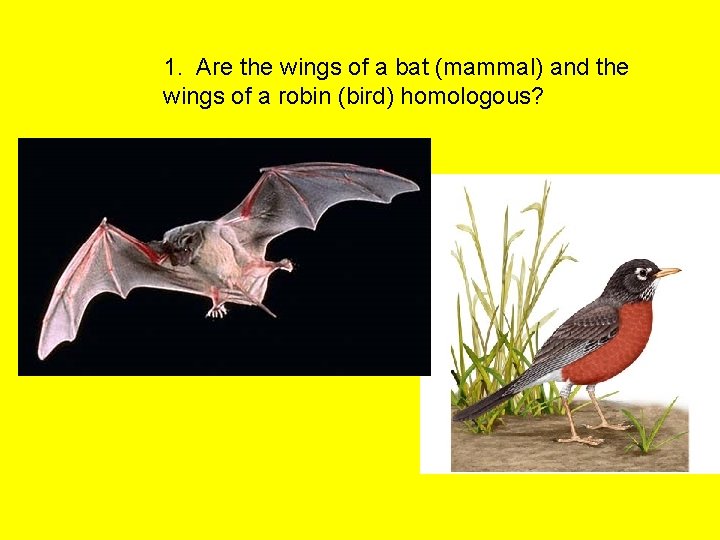
1. Are the wings of a bat (mammal) and the wings of a robin (bird) homologous?
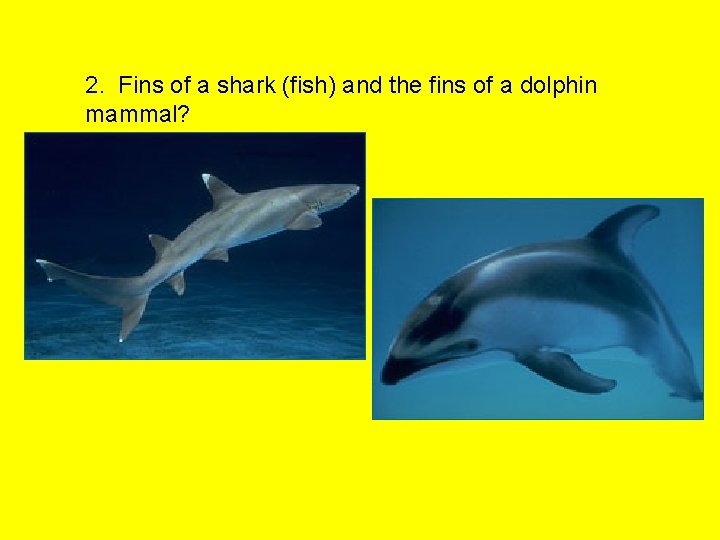
2. Fins of a shark (fish) and the fins of a dolphin mammal?
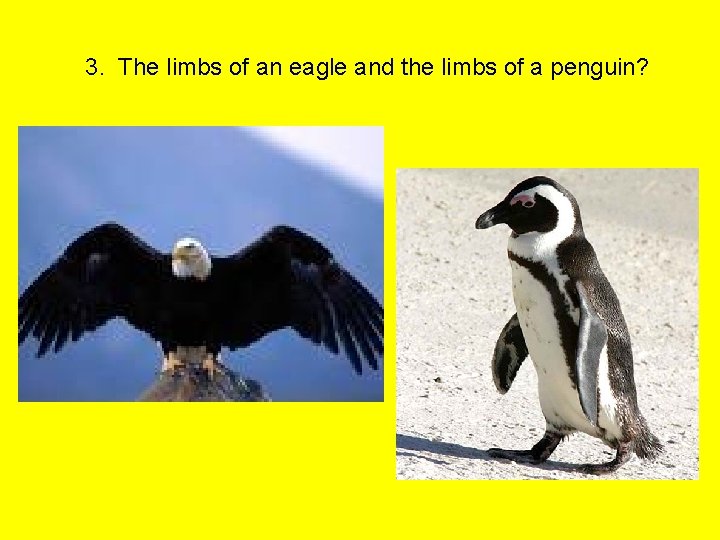
3. The limbs of an eagle and the limbs of a penguin?
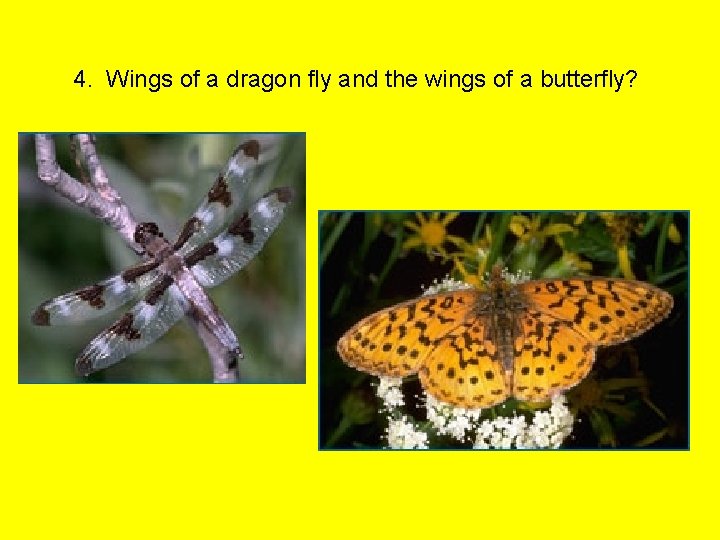
4. Wings of a dragon fly and the wings of a butterfly?
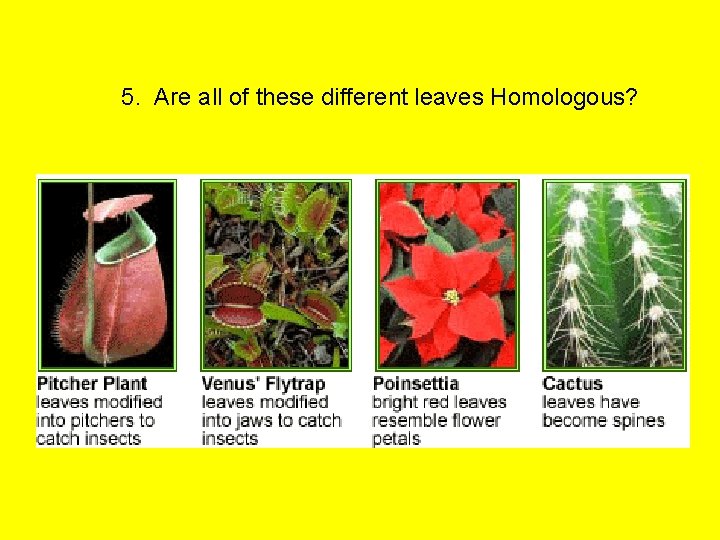
5. Are all of these different leaves Homologous?
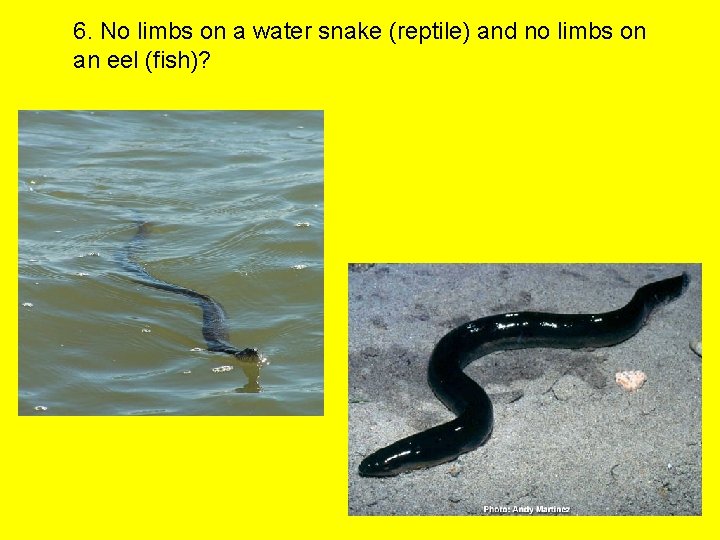
6. No limbs on a water snake (reptile) and no limbs on an eel (fish)?
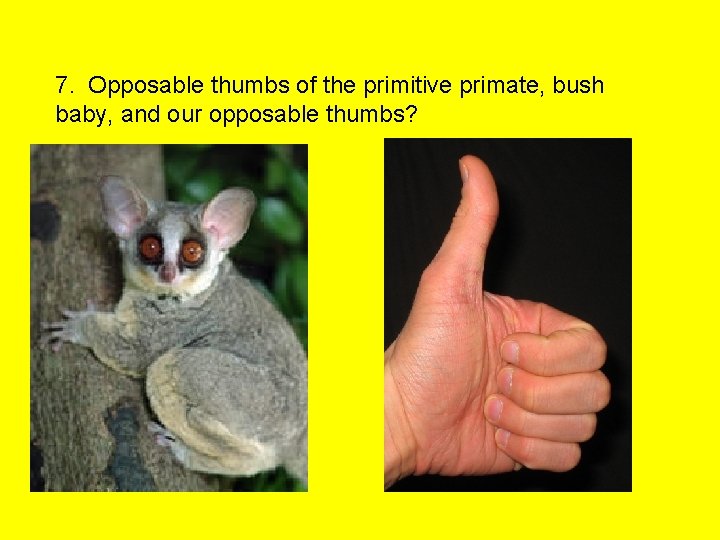
7. Opposable thumbs of the primitive primate, bush baby, and our opposable thumbs?
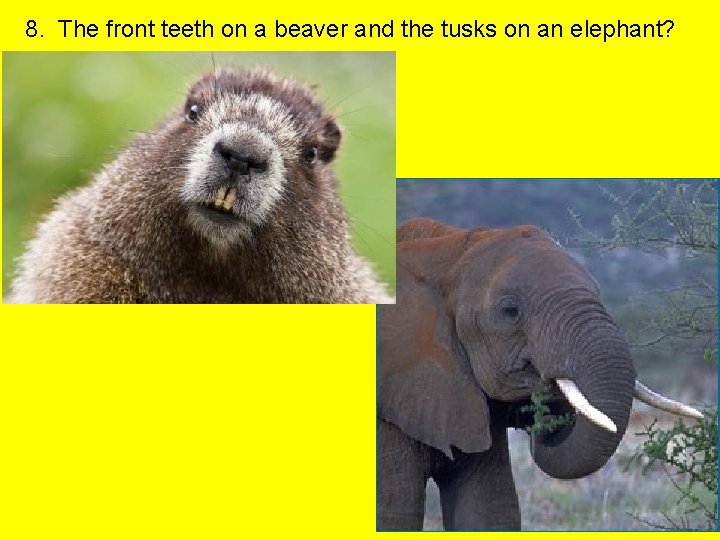
8. The front teeth on a beaver and the tusks on an elephant?
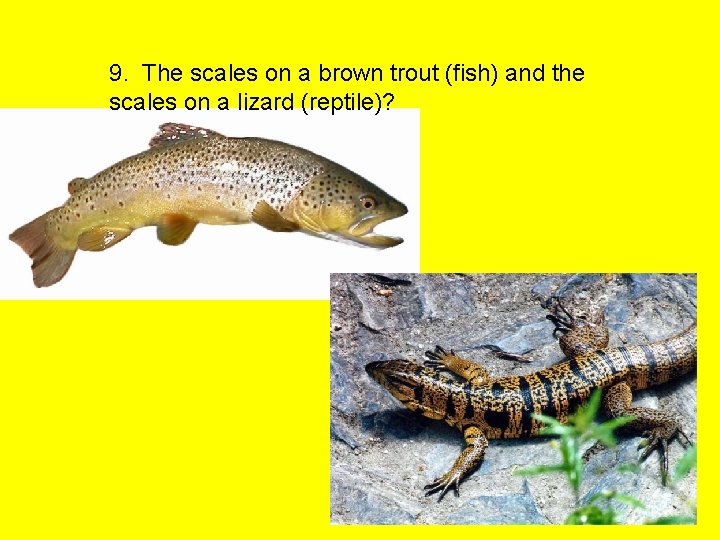
9. The scales on a brown trout (fish) and the scales on a lizard (reptile)?
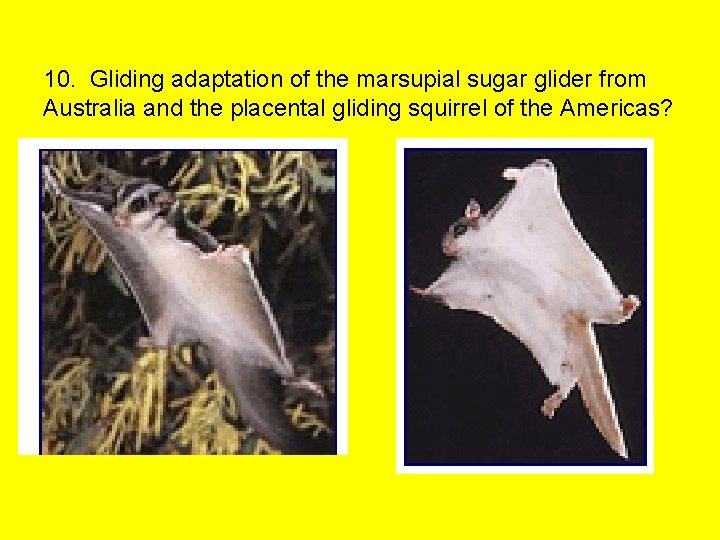
10. Gliding adaptation of the marsupial sugar glider from Australia and the placental gliding squirrel of the Americas?
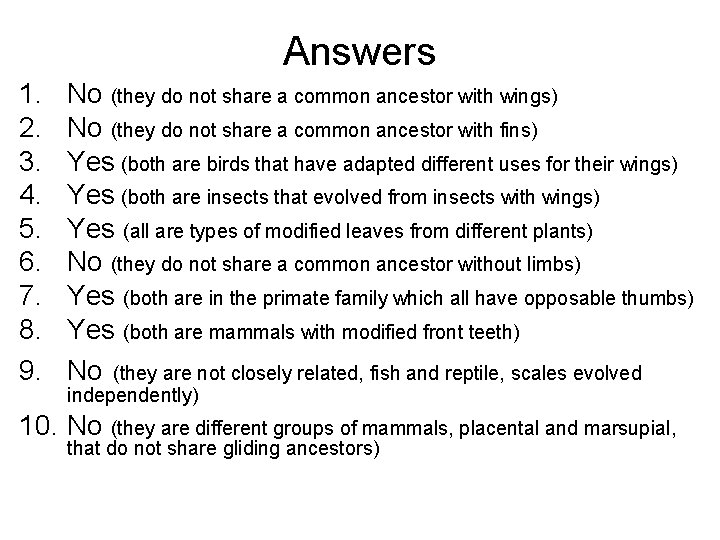
Answers 1. 2. 3. 4. 5. 6. 7. 8. 9. No (they do not share a common ancestor with wings) No (they do not share a common ancestor with fins) Yes (both are birds that have adapted different uses for their wings) Yes (both are insects that evolved from insects with wings) Yes (all are types of modified leaves from different plants) No (they do not share a common ancestor without limbs) Yes (both are in the primate family which all have opposable thumbs) Yes (both are mammals with modified front teeth) No (they are not closely related, fish and reptile, scales evolved independently) 10. No (they are different groups of mammals, placental and marsupial, that do not share gliding ancestors)
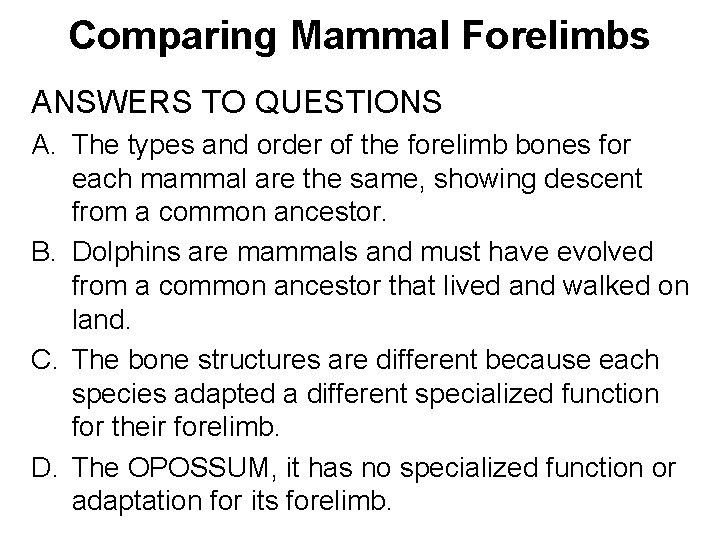
Comparing Mammal Forelimbs ANSWERS TO QUESTIONS A. The types and order of the forelimb bones for each mammal are the same, showing descent from a common ancestor. B. Dolphins are mammals and must have evolved from a common ancestor that lived and walked on land. C. The bone structures are different because each species adapted a different specialized function for their forelimb. D. The OPOSSUM, it has no specialized function or adaptation for its forelimb.
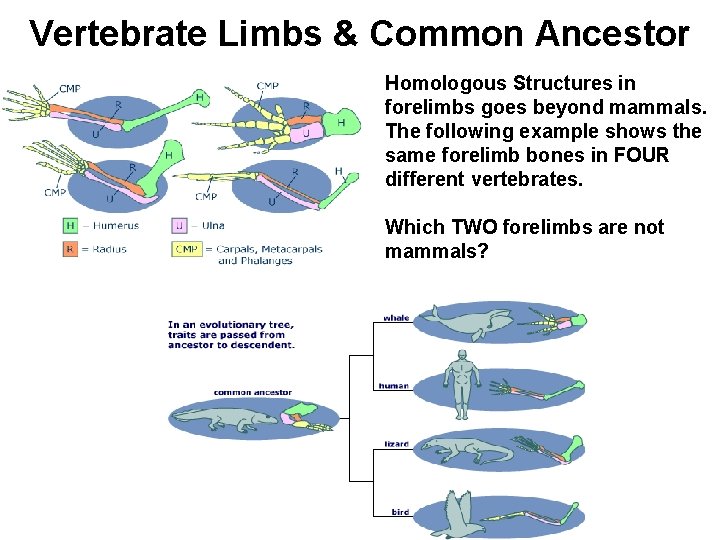
Vertebrate Limbs & Common Ancestor Homologous Structures in forelimbs goes beyond mammals. The following example shows the same forelimb bones in FOUR different vertebrates. Which TWO forelimbs are not mammals?