
Homogenization and porous media by Ulrich Hornung Chapter

Homogenization and porous media by Ulrich Hornung Chapter 1: Introduction Heike Gramberg, CASA Seminar Wednesday 23 February 2005

Overview • Diffusion in periodic media – Special case: layered media • Diffusion in media with obstacles • Stokes problem: derivation of Darcy’s law
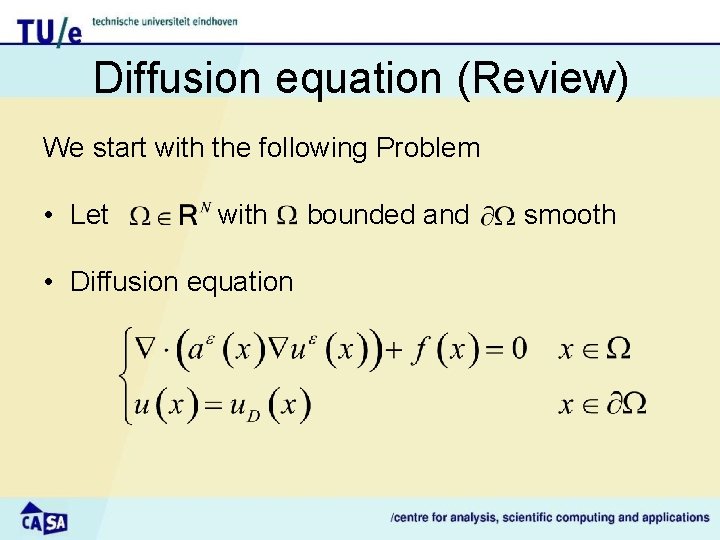
Diffusion equation (Review) We start with the following Problem • Let with • Diffusion equation bounded and smooth
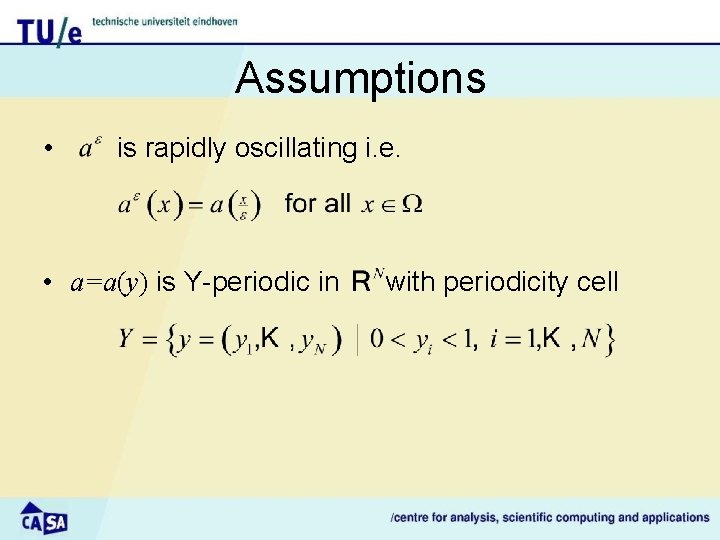
Assumptions • is rapidly oscillating i. e. • a=a(y) is Y-periodic in with periodicity cell
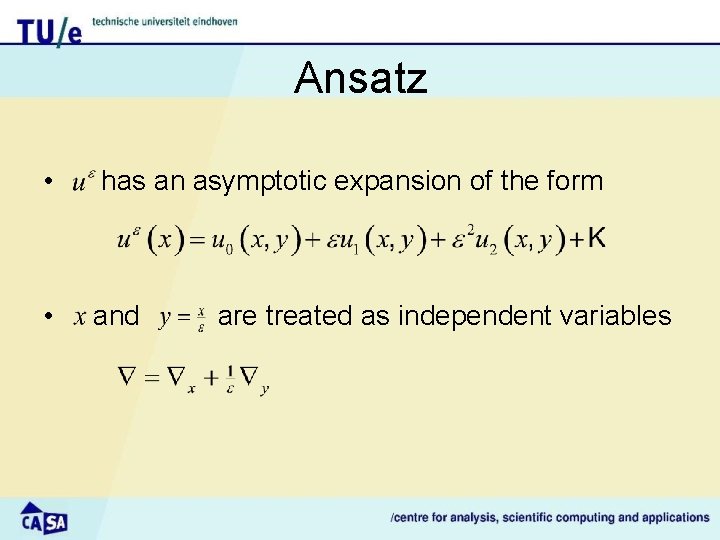
Ansatz • has an asymptotic expansion of the form • and are treated as independent variables
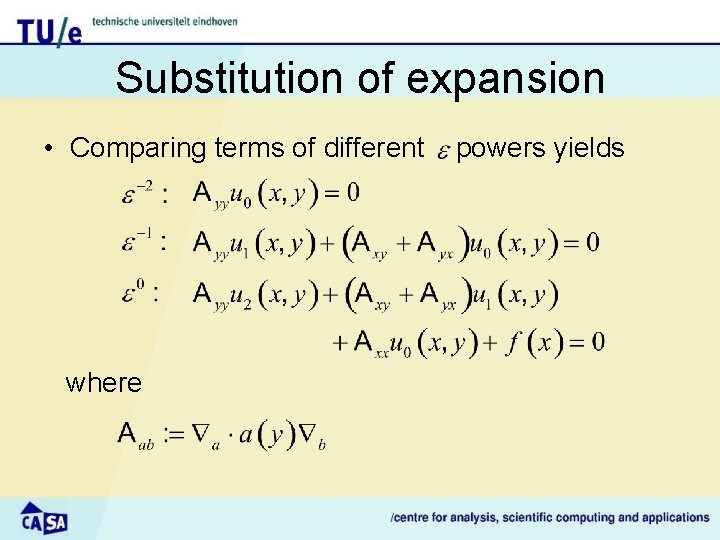
Substitution of expansion • Comparing terms of different where powers yields
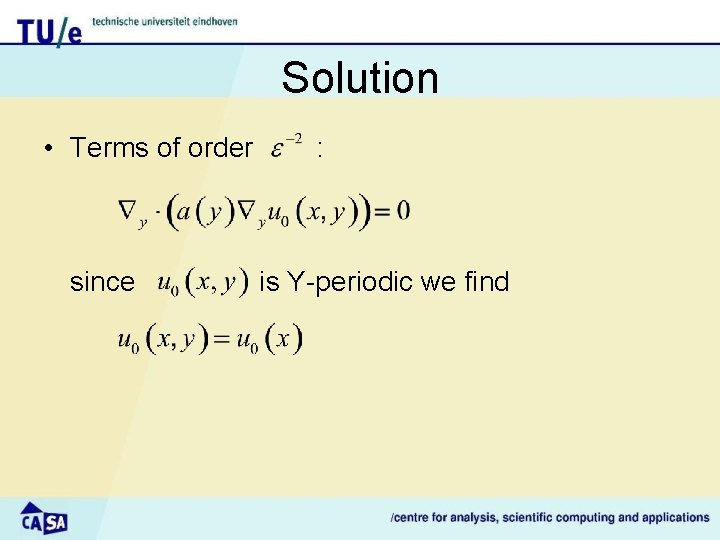
Solution • Terms of order since : is Y-periodic we find
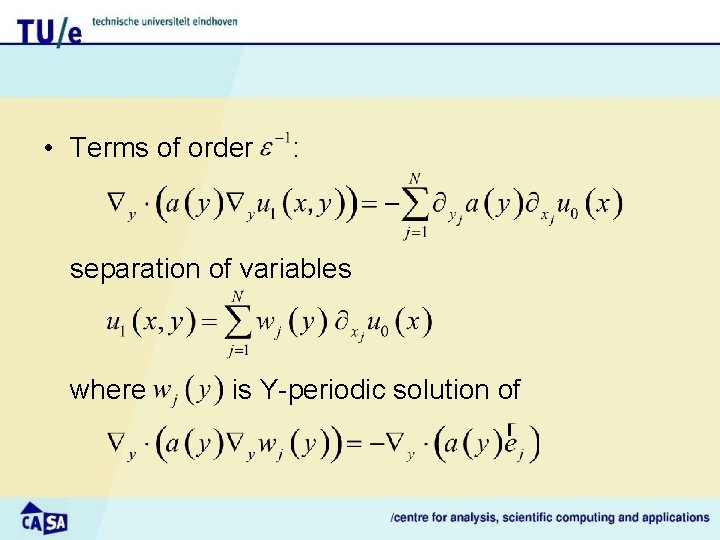
• Terms of order : separation of variables where is Y-periodic solution of
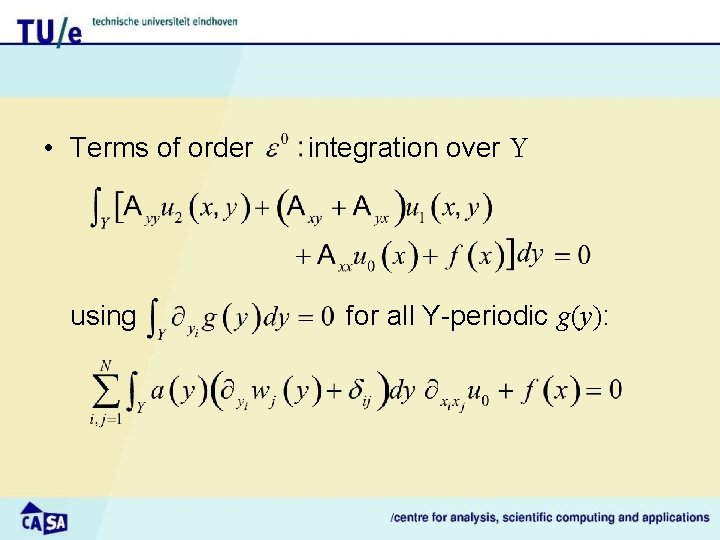
• Terms of order using integration over Y for all Y-periodic g(y):
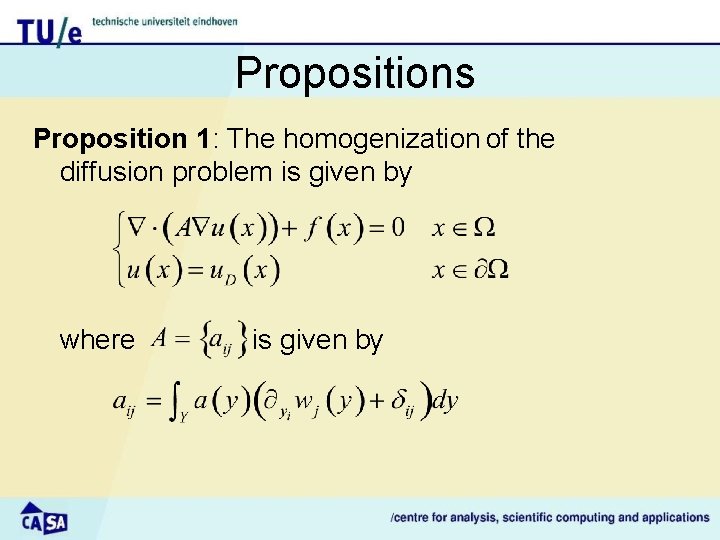
Propositions Proposition 1: The homogenization of the diffusion problem is given by where is given by
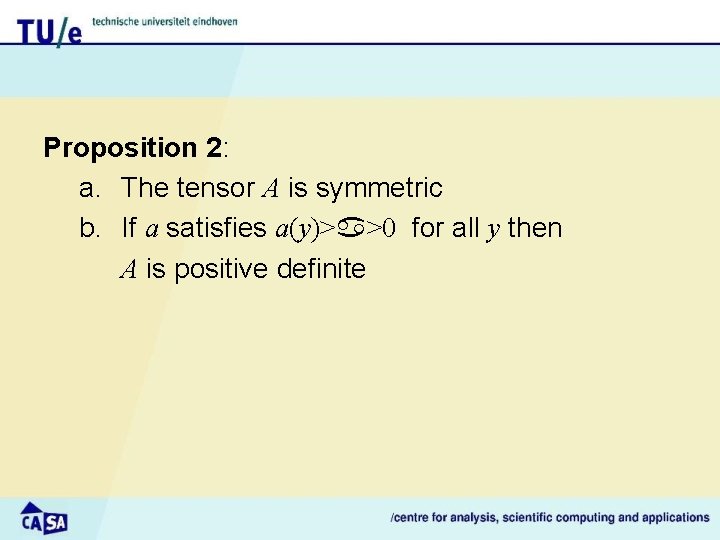
Proposition 2: a. The tensor A is symmetric b. If a satisfies a(y)>a>0 for all y then A is positive definite
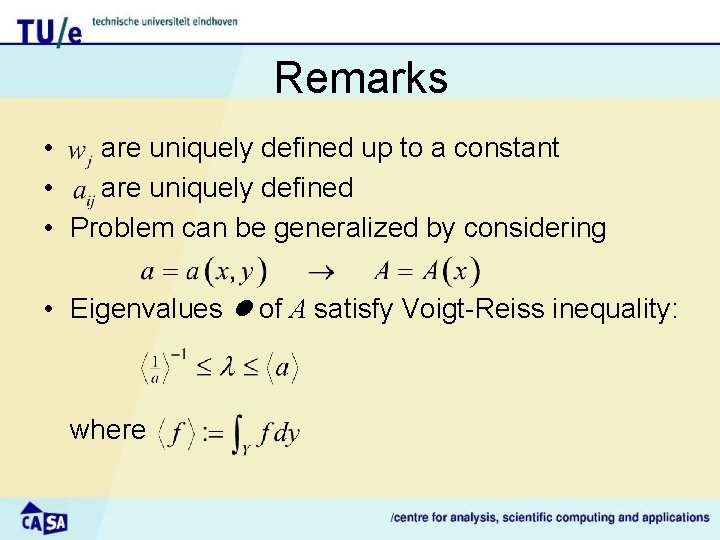
Remarks • are uniquely defined up to a constant • are uniquely defined • Problem can be generalized by considering • Eigenvalues l of A satisfy Voigt-Reiss inequality: where
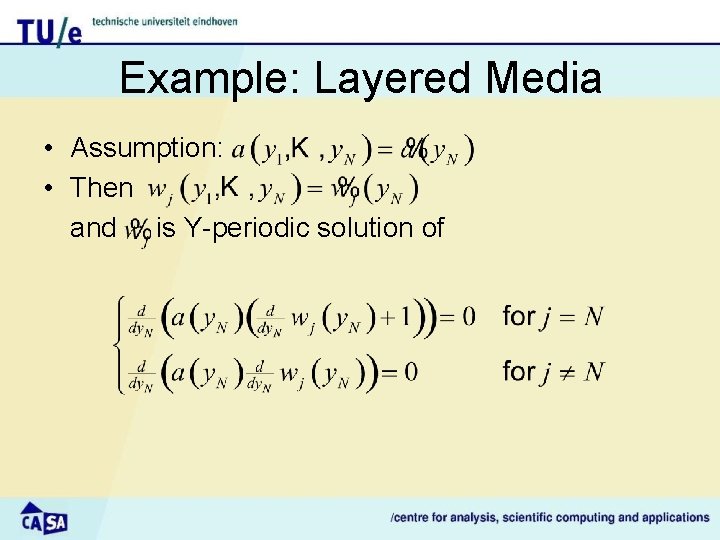
Example: Layered Media • Assumption: • Then and is Y-periodic solution of
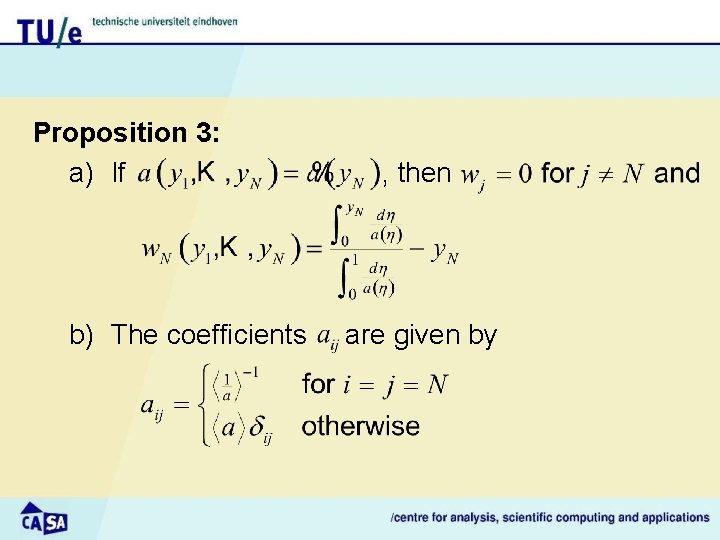
Proposition 3: a) If b) The coefficients , then are given by
Remarks • Effective Diffusivity in direction parallel to layers is given by arithmetic mean of a(y) • Effective Diffusivity in direction normal to layers is given by geometric mean of a(y) • Extreme example of Voigt-Reiss inequality
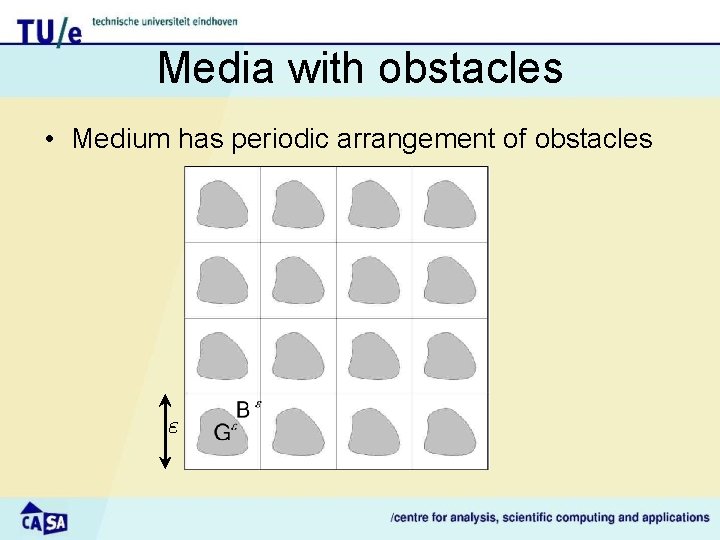
Media with obstacles • Medium has periodic arrangement of obstacles e
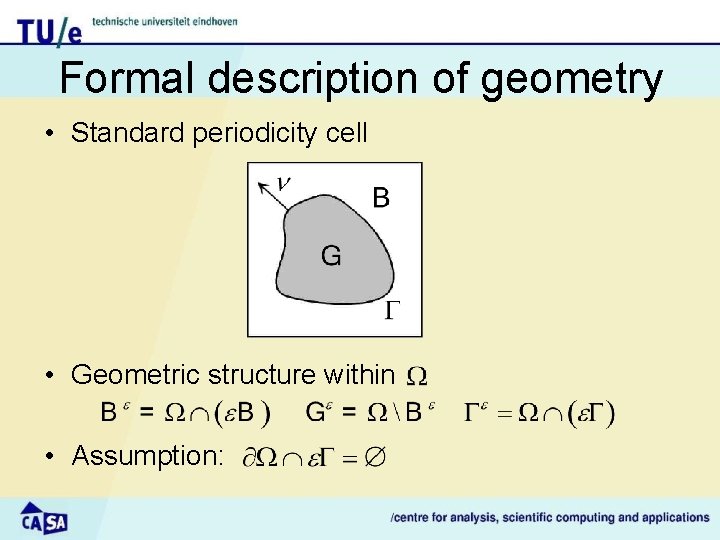
Formal description of geometry • Standard periodicity cell • Geometric structure within • Assumption:
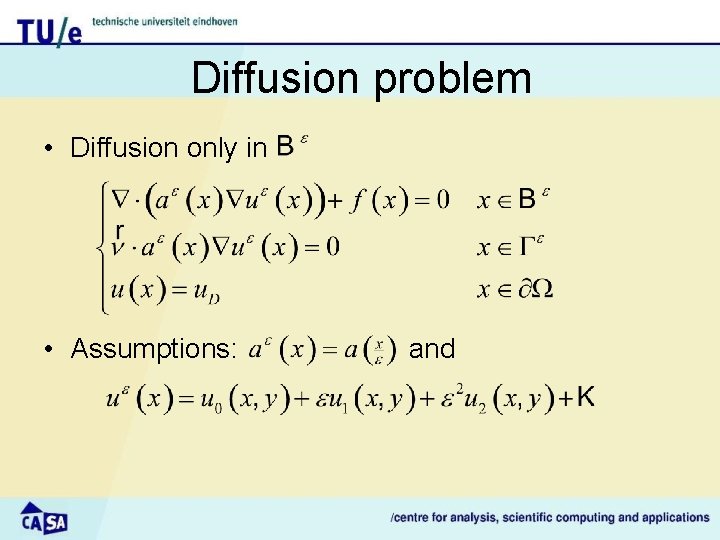
Diffusion problem • Diffusion only in • Assumptions: and
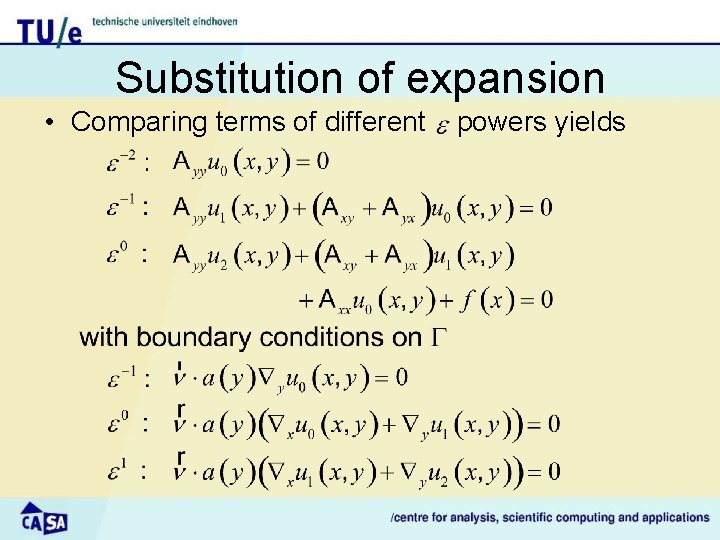
Substitution of expansion • Comparing terms of different powers yields
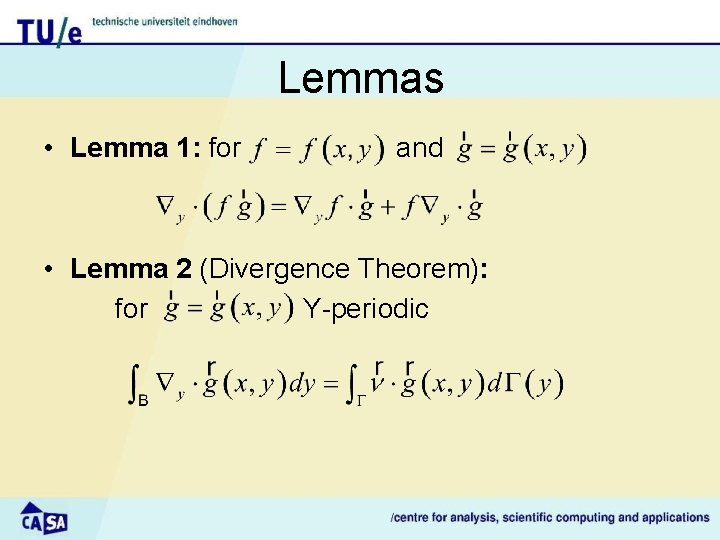
Lemmas • Lemma 1: for and • Lemma 2 (Divergence Theorem): for Y-periodic
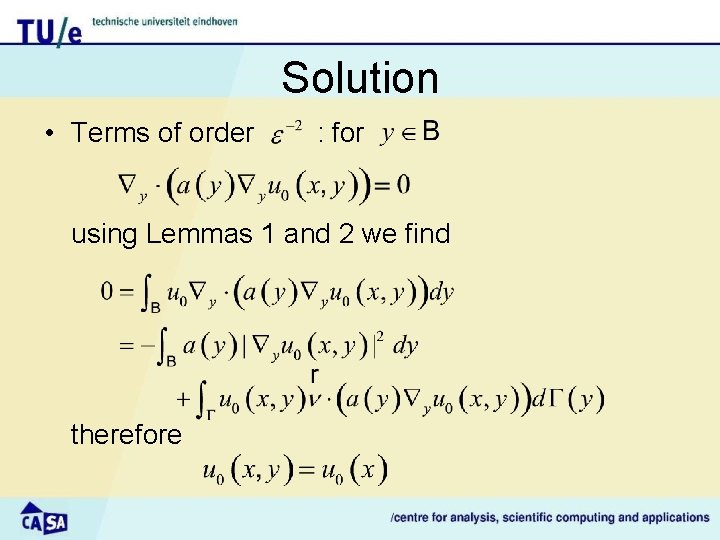
Solution • Terms of order : for using Lemmas 1 and 2 we find therefore
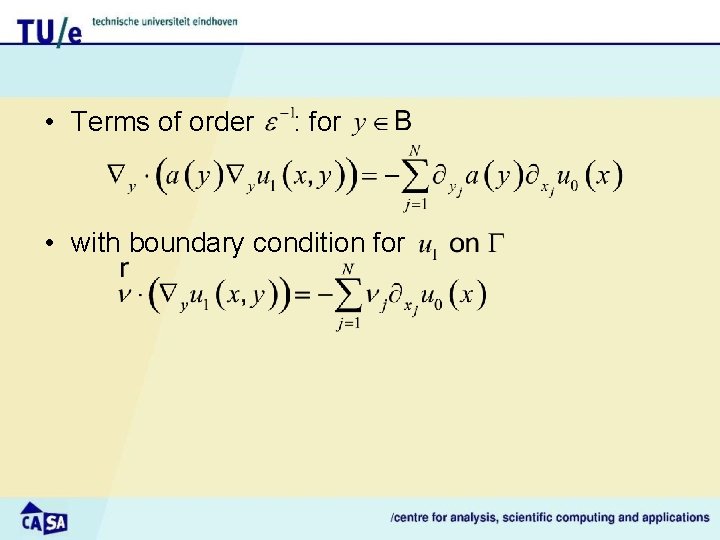
• Terms of order : for • with boundary condition for
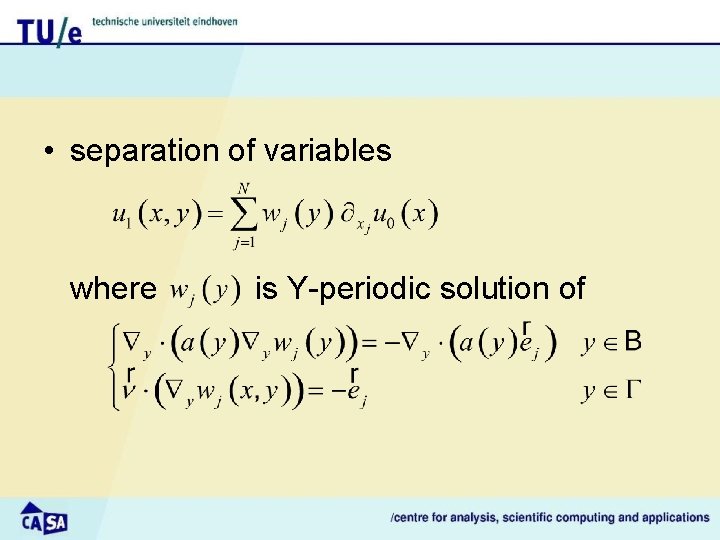
• separation of variables where is Y-periodic solution of
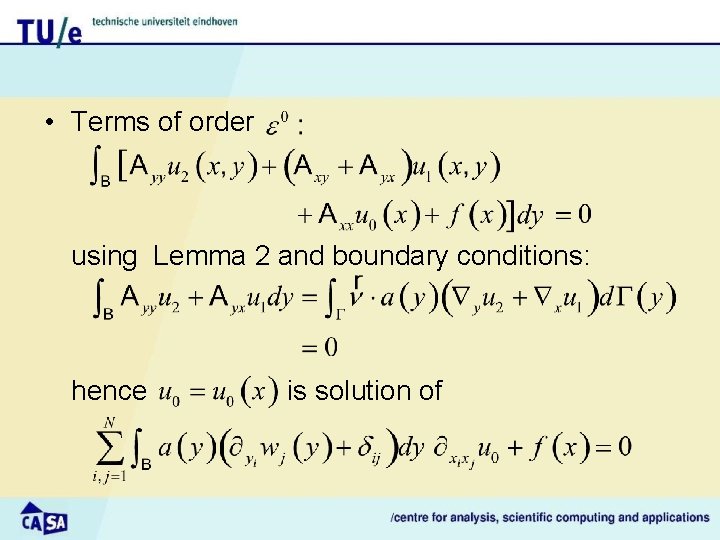
• Terms of order using Lemma 2 and boundary conditions: hence is solution of
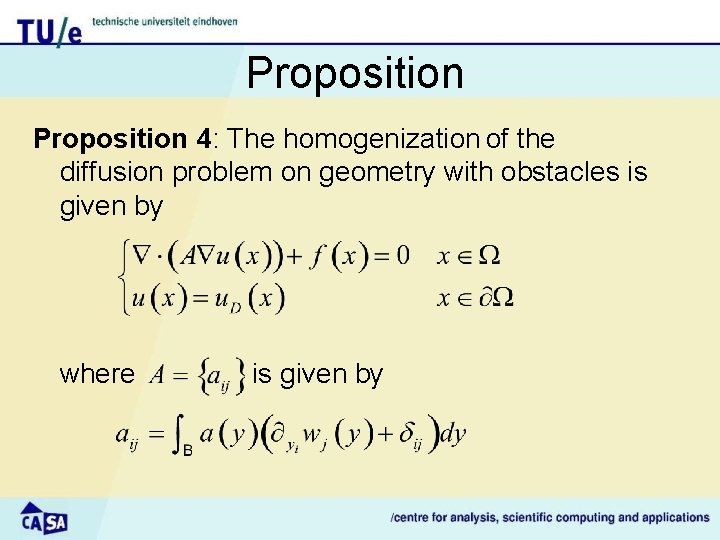
Proposition 4: The homogenization of the diffusion problem on geometry with obstacles is given by where is given by
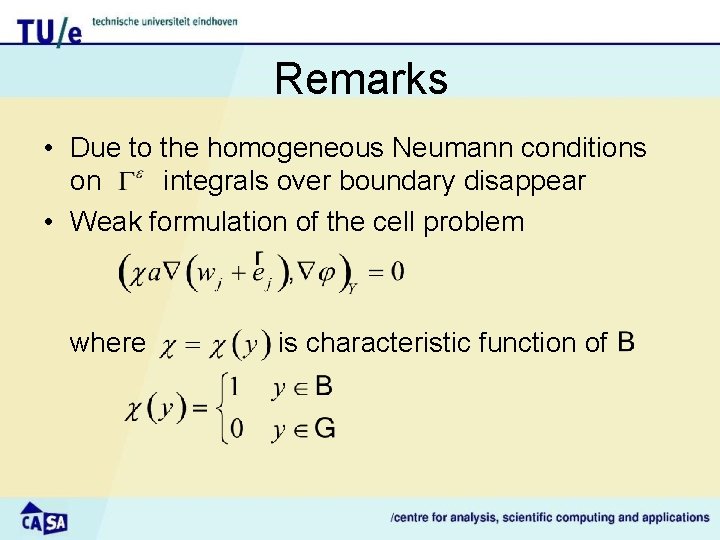
Remarks • Due to the homogeneous Neumann conditions on integrals over boundary disappear • Weak formulation of the cell problem where is characteristic function of
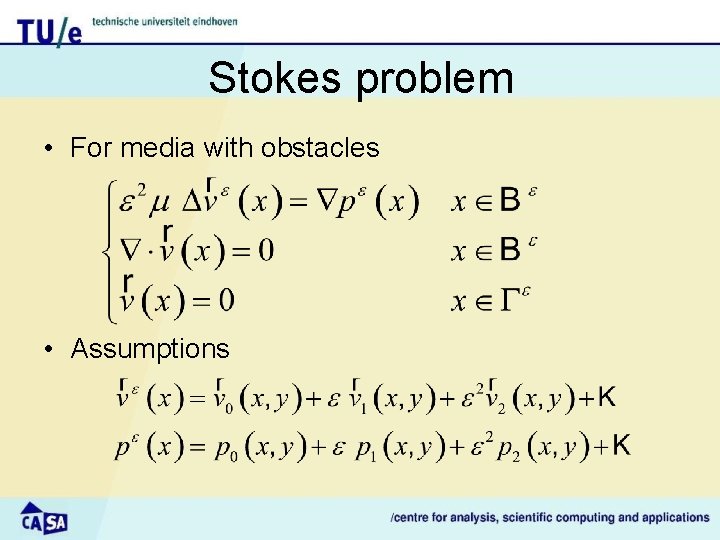
Stokes problem • For media with obstacles • Assumptions
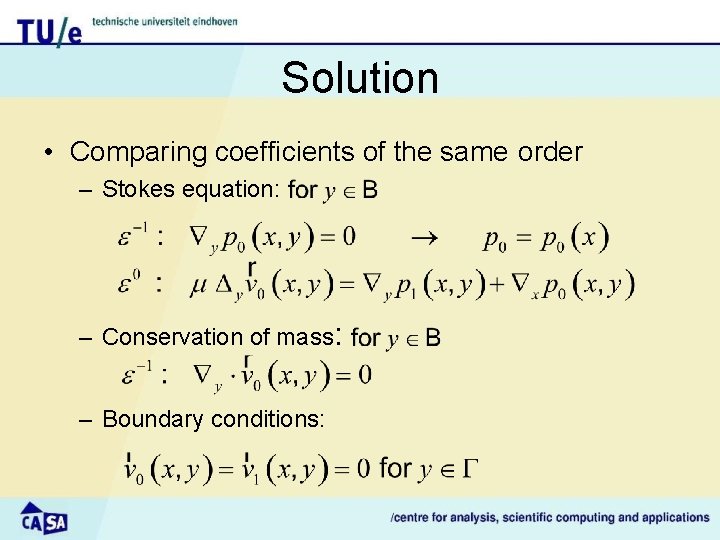
Solution • Comparing coefficients of the same order – Stokes equation: – Conservation of mass: – Boundary conditions:
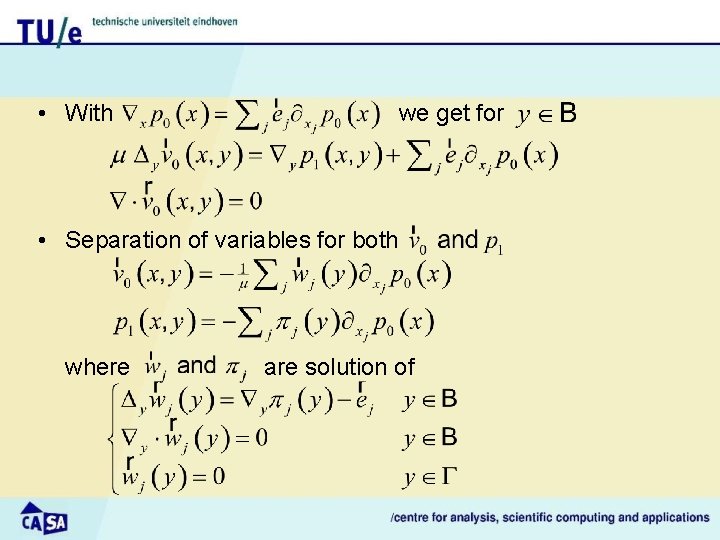
• With we get for • Separation of variables for both where are solution of
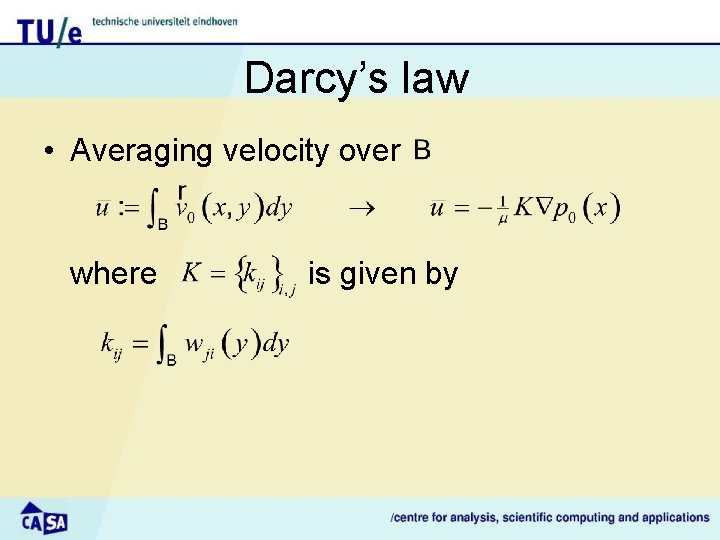
Darcy’s law • Averaging velocity over where is given by
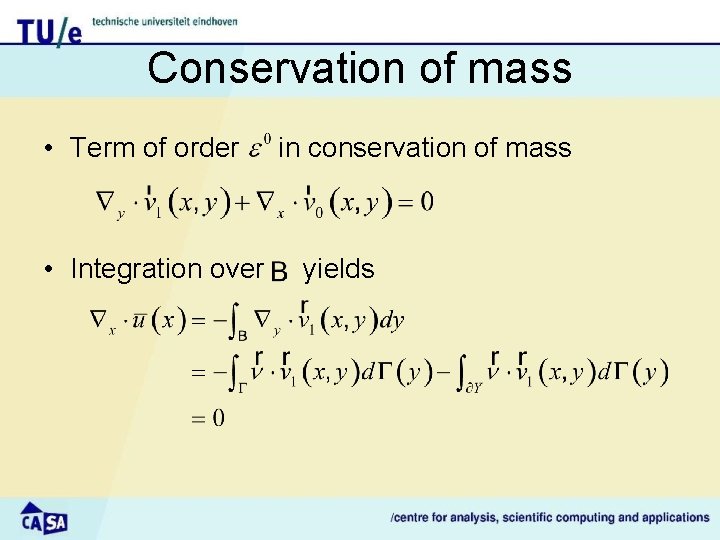
Conservation of mass • Term of order • Integration over in conservation of mass yields
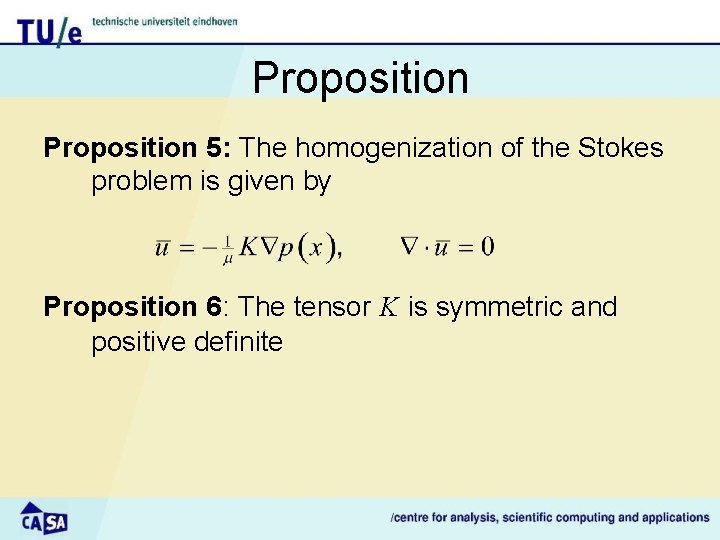
Proposition 5: The homogenization of the Stokes problem is given by Proposition 6: The tensor K is symmetric and positive definite
Conclusions • We have looked at homogenization of the Diffusion problem and the Stokes problem on media with obstacles • Solutions of the homogenized problems can be expressed in terms of solutions of cell problems • The homogenization of the Stokes problem leads to the derivation of Darcy’s law
- Slides: 33