
HOMO ERECTUS By Niky and Alyssa WHO IS
HOMO ERECTUS By: Niky and Alyssa
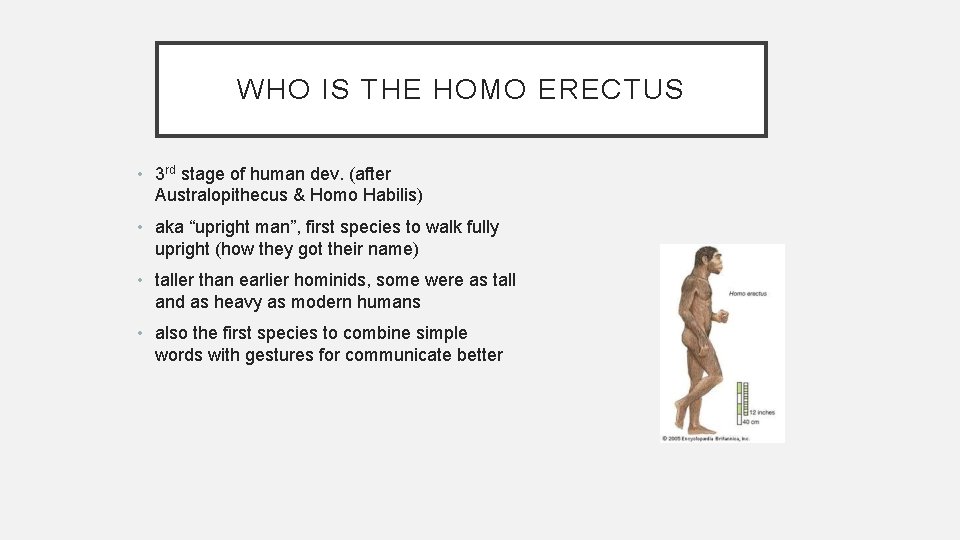
WHO IS THE HOMO ERECTUS • 3 rd stage of human dev. (after Australopithecus & Homo Habilis) • aka “upright man”, first species to walk fully upright (how they got their name) • taller than earlier hominids, some were as tall and as heavy as modern humans • also the first species to combine simple words with gestures for communicate better
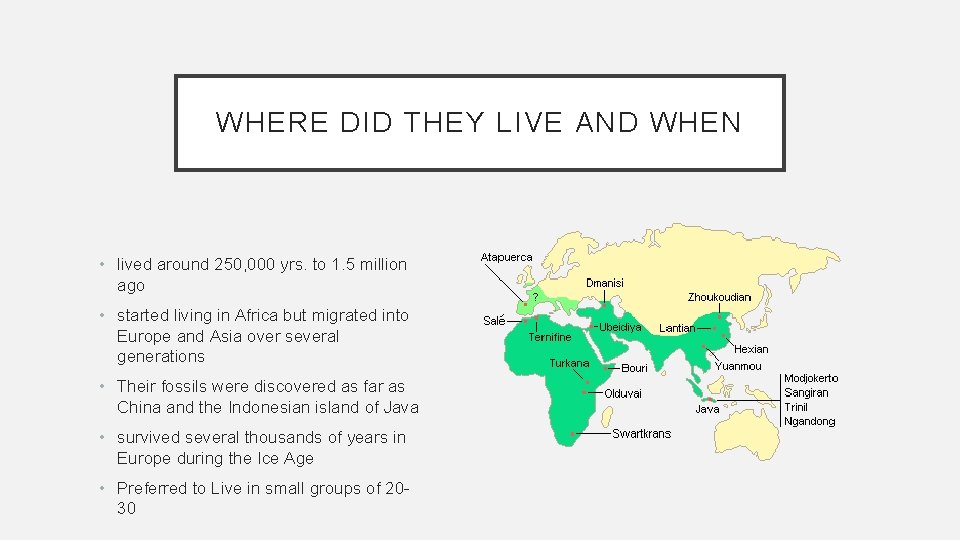
WHERE DID THEY LIVE AND WHEN • lived around 250, 000 yrs. to 1. 5 million ago • started living in Africa but migrated into Europe and Asia over several generations • Their fossils were discovered as far as China and the Indonesian island of Java • survived several thousands of years in Europe during the Ice Age • Preferred to Live in small groups of 2030
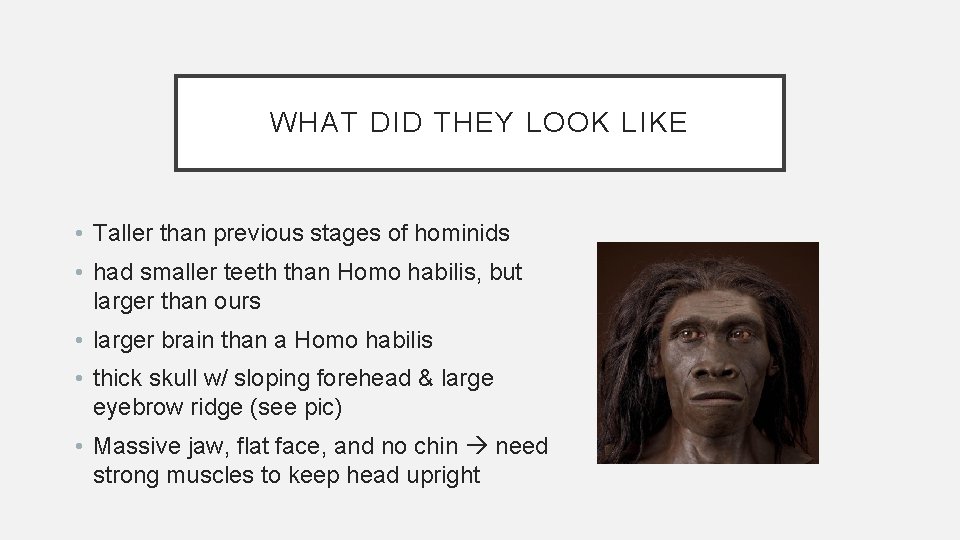
WHAT DID THEY LOOK LIKE • Taller than previous stages of hominids • had smaller teeth than Homo habilis, but larger than ours • larger brain than a Homo habilis • thick skull w/ sloping forehead & large eyebrow ridge (see pic) • Massive jaw, flat face, and no chin need strong muscles to keep head upright
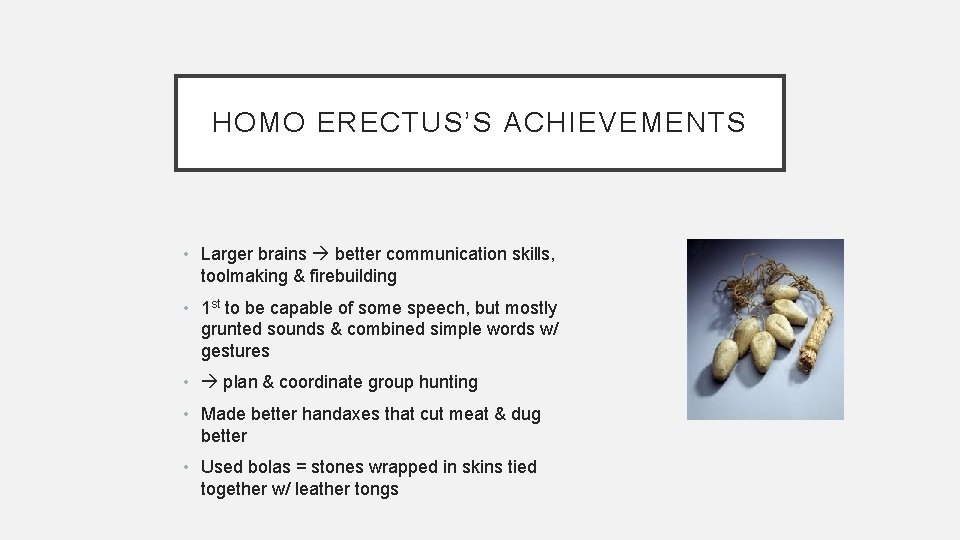
HOMO ERECTUS’S ACHIEVEMENTS • Larger brains better communication skills, toolmaking & firebuilding • 1 st to be capable of some speech, but mostly grunted sounds & combined simple words w/ gestures • plan & coordinate group hunting • Made better handaxes that cut meat & dug better • Used bolas = stones wrapped in skins tied together w/ leather tongs
HOMO ERECTUS’S ACHIEVEMENTS (CO NT ’D) • Ability to use & make fire • Unlike previous hominids (who were scared), H. E. learnt to use it for hunting, cooking & keeping warm • Hunting – catch frightened animals as they ran away from fire • Cooking – easier to cut and eat meat when cooked • Used for light & warmth & to keep animals away (we still do that today when we go camping) • Learnt to make fire by rubbing fire sticks together to create heat (from friction) flame • Fire helped them survive the Ice Age in Europe
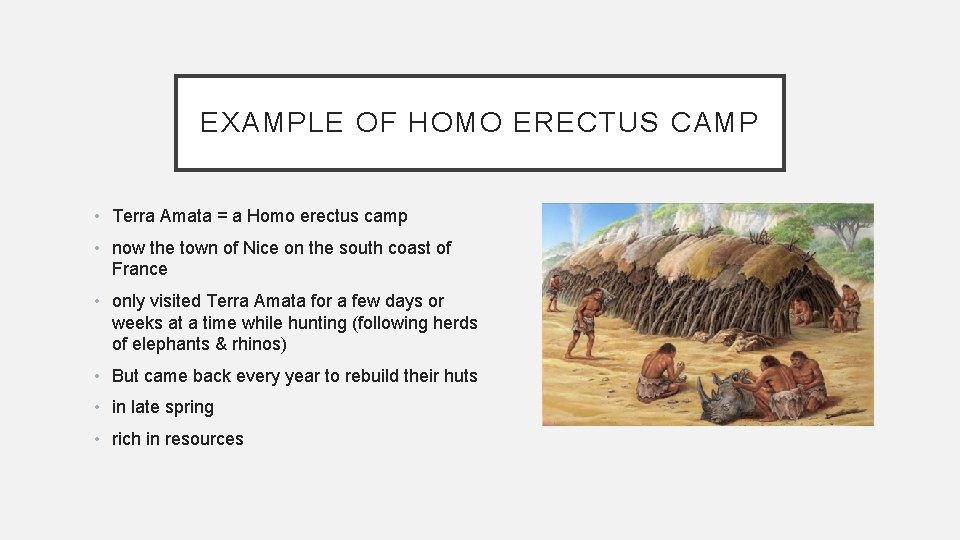
EXAMPLE OF HOMO ERECTUS CAMP • Terra Amata = a Homo erectus camp • now the town of Nice on the south coast of France • only visited Terra Amata for a few days or weeks at a time while hunting (following herds of elephants & rhinos) • But came back every year to rebuild their huts • in late spring • rich in resources
![TERRA AMATA [CONTINUED] • Located near a freshwater spring and river • needed fresh](http://slidetodoc.com/presentation_image_h/042eebc2e0bddfd29211f4306e39eb89/image-8.jpg "TERRA AMATA [CONTINUED] • Located near a freshwater spring and river • needed fresh")
TERRA AMATA [CONTINUED] • Located near a freshwater spring and river • needed fresh water close because they couldn’t transport it • Fresh water also helped with hunting animals like elephants, rhinos, deer & wild boar when they went to drink the water (became easy targets) • Ate fish (salmon) from water • Women gathered shellfish, oysters, turtles & driftwood (for fire) • Also ate dandelion leaves, wild wheat, almonds, figs, berries & birds’eggs
MORE ON TERRA AMATA • Huts built large enough to sleep 20 ppl. • made of branches with two wooden posts holding up the roof • Large rocks around the base protected the hut from the wind • Centre of hut has large fire pit • They would sleep on animal skins next to the fire for warmth • Had a “kitchen” for prep stuff for cooking

THANK YOU FOR WATCHING
- Slides: 10