
Homework Maintenance Sheet 28 via Study Island Answer
- Slides: 13
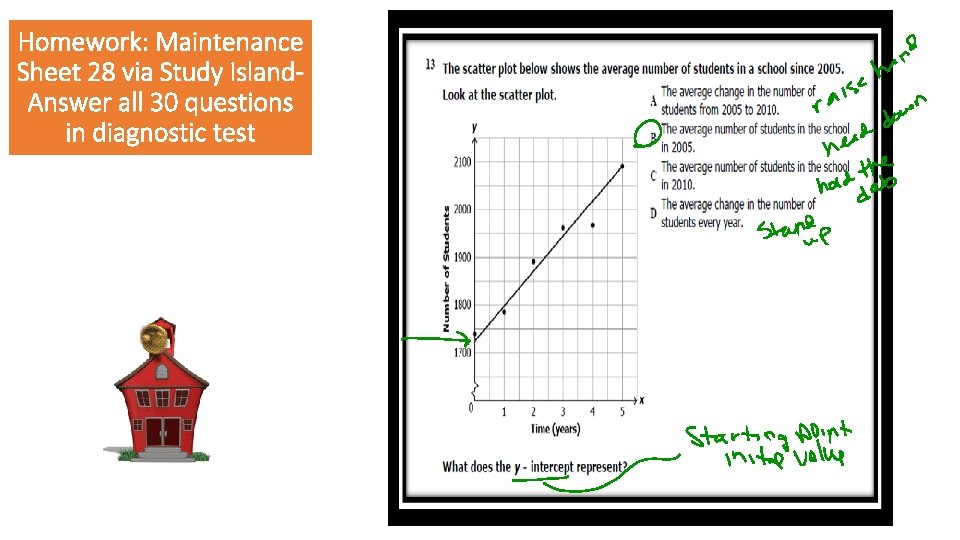
Homework: Maintenance Sheet 28 via Study Island. Answer all 30 questions in diagnostic test
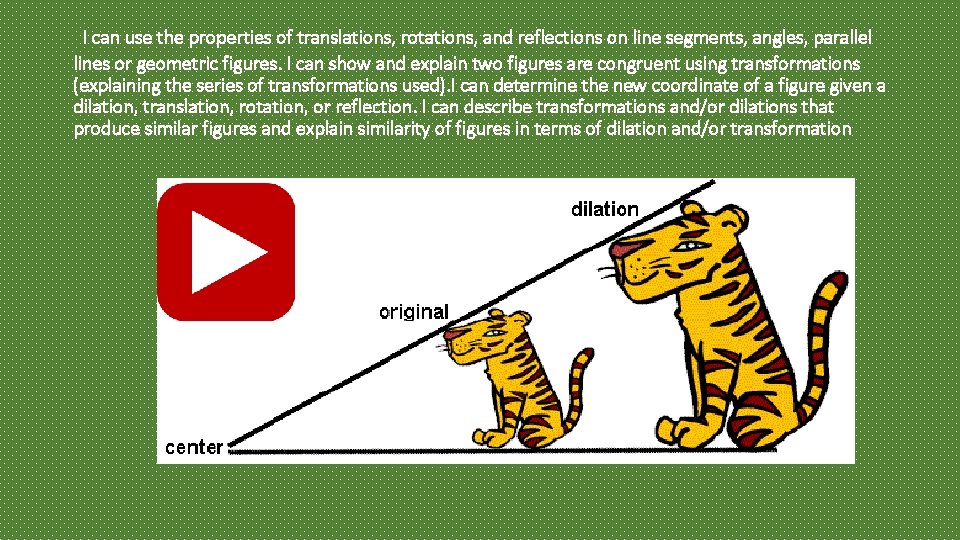
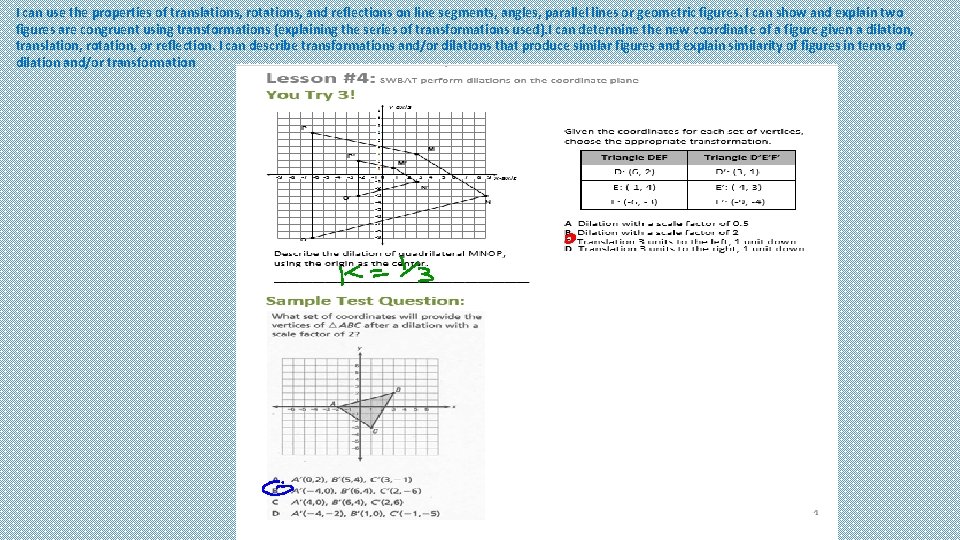
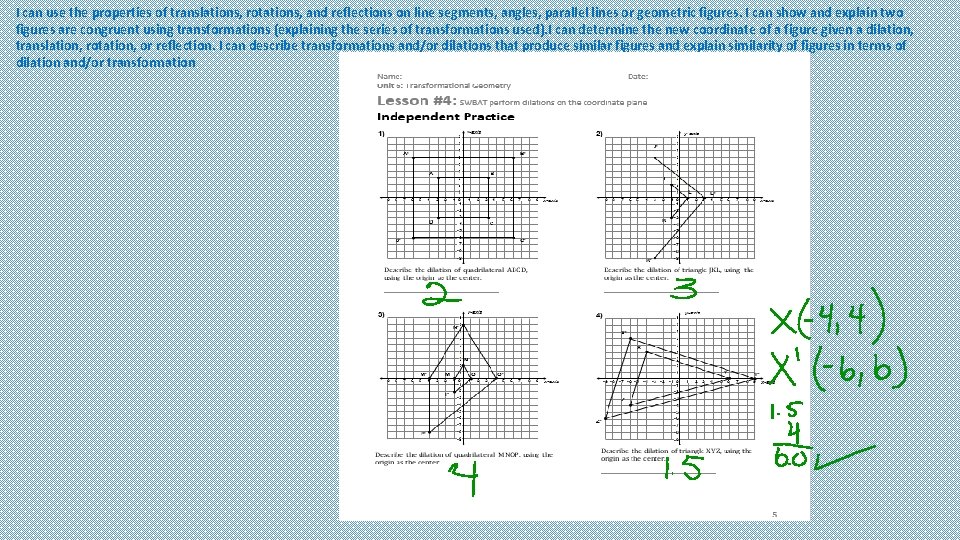
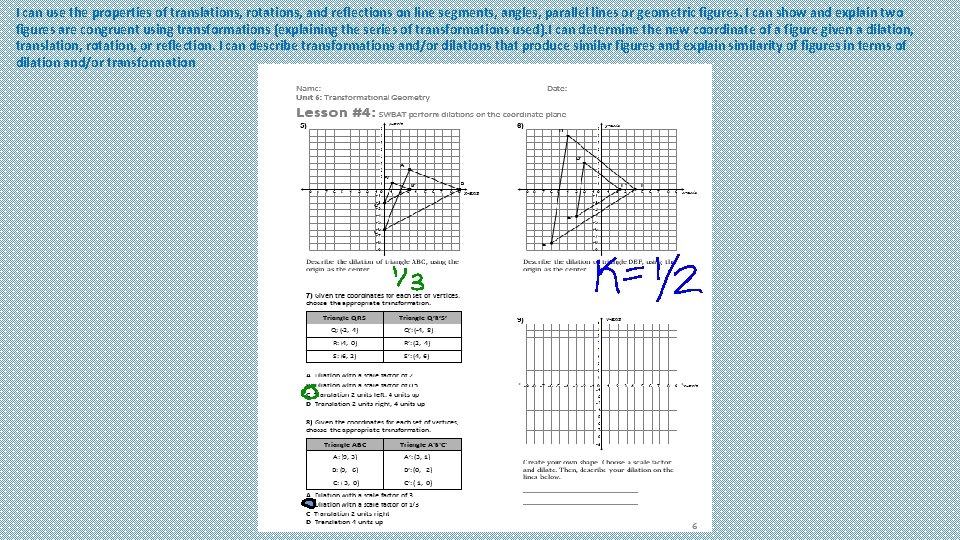
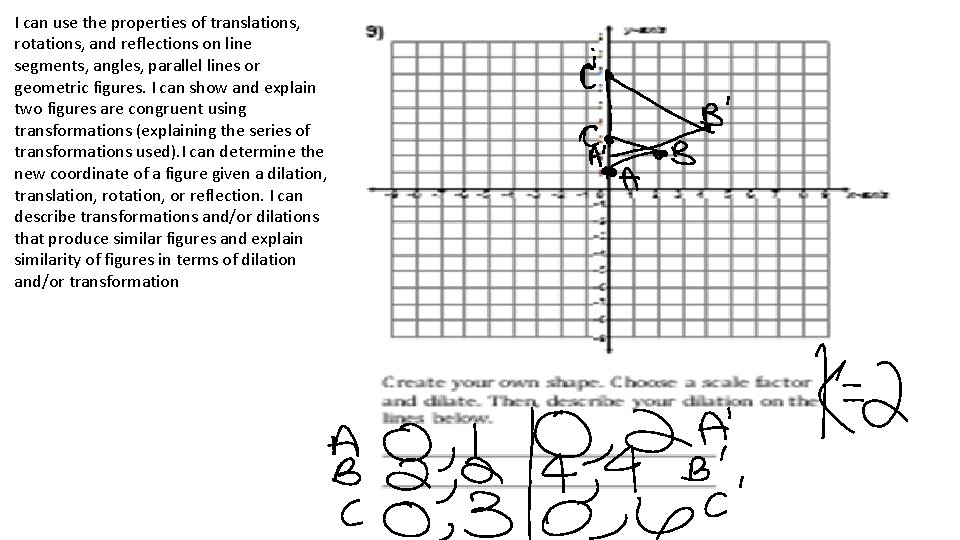
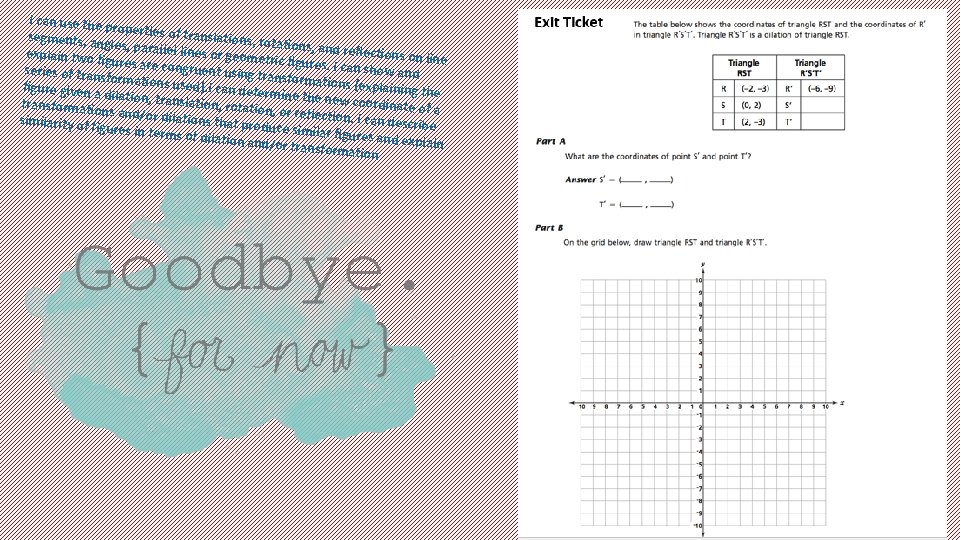
I can use the properties of translations, rotations, and reflections on line segments, angles, parallel lines or geometric figures. I can show and explain two figures are congruent using transformations (explaining the series of transformations used). I can determine the new coordinate of a figure given a dilation, translation, rotation, or reflection. I can describe transformations and/or dilations that produce similar figures and explain similarity of figures in terms of dilation and/or transformation
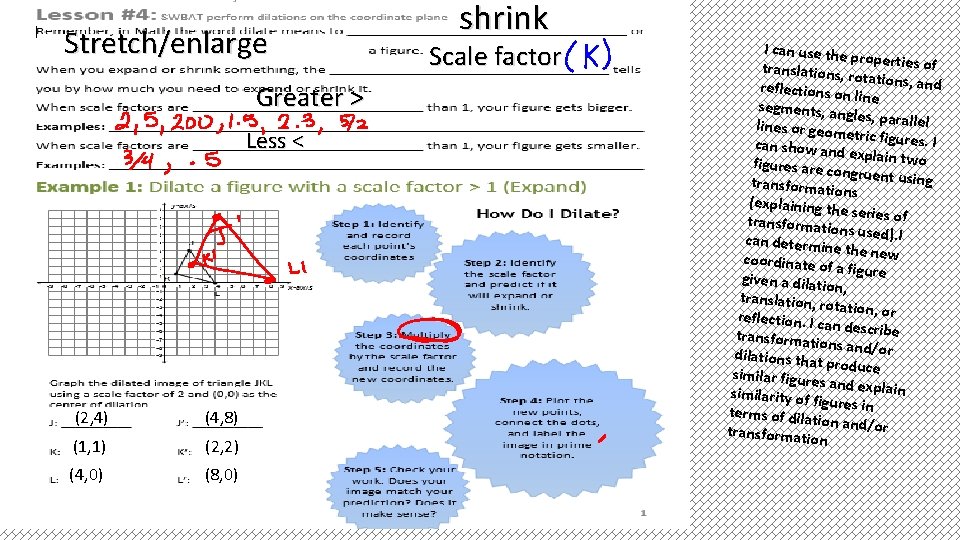
Stretch/enlarge Greater > Less < (2, 4) (4, 8) (1, 1) (2, 2) (4, 0) (8, 0) shrink Scale factor I can use the properties of translations, rotations, an d reflections o n line segments, an gles, parallel lines or geom etric figures. I can show and explain two figures are co ngruent usin g transformatio ns (explaining th e series of transformatio ns used). I can determin e the new coordinate o f a figure given a dilatio n, translation, r otation, or reflection. I c an describe transformatio ns and/or dilations tha t produce similar figure s and explain similarity of figures in terms of dila tion and/or transformatio n
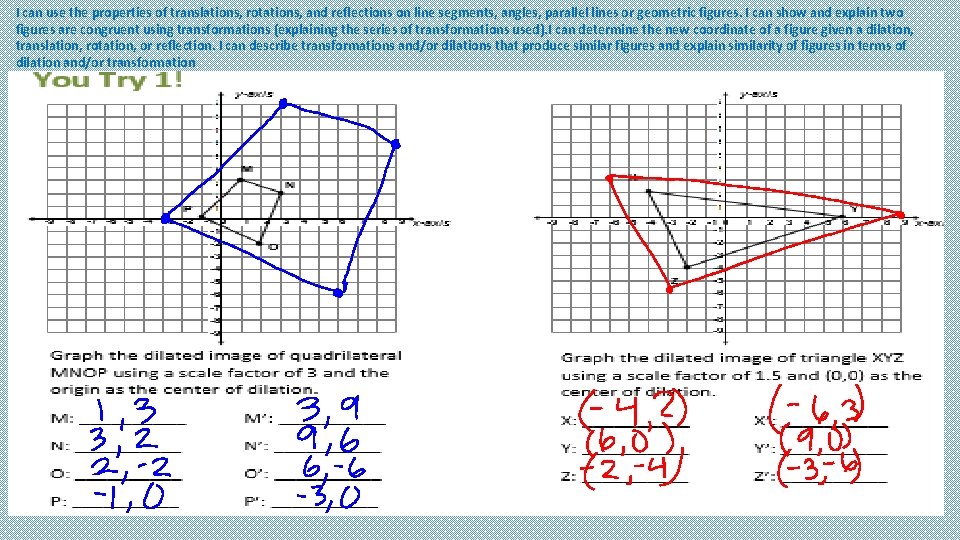
I can use the properties of translations, rotations, and reflections on line segments, angles, parallel lines or geometric figures. I can show and explain two figures are congruent using transformations (explaining the series of transformations used). I can determine the new coordinate of a figure given a dilation, translation, rotation, or reflection. I can describe transformations and/or dilations that produce similar figures and explain similarity of figures in terms of dilation and/or transformation
I can use the properties of translations, rotations, and reflections on line segments, angles, parallel lines or geometric figures. I can show and explain two figures are congruent using transformations (explaining the series of transformations used). I can determine the new coordinate of a figure given a dilation, translation, rotation, or reflection. I can describe transformations and/or dilations that produce similar figures and explain similarity of figures in terms of dilation and/or transformation
I can use the properties of translations, rotations, and reflections on line segments, angles, parallel lines or geometric figures. I can show and explain two figures are congruent using transformations (explaining the series of transformations used). I can determine the new coordinate of a figure given a dilation, translation, rotation, or reflection. I can describe transformations and/or dilations that produce similar figures and explain similarity of figures in terms of dilation and/or transformation
I can use the properties of translations, rotations, and reflections on line segments, angles, parallel lines or geometric figures. I can show and explain two figures are congruent using transformations (explaining the series of transformations used). I can determine the new coordinate of a figure given a dilation, translation, rotation, or reflection. I can describe transformations and/or dilations that produce similar figures and explain similarity of figures in terms of dilation and/or transformation
I can use the properties of translations, rotations, and reflections on line segments, angles, parallel lines or geometric figures. I can show and explain two figures are congruent using transformations (explaining the series of transformations used). I can determine the new coordinate of a figure given a dilation, translation, rotation, or reflection. I can describe transformations and/or dilations that produce similar figures and explain similarity of figures in terms of dilation and/or transformation
I can use the properties of translations, rotations, and reflections on line segments, angles, parallel lines or geometric figures. I can show and explain two figures are congruent using transformations (explaining the series of transformations used). I can determine the new coordinate of a figure given a dilation, translation, rotation, or reflection. I can describe transformations and/or dilations that produce similar figures and explain similarity of figures in terms of dilation and/or transformation
I can use the properties of translations, rotations, and reflections on line segments, angles, parallel lines or geometric figures. I can show and explain two figures are congruent using transformations (explaining the series of transformations used). I can determine the new coordinate of a figure given a dilation, translation, rotation, or reflection. I can describe transformations and/or dilations that produce similar figures and explain similarity of figures in terms of dilation and/or transformation
I can use the properties of translations, rotations, and reflections on line segments, angles, parallel lines or geometric figures. I can show and explain two figures are congruent using transformations (explaining the series of transformations used). I can determine the new coordinate of a figure given a dilation, translation, rotation, or reflection. I can describe transformations and/or dilations that produce similar figures and explain similarity of figures in terms of dilation and/or transformation
I can use the properties of translations, rotations, and reflections on line segments, angles, parallel lines or geometric figures. I can show and explain two figures are congruent using transformations (explaining the series of transformations used). I can determine the new coordinate of a figure given a dilation, translation, rotation, or reflection. I can describe transformations and/or dilations that produce similar figures and explain similarity of figures in terms of dilation and/or transformation
I can use the properties of translations, segments, an rotations, an gles, parallel d reflections lines or geom explain two fi on line etric figures are con I can show an gruent using series of tran d transformations (explainin used). I can d figure given a g the etermine the dilation, tran new coordin slation, rotati transformati ate of a on, or reflecti ons and/or d o il n a. ti I ons that prod can describe similarity of figures in term uce similar fi gures and ex s of dilation a plain nd/or transfo rmation