
Homework https www investopedia comarticlesforex11goldseffectcurrencies asp BY ABDULLAH
Homework https: //www. investopedia. com/articles/forex/11/golds-effect-currencies. asp BY: ABDULLAH ZIARMAL
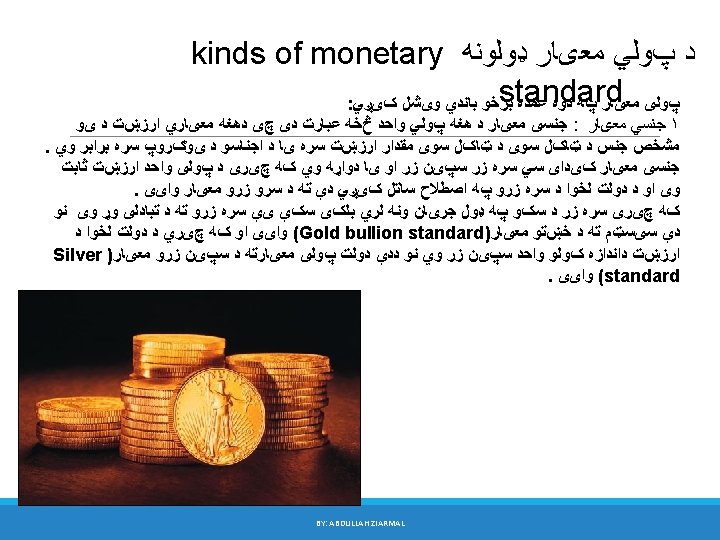
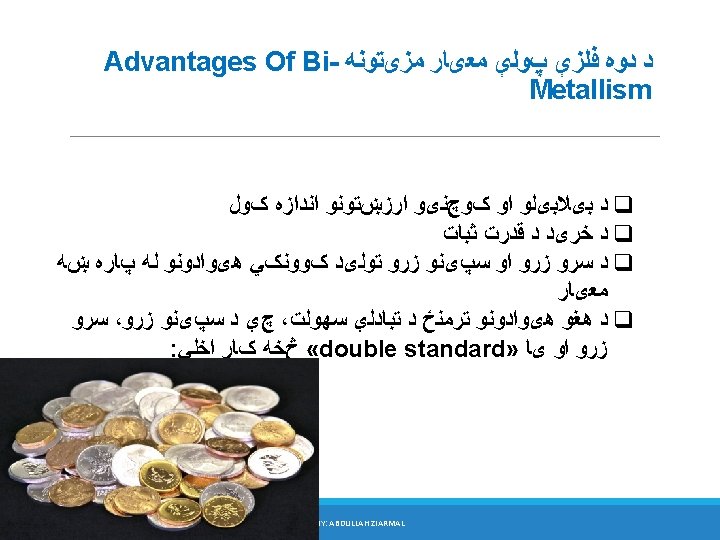
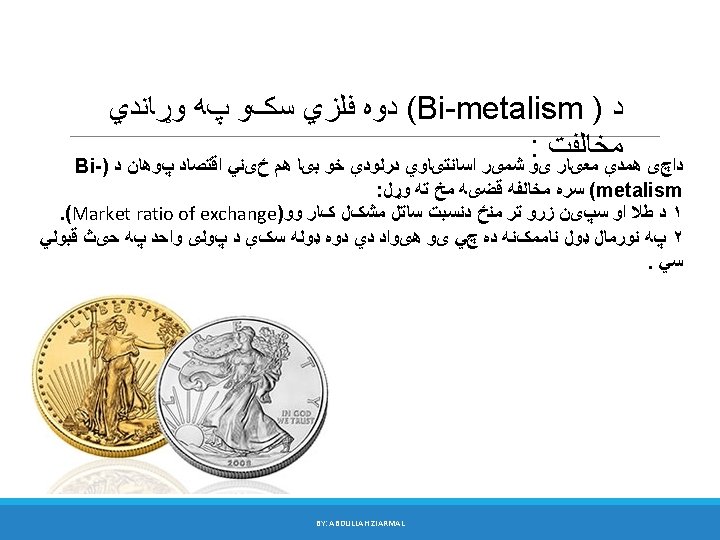
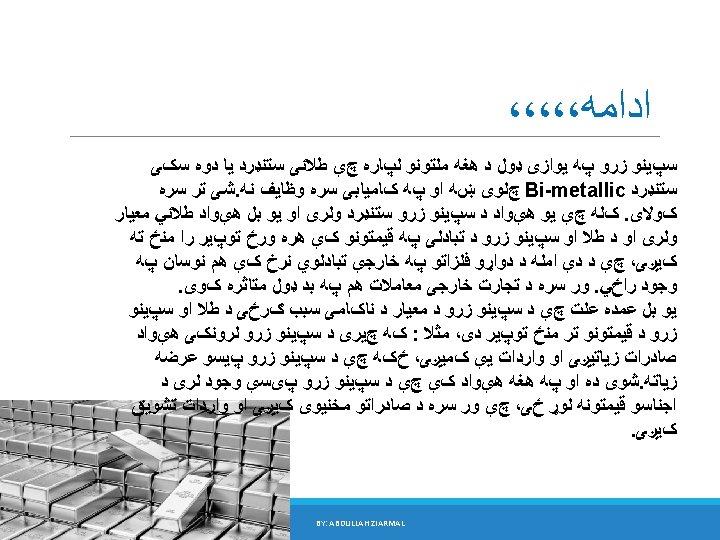
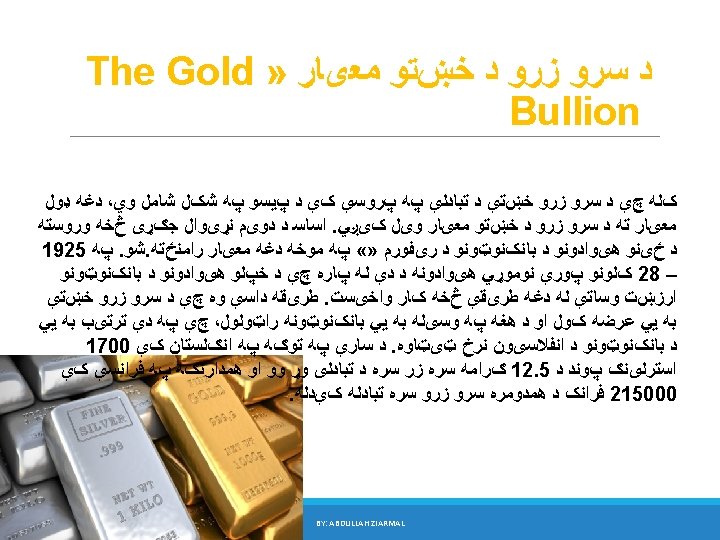
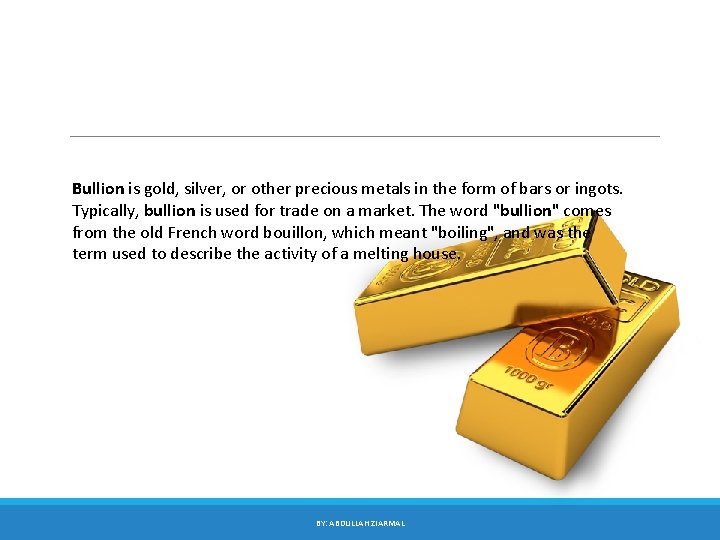
Bullion is gold, silver, or other precious metals in the form of bars or ingots. Typically, bullion is used for trade on a market. The word "bullion" comes from the old French word bouillon, which meant "boiling", and was the term used to describe the activity of a melting house. BY: ABDULLAH ZIARMAL
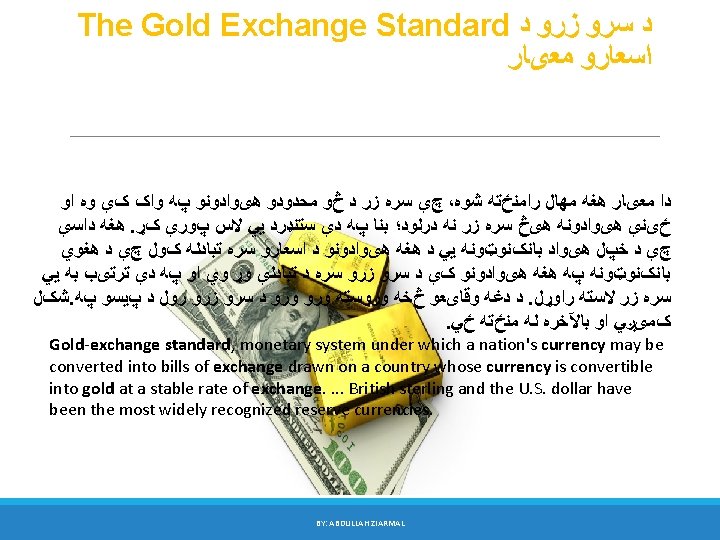
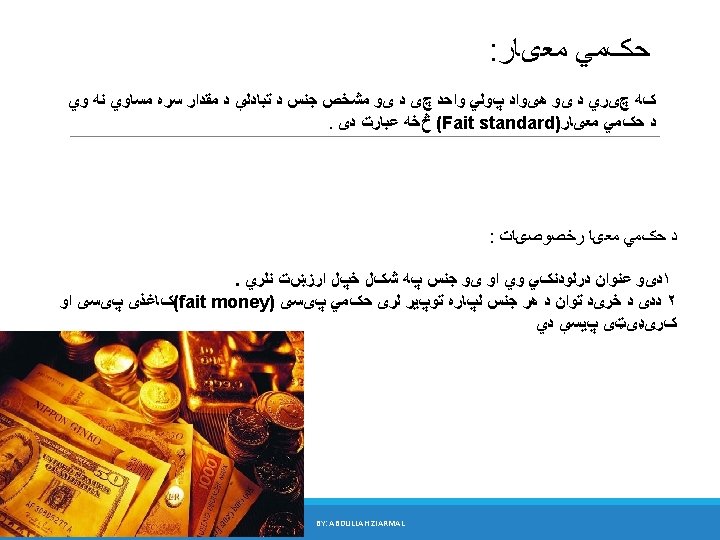
Fiat money is a currency without intrinsic value that has been established as money, often by government regulation. Fiat money does not have use value, and has value only because a government maintains its value, or because parties engaging in exchange agree on its value. [1] It was introduced as an alternative to commodity money and representative money. Commodity money is created from a good, often a precious metal such as gold or silver, which has uses other than as a medium of exchange (such a good is called a commodity). Representative money is similar to fiat money, but it represents a claim on a commodity (which can be redeemed to a greater or lesser extent). [2][3][note 1] The first use of fiat money was recorded in China around 1000 AD. Since then, it has been used by various countries, usually concurrently with commodity currencies. Fiat money started to dominate in the 20 th century. Since the decoupling of the US dollar from gold by Richard Nixon in 1971, a system of national fiat currencies has been used globally. Fiat money has been defined variously as: Any money declared by a government to be legal tender. [4] State-issued money which is neither convertible by law to any other thing, nor fixed in value in terms of any objective standard. [5] Intrinsically valueless money used as money because of government decree. [2] An intrinsically useless object that serves as a medium of exchange[6] (also known as fiduciary money. ) BY: ABDULLAH ZIARMAL
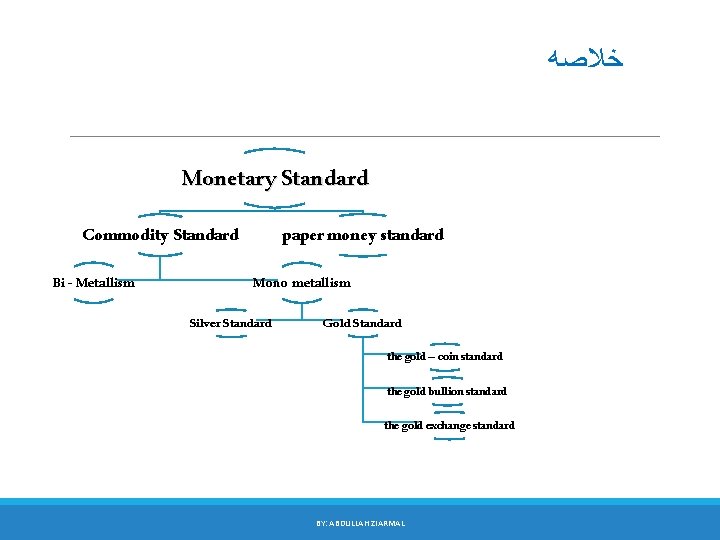
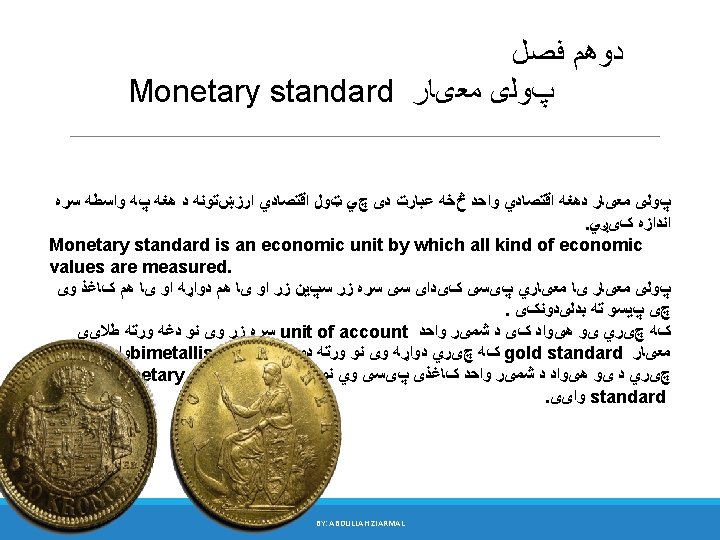
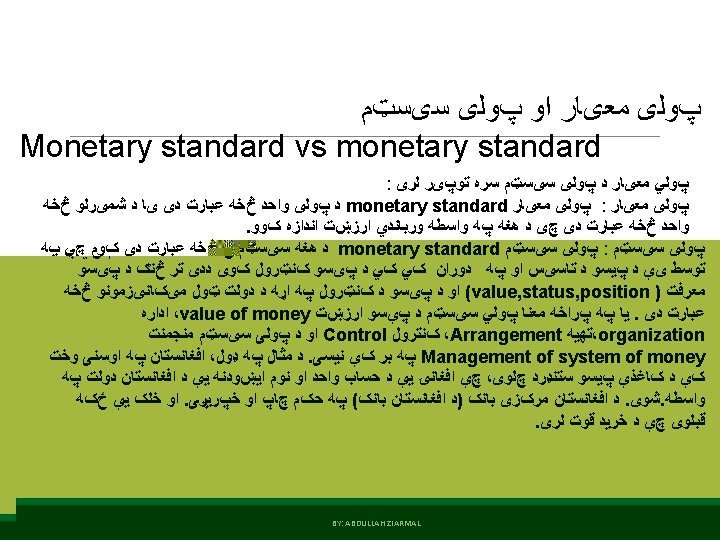
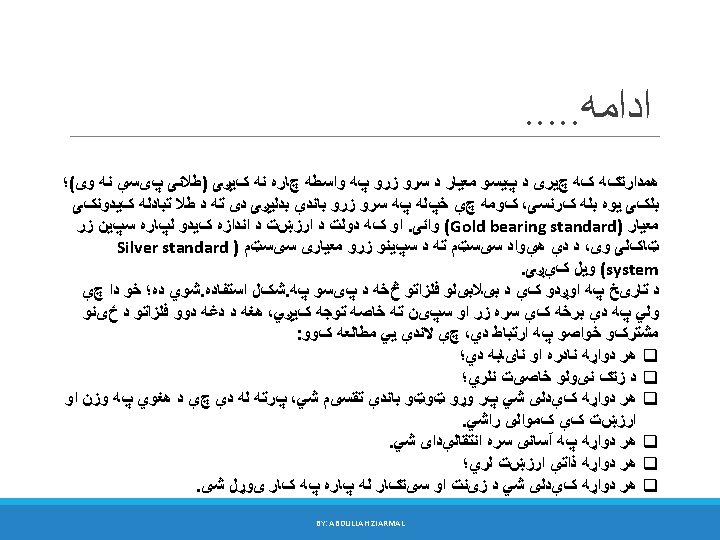
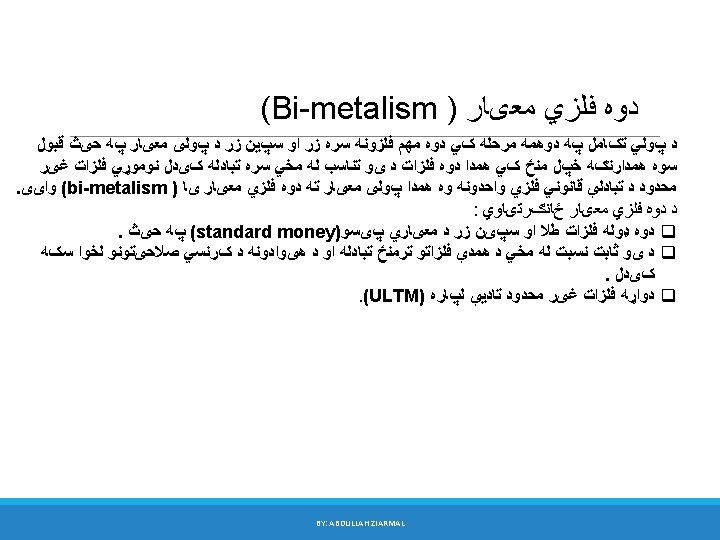
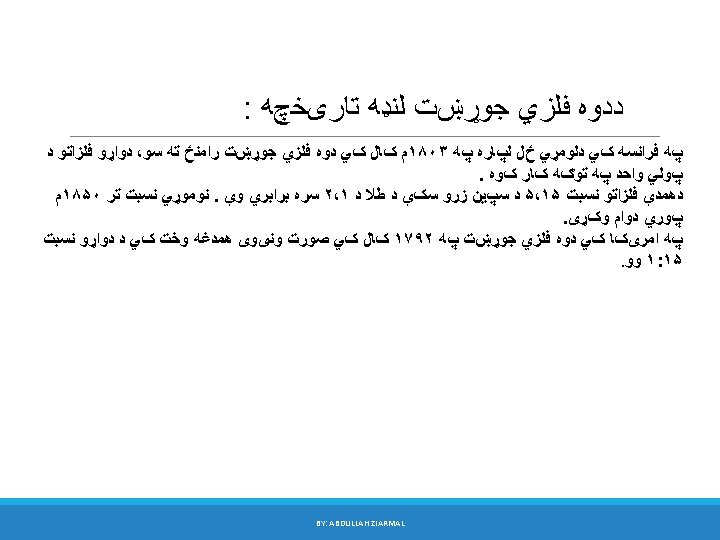
ﺧﻼﺻﻪ Monetary Standard Commodity Standard Bi - Metallism paper money standard Mono metallism Silver Standard Gold Standard the gold – coin standard the gold bullion standard the gold exchange standard BY: ABDULLAH ZIARMAL
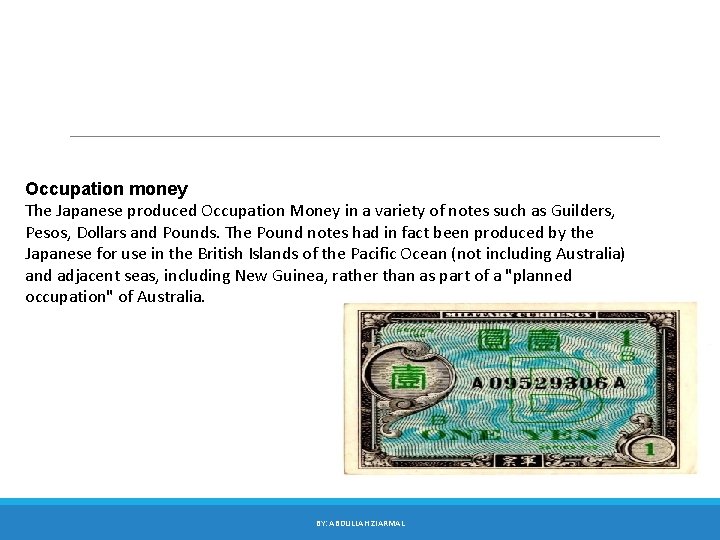
Occupation money The Japanese produced Occupation Money in a variety of notes such as Guilders, Pesos, Dollars and Pounds. The Pound notes had in fact been produced by the Japanese for use in the British Islands of the Pacific Ocean (not including Australia) and adjacent seas, including New Guinea, rather than as part of a "planned occupation" of Australia. BY: ABDULLAH ZIARMAL
Legal tender ﻗﺎﻧﻮﻧﻲ پﻴﺴﻲ پﺮ ﻫﻤﺪې ﺍﺳﺎﺱ ټﻮﻝ ﻫﻐﻪ. پﻪ ﺩﻏﻪ پﻴﺴﻮ کې ﻗﺎﻧﻮﻧﻲ ﻭﺍﻟی ﺩ ﺗﺄﺪیﺎﺗﻮ پﻪ ﻟﺤﺎﻅ ﺩ پﺎﻡ ﻭړ ﺩﻩ . کﻮﻻی ﺷﻮ ﻫﻐﻪ ﻗﺎﻧﻮﻧﻲ پﻴﺴﻲ ﻭګڼﻮ ، پﻴﺴﻲ چﻲ ﺩ ﻫﺮ ډﻮﻝ پﻮﺭ ﺩ ﺗﺄﺪیﺎﺗﻮ ﻟپﺎﺭﻩ ﻣﻨﻞ کیږﻲ ﺩ پﻴﺴﻮ ﻗﺎﻧﻮﻧﻲ ﻭﺍﻟی ﻫیڅکﻠﻪ ﺩﺍ ﻣﺎﻧﺎ ﻧﻠﺮﻱ چﻲ ټﻮﻝ ﺧﺮڅﻮﻧکی ﺍﻭ ﻣﻌﺎﻣﻠﻪ کﻮﻭﻧکﻲ ﺣﺘﻤ پﻪ ﻫﻐﻪ پﻴﺴﻲ ﻣﻌﺎﻣﻠﻪ ﺳﺮﺗﻪ ﻭﺭﺳﻮﻱ؛ ﺑﻠکﻲ کﻪ ﺧﺮڅﻮﻧکﻲ ﻭﻧﻪ ﻏﻮﺍړﻲ ﻣﻌﺎﻣﻠﻪ پﻪ ﺩﻏﻪ پیﺴﻮ ﻫیڅ ﻣﻘﺎﻡ ﻧﺸﻲ کﻮﻻی ﻫﻐﻪ ﺩ ﺩﻏﺴﻲ ﻣﻌﺎﻣﻠﻲ پﻪ ﺳﺮﺗﻪ ، » ﻗﺎﻧﻮﻧی پﻴﺴﻲ « ﺳﺮﺗﻪ ﻭﺭﺳﻮﻱ . ﺭﺳﻮﻟﻮ ﻣﺠﺒﻮﺭ کړﻲ؛ ﻣګﺮ ﺩﺍ چې ﻗﺎﻧﻮﻥ ﺑﻞ ډﻮﻝ ﺻﺮﺍﺣﺖ » ﺣکﻢ « ﻭکړﻲ Legal tender is a medium of payment recognized by a legal system to be valid for meeting a financ obligation. [1] Paper currency and coins are common forms of legal tender in many countries. Legal tender is variously defined in different jurisdictions. Formally, it is anything which when offered in payment extinguishes the debt. Thus, personal cheques, credit cards, and similar non-cash method payment are not usually legal tender. The law does not relieve the debt obligation until payment i tendered. Coins and banknotes are usually defined as legal tender. Some jurisdictions may forbid o restrict payment made other than by legal tender. For example, such a law might outlaw the use o foreign coins and bank notes or require a license to perform financial transactions in a foreign currency. BY: ABDULLAH ZIARMAL
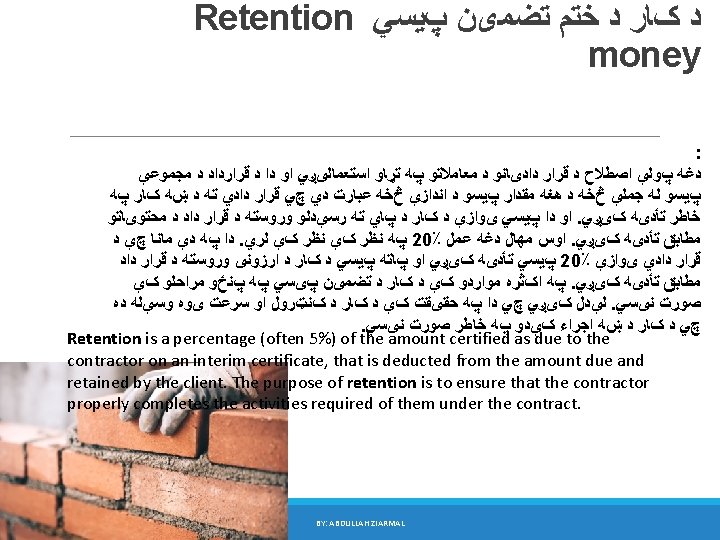
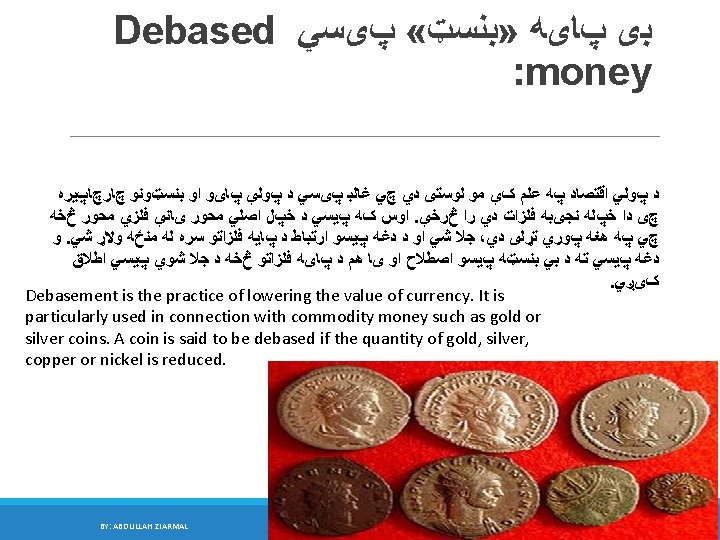
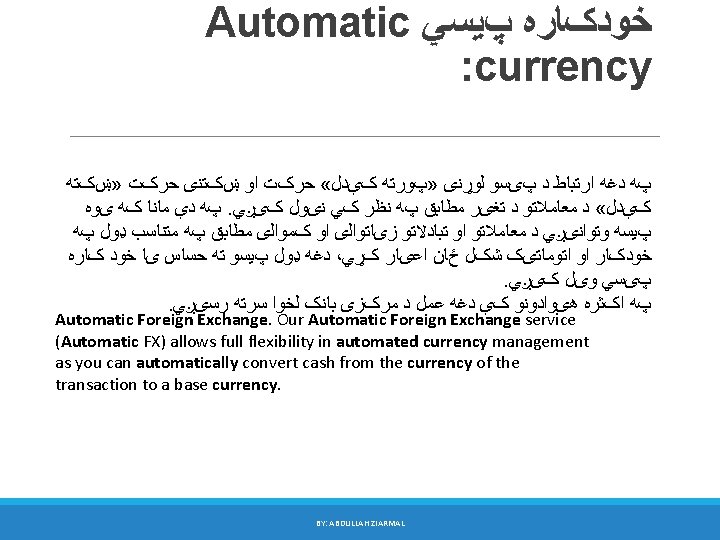
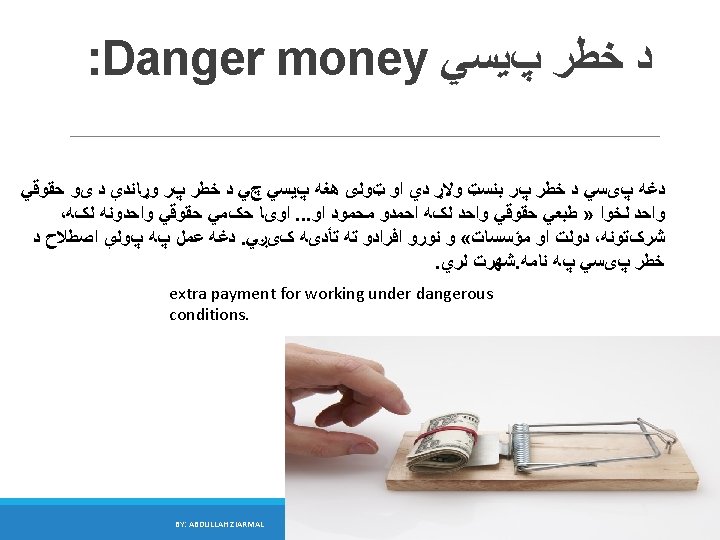
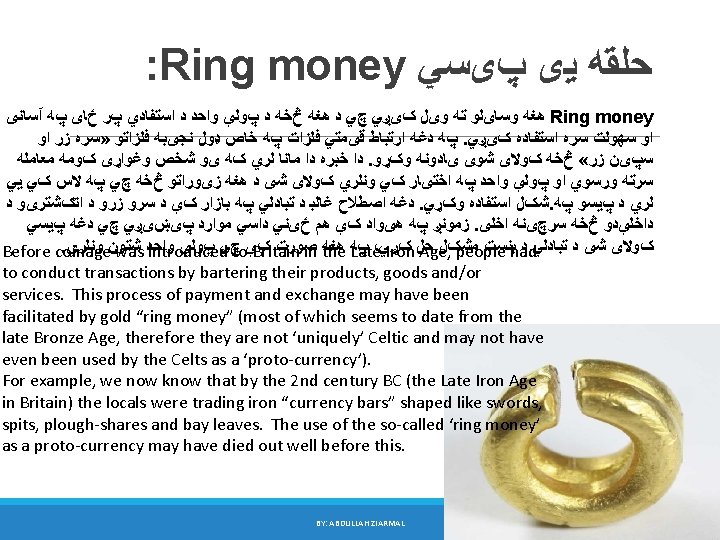
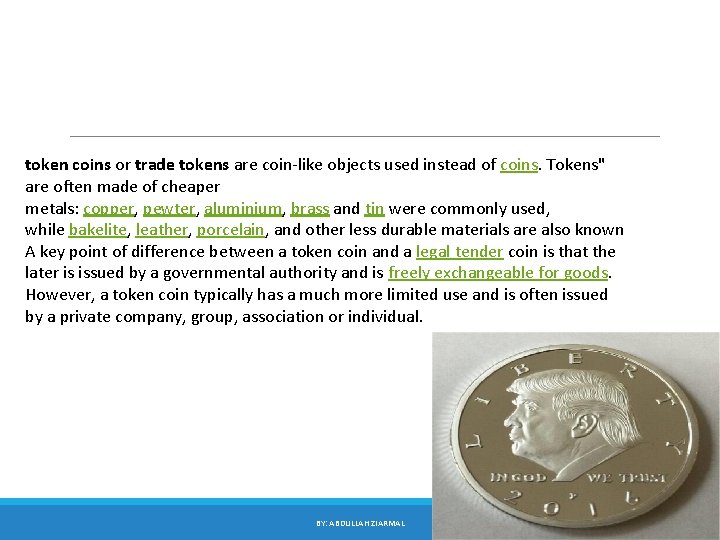
token coins or trade tokens are coin-like objects used instead of coins. Tokens" are often made of cheaper metals: copper, pewter, aluminium, brass and tin were commonly used, while bakelite, leather, porcelain, and other less durable materials are also known A key point of difference between a token coin and a legal tender coin is that the later is issued by a governmental authority and is freely exchangeable for goods. However, a token coin typically has a much more limited use and is often issued by a private company, group, association or individual. BY: ABDULLAH ZIARMAL
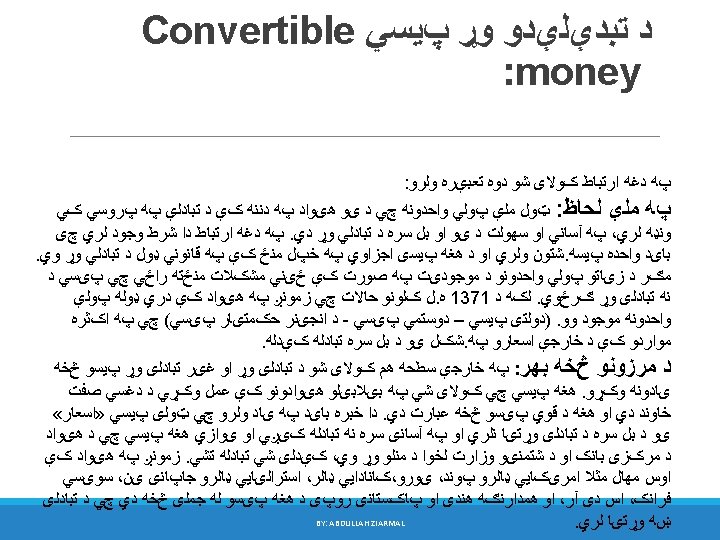
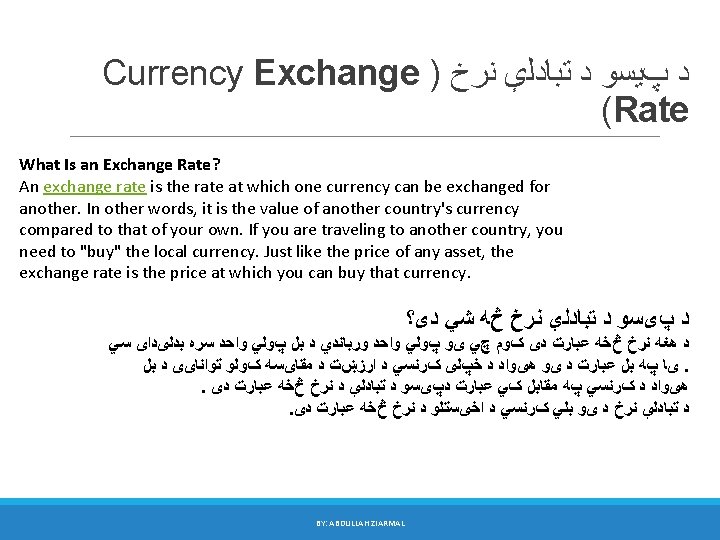
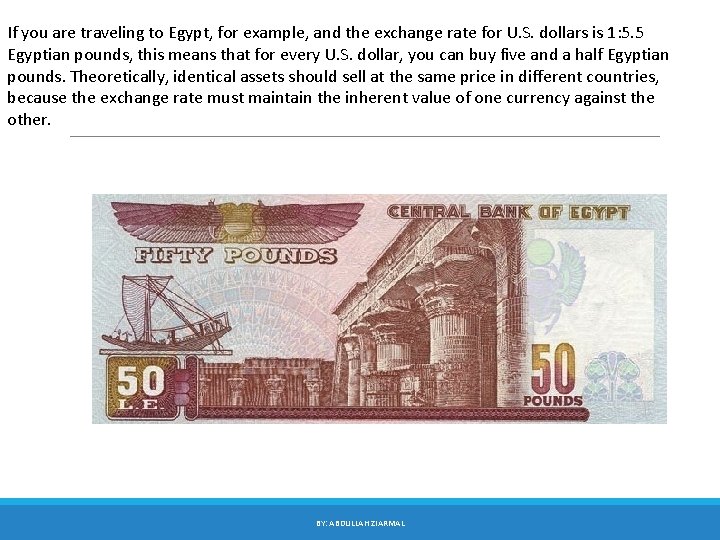
If you are traveling to Egypt, for example, and the exchange rate for U. S. dollars is 1: 5. 5 Egyptian pounds, this means that for every U. S. dollar, you can buy five and a half Egyptian pounds. Theoretically, identical assets should sell at the same price in different countries, because the exchange rate must maintain the inherent value of one currency against the other. BY: ABDULLAH ZIARMAL
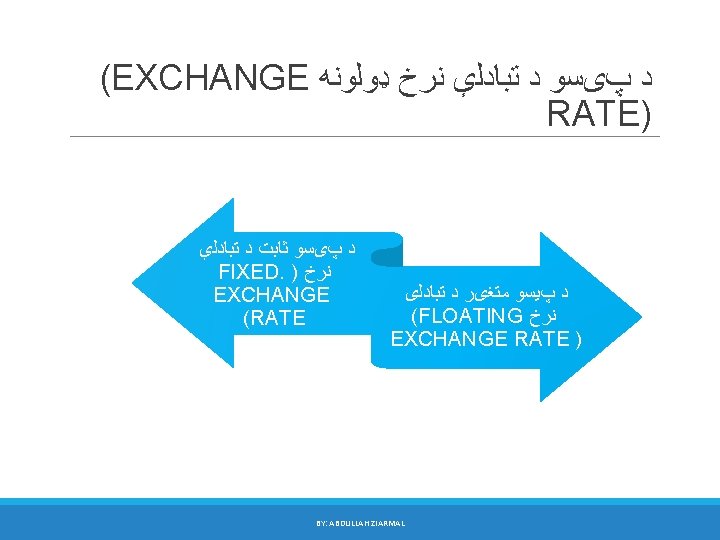
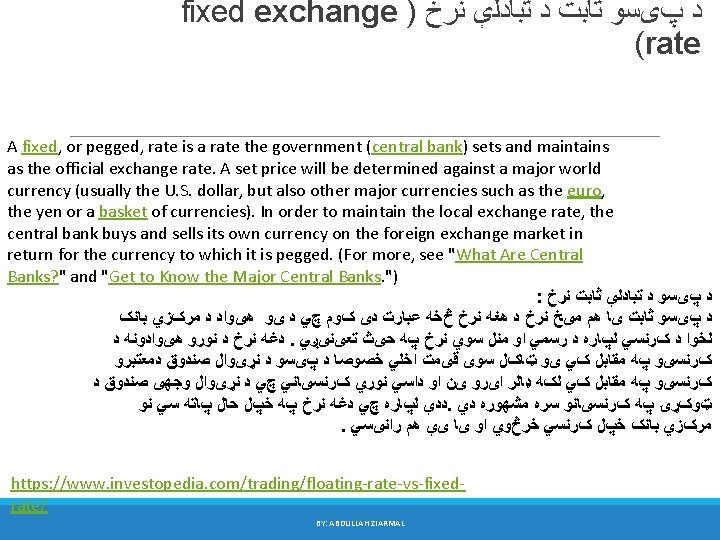
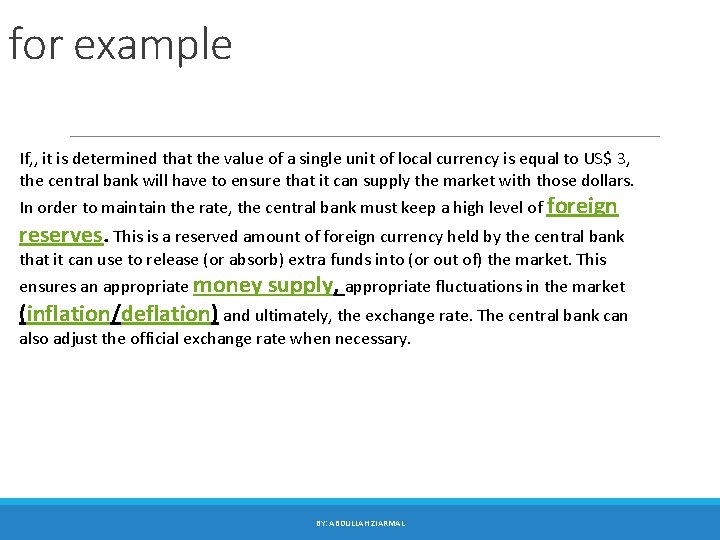
for example If, , it is determined that the value of a single unit of local currency is equal to US$ 3, the central bank will have to ensure that it can supply the market with those dollars. In order to maintain the rate, the central bank must keep a high level of foreign reserves. This is a reserved amount of foreign currency held by the central bank that it can use to release (or absorb) extra funds into (or out of) the market. This ensures an appropriate money supply, appropriate fluctuations in the market (inflation/deflation) and ultimately, the exchange rate. The central bank can also adjust the official exchange rate when necessary. BY: ABDULLAH ZIARMAL
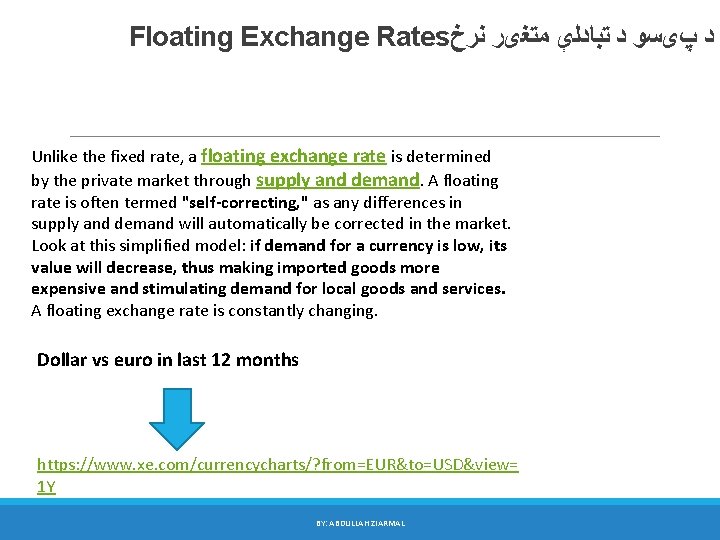
Floating Exchange Rates ﺩ پیﺴﻮ ﺩ ﺗﺒﺎﺩﻟې ﻣﺘﻐیﺮ ﻧﺮﺥ Unlike the fixed rate, a floating exchange rate is determined by the private market through supply and demand. A floating rate is often termed "self-correcting, " as any differences in supply and demand will automatically be corrected in the market. Look at this simplified model: if demand for a currency is low, its value will decrease, thus making imported goods more expensive and stimulating demand for local goods and services. A floating exchange rate is constantly changing. Dollar vs euro in last 12 months https: //www. xe. com/currencycharts/? from=EUR&to=USD&view= 1 Y BY: ABDULLAH ZIARMAL
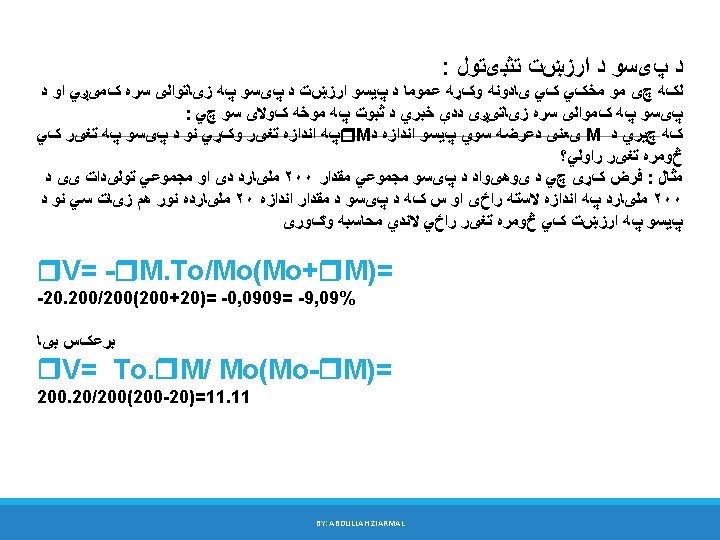
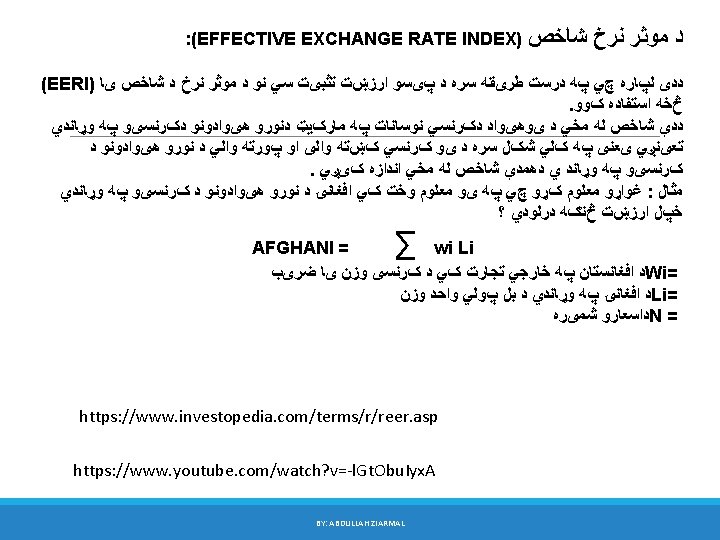
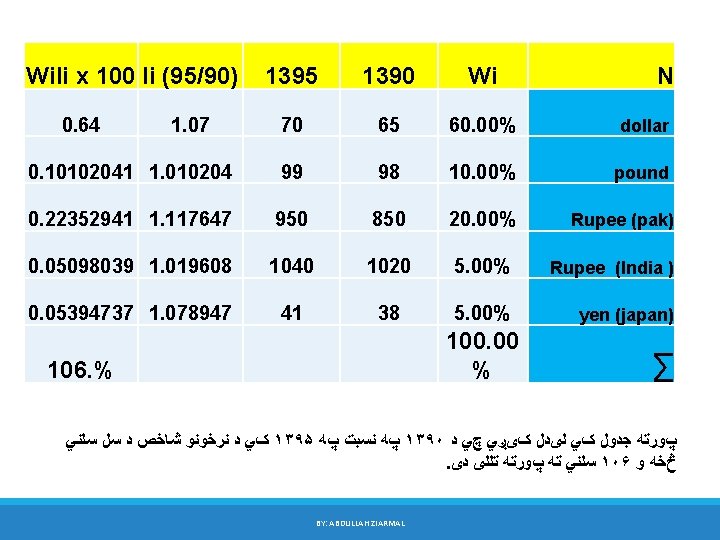
N Wi 1390 1395 dollar 60. 00% 65 70 pound 10. 00% 98 99 0. 10102041 1. 010204 ) Rupee (pak 20. 00% 850 950 0. 22352941 1. 117647 ) Rupee (India 5. 00% 1020 1040 0. 05098039 1. 019608 ) yen (japan 5. 00% 38 41 0. 05394737 1. 078947 100. 00 % . ∑ ) Wili x 100 li (95/90 1. 07 0. 64 106. % پﻮﺭﺗﻪ ﺟﺪﻭﻝ کﻲ ﻟیﺪﻝ کیږﻲ چﻲ ﺩ ۱۳۹۰ پﻪ ﻧﺴﺒﺖ پﻪ ۱۳۹۵ کﻲ ﺩ ﻧﺮﺧﻮﻧﻮ ﺷﺎﺧﺺ ﺩ ﺳﻞ ﺳﻠﻨﻲ څﺨﻪ ﻭ ۱۰۶ ﺳﻠﻨﻲ ﺗﻪ پﻮﺭﺗﻪ ﺗﻠﻠی ﺩی. BY: ABDULLAH ZIARMAL
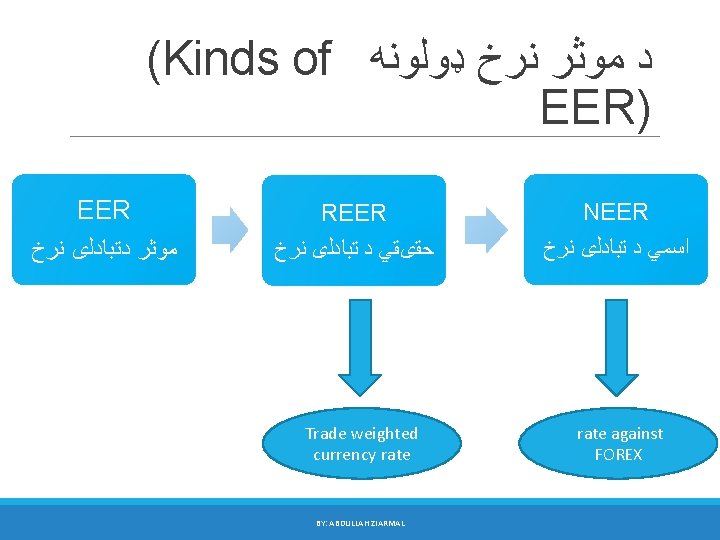
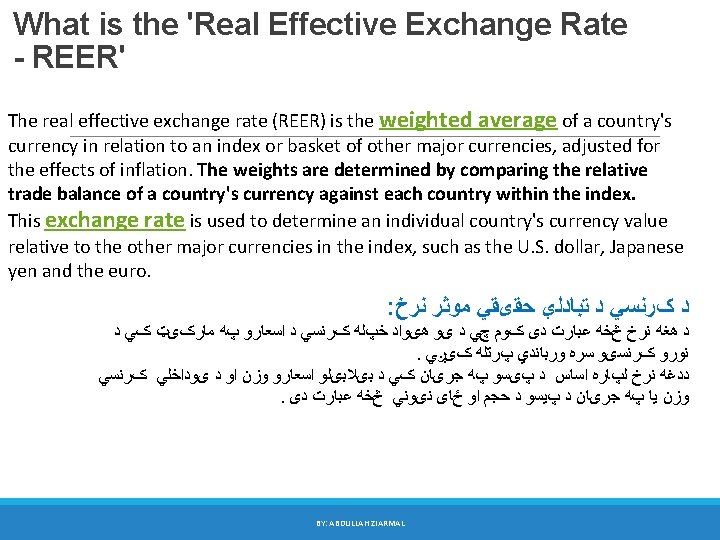
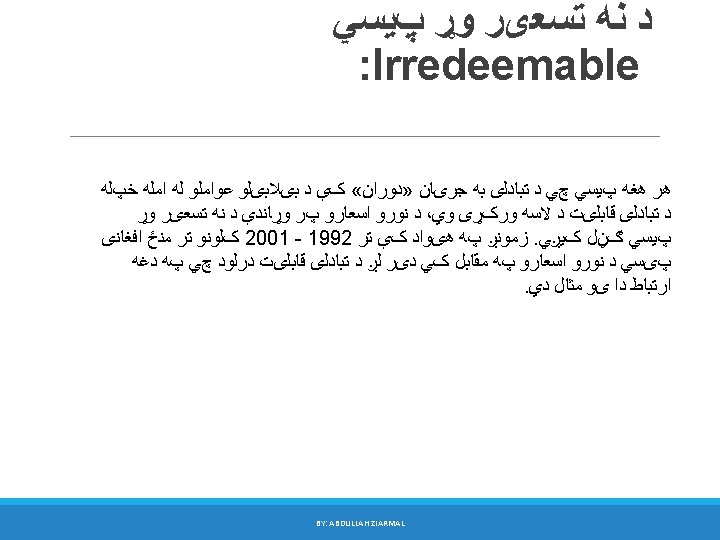
What is the 'Real Effective Exchange Rate - REER' The real effective exchange rate (REER) is the weighted average of a country's currency in relation to an index or basket of other major currencies, adjusted for the effects of inflation. The weights are determined by comparing the relative trade balance of a country's currency against each country within the index. This exchange rate is used to determine an individual country's currency value relative to the other major currencies in the index, such as the U. S. dollar, Japanese yen and the euro. : ﺩ کﺮﻧﺴﻲ ﺩ ﺗﺒﺎﺩﻟې ﺣﻘیﻘﻲ ﻣﻮﺛﺮ ﻧﺮﺥ ﺩ ﻫﻐﻪ ﻧﺮﺥ څﺨﻪ ﻋﺒﺎﺭﺕ ﺩی کﻮﻡ چﻲ ﺩ یﻮ ﻫیﻮﺍﺩ ﺧپﻠﻪ کﺮﻧﺴﻲ ﺩ ﺍﺳﻌﺎﺭﻭ پﻪ ﻣﺎﺭکیټ کﻲ ﺩ . ﻧﻮﺭﻭ کﺮﻧﺴیﻮ ﺳﺮﻩ ﻭﺭﺑﺎﻧﺪﻱ پﺮﺗﻠﻪ کیږﻲ ﺩﺩﻏﻪ ﻧﺮﺥ ﻟپﺎﺭﻩ ﺍﺳﺎﺱ ﺩ پیﺴﻮ پﻪ ﺟﺮیﺎﻥ کﻲ ﺩ ﺑیﻼﺑیﻠﻮ ﺍﺳﻌﺎﺭﻭ ﻭﺯﻥ ﺍﻭ ﺩ یﻮﺩﺍﺧﻠﻲ کﺮﻧﺴﻲ . ﻭﺯﻥ ﻳﺎ پﻪ ﺟﺮیﺎﻥ ﺩ پﻴﺴﻮ ﺩ ﺣﺠﻢ ﺍﻭ ځﺎی ﻧیﻮﻧﻲ څﺨﻪ ﻋﺒﺎﺭﺕ ﺩی BY: ABDULLAH ZIARMAL
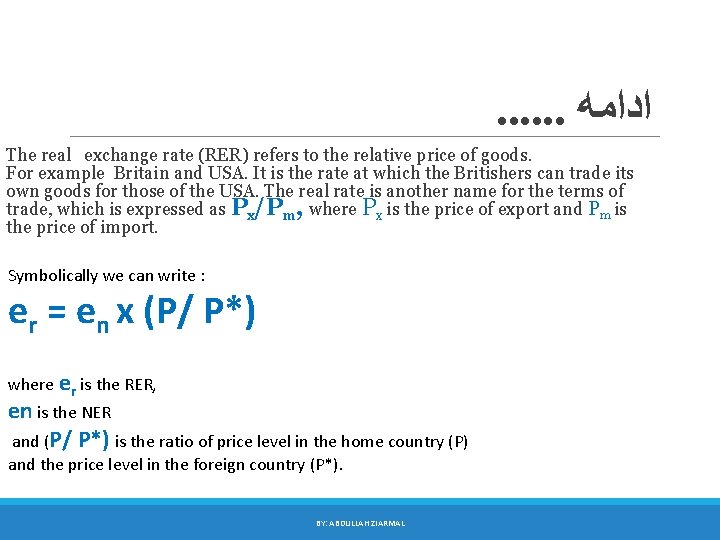
. . . ﺍﺩﺍﻣﻪ The real exchange rate (RER) refers to the relative price of goods. For example Britain and USA. It is the rate at which the Britishers can trade its own goods for those of the USA. The real rate is another name for the terms of trade, which is expressed as Px/Pm, where Px is the price of export and Pm is the price of import. Symbolically we can write : er = en x (P/ P*) where er is the RER, en is the NER and (P/ P*) is the ratio of price level in the home country (P) and the price level in the foreign country (P*). BY: ABDULLAH ZIARMAL
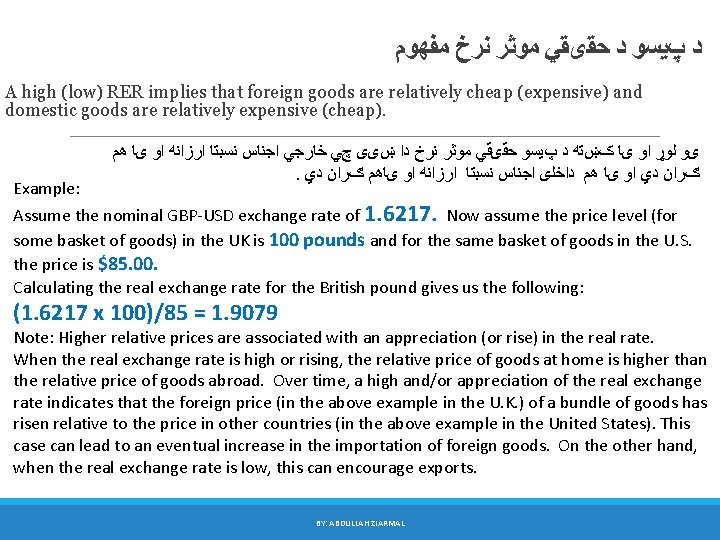
ﺩ پﻴﺴﻮ ﺩ ﺣﻘیﻘﻲ ﻣﻮﺛﺮ ﻧﺮﺥ ﻣﻔﻬﻮﻡ A high (low) RER implies that foreign goods are relatively cheap (expensive) and domestic goods are relatively expensive (cheap). Example: یﻮ ﻟﻮړ ﺍﻭ یﺎ کښﺘﻪ ﺩ پﻴﺴﻮ ﺣﻘیﻘﻲ ﻣﻮﺛﺮ ﻧﺮﺥ ﺩﺍ ښیی چﻲ ﺧﺎﺭﺟﻲ ﺍﺟﻨﺎﺱ ﻧﺴﺒﺘﺎ ﺍﺭﺯﺍﻧﻪ ﺍﻭ یﺎ ﻫﻢ . ګﺮﺍﻥ ﺩﻱ ﺍﻭ یﺎ ﻫﻢ ﺩﺍﺧﻠی ﺍﺟﻨﺎﺱ ﻧﺴﺒﺘﺎ ﺍﺭﺯﺍﻧﻪ ﺍﻭ یﺎﻫﻢ ګﺮﺍﻥ ﺩﻱ Assume the nominal GBP-USD exchange rate of 1. 6217. Now assume the price level (for some basket of goods) in the UK is 100 pounds and for the same basket of goods in the U. S. the price is $85. 00. Calculating the real exchange rate for the British pound gives us the following: (1. 6217 x 100)/85 = 1. 9079 Note: Higher relative prices are associated with an appreciation (or rise) in the real rate. When the real exchange rate is high or rising, the relative price of goods at home is higher than the relative price of goods abroad. Over time, a high and/or appreciation of the real exchange rate indicates that the foreign price (in the above example in the U. K. ) of a bundle of goods has risen relative to the price in other countries (in the above example in the United States). This case can lead to an eventual increase in the importation of foreign goods. On the other hand, when the real exchange rate is low, this can encourage exports. BY: ABDULLAH ZIARMAL
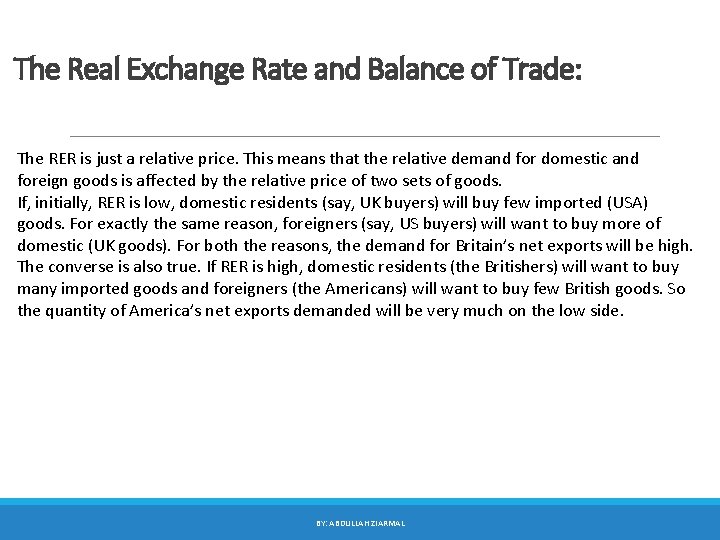
The Real Exchange Rate and Balance of Trade: The RER is just a relative price. This means that the relative demand for domestic and foreign goods is affected by the relative price of two sets of goods. If, initially, RER is low, domestic residents (say, UK buyers) will buy few imported (USA) goods. For exactly the same reason, foreigners (say, US buyers) will want to buy more of domestic (UK goods). For both the reasons, the demand for Britain’s net exports will be high. The converse is also true. If RER is high, domestic residents (the Britishers) will want to buy many imported goods and foreigners (the Americans) will want to buy few British goods. So the quantity of America’s net exports demanded will be very much on the low side. BY: ABDULLAH ZIARMAL
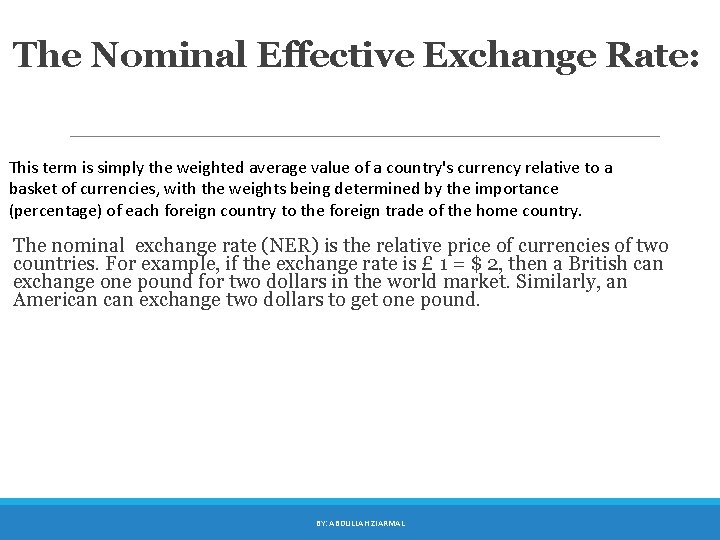
The Nominal Effective Exchange Rate: This term is simply the weighted average value of a country's currency relative to a basket of currencies, with the weights being determined by the importance (percentage) of each foreign country to the foreign trade of the home country. The nominal exchange rate (NER) is the relative price of currencies of two countries. For example, if the exchange rate is £ 1 = $ 2, then a British can exchange one pound for two dollars in the world market. Similarly, an American exchange two dollars to get one pound. BY: ABDULLAH ZIARMAL
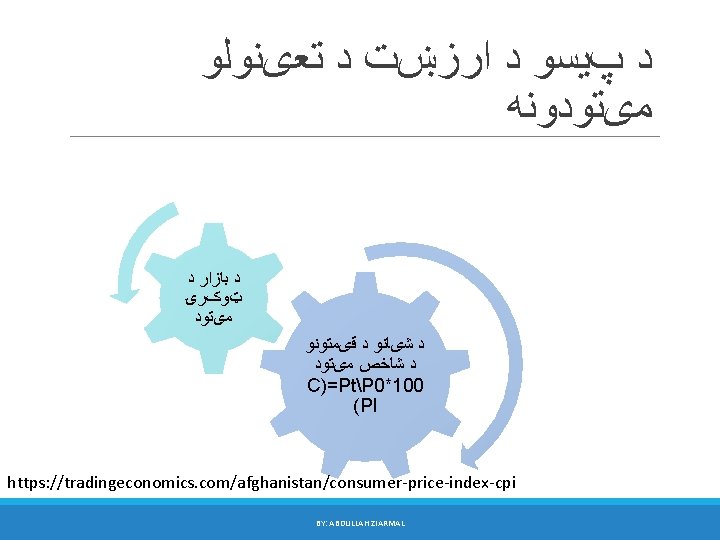

TUTOR-MARKED ASSIGNMENTS http: //www. lietaer. com/category/monetary-literacy/ for group one introduction to money https: //www. cato. org/cato-journal/springsummer-2018/case-newinternational-monetary-system for group 2 nd https: //www. researchgate. net/publication/299525867_Dollarization_A_ Case_Study_of_Ecuador for group 3 rd http: //dab. gov. af/en/page/about-the-bank/departments/11010 for group 4 th da afghanistan bank monetary policy پﺎی BY: ABDULLAH ZIARMAL .
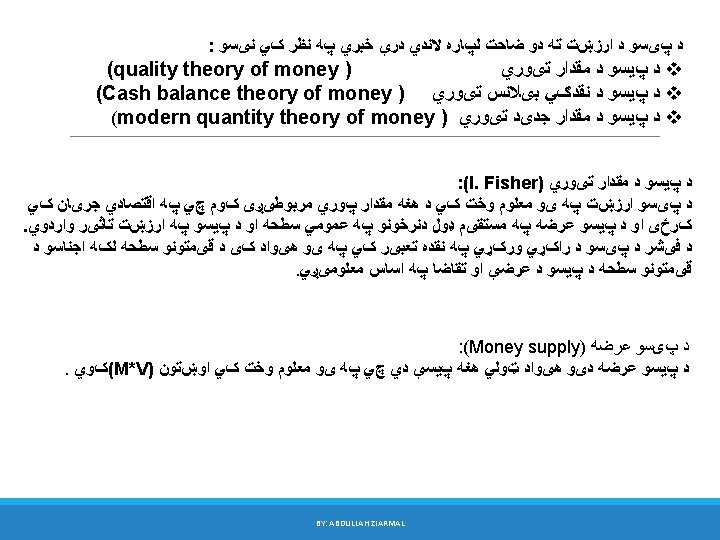
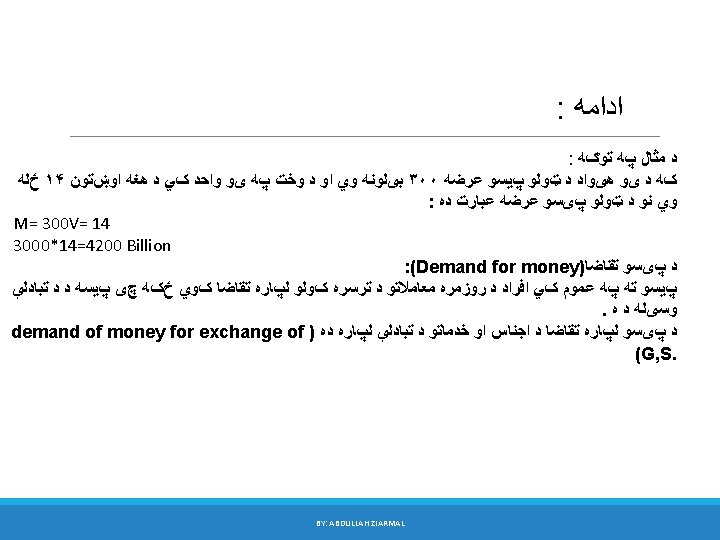
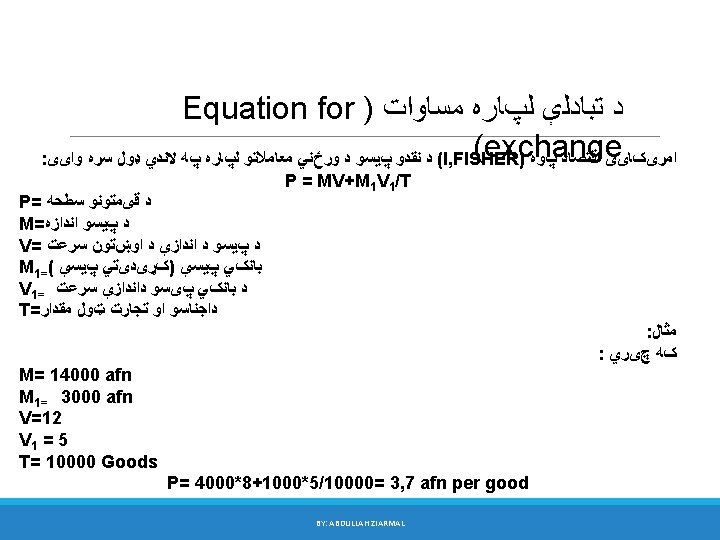
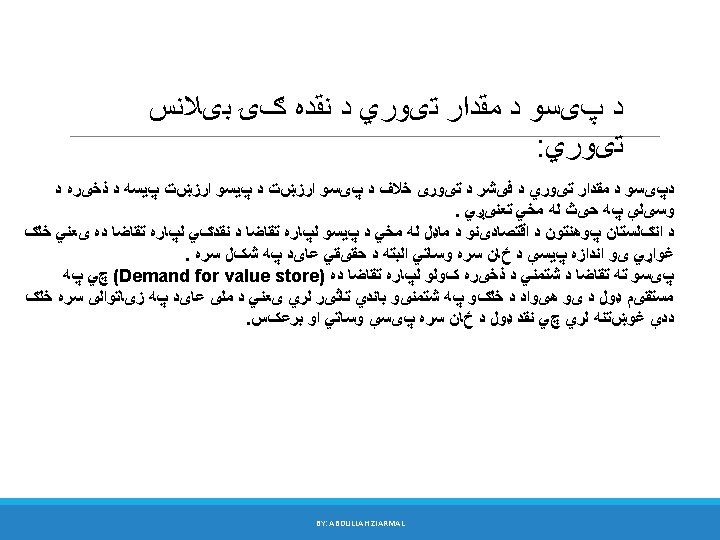
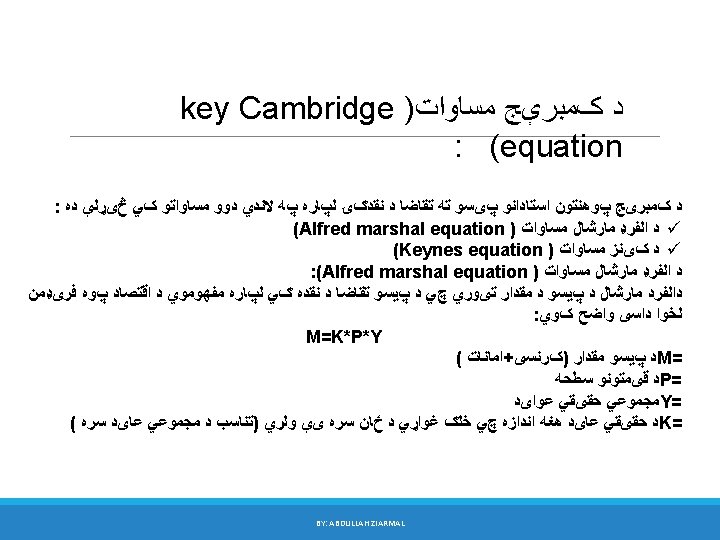
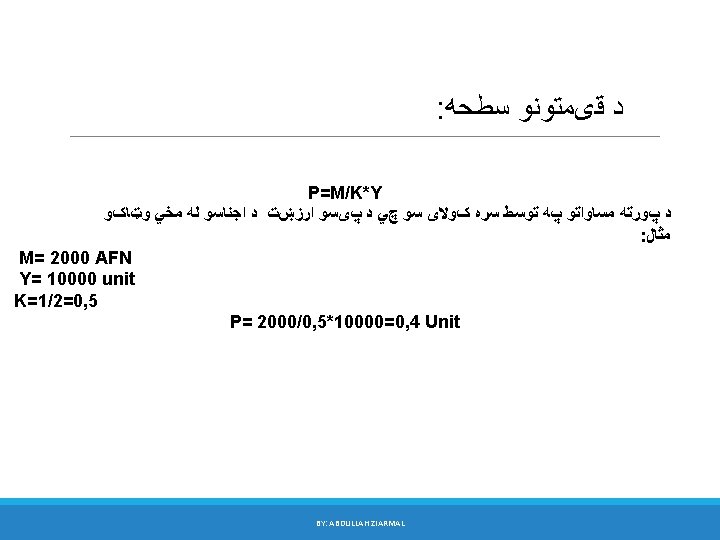
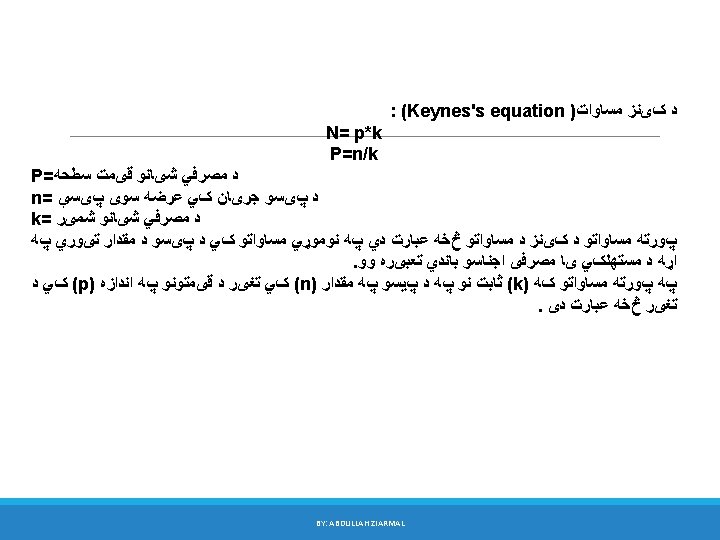
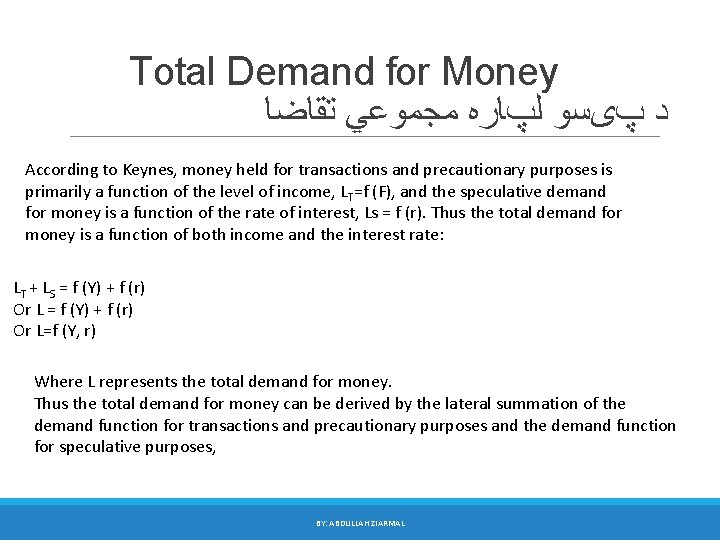
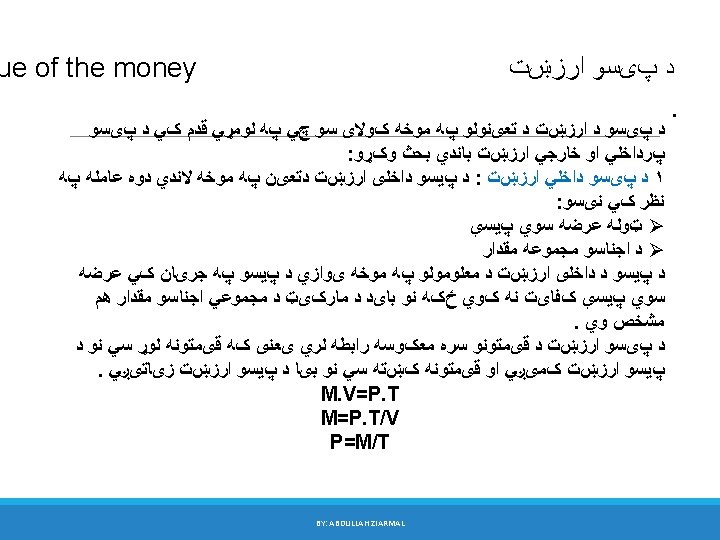
Total Demand for Money ﺩ پیﺴﻮ ﻟپﺎﺭﻩ ﻣﺠﻤﻮﻋﻲ ﺗﻘﺎﺿﺎ According to Keynes, money held for transactions and precautionary purposes is primarily a function of the level of income, LT=f (F), and the speculative demand for money is a function of the rate of interest, Ls = f (r). Thus the total demand for money is a function of both income and the interest rate: LT + LS = f (Y) + f (r) Or L=f (Y, r) Where L represents the total demand for money. Thus the total demand for money can be derived by the lateral summation of the demand function for transactions and precautionary purposes and the demand function for speculative purposes, BY: ABDULLAH ZIARMAL
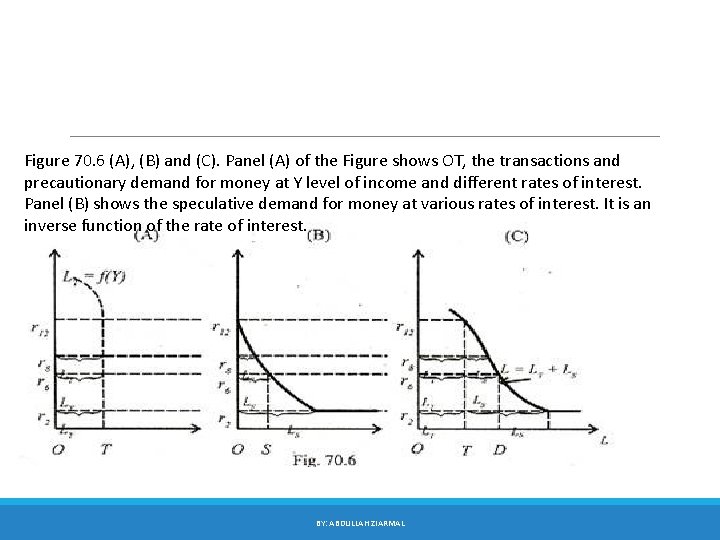
Figure 70. 6 (A), (B) and (C). Panel (A) of the Figure shows ОТ, the transactions and precautionary demand for money at Y level of income and different rates of interest. Panel (B) shows the speculative demand for money at various rates of interest. It is an inverse function of the rate of interest. BY: ABDULLAH ZIARMAL

For instance, at r 6 rate of interest it is OS and as the rate of interest falls to r the Ls curve becomes perfectly elastic. Panel (C) shows the total demand curve for money L which is a lateral summation of LT and Ls curves: L=LT+LS. For example, at rb rate of interest, the total demand for money is OD which is the sum of transactions and precautionary demand ОТ plus the speculative demand TD, OD=OT+TD. At r 2 interest rate, the total demand for money curve also becomes perfectly elastic, showing the position of liquidity trap. BY: ABDULLAH ZIARMAL
There is no subtler, no surer means of overturning the existing basis of society than to debauch the currency. The process engages all the hidden forces of economic law on the side of destruction, and does it in a manner which not one man in a million is able to diagnose. John Maynard Keynes BY: ABDULLAH ZIARMAL
چې ﺩ ﻣﻮﺿﻮﻉ ﺩ ﻻ ﻭﺿﺎﺣﺖ پﻪ ﻣﻮﺧﻪ ﻻﻧﺪﻱ ﺗﻌﺮیﻔﺎﺕ ، ﺩ ﺍﻧﻔﻼﺳﻴﻮﻥ ﻟپﺎﺭﻩ ﺯیﺎﺕ ﺗﻌﺮیﻔﻮﻧﻪ ﻭﺟﻮﺩ ﻟﺮﻱ : ﻟﺮﻭ Inflation 1: is a sustained increase in the general price level of goods and services in an economy over a period of time. Inflation 2: is a situation in which there is a continuous rise in the general price level. Inflation 3: is a sustained increase in the general price level leading to a fall in the purchasing power of money. BY: ABDULLAH ZIARMAL
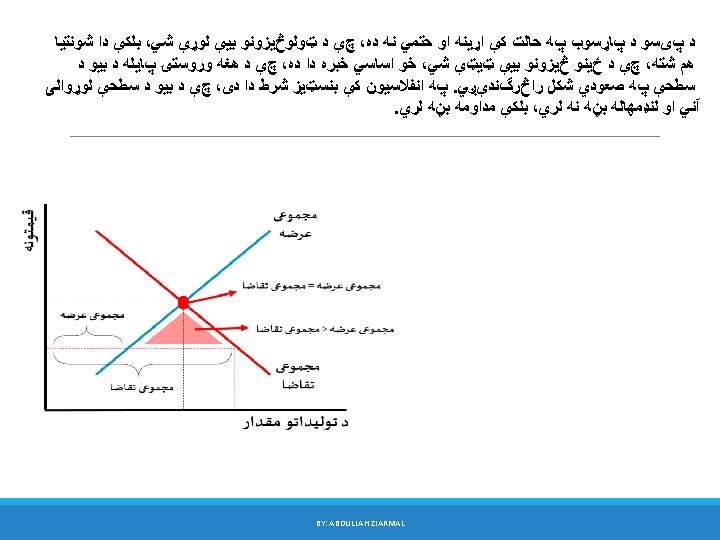
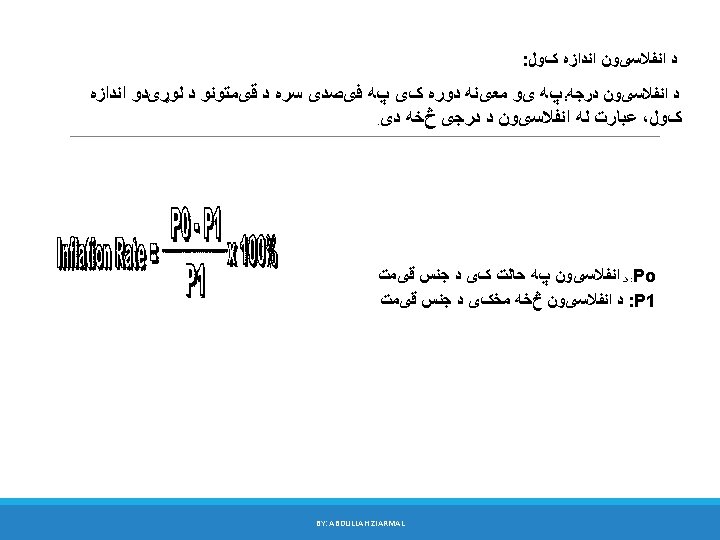
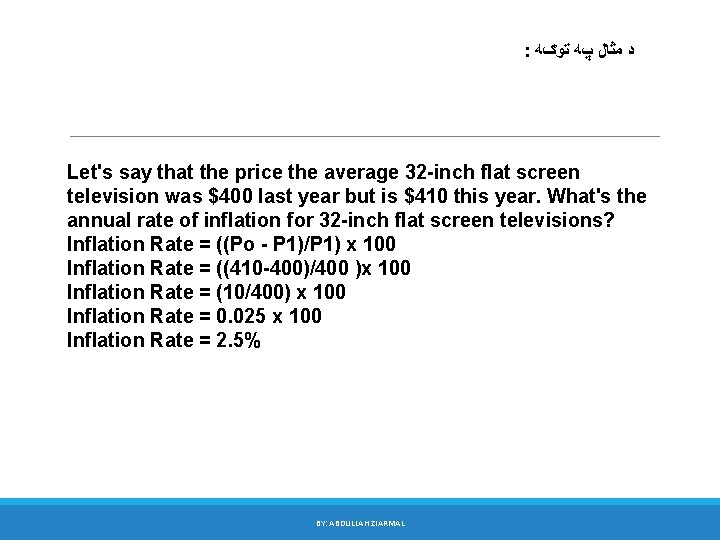
: ﺩ ﻣﺜﺎﻝ پﻪ ﺗﻮګﻪ Let's say that the price the average 32 -inch flat screen television was $400 last year but is $410 this year. What's the annual rate of inflation for 32 -inch flat screen televisions? Inflation Rate = ((Po - P 1)/P 1) x 100 Inflation Rate = ((410 -400)/400 )x 100 Inflation Rate = (10/400) x 100 Inflation Rate = 0. 025 x 100 Inflation Rate = 2. 5% BY: ABDULLAH ZIARMAL
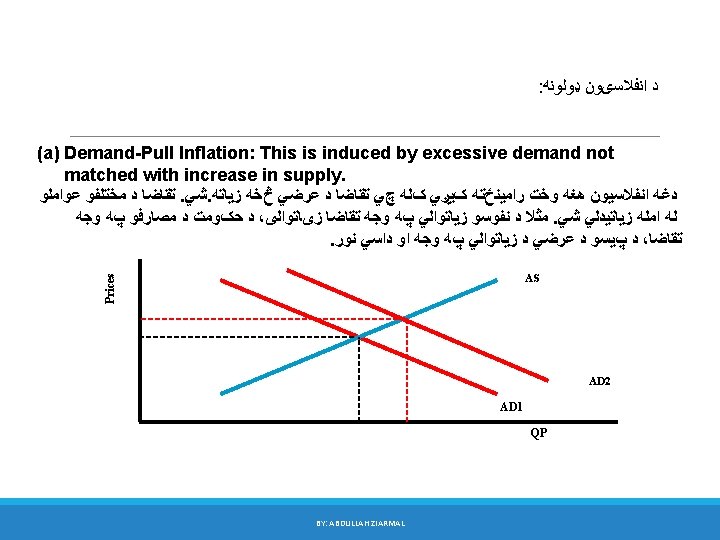
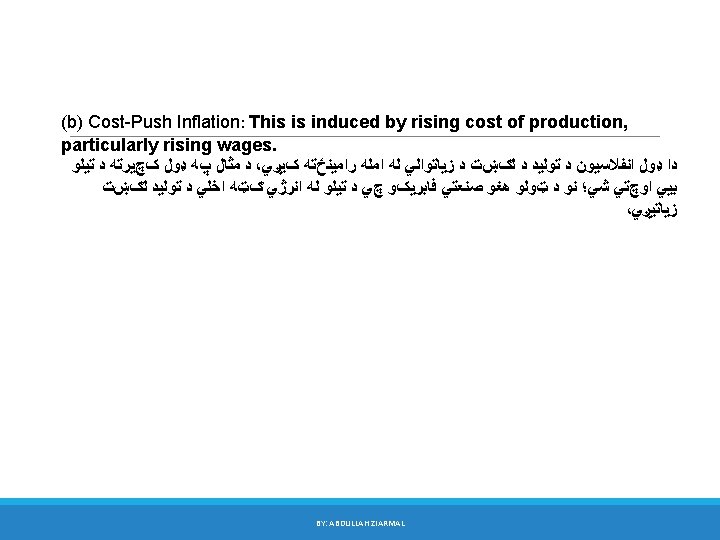
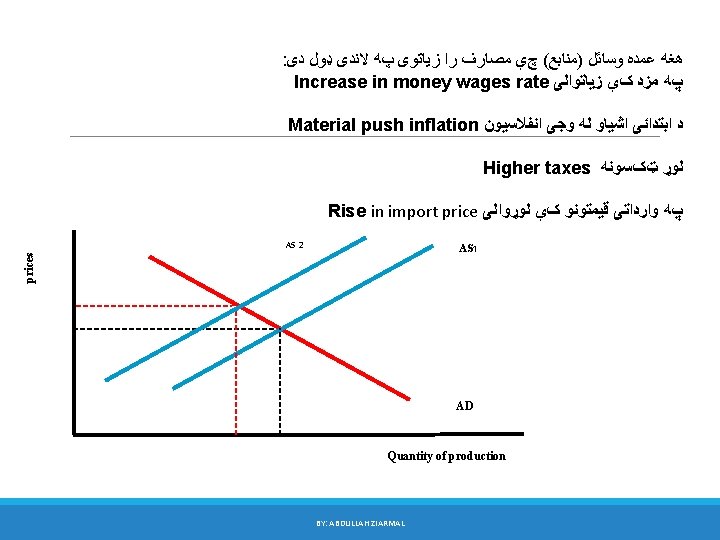
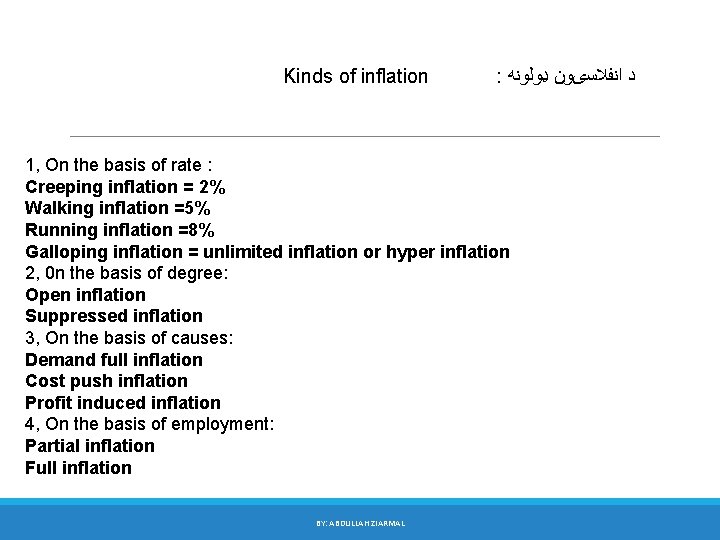
Kinds of inflation : ﺩ ﺍﻧﻔﻼﺳیﻮﻥ ډﻮﻟﻮﻧﻪ 1, On the basis of rate : Creeping inflation = 2% Walking inflation =5% Running inflation =8% Galloping inflation = unlimited inflation or hyper inflation 2, 0 n the basis of degree: Open inflation Suppressed inflation 3, On the basis of causes: Demand full inflation Cost push inflation Profit induced inflation 4, On the basis of employment: Partial inflation Full inflation BY: ABDULLAH ZIARMAL
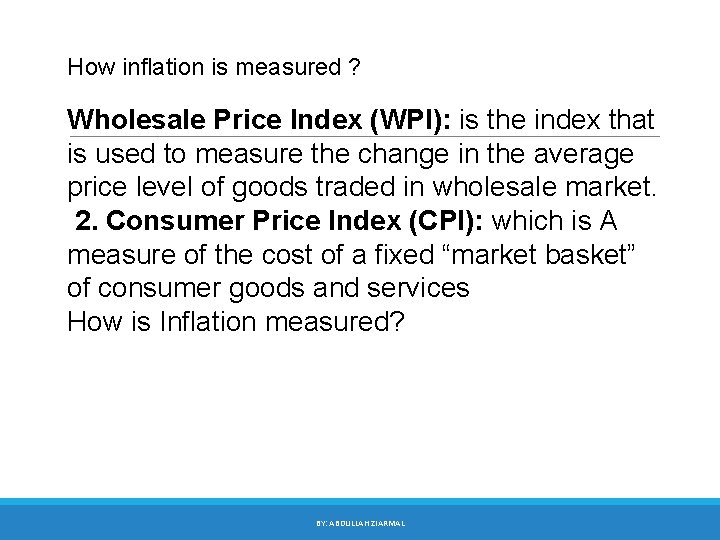
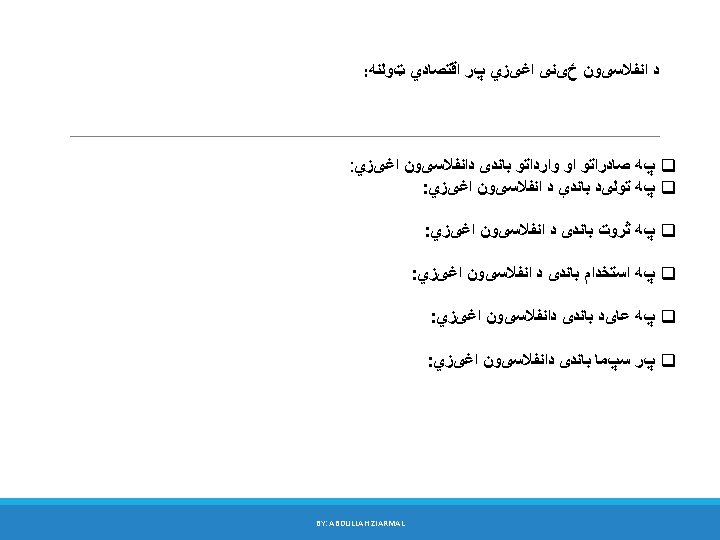
How inflation is measured ? Wholesale Price Index (WPI): is the index that is used to measure the change in the average price level of goods traded in wholesale market. 2. Consumer Price Index (CPI): which is A measure of the cost of a fixed “market basket” of consumer goods and services How is Inflation measured? BY: ABDULLAH ZIARMAL
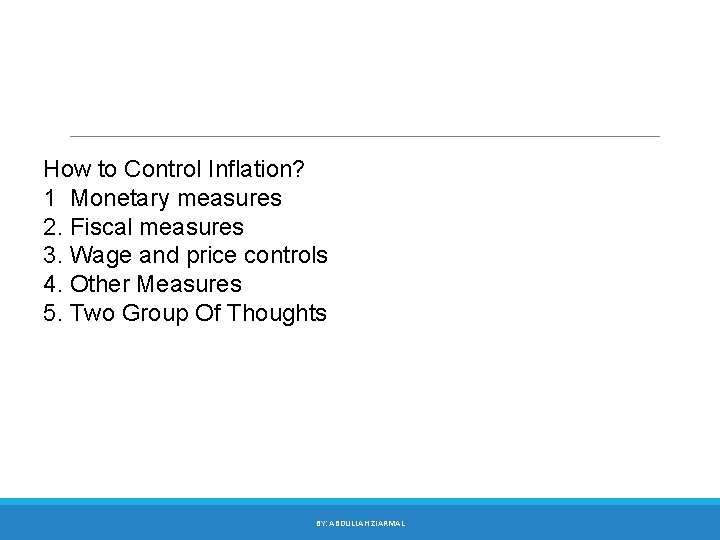
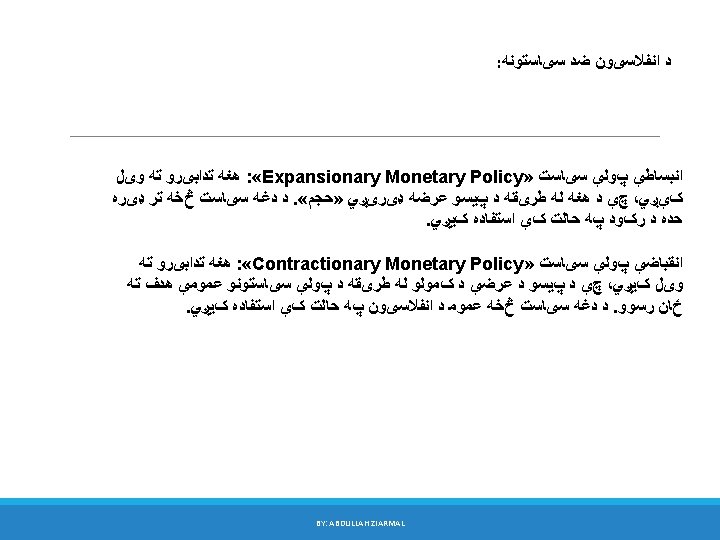
How to Control Inflation? 1 Monetary measures 2. Fiscal measures 3. Wage and price controls 4. Other Measures 5. Two Group Of Thoughts BY: ABDULLAH ZIARMAL
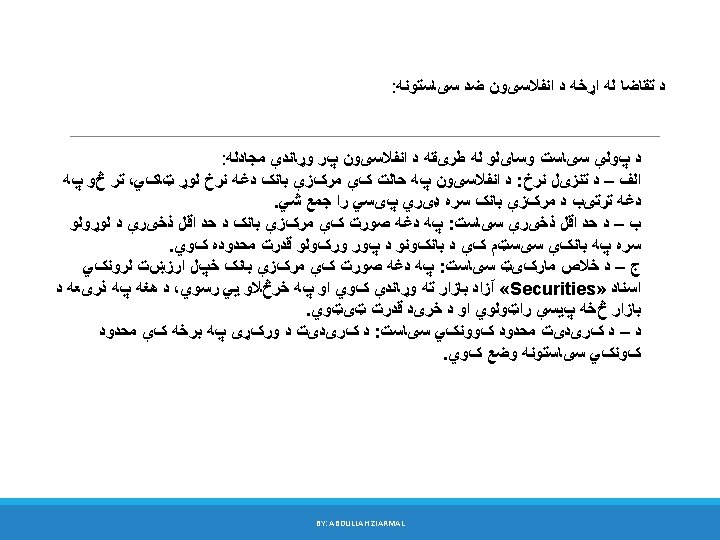
1. MONETARY MEASURES • The most important and commonly used method to control inflation is monetary policy of the Central Bank. • Most central banks use high interest rates and slow growth of the money supply as the traditional way to fight or prevent inflation. 1. Monetary measures used to control inflation include: ü Bank Rate Policy or Credit Control ü Cash Reserve Ratio o Open Market Operations. ü Fixed Exchange Rates BY: ABDULLAH ZIARMAL
Bank rate policy: is used as the main common tool against inflation. When the central bank raises the bank rate, it is said to have adopted a dear money policy. The increase in bank rate increases the cost of borrowing which reduces commercial banks borrowing from the central bank. Consequently, the flow of money from the commercial banks to the public gets reduced. Therefore, inflation is controlled to the extent it is caused by the bank credit. BY: ABDULLAH ZIARMAL
Cash Reserve Ratio (CRR) : To control inflation, the central bank should raise the CRR which reduces the lending capacity of the commercial banks. Consequently, flow of money from commercial banks to public decreases. BY: ABDULLAH ZIARMAL
Open Market Operations: Open market operations refer to sale and purchase of government securities and bonds by the central bank. To control inflation, central bank should sell the government securities to the public through the banks. This results in transfer of a part of bank deposits to central bank account and reduces credit creation capacity of the commercial banks. BY: ABDULLAH ZIARMAL
Fixed exchange rates: Under a fixed exchange rate currency regime, a country's currency is tied in value to another single currency or to a basket of other currencies (or sometimes to another measure of value, such as gold). A fixed exchange rate is usually used to stabilize the value of a currency, vis-a-vis the currency it is pegged to. It can also be used as a means to control inflation. However, as the value of the reference currency rises and falls, so does the currency pegged to it. BY: ABDULLAH ZIARMAL
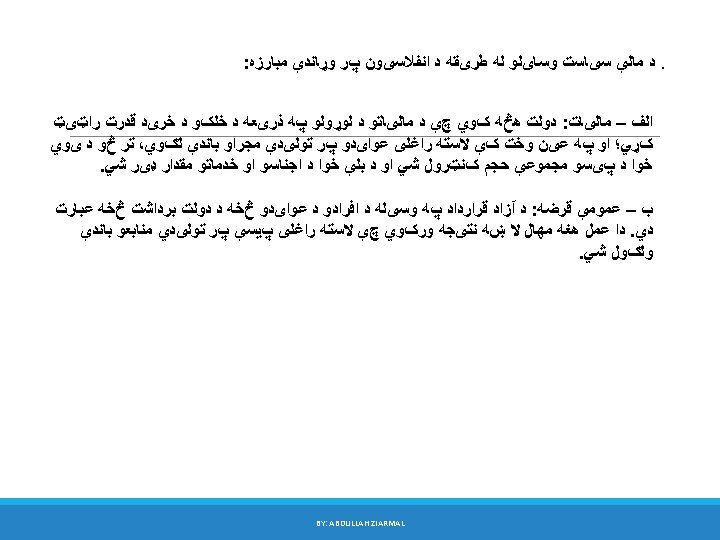
2. FISCAL MEASURES Fiscal measures to control inflation include taxation, government expenditure and public borrowings. The government can also take some protectionist measures (such as banning the export of essential items such as pulses, cereals and oils to support the domestic consumption, encourage imports by lowering duties on import items etc. BY: ABDULLAH ZIARMAL
FISCAL MEASURES q. Reduction in Unnecessary Expenditure q. Increase in Taxes q. Increase in Savings BY: ABDULLAH ZIARMAL
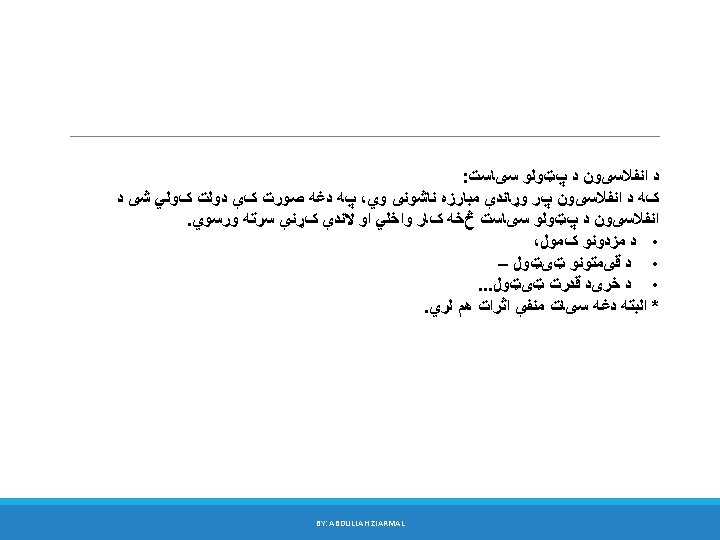
DEFLATION ډیﻔﻼﺳیﻮﻥ Deflation is just the opposite of inflation, if there is a rise in the general level of prices so that the value of money declines, it is named as inflation. Conversely if the general level of prices falls and as a result the value of money increases it is called deflation. Deflation is a situation where price level falls causing major increase in unemployment, reduction in output and decrease in the income of the people. BY: ABDULLAH ZIARMAL
Causes of deflation: o Fall in the private investment o Sudden increase in the total output o Less supply of money than economy’s potential output BY: ABDULLAH ZIARMAL
Measures to control deflation : Deflation can controlled both by fiscal and monetary policies. Increasing the demand for goods and services Increasing public spending by government Reducing taxis Stimulating of private investment BY: ABDULLAH ZIARMAL
Effects of deflation : Over production Traders lose Pace economic growth BY: ABDULLAH ZIARMAL
Reflation: Reflation is a situation of rising prices after the full employment is reached. It is infact a phenomenon of rising prices due to increase in aggregation demand without any increase in production of goods and employment. BY: ABDULLAH ZIARMAL
Inflation vs deflation : Inflation: is a state of rising prices over a long period of time that has adverse effect on economy. Deflation: is a state of falling prices which is too harmful to the society and the deflation perhaps is the worse. Inflation is unjust and deflation is inexpedient BY: ABDULLAH ZIARMAL
Inflation vs deflation : Inflation and deflation both have undesirable effects on the economy, Keynes is the right when he says inflation is unjust and deflation is inexpedient but If a choice is to be made between inflation and deflation, then inflation is better because it helps in stimulating the economy. BY: ABDULLAH ZIARMAL
- Slides: 112