
Homework 5 Statistics Minimum Value Maximum Value Range



![Depth-Robustness: The Key Property Necessary [AB 16] and sufficient [ABP 16] for secure i.](https://slidetodoc.com/presentation_image_h/7e48fae2c784bba5bd5ca7ca896ba8cf/image-38.jpg "Depth-Robustness: The Key Property Necessary [AB 16] and sufficient [ABP 16] for secure i.")

- Slides: 42
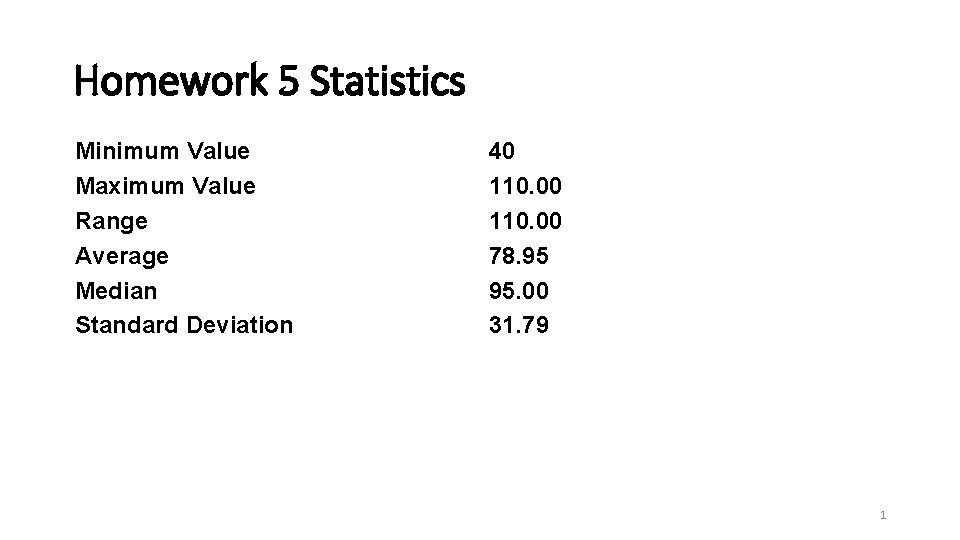
Homework 5 Statistics Minimum Value Maximum Value Range Average Median Standard Deviation 40 110. 00 78. 95 95. 00 31. 79 1
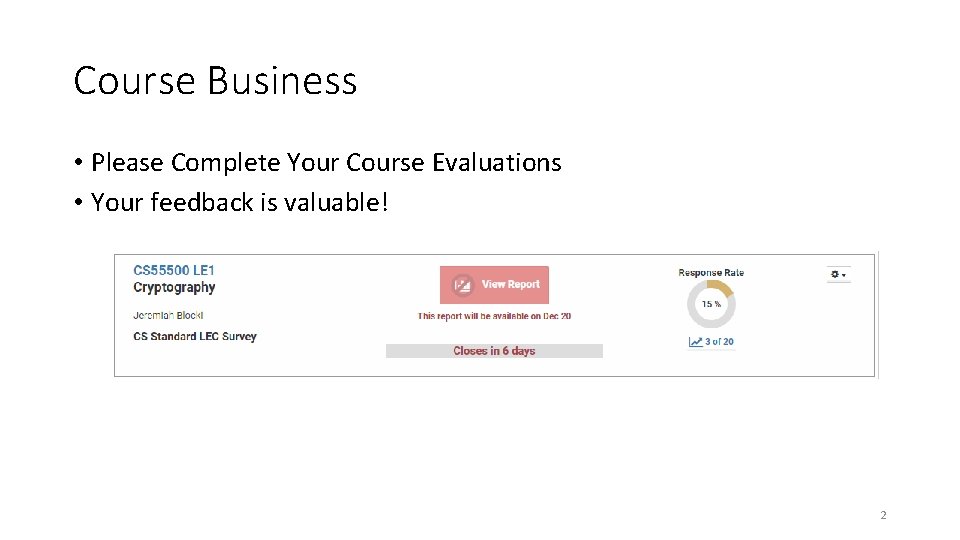
Course Business • Please Complete Your Course Evaluations • Your feedback is valuable! 2
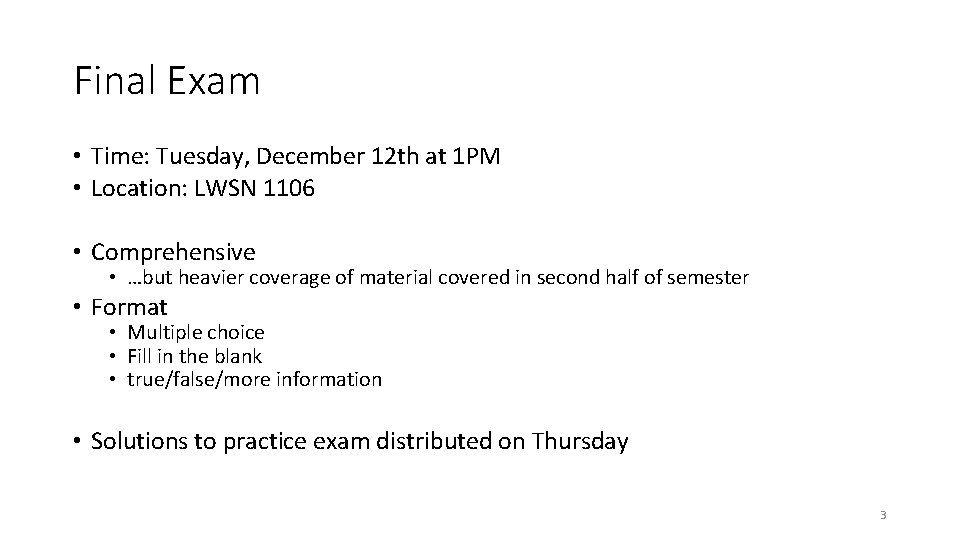
Final Exam • Time: Tuesday, December 12 th at 1 PM • Location: LWSN 1106 • Comprehensive • …but heavier coverage of material covered in second half of semester • Format • Multiple choice • Fill in the blank • true/false/more information • Solutions to practice exam distributed on Thursday 3
Cryptography CS 555 Week 16: • Zero-Knowledge Proofs, • Hot Topics in Cryptography • Review for Final Exam Readings: Katz and Lindell Chapter 10 & Chapter 11. 1 -11. 2, 11. 4 Fall 2017 4
CS 555: Week 15: Zero. Knowledge Proofs 5
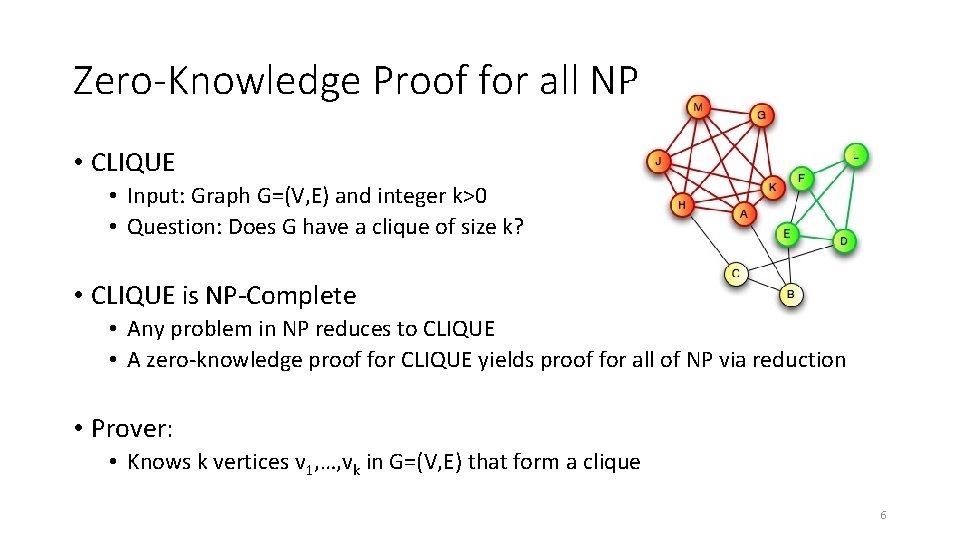
Zero-Knowledge Proof for all NP • CLIQUE • Input: Graph G=(V, E) and integer k>0 • Question: Does G have a clique of size k? • CLIQUE is NP-Complete • Any problem in NP reduces to CLIQUE • A zero-knowledge proof for CLIQUE yields proof for all of NP via reduction • Prover: • Knows k vertices v 1, …, vk in G=(V, E) that form a clique 6
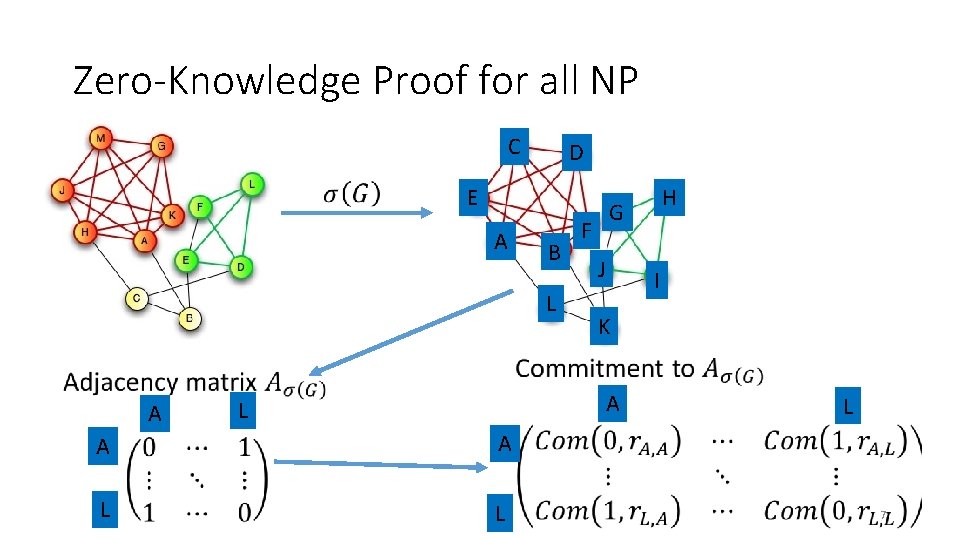
Zero-Knowledge Proof for all NP C D E A B L H G F J I K A A L L L 7
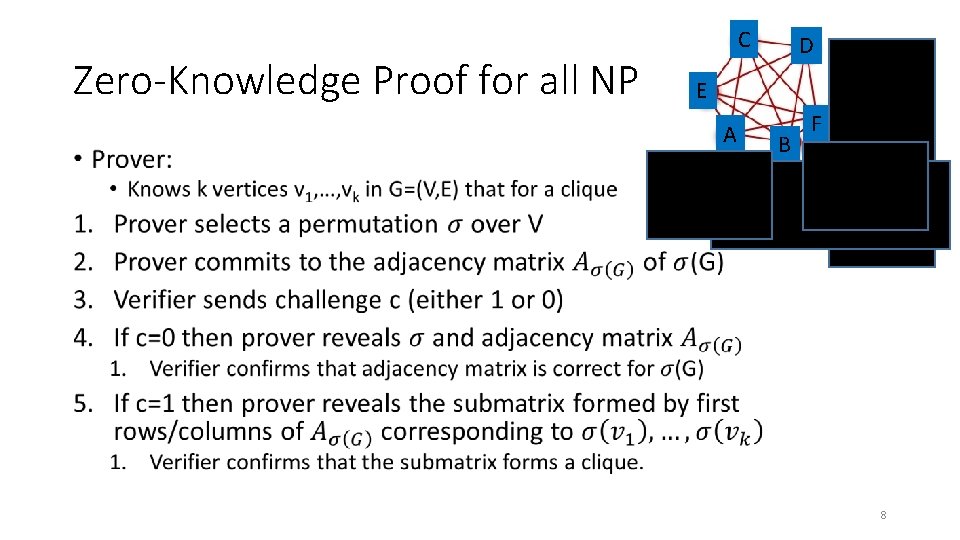
Zero-Knowledge Proof for all NP • C D E A B L H G F J I K 8
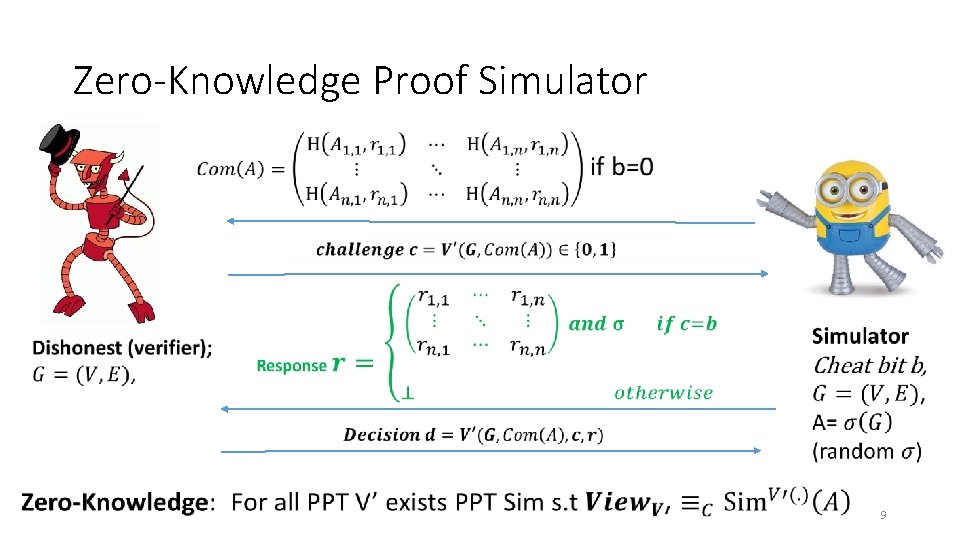
Zero-Knowledge Proof Simulator 9
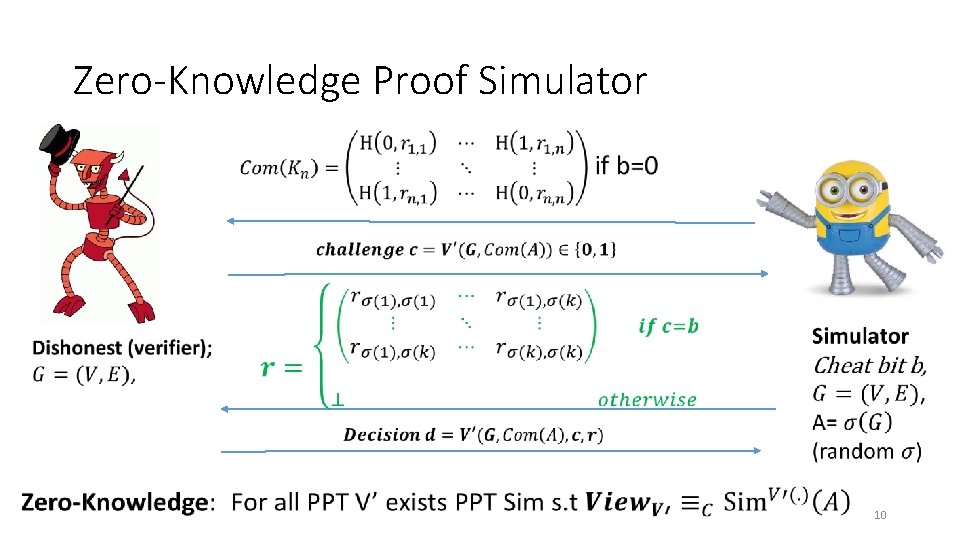
Zero-Knowledge Proof Simulator 10
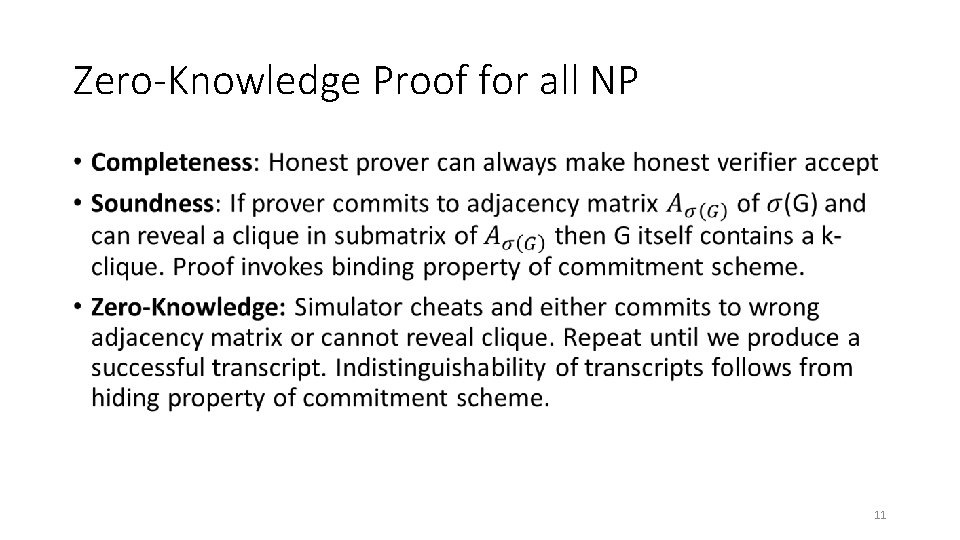
Zero-Knowledge Proof for all NP • 11
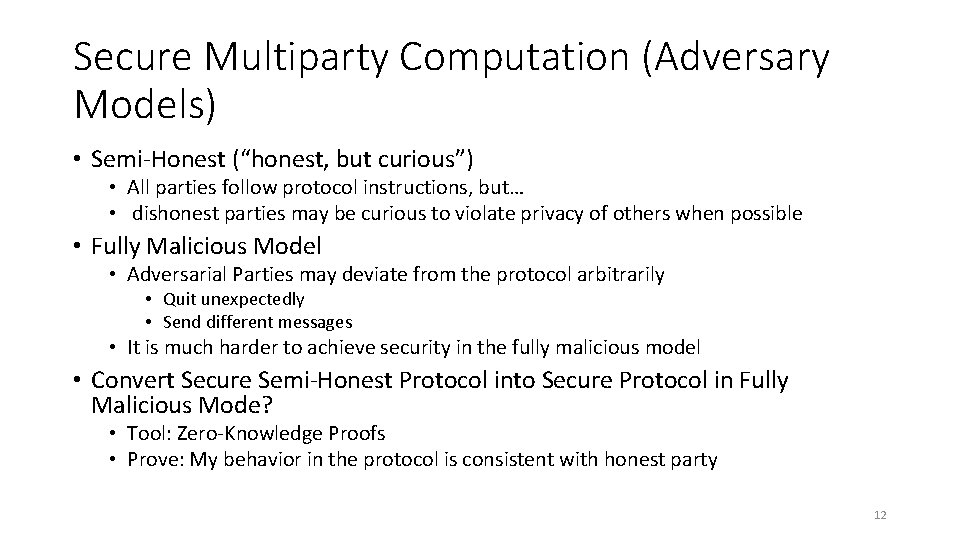
Secure Multiparty Computation (Adversary Models) • Semi-Honest (“honest, but curious”) • All parties follow protocol instructions, but… • dishonest parties may be curious to violate privacy of others when possible • Fully Malicious Model • Adversarial Parties may deviate from the protocol arbitrarily • Quit unexpectedly • Send different messages • It is much harder to achieve security in the fully malicious model • Convert Secure Semi-Honest Protocol into Secure Protocol in Fully Malicious Mode? • Tool: Zero-Knowledge Proofs • Prove: My behavior in the protocol is consistent with honest party 12
CS 555: Week 15: Hot Topics 13
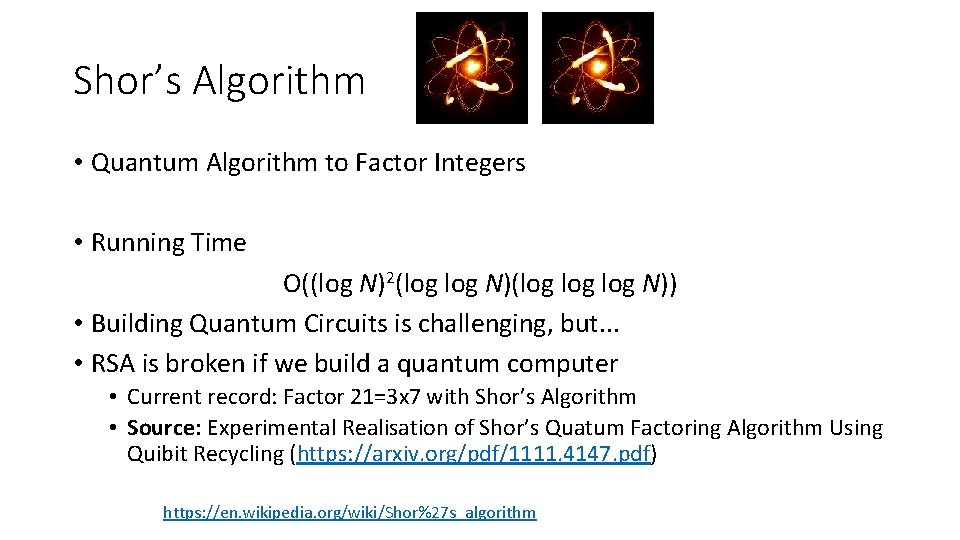
Shor’s Algorithm • Quantum Algorithm to Factor Integers • Running Time O((log N)2(log N)(log log N)) • Building Quantum Circuits is challenging, but. . . • RSA is broken if we build a quantum computer • Current record: Factor 21=3 x 7 with Shor’s Algorithm • Source: Experimental Realisation of Shor’s Quatum Factoring Algorithm Using Quibit Recycling (https: //arxiv. org/pdf/1111. 4147. pdf) https: //en. wikipedia. org/wiki/Shor%27 s_algorithm
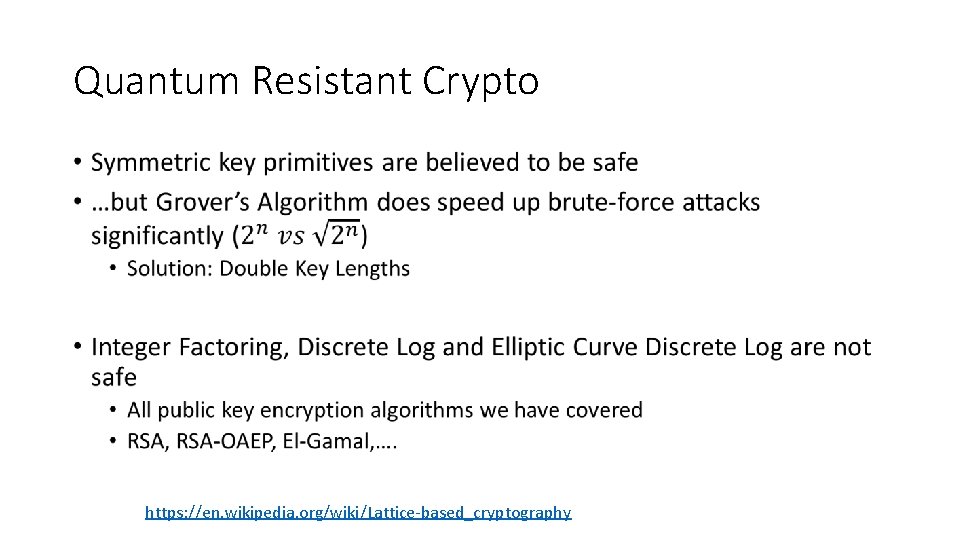
Quantum Resistant Crypto • https: //en. wikipedia. org/wiki/Lattice-based_cryptography
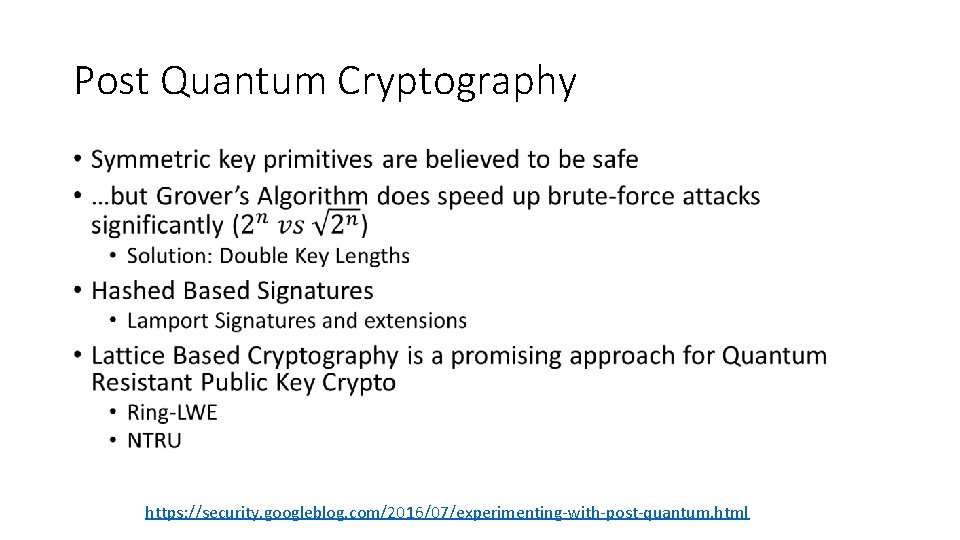
Post Quantum Cryptography • https: //security. googleblog. com/2016/07/experimenting-with-post-quantum. html
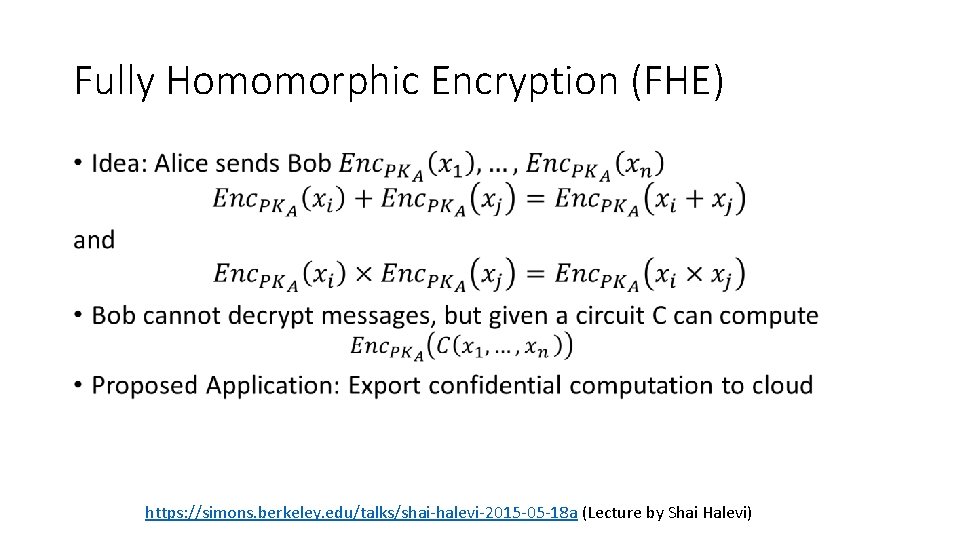
Fully Homomorphic Encryption (FHE) • https: //simons. berkeley. edu/talks/shai-halevi-2015 -05 -18 a (Lecture by Shai Halevi)
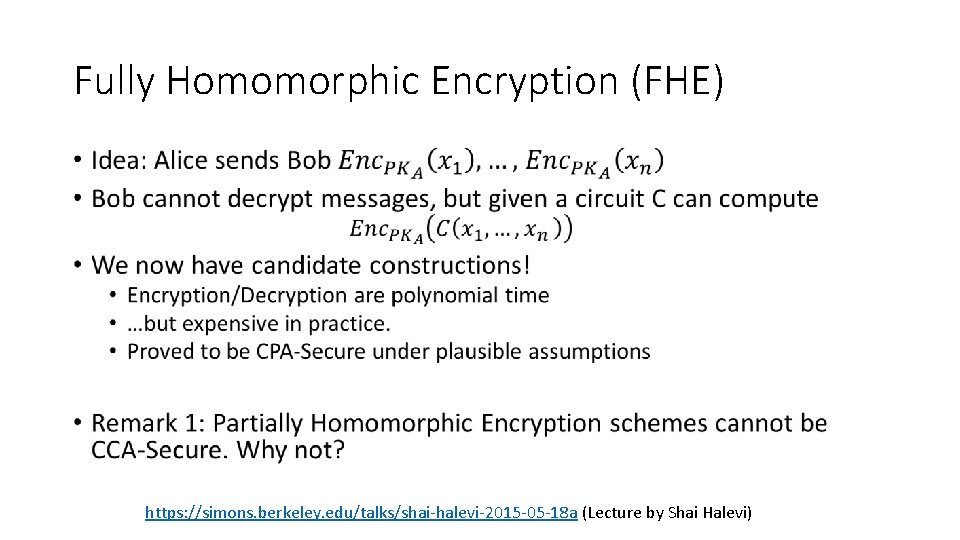
Fully Homomorphic Encryption (FHE) • https: //simons. berkeley. edu/talks/shai-halevi-2015 -05 -18 a (Lecture by Shai Halevi)
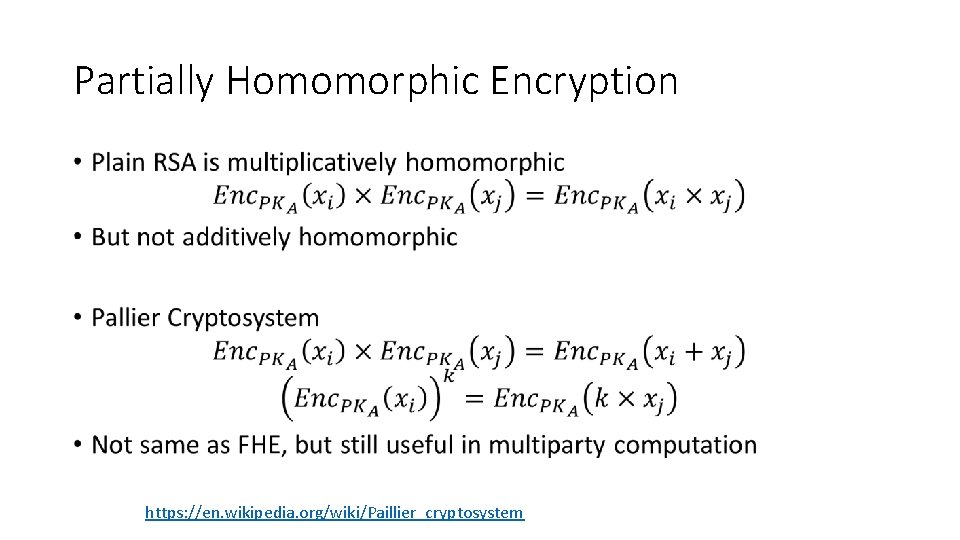
Partially Homomorphic Encryption • https: //en. wikipedia. org/wiki/Paillier_cryptosystem
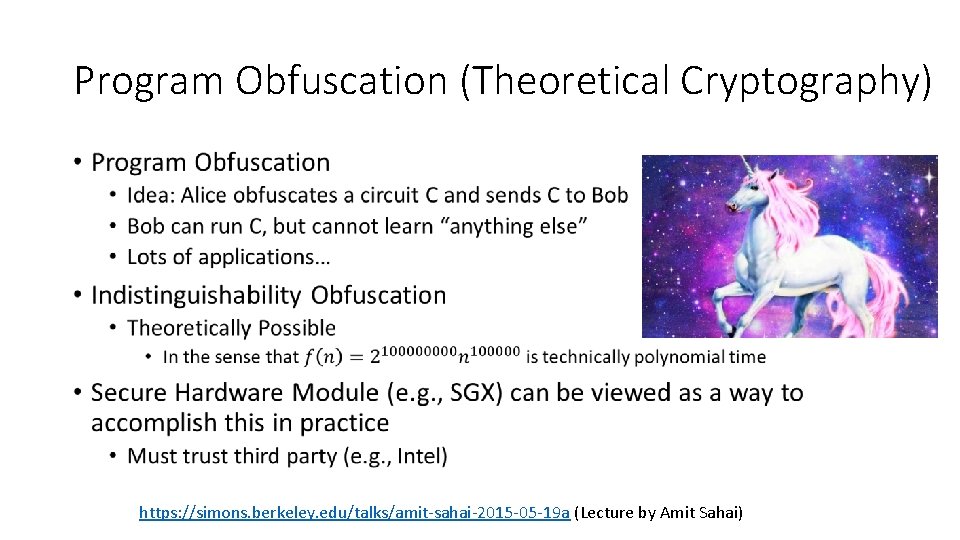
Program Obfuscation (Theoretical Cryptography) • https: //simons. berkeley. edu/talks/amit-sahai-2015 -05 -19 a (Lecture by Amit Sahai)
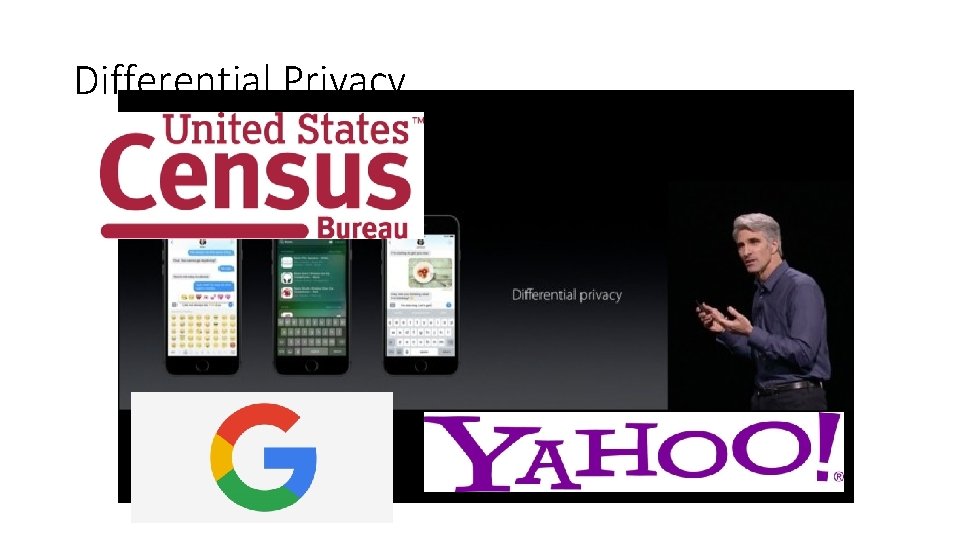
Differential Privacy
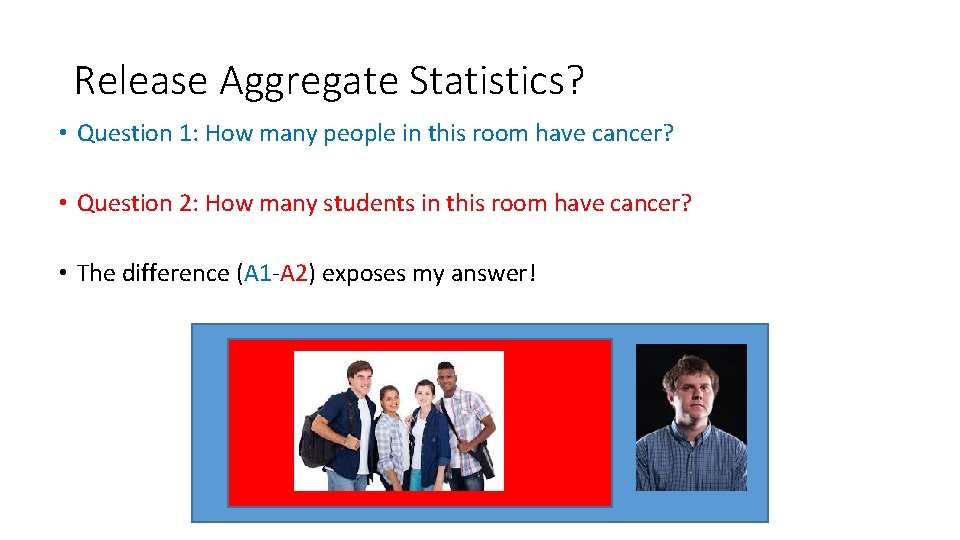
Release Aggregate Statistics? • Question 1: How many people in this room have cancer? • Question 2: How many students in this room have cancer? • The difference (A 1 -A 2) exposes my answer!
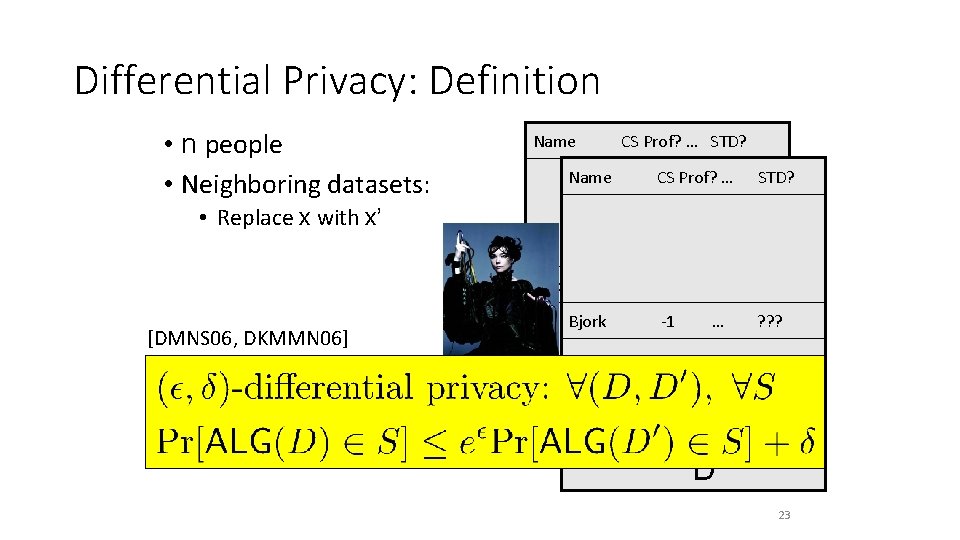
Differential Privacy: Definition • n people • Neighboring datasets: Name CS Prof? … STD? Name CS Prof? … STD? • Replace x with x’ J Blocki [DMNS 06, DKMMN 06] +1 Bjork -1 … ? ? ? D D’ 23
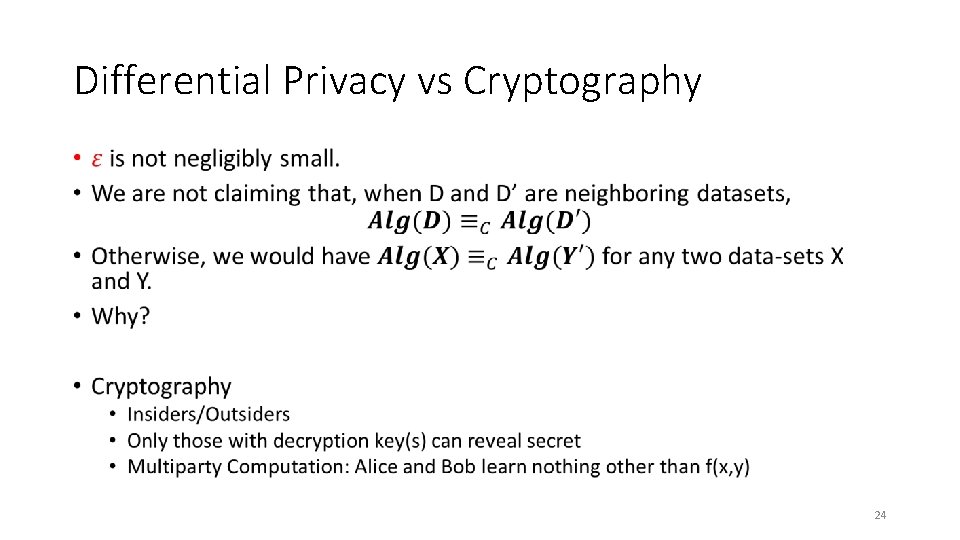
Differential Privacy vs Cryptography • 24
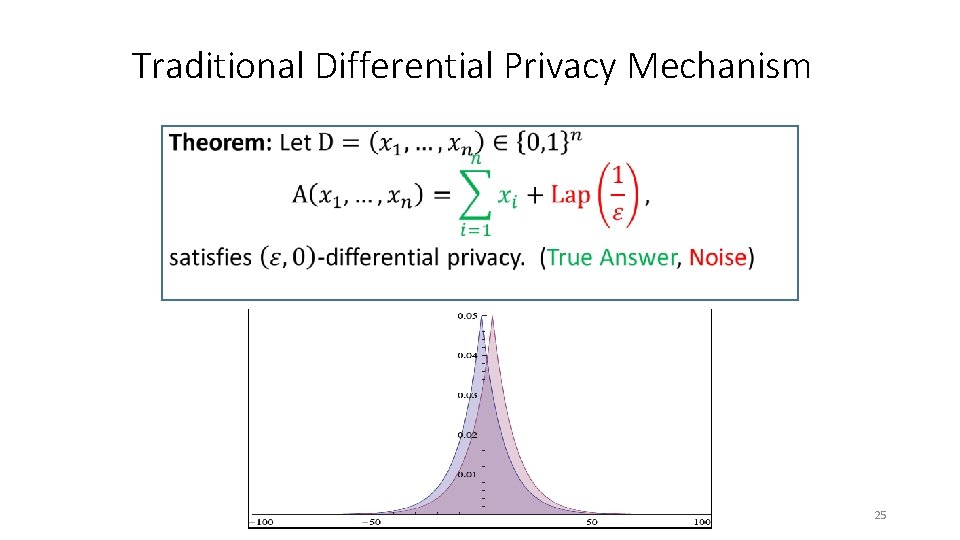
Traditional Differential Privacy Mechanism • 25
Resources • $99 Free PDF: https: //www. cis. upenn. edu/~aaroth/Papers/privacybook. pdf
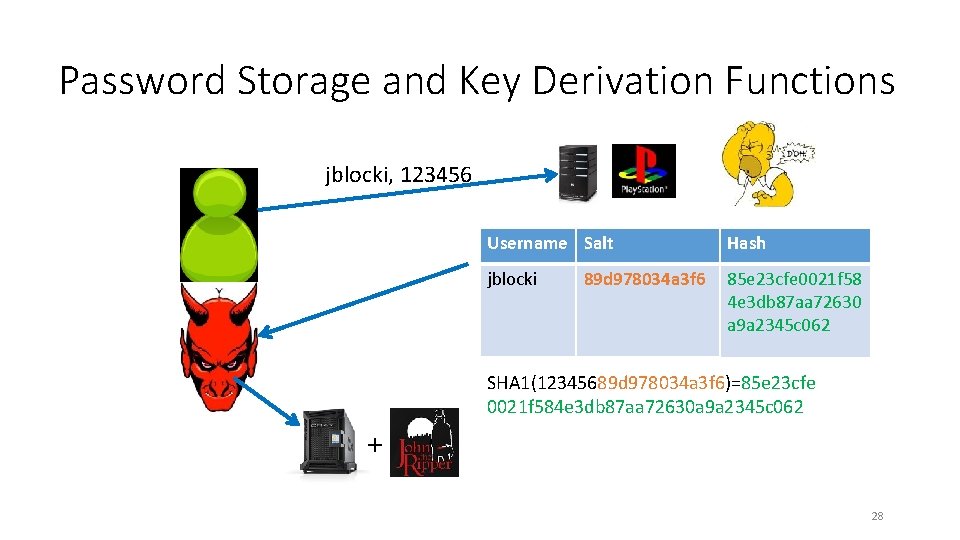
Password Storage and Key Derivation Functions jblocki, 123456 Username Salt Hash jblocki 85 e 23 cfe 0021 f 58 4 e 3 db 87 aa 72630 a 9 a 2345 c 062 89 d 978034 a 3 f 6 SHA 1(12345689 d 978034 a 3 f 6)=85 e 23 cfe 0021 f 584 e 3 db 87 aa 72630 a 9 a 2345 c 062 + 28
Offline Attacks: A Common Problem • Password breaches at major companies have affected millions billions of user accounts.
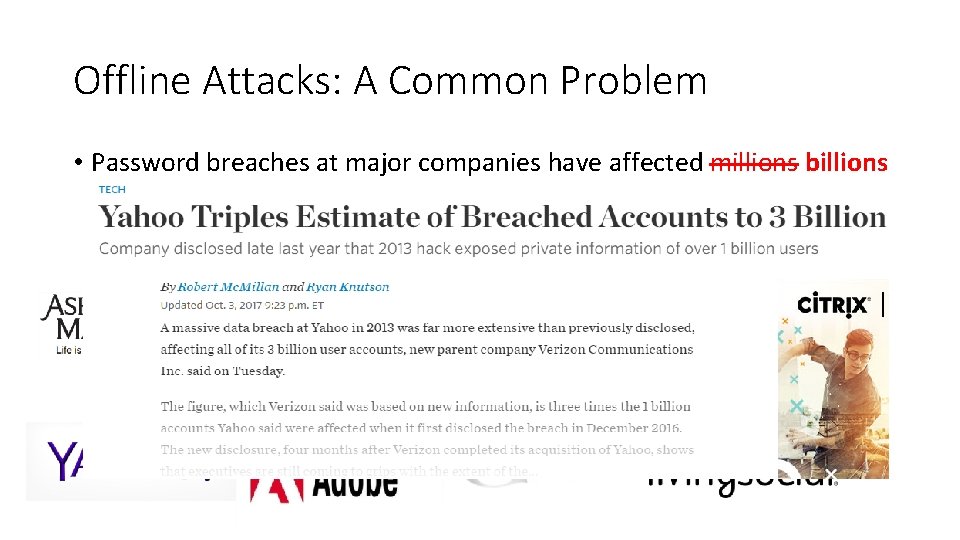
Offline Attacks: A Common Problem • Password breaches at major companies have affected millions billions of user accounts.
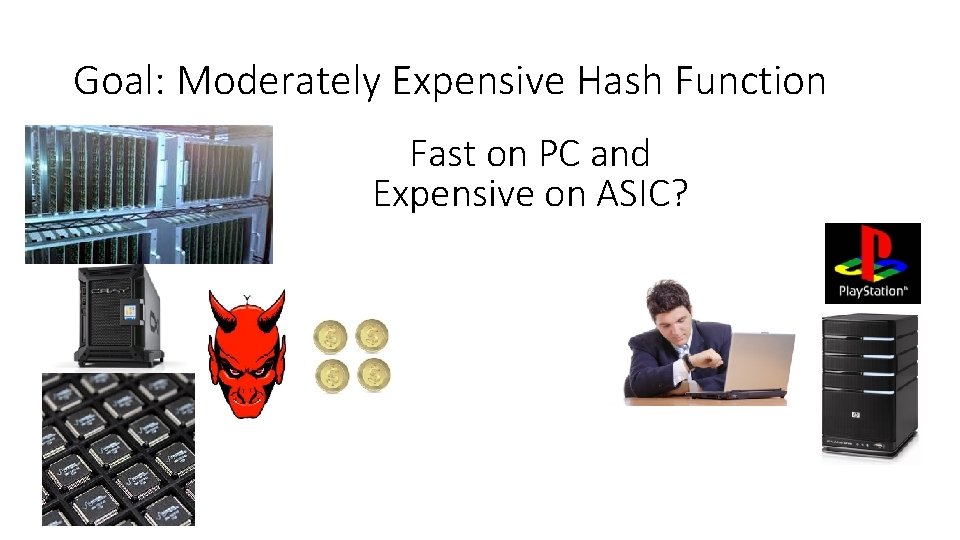
Goal: Moderately Expensive Hash Function Fast on PC and Expensive on ASIC?
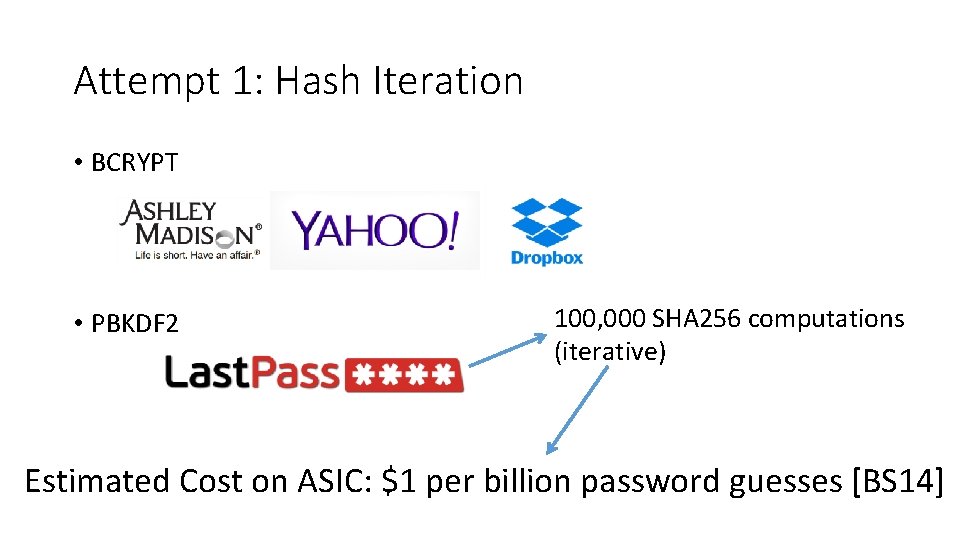
Attempt 1: Hash Iteration • BCRYPT • PBKDF 2 100, 000 SHA 256 computations (iterative) Estimated Cost on ASIC: $1 per billion password guesses [BS 14]
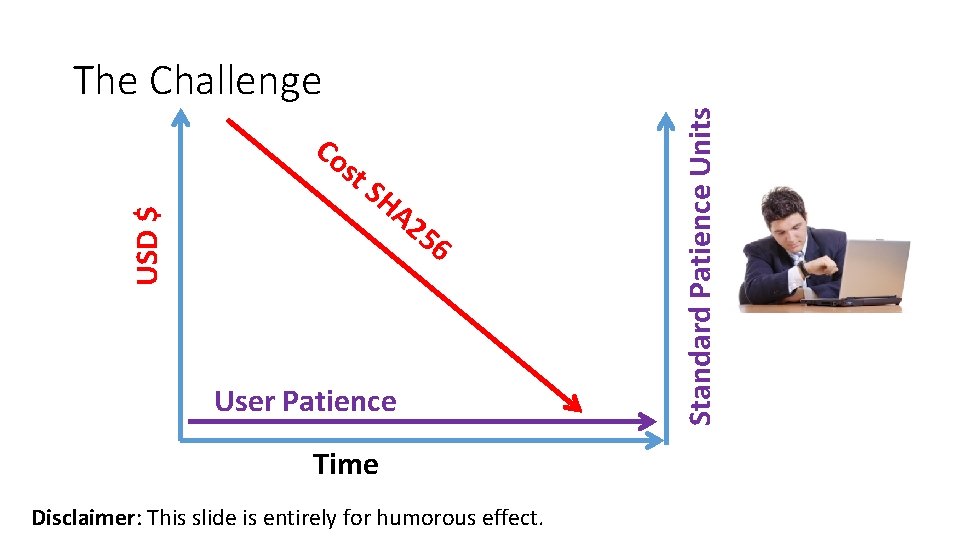
Co USD $ st SH A 2 56 User Patience Time Disclaimer: This slide is entirely for humorous effect. Standard Patience Units The Challenge
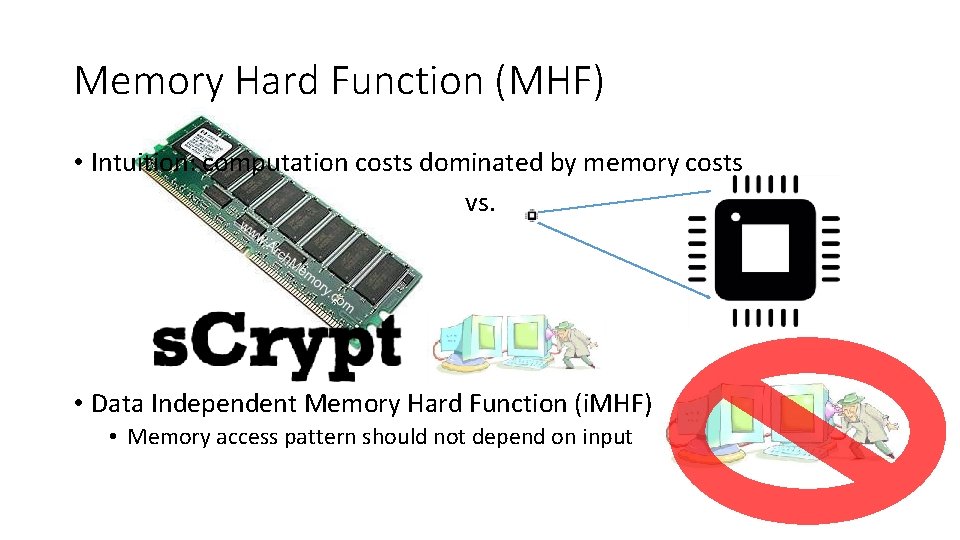
Memory Hard Function (MHF) • Intuition: computation costs dominated by memory costs vs. • Data Independent Memory Hard Function (i. MHF) • Memory access pattern should not depend on input
(2013 -2015) https: //password-hashing. net/
We recommend that you use Argon 2… (2013 -2015) https: //password-hashing. net/
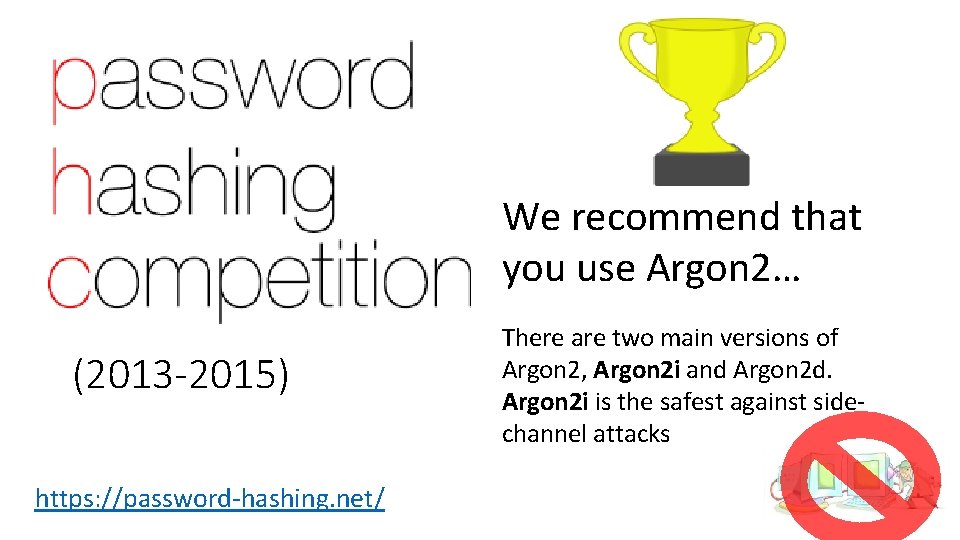
We recommend that you use Argon 2… (2013 -2015) https: //password-hashing. net/ There are two main versions of Argon 2, Argon 2 i and Argon 2 d. Argon 2 i is the safest against sidechannel attacks
Depth-Robustness: The Key Property Necessary [AB 16] and sufficient [ABP 16] for secure i. MHFs
Question Are existing i. MHF candidates based on depthrobust DAGs?
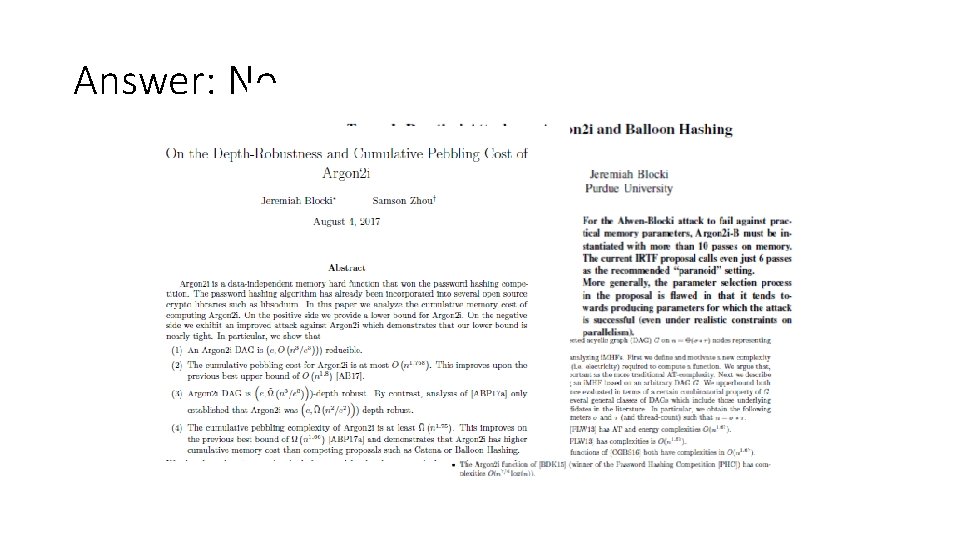
Answer: No
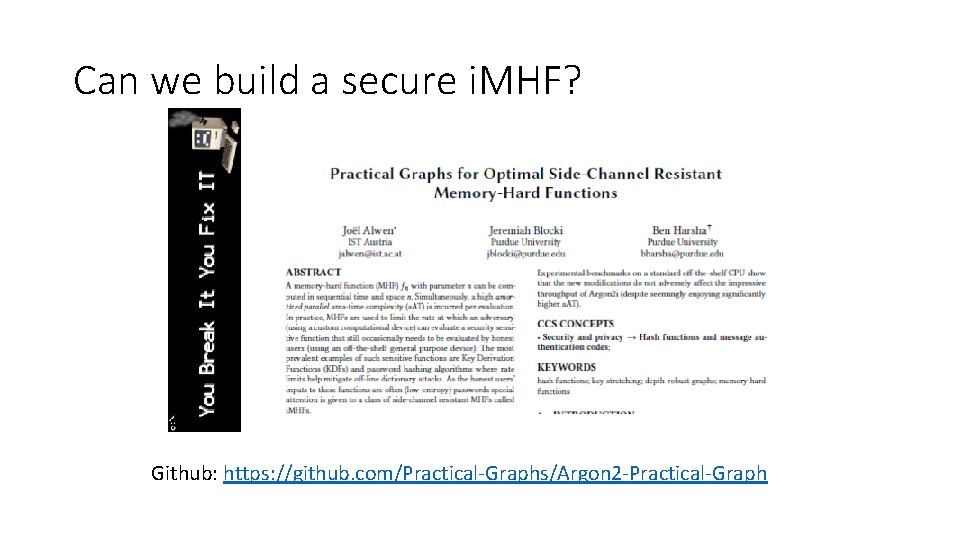
Can we build a secure i. MHF? Github: https: //github. com/Practical-Graphs/Argon 2 -Practical-Graph
42