
Homework 4 Ground State and Excited State WS




- Slides: 31
Homework # 4 • Ground State and Excited State WS • Bring your calculator
Aim #4: How do neon signs and fluorescent light bulbs work?
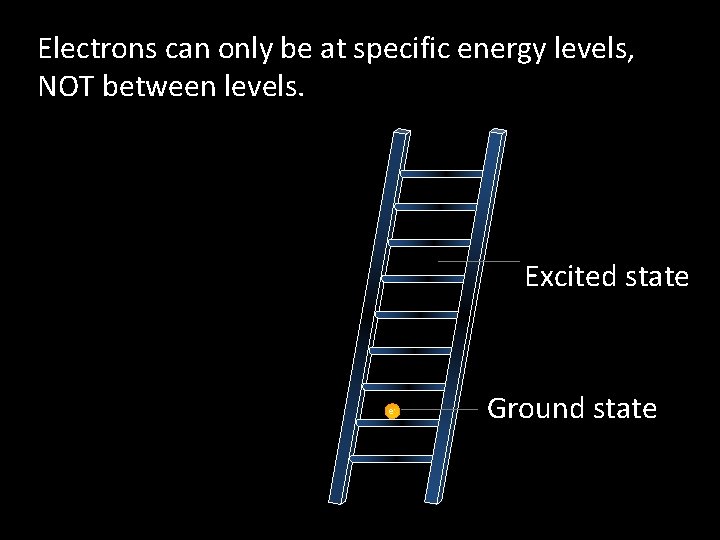
Electrons can only be at specific energy levels, NOT between levels. Excited state e- Ground state
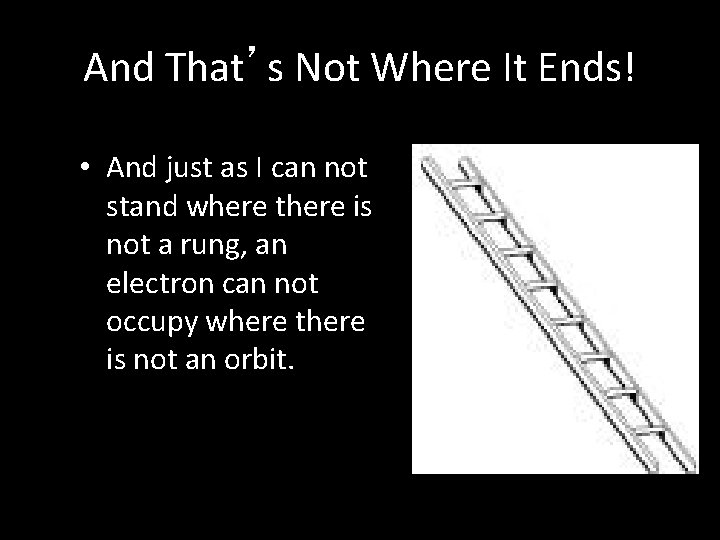
And That’s Not Where It Ends! • And just as I can not stand where there is not a rung, an electron can not occupy where there is not an orbit.
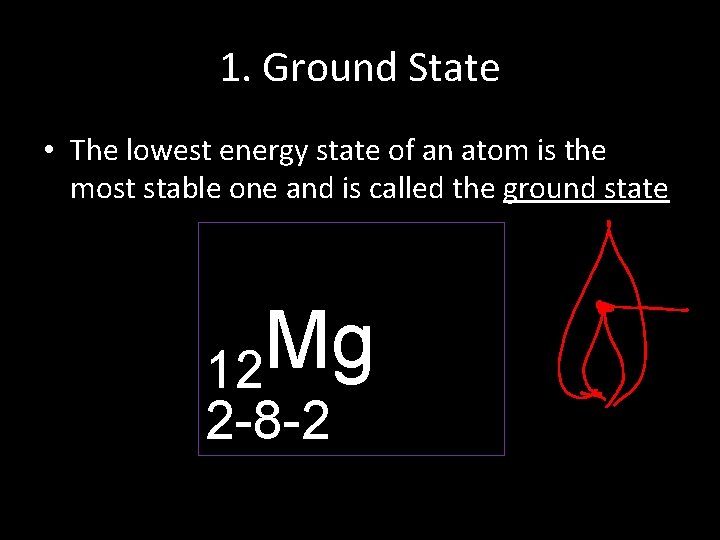
1. Ground State • The lowest energy state of an atom is the most stable one and is called the ground state Mg 12 2 -8 -2
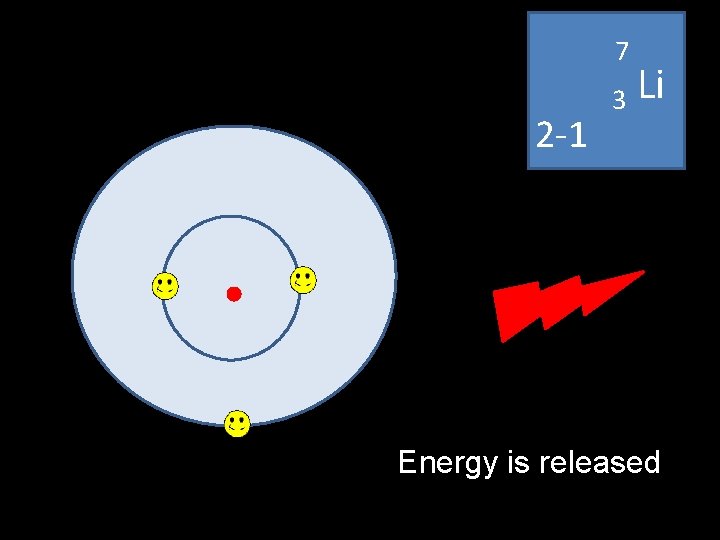
An Excited Lithium Atom Energy Excited Li atom Photon of red light emitted Li atom in lower energy state
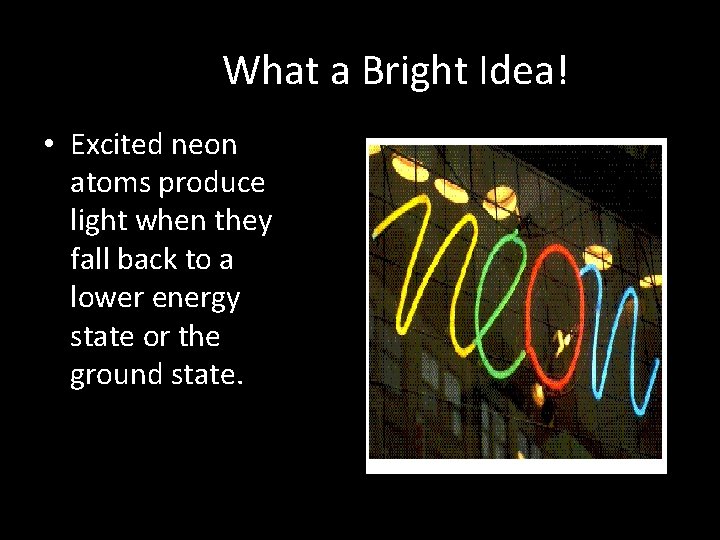
What a Bright Idea! • Excited neon atoms produce light when they fall back to a lower energy state or the ground state.
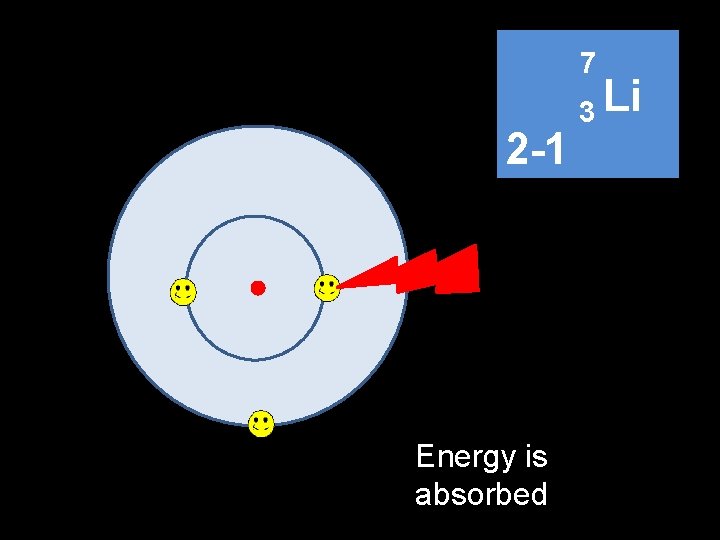
2. Excited State • When atoms absorb energy, electrons may shift to a higher energy level. The excited state is unstable, and the electrons fall back to lower energy levels.
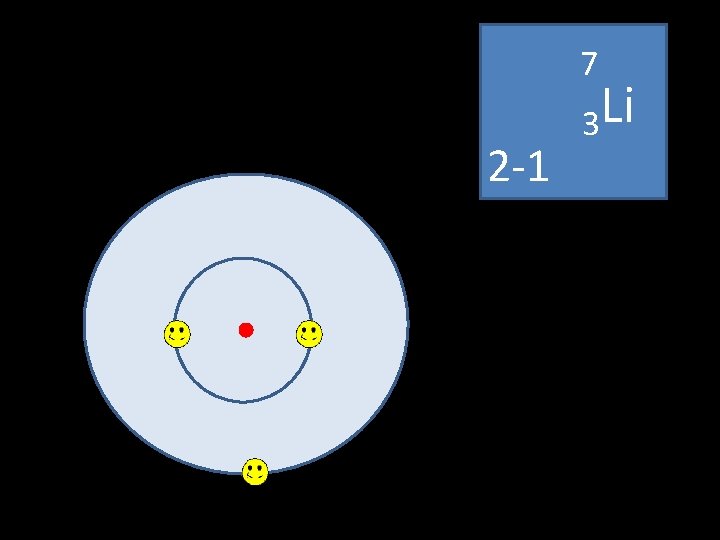
7 2 -1 3 Li
7 2 -1 Energy is absorbed 3 Li
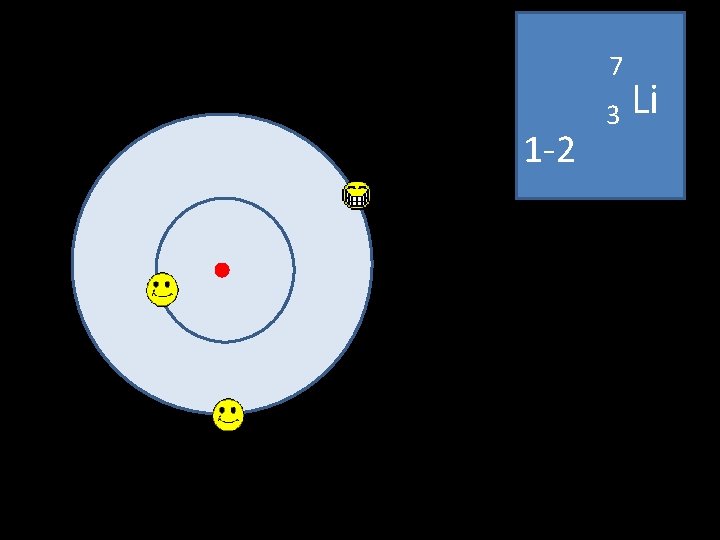
7 1 -2 3 Li
7 2 -1 3 Li Energy is released
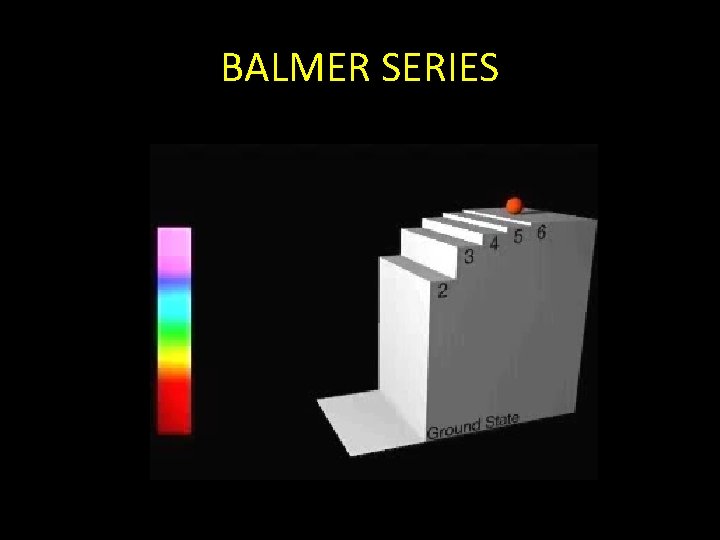
BALMER SERIES
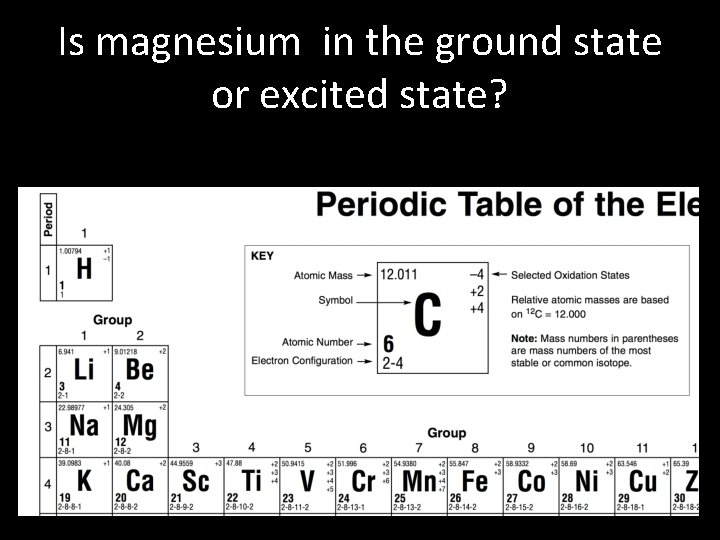
Is magnesium in the ground state or excited state?
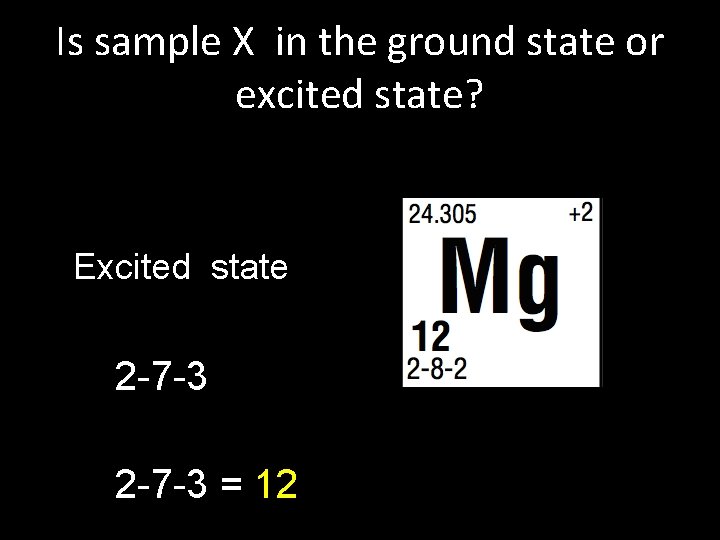
Is sample X in the ground state or excited state? Excited state 2 -7 -3 = 12
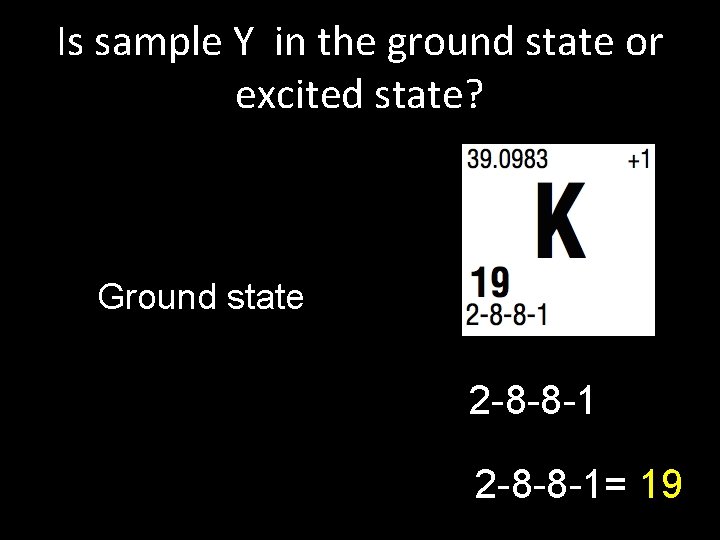
Is sample Y in the ground state or excited state? Ground state 2 -8 -8 -1= 19
Is sample Y in the ground state or excited state? Ground state 2 -8 -8 -1= 19
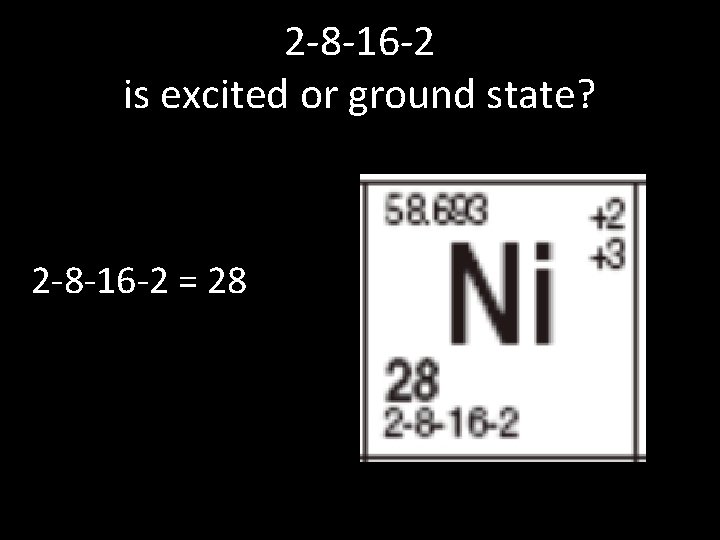
2 -8 -16 -2 is excited or ground state? 2 -8 -16 -2 = 28
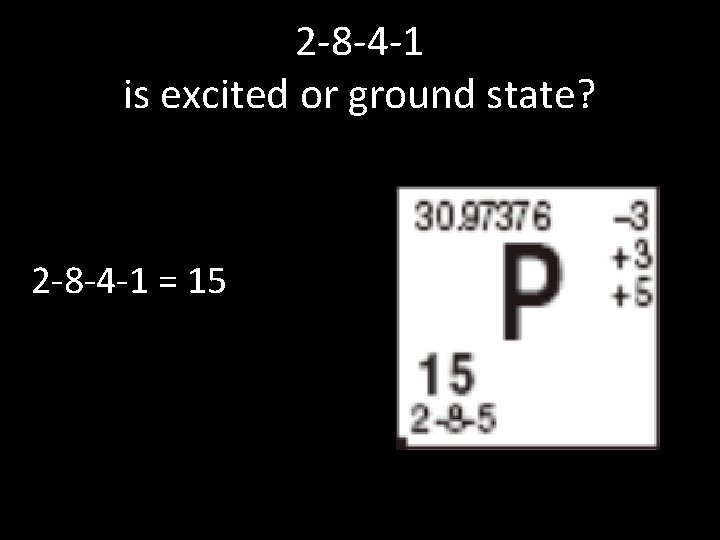
2 -8 -4 -1 is excited or ground state? 2 -8 -4 -1 = 15
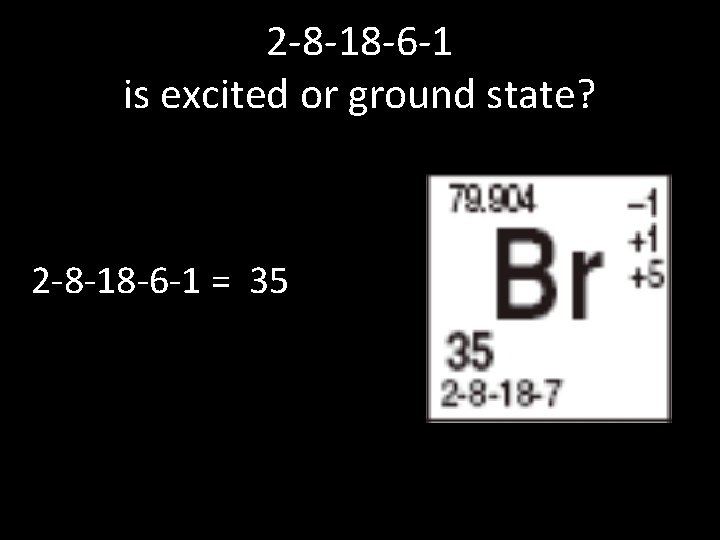
2 -8 -18 -6 -1 is excited or ground state? 2 -8 -18 -6 -1 = 35
END
August 2008 1 Which quantity identifies an element? (1) atomic number (2) mass number (3) total number of neutrons in an atom of the element (4) total number of valence electrons in an atom of the element
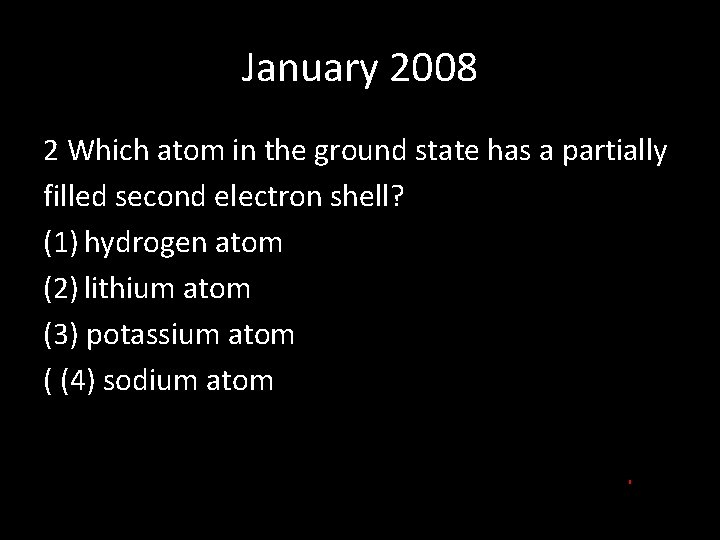
January 2008 2 Which atom in the ground state has a partially filled second electron shell? (1) hydrogen atom (2) lithium atom (3) potassium atom ( (4) sodium atom
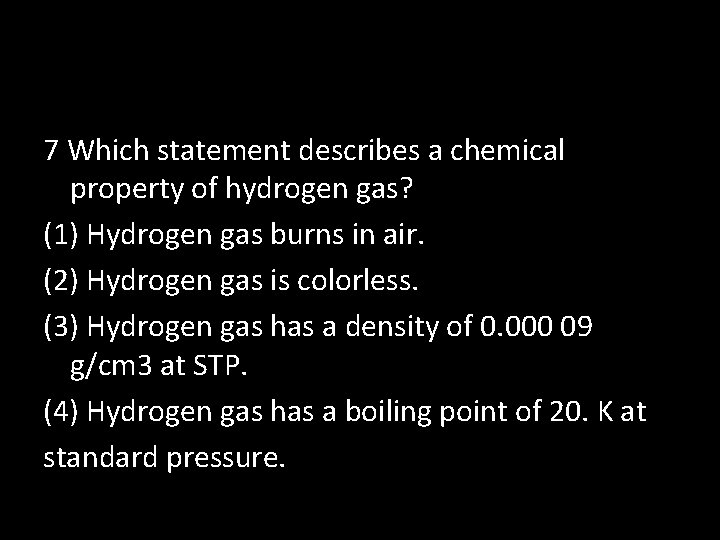
7 Which statement describes a chemical property of hydrogen gas? (1) Hydrogen gas burns in air. (2) Hydrogen gas is colorless. (3) Hydrogen gas has a density of 0. 000 09 g/cm 3 at STP. (4) Hydrogen gas has a boiling point of 20. K at standard pressure.
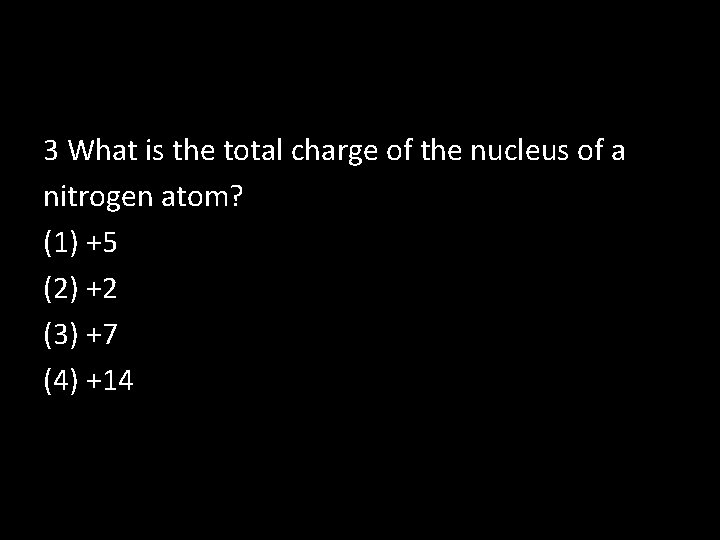
3 What is the total charge of the nucleus of a nitrogen atom? (1) +5 (2) +2 (3) +7 (4) +14
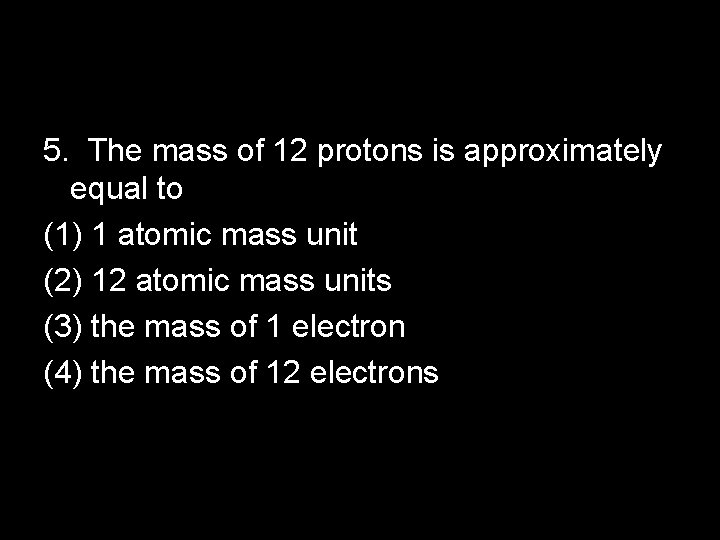
5. The mass of 12 protons is approximately equal to (1) 1 atomic mass unit (2) 12 atomic mass units (3) the mass of 1 electron (4) the mass of 12 electrons
August 2007
2. An atom is electrically neutral because the (1) number of protons equals the number of electrons (2) number of protons equals the number of neutrons (3) ratio of the number of neutrons to the number of electrons is 1: 1 (4) ratio of the number of neutrons to the number of protons is 2: 1
3 How do the energy and the most probable location of an electron in the third shell of an atom compare to the energy and the most probable location of an electron in the first shell of the same atom? (1) In the third shell, an electron has more energy and is closer to the nucleus. (2) In the third shell, an electron has more energy and is farther from the nucleus. (3) In the third shell, an electron has less energy and is closer to the nucleus. (4) In the third shell, an electron has lessenergy and is farther from the nucleus.
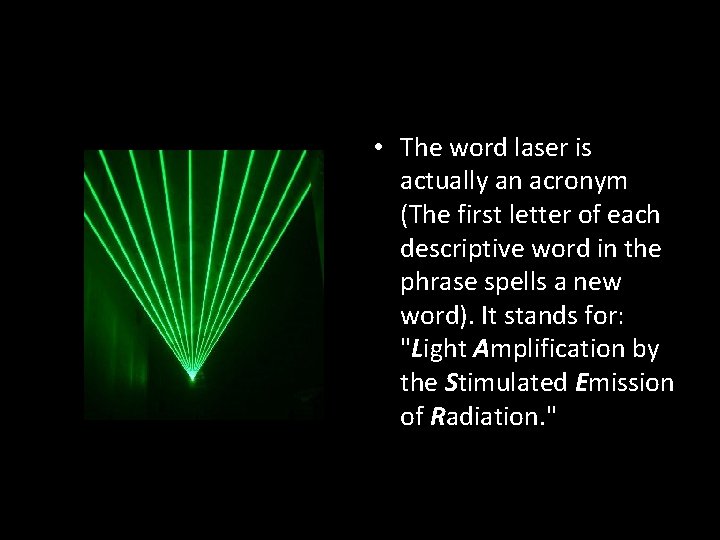
• The word laser is actually an acronym (The first letter of each descriptive word in the phrase spells a new word). It stands for: "Light Amplification by the Stimulated Emission of Radiation. "