
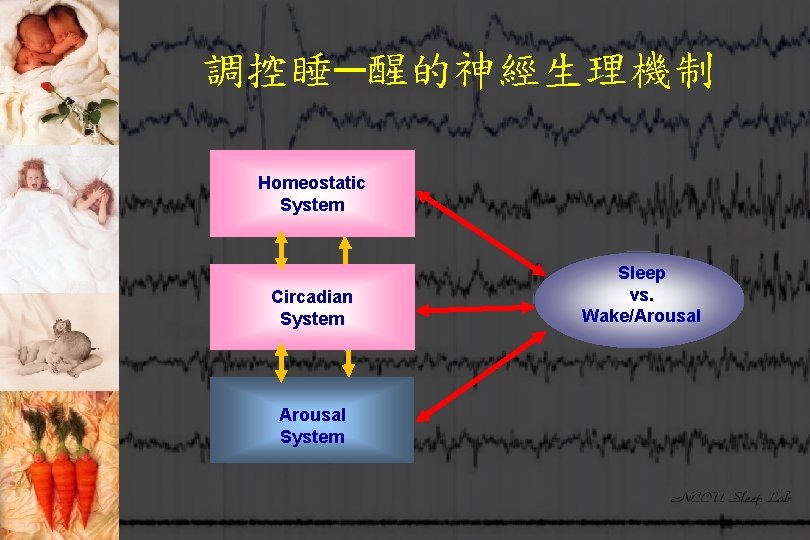
Homeostatic System Circadian System Arousal System Sleep vs
- Slides: 52
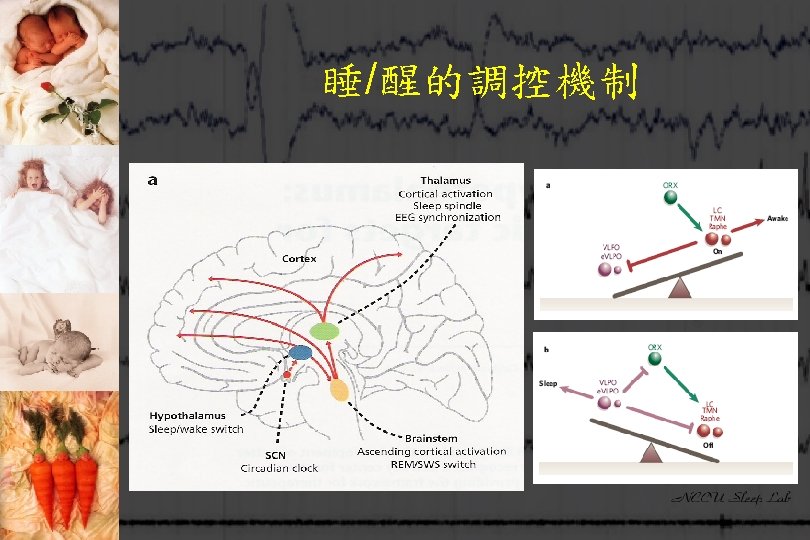
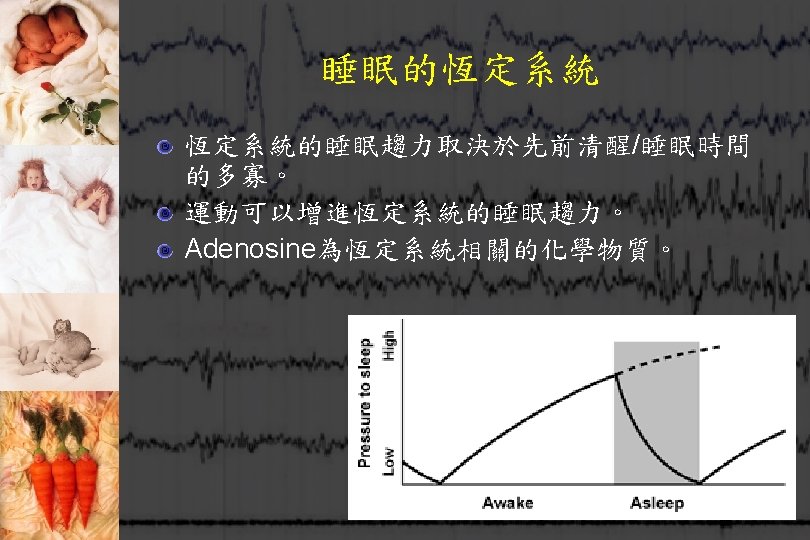
調控睡─醒的神經生理機制 Homeostatic System Circadian System Arousal System Sleep vs. Wake/Arousal
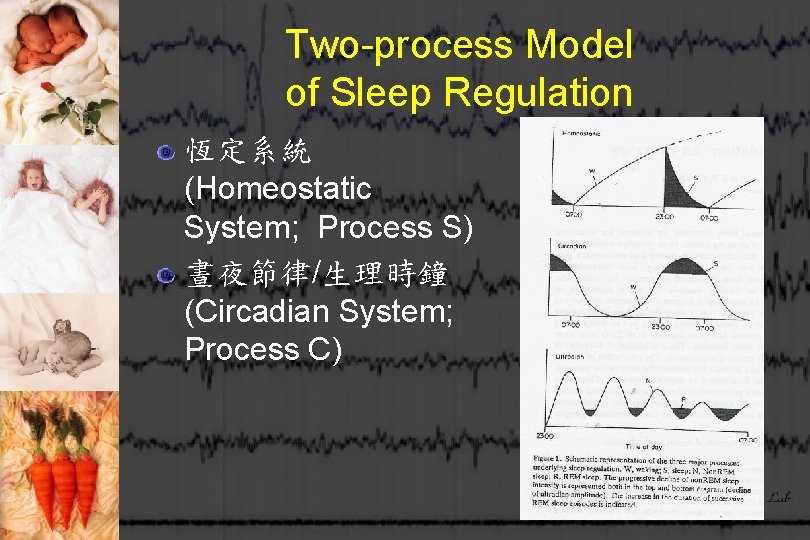
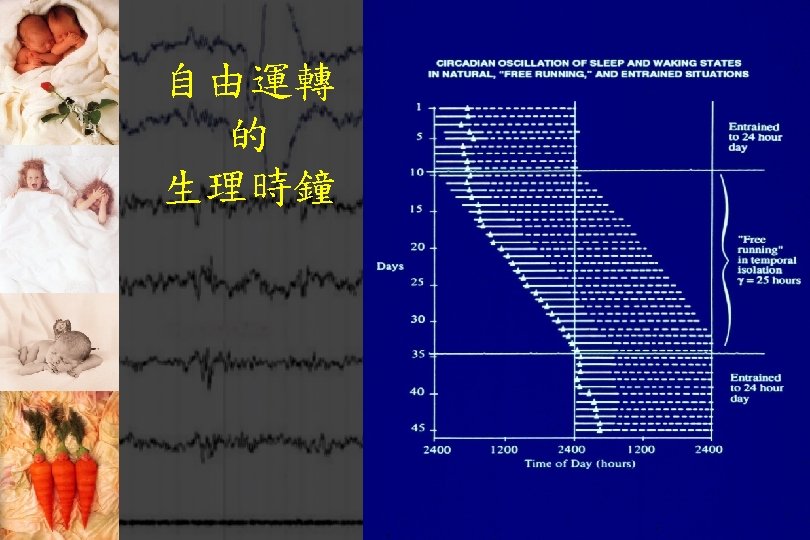
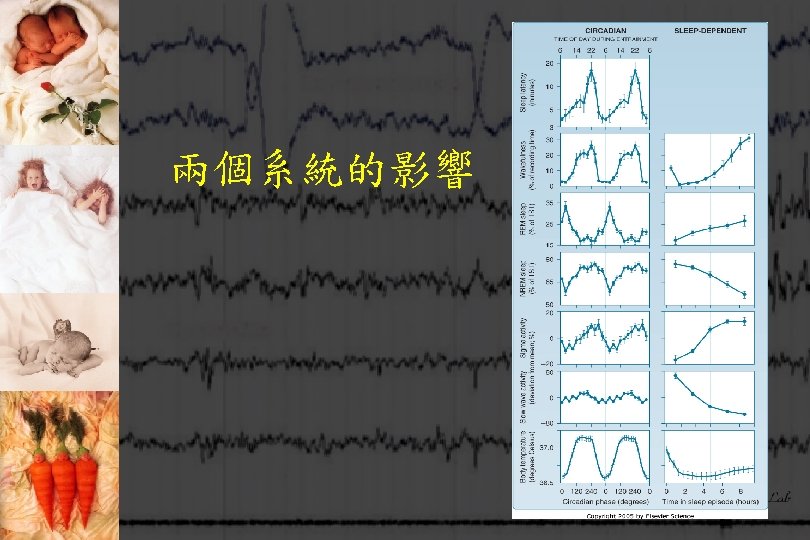
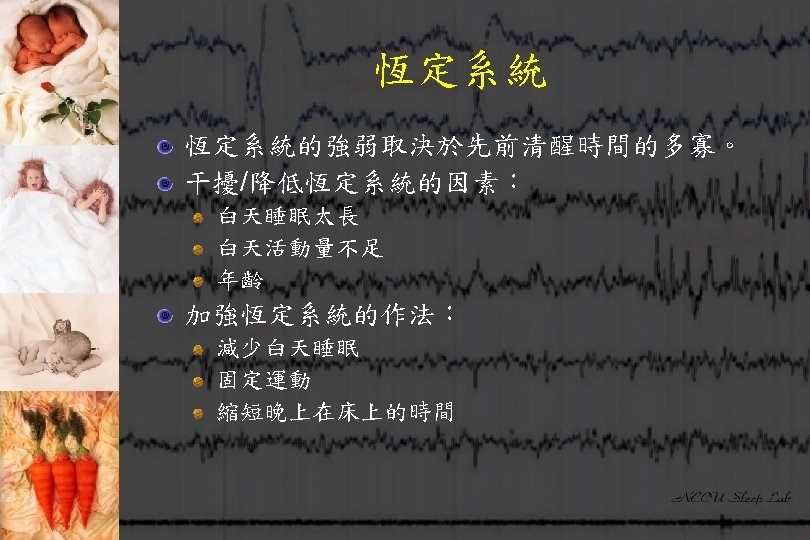
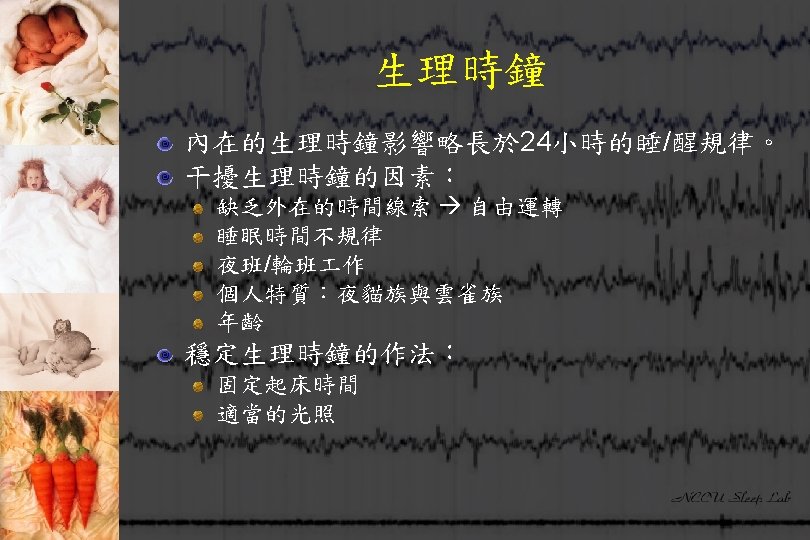
Two-process Model of Sleep Regulation 恆定系統 (Homeostatic System; Process S) 晝夜節律/生理時鐘 (Circadian System; Process C)
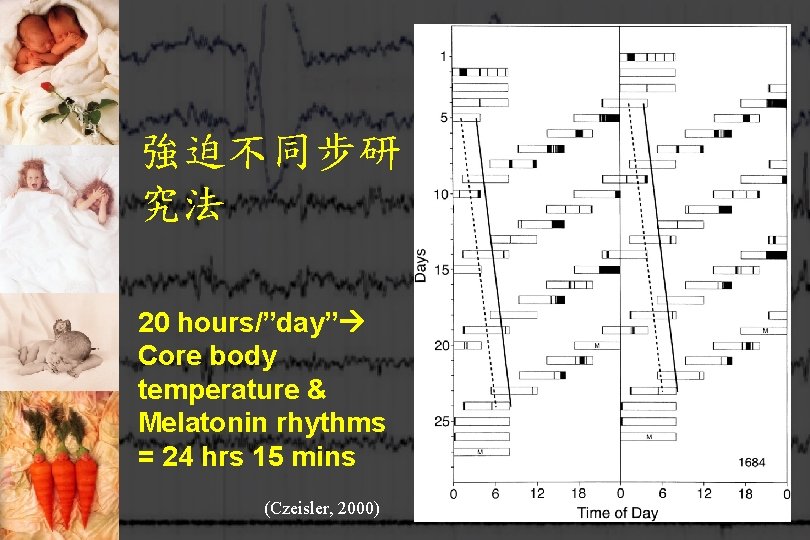
強迫不同步研 究法 20 hours/”day” Core body temperature & Melatonin rhythms = 24 hrs 15 mins (Czeisler, 2000)
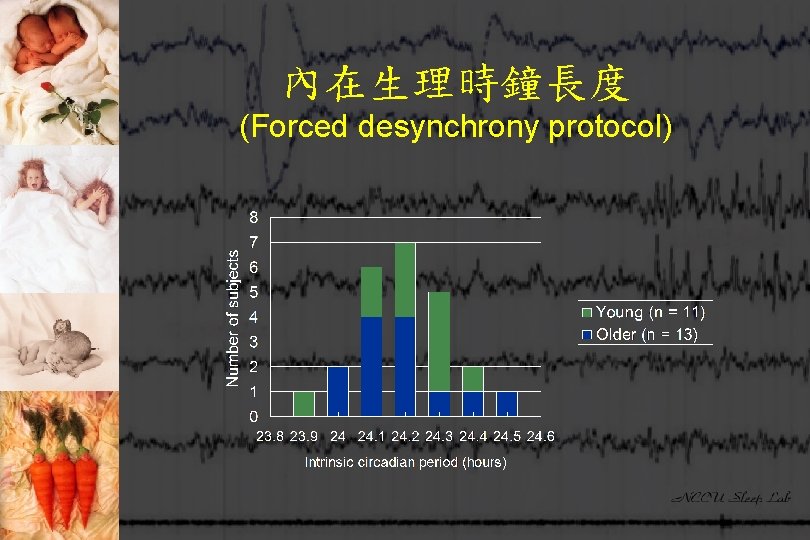
內在生理時鐘長度 (Forced desynchrony protocol)
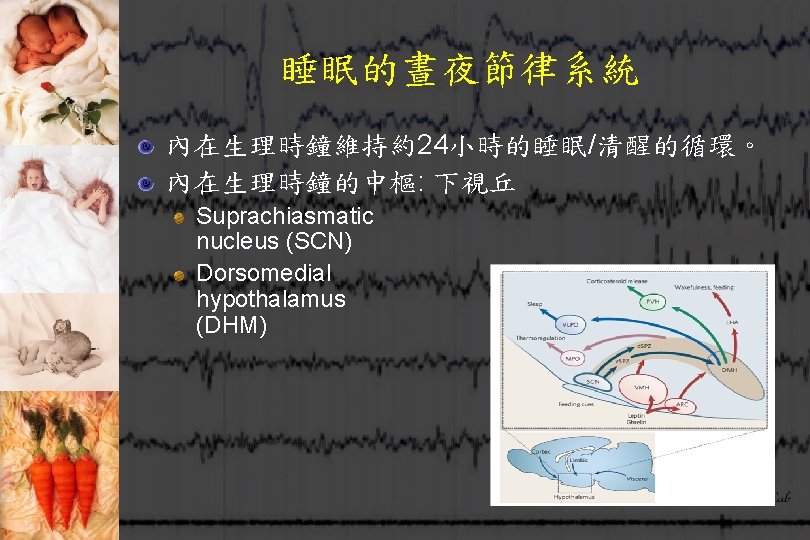
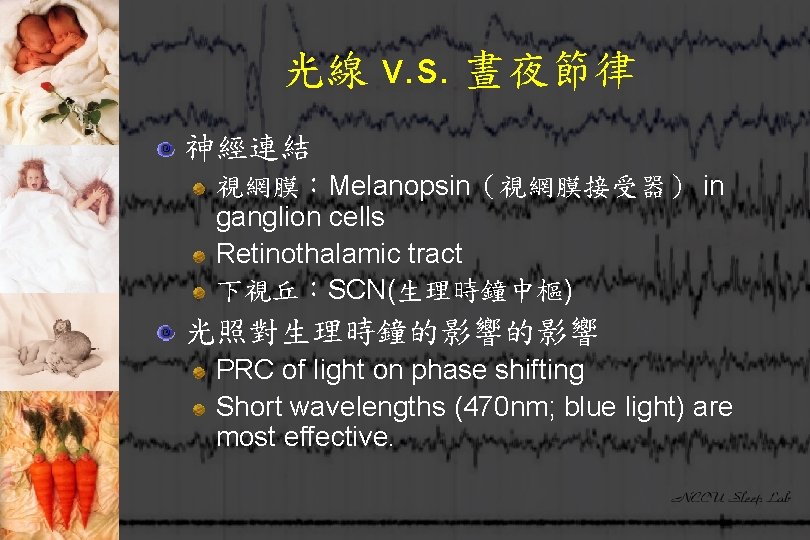
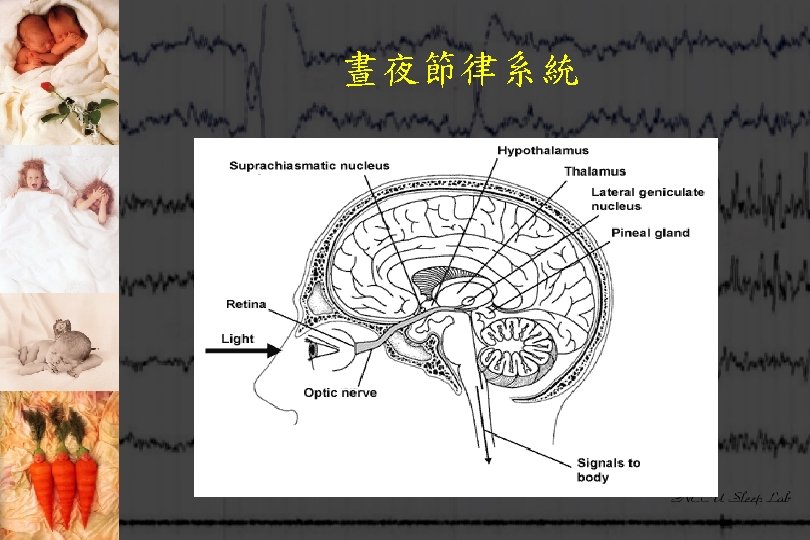
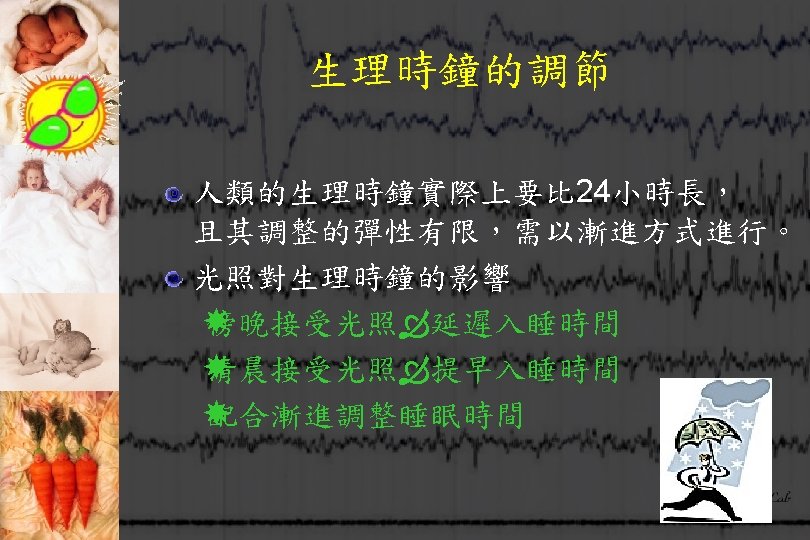
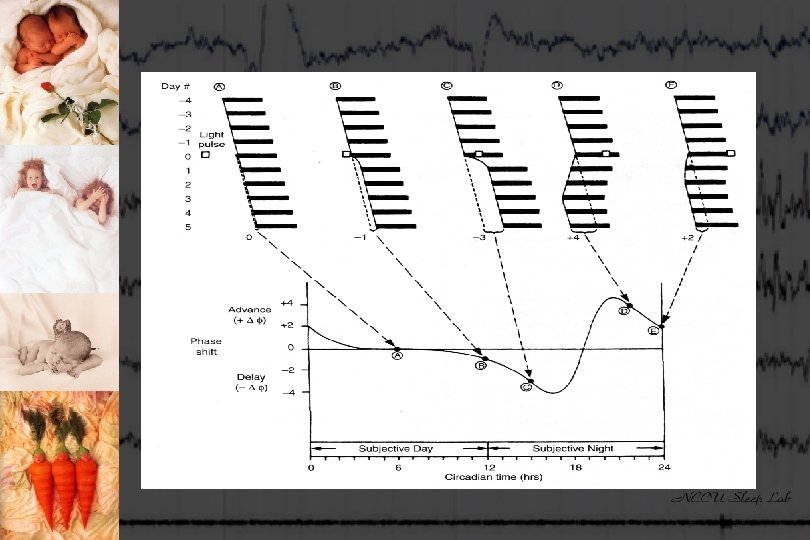
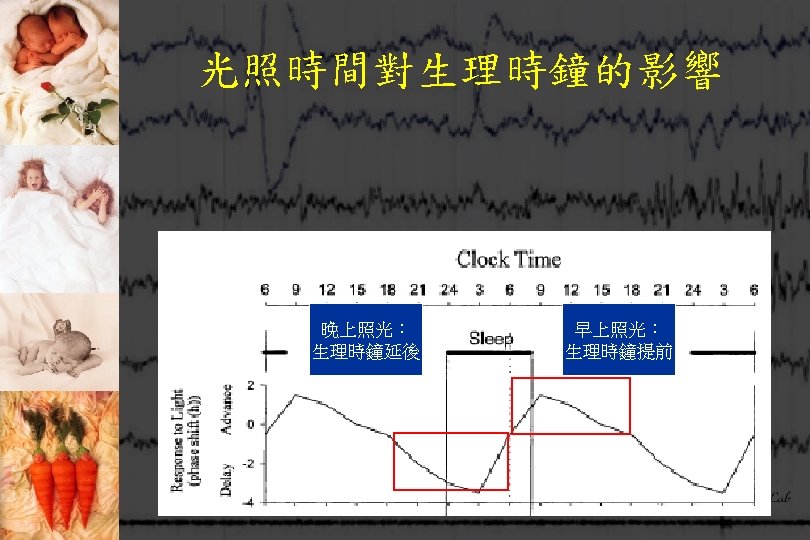
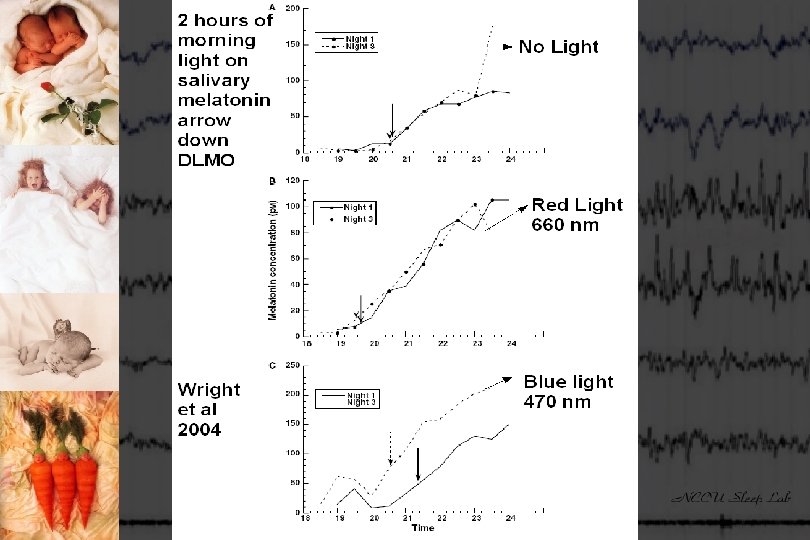
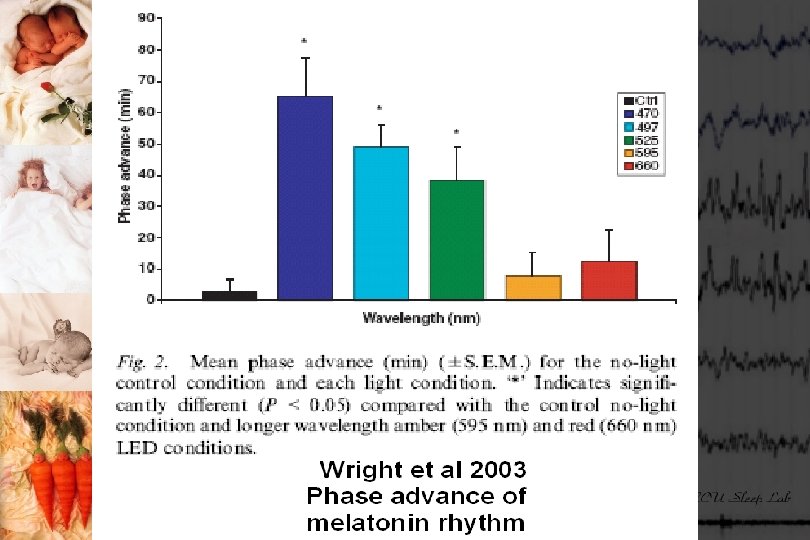
光線 v. s. 晝夜節律 神經連結 視網膜:Melanopsin(視網膜接受器) in ganglion cells Retinothalamic tract 下視丘:SCN(生理時鐘中樞) 光照對生理時鐘的影響的影響 PRC of light on phase shifting Short wavelengths (470 nm; blue light) are most effective.
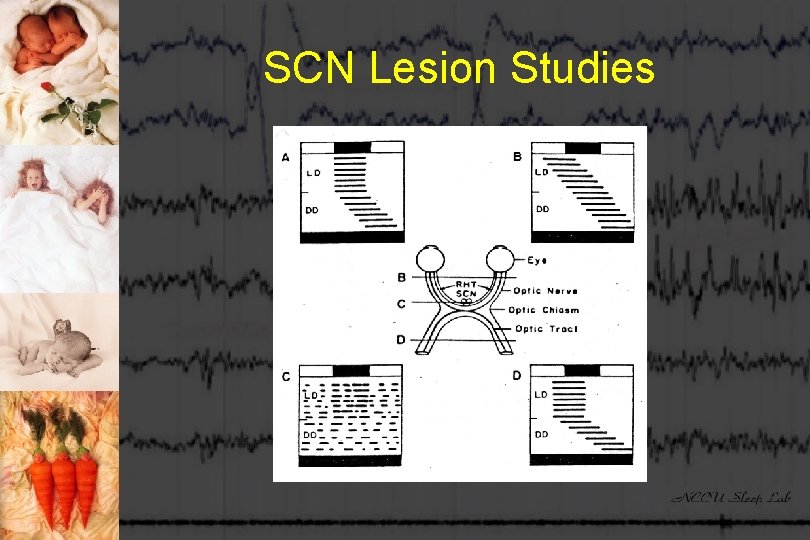
SCN Lesion Studies
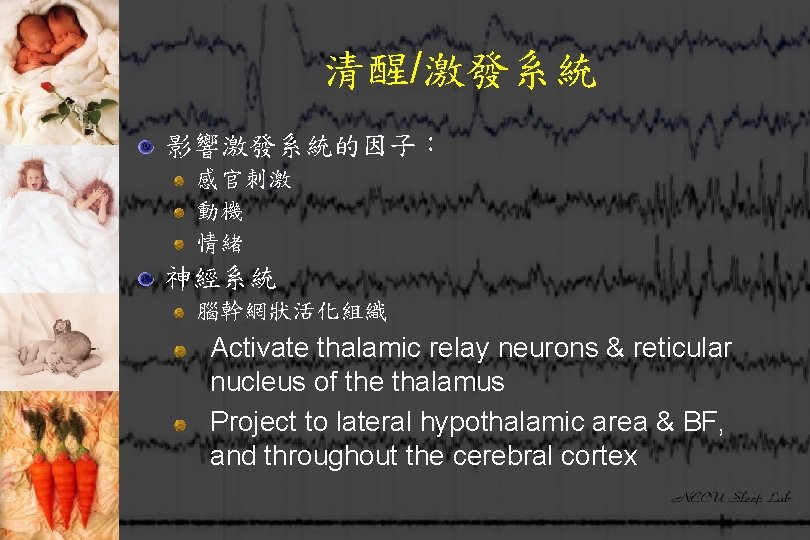
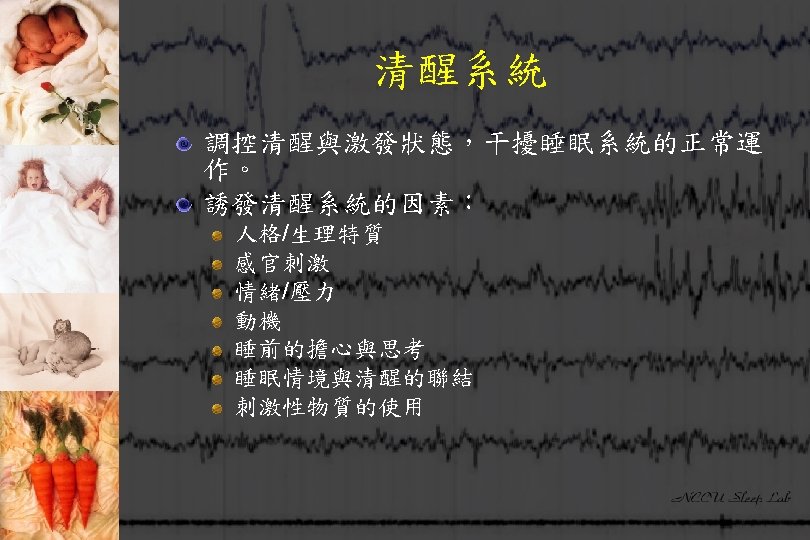
清醒/激發系統 影響激發系統的因子: 感官刺激 動機 情緒 神經系統 腦幹網狀活化組織 Activate thalamic relay neurons & reticular nucleus of the thalamus Project to lateral hypothalamic area & BF, and throughout the cerebral cortex
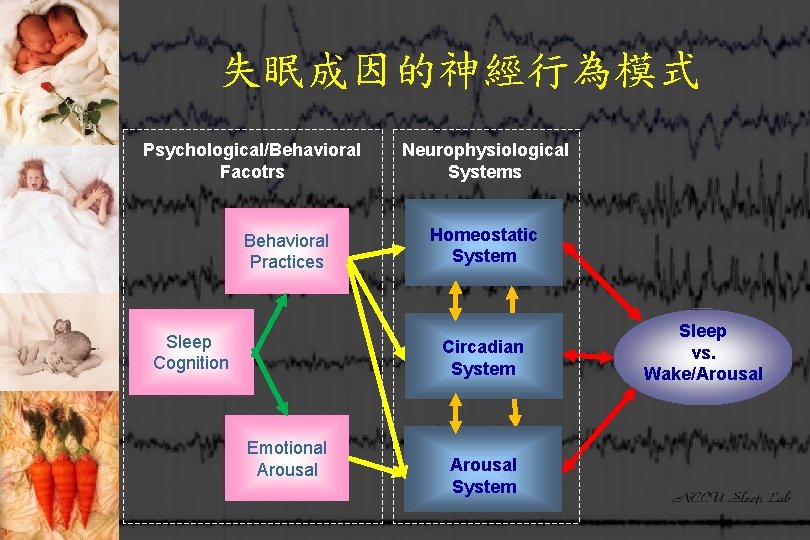
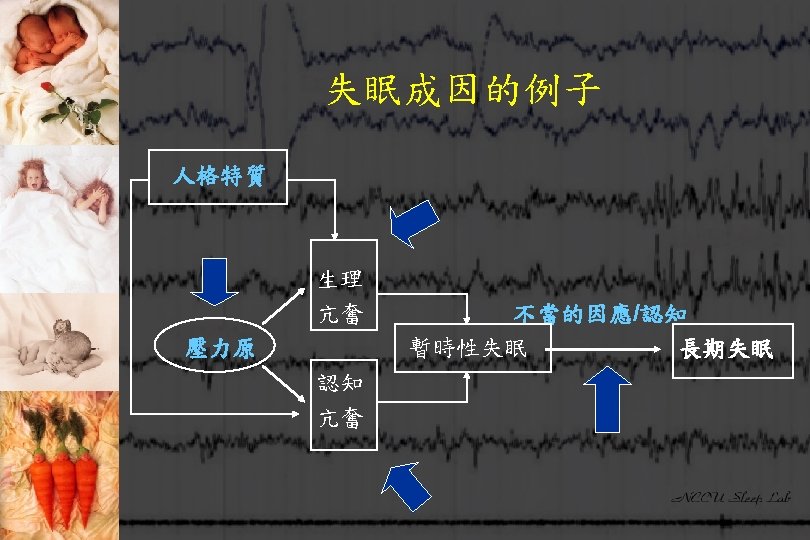
失眠成因的神經行為模式 Psychological/Behavioral Facotrs Behavioral Practices Sleep Cognition Neurophysiological Systems Homeostatic System Circadian System Emotional Arousal System Sleep vs. Wake/Arousal
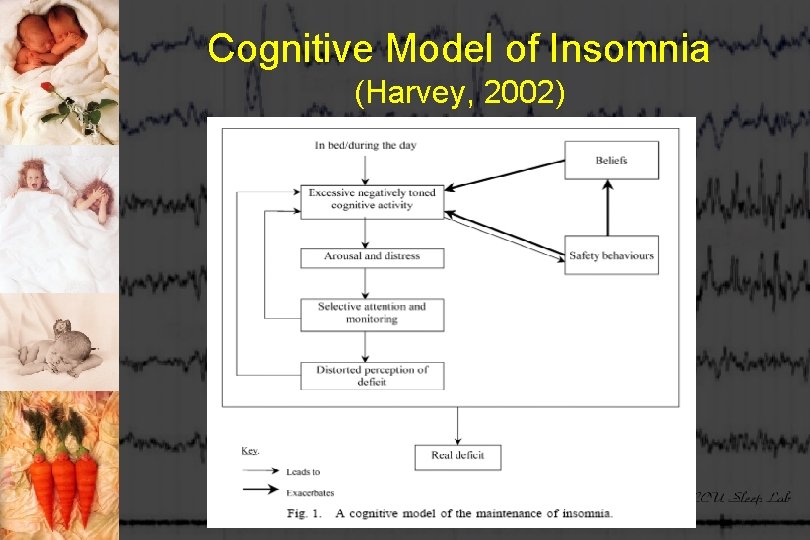
Cognitive Model of Insomnia (Harvey, 2002)
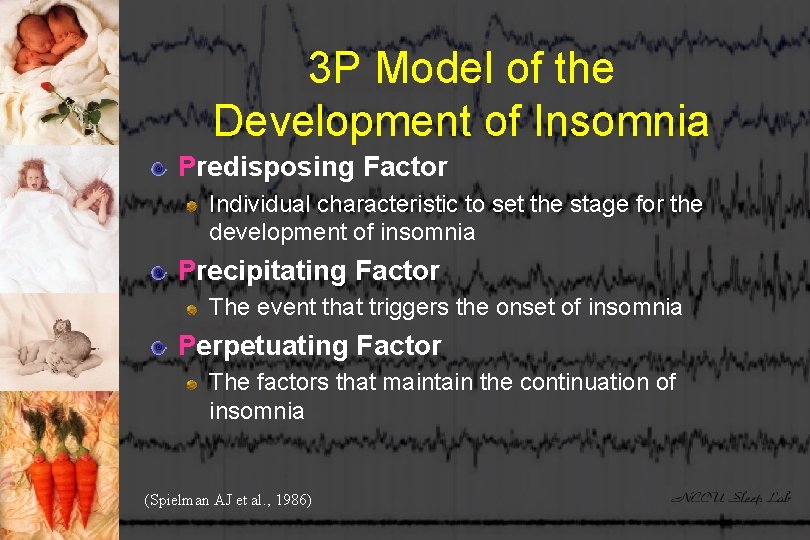
3 P Model of the Development of Insomnia Predisposing Factor Individual characteristic to set the stage for the development of insomnia Precipitating Factor The event that triggers the onset of insomnia Perpetuating Factor The factors that maintain the continuation of insomnia (Spielman AJ et al. , 1986)
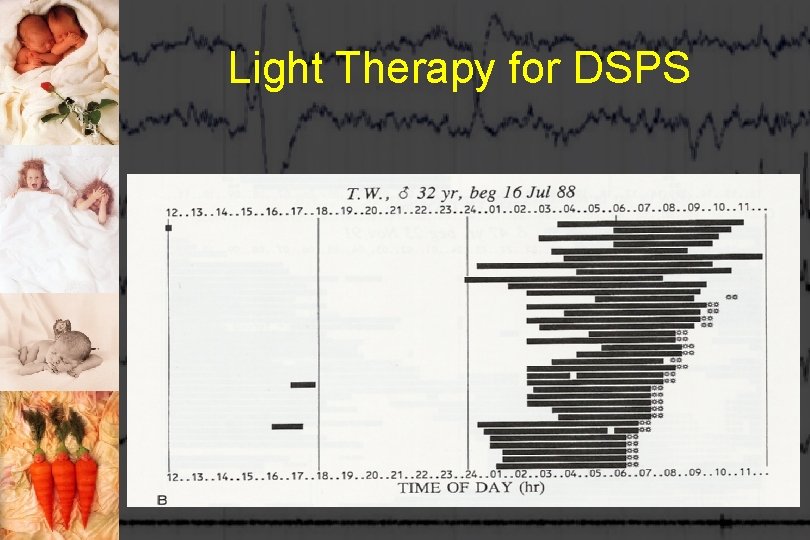
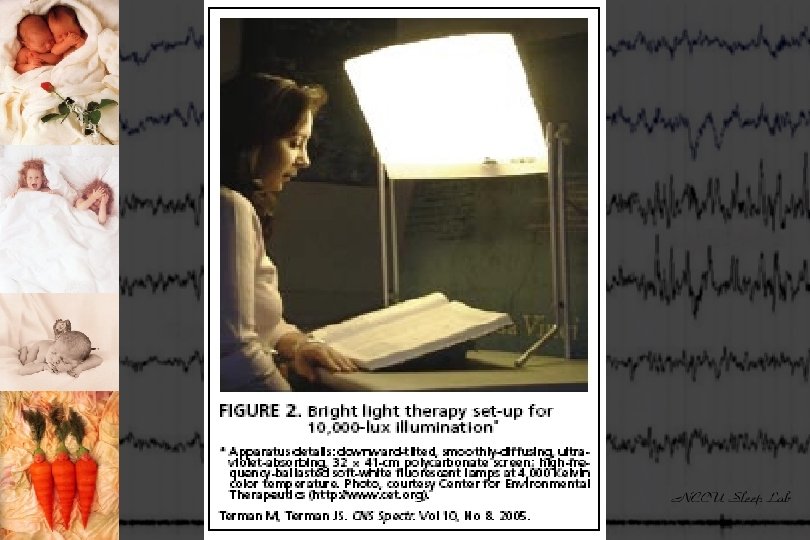
Light Therapy for DSPS
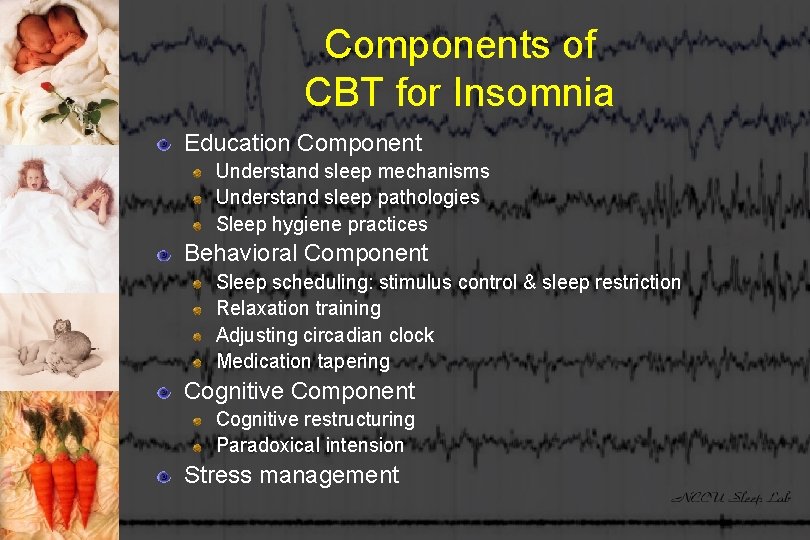
Components of CBT for Insomnia Education Component Understand sleep mechanisms Understand sleep pathologies Sleep hygiene practices Behavioral Component Sleep scheduling: stimulus control & sleep restriction Relaxation training Adjusting circadian clock Medication tapering Cognitive Component Cognitive restructuring Paradoxical intension Stress management
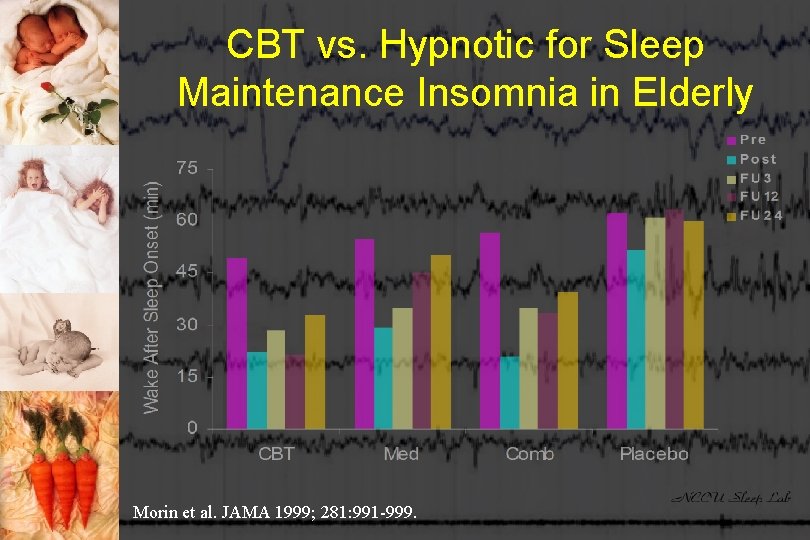
CBT vs. Hypnotic for Sleep Maintenance Insomnia in Elderly Morin et al. JAMA 1999; 281: 991 -999.
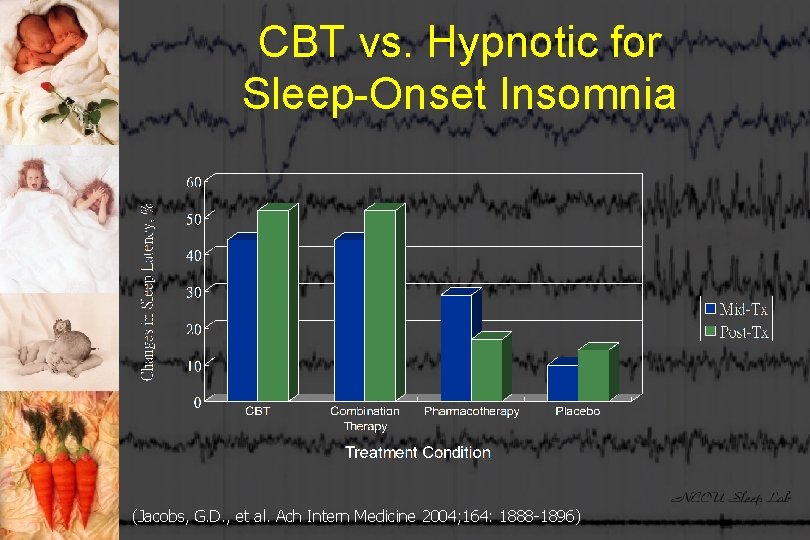
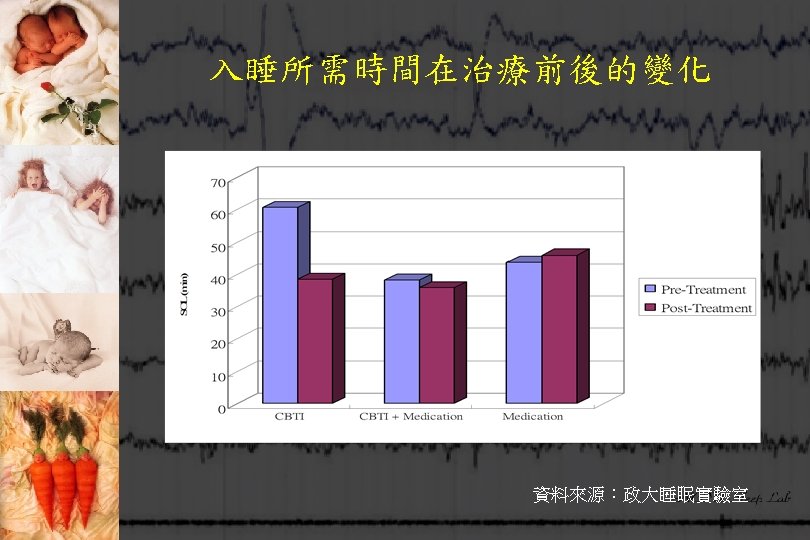
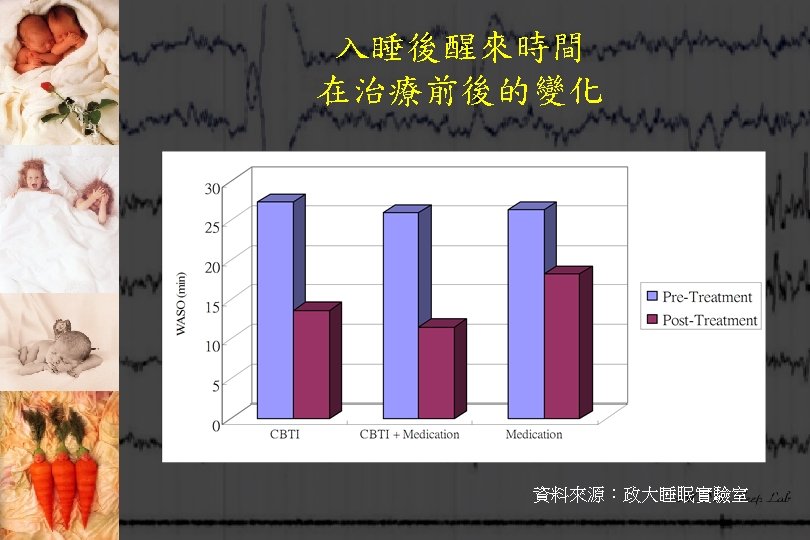
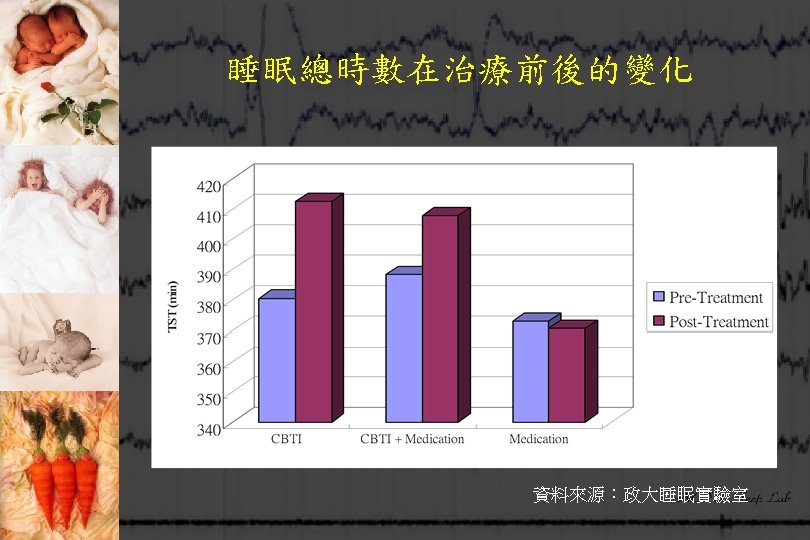
CBT vs. Hypnotic for Sleep-Onset Insomnia (Jacobs, G. D. , et al. Ach Intern Medicine 2004; 164: 1888 -1896)
Have a Nice Sleep!!