
Homeostatic Imbalances of the Skin Burns Infections Allergies
Homeostatic Imbalances of the Skin Burns, Infections, Allergies Pages 124 -126
Skin Homeostatic Imbalances � Burns ◦ Tissue damage and cell death � Causes: ◦ ◦ Heat Electricity UV radiation Chemicals � Consequences: ◦ loss of body fluids ◦ invasion of bacteria © 2015 Pearson Education, Inc.
Rule of Nines � Used to determine the extent of burns � The body is divided into 11 areas for quick estimation � Each area represents about 9 percent of total body surface area ◦ Exception is the perineum which represents 1% © 2015 Pearson Education, Inc.
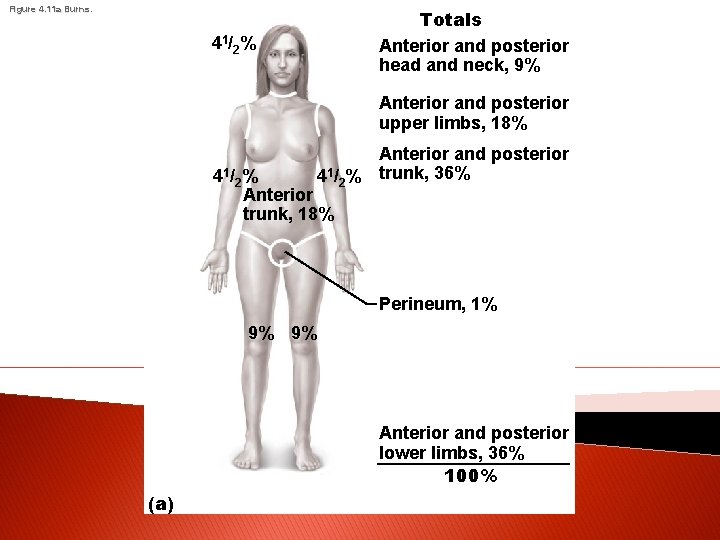
Figure 4. 11 a Burns. Totals Anterior and posterior head and neck, 9% 41 / 2 % Anterior and posterior upper limbs, 18% Anterior and posterior 41/2% trunk, 36% 41 / 2 % Anterior trunk, 18% Perineum, 1% 9% 9% Anterior and posterior lower limbs, 36% 100% (a)

Severity of Burns � First-degree burns (partial-thickness burn) ◦ Damage to epidermis � Second-degree burns (partial-thickness burn) ◦ Damage to Epidermis and upper dermis (papillary) ◦ Skin: red, blistered � Third-degree burns (full-thickness burn) ◦ Destroys entire skin layer ◦ Requires skin grafts ◦ Skin looks charred © 2015 Pearson Education, Inc.
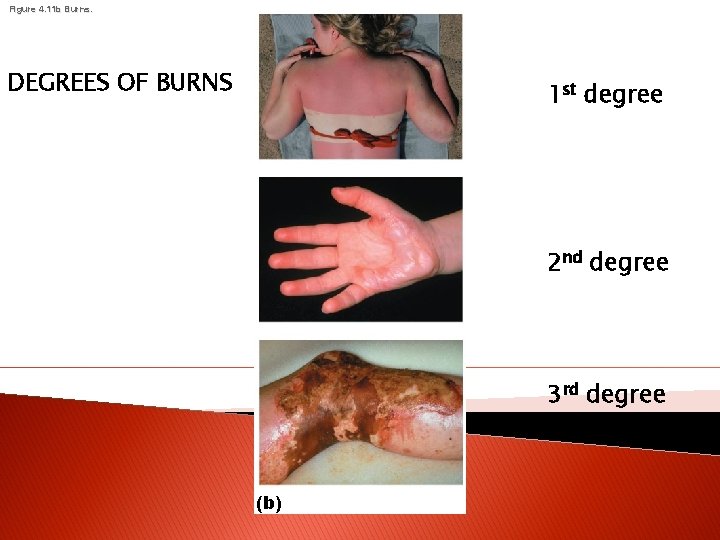
Figure 4. 11 b Burns. DEGREES OF BURNS 1 st degree 2 nd degree 3 rd degree (b)
Symptoms of skin infections/allergies: � Redness � Blisters/lesions � Bumps � Itching oozing pus � Burning � Patches � Scaling/flaking/peeling
Common Skin Infections � Athlete’s foot (tinea pedis) ◦ fungal infection � Boils and carbuncles � Cold sores ◦ bacterial infections (usually staphylococcus) ◦ herpes simplex virus I or II �As many as 90% of Americans have been exposed to simplex Virus I (cold sores) �An estimate of 50 -70% have Virus II (genital herpes) � You may want to assume that everyone has the virus as it is so common and does not always show symptoms to shed the virus © 2015 Pearson Education, Inc.
Common skin allergies � Contact dermatitis ◦ Exposures cause allergic reaction ◦ Causes include chemicals, plants (grass is common) � Impetigo ◦ Caused by bacterial infection �Strep and staph are most common � Psoriasis ◦ Unknown cause ◦ Triggered by trauma, infection, stress © 2015 Pearson Education, Inc.
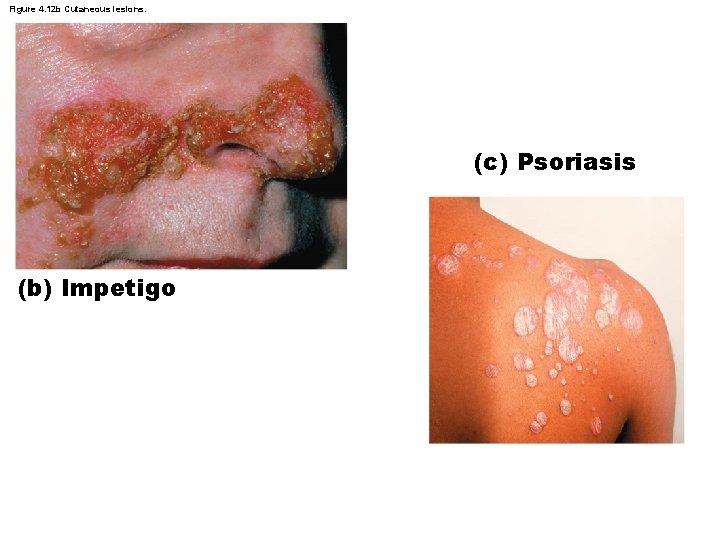
Figure 4. 12 b Cutaneous lesions. (c) Psoriasis (b) Impetigo
- Slides: 10