
Homeostasis What is Homeostasis To survive all living

- Slides: 8
Homeostasis
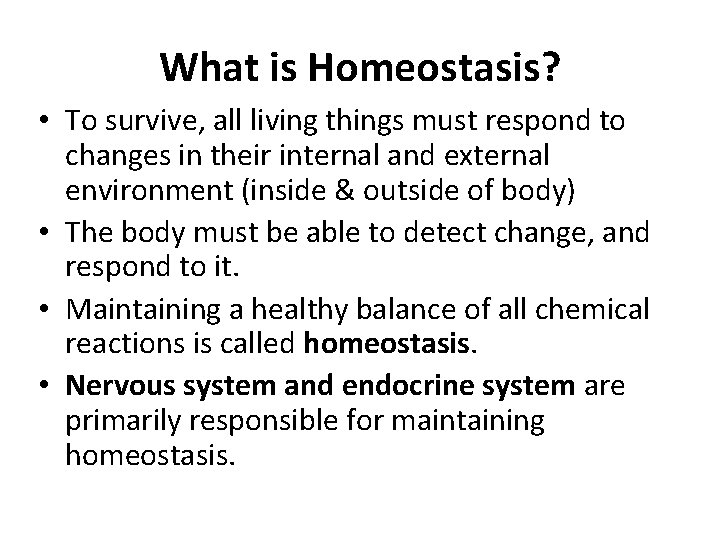
What is Homeostasis? • To survive, all living things must respond to changes in their internal and external environment (inside & outside of body) • The body must be able to detect change, and respond to it. • Maintaining a healthy balance of all chemical reactions is called homeostasis. • Nervous system and endocrine system are primarily responsible for maintaining homeostasis.
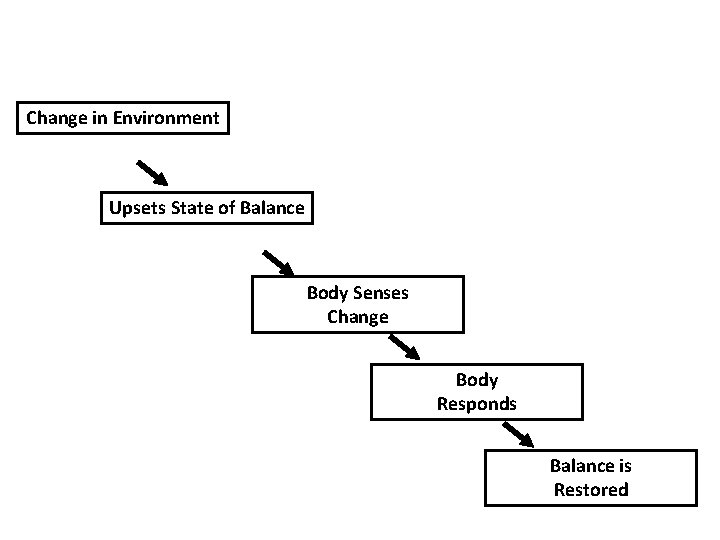
Change in Environment Upsets State of Balance Body Senses Change Body Responds Balance is Restored
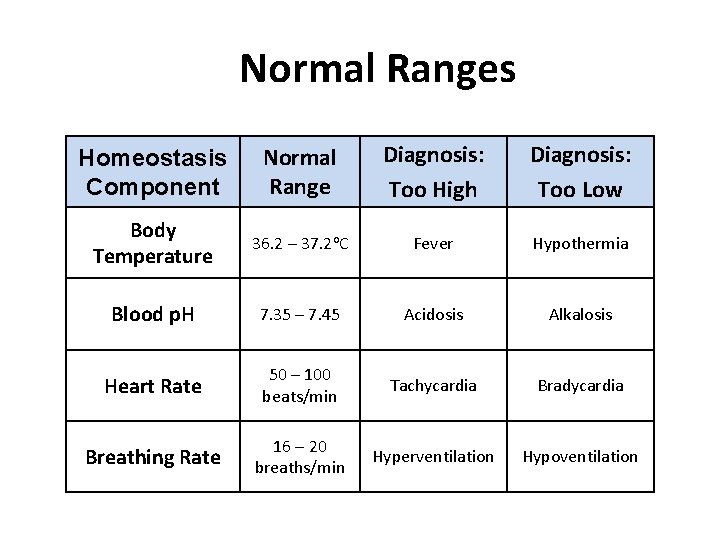
Normal Ranges Homeostasis Component Normal Range Diagnosis: Too High Diagnosis: Too Low Body Temperature 36. 2 – 37. 2 o. C Fever Hypothermia Blood p. H 7. 35 – 7. 45 Acidosis Alkalosis Heart Rate 50 – 100 beats/min Tachycardia Bradycardia Breathing Rate 16 – 20 breaths/min Hyperventilation Hypoventilation
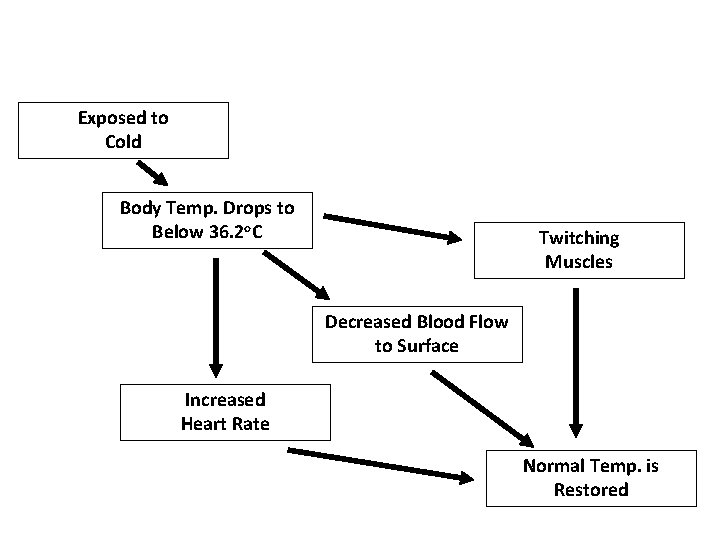
Exposed to Cold Body Temp. Drops to Below 36. 2 o. C Twitching Muscles Decreased Blood Flow to Surface Increased Heart Rate Normal Temp. is Restored
Negative Feedback • A process to restore conditions to its original state • Constantly monitors and measures the environmental conditions being regulated. It will make the necessary adjustments when small changes are sensed. • Akin to a controlled thermostat in the home. – If programmed to keep room at 23°C. It will monitor the temperature. – If temp falls below 23 C, it will automatically turn on the heat. Once temp reaches 23 C, it will turn off the heat. • Prevents small changes from becoming large changes
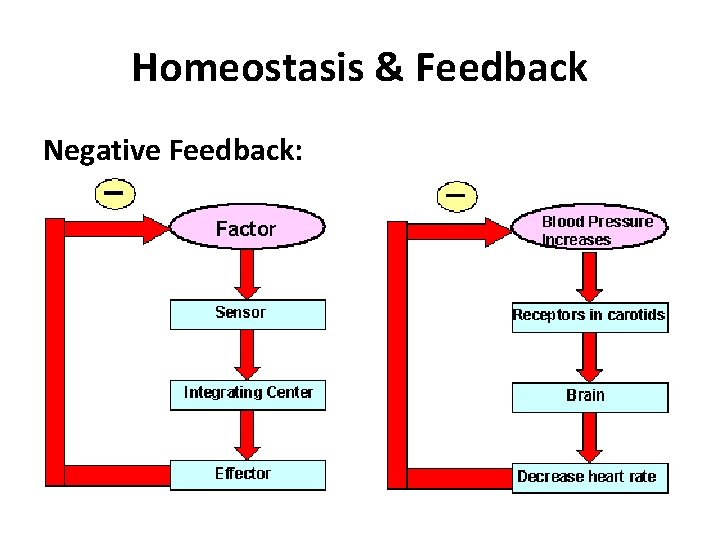
Homeostasis & Feedback Negative Feedback: – Mechanisms that make adjustments to keep body conditions within normal range – Involved Parts: • Monitor, regulator, coordinating centre – Copy Pg. 170, Figure 3 The End!!!
Big Bang Theory video Sheldon