
Homeostasis the tendency of the body to maintain
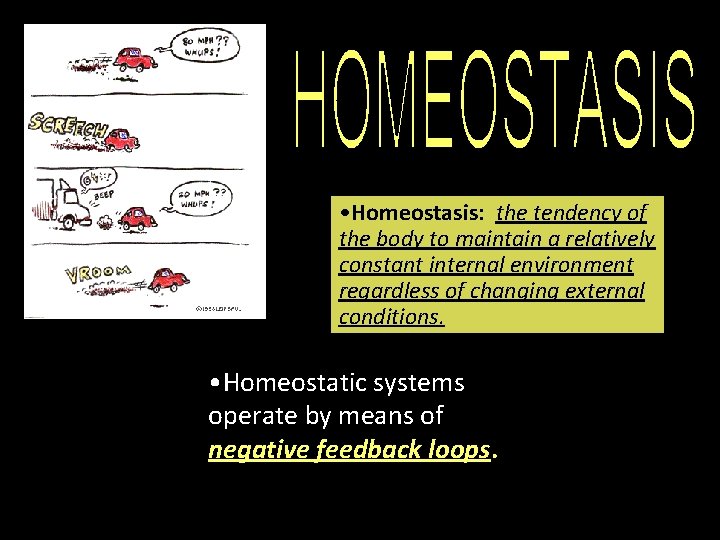
• Homeostasis: the tendency of the body to maintain a relatively constant internal environment regardless of changing external conditions. • Homeostatic systems operate by means of negative feedback loops.
Negative vs. Positive Feedback Loops/Mechanisms • Negative feedback mechanism: – Mechanism of homeostatic response by which the output of a system suppresses or inhibits activity of the system. • Positive feedback mechanism: – Mechanism designed to accelerate or enhance output created by a stimulus
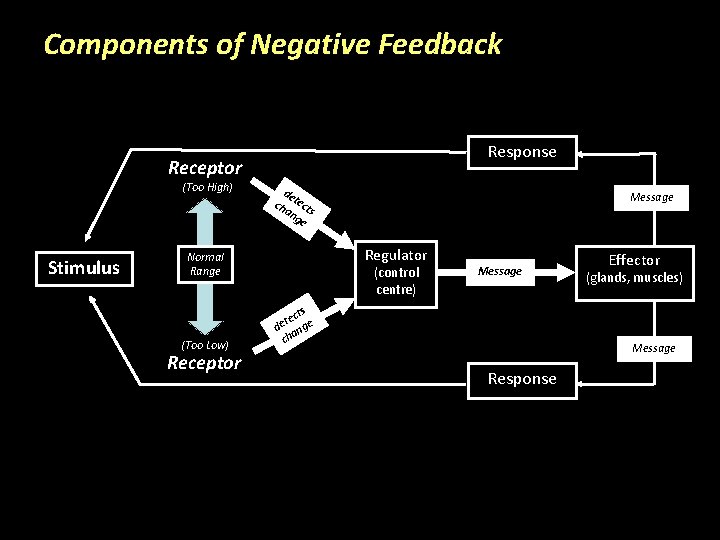
Components of Negative Feedback Response Receptor (Too High) Stimulus de ch tect an s ge Regulator Normal Range (Too Low) Receptor Message (control centre) Message cts e t de nge cha Effector (glands, muscles) Message Response
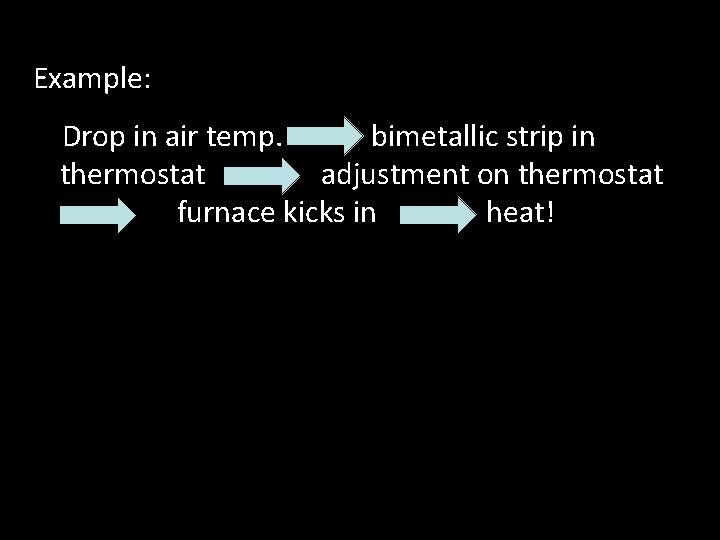
Example: Drop in air temp. bimetallic strip in thermostat adjustment on thermostat furnace kicks in heat!
![Example: Regulation of Urine Production by ADH Dehydration causes high [salt] in blood Osmoreceptors](http://slidetodoc.com/presentation_image_h2/35df4fdcf69c2eccded0253371a32adf/image-5.jpg "Example: Regulation of Urine Production by ADH Dehydration causes high [salt] in blood Osmoreceptors")
Example: Regulation of Urine Production by ADH Dehydration causes high [salt] in blood Osmoreceptors in hypothalamus sense change ADH synthesized by neurosecretory cells in hypothalamus ADH released by posterior pituitary into blood Increased water reabsorption in kidneys Higher water volume in blood Negative feedback
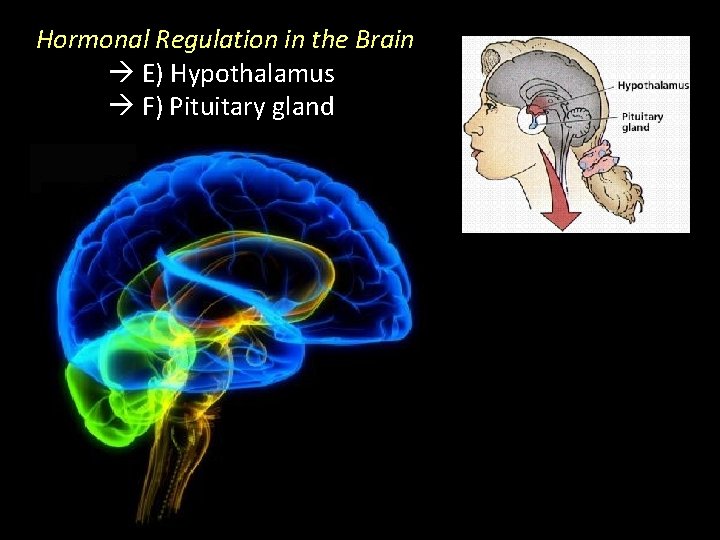
Hormonal Regulation in the Brain E) Hypothalamus F) Pituitary gland
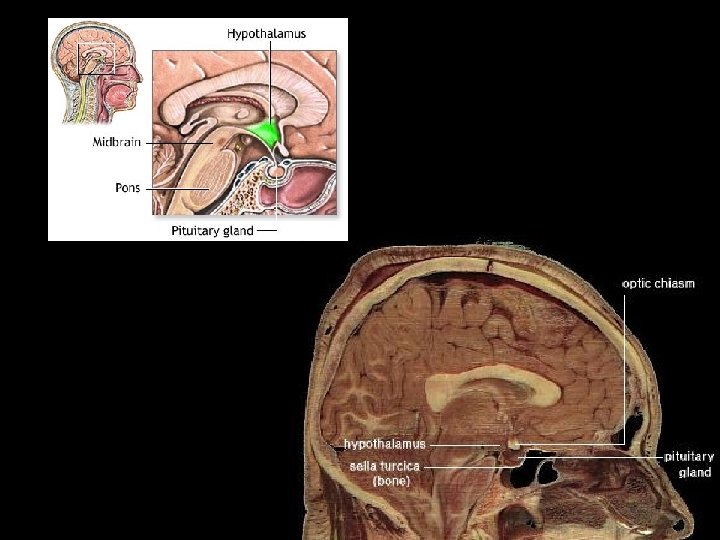
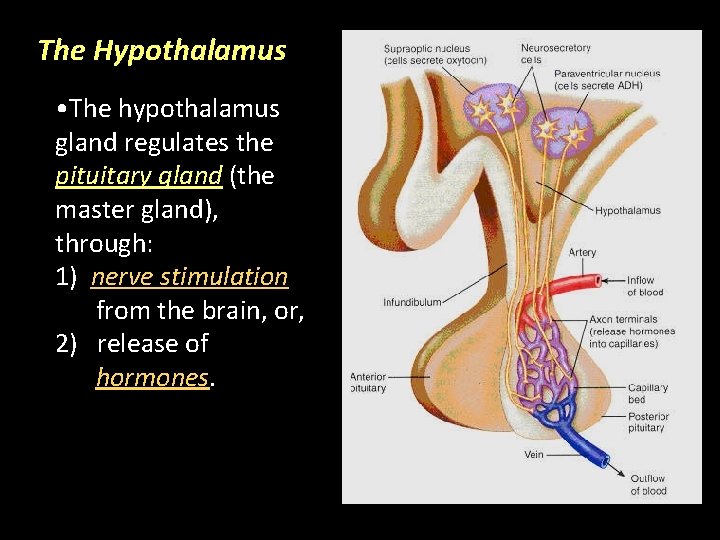
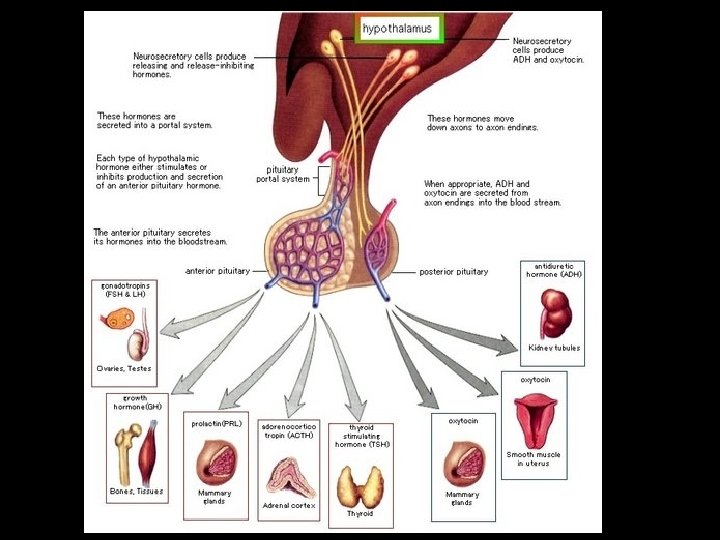
The Hypothalamus • The hypothalamus gland regulates the pituitary gland (the master gland), through: 1) nerve stimulation from the brain, or, 2) release of hormones.
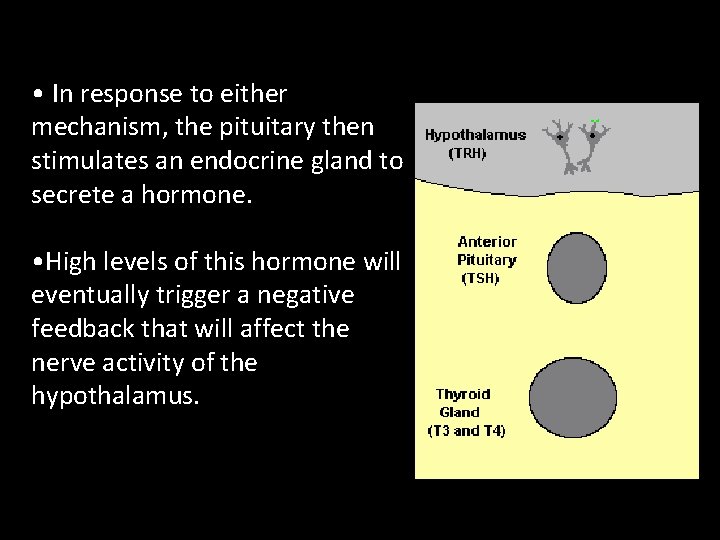
• In response to either mechanism, the pituitary then stimulates an endocrine gland to secrete a hormone. • High levels of this hormone will eventually trigger a negative feedback that will affect the nerve activity of the hypothalamus.
• Differs from other glands in that it synthesizes hormones called releasing hormones. • These travel from the hypothalamus to the pituitary and signal another specific hormones to be released.
Examples of Releasing Hormones: -Gn. RH- Gonadotropin Releasing Hormone. Stimulates the pituitary to release Luteinizing Hormone. -GHRF- Growth Hormone Releasing Factor. Stimulates the pituitary to release Growth Hormone. -PRH- Prolactin Releasing Hormone which stimulates the pituitary to release Prolactin. (-Inhibiting hormones- GHIF, PIF)
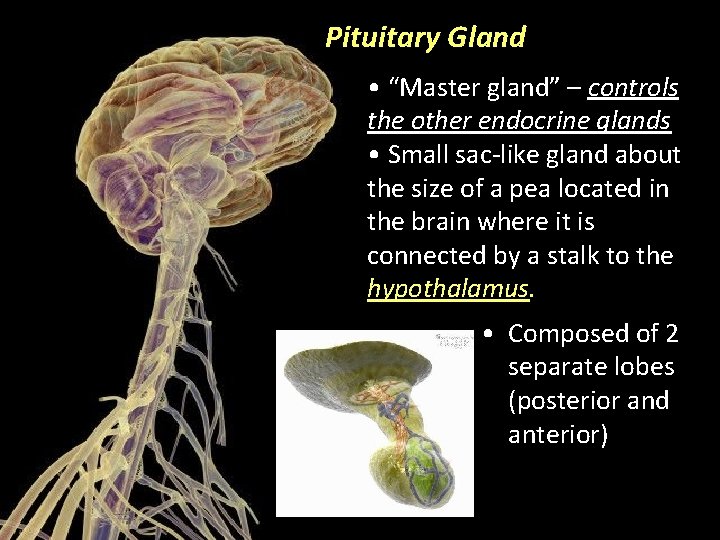
Pituitary Gland • “Master gland” – controls the other endocrine glands • Small sac-like gland about the size of a pea located in the brain where it is connected by a stalk to the hypothalamus. • Composed of 2 separate lobes (posterior and anterior)
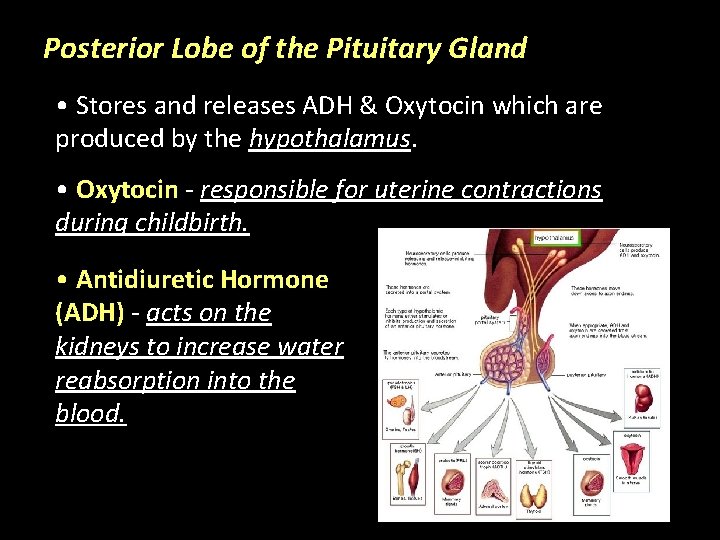
Posterior Lobe of the Pituitary Gland • Stores and releases ADH & Oxytocin which are produced by the hypothalamus. • Oxytocin - responsible for uterine contractions during childbirth. • Antidiuretic Hormone (ADH) - acts on the kidneys to increase water reabsorption into the blood.
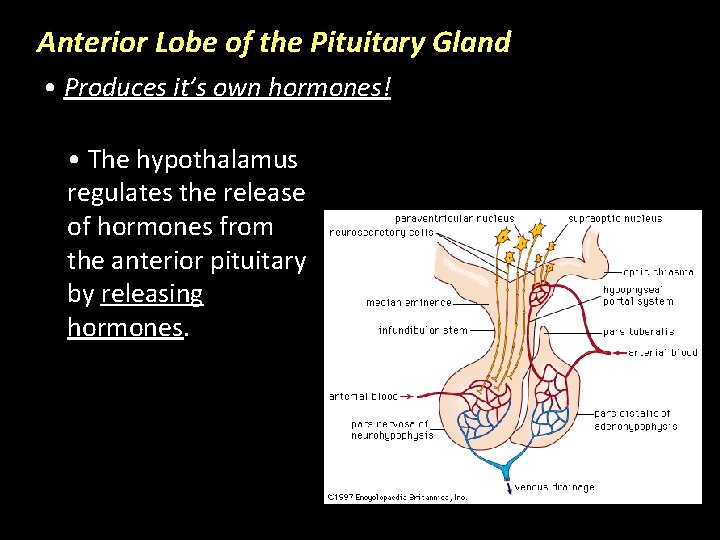
Anterior Lobe of the Pituitary Gland • Produces it’s own hormones! • The hypothalamus regulates the release of hormones from the anterior pituitary by releasing hormones.
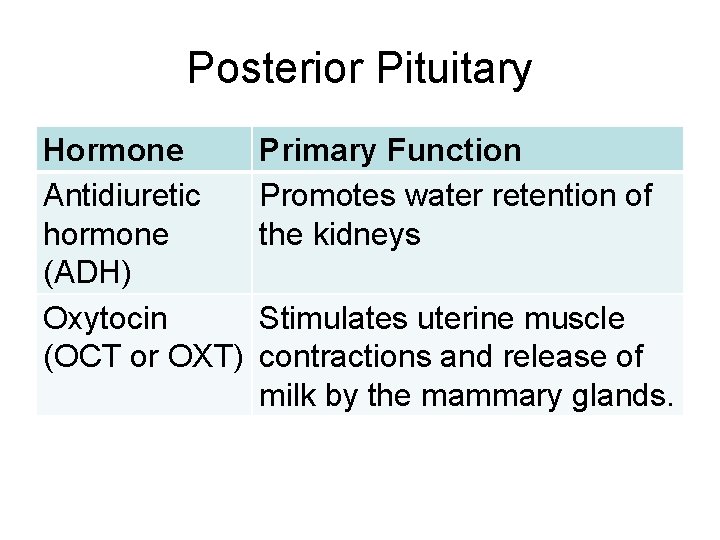
Posterior Pituitary Hormone Antidiuretic hormone (ADH) Oxytocin (OCT or OXT) Primary Function Promotes water retention of the kidneys Stimulates uterine muscle contractions and release of milk by the mammary glands.
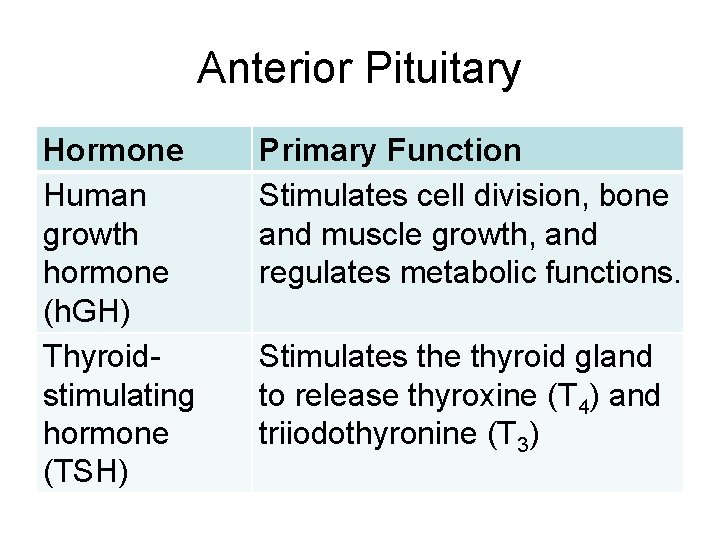
Anterior Pituitary Hormone Human growth hormone (h. GH) Thyroidstimulating hormone (TSH) Primary Function Stimulates cell division, bone and muscle growth, and regulates metabolic functions. Stimulates the thyroid gland to release thyroxine (T 4) and triiodothyronine (T 3)
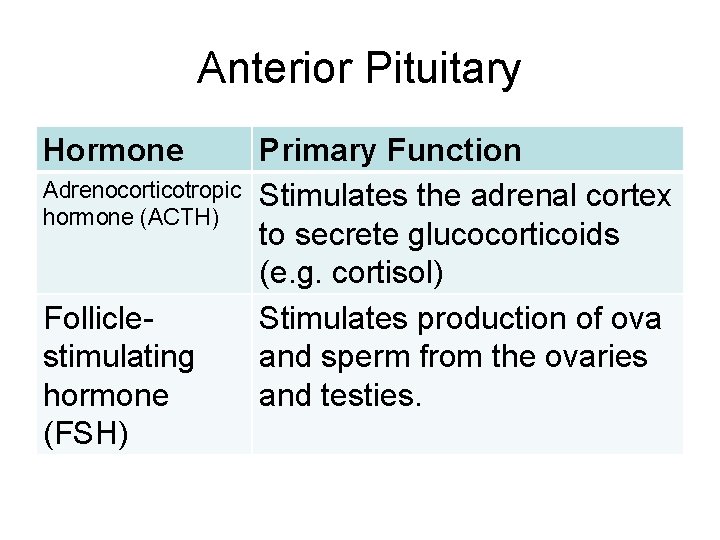
Anterior Pituitary Hormone Adrenocorticotropic hormone (ACTH) Folliclestimulating hormone (FSH) Primary Function Stimulates the adrenal cortex to secrete glucocorticoids (e. g. cortisol) Stimulates production of ova and sperm from the ovaries and testies.
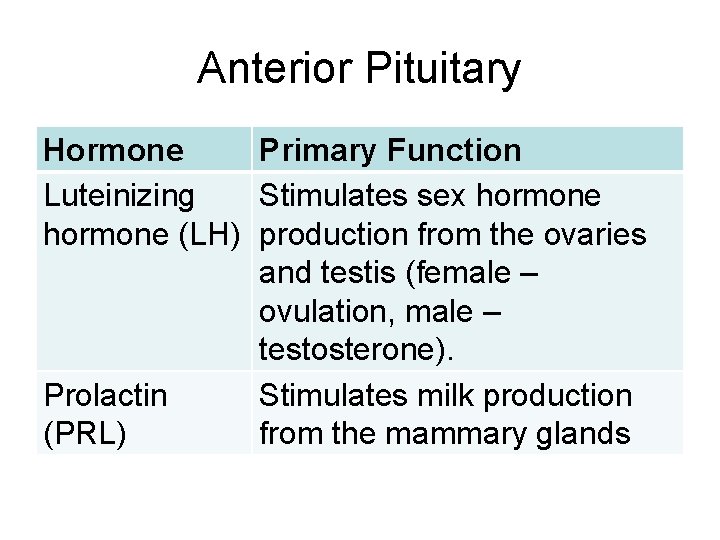
Anterior Pituitary Hormone Primary Function Luteinizing Stimulates sex hormone (LH) production from the ovaries and testis (female – ovulation, male – testosterone). Prolactin Stimulates milk production (PRL) from the mammary glands
- Slides: 19