
Homeostasis the maintenance of a constant or unchanging
- Slides: 13
Homeostasis • the maintenance of a constant or unchanging internal environment • during rest or unstressed conditions
Steady State • constant internal environment or metabolism • during exercise or elevated metabolism • balance has been achieved between demands of the body and the body’s response
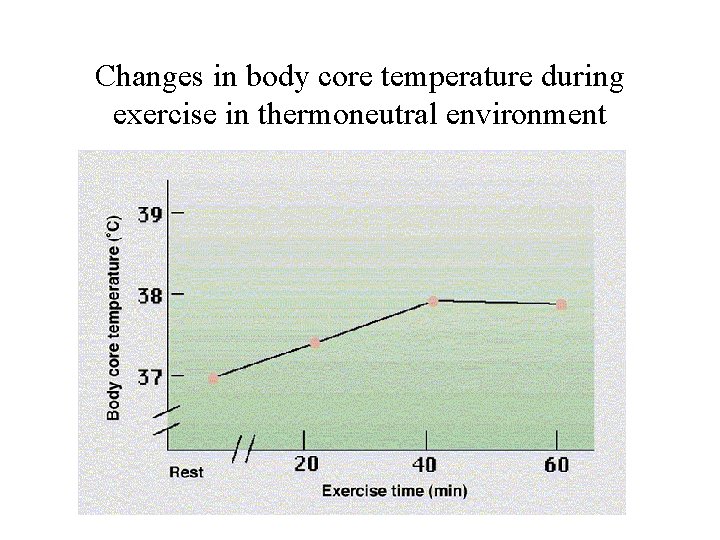
Changes in body core temperature during exercise in thermoneutral environment
Temperature • core temperature is a very important metabolic parameter • needs to be maintained within a very narrow range • much heat is generated during exercise, but is dissipated to maintain constancy • homeostatic condition will not differ from steady state greatly
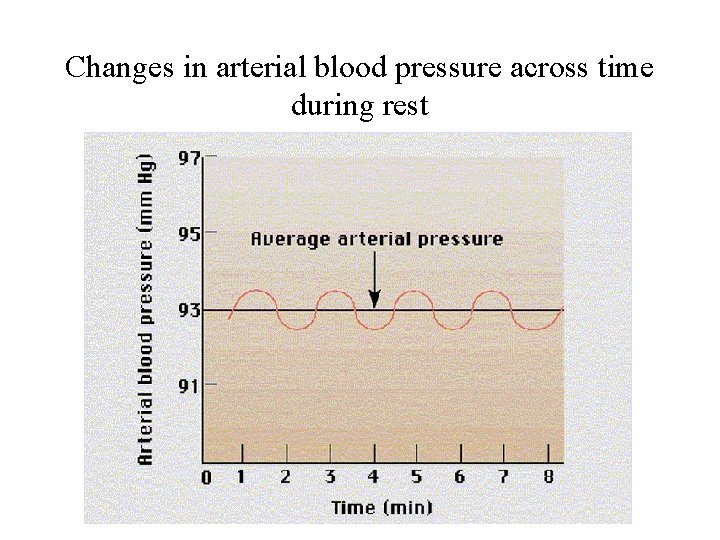
Changes in arterial blood pressure across time during rest
Blood Pressure • blood pressure is another important metabolic parameter • will vary to a greater extent from rest to exercise • will be constant during homeostasis or steady state though
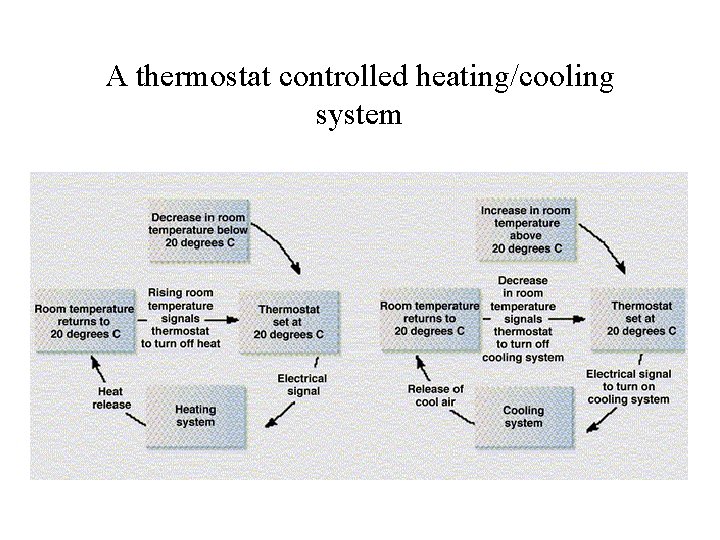
A thermostat controlled heating/cooling system
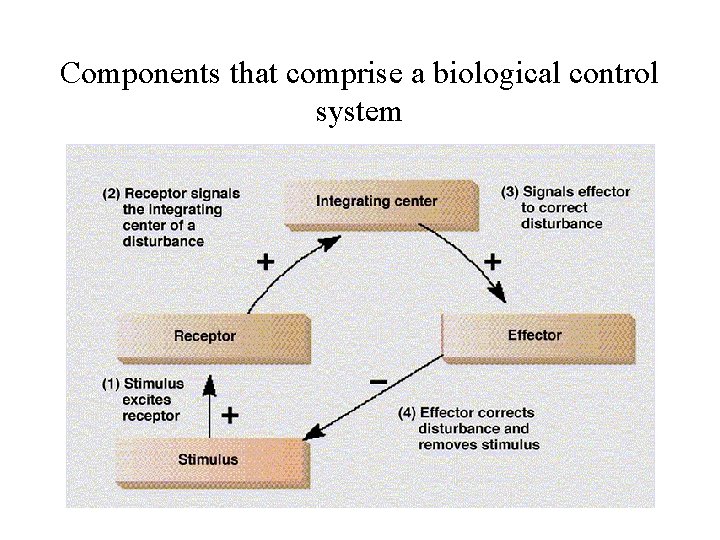
Components that comprise a biological control system
Components • Stimulus-excites a receptor • Receptor-receives the stimulus • Integrating center-relay station (dispatcher) • Effector-corrects disturbance and removes stimulus
Negative Feedback • Biological control system • effector response opposite to stimulus • very common in biological systems
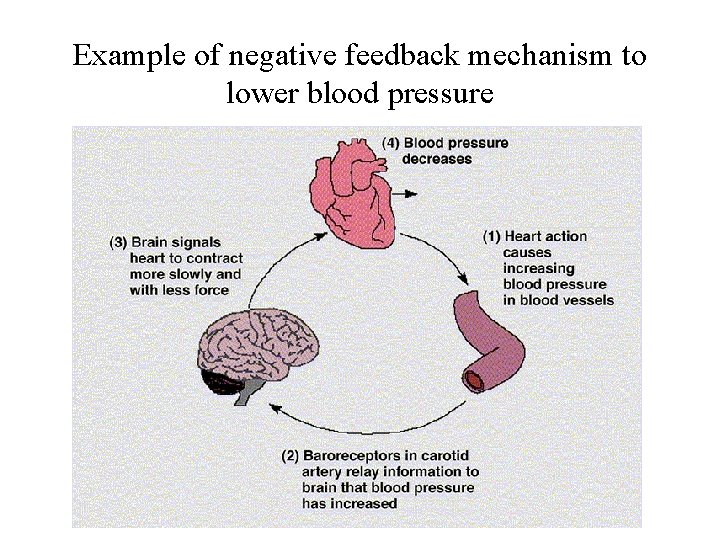
Example of negative feedback mechanism to lower blood pressure
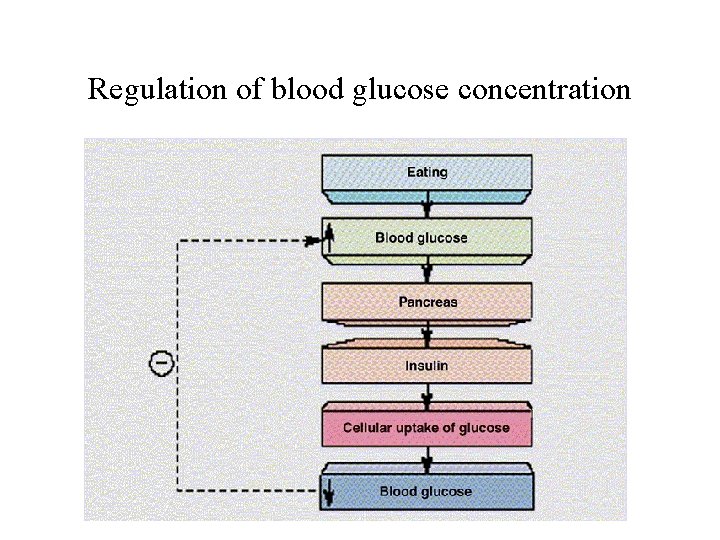
Regulation of blood glucose concentration
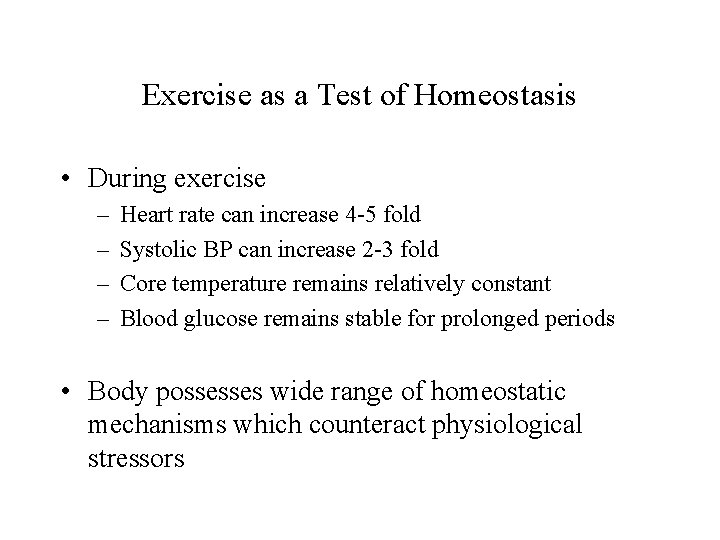
Exercise as a Test of Homeostasis • During exercise – – Heart rate can increase 4 -5 fold Systolic BP can increase 2 -3 fold Core temperature remains relatively constant Blood glucose remains stable for prolonged periods • Body possesses wide range of homeostatic mechanisms which counteract physiological stressors