
Homeostasis of body fluid Text Chapter 8 Human
Homeostasis of body fluid Text: Chapter 8 Human Biology Stage 3
Keywords � Hypothalamus � Osmoreceptors � Thirst centre � ADH • Adrenal glands • Aldosterone � Nephron � Bowman’s capsule glomerulus � Proximal convoluted tubule � Loop of Henle � Distal convoluted tubule � Collection duct � Ureter � Bladder 12/14/2021 3 HBS 2
Renal function: osmoregulation (6 min) �https: //www. youtube. com/watch? v=SDs. Vx 6 m 219 o
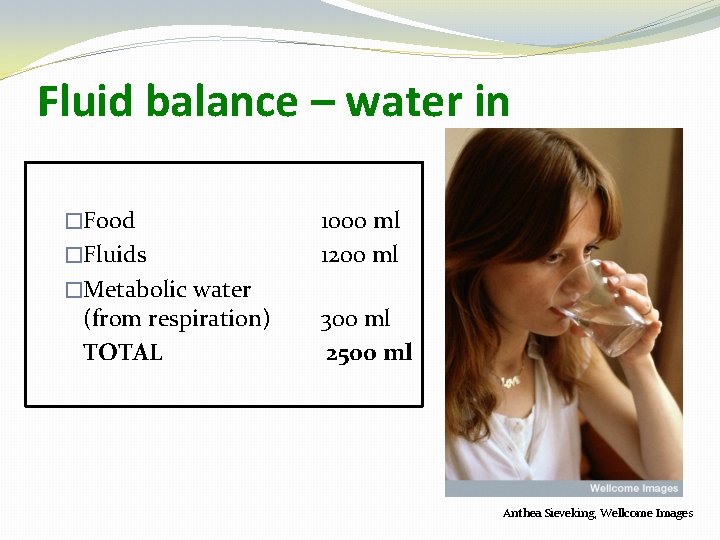
Fluid balance – water in �Food �Fluids �Metabolic water (from respiration) TOTAL 1000 ml 1200 ml 300 ml 2500 ml Anthea Sieveking, Wellcome Images
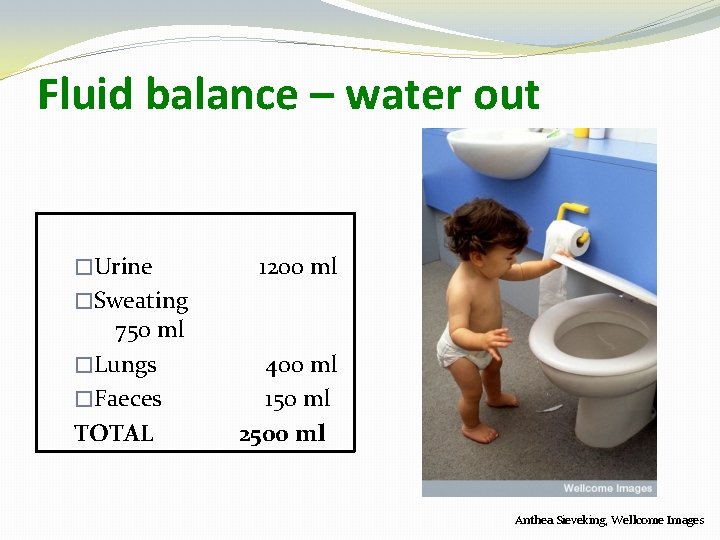
Fluid balance – water out �Urine 1200 ml �Sweating 750 ml �Lungs �Faeces TOTAL 400 ml 150 ml 2500 ml Anthea Sieveking, Wellcome Images
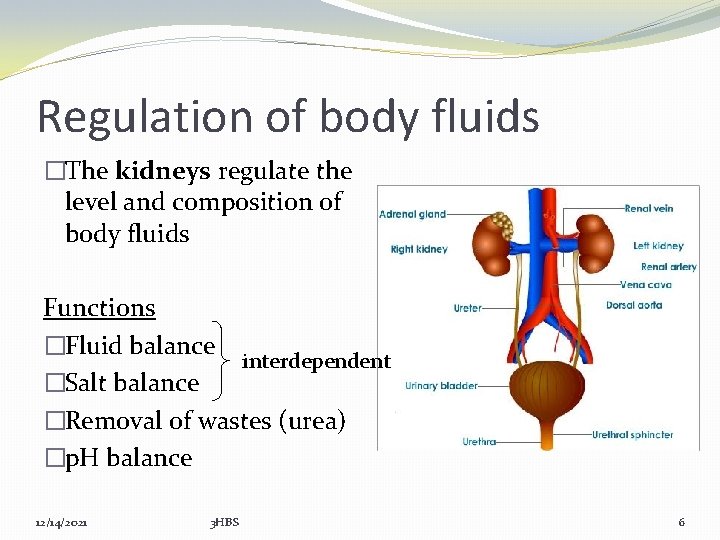
Regulation of body fluids �The kidneys regulate the level and composition of body fluids Functions �Fluid balance interdependent �Salt balance �Removal of wastes (urea) �p. H balance 12/14/2021 3 HBS 6
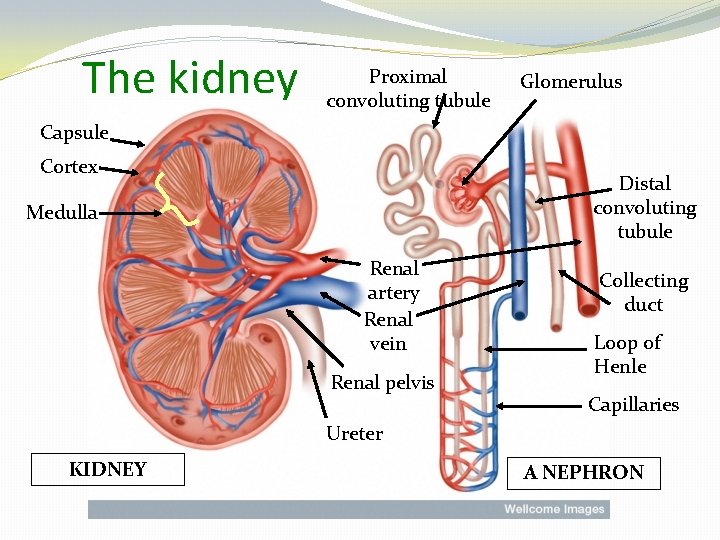
The kidney Proximal convoluting tubule Glomerulus Capsule Cortex Distal convoluting tubule Medulla Renal artery Renal vein Renal pelvis Collecting duct Loop of Henle Capillaries Ureter KIDNEY A NEPHRON
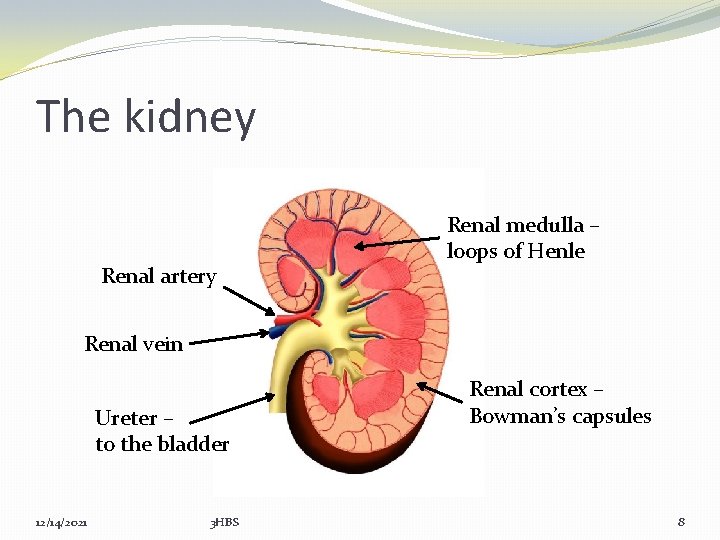
The kidney Renal artery Renal medulla – loops of Henle Renal vein Ureter – to the bladder 12/14/2021 3 HBS Renal cortex – Bowman’s capsules 8
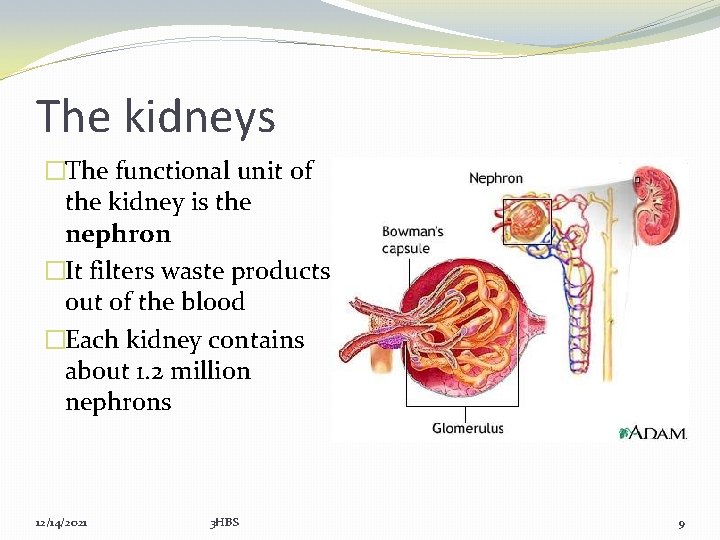
The kidneys �The functional unit of the kidney is the nephron �It filters waste products out of the blood �Each kidney contains about 1. 2 million nephrons 12/14/2021 3 HBS 9
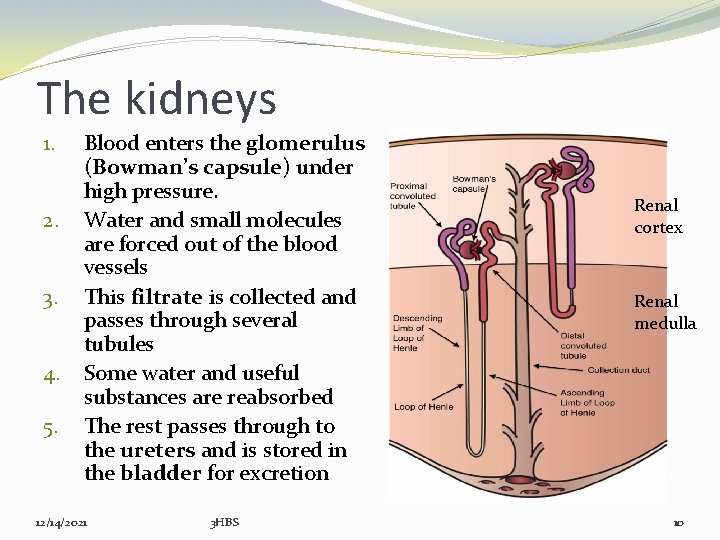
The kidneys 1. 2. 3. 4. 5. Blood enters the glomerulus (Bowman’s capsule) under high pressure. Water and small molecules are forced out of the blood vessels This filtrate is collected and passes through several tubules Some water and useful substances are reabsorbed The rest passes through to the ureters and is stored in the bladder for excretion 12/14/2021 3 HBS Renal cortex Renal medulla 10
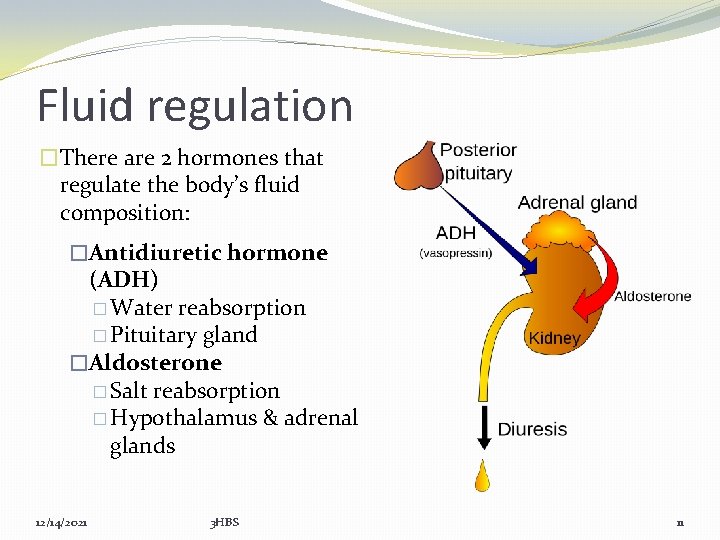
Fluid regulation �There are 2 hormones that regulate the body’s fluid composition: �Antidiuretic hormone (ADH) � Water reabsorption � Pituitary gland �Aldosterone � Salt reabsorption � Hypothalamus & adrenal glands 12/14/2021 3 HBS 11
Selective water re-absorption The second stage of water re-absorption is important if we become dehydrated. It can be divided into two phases (though both are interdependent). 1. The first phase involves the re-absorption of salt under the influence of the hormone aldosterone. 2. The second phase involves the re-absorption of water under the influence of the antidiuretic hormone (ADH).
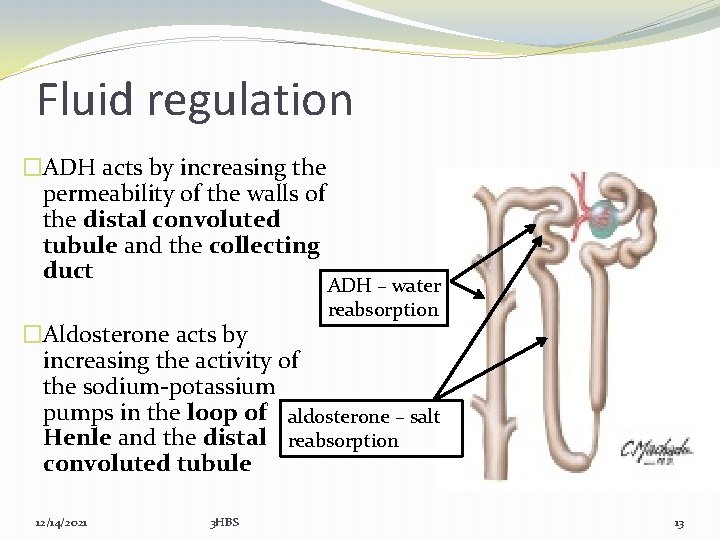
Fluid regulation �ADH acts by increasing the permeability of the walls of the distal convoluted tubule and the collecting duct ADH – water reabsorption �Aldosterone acts by increasing the activity of the sodium-potassium pumps in the loop of aldosterone – salt Henle and the distal reabsorption convoluted tubule 12/14/2021 3 HBS 13
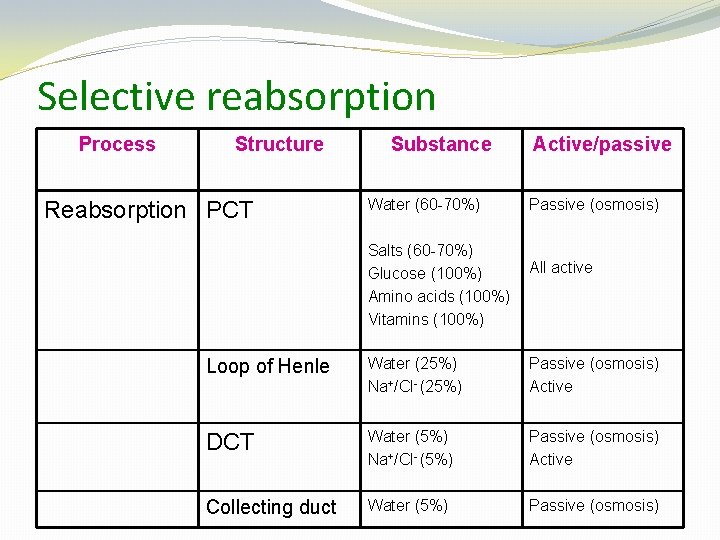
Selective reabsorption Process Structure Reabsorption PCT Substance Water (60 -70%) Salts (60 -70%) Glucose (100%) Amino acids (100%) Vitamins (100%) Active/passive Passive (osmosis) All active Loop of Henle Water (25%) Na+/Cl- (25%) Passive (osmosis) Active DCT Water (5%) Na+/Cl- (5%) Passive (osmosis) Active Collecting duct Water (5%) Passive (osmosis)
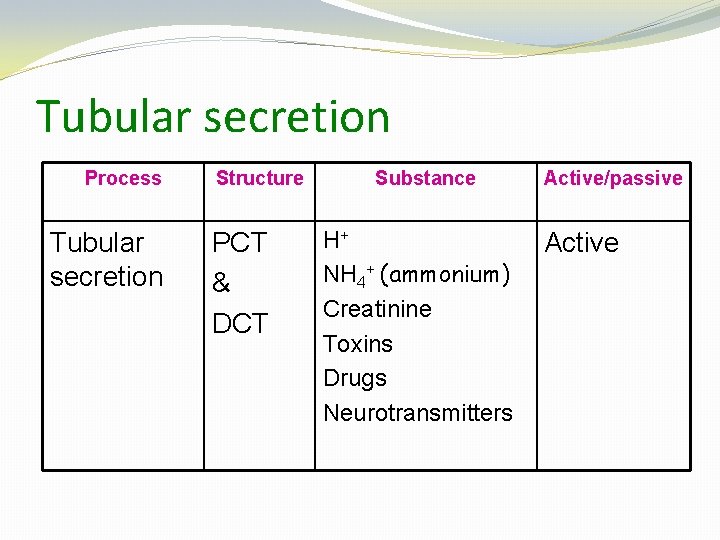
Tubular secretion Process Tubular secretion Structure PCT & DCT Substance H+ NH 4+ (ammonium) Creatinine Toxins Drugs Neurotransmitters Active/passive Active
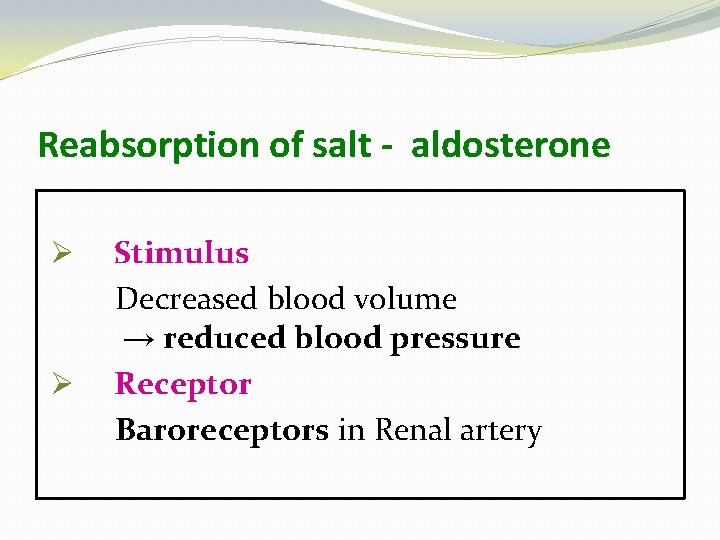
Reabsorption of salt - aldosterone Ø Ø Stimulus Decreased blood volume → reduced blood pressure Receptor Baroreceptors in Renal artery
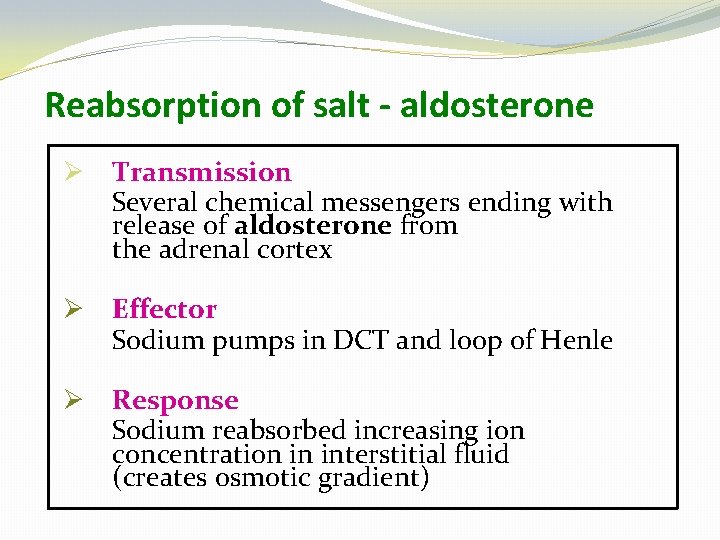
Reabsorption of salt - aldosterone Ø Transmission Several chemical messengers ending with release of aldosterone from the adrenal cortex Ø Effector Sodium pumps in DCT and loop of Henle Ø Response Sodium reabsorbed increasing ion concentration in interstitial fluid (creates osmotic gradient)
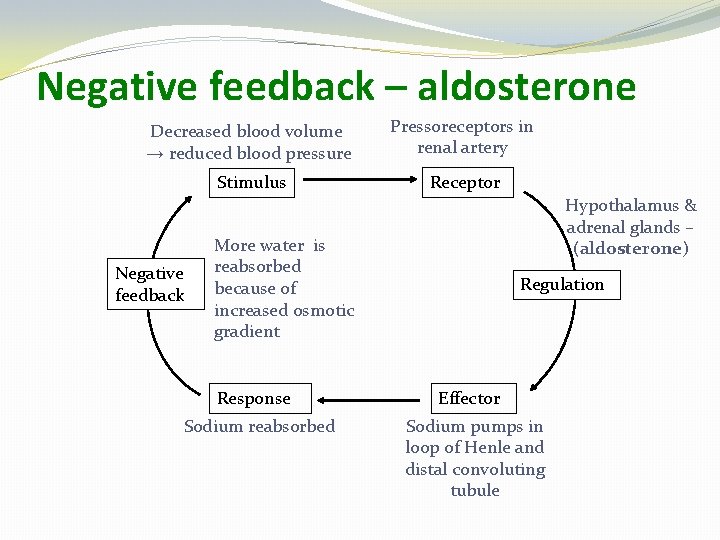
Negative feedback – aldosterone Decreased blood volume → reduced blood pressure Pressoreceptors in renal artery Stimulus Receptor Negative feedback Hypothalamus & adrenal glands – (aldosterone) More water is reabsorbed because of increased osmotic gradient Response Sodium reabsorbed Regulation Effector Sodium pumps in loop of Henle and distal convoluting tubule
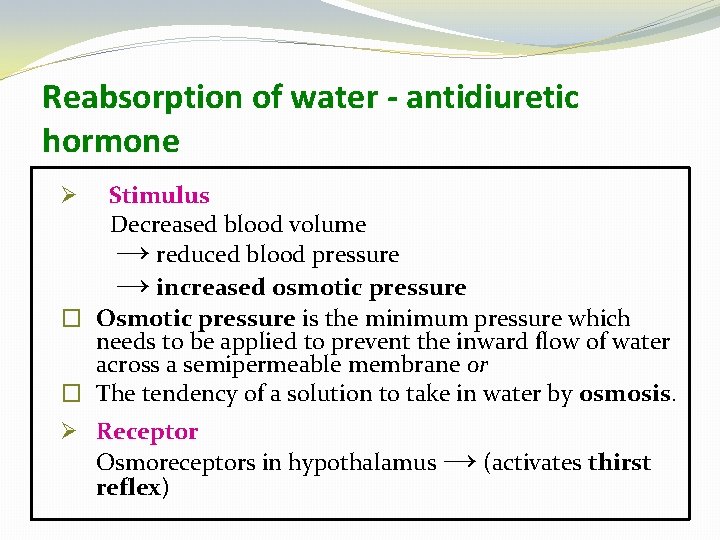
Reabsorption of water - antidiuretic hormone Stimulus Decreased blood volume → reduced blood pressure → increased osmotic pressure � Osmotic pressure is the minimum pressure which needs to be applied to prevent the inward flow of water across a semipermeable membrane or � The tendency of a solution to take in water by osmosis. Ø Ø Receptor Osmoreceptors in hypothalamus → (activates thirst reflex)
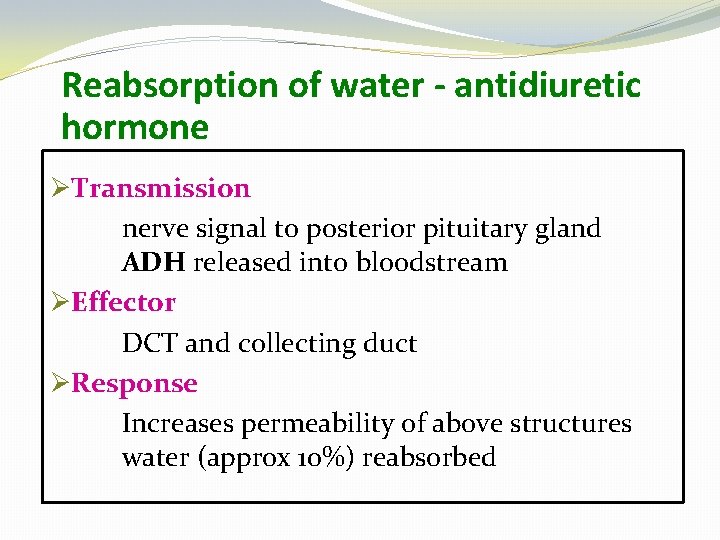
Reabsorption of water - antidiuretic hormone ØTransmission nerve signal to posterior pituitary gland ADH released into bloodstream ØEffector DCT and collecting duct ØResponse Increases permeability of above structures water (approx 10%) reabsorbed
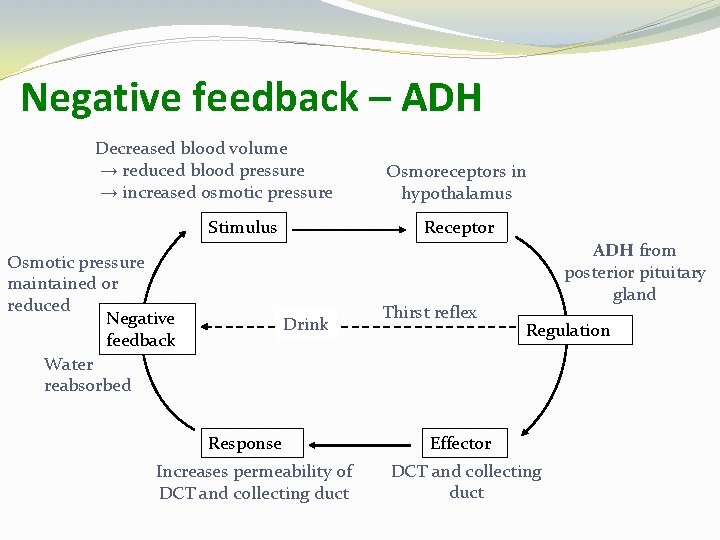
Negative feedback – ADH Decreased blood volume → reduced blood pressure → increased osmotic pressure Stimulus Osmotic pressure maintained or reduced Negative feedback Water reabsorbed Osmoreceptors in hypothalamus Receptor Drink Response Increases permeability of DCT and collecting duct Thirst reflex ADH from posterior pituitary gland Regulation Effector DCT and collecting duct
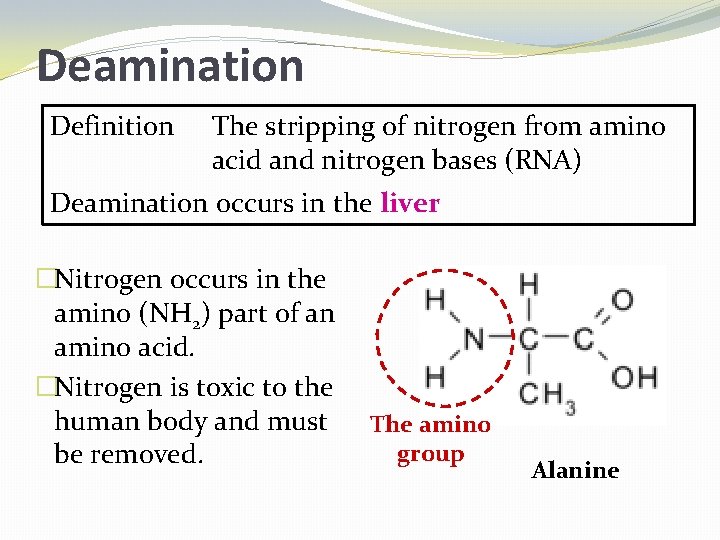
Deamination Definition The stripping of nitrogen from amino acid and nitrogen bases (RNA) Deamination occurs in the liver �Nitrogen occurs in the amino (NH 2) part of an amino acid. �Nitrogen is toxic to the human body and must be removed. The amino group Alanine
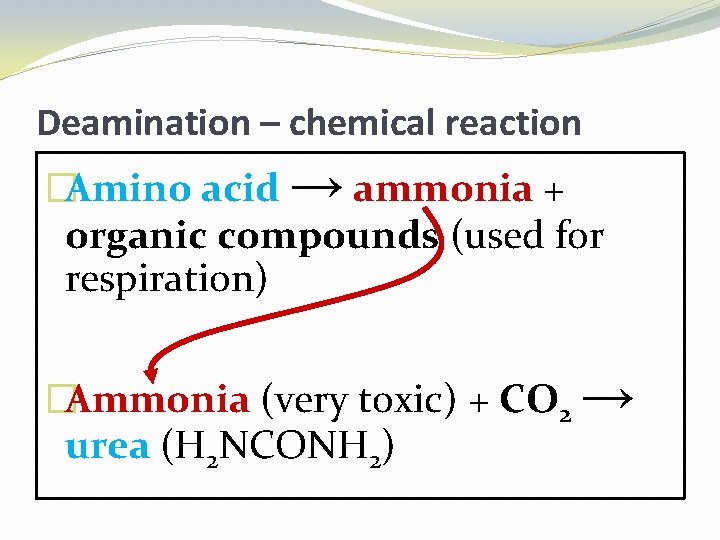
Deamination – chemical reaction �Amino acid → ammonia + organic compounds (used for respiration) �Ammonia (very toxic) + CO 2 → urea (H 2 NCONH 2)
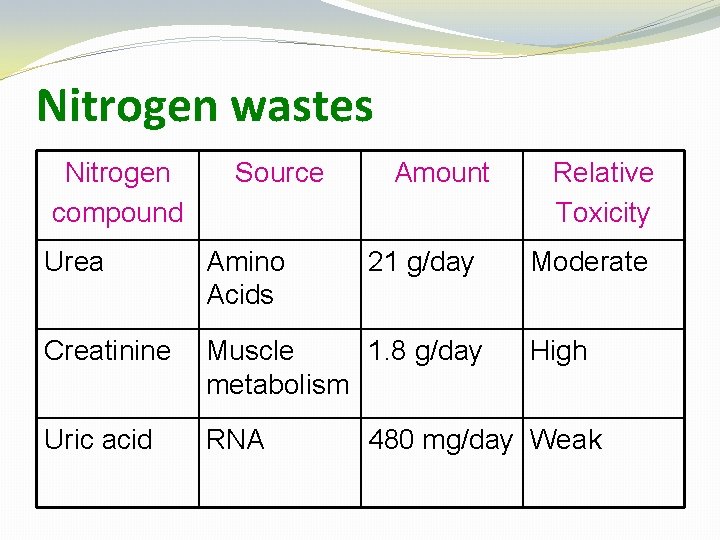
Nitrogen wastes Nitrogen compound Source Amount Urea Amino Acids 21 g/day Creatinine Muscle 1. 8 g/day metabolism Uric acid RNA Relative Toxicity Moderate High 480 mg/day Weak
- Slides: 24