
HOMEOSTASIS NOTES WHAT IS HOMEOSTASIS Homeostasis maintenance of

- Slides: 11
HOMEOSTASIS NOTES
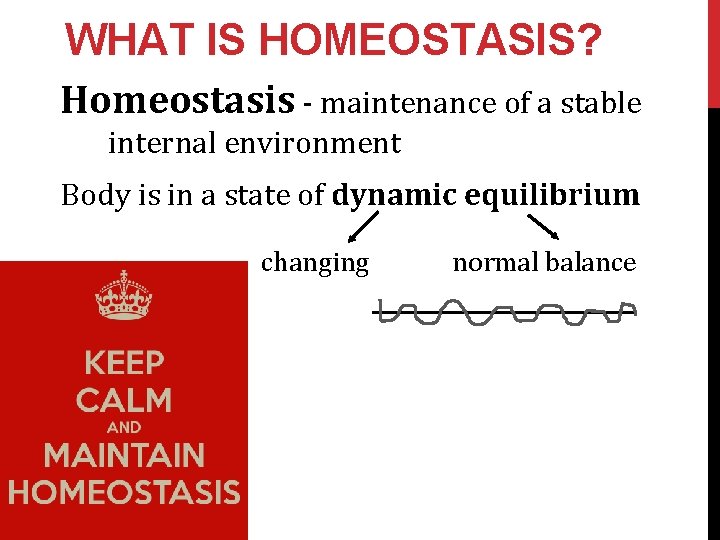
WHAT IS HOMEOSTASIS? Homeostasis - maintenance of a stable internal environment Body is in a state of dynamic equilibrium changing normal balance
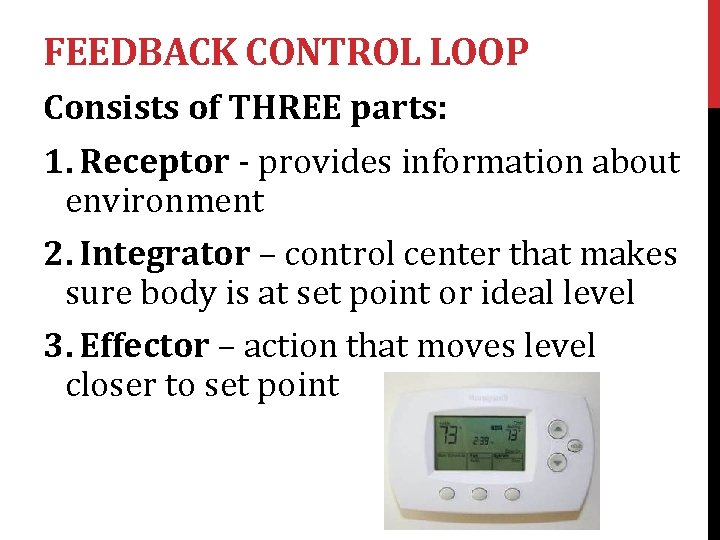
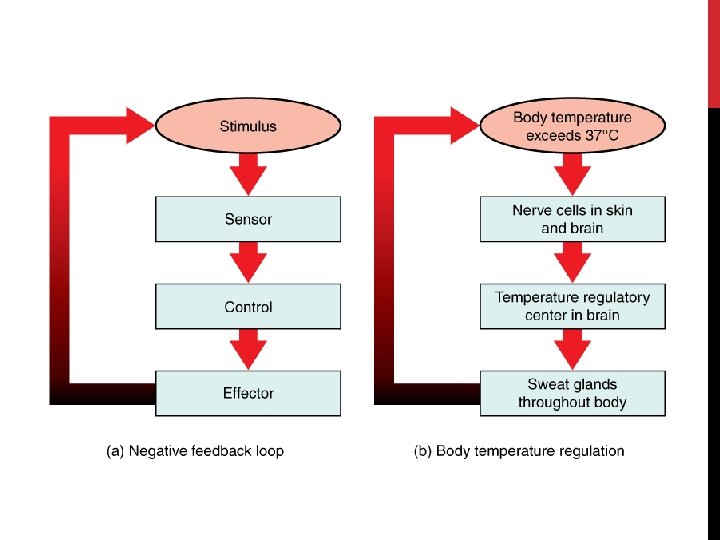
FEEDBACK CONTROL LOOP Consists of THREE parts: 1. Receptor - provides information about environment 2. Integrator – control center that makes sure body is at set point or ideal level 3. Effector – action that moves level closer to set point
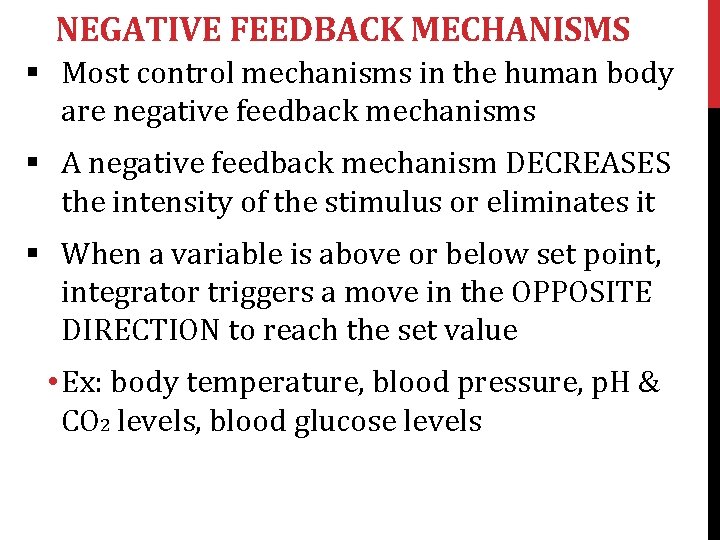
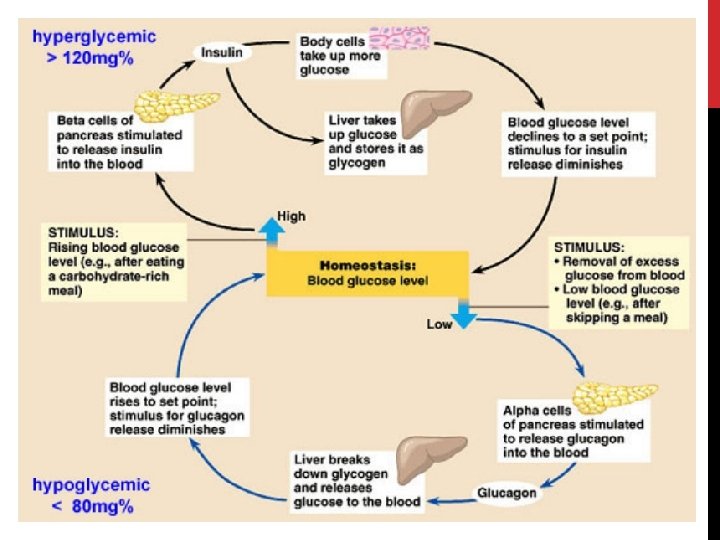
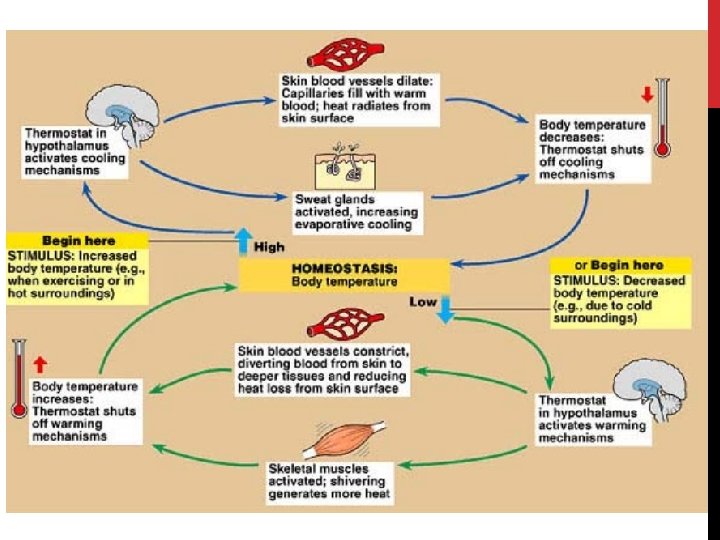
NEGATIVE FEEDBACK MECHANISMS § Most control mechanisms in the human body are negative feedback mechanisms § A negative feedback mechanism DECREASES the intensity of the stimulus or eliminates it § When a variable is above or below set point, integrator triggers a move in the OPPOSITE DIRECTION to reach the set value • Ex: body temperature, blood pressure, p. H & CO 2 levels, blood glucose levels
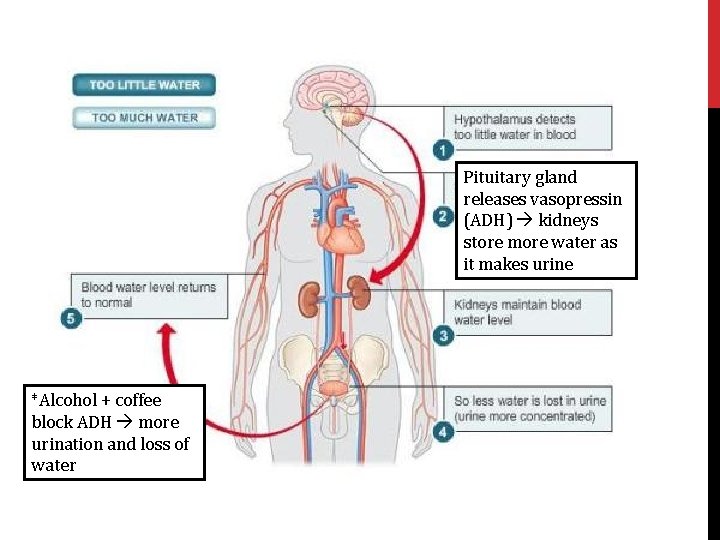
Pituitary gland releases vasopressin (ADH) kidneys store more water as it makes urine *Alcohol + coffee block ADH more urination and loss of water
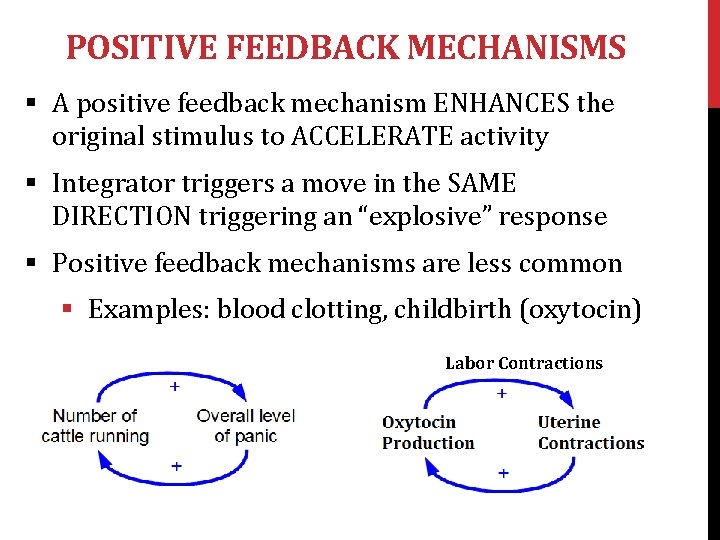
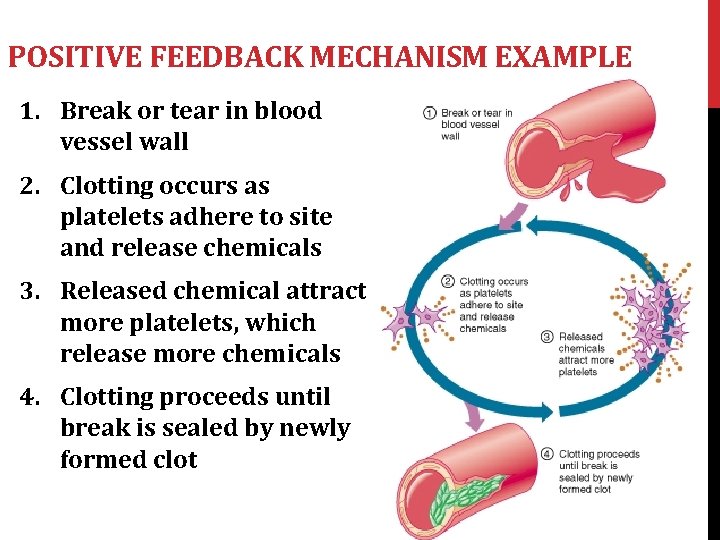
POSITIVE FEEDBACK MECHANISMS § A positive feedback mechanism ENHANCES the original stimulus to ACCELERATE activity § Integrator triggers a move in the SAME DIRECTION triggering an “explosive” response § Positive feedback mechanisms are less common § Examples: blood clotting, childbirth (oxytocin) Labor Contractions
POSITIVE FEEDBACK MECHANISM EXAMPLE 1. Break or tear in blood vessel wall 2. Clotting occurs as platelets adhere to site and release chemicals 3. Released chemical attract more platelets, which release more chemicals 4. Clotting proceeds until break is sealed by newly formed clot
HOMEOSTATIC IMBALANCES § Most diseases cause homeostatic imbalances: chills, fevers, elevated white blood cell counts etc. § Aging reduces our ability to maintain homeostasis