
Homeostasis Maintenance of relatively stable internal environment Body
Homeostasis Maintenance of relatively stable internal environment.
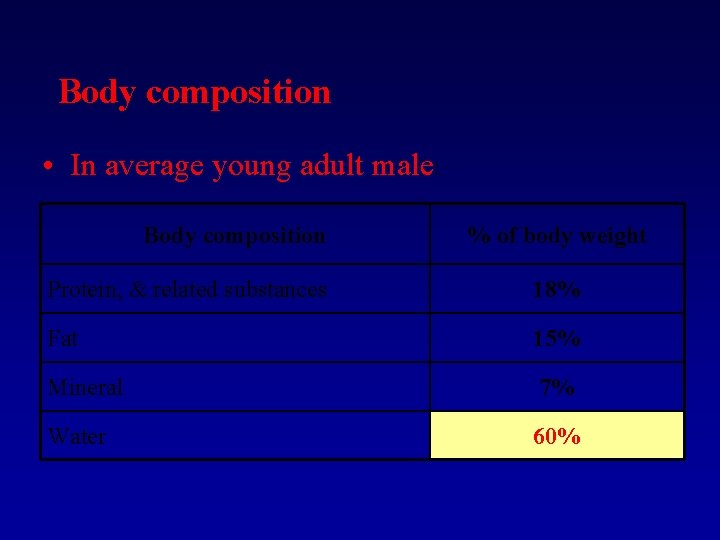
Body composition • In average young adult male: Body composition % of body weight Protein, & related substances 18% Fat 15% Mineral 7% Water 60%
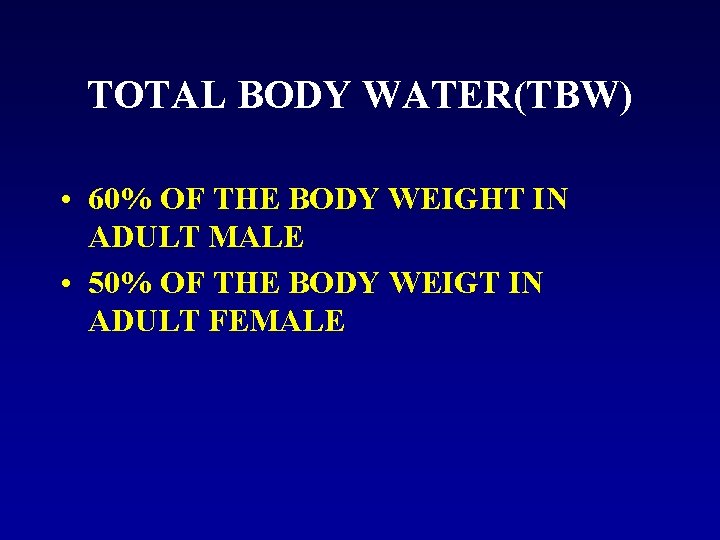
TOTAL BODY WATER(TBW) • 60% OF THE BODY WEIGHT IN ADULT MALE • 50% OF THE BODY WEIGT IN ADULT FEMALE

FLUID COMPARTMENTS EXTRA CELLUAR FLUID PLASMA INTRA CELLULAR FLUID INTERSTITIAL FLUID CSF Intra ocular Pleural Peritoneal Synovial Digestive Secretions TRANSCELLULAR FLUID
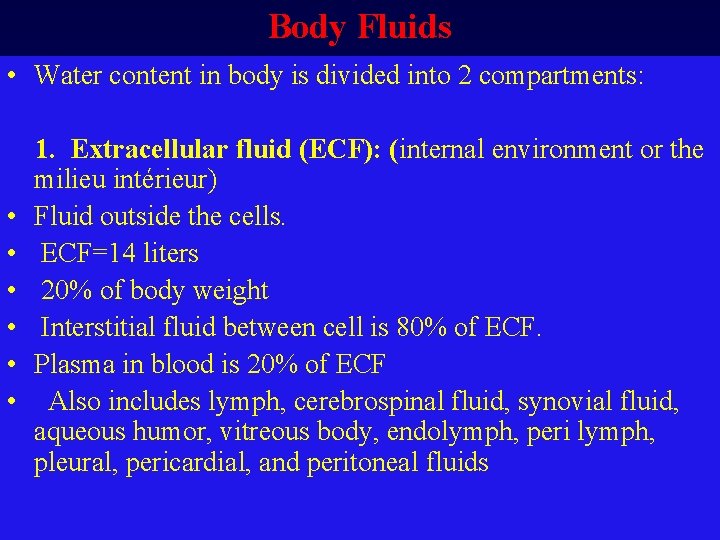
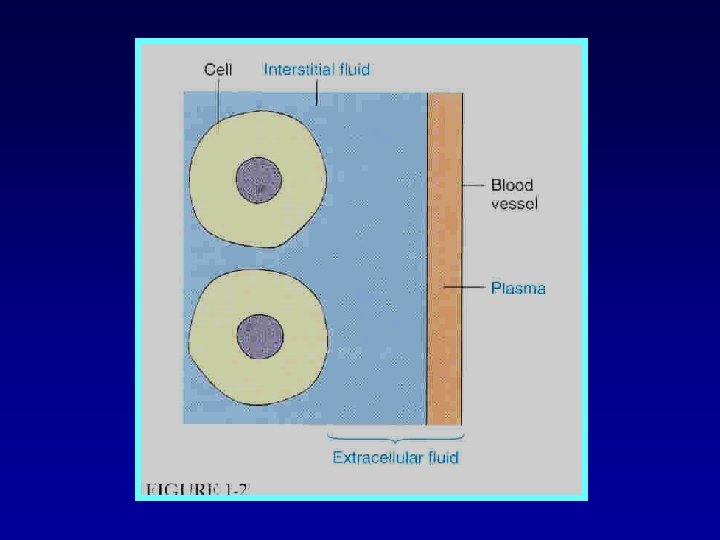
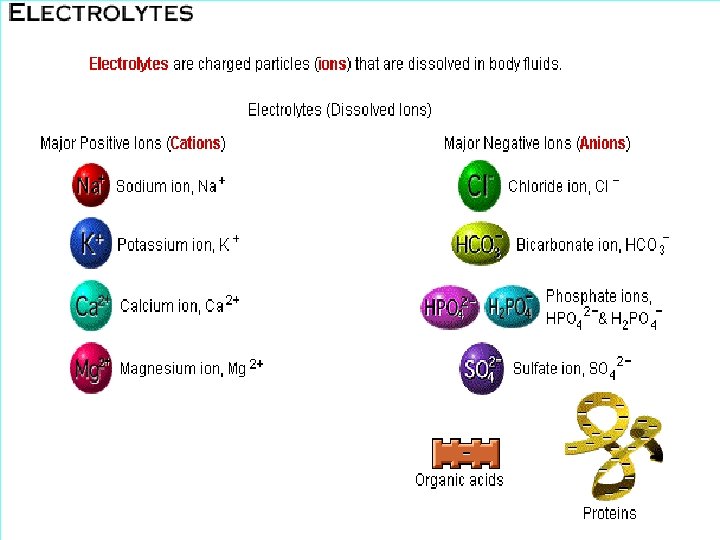
Body Fluids • Water content in body is divided into 2 compartments: • • • 1. Extracellular fluid (ECF): (internal environment or the milieu intérieur) Fluid outside the cells. ECF=14 liters 20% of body weight Interstitial fluid between cell is 80% of ECF. Plasma in blood is 20% of ECF Also includes lymph, cerebrospinal fluid, synovial fluid, aqueous humor, vitreous body, endolymph, peri lymph, pleural, pericardial, and peritoneal fluids
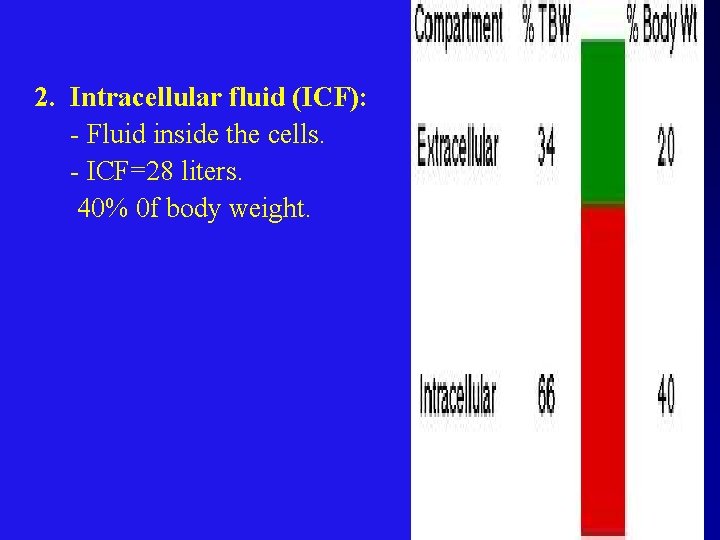
2. Intracellular fluid (ICF): - Fluid inside the cells. - ICF=28 liters. 40% 0 f body weight.
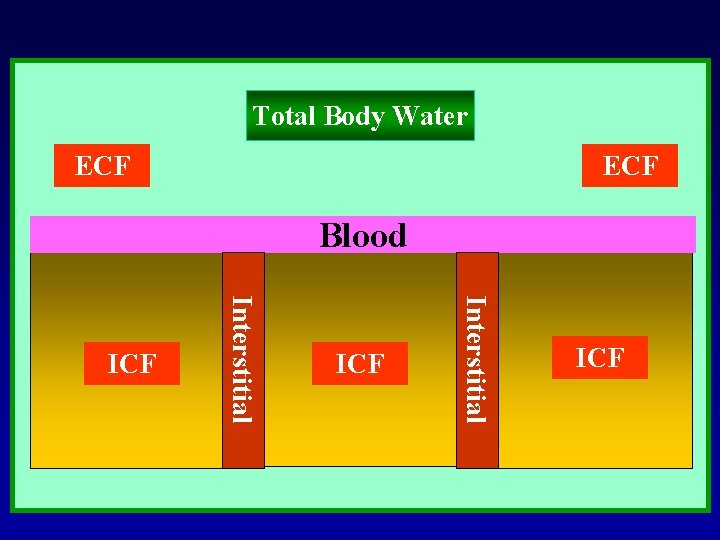
Total Body Water ECF Blood ICF Interstitial ICF BLOOD ICF
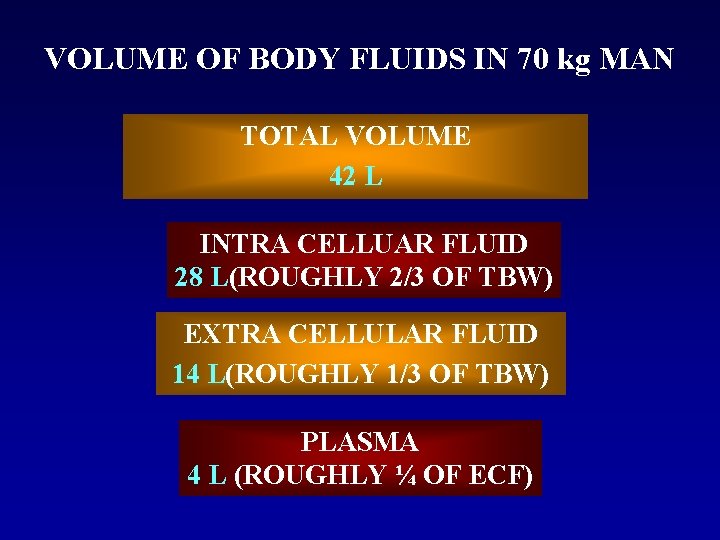
VOLUME OF BODY FLUIDS IN 70 kg MAN TOTAL VOLUME 42 L INTRA CELLUAR FLUID 28 L(ROUGHLY 2/3 OF TBW) EXTRA CELLULAR FLUID 14 L(ROUGHLY 1/3 OF TBW) PLASMA 4 L (ROUGHLY ¼ OF ECF)
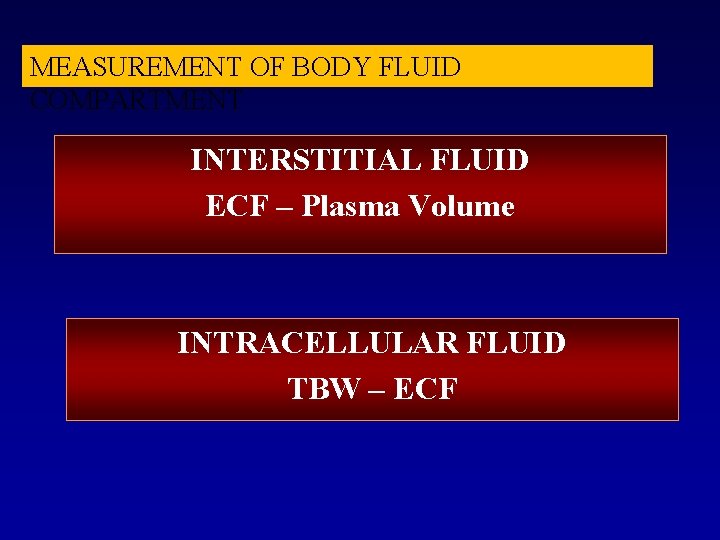
MEASUREMENT OF BODY FLUID COMPARTMENT INTERSTITIAL FLUID ECF – Plasma Volume INTRACELLULAR FLUID TBW – ECF
HOMEOSTASIS • Homeostasis is the physiological process to maintenance of a steady state in the body despite changes in the external environment • The steady state is the optimum level for the body functions © 2008 Paul Billiet ODWS
HOMEOSTASIS – REGULATION OF INTERNAL CONDITIONS • The term “milieu interieur” was coined by Claude Bernard. • The actual environment of the body cells is the interstitial component of the extracellular fluid (ECF) • The term “homeostasis” was coined by WB Cannon
Homeostasis depends on feedback circuits • Three components Receptor – detects a change in internal environment Control Center – process information from receptor, directs signal to the effector Effector – brings about the change to normal condition.
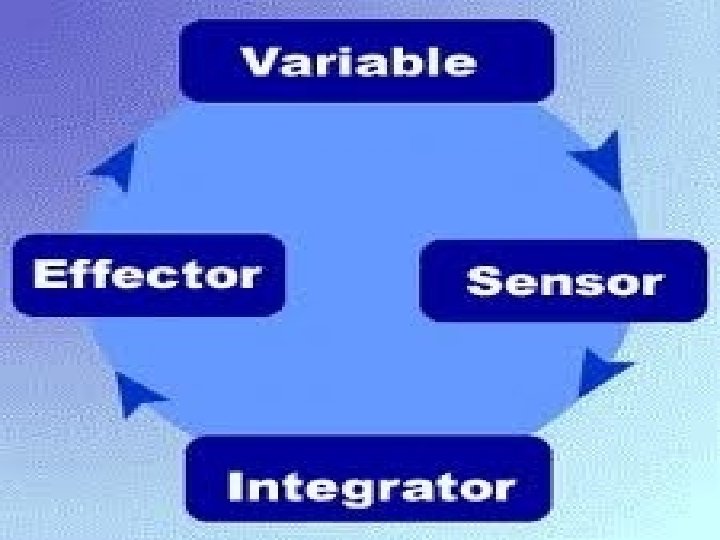
Negative feedback control system Cause and response are in opposite direction. v The sensor detects deviations from normal set point. v Signals from the sensor trigger compensatory changes that continue until the set point is again reached v. The response to the initiating stimulus is negative. v
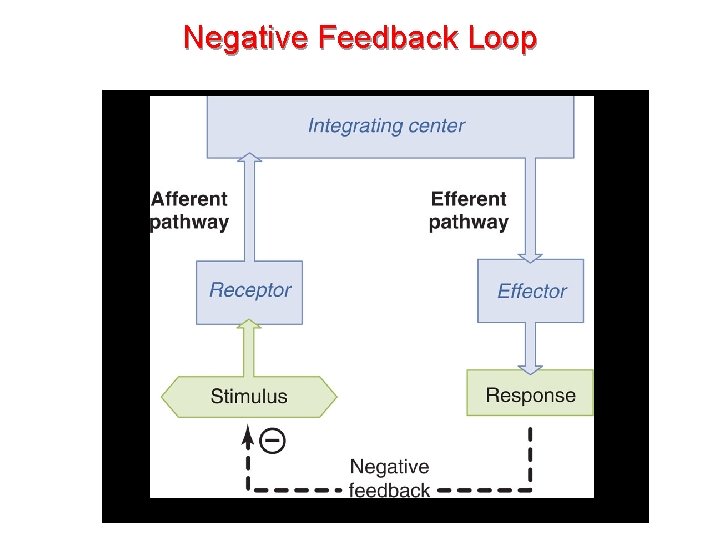
Negative Feedback Loop
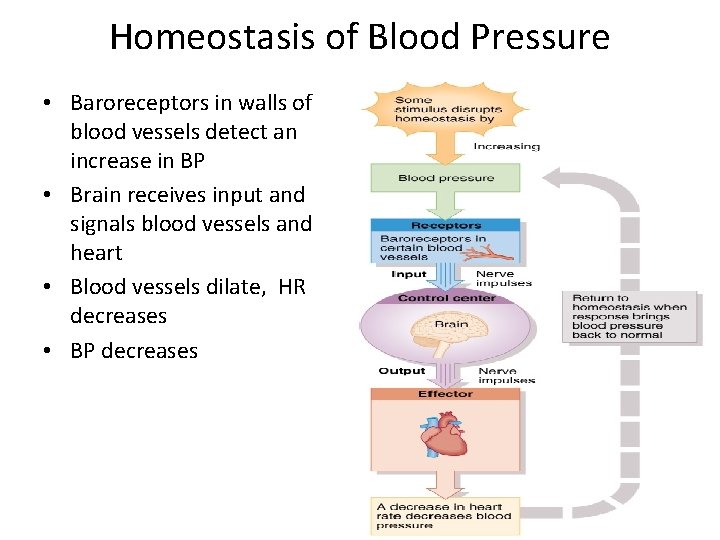
Homeostasis of Blood Pressure • Baroreceptors in walls of blood vessels detect an increase in BP • Brain receives input and signals blood vessels and heart • Blood vessels dilate, HR decreases • BP decreases
Positive feedback control system Response is in the direction of stimulus. Amplifying system. Each successive cycle shall be stronger than previous cycle. • Egs. • Parturition • Blood coagulation. • •
Positive Feedback during Childbirth • Stretch receptors in walls of uterus send signals to the brain • Brain induces release of hormone (oxytocin) into bloodstream • Uterine smooth muscle contracts more forcefully • More stretch, more hormone, more contraction etc. • Cycle ends with birth of the baby & decrease in stretch
- Slides: 20