
Homeostasis Introduction Homeostasis the process of maintaining a

- Slides: 14
Homeostasis Introduction
Homeostasis – the process of maintaining a constant internal environment despite changing external conditions
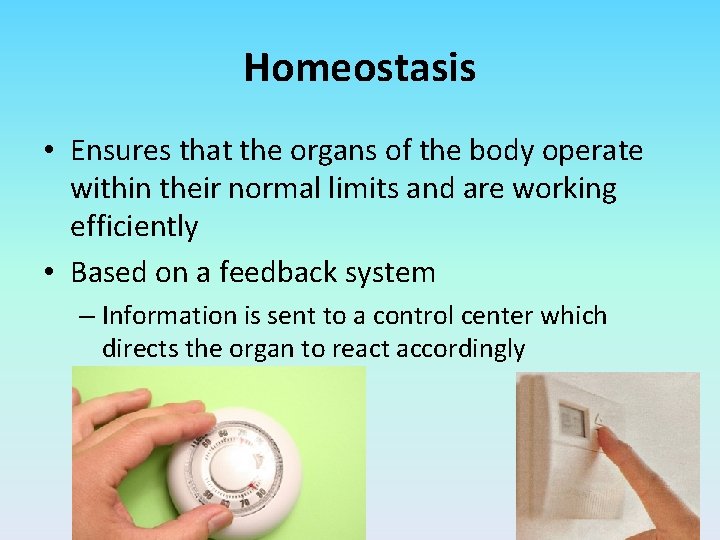
Homeostasis • Ensures that the organs of the body operate within their normal limits and are working efficiently • Based on a feedback system – Information is sent to a control center which directs the organ to react accordingly
http: //youtu. be/d 2 YWon. Zsh_M
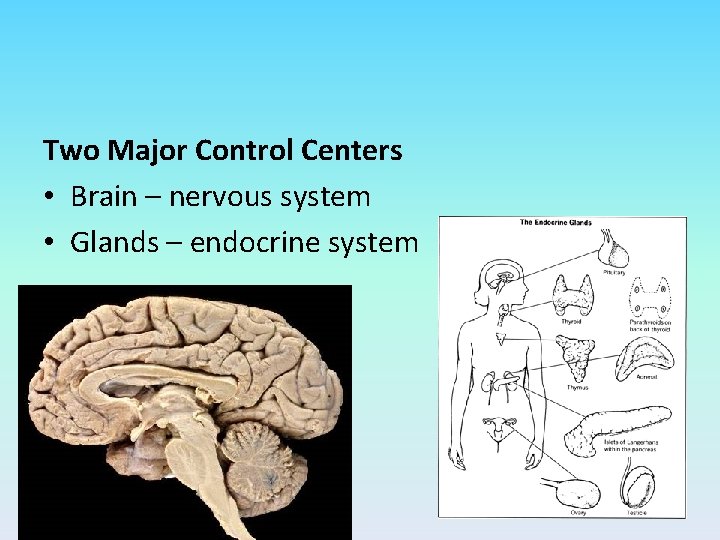
Two Major Control Centers • Brain – nervous system • Glands – endocrine system
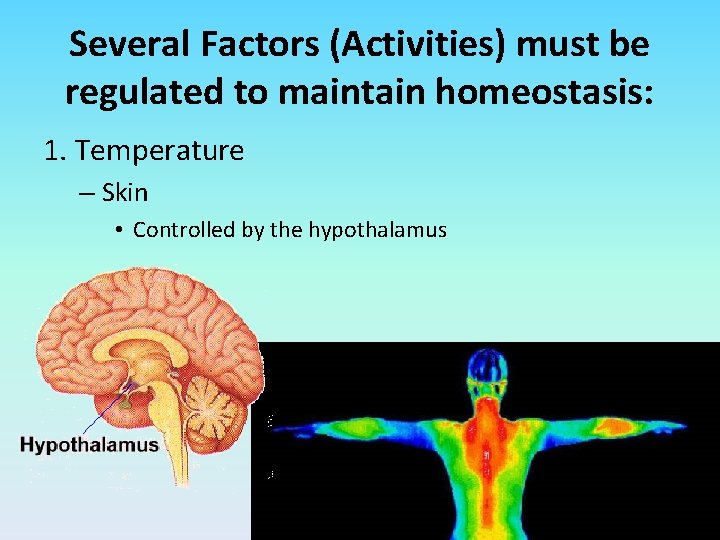
Several Factors (Activities) must be regulated to maintain homeostasis: 1. Temperature – Skin • Controlled by the hypothalamus
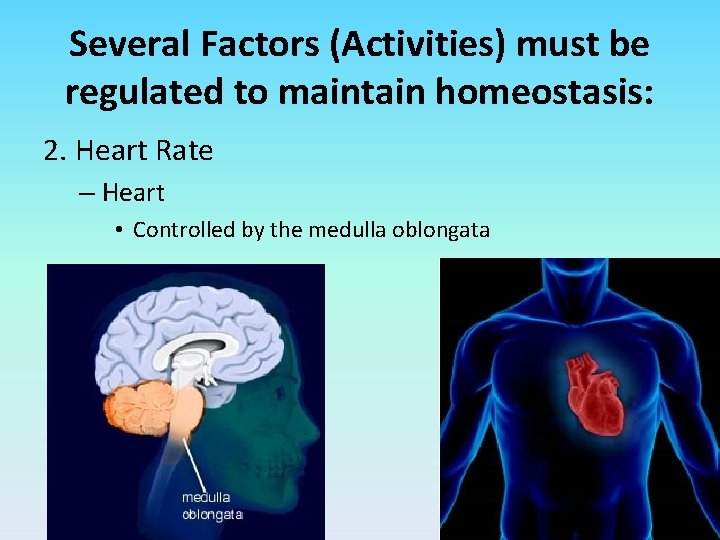
Several Factors (Activities) must be regulated to maintain homeostasis: 2. Heart Rate – Heart • Controlled by the medulla oblongata
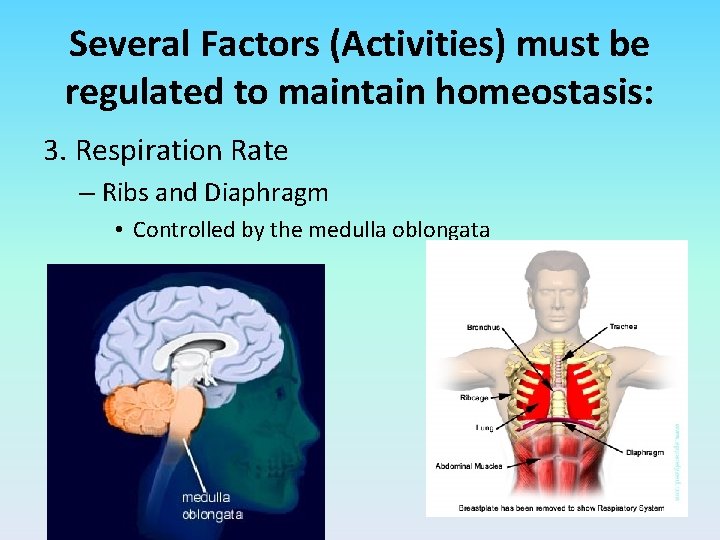
Several Factors (Activities) must be regulated to maintain homeostasis: 3. Respiration Rate – Ribs and Diaphragm • Controlled by the medulla oblongata
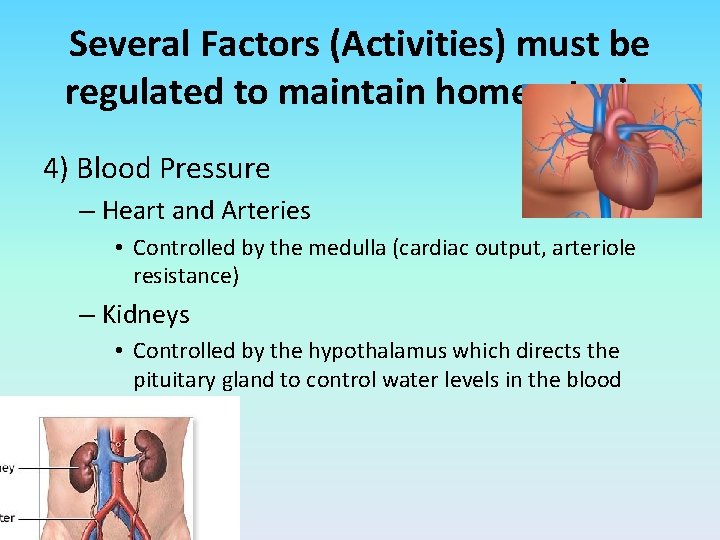
Several Factors (Activities) must be regulated to maintain homeostasis: 4) Blood Pressure – Heart and Arteries • Controlled by the medulla (cardiac output, arteriole resistance) – Kidneys • Controlled by the hypothalamus which directs the pituitary gland to control water levels in the blood
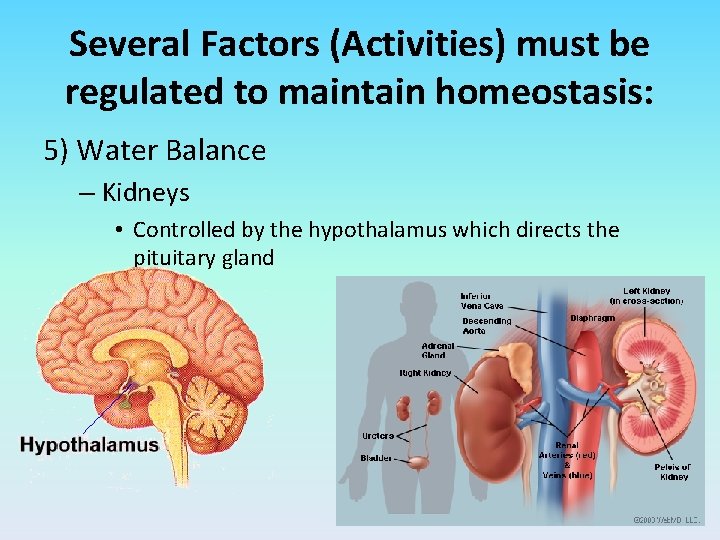
Several Factors (Activities) must be regulated to maintain homeostasis: 5) Water Balance – Kidneys • Controlled by the hypothalamus which directs the pituitary gland
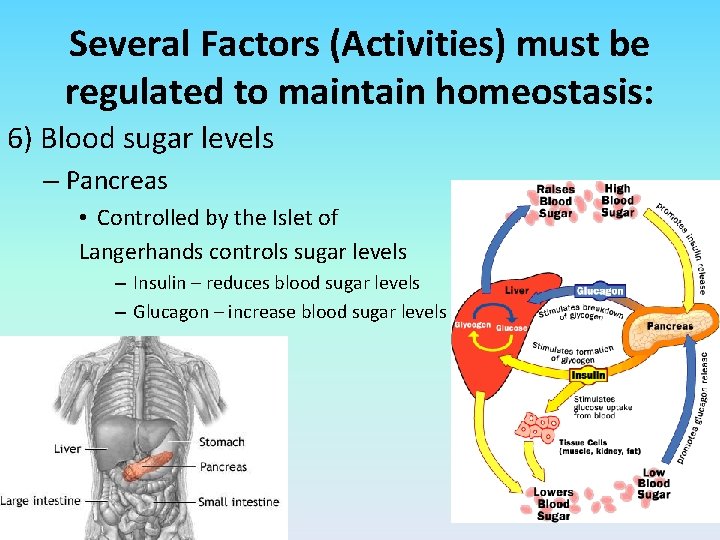
Several Factors (Activities) must be regulated to maintain homeostasis: 6) Blood sugar levels – Pancreas • Controlled by the Islet of Langerhands controls sugar levels – Insulin – reduces blood sugar levels – Glucagon – increase blood sugar levels
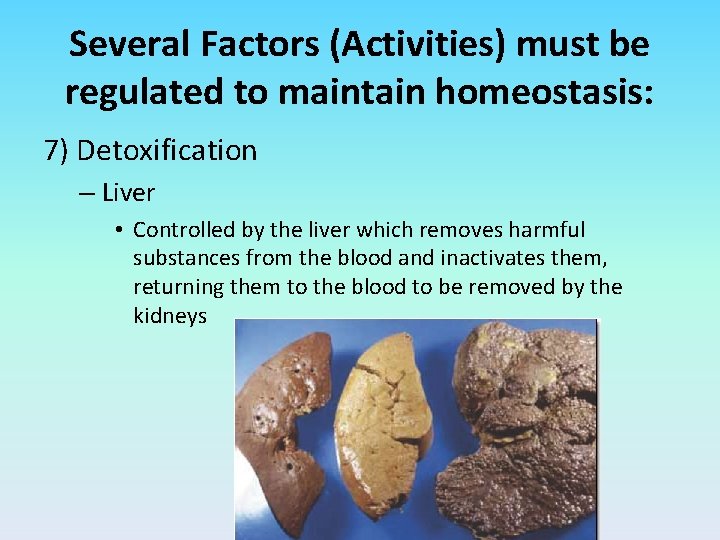
Several Factors (Activities) must be regulated to maintain homeostasis: 7) Detoxification – Liver • Controlled by the liver which removes harmful substances from the blood and inactivates them, returning them to the blood to be removed by the kidneys
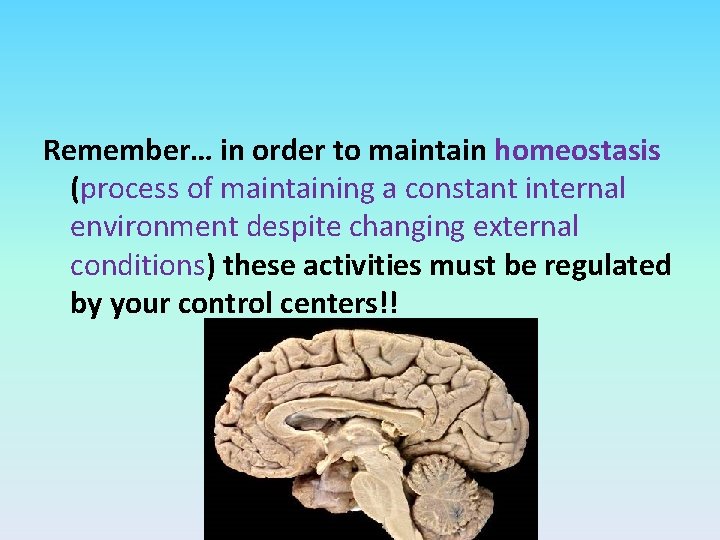
Remember… in order to maintain homeostasis (process of maintaining a constant internal environment despite changing external conditions) these activities must be regulated by your control centers!!
Now to build up to these high function levels of organization in an organism that help maintain homeostasis let’s begin with the basic building blocks…